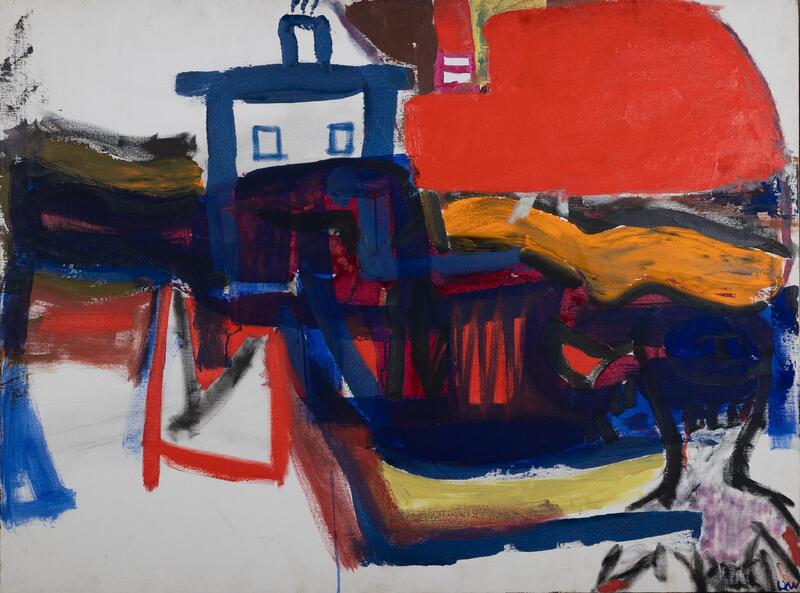
Lillie Kate Walker was an artist from Atlanta, GA. "276 Chestnut Street" is a faux naive depiction of a house on a neighborhood street. Walker uses broad, simplistic strokes of mostly primary colors to craft a residential scene
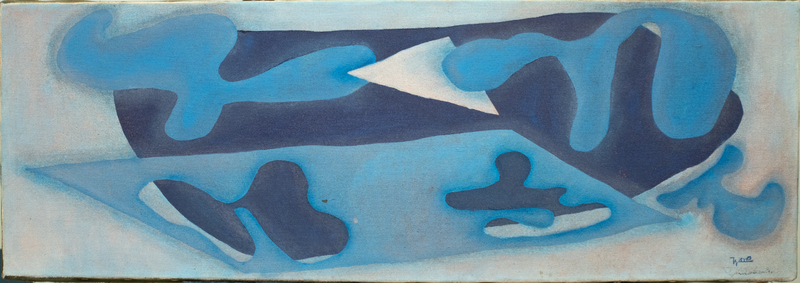
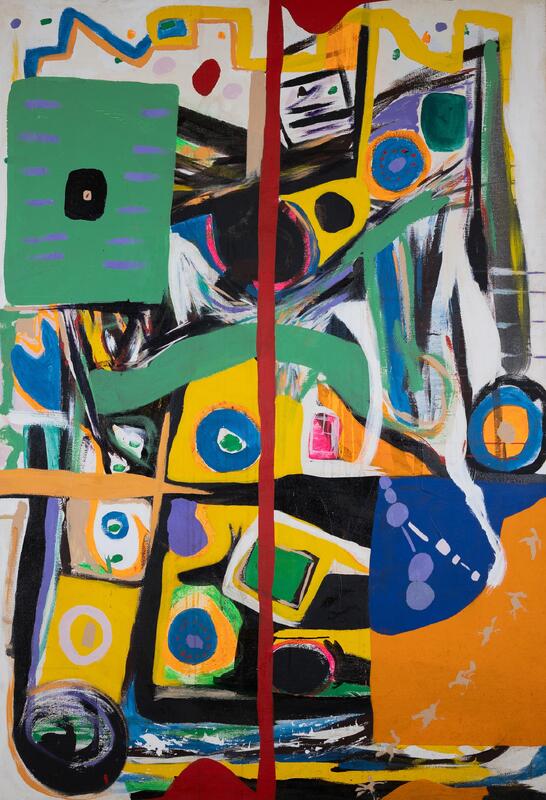
Ware’s blue, abstract painting is created in landscape form. Curved shapes are layered over an oval-shaped form. The top layer is a slanted prism with cutout shapes that slightly imitate the forms floating around. Abstract art of this sort is not commonly featured in the permanent collection of Texas Southern University.
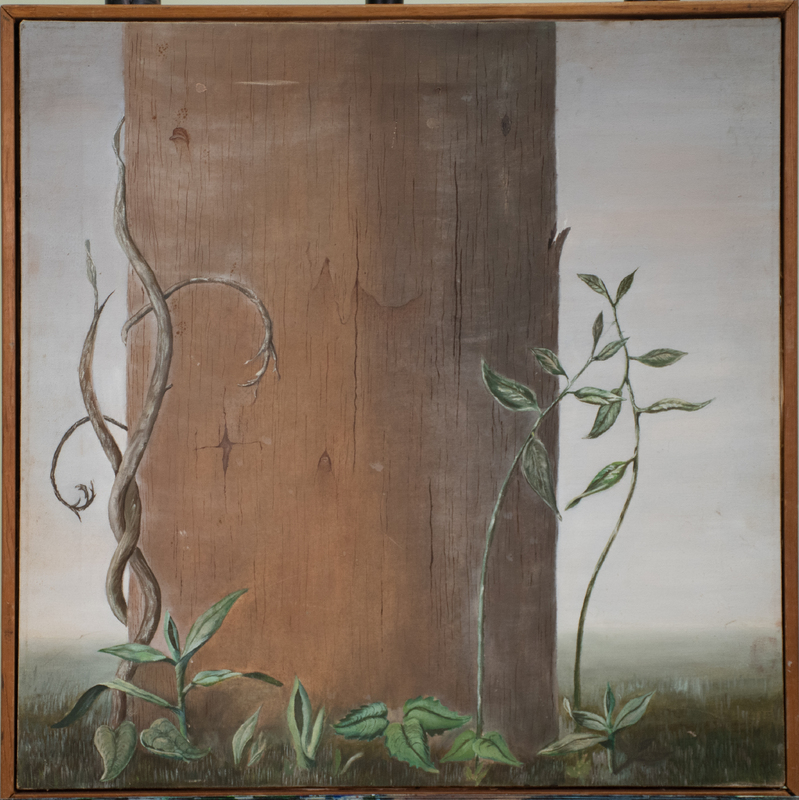
This painting, created by an unknown TSU art student, depicts the base of a tree or wooden telephone pole, with various smaller plants and vines creeping up its structure. Dr. John T. Biggers encouraged students to study the natural world and seek inspiration from it. He instructed students to sit outside for an extended period of time and observe.
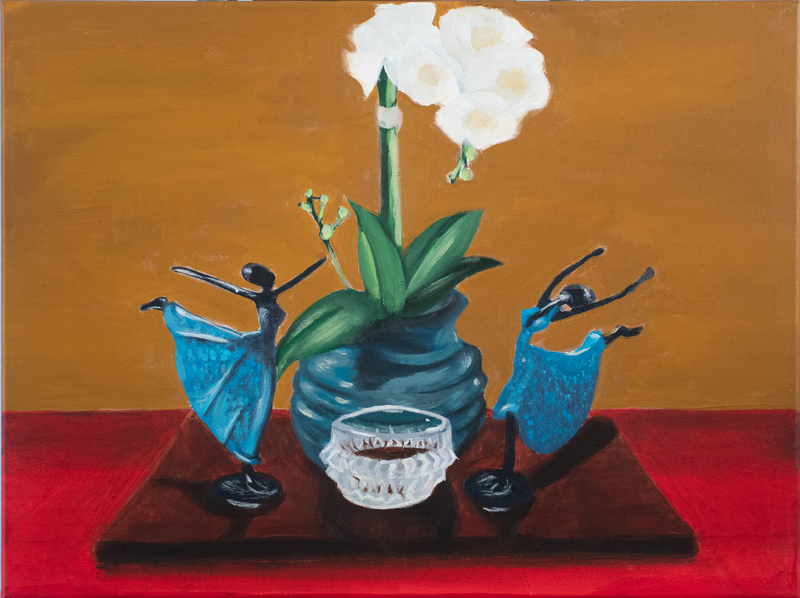
Etienne created her painting, “Dancing Still Life,” as part of a class assignment based on objects within her home. Etienne selected these figures, which her mother collected from the National Museum of African American History & Culture, white orchids in a blue pot, and a glass dish from her grandmother's home. A graduate from Texas Southern University, Etienne emphasizes femininity, movement, and flowers in her art.
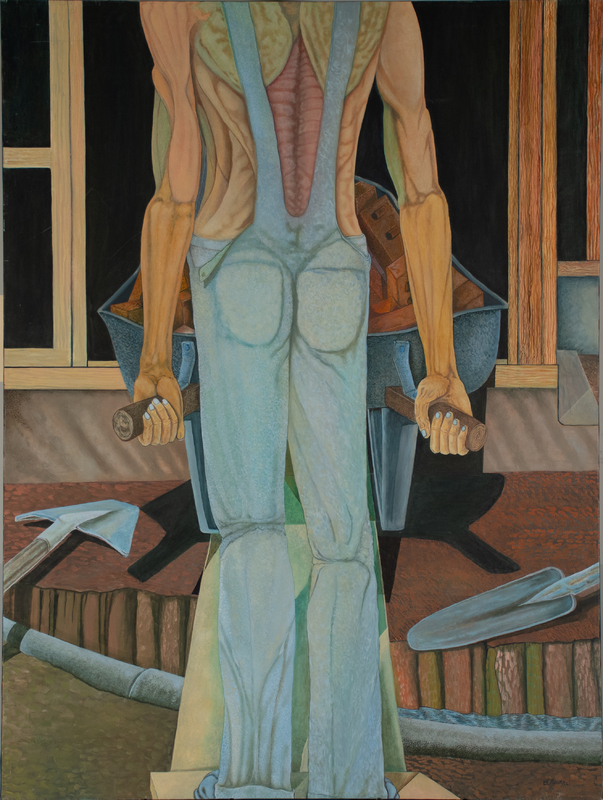
Renfro’s painting displays an image of a working man dressed in overalls from behind. The man is wheeling bricks towards a construction site. His bones and muscles are made visible in the composition, perhaps to highlight the physical demands of his labor. Dr. Biggers taught his students to portray the human form with care and detail, particularly oft-neglected features like hands and feet.
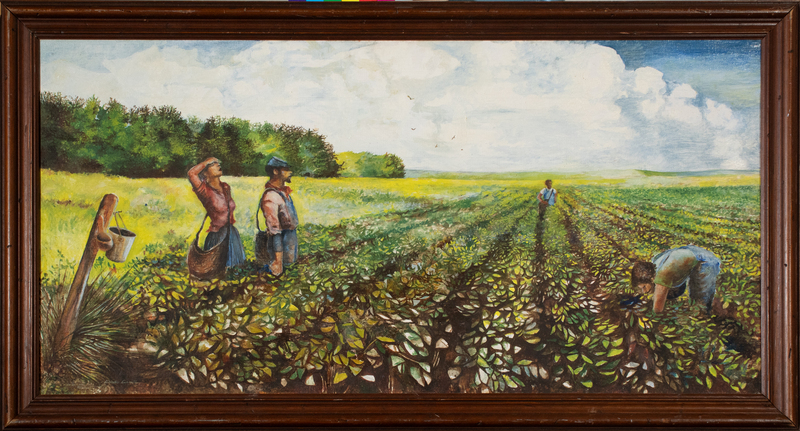
Curnell's painting shows a field of crops stretching into a cloudy horizon, with four people working the field. Two men are actively picking, while a man and woman stand to the side, resting next to a water pail. The figures’ dress and posture seem to suggest that this may be a family farm, rather than a plantation scene depicting slavery.
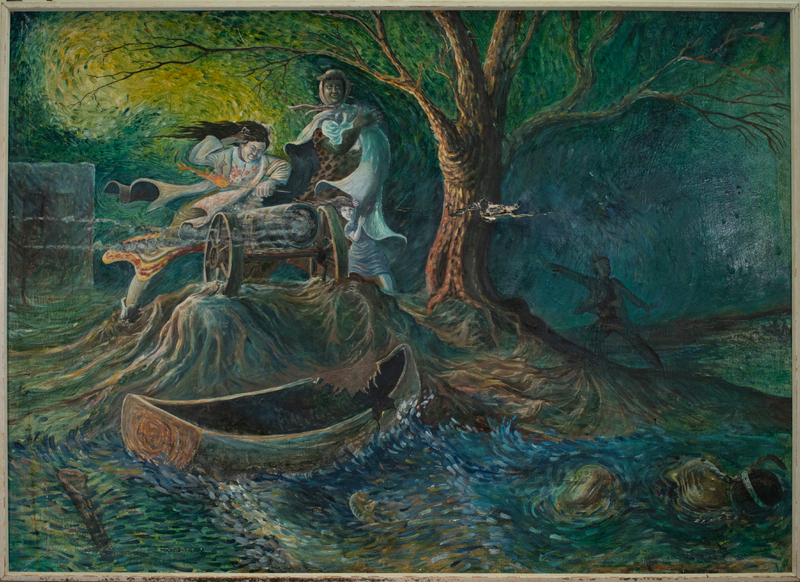
Mills paints a compelling and complex commentary on violence against indigenous people in the United States. In the foreground, a lifeless indigenous person floats next to a wrecked canoe. In the center, a white woman prepares to fire a cannon, still smoking from its last round. Behind her, a stoic Black woman holds one white baby and shelters another white child within her cloak. In the background, a faceless indigenous person reaches towards the scene.
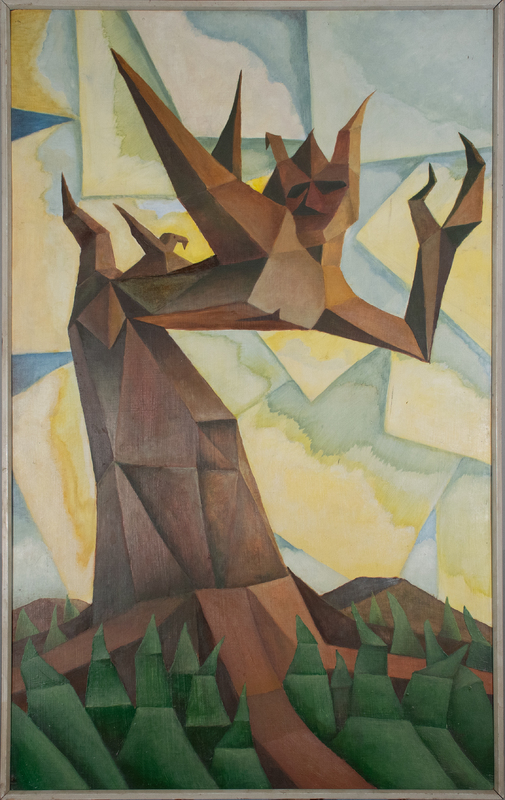
Sifuentes' painting shows a landscape filled with grass and a barren tree, with a bird perched atop. The tree bears human characteristics, perhaps symbolizing the interconnectedness of all living beings. This piece is painted in a geometric style that appears frequently in the work of students of Dr. John T. Biggers during the mid to late 1970s. Sifuentes later went on to become an art professor at Texas Southern.
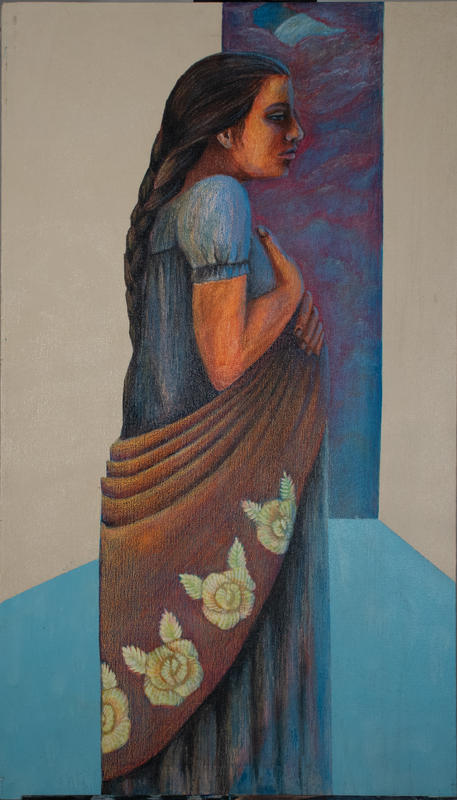
Mendoza's painting depicts an expecting mother gazing into the distance and wearing a traditional Mexican rebozo. Rebozos can be used by pregnant women to support their bellies, as this woman appears to be doing. Mother and child is a prevalent theme in art by Texas Southern Art Department students, found in drawings, sculptures, murals, and paintings.
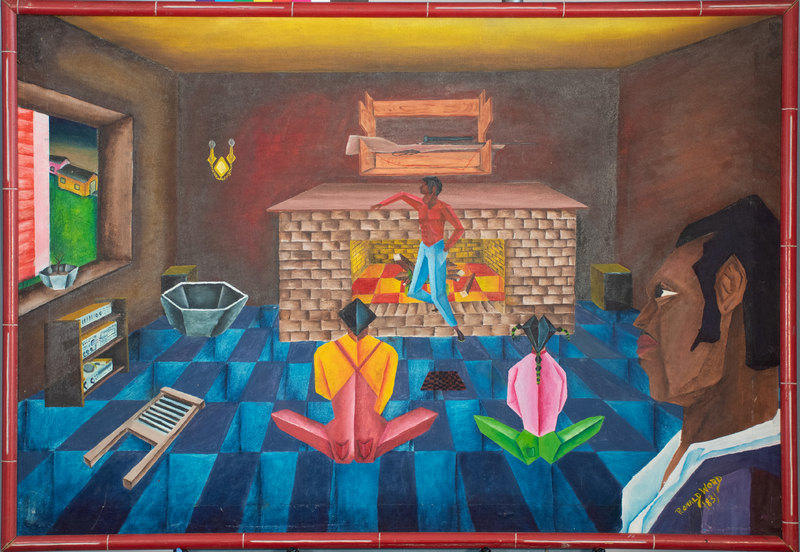
Word’s painting is a partial pre-study of his Hannah Hall mural. The painting, featuring a family in a small room with a fireplace, washboard, mounted gun, and radio, is done in a geometric style frequently seen in the art of Biggers’ students from the late 1970s and early 1980s. Word’s full mural design includes adjacent panels depicting a church, an abstract figure with a bubble-like head, and an homage to the Wizard of Oz.
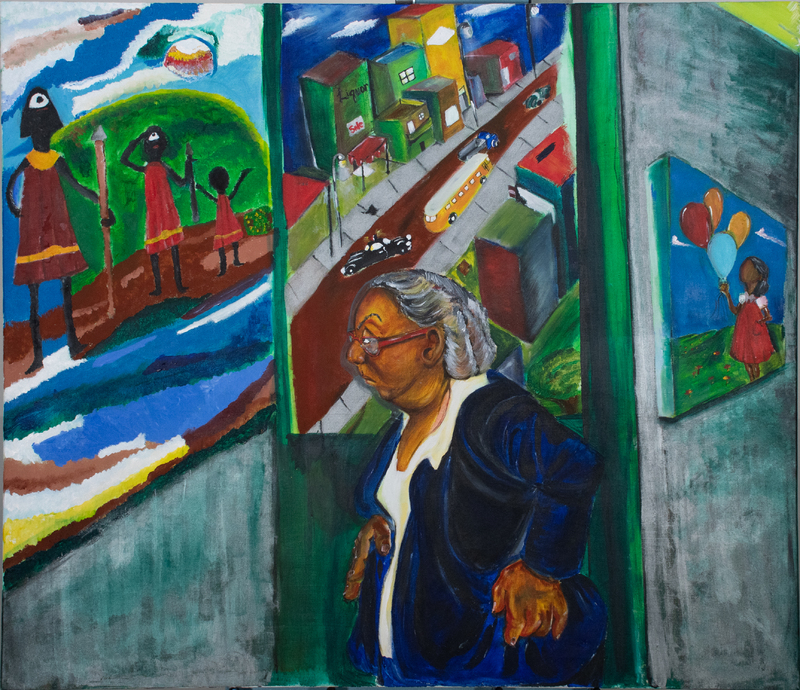
Caldwell’s painting reflects a comical scene from an art museum. An elderly woman walks past the artworks exhibited, glaring with a dubious expression on her face. Her posture and facial expression suggest disapproval and criticism. The leftmost piece pictured in Caldwell’s painting is “Landscape” by Marrion Cole, a textile piece from Texas Southern’s permanent collection. This is one example of how art students interact with TSU’s art legacy.
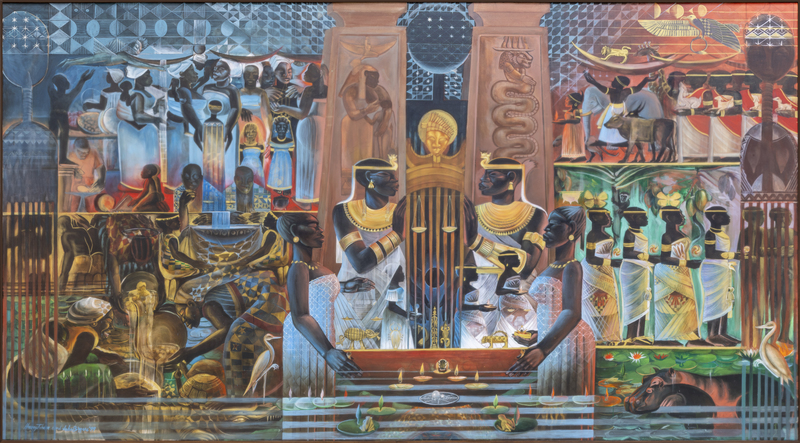
Biggers and Harvey Johnson, a former TSU art professor and student of Dr. Biggers, painted this mural in the lobby of the Jesse H. Jones School of Business. It speaks to the history of commerce and the wealth of Africa. NUBIA is full of visual symbols drawn from African art, including ceremonial combs, gold weights, and several meaningful animals, like the hippo, buzzard, sacred ibis, double crocodile, spider, tortoise, and more.
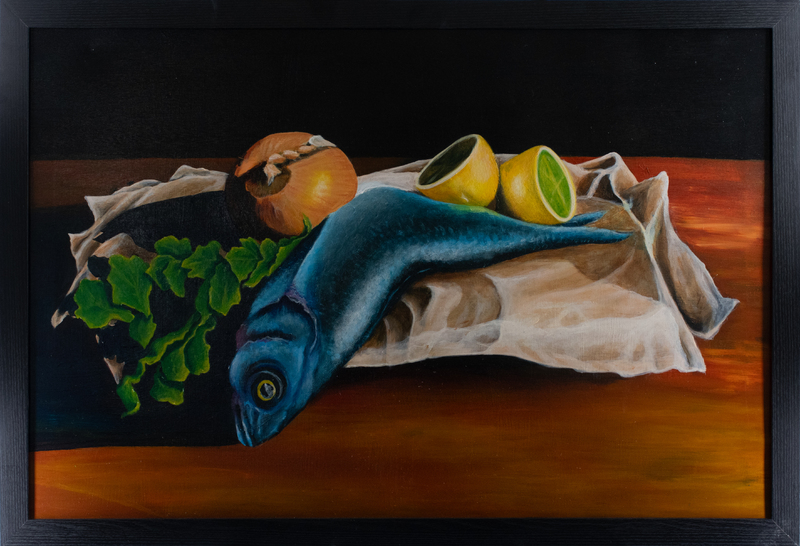
Hinojos' painting, "Pescador de Hombres," draws on Christian themes. The painting references the story of Jesus' miraculous feeding of the multiple with bread and fish, but also a symbolic representation of Christ as the "Bread of Life," a source of spiritual sustenance. Hinojos is a graduate of Texas Southern, accomplished airbrush artist, and founder of the Houston Art Center, an organization that aims to support artists in the Hobby area of Houston.