Dr. Roy Nichols emphasizes the importance of goodness, truth, and beauty as guiding principles, urging the congregation to seek these qualities in their lives and actions reflecting on the New Year.
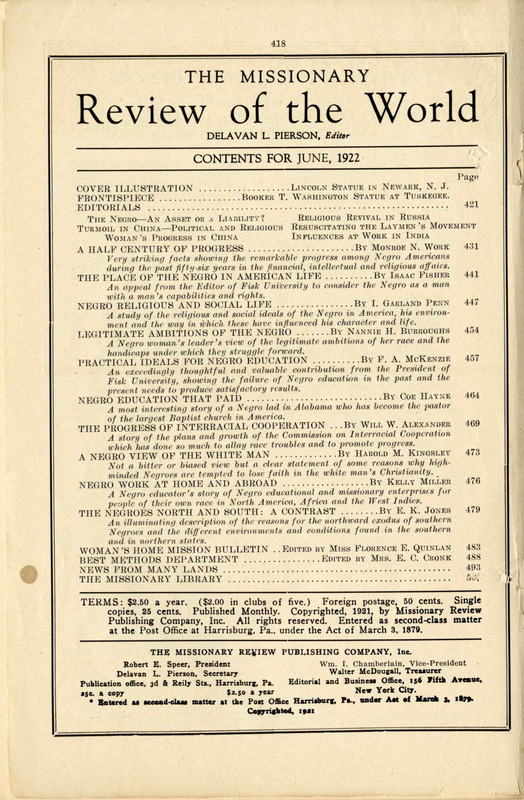
94-page document containing more than 10 articles by a variety of contributors, including a 12-page article by Monroe N. Work titled "A Half Century of Progress: A Contrast, The Negro in America in 1866 and in 1922."
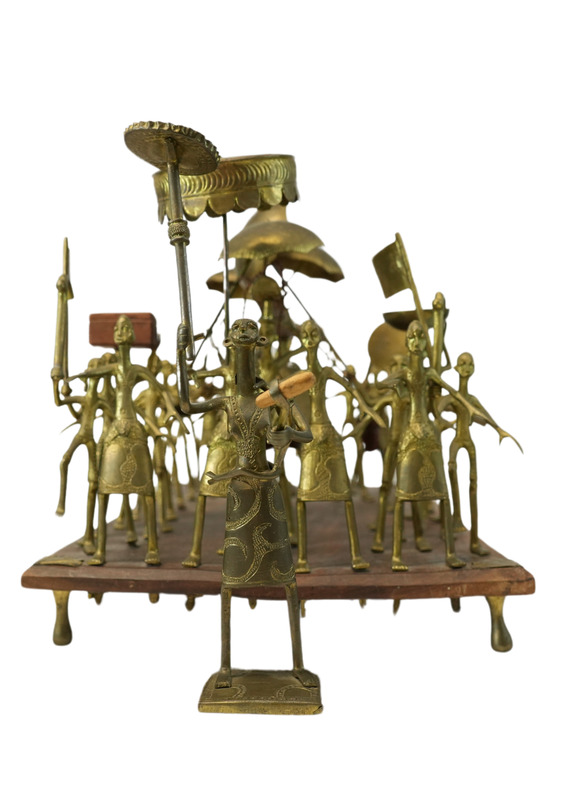
The Kings Procession brass sculpture vividly depicts a ceremonial parade, celebrating the rich traditions and cultural heritage of African royalty. Crafted with intricate detail, it showcases figures adorned in regal attire, emphasizing community and leadership.
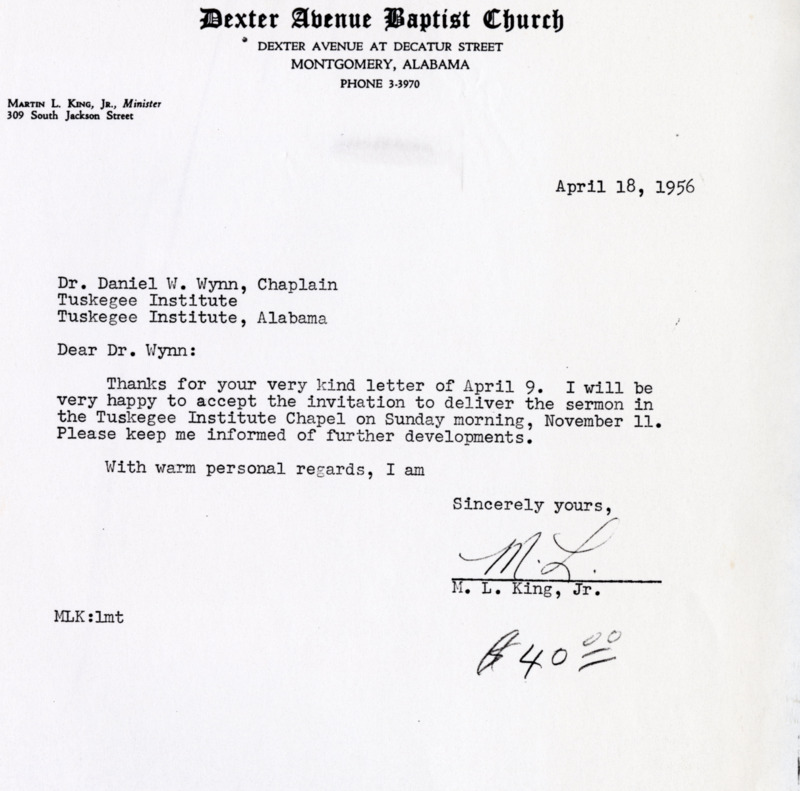
A reply letter from Dr. Martin Luther King Jr. to Chaplain Wynn’s 04/06/1956 letter, informing Chaplain Wynn that he would be happy to speak at the Tuskegee Chapel on 11/11/1956.
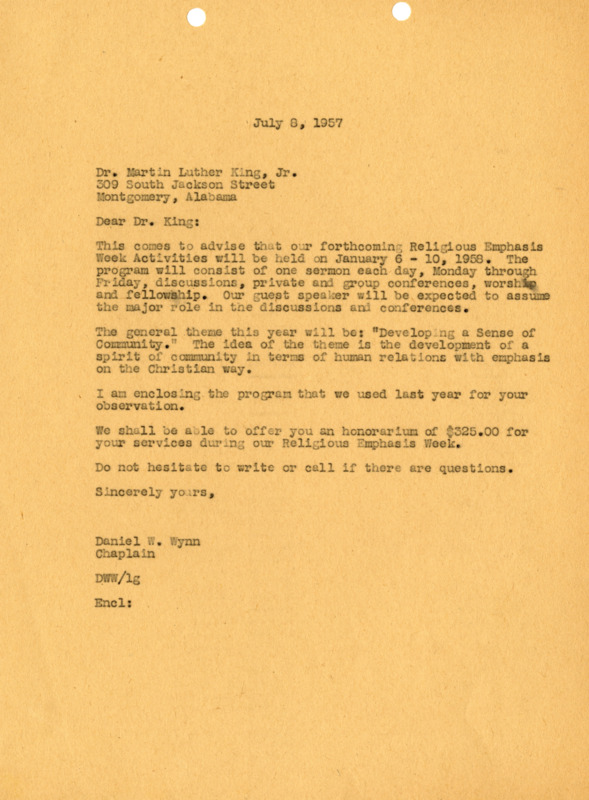
A letter from Chaplain Wynn to Dr. Martin Luther King Jr. advising him on the activities set to take place during the Religious Emphasis Week Activities for Jan 6-10 1958.
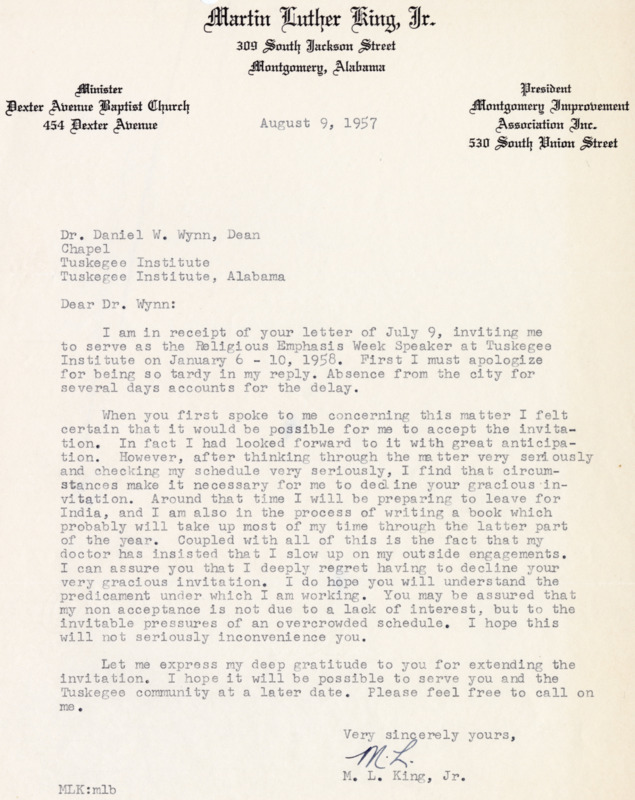
A letter from Dr. Martin Luther King Jr. to Chaplain Wynn stating that he would not be able to attend Religious Emphasis Week from Jan 6-10, 1958 due to an overseas trip to India and completing his book.
12-page document reprinted from Missionary Review of the World. Contains an informational table on the economic, educational, and religious progress of African Americans from 1866 and 1922. Also includes photos and an informational map depicting Black population and education.
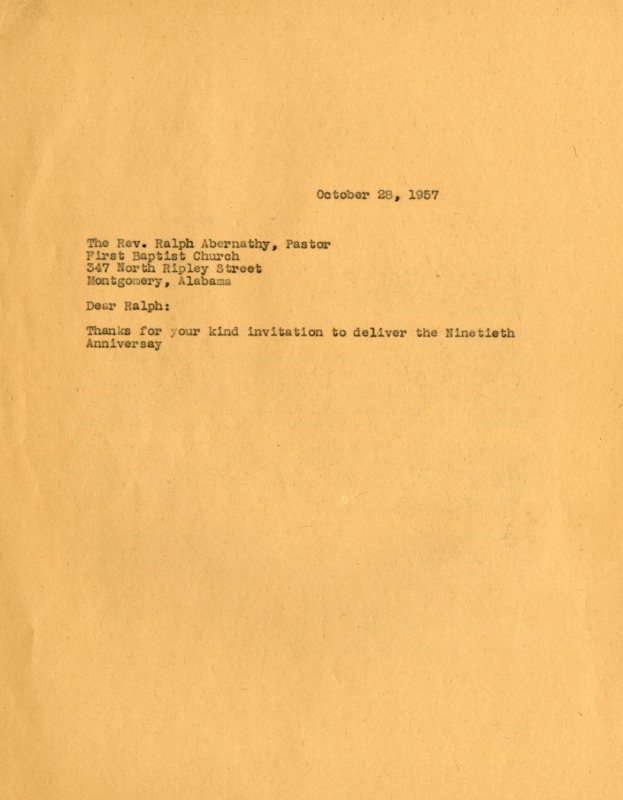
A thank you letter from Chaplain Wynn to Rev. Ralph Abernathy expressing gratitude for the invitation to be guest speaker for First Baptist Church celebration.
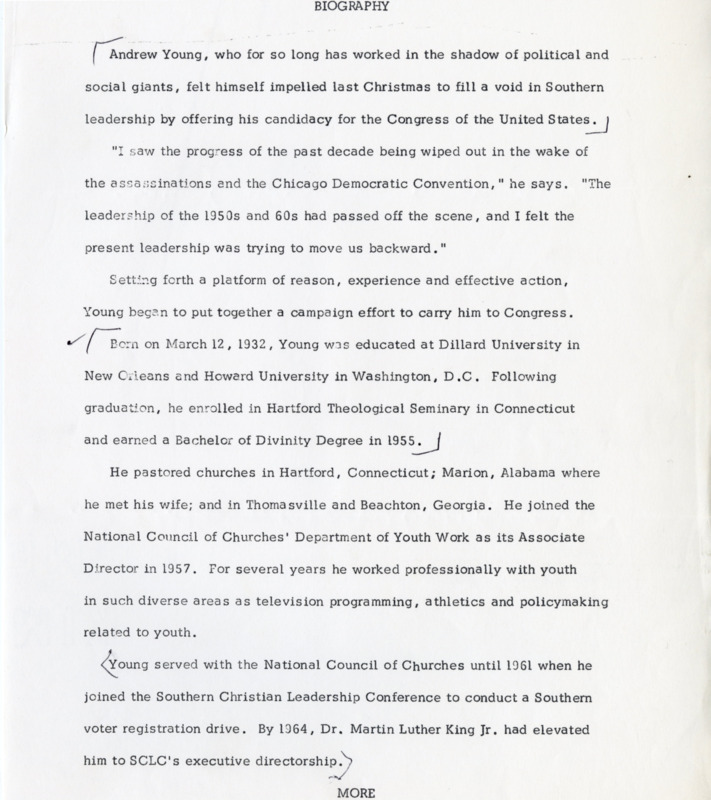
A biography of congressional candidate Andrew Young. This document explains his education and experience and why he is qualified to run for political office.
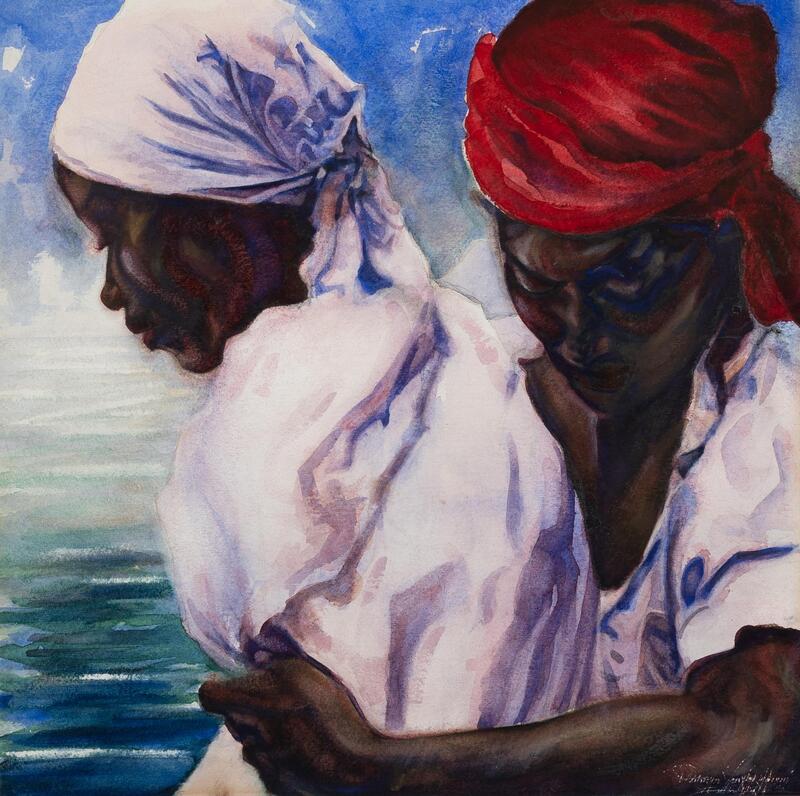
Romeyn van Vleck Lippman was a 19th-century painter and educator. "Baptismal (I Give This Child to Baptism)" depicts a religious scene of a woman preparing to baptize a girl. Both female subjects are dark-skinned and standing in water, dressed in white, under a dark blue sky. The woman is wearing a red kerchief, and the girl's is white.
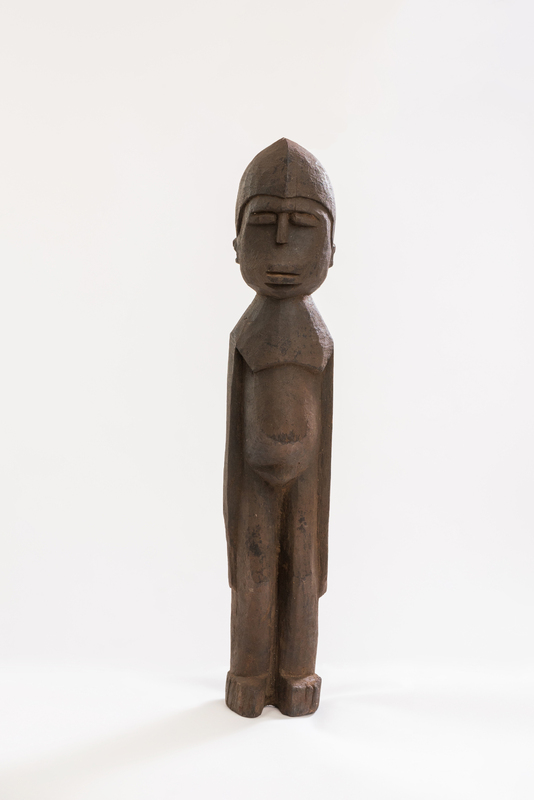
The Bateba, in Fante culture, is a guardian spirit that protects women and children from harmful field spirits. It symbolizes nurturing, protection, and resilience. At FAMU, the Bateba represents a cultural link to African heritage, emphasizing the protective role of spiritual figures in the lives of families and communities throughout history.
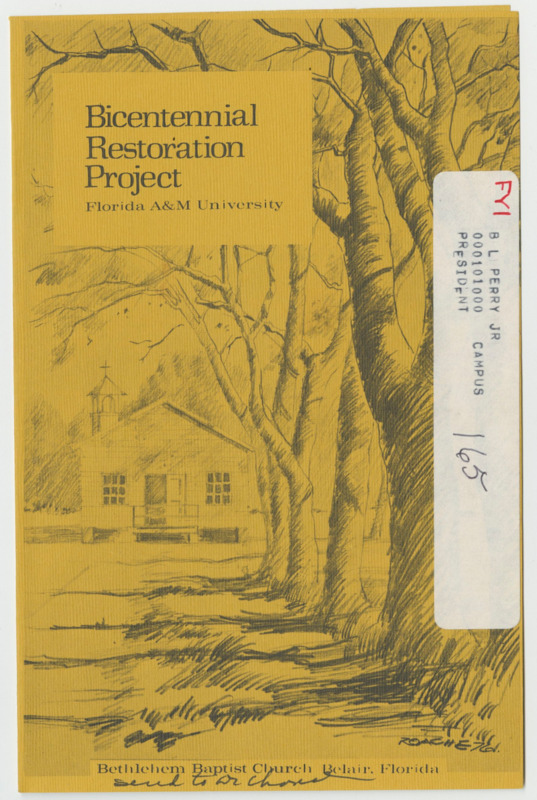
This collection includes a pamphlet explaining the Bicentennial Restoration Project, an initiative undertaken by FAMU’s Black Church Restoration Committee to mend the Bethlehem Church, and a check. The last page of the pamphlet was photocopied and attached to a $10 donation check to the FAMU Foundation made by B. L. Perry, Jr. on November 2, 1976.
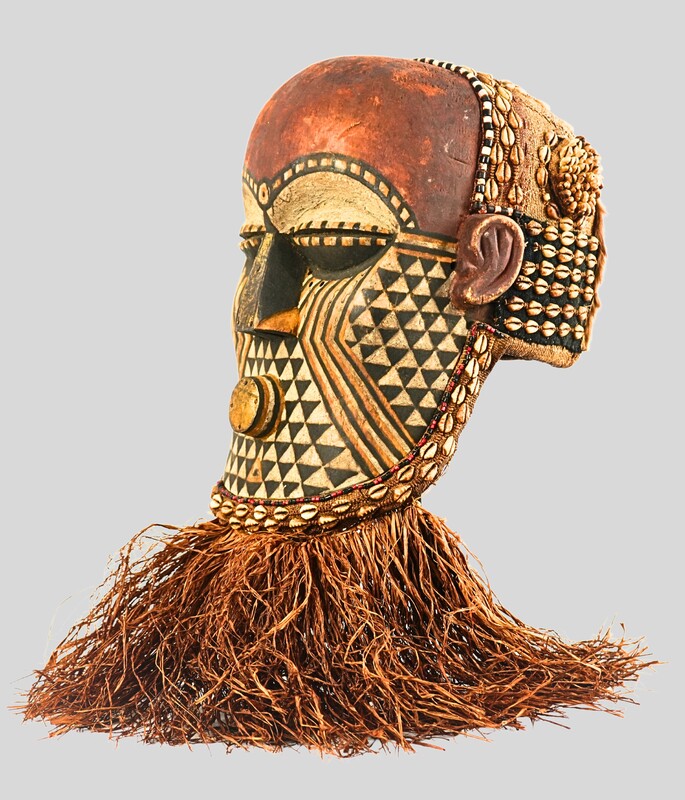
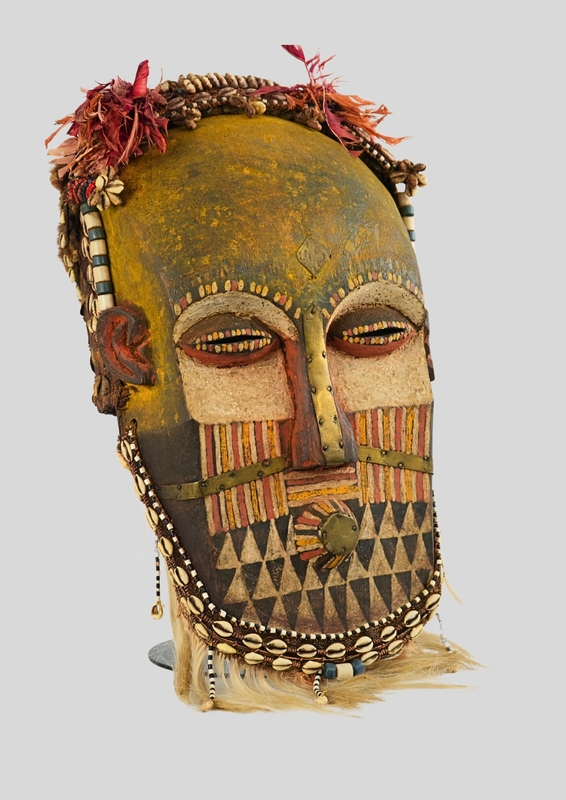
This Bongo mask, intricately carved and vibrantly painted, reflects just how important art was to the Bongo peoples' heritage. A Central African piece known for its expressive features and elaborate designs, it serves a ceremonial purpose and is often used in rituals to connect with ancestral spirits.
This Bongo mask, intricately carved and vibrantly painted, represents the artistic traditions of the Bongo people of Central Africa. Known for its expressive features and elaborate designs, it serves a ceremonial purpose, often used in rituals to connect with ancestral spirits.
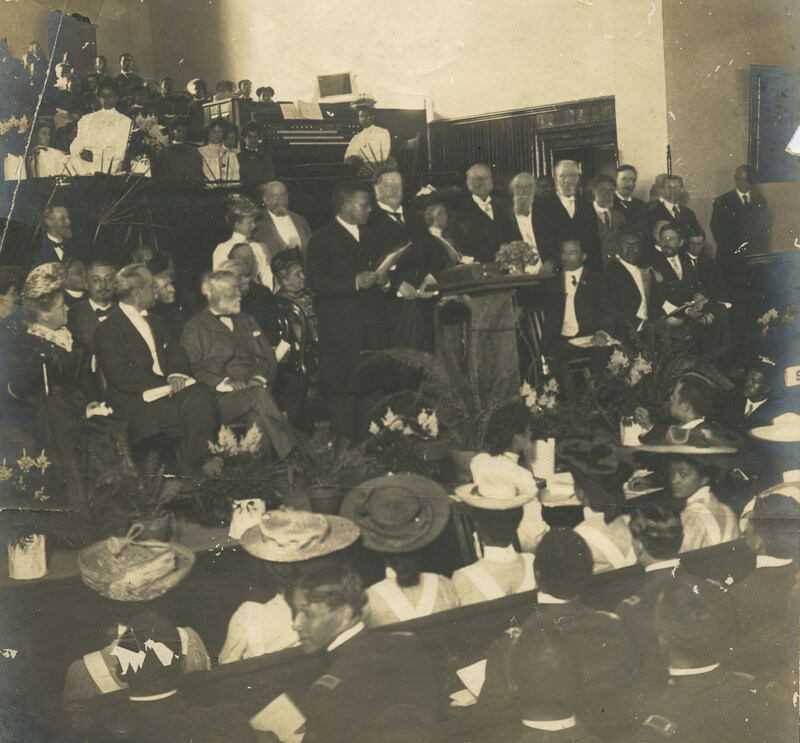
Black and white image of Booker T. Washington giving a speech in the old chapel building. Some notable figures are Andrew Carnegie and William H. Taft.
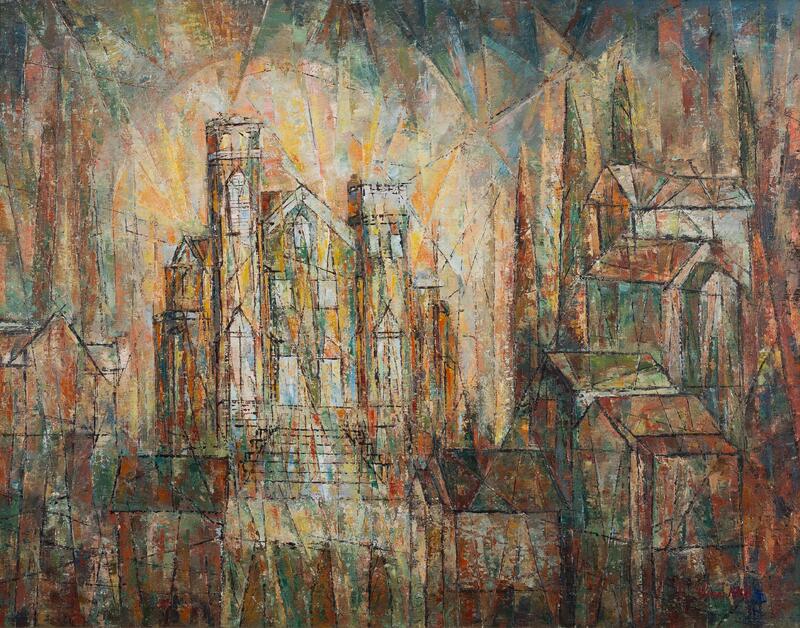
Leonard Jones was an artist from Winston-Salem, N.C. "Cathedral" is a cubist depiction of a cathedral and the town surrounding it. Jones uses a variety of light and dark colors that resemble the aesthetic of stained glass.
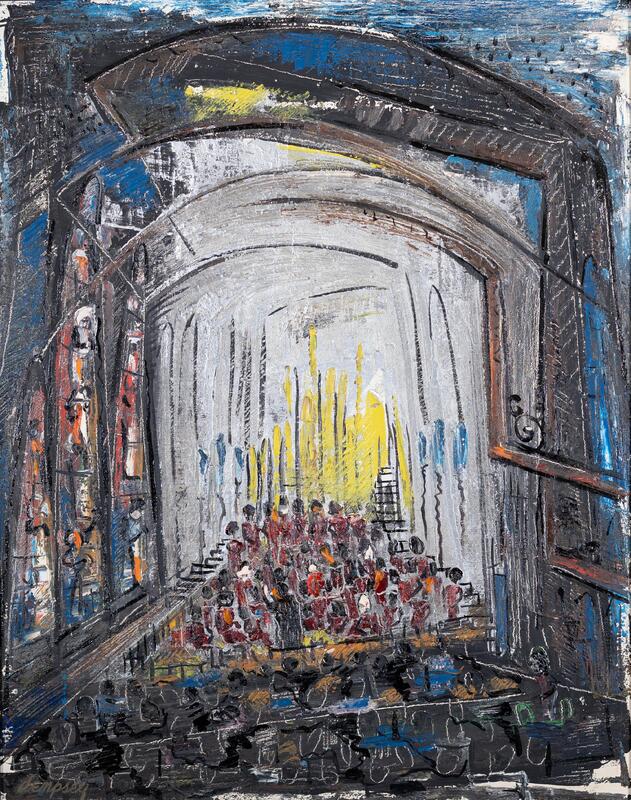
Richard Dempsey was a painter known for his abstractions and portraits of prominent African American leaders from Washington, D.C. "Cathedral and Choir" is an impressionist depiction of the inside of a church. The yellow brushstrokes create a tall organ alongside stained glass; the layered reds, blues, and black show the congregation and choir.
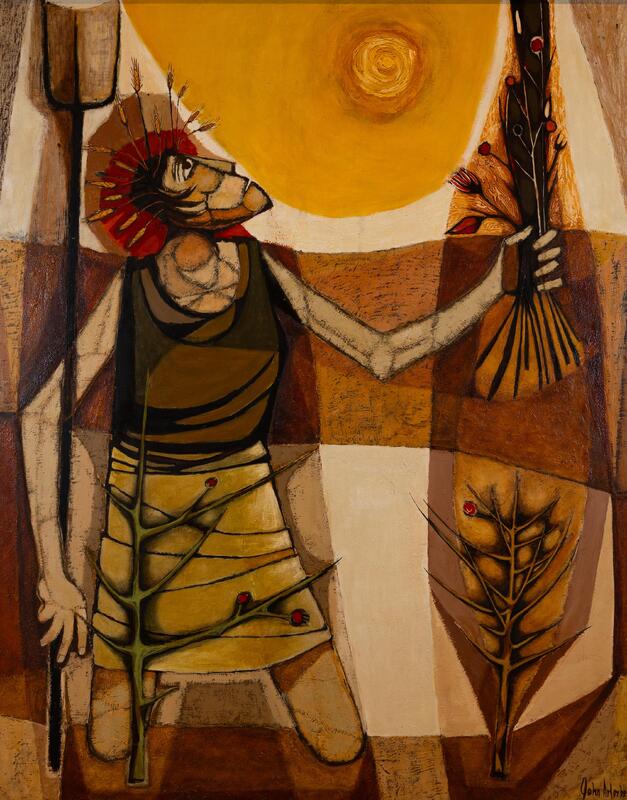
John Arterberry was an artist who worked in the art department at Langston University from Tallahassee, FL. "Ceres" depicts the Roman goddess of agriculture, grain crops, and fertility, looking toward the sun. Ceres wears a crown of wheat stalks and holds a pitchfork in one hand and a bouquet of poppies in the other.
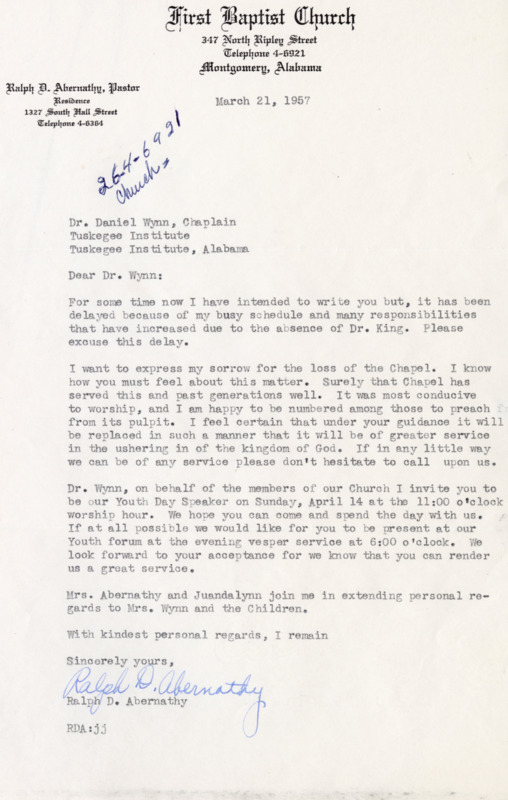
A letter from Rev. Ralph Abernathy to Chaplain Wynn expressing sorrow for the loss of the chapel and offering to be the Youth Day Speaker on 04/11/1957.
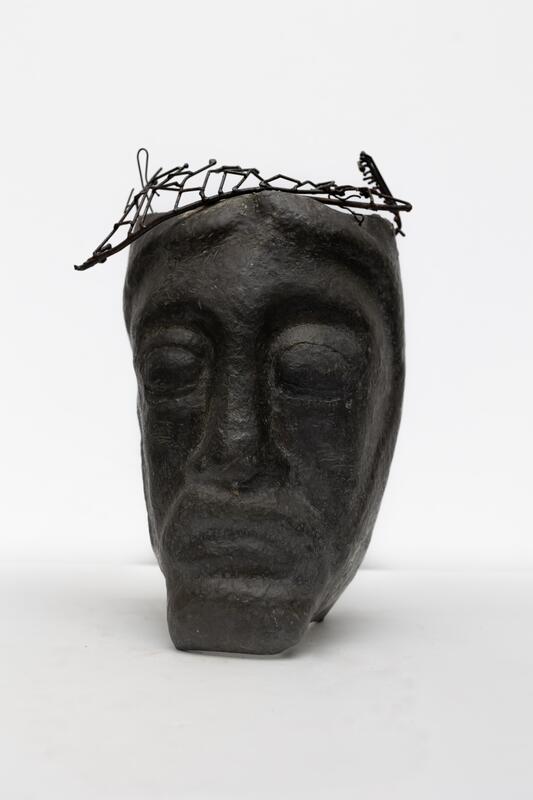
Dr. Eddie Jordan, Sr., was a Southern artist from Wichita Falls, TX. "Christ Crowned with Thorns" is a metal bust of Jesus with African features. The bust has a metal thorned crown installed atop it to depict Jesus' leading to his crucifixion.
A photograph of Christ Temple Church on Lamar Street in the Farish Street Historic District. The denomination, which has over 160 member churches in the U.S., was founded ca. 1896 in Jackson by the Rev. Charles Price Jones. A historical marker was erected in front of the church in 1992 by Mississippi Department of Archives and History.
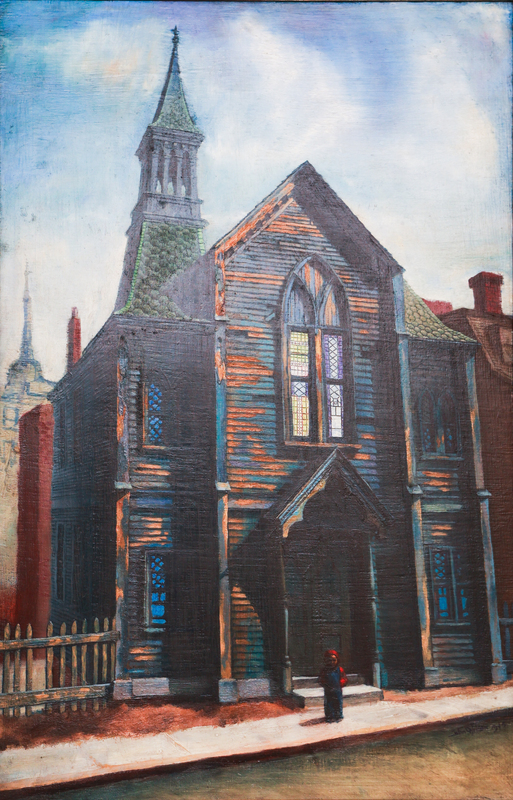
John Woodrow Wilson, a sculptor, painter, and printmaker from Roxbury, MA, was known for his creative portraits and stylistic approach to social justice. "Church" is a cityscape that centers an old steepled church under a cloudy, blue sky. There is a child dressed in red and overalls standing in front of the church's entrance.
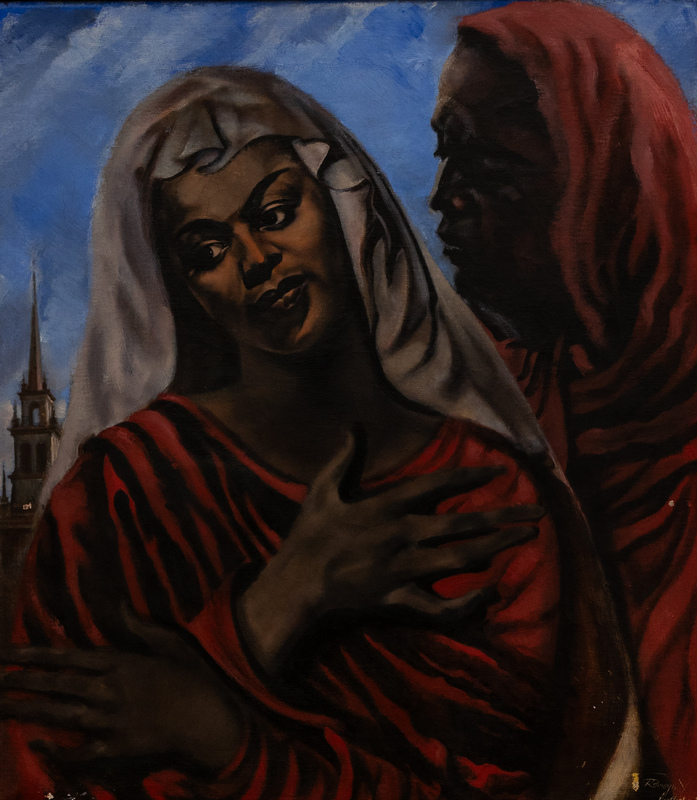
Romeyn van Vleck Lippman was a 19th-century painter and educator. "Church" is a portrait of a man and woman with a cathedral in the distance. The woman embraces herself and glances away from the man as he leans toward her. They both wear red cloaks, and the woman wears a white headdress.
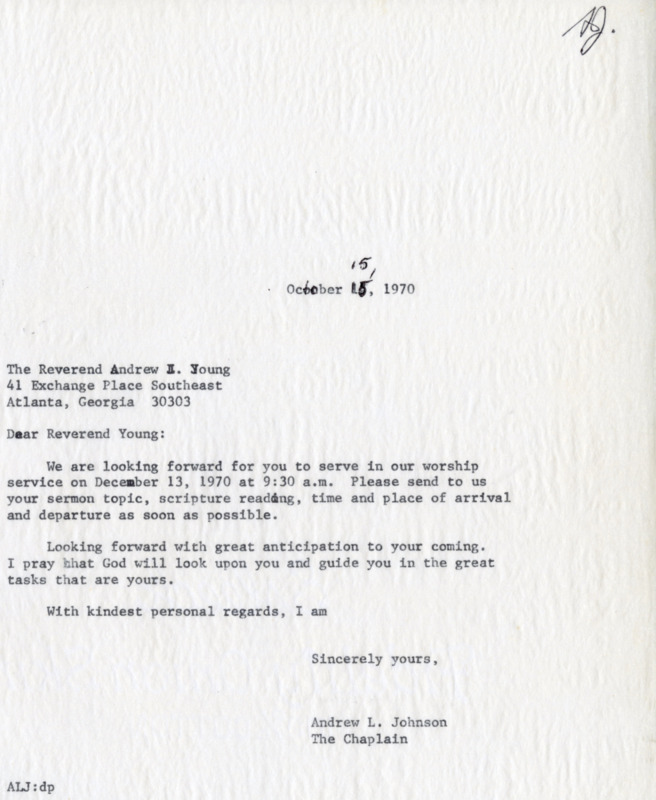
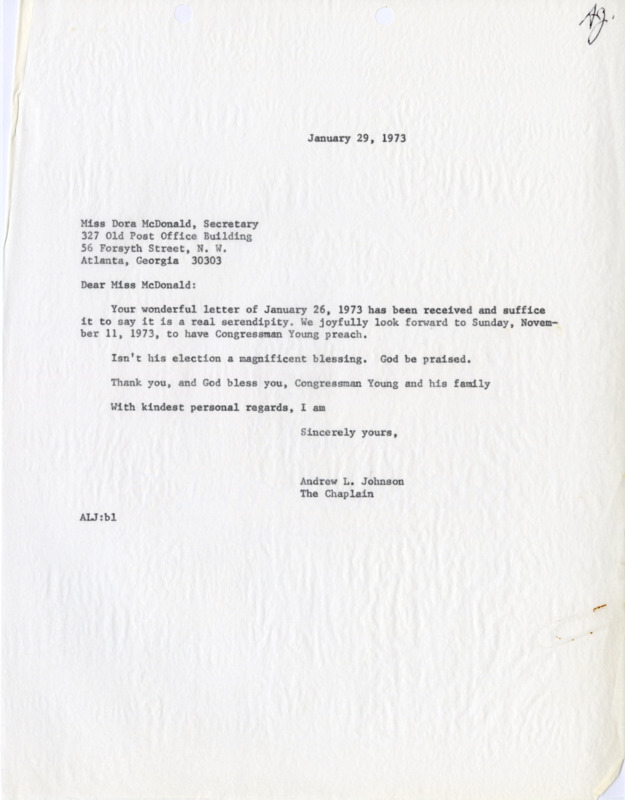
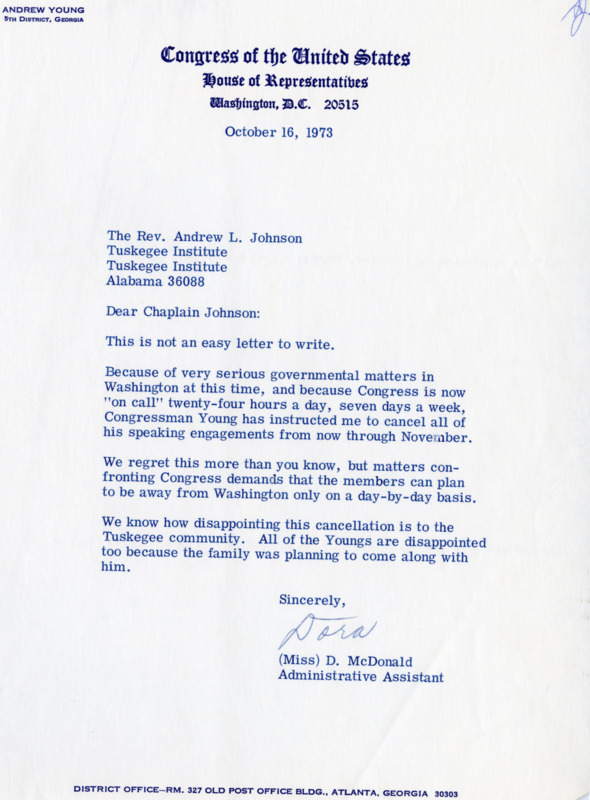
A letter from Miss Dora McDonald to Chaplain Johnson expressing regret that Congressman Young and his family will not be able to come to Tuskegee due to serious government matters.
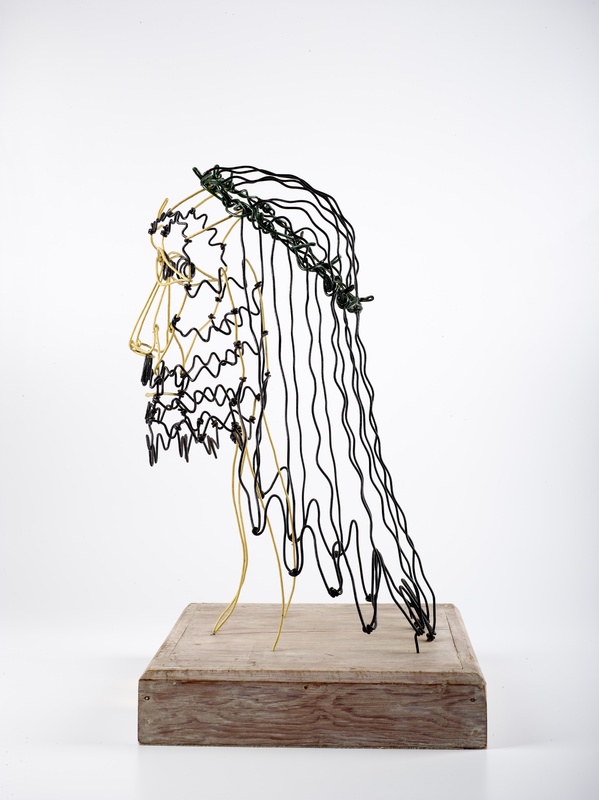
Hayward Oubre was a multimedia artist and educator from New Orleans, LA. During his time competing at the annuals, Oubre developed his artistic practice to include wire to set himself apart from his competition. "Crown of Thorns" is a metal wire framework depiction of Jesus that represents Oubre's skill in wire sculpture.
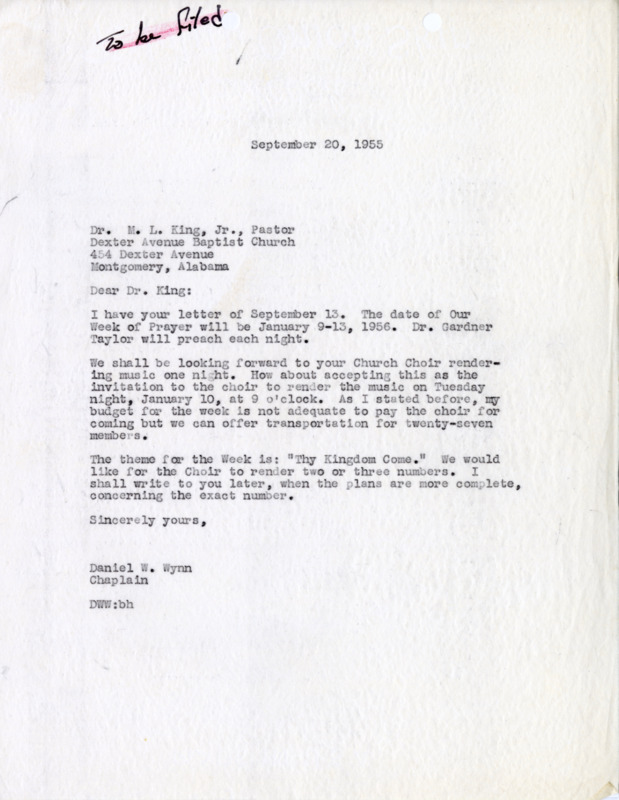
A letter from Chaplain Wynn to Dr. Martin Luther King Jr. on onion skin paper informing about the Week of Prayer taking place at Tuskegee Institute and requesting that the choir of the Dexter Avenue Baptist Church choir can sing two or three songs.