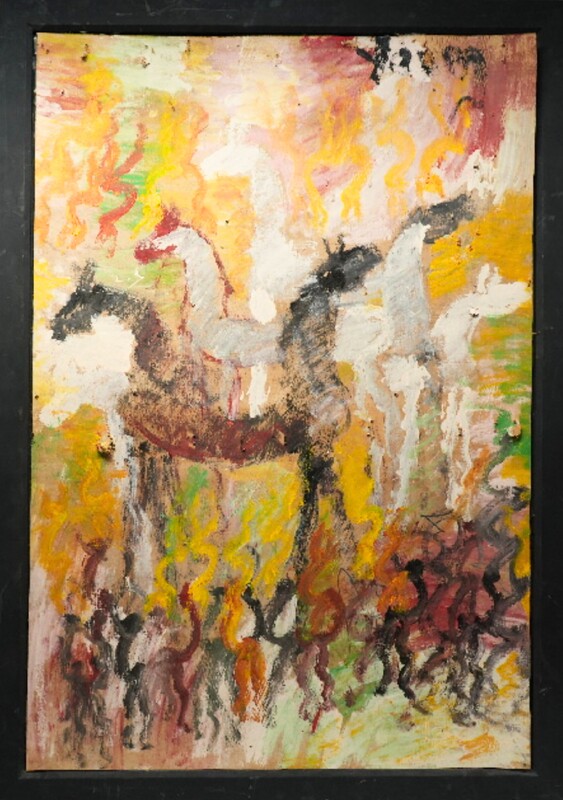
Signature fusion of urban expressionism and folk art. The horses, are a recurring symbol in his work, represent freedom, movement, and resistance. Created with bold, layered brushstrokes on reclaimed wood, the piece embodies themes of liberation and struggle, often inspired by the energy and challenges of inner-city life.
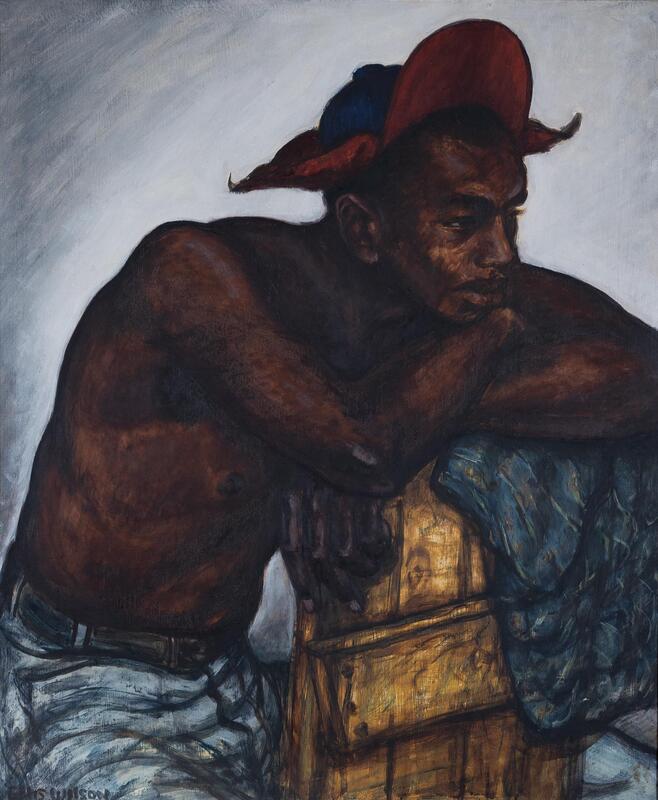
Ellis Wilson was an artist from Mayfield, KY. "Allen" is a portrait depicting a shirtless, seated Black man wearing an aviator hat. The subject is leaning against the backrest of a wooden chair with his arms crossed, looking away from the viewer.
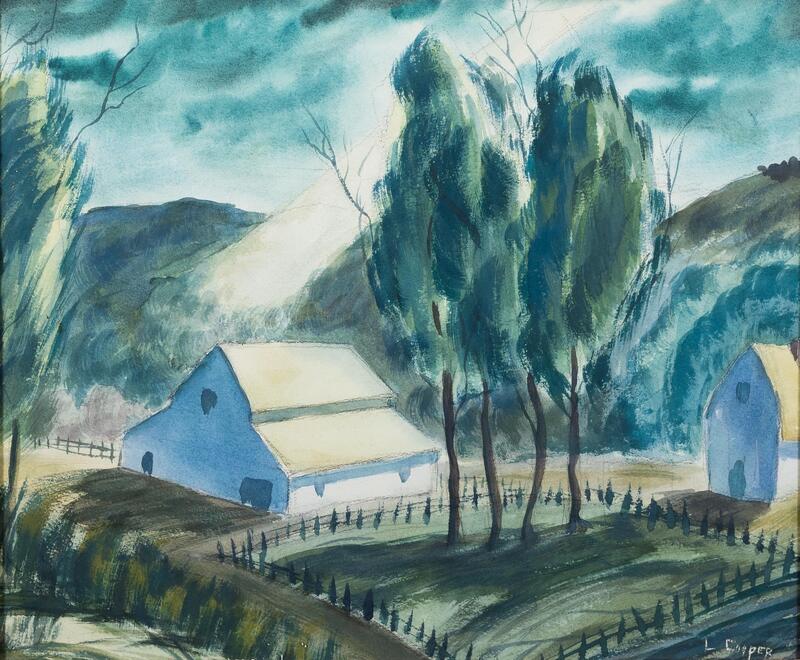
Leonard Cooper was a painter, musician, and piano teacher from Salinas, CA. "Before the Rains Came" illustrates a rural landscape prior to a rainstorm. It depicts two barns, a thicket of trees, a fenced area, and rolling hills under a dark cloudy sky.
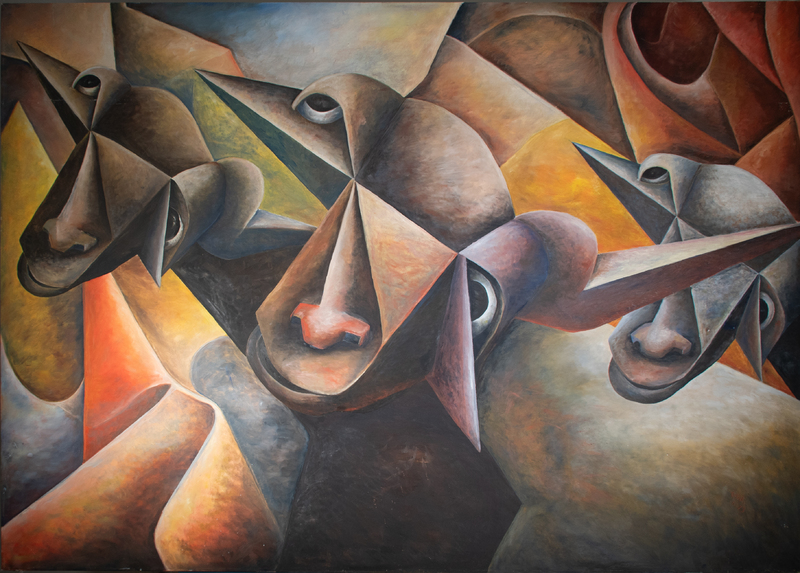
This abstract work features three distorted cows’ faces that seem to be staring upwards and at the viewer, against a colorful triangular background. Vital was an art student at Texas Southern and later went on to become a faculty member in the art department. Many works in the school’s collection, particularly from the 1970s, use cubist styles.
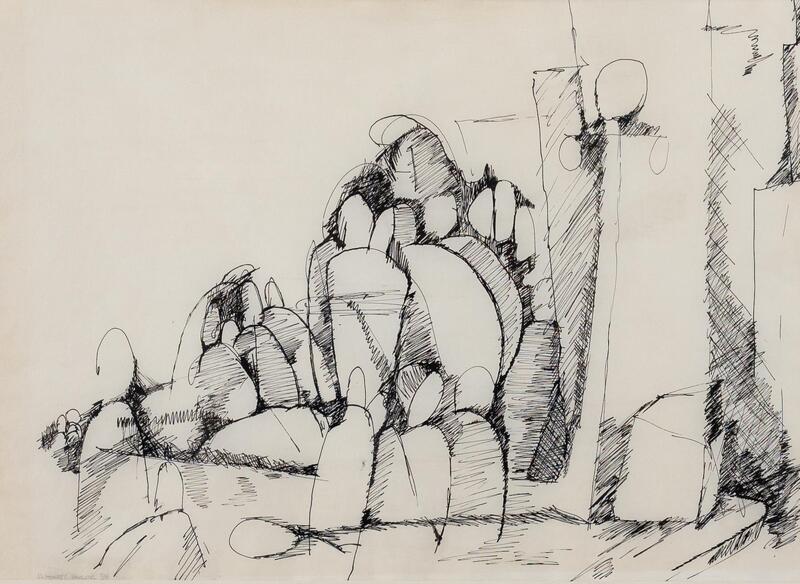
Hubert C. Taylor was an architect and artist from Kilmarnock, VA. "Bus Stop" is a non-finito depiction of a bus stop. The piece displays a sign pole with indistinct shapes and shadows surrounding it.
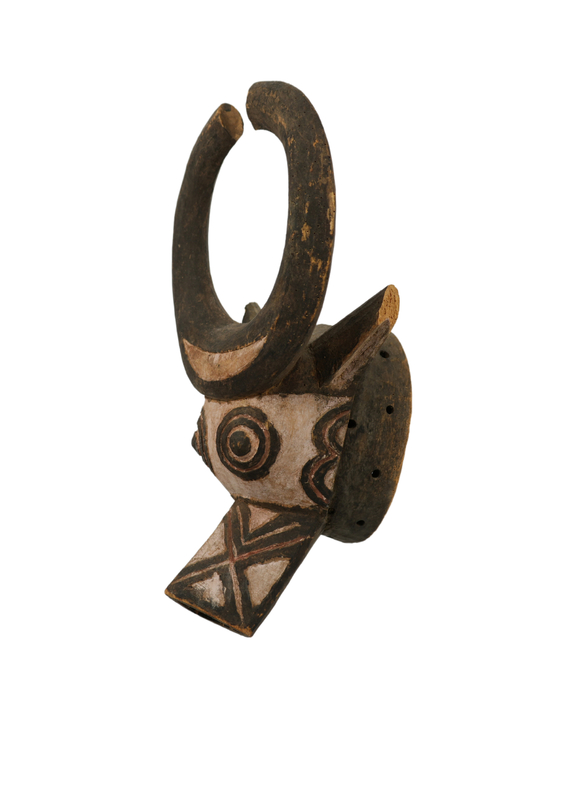
This rare mask could belong to the Gurunsi, Boba, or Bwa ethnic groups in Burkina Faso, one of the oldest agricultural groups in that region. They believed in strictly preserving the spirits, which brought balance to a world humans disturb. Each mask is unique, channeling these spirits for performances, celebrations, and harvest rituals.
Vivian M. Williams was an artist and art teacher from Coshocton, OH. "Discards" depicts scattered pieces of wooden furniture, including a rocking chair, in a room with white-brown brick walls. The broken pieces have been cast aside on a bed of bright yellow hay with strands of golden brown.
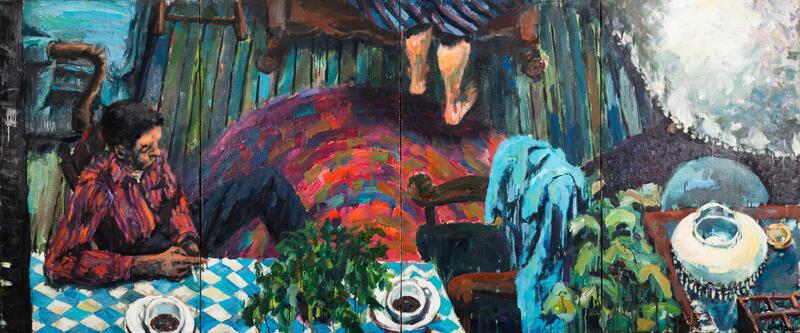
Henri Linton was an artist and art professor from Tuscaloosa, AL. "Easy for One, Hard for Two" is a polyptych depicting the domestic labor expected of wives. The husband sits at the table, fully visible, while the wife's feet and calves are visible as she prepares food for the family in the well-kept house she cares for.
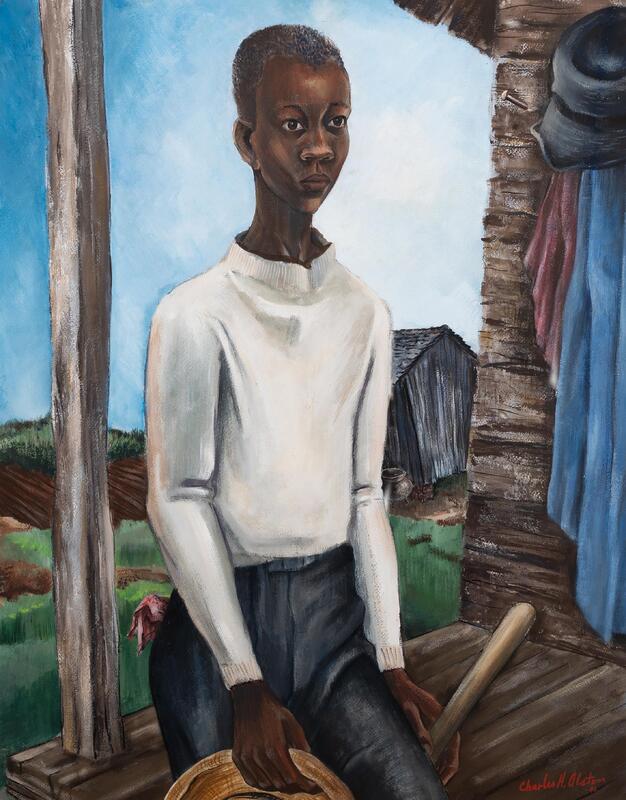
Charles Henry Alston was a Harlem Renaissance painter, sculptor, illustrator, muralist, and teacher. "Farm Boy" is a portrait of a young Black boy holding a hat and a tool on a farm. In the background is a rural landscape of fields and a barn. Alston photographed Black Southern life in North Carolina when he visited rural and farm sites with a Farm Security Administration inspector. His photos served as inspiration for his paintings that depicted Black southern life.
Edward L. Pryce was a landscape architect and artist from Lake Charles, LA. "Fisherman with Cormorant" is a medium-sized carving of a man fishing with a cormorant, a species of aquatic bird, on his head.
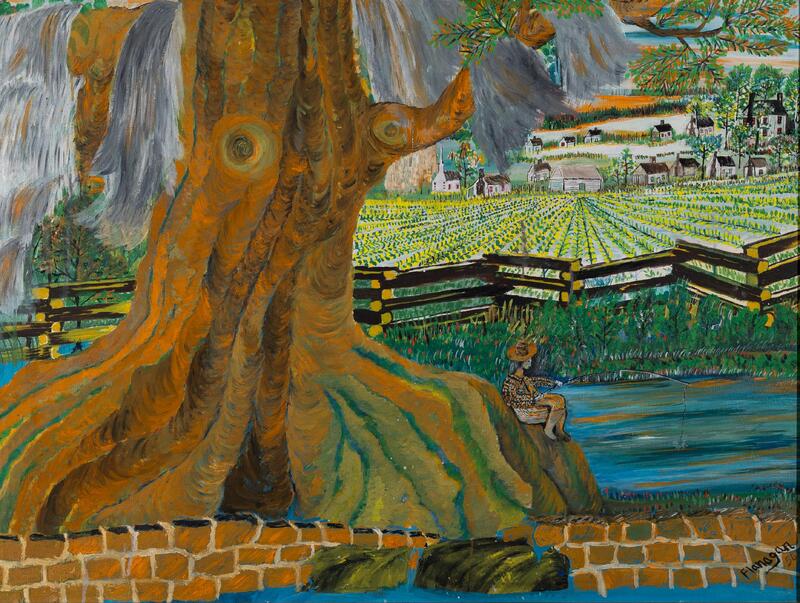
Thomas Jefferson Flanagan was an artist and activist from Florence, GA. "Fishing on the Quarters" is a landscape painting with a large tree and a person fishing from a body of water. The tree and fisherman are in the foreground, while a wooden gate borders an acreage of colorful crops painted linearly.
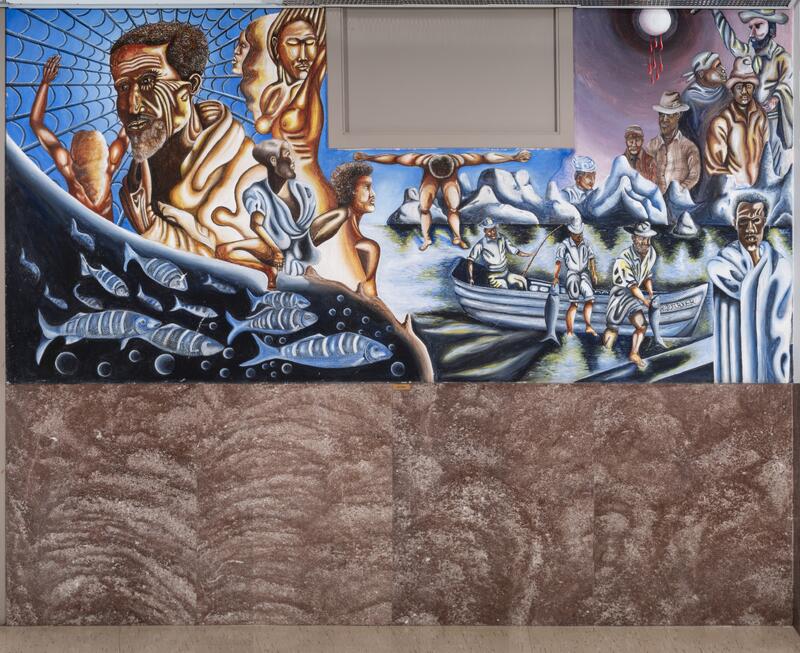
The mural shows fishing life along the water. In the middle and on the right, a man is doubled over from his burden, while a group of fishermen brings their catch to shore. On the left, an elderly man and other figures suggest the trials and challenges of the ancestors.
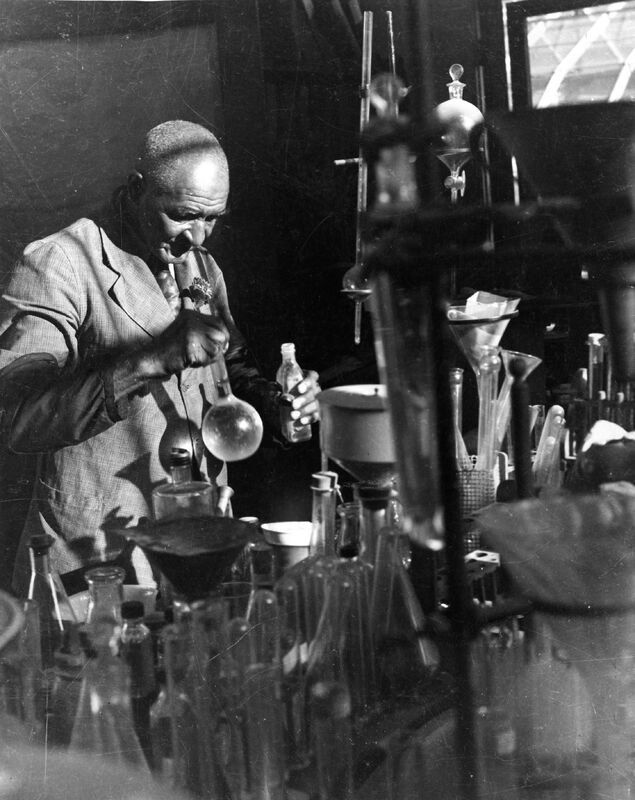
A black and white photo of an elderly George Washington Carver in his lab in the now George Washington Carver Museum. Dr. Carver has a bottle and a beaker in his hands. Carver's picture was tacken by the university's head of photography department and university photographer P.H. Polk.
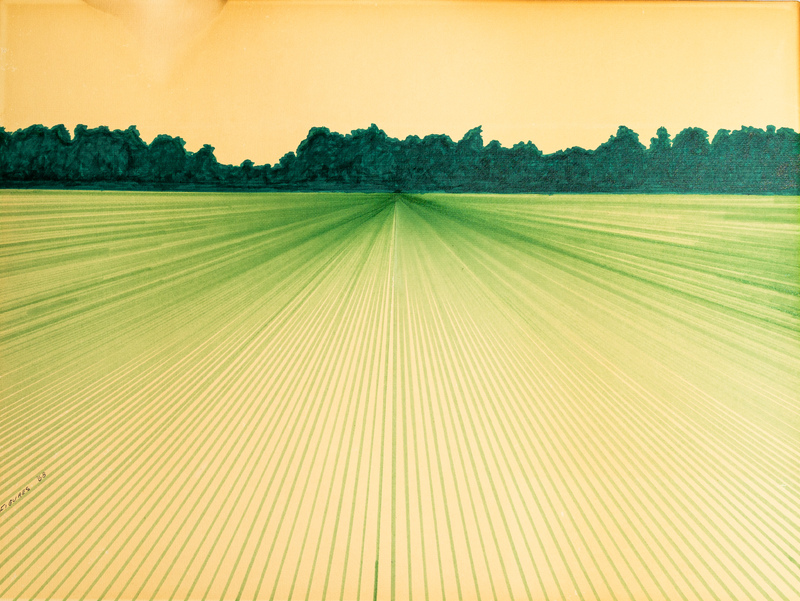
Alfred Figures was an artist from Mobile, AL. "Green Field" is a landscape painting that depicts a field of rolling grass and a distant tree line. Fine green lines form rows of organic matter, depicting an open field.
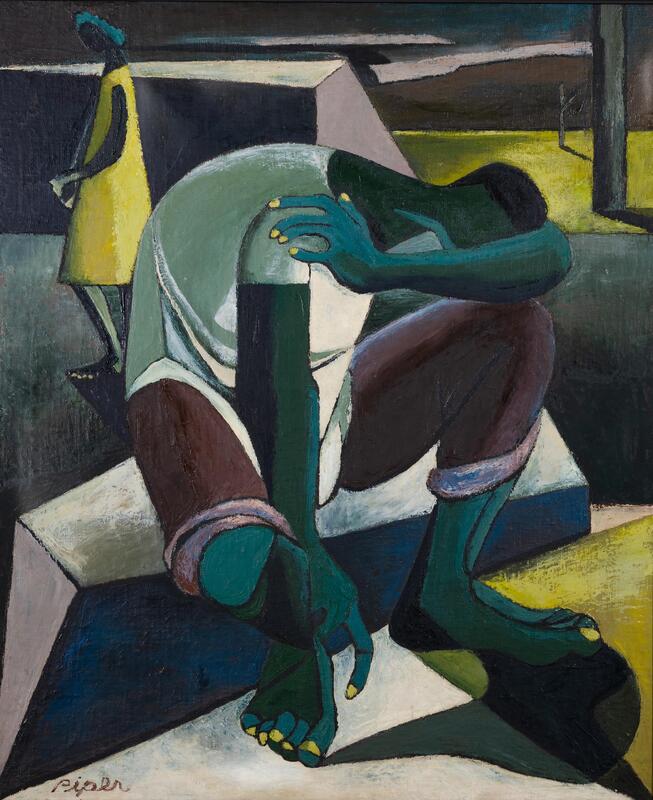
Rose Piper, an African-American artist, used her knowledge of art and geometry to explore the American South. "Grievin’ Hearted," a cubist painting, illustrates the sentiments of African Americans in the South. A man sadly hangs his head on his arm as he sits in the shadows. The girl in the yellow dress symbolizes hope for the future.
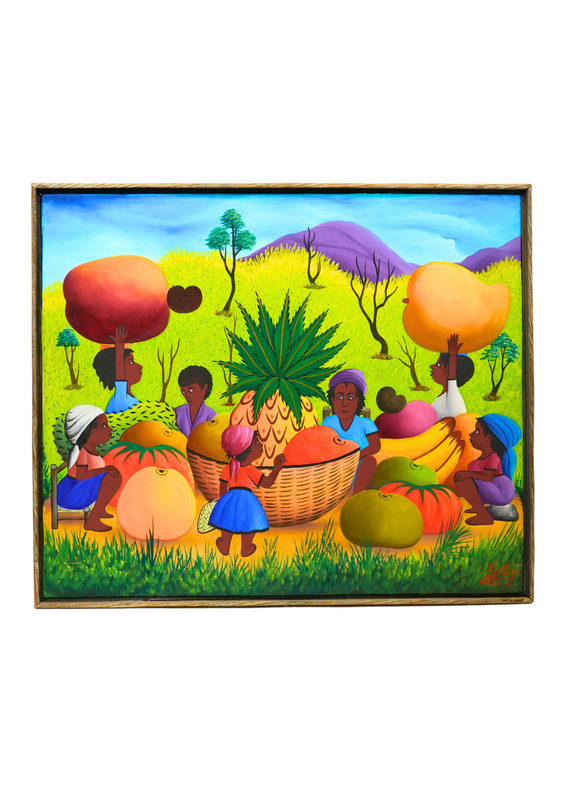
This painting from the Leo Psam Collection is a textbook example of the colorfully vibrant scenes artists create when depicting Caribbean art. The Haitian art showcases a busy market scene with people selling fruit and customers inquiring and purchasing them.
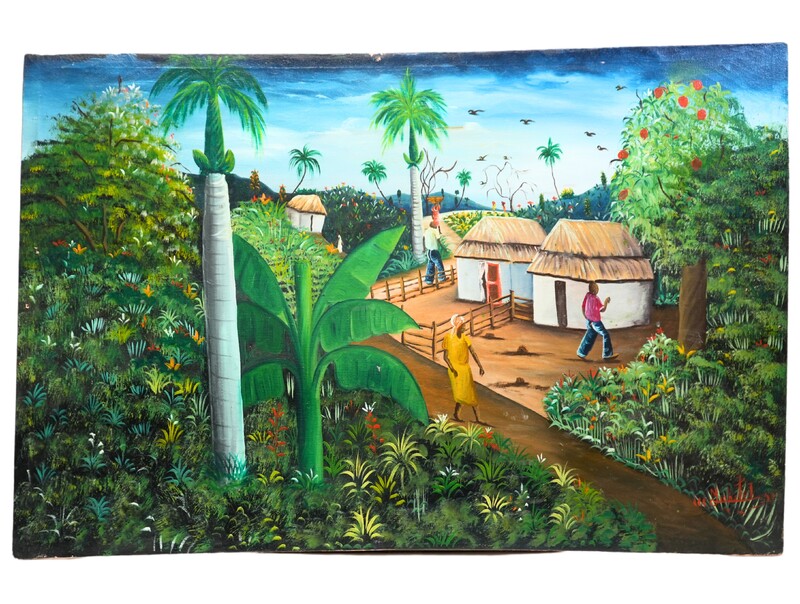
This painting from the FAMU Black Archives/Caribbean Art Collection has limited identification for precise attribution. The vibrantly-painted piece depicts a Haitian village scene and features an unclear inscription in red, cursive font on the lower right corner that could be the artist’s signature.
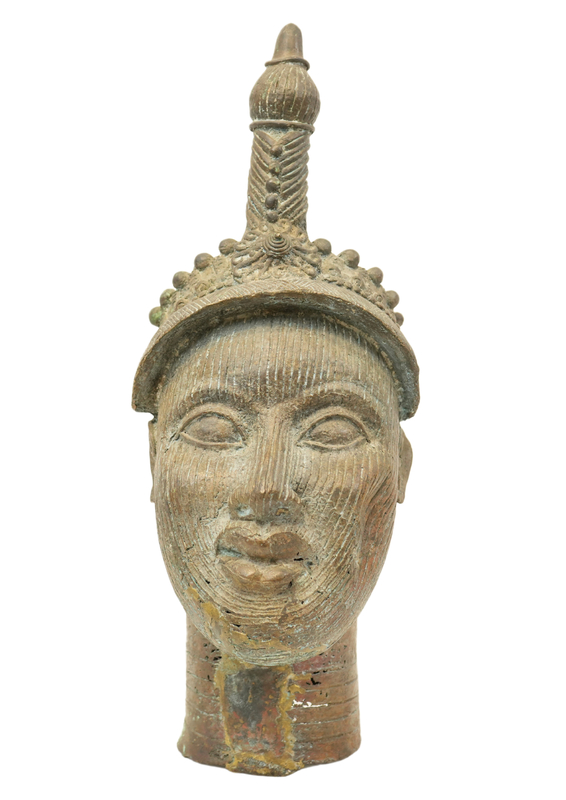
This rare sculpture unearthed in Nigeria belongs to the Yoruba people of that region. It is believed that a single individual or workshop created this copper alloy sculpture between the 12th and 15th centuries to represent a king or highly respected warrior figure.
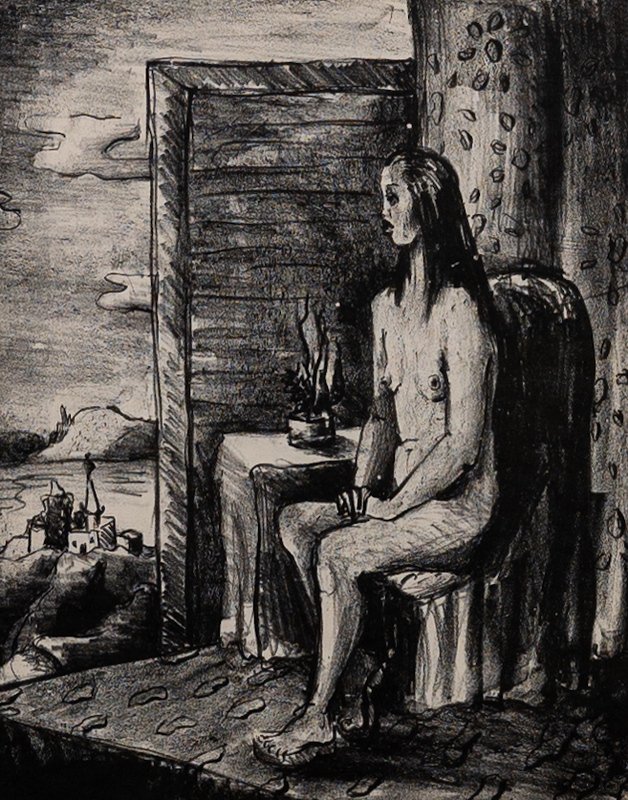
Jenelsie Walden Holloway was an artist and art educator from Atlanta, GA. In a World Alone is a sketch of a nude woman. The sketch depicts the nude woman in a reflective pose, sitting on a porch with a cityscape in the distance.
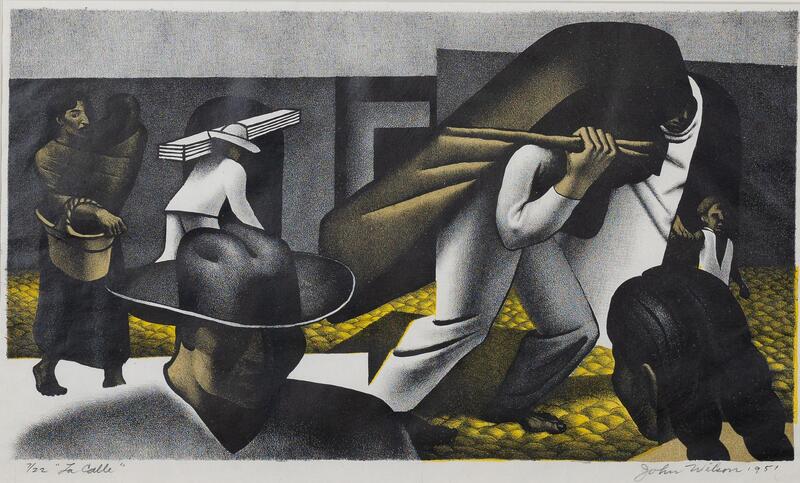
John Woodrow Wilson was a sculptor, painter, printmaker, and educator from Roxbury, MA. La Calle, or The Street, is a print depiction of people traveling a gold cobblestoned street. There are male workers carrying wood and rock slabs, women and their children walking, a woman watching the street, and a man facing the viewer.
Otis Galbreath was an artist from Jackson, MI. Let By-Gones be By-Gones shows a woman and a young boy sitting down in a room with wooden floors and plant barrels behind them. The woman sits in a rocking chair looking down to knit, while the boy sits across from her with a hand in his mouth. A green hat sits beside him.
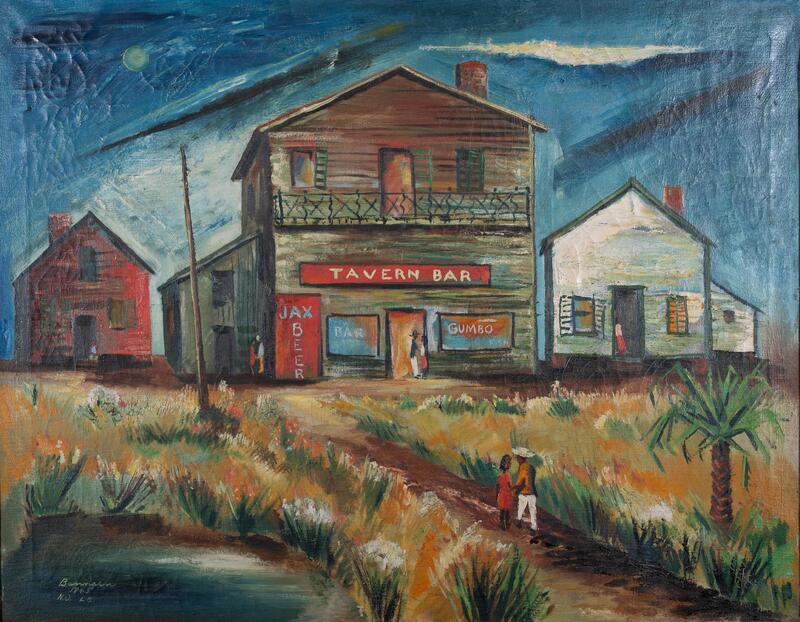
Henry Wilmer Bannarn was a Harlem Renaissance sculptor and artist who worked in pastel and free-form sketching. Louisiana Nocturne depicts the nightlife of a rural town in Louisiana. The piece shows three couples around a two-story building marked Tavern Bar. The bar is between two buildings, and a person is on both porches.
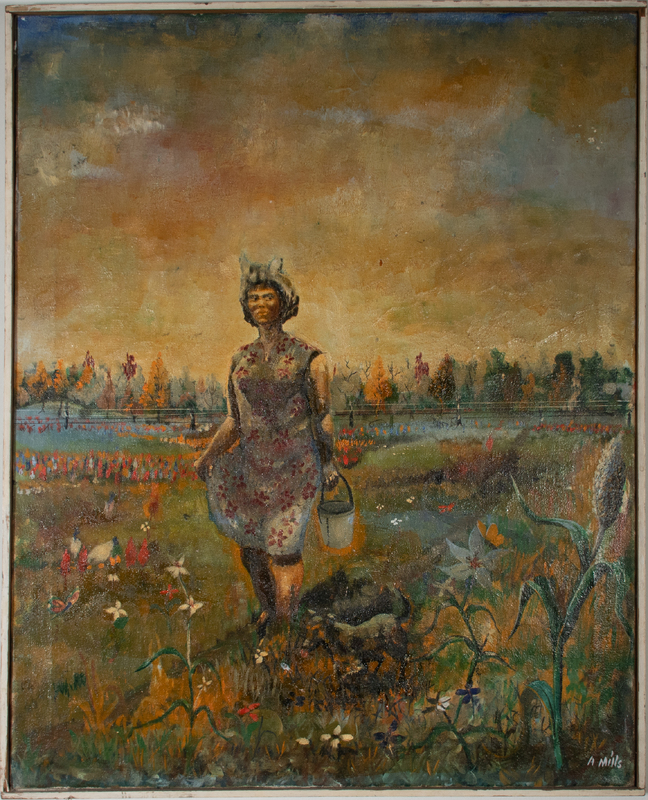
Armstead Mills' painting shows a woman holding a bucket and striding through a field of flowers, with a small dog at her ankles. Malindy, wearing a dress and carrying a bucket, is portrayed tenderly and beautifully in this colorful nature scene. Mills' brother, Edward, also attended Texas Southern as an art student.
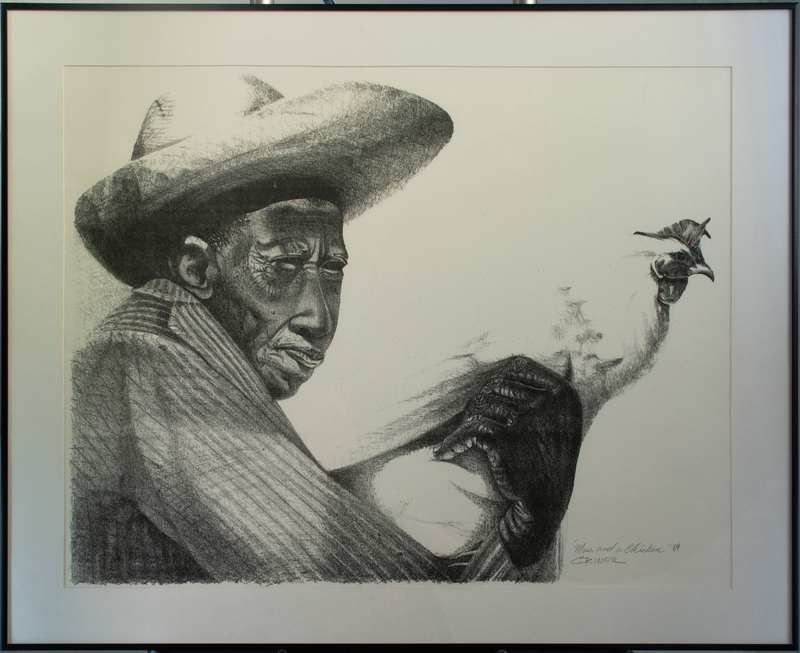
Criner’s print shows an older man wearing a hat and holding a chicken. This print is a black-and-white version of Criner’s piece “Mr. Alvin White, Man With Chicken.” Criner learned printmaking firsthand from Dr. John Biggers and was the longtime artist-in-residence at Houston’s Museum of Printing History.
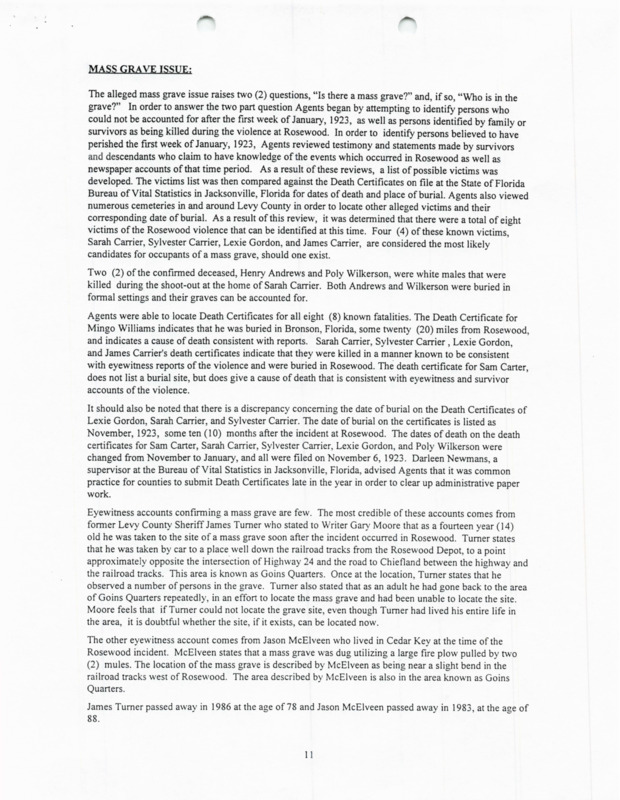
This document is an excerpt from a larger report. It focuses on the “alleged mass grave issue,” where investigators of the 1923 Rosewood Massacre tried to determine the location and names of unaccounted-for unidentified persons after the first week of the massacre, where burning, looting, and killing were at their peak.
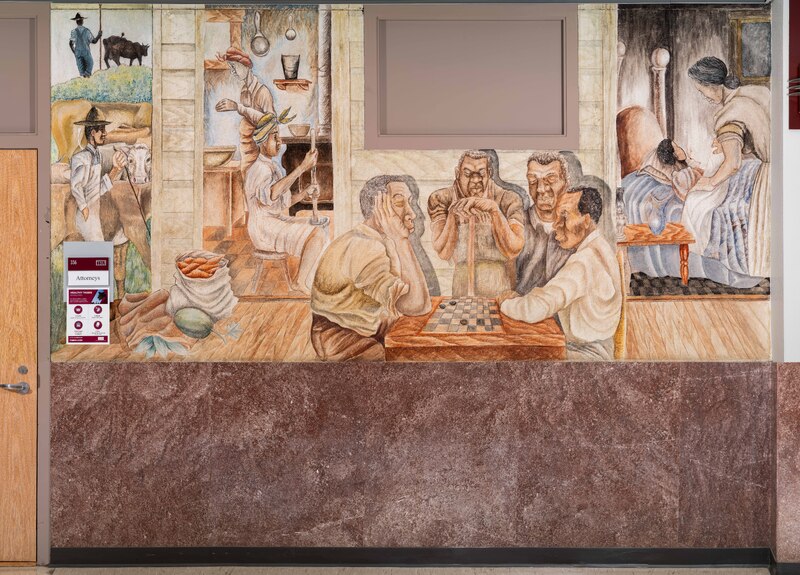
Ross’s mural represents Black rural life in the early to mid twentieth century. The composition highlights the gendered division of labor, and how women’s work focuses on maintaining the home. Ross grew up in Huntsville, Texas, and this scene may represent his background and experiences.
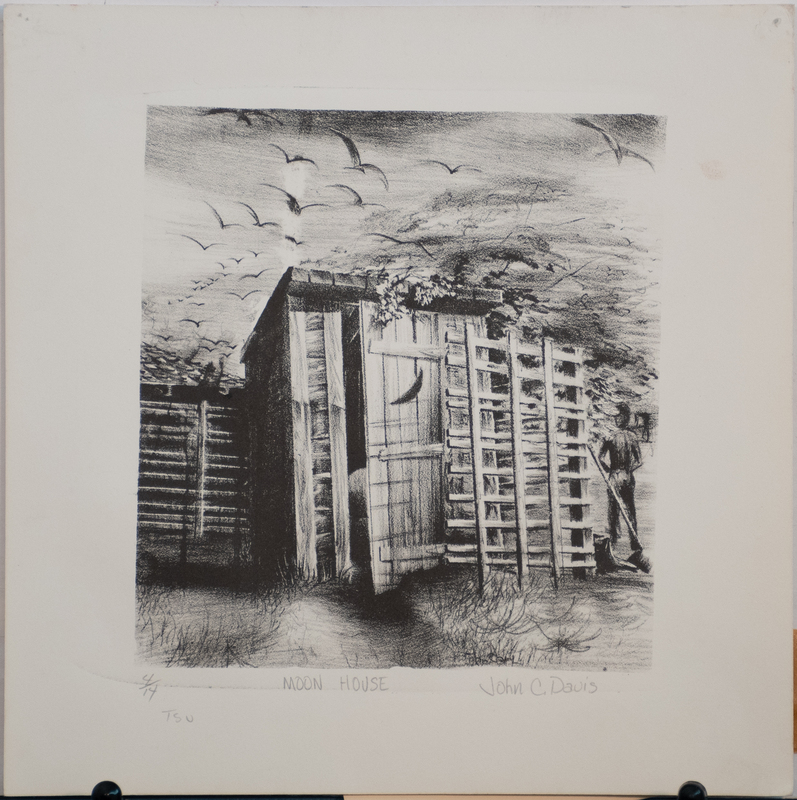
Davis’s print is of an outhouse, colloquially referred to as a moon house. In modern imagination, the crescent moon on an outhouse door has become an identifying symbol of frontier living. Davis’ print also shows a shirtless man zipping up his pants upon exiting the outhouse, while a huge flock of birds fly overhead.
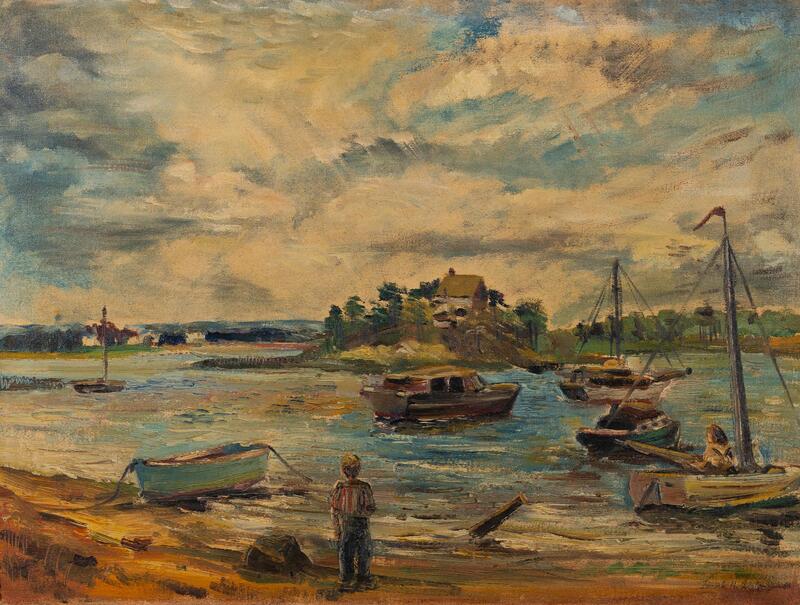
Frank H. Alston, Jr. was an artist and teacher from Providence, RI. Morning on Cape Cod illustrates a cloudy morning along the coast of a peninsula on the Massachusetts Coast. The image depicts a boy standing at the shoreline, boats sailing across the water, a house on top of a hill, and a residential area in the distance.
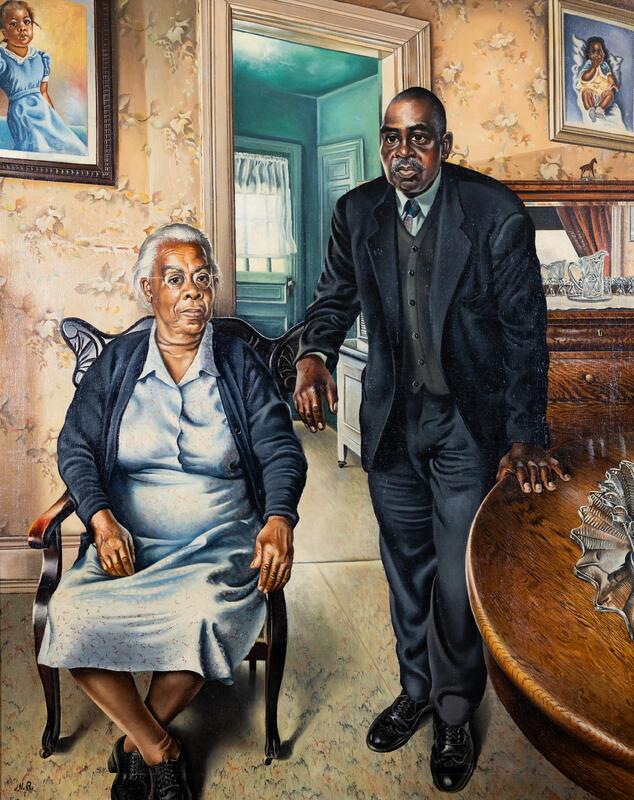
John N. Robinson, born in Washington, D.C., was a self-taught painter. Mr. and Mrs. Barton is an oil painting of an elderly black couple inside their home. The husband is standing in a suit, while the wife is sitting in a sweater and gray dress. Behind them are two framed portraits, a vanity, and the doorway to the kitchen.
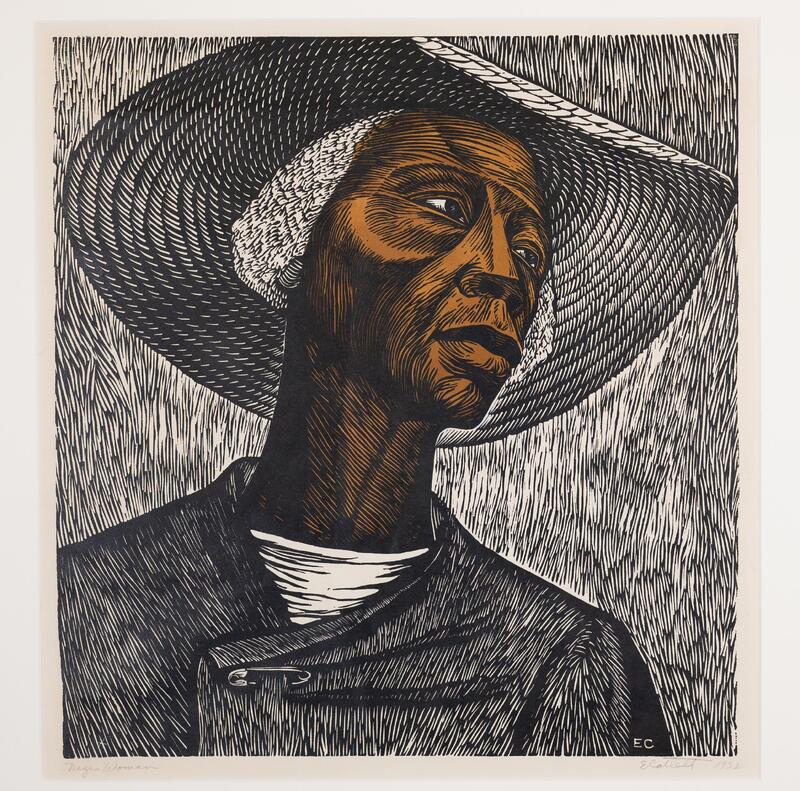
Elizabeth Catlett was an artist and educator from Washington, D.C., who was repatriated to Mexico. Negro Woman is a print depicting a dark-skinned woman looking off into the distance. The piece is in Black and white, aside from her brown face. The woman is wearing a jacket pinned at the collar, an undershirt, and a straw hat.