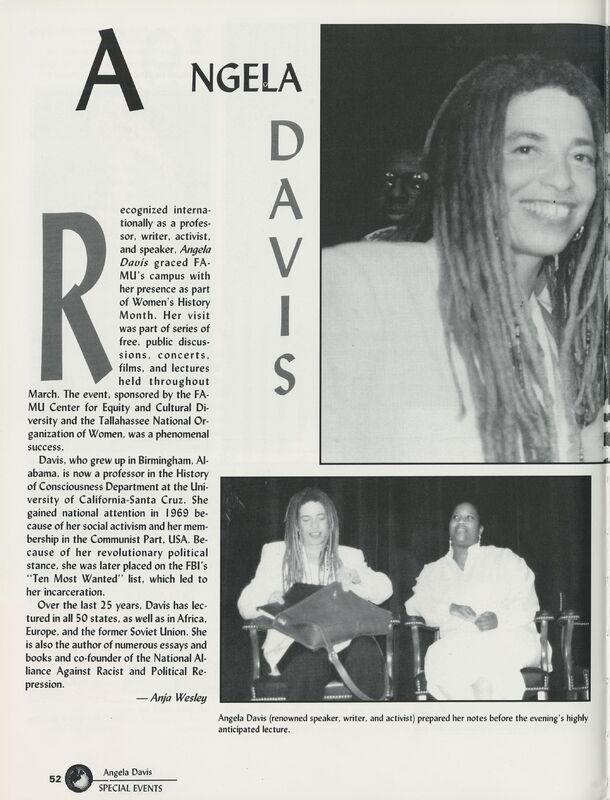
As a part of a Woman’s History Month event in the early 1990s, Angela Davis lectured at Florida A&M’s campus. In rare photographs of Davis in dreadlocks, the international civil rights activist and writer spoke for the event sponsored by the Tallahassee National Organization of Women and the FAMU Center for Equity and Cultural Diversity.
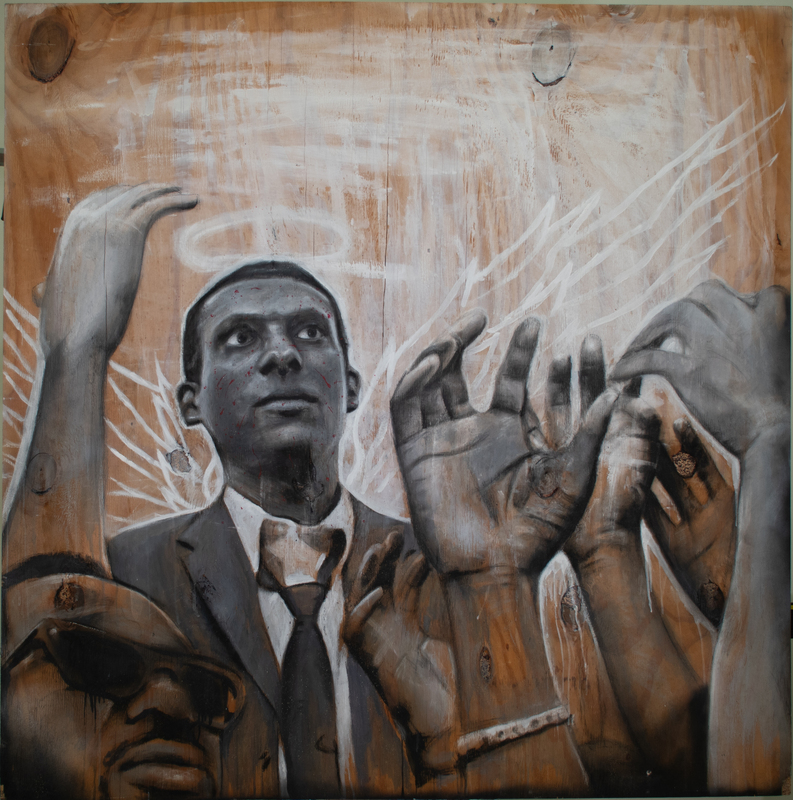
Cornett's work shows Stokely Carmichael with angelic features amidst raised hands. He was a key civil rights activist, a leader of the SNCC, and popularized the term "Black Power." He spoke at Texas Southern one month prior to the TSU Invasion, when Houston police invaded the campus, fired 5,000 rounds into dormitories, and arrested 488 students.
Anita Dixon became a Head Start student when she was 5 years old in 1968 in Mendenhall, Mississippi. She talks about her experience as a student, saying she learned things that prepared her to be an elementary student.
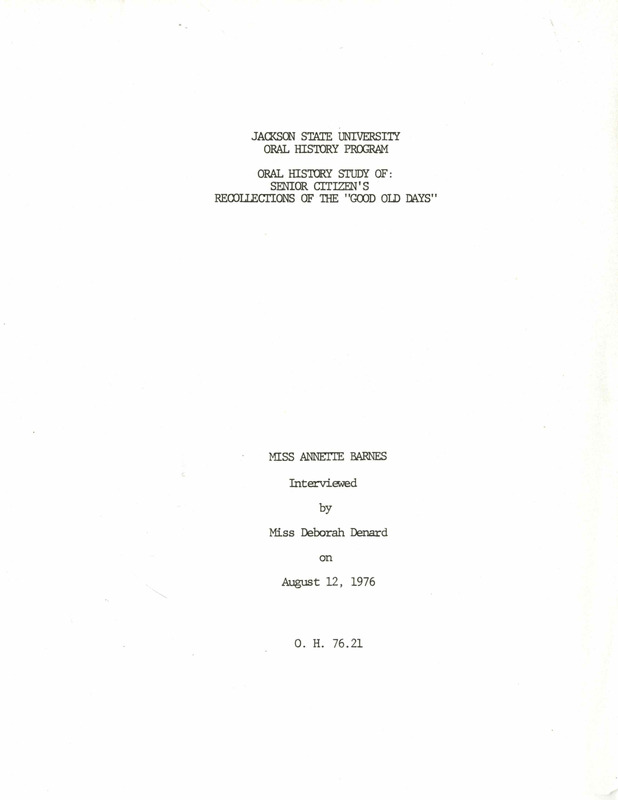
Annette Barnes was born in 1905 in Mount Olive, Mississippi. Her family moved to Jackson in 1909 when her father opened Barnes Drug Store. She talks about her childhood in Jackson being fun but also with responsibilities. She recalls the “Good Old Days'' as the times she can look back on and times were not as hard as they were then thought to be.
Annie Morganfield talks about sending her children to Head Start in 1966. She recounts going to community organizing meetings and informational sessions about the beginning of Head Start in Rolling Fork, Mississippi. She also talks about the experiences her children had in Head Start and other schools and touches on racial differences in schools.
Annie Smith was part of the group that started the first Head Start program in Edwards, Mississippi, in 1965. She talks about that process, including buying and renovating the building, hiring teachers, and recruiting students to get the program off the ground.
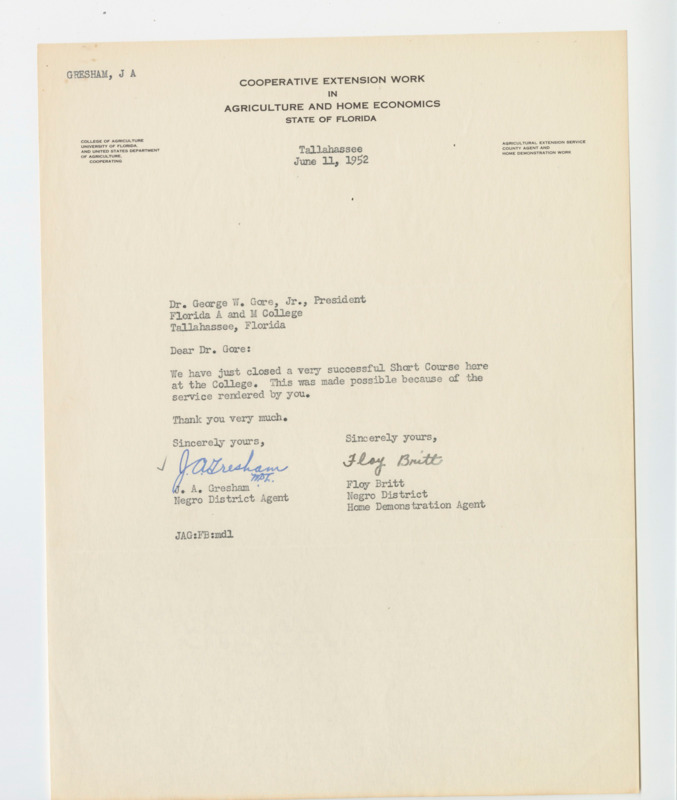
Annual letters between President Gore and Negro District Agents include invitations to the 4-H Annual Short Course, detailed program statistics, and personal information of agents. The correspondences focused on initiatives to improve educational standards in agricultural and home demonstration programs throughout Florida.
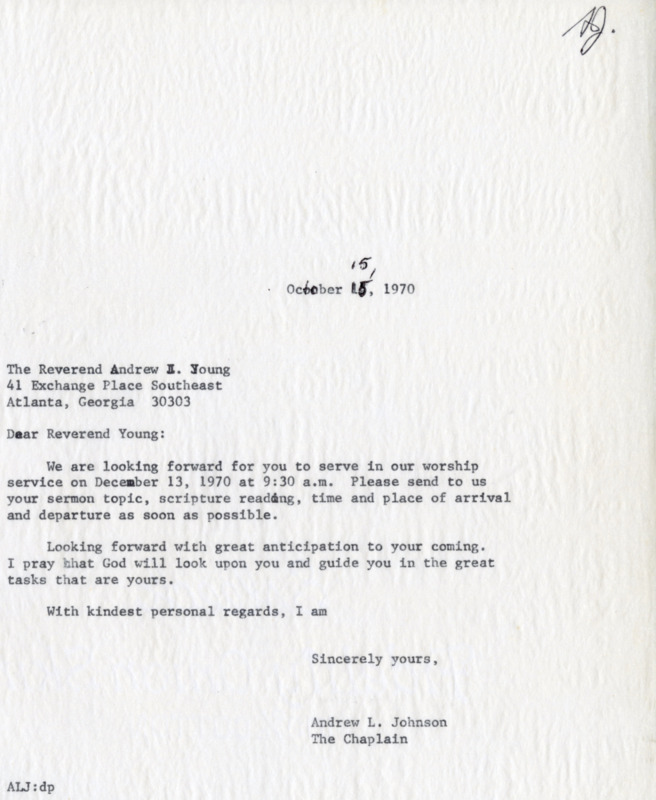
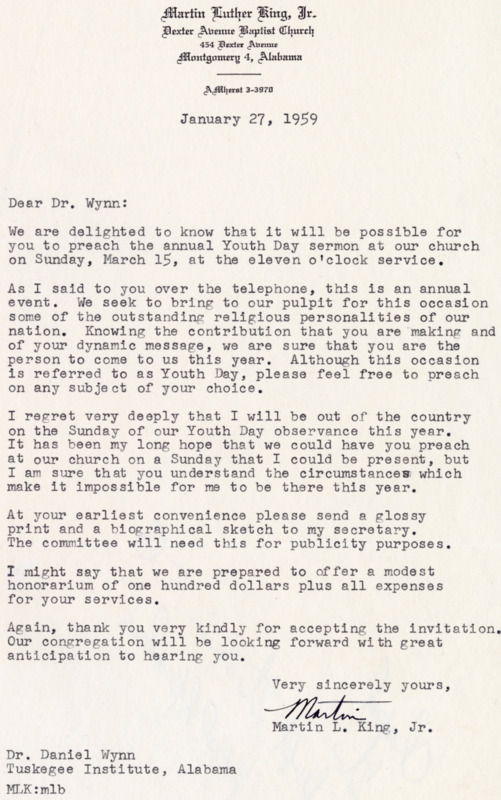
A letter from Dr. Martin Luther King Jr. to Chaplain Wynn thanking him accepting to speak at the Annual Youth Day on March 15, 1959. Unfortunately, Dr. King will not be present to listen to Chaplain Wynn’s sermon due to prior engagements out of the country.
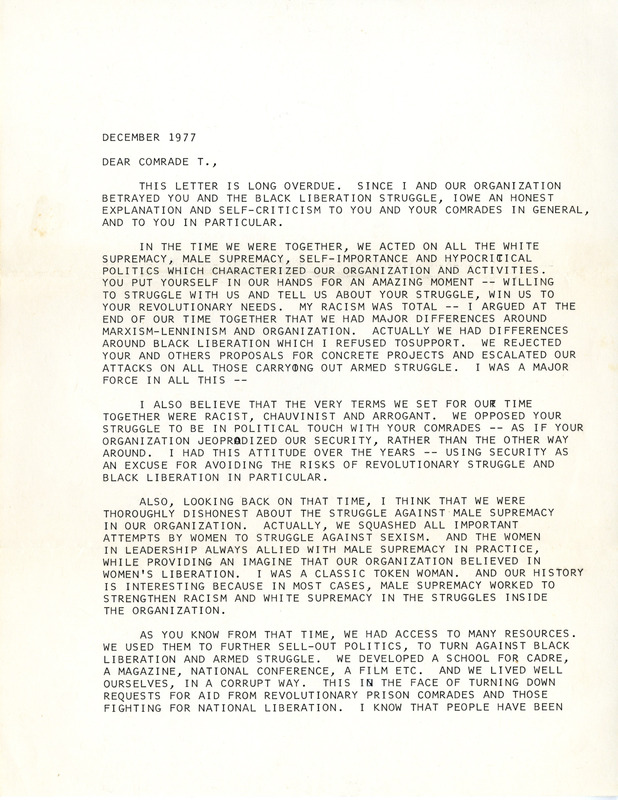
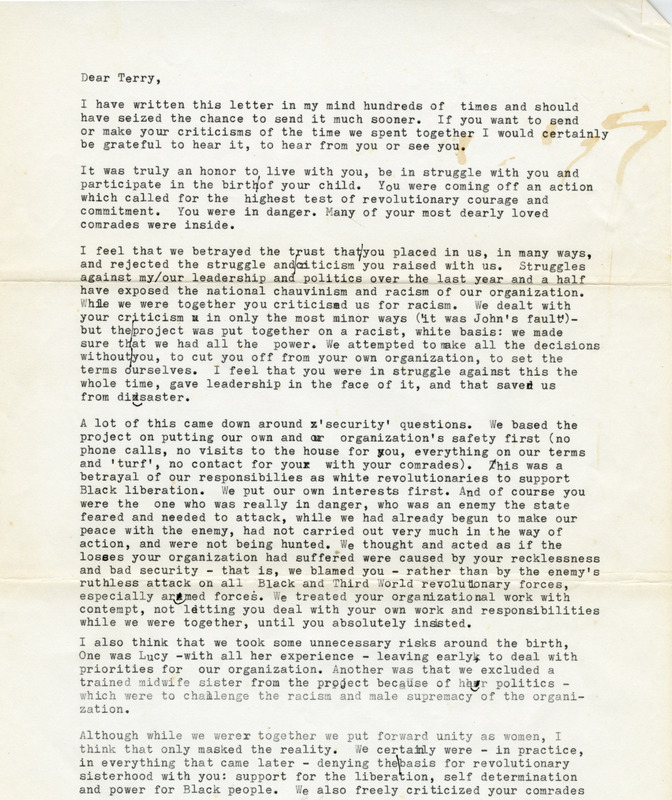
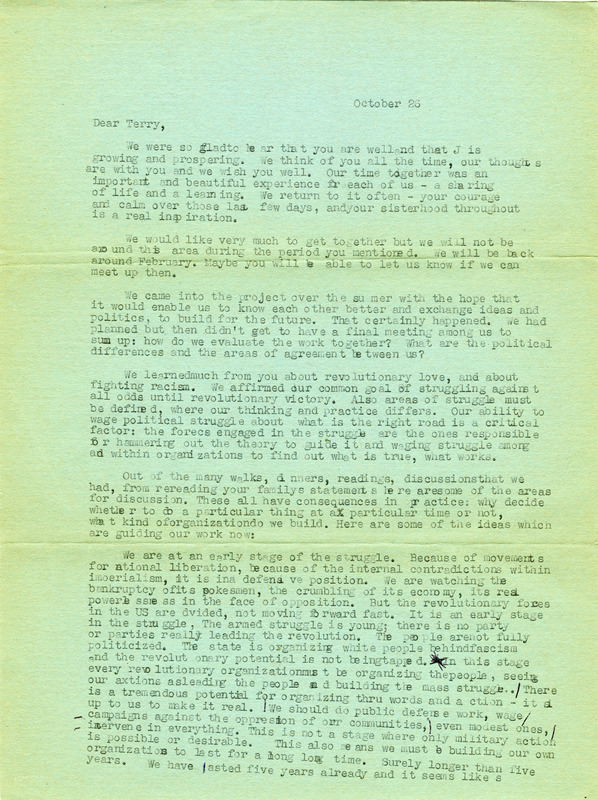
“J”, a White movement leader, writes to “T” to apologize, explain, and take responsibility for past behavior that was in retaliation to the Black Liberation struggle. “J” explains the connection between sexism and racism. “J” acknowledges that Comrade “T” always understood the organization was wrong.
Maggie/Jean, a White revolutionary, writes to an unknown Black Liberation movement leader. The author is apologizing for the way White revolutionaries dealt with the struggle for Black liberation during the time they worked together. The writer says that the criticisms of their group exposed the national chauvinism and racism of their organization.
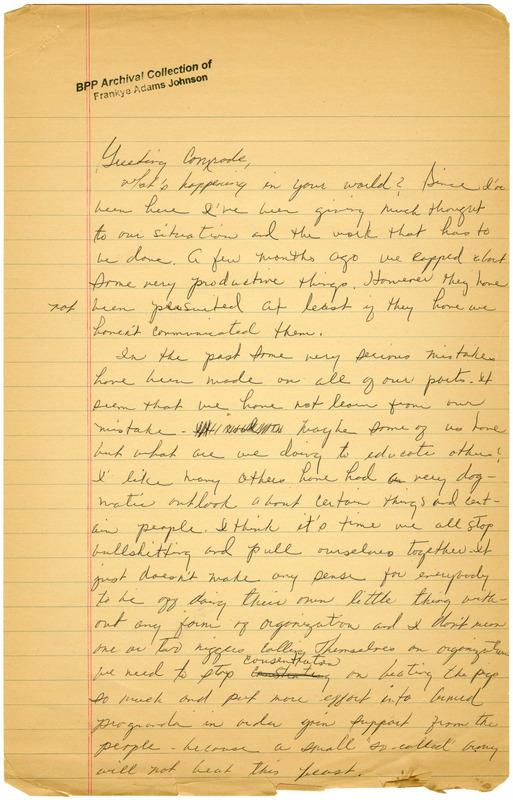
A letter from Terry to an unknown recipient. The author writes that they need to put past mistakes behind them to begin seriously organizing for the fight for liberation. He makes the argument that a propaganda campaign will be needed to gain the support of the masses.
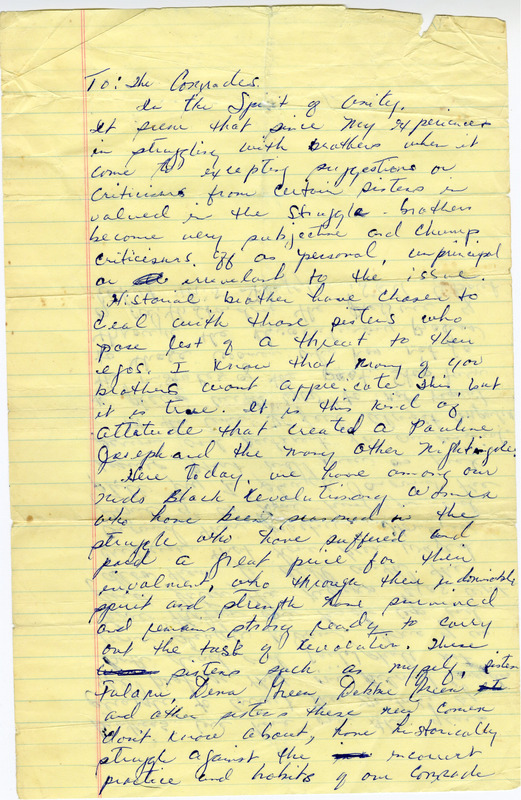
The unnamed sender addresses the comrades about the mistreatment of women in the Black Panther Party and explains the historical importance of women in the struggle as revolutionaries. The sender urges the revolutionaries to not make the same past mistakes.
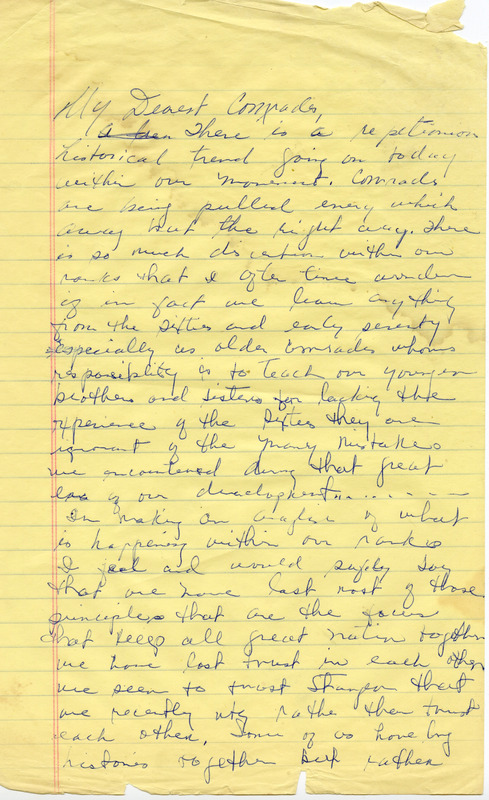
The unnamed sender writes about the lost trust among members, the wrong direction the Black Panther Party is headed, and the responsibility of the older members. The sender addresses the behavior of the New African People's Organization in New York and vows to expose the corruption.
A letter from "M" to Terry. The author writes that it is the early days of the struggle and there is an opportunity to organize the people for revolutionary struggle, giving specific examples of work that can be done in communities to gain the support of the people. Tenets such as internationalism, organization, and Marxism-Leninism are discussed.
Summary reports to and from the Florida House of Representatives regarding the 1923 Rosewood massacre. Details include key facts, survivor accounts of racial violence, and a memorandum proposing compensation for victims and their descendants in an effort to address the tragedy’s lasting impact.
Case Data and Exhibits for Brown III, a relitigation of Brown v. Topeka Board of Education (1954) that corrected resegregation issues caused by open enrollment school choice in 1992. Ruling of the U.S. District Court for the District of Kansas on the Brown III case that reverses a lower court’s ruling that the Topeka School District is unitary.
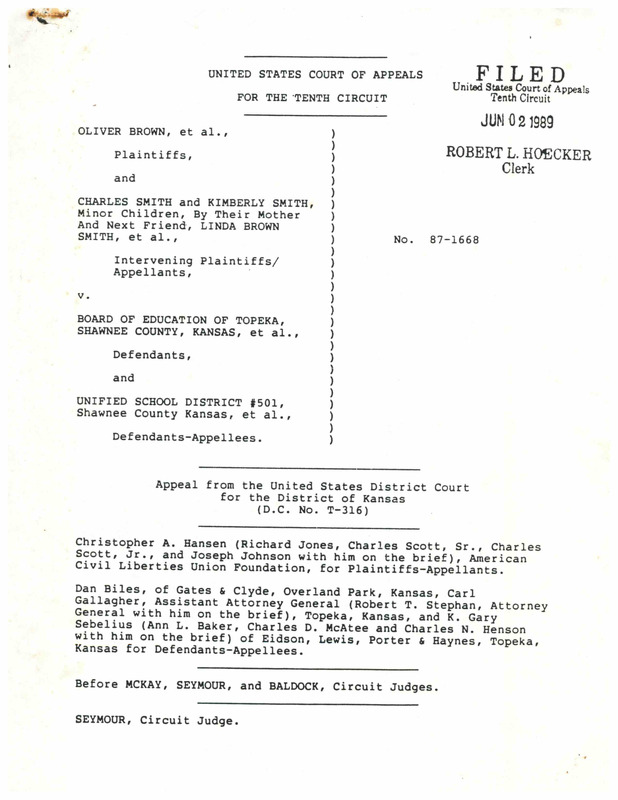
Case Data and Exhibits for Brown III, a relitigation of Brown v. Topeka Board of Education (1954) that corrected resegregation issues caused by open enrollment school choice in 1992. U.S. District Court for the District of Kansas Circuit Judge Stephanie Seymour’s opinion, ruling that Topeka school’s have not done enough to rectify segregation.
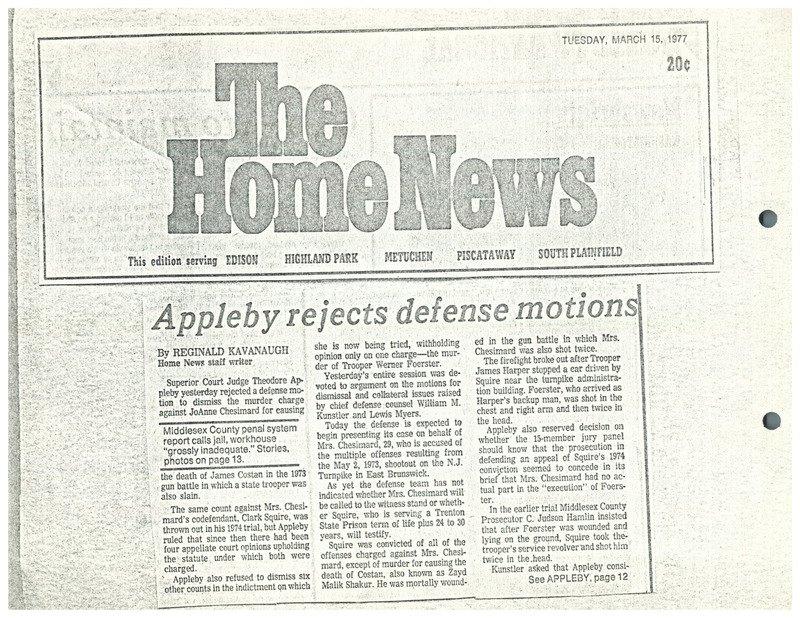
A newspaper article from The Home News about a day long juryless court session where defense lawyers made numerous motions to dismiss the indictments against Assata Shakur (JoAnne Chesimard) who was on trial for the 1973 killing of a state trooper. The judge rejected these motions and the attorneys are scheduled to call witnesses that day.
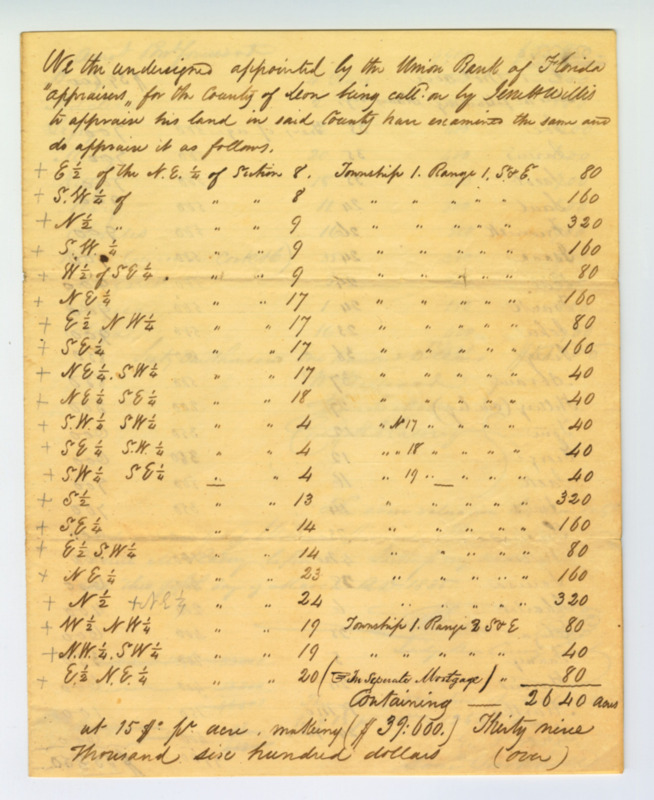
In this financial document, Union Bank of Florida hired three people for the appraisement of Jefse H Millis estate with the addition of a list of slaves. The listed names have ages, prices, and total sums.
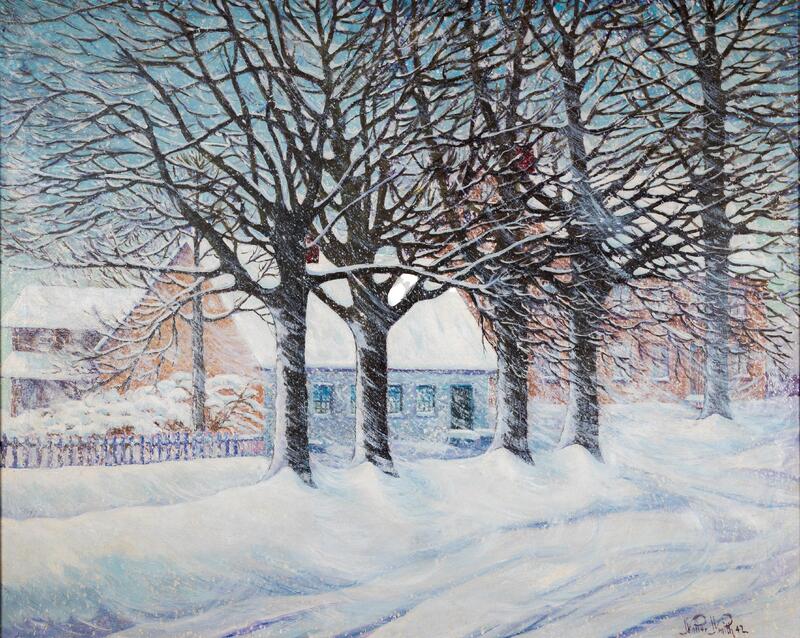
Walter Washington Smith was an artist who often painted religious scenes and created city signs and posters from Clearfield, PA. However, "April Blizzard" indicates Smith's variability as it depicts a residential neighborhood during a blizzard. The sidewalk, open and empty street, and a house behind four barren trees are covered in blowing snow.
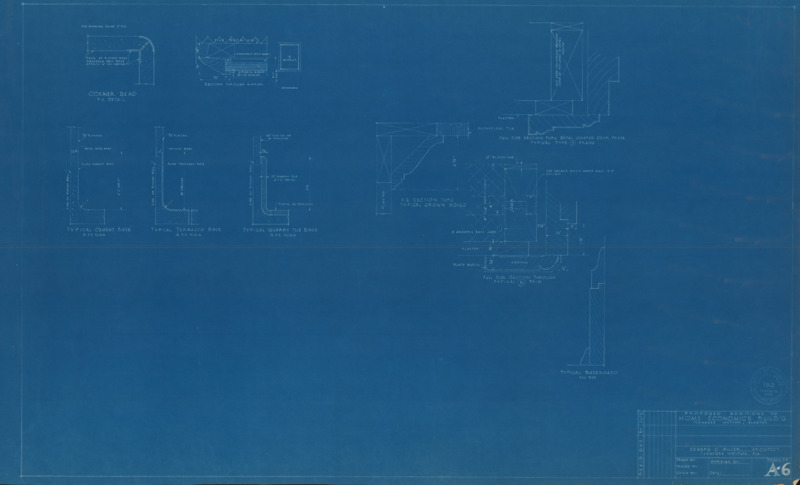
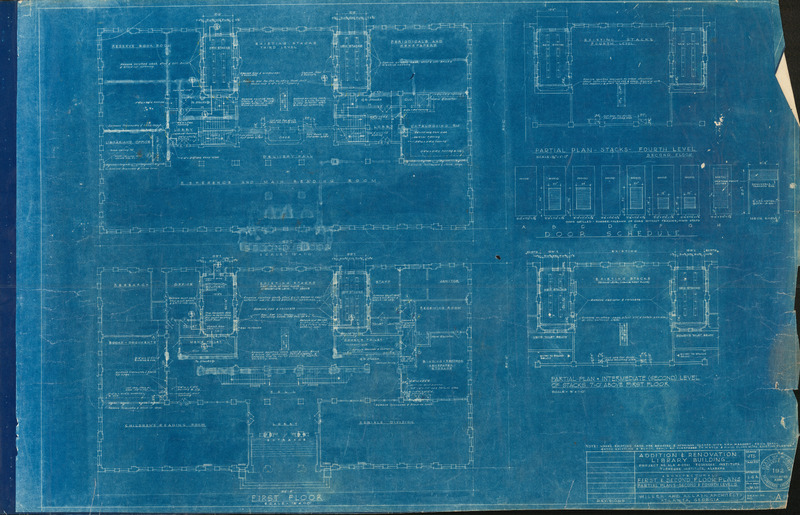
Architectual blueprint drawing of the renovations for the purposed Library Building at Tuskegee Institute located in Tuskegee, Alabama. Blueprint drawings depict 1st and 2nd Floor Plans and partial plans for second and fourth floor levels.
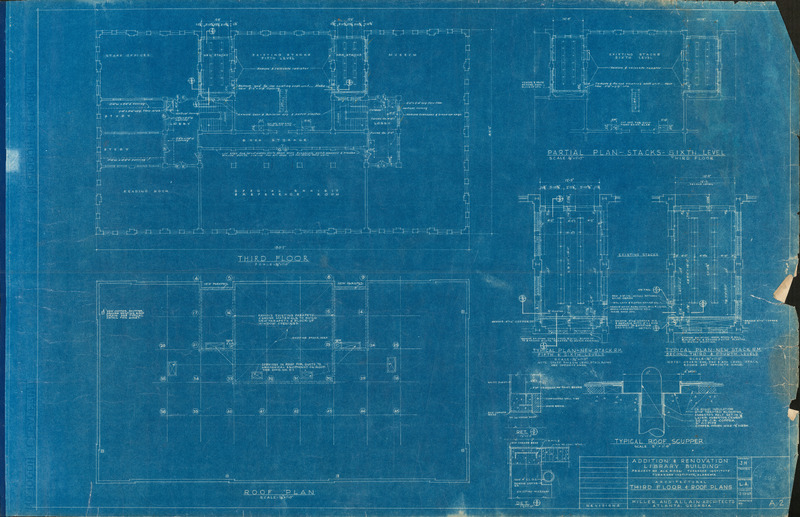
2nd Architectual drawing blueprint of the third floor layout and roof layout for the additions and renovations for the purposed Library Building at Tuskegee Institute. Blueprint also depicts typical plan stacks for second, third, fourth, fifth, and sixth floors.
Lacy’s mural depicts houses from a variety of different civilizations and cultures, ranging from small circular huts to step pyramids. The center structure is a depiction of the terracotta sculpture she created under the instruction of Professor Carroll Harris Simms.
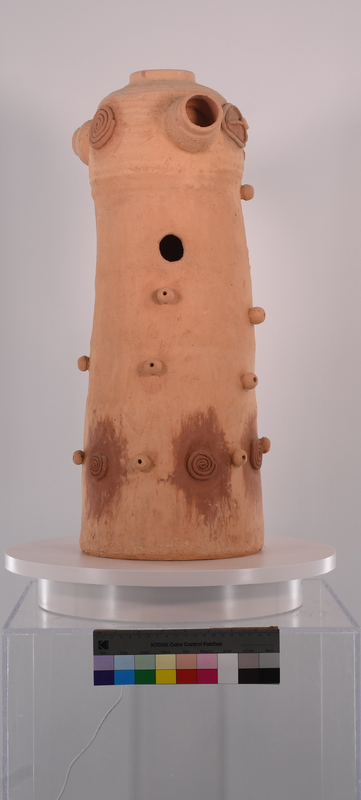
Lacy’s terracotta tower sculpture features cut-outs throughout the body. The top bears an abstract, smiling face with conical ears. The work is decorated with spirals and rolled balls of clay, both of which are among the signature embellishments used by students of Professor Simms. Lacy features this sculpture prominently in her Hannah Hall mural, where it appears as a building.
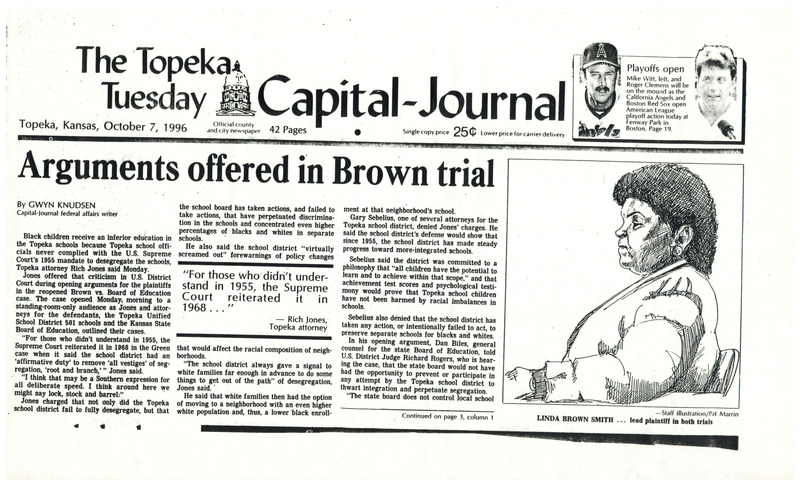
A newspaper article from The Topeka Capital Journal about opening arguments in the Topeka desegregation case. The opening day also saw the opening of testimony by expert witness for the plaintiffs William Lamson who used maps and charts to argue that the Topka School System continues to remain segregated.
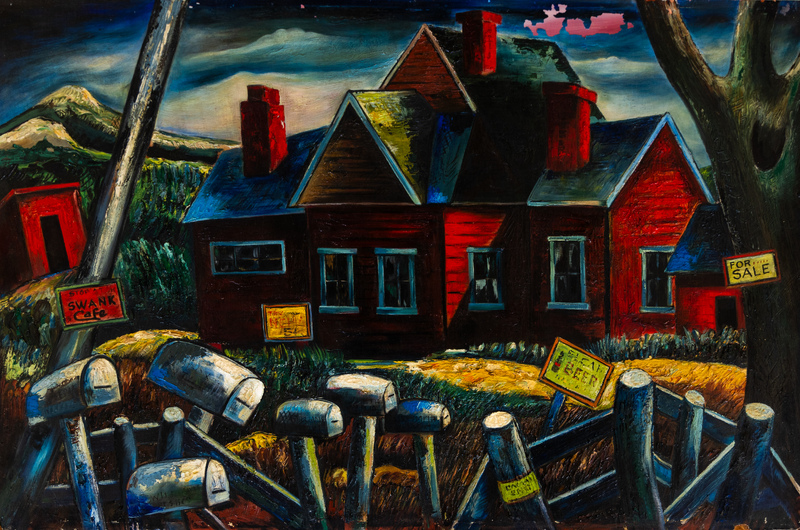
John Howard was an artist from Alcorn, MS. "Arkansas Landscape" shows a red house with a wooden gate, five posted signs, and six mailboxes in the foreground. The house is surrounded by dark green grass, leading to a mountaintop in the background. A sign pinned to a tree reads “For Sale” along with other titled signs throughout the landscape.
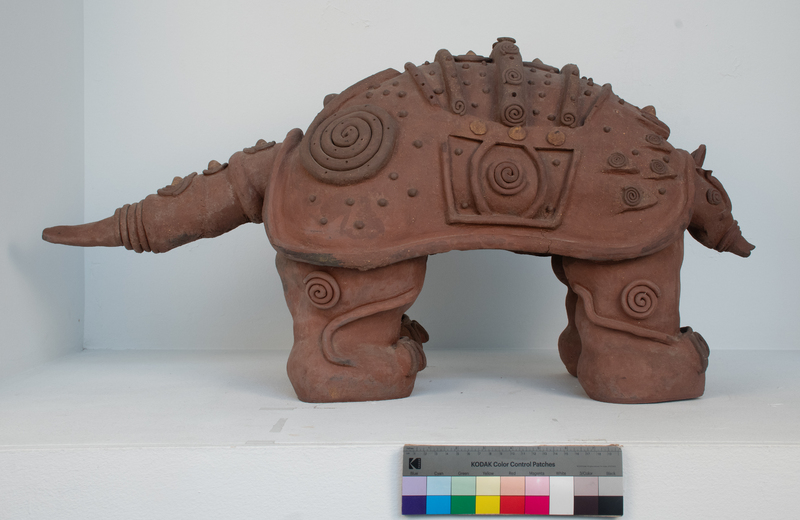
Johnny Jones’s sculpture, “Armadillo,” features decorative embellishments along the body of the animal, especially the shell. The spiral motif is often found on the sculptures of student artists taught by Carroll Harris Simms. Armadillos, which utilize their shells for protection, are commonly found in Texas.