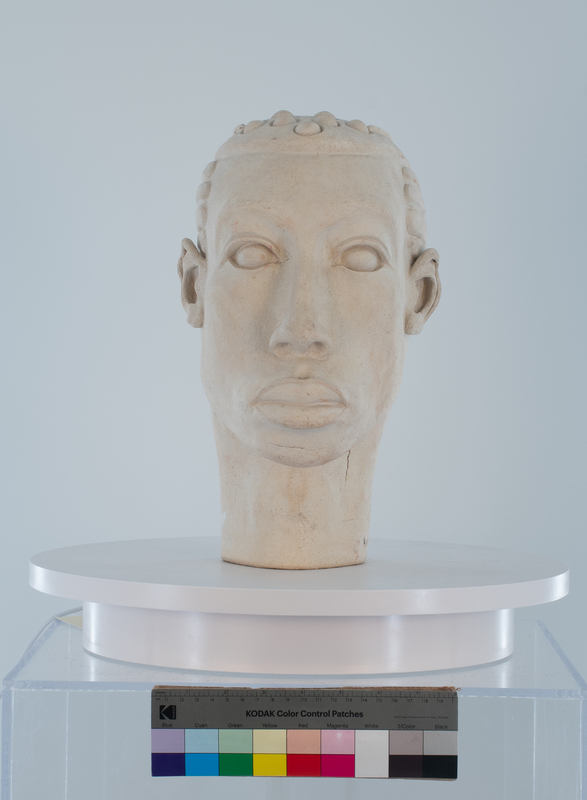
Walker’s bust was created during his time as an art student at TSU. Under the instruction of Professor Carroll Harris Simms, artists would create self-portraits embellished with textures, like those seen in the hair of this sculpture. While most were made from terracotta clay, this one is made from plaster. These busts are inspired by Nok terracotta sculptures and Ife busts, which Simms saw during his travels to Western Africa.
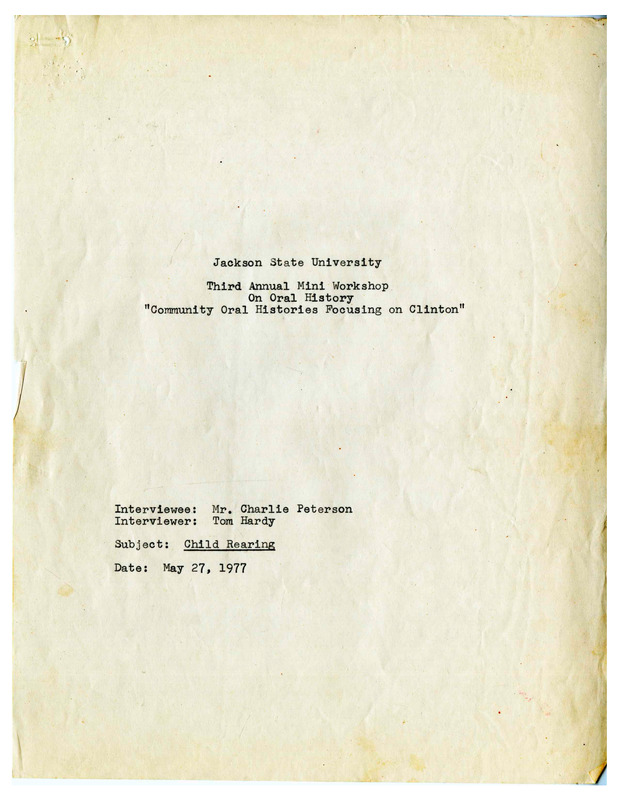
Mr. Peterson was born in 1891 and was a lifelong resident of Clinton. He talks about his parents being born into slavery; the Clinton Riot; his Christian faith; and his education, specifically giving an overview of the curriculum of his school at the turn of the century.
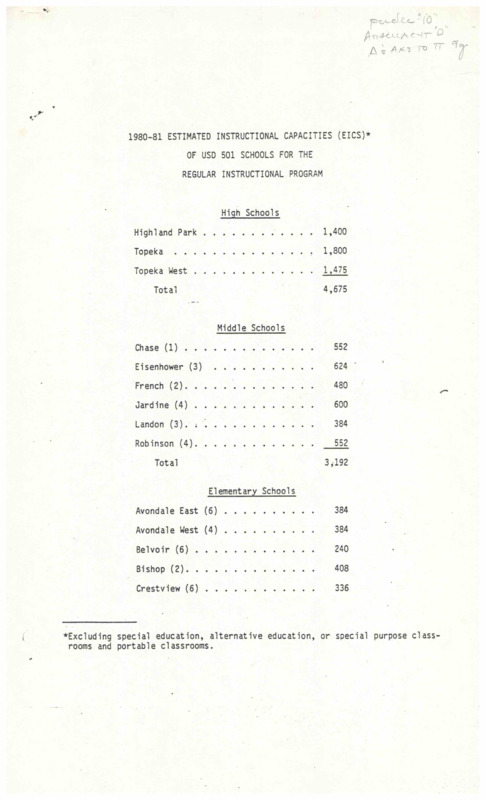
Case Data and Exhibits for Brown III, a relitigation of Brown v. Topeka Board of Education (1954) that corrected resegregation issues caused by open enrollment school choice in 1992. Charts and spreadsheets analyzing the estimated capacities for student instruction for Topeka, Kansas, area schools for the 1980-1981 school year.
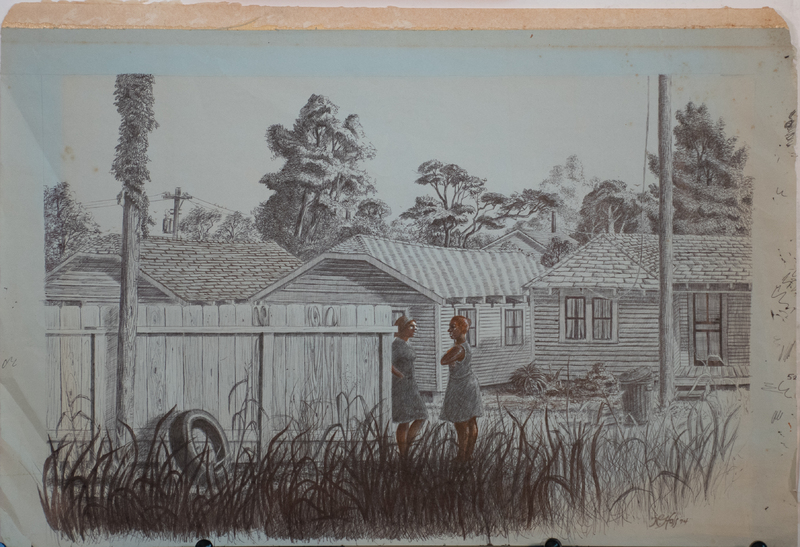
Hals’ drawing shows two women chatting on the street. Their environment, filled with shotgun homes and tall grass, resembles Houston’s Third Ward, the historically Black neighborhood that Texas Southern University calls home. TSU art students, at Dr. Biggers’ instruction, often looked to their surroundings for inspiration.
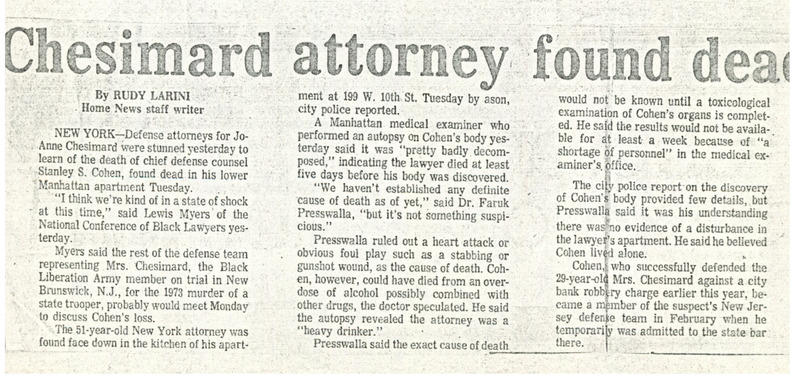
A newspaper article from The Home News about Stanley Cohen, the chief defense counsel in the murder trial of Assata Shakur (JoAnne Chesimard) for the 1973 killing of a state trooper, being found dead in his Manhattan apartment. At the time of reporting, the cause of death was unknown.
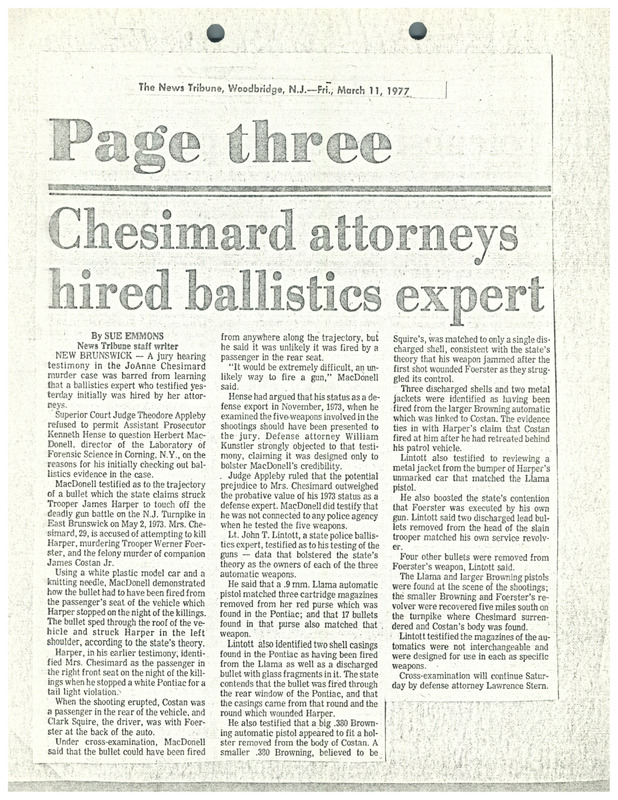
A newspaper article from The News Tribune about testimony on ballistics and gunshot trajectories given by two different expert witnesses in the trial of Assata Shakur (JoAnne Chesimard) for the 1973 killing of a state trooper. The judge in the case barred the jury from learning that one of the experts was hired by the defense.
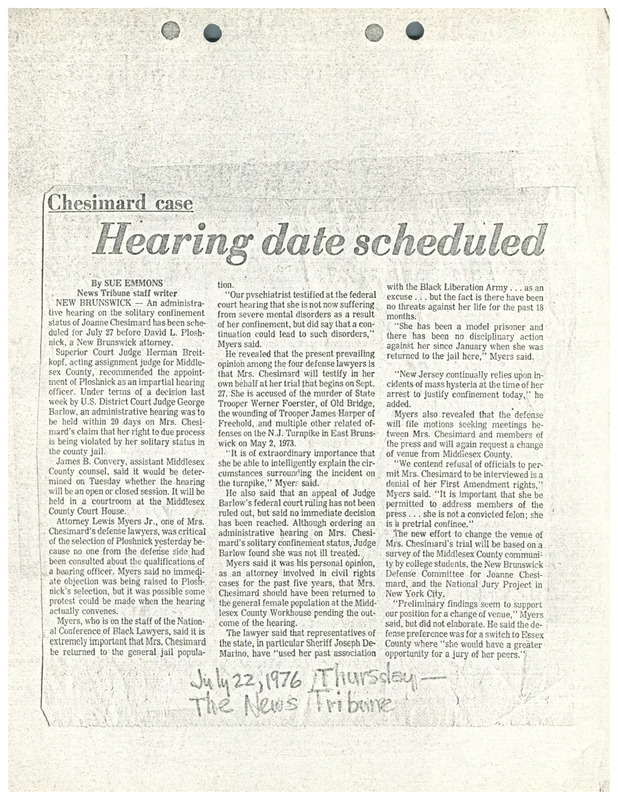
A newspaper article from The News Tribune about an administrative hearing for Assata Shakur (JoAnne Chesimard) being scheduled for July 27th. The hearing will determine if Assata Shakur (JoAnne Chesimard) should be moved out of solitary confinement and into women's general population. She was on trial for the 1973 killing of a state trooper.
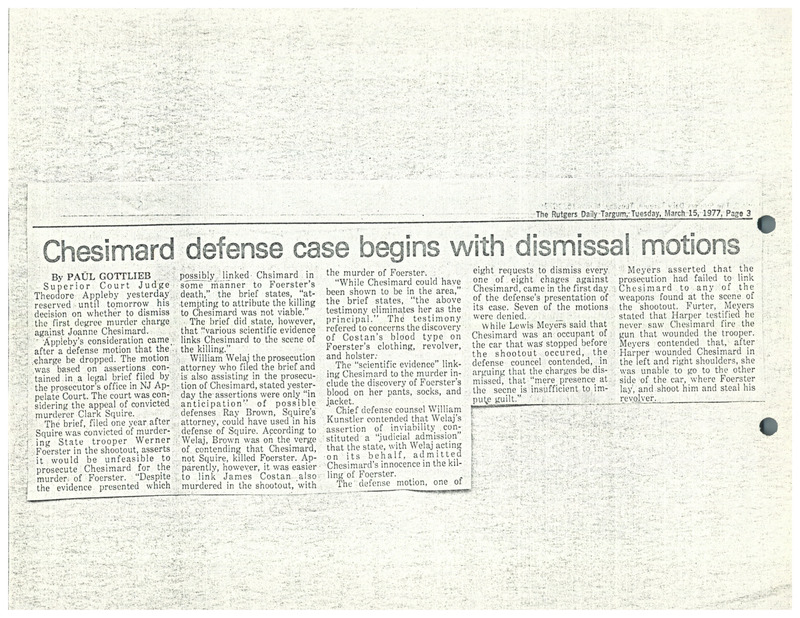
A newspaper article from The Rutgers Daily-Targum about the defense team for Assata Shakur (JoAnne Chesimard), who was on trial for the 1973 killing of a state trooper, opening their case by calling for dismissal of the murder charge on the grounds that she cannot be convicted since Clark Squire has already been convicted of the killing.
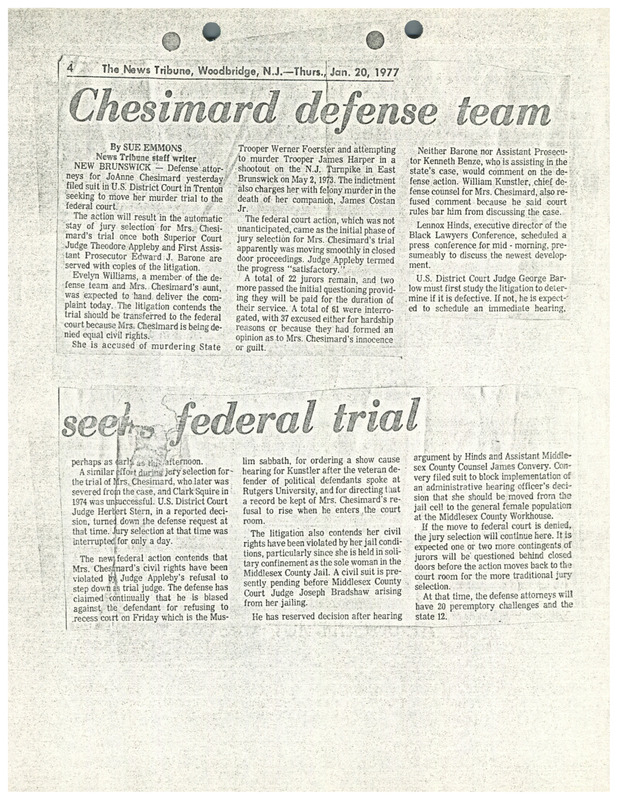
A newspaper article from The News Tribune about defense attorneys for Assata Shakur (JoAnne Chesimard) filing suit to move her trial for the 1973 killing of a state trooper to the federal court. They contend that her civil rights are being violated in at least two ways. The litigation came during jury selection.
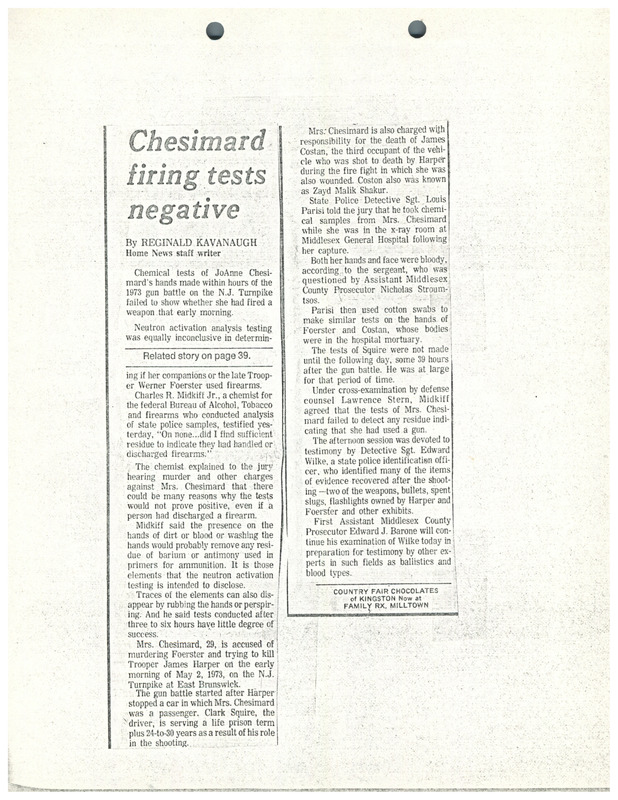
A newspaper article from Home News about chemical and neutron activation tests both being inconclusive on the matter of whether Assata Shakur (JoAnne Chesimard), the other defendants, or the state trooper had fired the gun in question in Shakur’s trial for the 1973 killing of a state trooper.
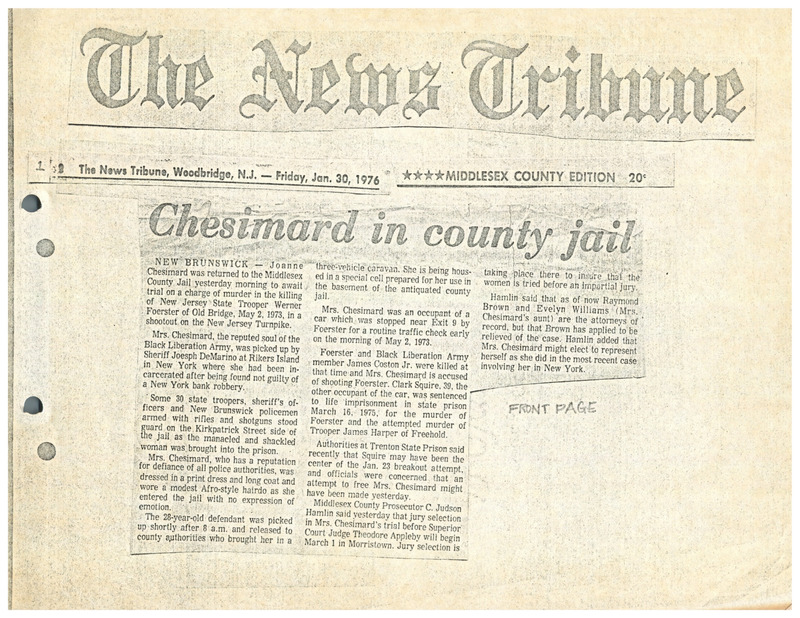
A newspaper article from The News Tribune about Assata Shakur (JoAnne Chesimard) being in New Jersey to stand trial for the May 1973 killing of a state trooper. Shakur was convicted in 1977 of killing the state trooper during a shootout, escaped prison in 1979, and is still wanted by the FBI.
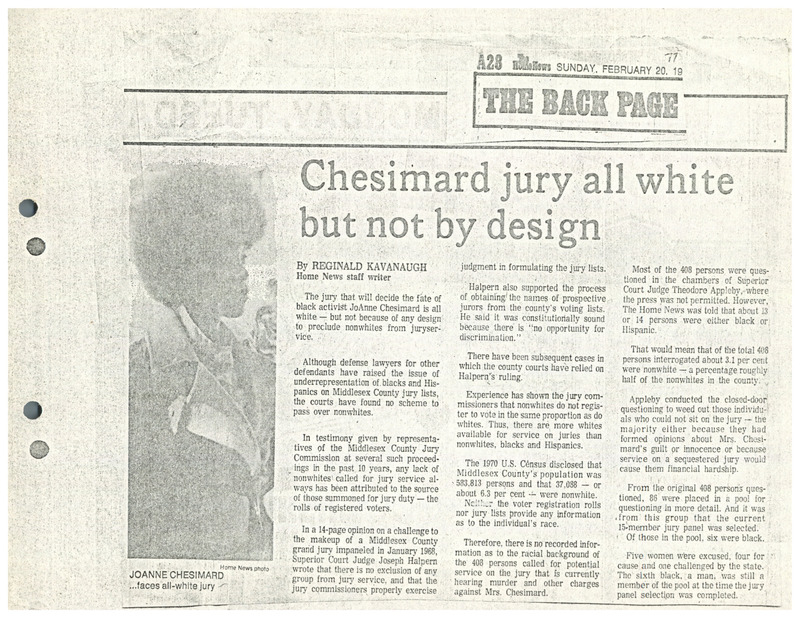
A newspaper article from The Home News about the all white jury in the murder trial of Assata Shakur (JoAnne Chesimard) for the 1973 killing of a state trooper. Courts have decided that the jury selection is fair since the selections are made from voter registration rolls. Shakur was convicted in 1977 of the killing and escaped prison in 1979.
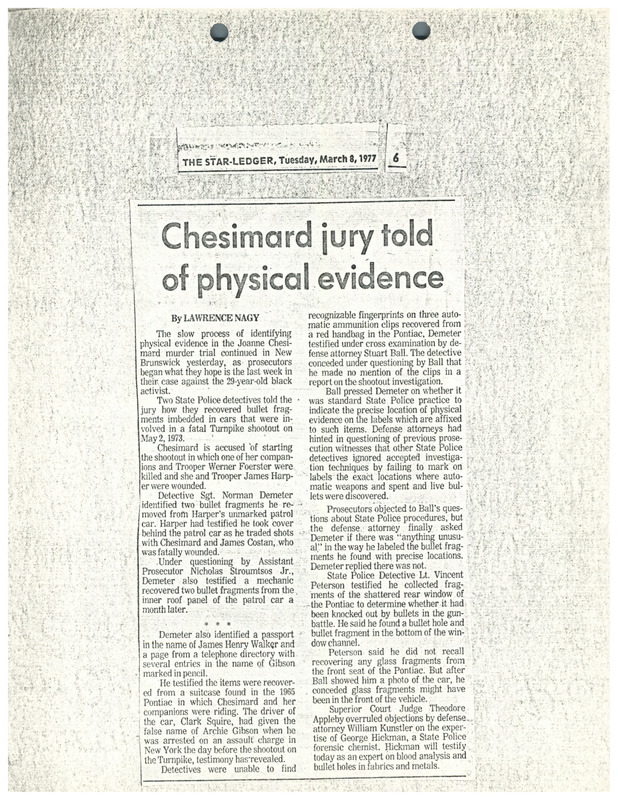
A newspaper article from The Star Ledger about bullet fragments the prosecution is putting into evidence in what they hope is the last week in their case against Assata Shakur (JoAnne Chesimard) for the 1973 killing of a state trooper. Defense attorneys questioned if the fragments were marked on the scene in an unusual way.
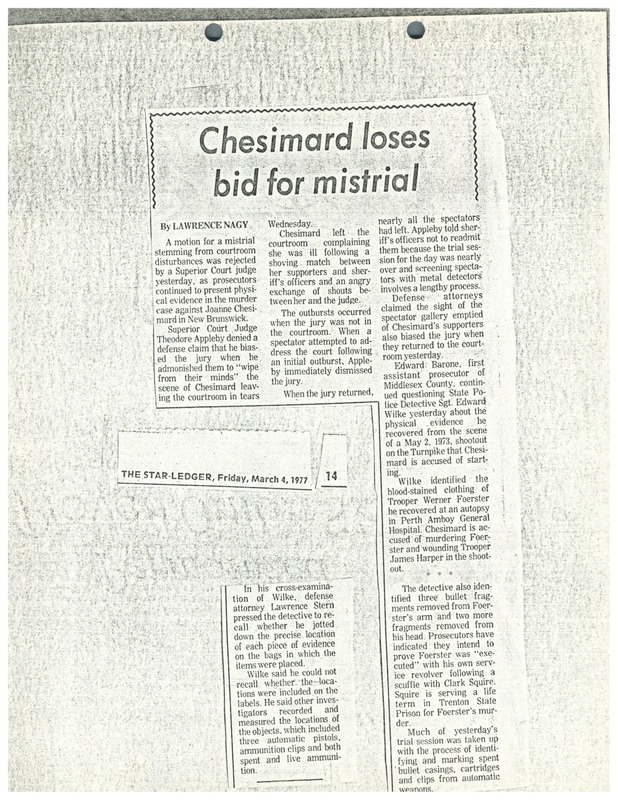
A newspaper article from The Star Ledger about the defense team for Assata Shakur (JoAnne Chesimard) being rejected in their motion to have a mistrial called after disturbances in the courtroom on March 2, 1977, during Shakur’s trial for the 1973 killing of a state trooper. The article also discusses physical evidence presented by the prosecution.
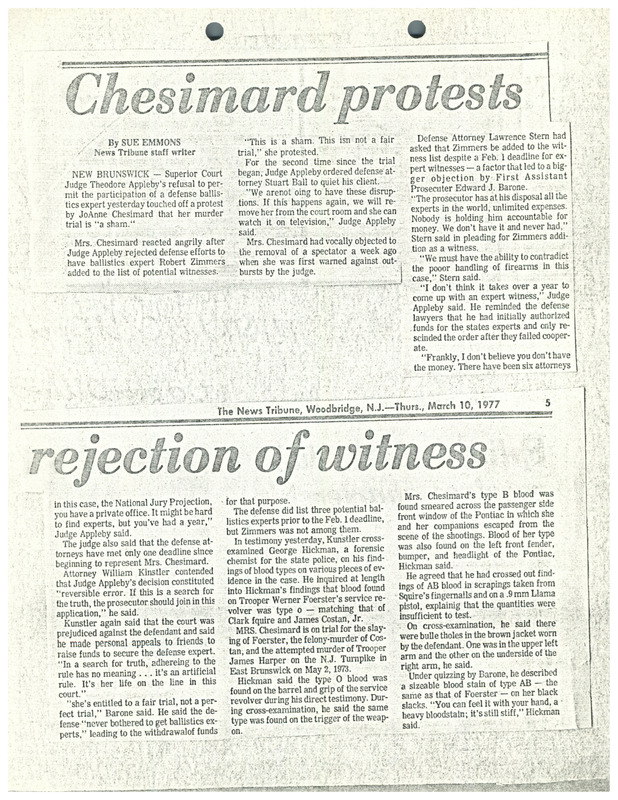
A newspaper article from The News Tribune about the defense team for Assata Shakur (JoAnne Chesimard), on trial for the 1973 killing of a state trooper, being denied calling an extra ballistics witness by the judge. The prosecution contended the witness was not valid since the defense team missed the cutoff date to add witnesses to their list.
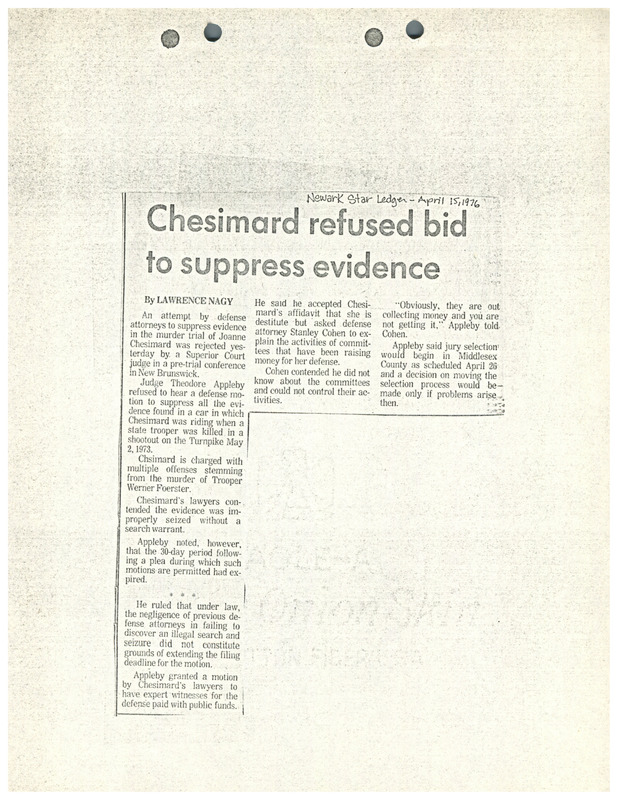
A newspaper article from the Star Ledger about the defense team in Assata Shakur's (JoAnne Chesimard) trial being denied a motion to suppress evidence found in the car after the May 1973 shootout. Shakur was convicted in 1977 of killing the state trooper during a shootout, escaped prison in 1979, and is still wanted by the FBI.
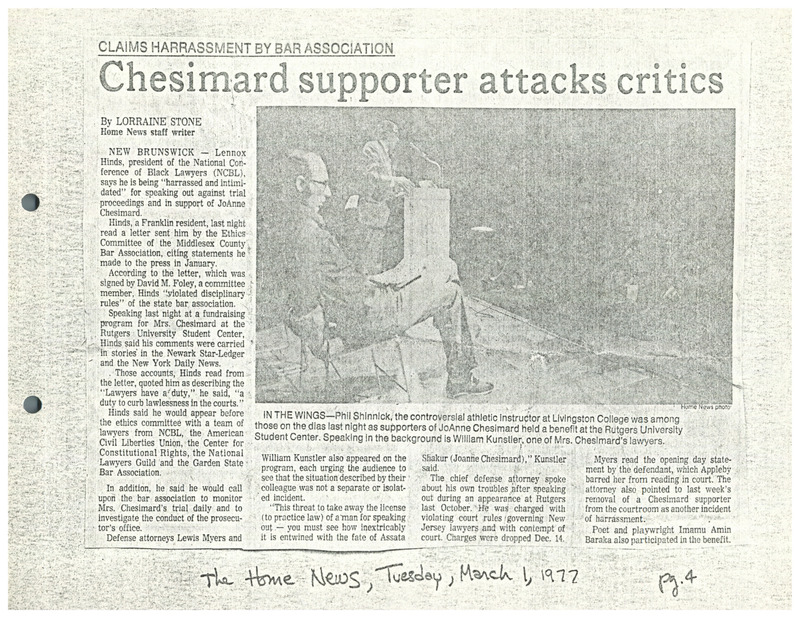
A newspaper article from The Home News about Lennox Hinds, president of the National Conference of Black Lawyers, being cited by The Ethics Committee of the Middlesex County Bar Association for statements he made to the press against critics of Assata Shakur (JoAnne Chesimard), who was on trial for the 1973 killing of a state trooper.
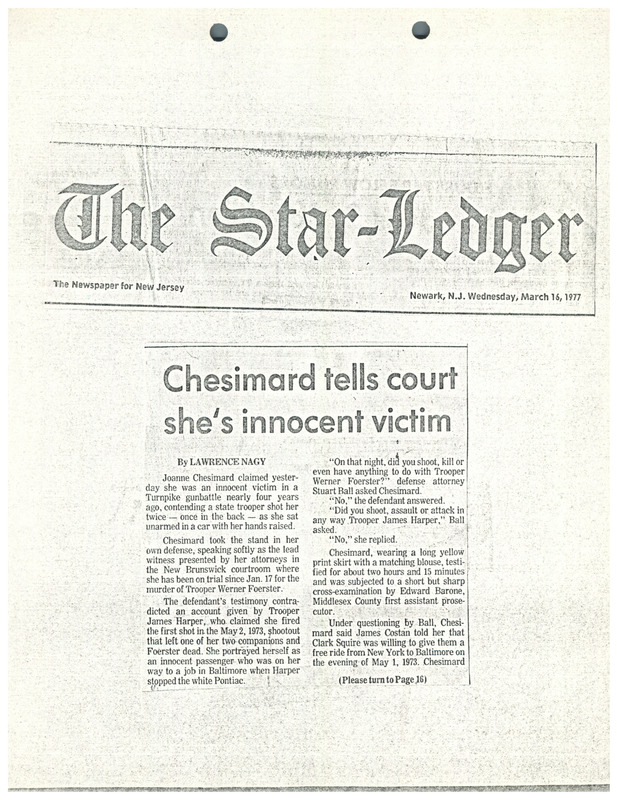
A newspaper article from The Star Ledger detailing the testimony Assata Shakur (JoAnne Chesimard) gave during her trial for the 1973 killing of a state trooper. In her testimony, she claimed her innocence and gave her account of what happened that day.
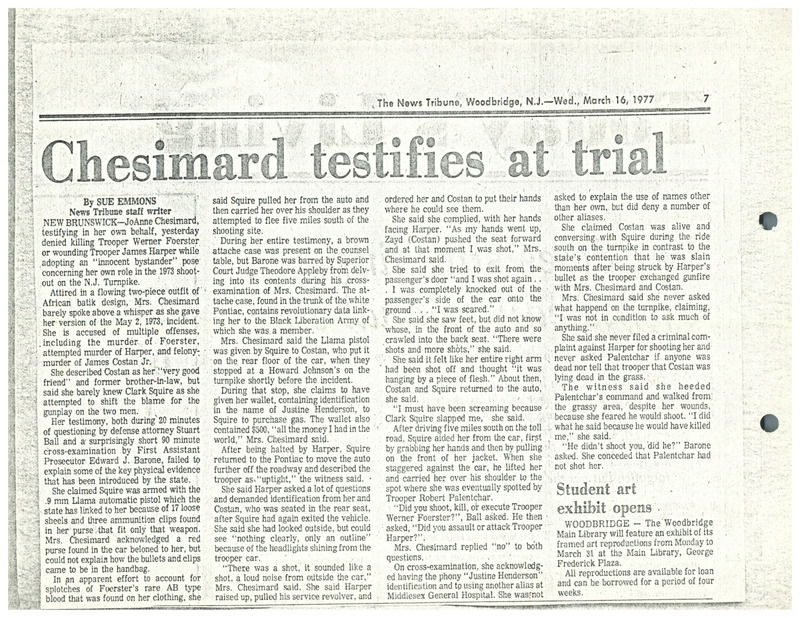
A newspaper article from The News Tribune detailing the testimony Assata Shakur (JoAnne Chesimard) gave during her trial for the 1973 killing of a state trooper. In her testimony, given during 20 minutes of questioning by the defense and 90 minutes of cross-examination, she denied shooting anyone and gave her account of what happened that day.
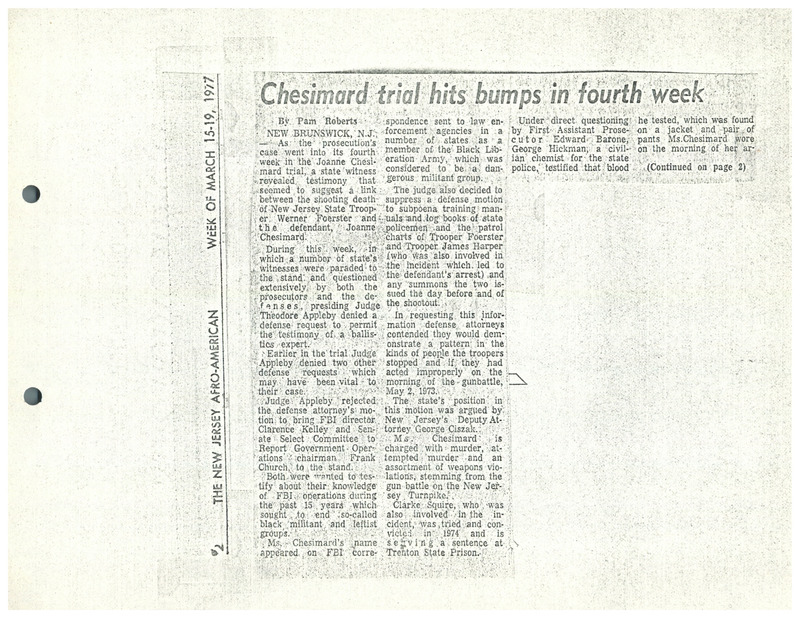
A newspaper article from The New Jersey Afro-American about Superior Court Judge Theodore Appleby barring the testimony of an FBI agent and senator in the trial of Assata Shakur (JoAnne Chesimard) for the 1973 killing of a state trooper. Attorney William Kunstler wanted to use the testimony to establish a police conspiracy against Black militants.
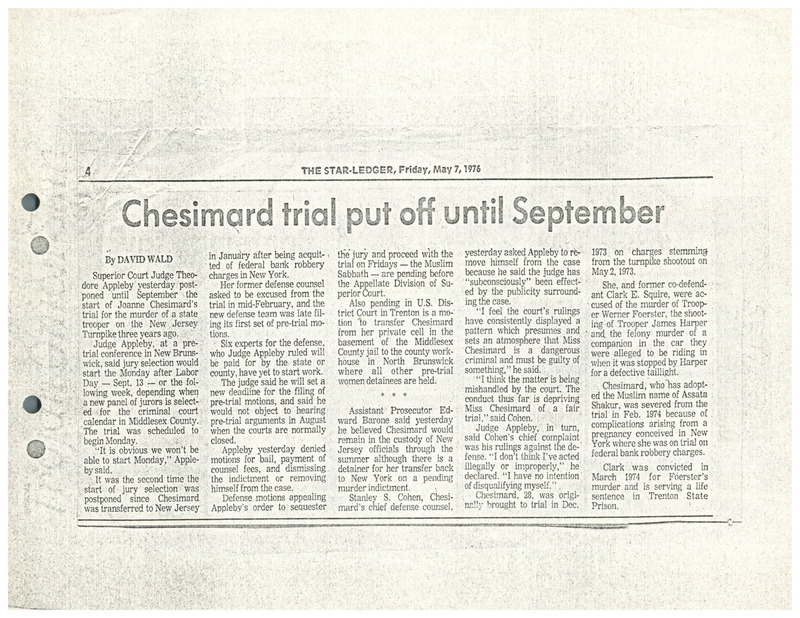
A newspaper article from The Star Ledger about Superior Court Judge Theodore Appleby postponing jury selection for the murder trial of Assata Shakur (JoAnne Chesimard) for the 1973 killing of a state trooper until September after her new defense team was late to file pre-trial motions.
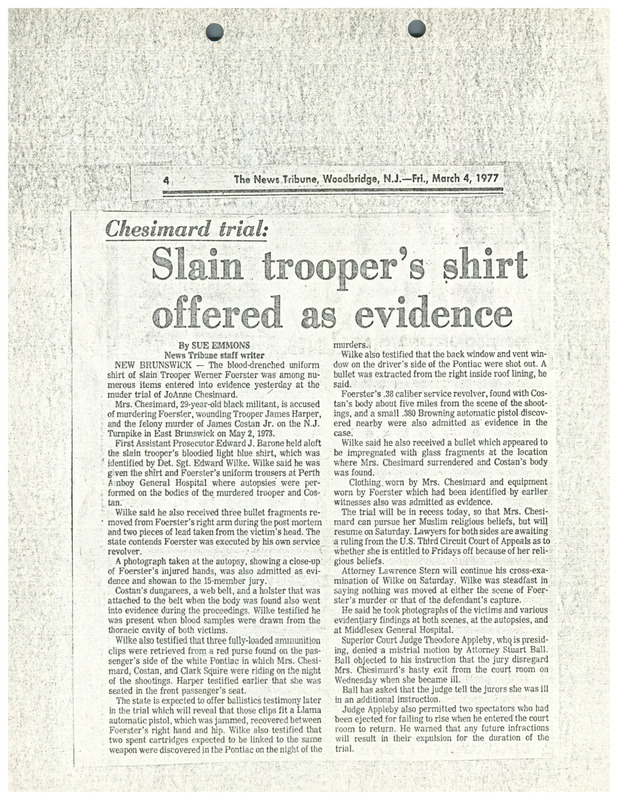
A newspaper article from The News Tribune about items entered into evidence by the prosecution in the Assata Shakur (JoAnne Chesimard) trial for the 1973 killing of a state trooper. The slain trooper’s bloodied uniform shirt was submitted into evidence, as well as bullet fragments pulled from the body, autopsy photos, and two firearms.
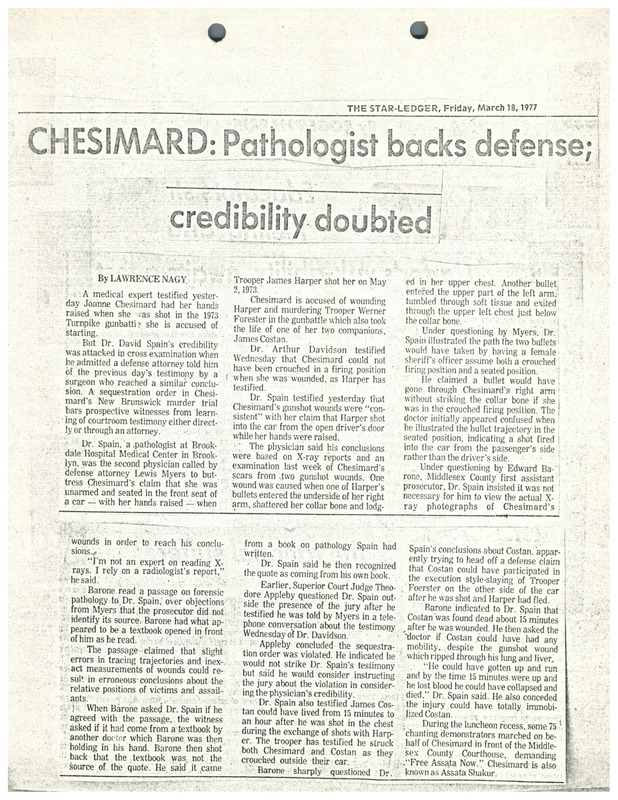
A newspaper article from The Star-Ledger about the testimony of defense witness Dr. David Spain during the trial of Assata Shakur (JoAnne Chesimard) for the 1973 killing of a state trooper. He testified about the wounds she sustained, arguing that she couldn’t have shot from a crouching position due to the position of her wounds from the shootout.
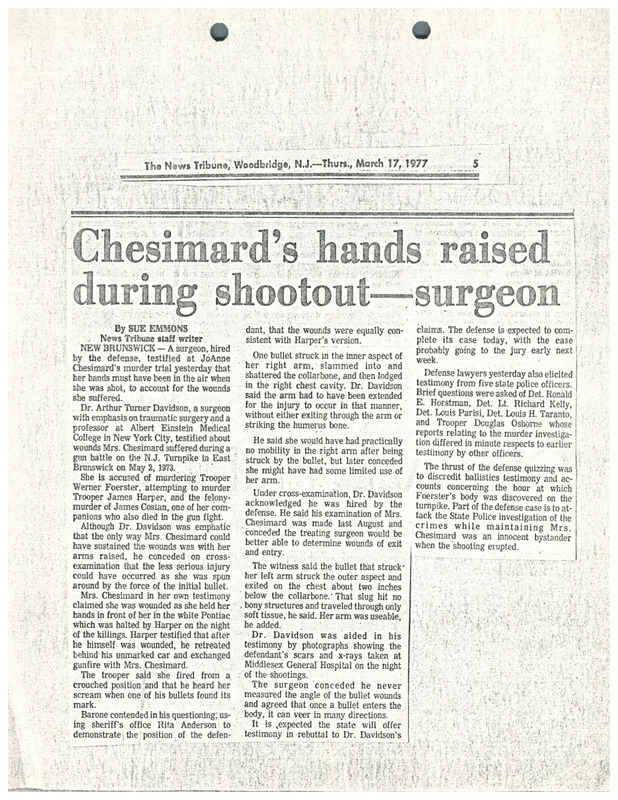
A newspaper article from The News Tribune about the testimony of defense witness Dr. Arthur Turner Davidson, a surgeon with emphasis on traumatic surgery, during the trial of Assata Shakur (JoAnne Chesimard) for the 1973 killing of a state trooper. He goes into detail about the injuries Shakur and the others sustained in the shootout.
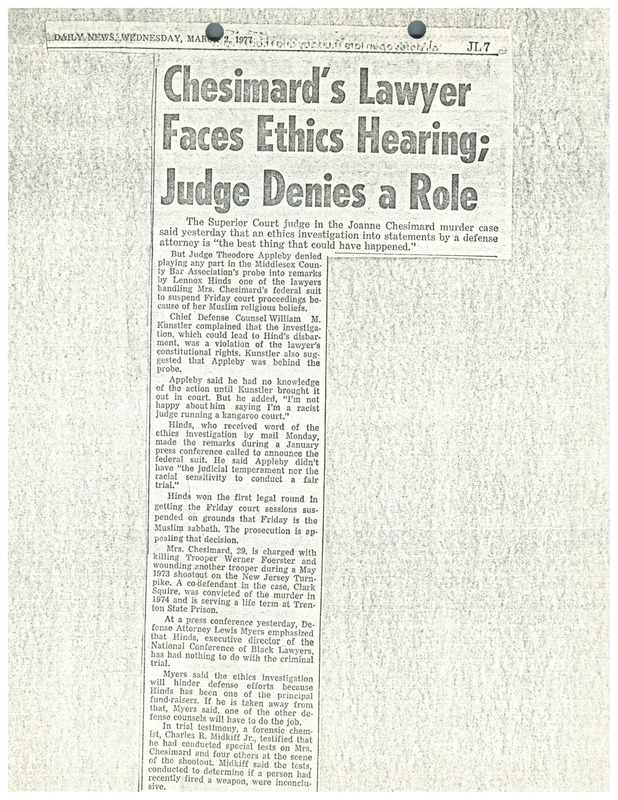
An article from Daily News about Lennox Hinds, president of the National Conference of Black Lawyers, speaking out against his critics for his support of Assata Shakur (JoAnne Chesimard) after being cited by The Ethics Committee of the Middlesex County Bar Association during Shakur’s trial for the 1973 killing of a state trooper.
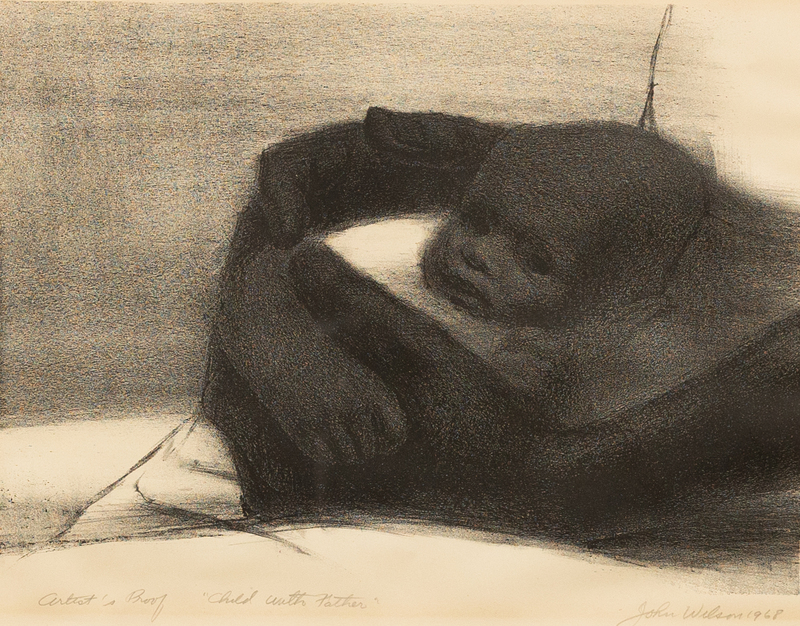
John Woodrow Wilson was a sculptor, painter, and printmaker from Roxbury, MA. "Child With Father" shows a baby wrapped in cloth as large shadowy hands are folded around the baby, making a round, square-like shape.
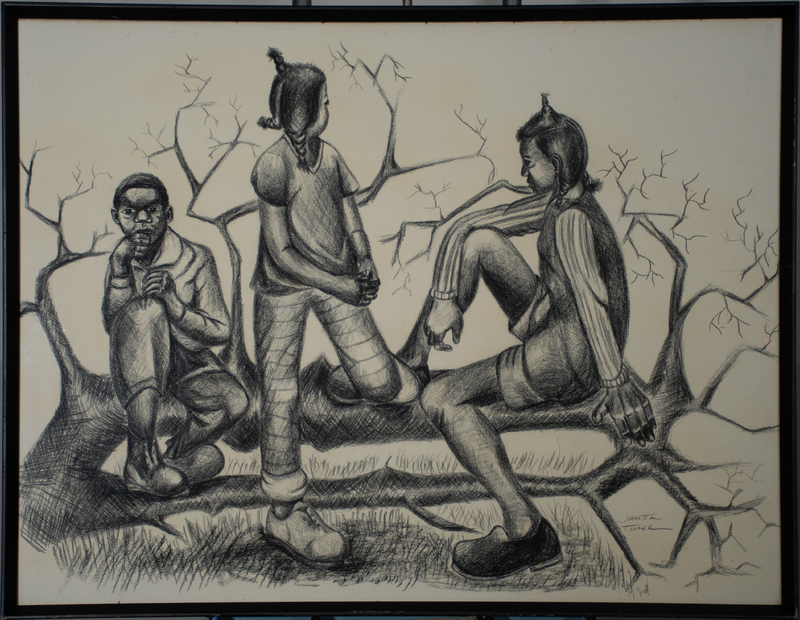
Tinker’s drawing shows three children lounging around a fallen tree. The two girls are depicted with elongated limbs, and the rightmost girl also has oversized hands. Dr. Biggers influenced his students to draw the hands and feet of their subjects in great detail and disproportionately large. This style continues to be taught to and implemented in the works of TSU artists in the 21st century.
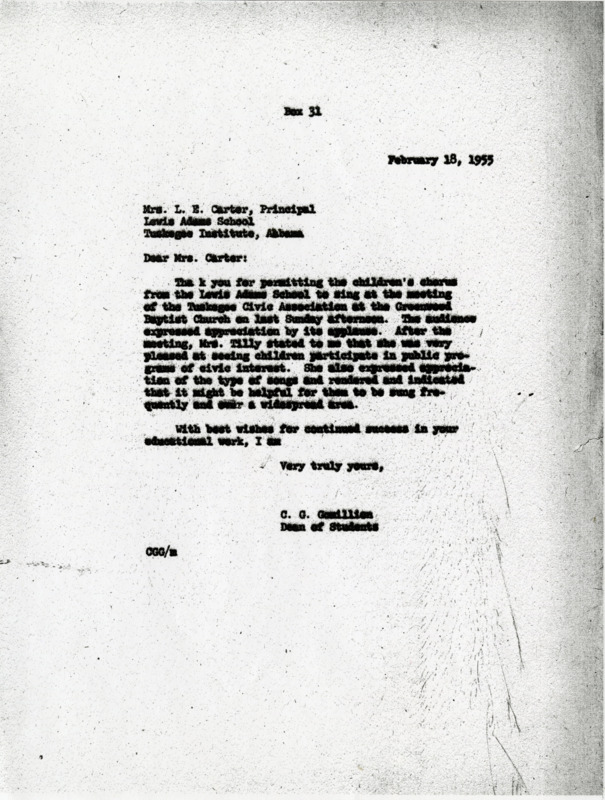
A letter form the Charles G. Gomillion to Mrs. L.E. Carter thanking her for allowing the children’s choir to sing this pact Tuskegee Civic Association meeting.