Case Data and Exhibits for Brown III, a relitigation of Brown v. Topeka Board of Education (1954) that corrected resegregation issues caused by open enrollment school choice in 1992. Document to the plaintiffs from the defense in response to questions concerning student transfer numbers.
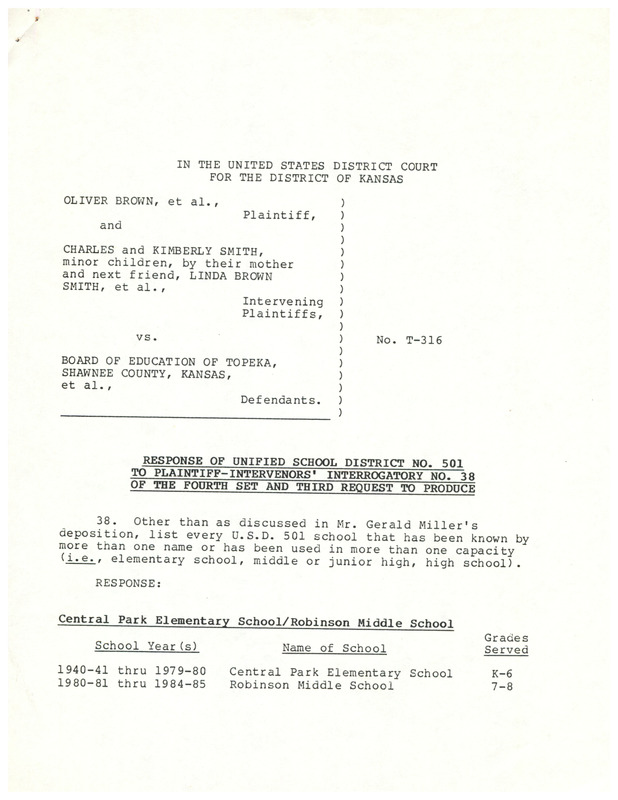
Case Data and Exhibits for Brown III, a relitigation of Brown v. Topeka Board of Education (1954) that corrected resegregation issues caused by open enrollment school choice in 1992. Document to the plaintiffs from the defense answering questions about Topeka schools that have changed names or have been used in different capacities or grade levels.
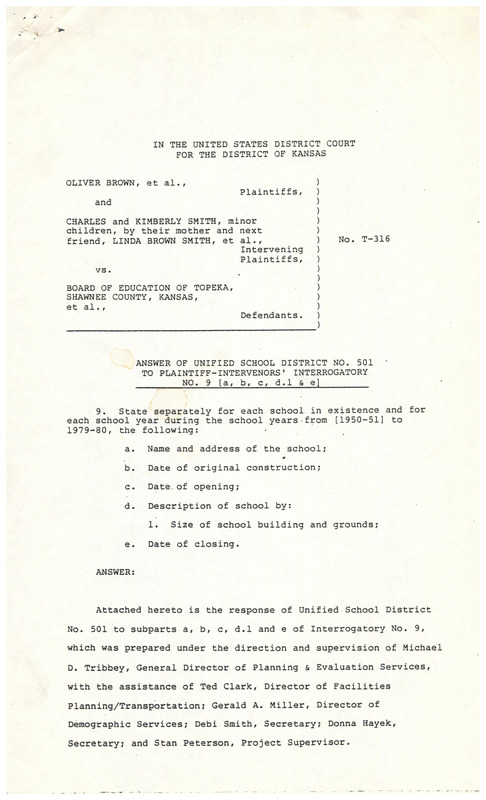
Case Data and Exhibits for Brown III, a relitigation of Brown v. Topeka Board of Education (1954) that corrected resegregation issues caused by open enrollment school choice in 1992. Document to the plaintiffs from the defense answering questions about Topeka schools construction dates, opening dates, and closing dates between 1950-1980.
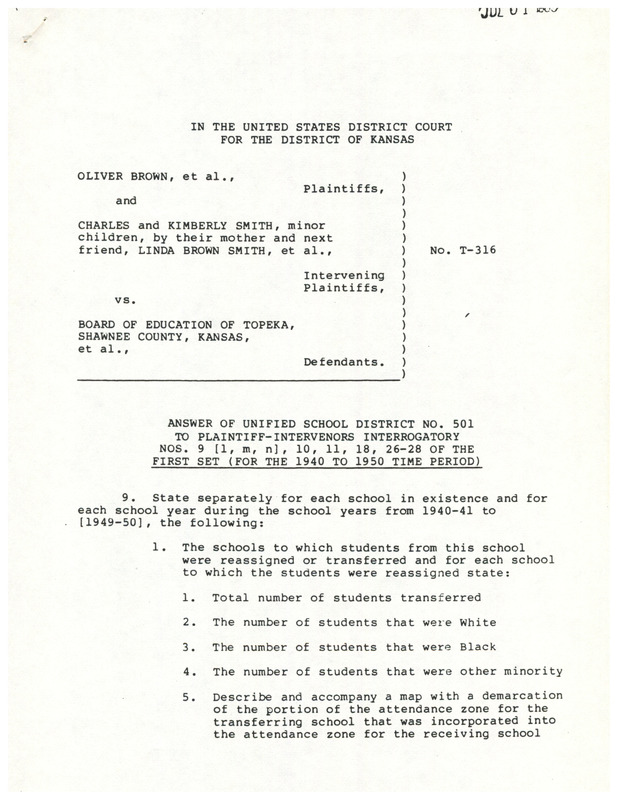
Case Data and Exhibits for Brown III, a relitigation of Brown v. Topeka Board of Education (1954) that corrected resegregation issues caused by open enrollment school choice in 1992. Document to the plaintiffs from the defense answering questions about student transfers and reassignments in Topeka schools between 1940 and 1950.
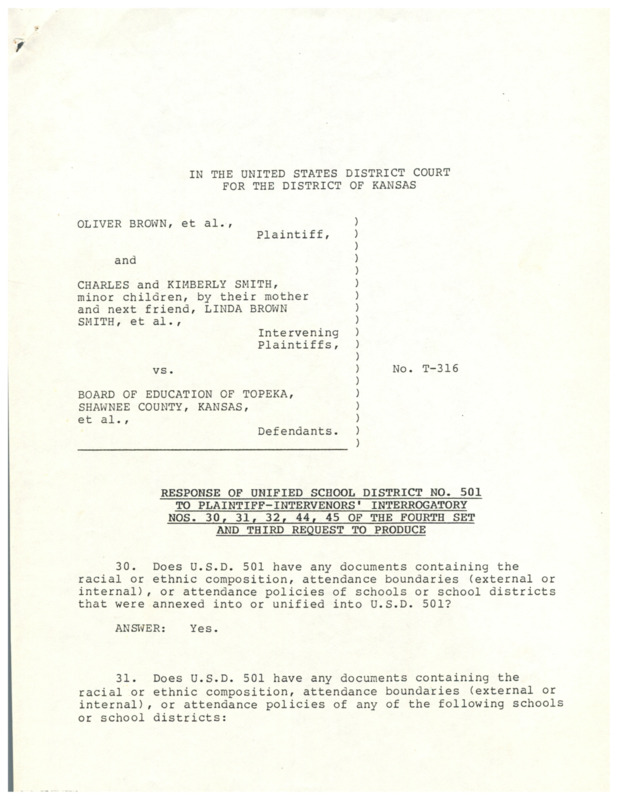
Case Data and Exhibits for Brown III, a relitigation of Brown v. Topeka Board of Education (1954) that corrected resegregation issues caused by open enrollment school choice in 1992. Document to the plaintiffs from the defense in response to a request for documents about Topeka School student demographics and attendance boundaries and policies.
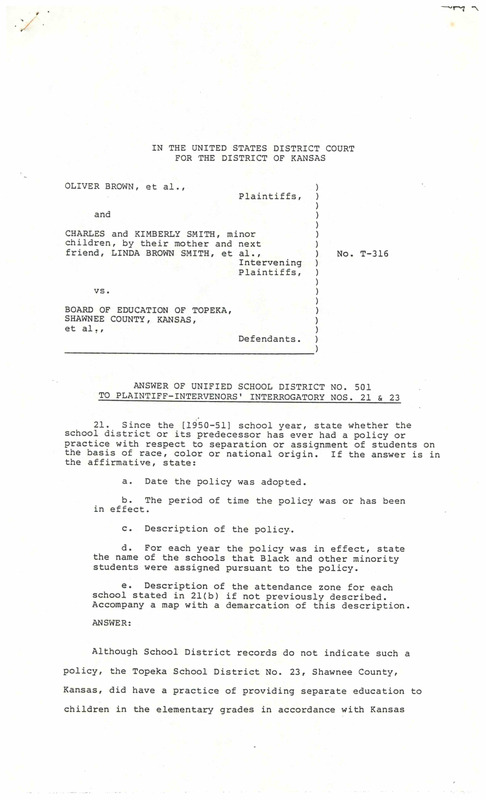
Case Data and Exhibits for Brown III, a relitigation of Brown v. Topeka Board of Education (1954) that corrected resegregation issues caused by open enrollment school choice in 1992. Document to the plaintiffs from the defense in response to questions about the school district’s former and current policies on segregation and desegregation.
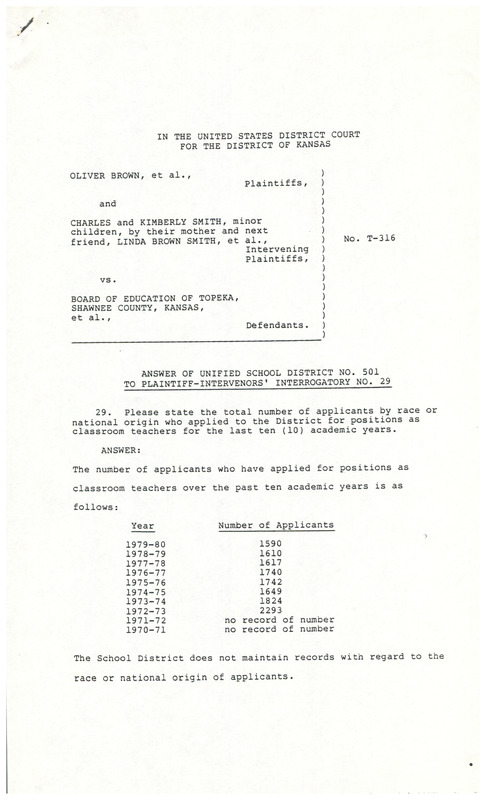
Case Data and Exhibits for Brown III, a relitigation of Brown v. Topeka Board of Education (1954) that corrected resegregation issues caused by open enrollment school choice in 1992. Document to the plaintiffs from the defense in response to a request for the number of applicants by race or national origin for district jobs over the past decade.
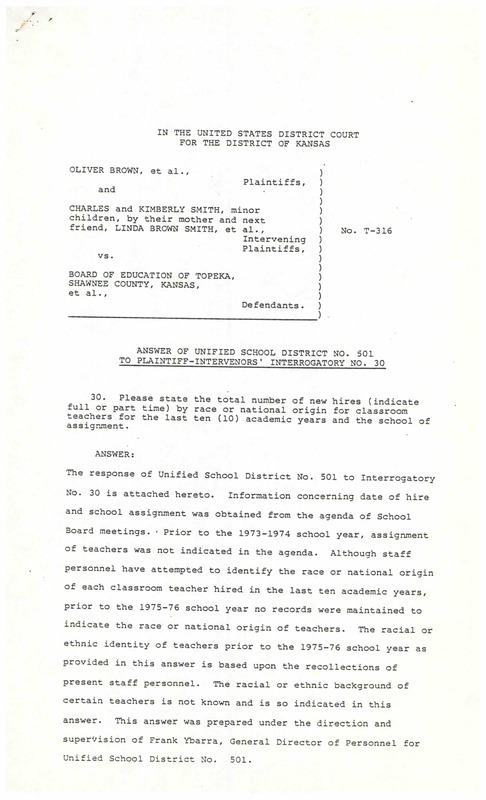
Case Data and Exhibits for Brown III, a relitigation of Brown v. Topeka Board of Education (1954) that corrected resegregation issues caused by open enrollment school choice in 1992. Document to the plaintiffs from the defense in response to a request for the number of new hires by race or national origin for district jobs over the past decade.
Case Data and Exhibits for Brown III, a relitigation of Brown v. Topeka Board of Education (1954) that corrected resegregation issues caused by open enrollment school choice in 1992. Document to the plaintiffs from the defense seeking clarification to questions and definitions of terms from previous plaintiff inquiries.
Case Data and Exhibits for Brown III, a relitigation of Brown v. Topeka Board of Education (1954) that corrected resegregation issues caused by open enrollment school choice in 1992. Document to the plaintiffs from the defense in response to a question about the creation of the school district and how it is presently governed.
Case Data and Exhibits for Brown III, a relitigation of Brown v. Topeka Board of Education (1954) that corrected resegregation issues caused by open enrollment school choice in 1992. Document to the plaintiffs from the defense in response to questions about vocational training programs, including names of schools, types of training, and more.
Case Data and Exhibits for Brown III, a relitigation of Brown v. Topeka Board of Education (1954) that corrected resegregation issues caused by open enrollment school choice in 1992. Document to the plaintiffs from the defense in response to a question about how the vocational training programs have been and are currently being funded.
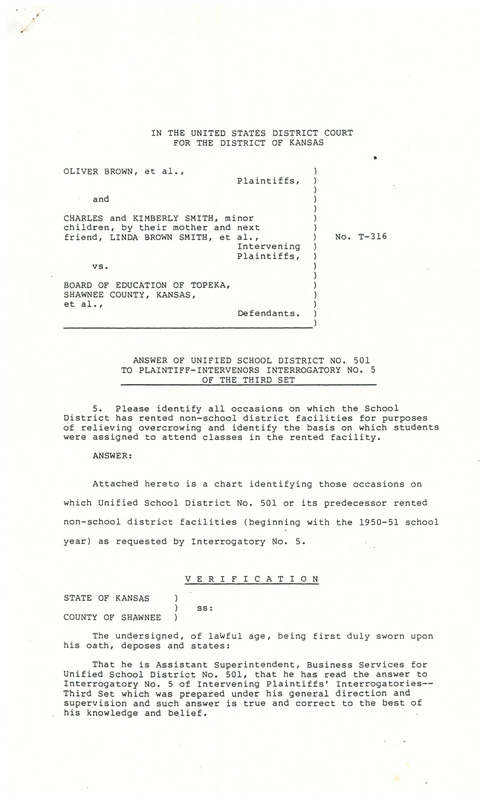
Case Data and Exhibits for Brown III, a relitigation of Brown v. Topeka Board of Education (1954) that corrected resegregation issues caused by open enrollment school choice in 1992. Document to the plaintiffs from the defense in response to questions about overcrowded schools and times where facilities were rented to handle the issue.
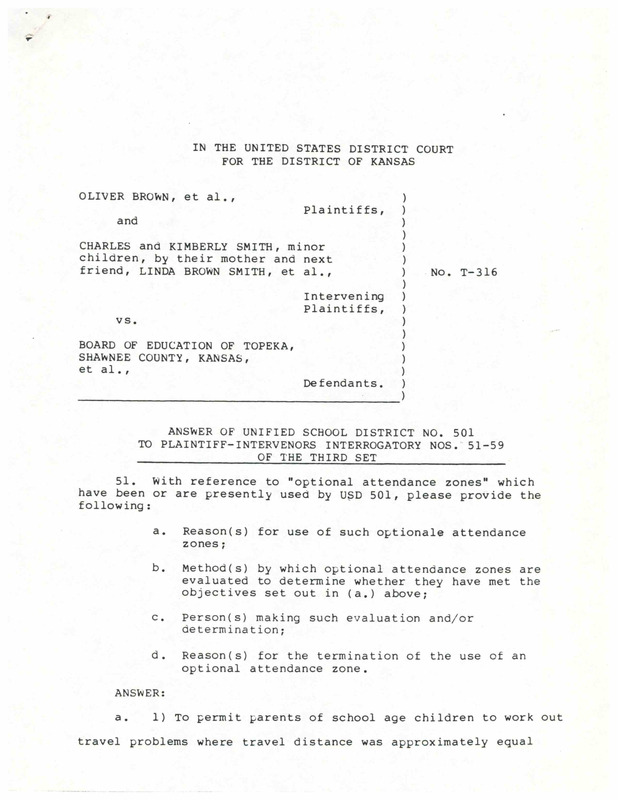
Case Data and Exhibits for Brown III, a relitigation of Brown v. Topeka Board of Education (1954) that corrected resegregation issues caused by open enrollment school choice in 1992. Document to the plaintiffs from the defense in response to questions about optional attendance zones, including why they exist, how they are evaluated, and more.
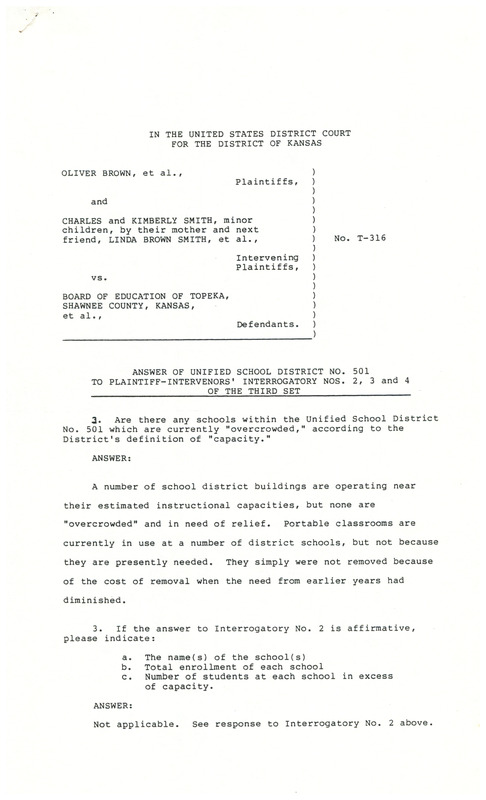
Case Data and Exhibits for Brown III, a relitigation of Brown v. Topeka Board of Education (1954) that corrected resegregation issues caused by open enrollment school choice in 1992. Document to the plaintiffs from the defense in response to questions about overcrowded schools in the district and a definition of the word capacity.
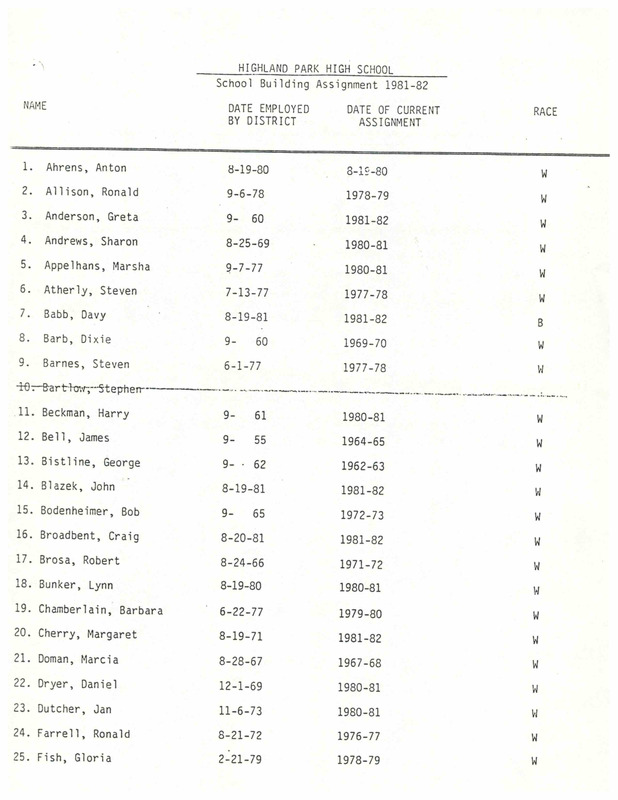
Case Data and Exhibits for Brown III, a relitigation of Brown v. Topeka Board of Education (1954) that corrected resegregation issues caused by open enrollment school choice in 1992. Document to the plaintiffs from the defense in response to questions about teacher school assignments, current assignments, race of teacher, year hired, and more.
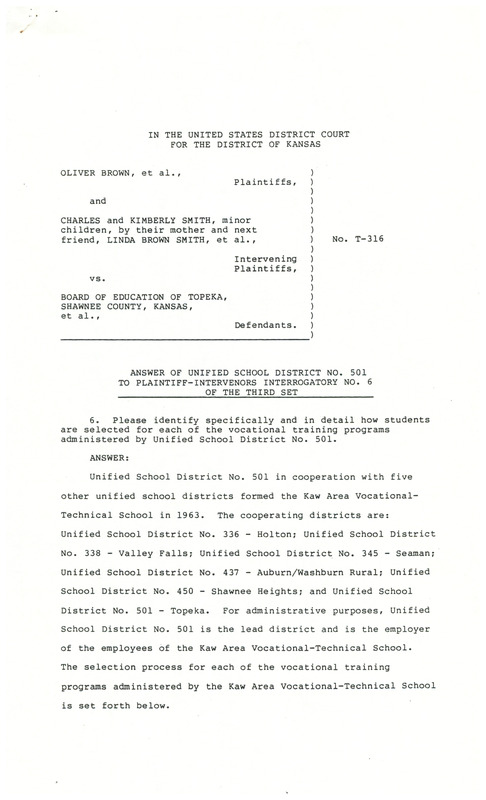
Case Data and Exhibits for Brown III, a relitigation of Brown v. Topeka Board of Education (1954) that corrected resegregation issues caused by open enrollment school choice in 1992. Document to the plaintiffs from the defense in response to questions about the process for selecting students for the vocational training programs in the district.
Case Data and Exhibits for Brown III, a relitigation of Brown v. Topeka Board of Education (1954) that corrected resegregation issues caused by open enrollment school choice in 1992. Document from the defense answering the second set of questions posed by the plaintiff team during evidence discovery.
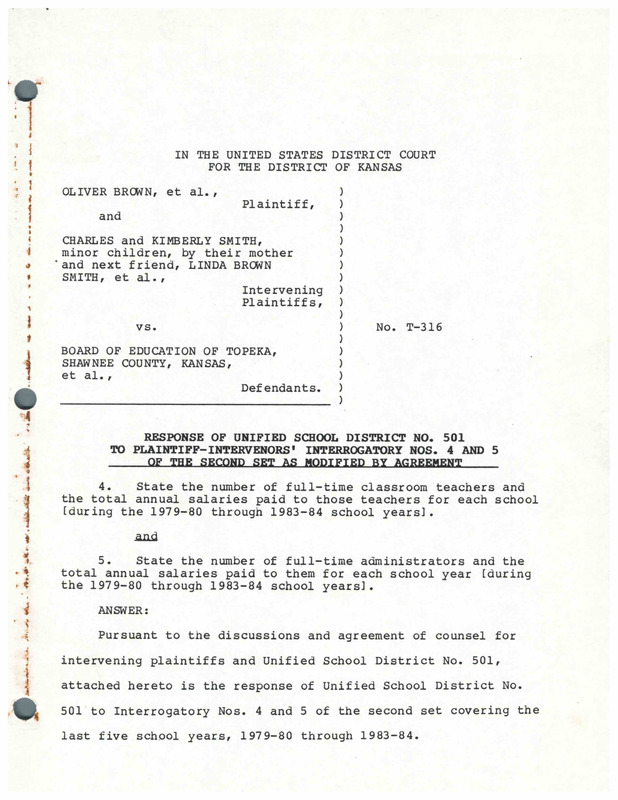
Case Data and Exhibits for Brown III, a relitigation of Brown v. Topeka Board of Education (1954) that corrected resegregation issues caused by open enrollment school choice in 1992. A document to the plaintiffs from the defense in response to the question of the number of teachers and administrators employed by the district from 1979-1984.
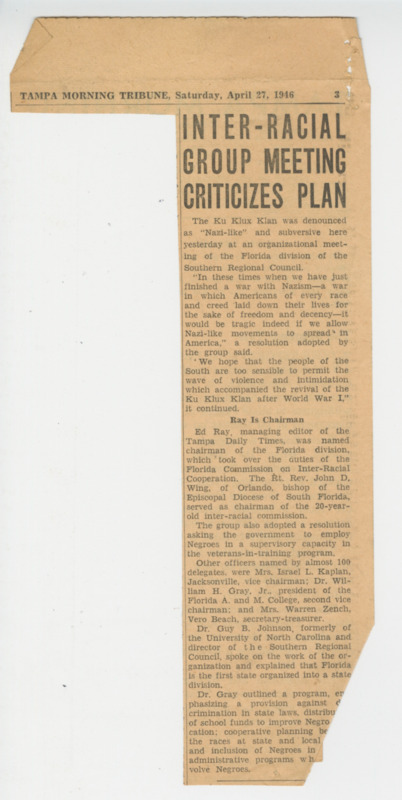
The Tampa Morning Tribune reported on the Florida Division of the Southern Regional Council's strong stance against the Ku Klux Klan, labeling it Nazi-like. Dr. Gray and fellow leaders introduced a comprehensive plan to tackle discrimination in state laws, calling for equal school funding and social progress in Florida.
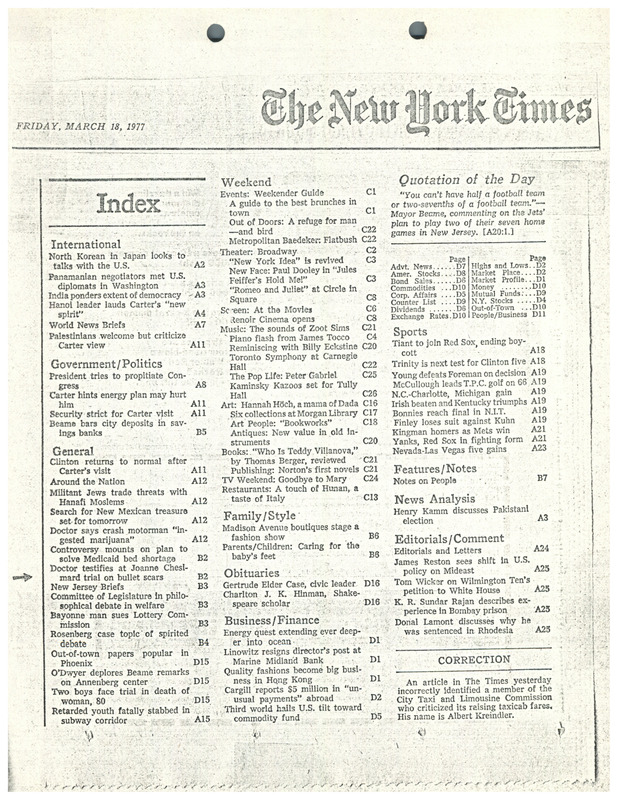
A newspaper article from The New York Times about the testimony of defense witness Dr. David Spain during the trial of Assata Shakur (JoAnne Chesimard) for the 1973 killing of a state trooper. He testified that the scar from a bullet hole on the body of Shakur shows that her arm was raised high in the direction of the gun that shot her.
Case Data and Exhibits for Brown III, a relitigation of Brown v. Topeka Board of Education (1954) that corrected resegregation issues caused by open enrollment school choice in 1992. List of all proposed findings of fact and conclusion of law submitted by the defense team, who argue the plaintiffs have failed to demonstrate guilt by any defendant.
Case Data and Exhibits for Brown III, a relitigation of Brown v. Topeka Board of Education (1954) that corrected resegregation issues caused by open enrollment school choice in 1992. Defendant response to the plaintiffs’ post-trial brief, which contends the plaintiffs have failed to show any evidence on which liability can be premised.
Case Data and Exhibits for Brown III, a relitigation of Brown v. Topeka Board of Education (1954) that corrected resegregation issues caused by open enrollment school choice in 1992. Response of individually-named defendants associated with the Kansas State Board of Education to the plaintiffs' post-trial brief.
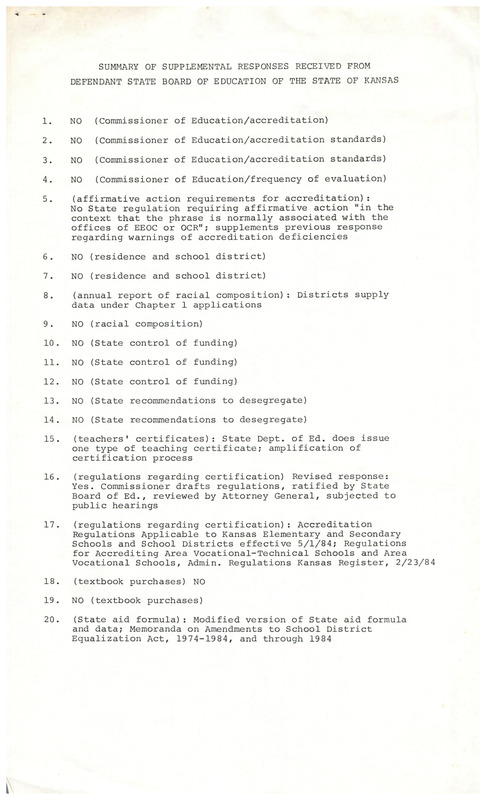
Case Data and Exhibits for Brown III, a relitigation of Brown v. Topeka Board of Education (1954) that corrected resegregation issues caused by open enrollment school choice in 1992. A document that lists a summary of all supplemental responses to the Plaintiff attorneys submitted by the defendant State Board of Education of Kansas.
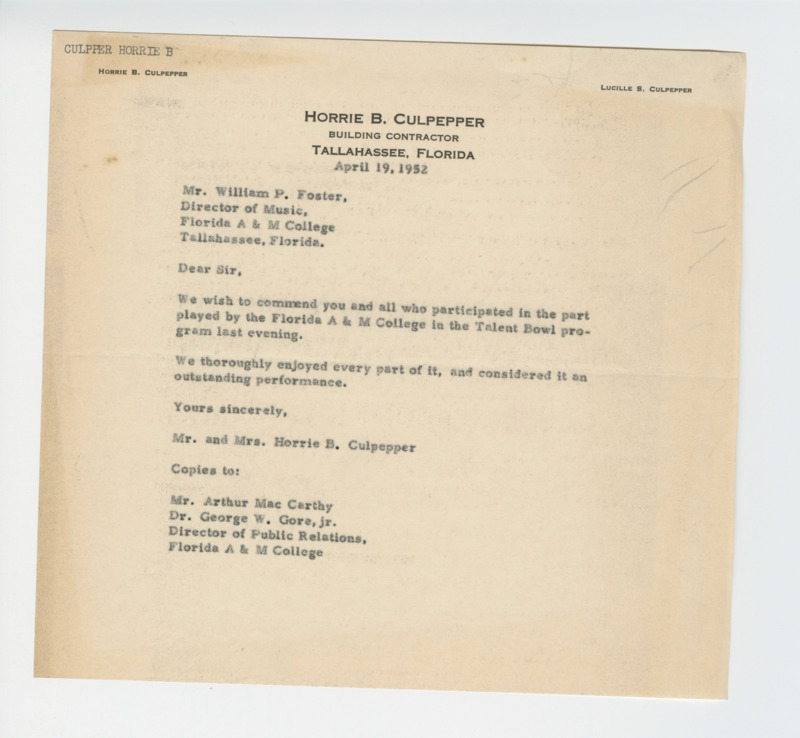
A collection of letters, invitations, and documents related to Dr. William P. Foster and the Florida A&M University Marching Band, Foster's Symphonic Band program, travel plans to Atlanta, and a letter outlining the band’s performance at Tennessee A&T. This collection showcases Foster's efforts to expand the band's reach and reputation.
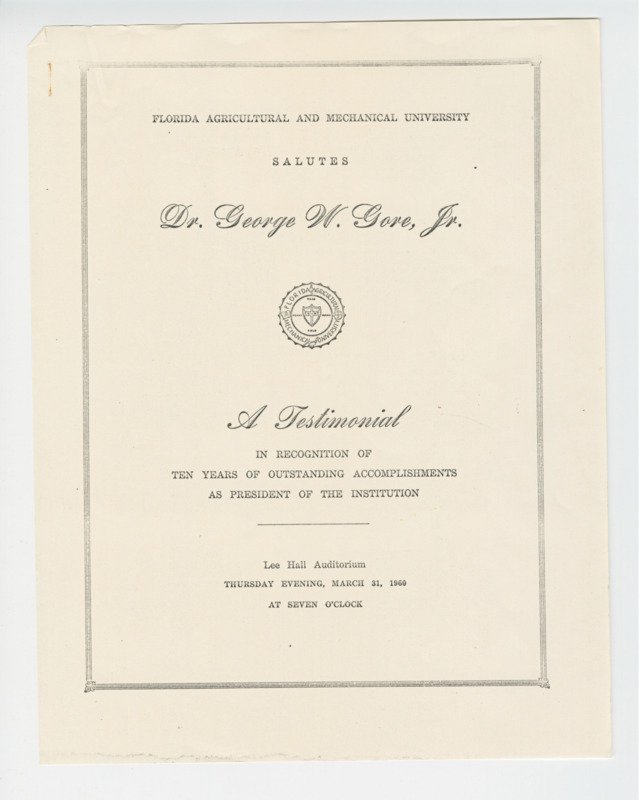
A testimonial recognizing President Gore’s ten-year anniversary of outstanding accomplishments during his tenure at FAMC and FAMU. The celebration honored his decade of leadership with the alma mater, various sing-alongs, and a schedule of remarks and presentations.
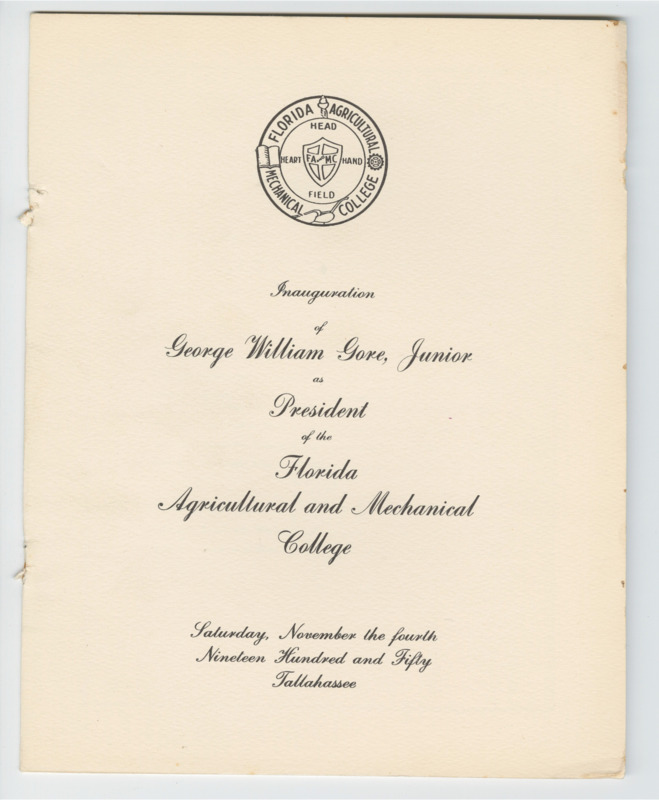
The inauguration packet for President Gore commemorates the start of his transformative leadership at FAMC and FAMU. It highlights his previous presidency at Tennessee State University and includes the ceremony program, speeches, and reflections on his vision for academic excellence, campus growth, and community engagement.
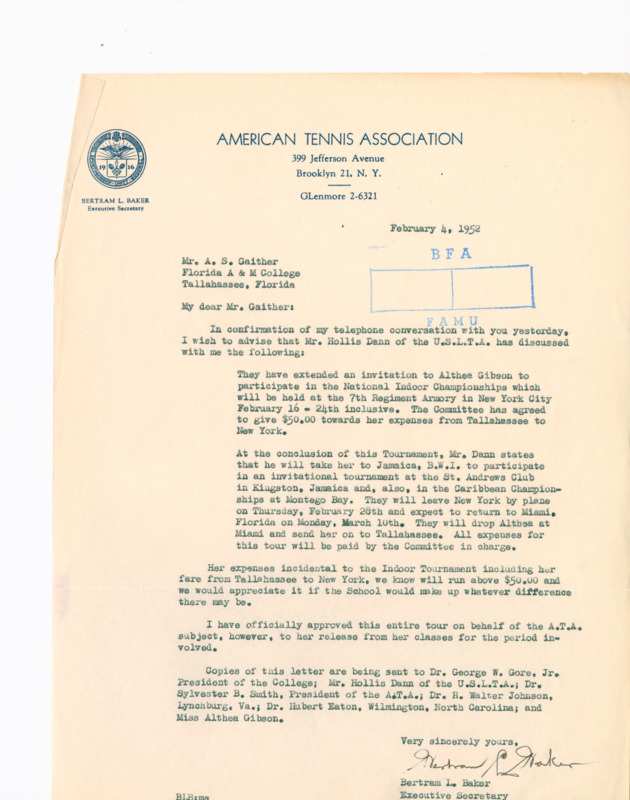
This collection gives astounding insight into the origins of Althea Gibson, the first Black person to win a Grand Slam event and play at Wimbledon. As an alum of Florida A&M, these letters show FAMU’s full support of Gibson through sponsorship of trips to competitions, Gibson’s return of that love, and her balancing her role as a student-athlete.
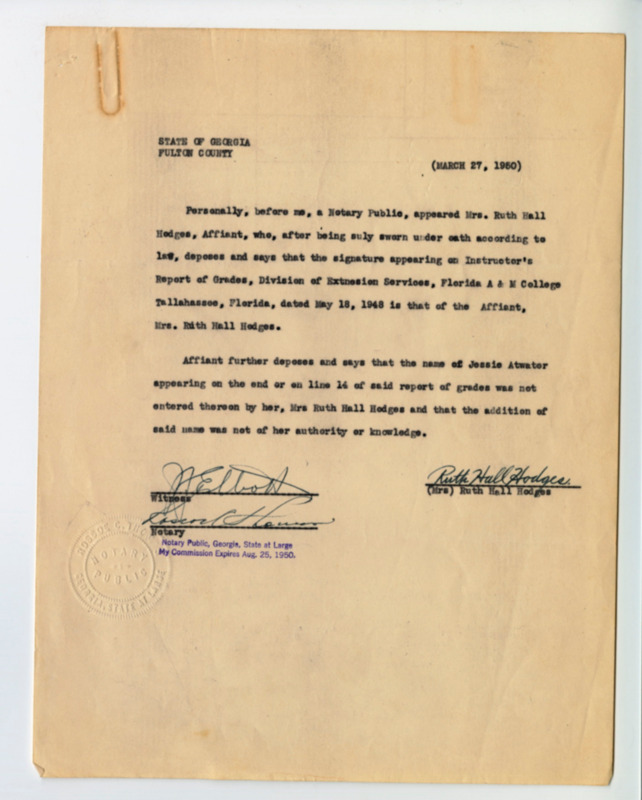
Numerous forms of documentation from the Registrar and a Georgia notary public regarding Quincy Center misconduct. The various documents include student grade records, an extension report, and official documents outlining the incidents and actions taken - seemingly supporting the ongoing investigation into the allegations.