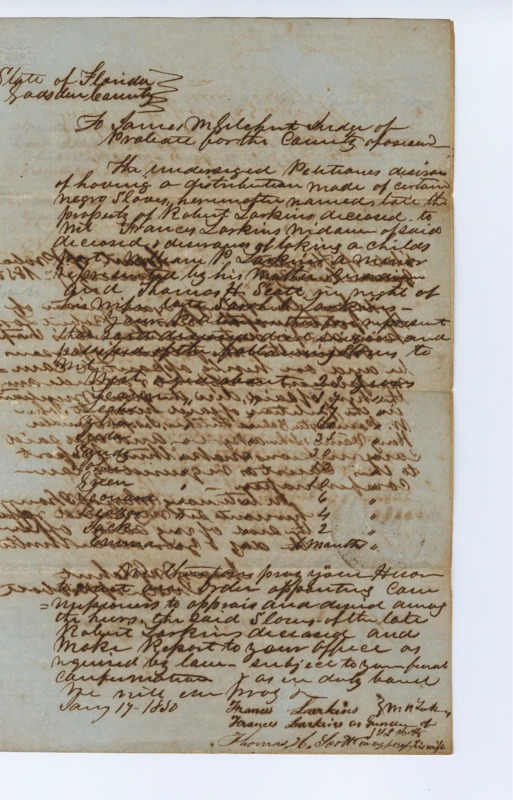
This rare 1850 slave document from Robert Larkin's estate discusses the manner of the estate's distribution. The ledgers include descriptions and price breakdowns.
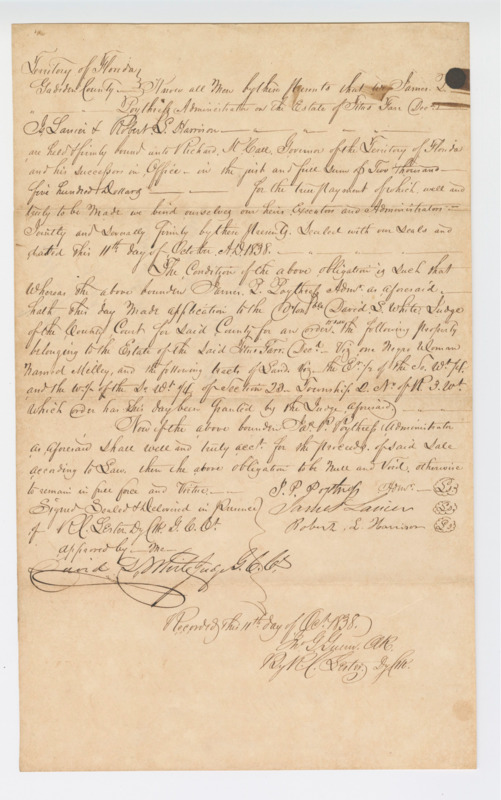
The Gadsden County court administered the estate of Titus Farr. The administration detailed Farr's assets, reflecting the economic reliance on enslaved labor in the region. This process underscored the legal framework of property management, where enslaved people were treated as assets and sold to settle debts.
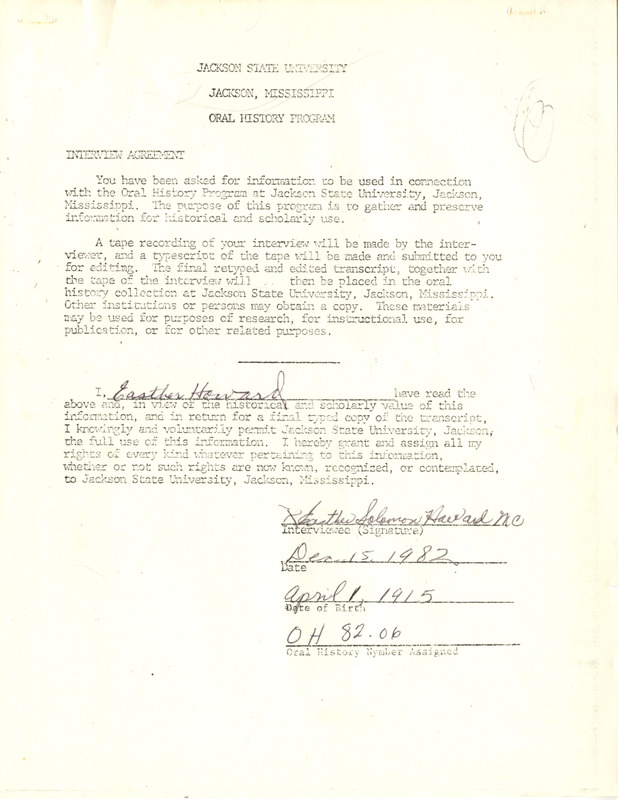
Esther Solomon Howard was born in the Farish Street District in 1915. Ms. Howard talks about her childhood in the Farish Street District, including attending Smith Robertson School, Central Church, and the Young Women’s Christian Association (Y.W.C.A.). She also talks extensively about her husband. The transcript is edited with handwritten notes.
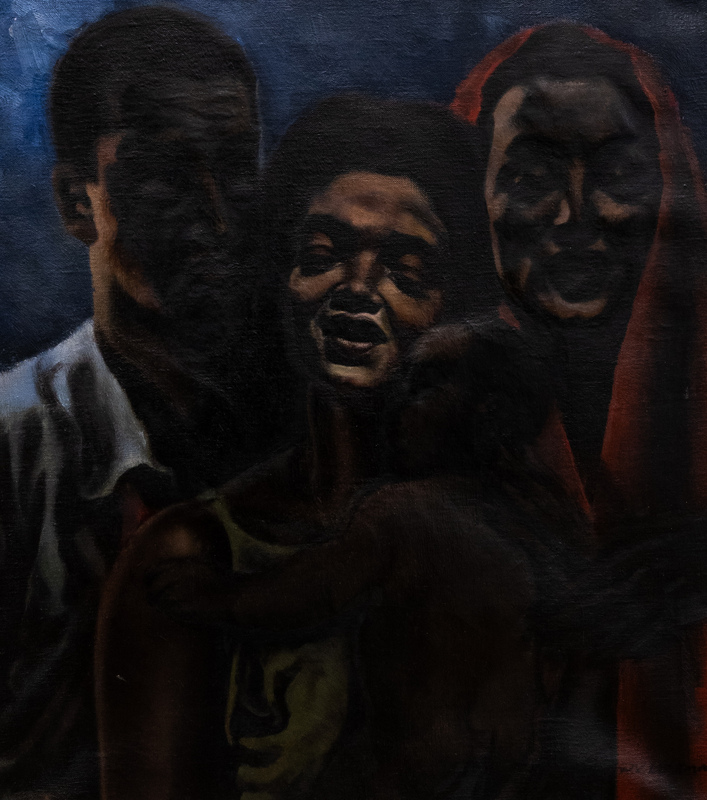
Romeyn van Vleck Lippman was a 19th-century painter and educator. "Eternal" depicts a family portrait of three generations in a dark composition. Lippman illustrates the immortality of humanity through familial legacies.
Ethel George McCallister recalls many memories from her childhood, the plantation she lived and worked on, family, school, and her experiences in the church. She talks about her social life when she was young, and the relationships between the farmers, her marriage, and starting a family. She ends by talking about her family history.
Eunice Hicks began work at Head Start in 1965 as a social worker because of her degree in Sociology. She goes through her career and the different positions she held in the organization and the different centers she worked in. The interview is incomplete because Side A was recorded over.
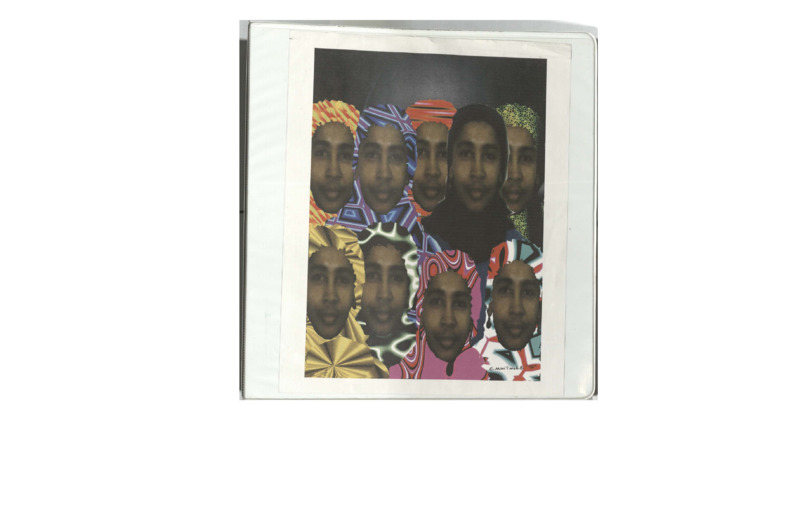
Bilal’s senior notebook includes her written philosophy of art, photographs of the artist’s works, and a copy of her senior exhibition brochure. As a part of the Texas Southern art curriculum under Dr. John T. Biggers and Professor Carroll Harris Simms, students would create these notebooks to explain their artistry and showcase the works they created as students.
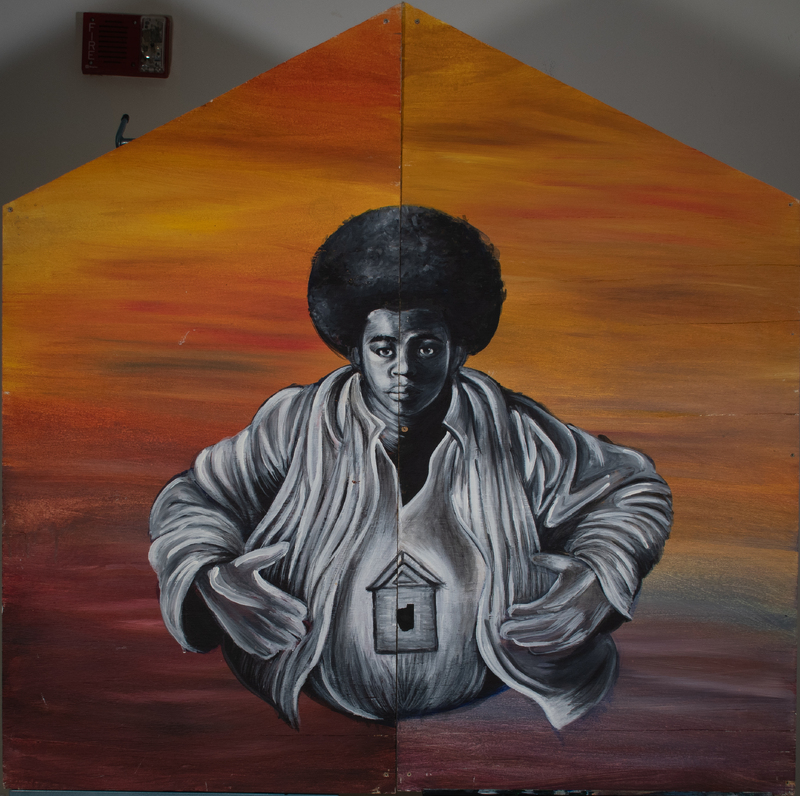
Foster’s painting is inspired by Charles White’s Sound of Silence. Third Ward is the historically Black neighborhood of Houston that Texas Southern calls home. Where White’s original features a seashell, Foster substitutes a rowhouse, the style of homes that are the heart of Third Ward. Dr. John T. Biggers, founder of Texas Southern's art department, studied under White at Hampton University.
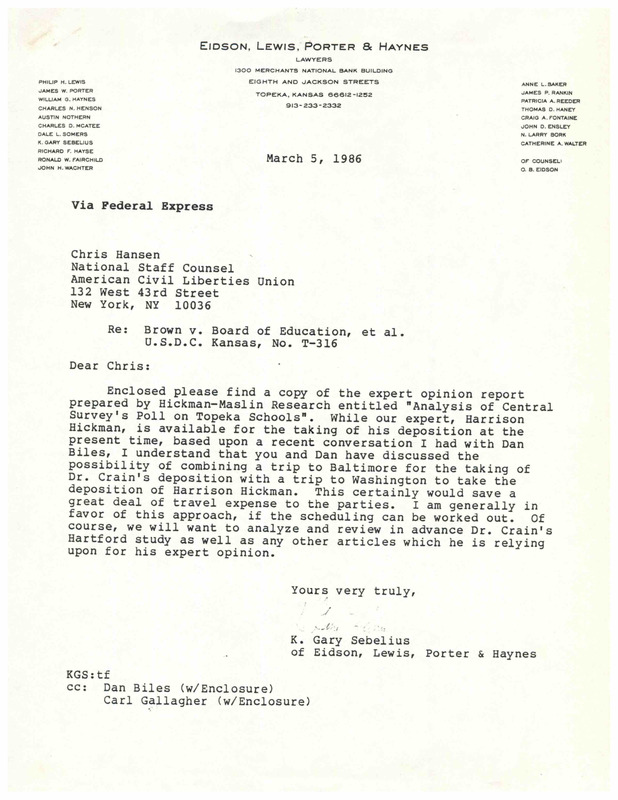
Case Data and Exhibits for Brown III, a relitigation of Brown v. Topeka Board of Education (1954) that corrected resegregation issues caused by open enrollment school choice in 1992. This was produced by defense team expert witness R. Harrison Hickman. He concludes that people didn’t equate a school being “mainly white” with it being better.
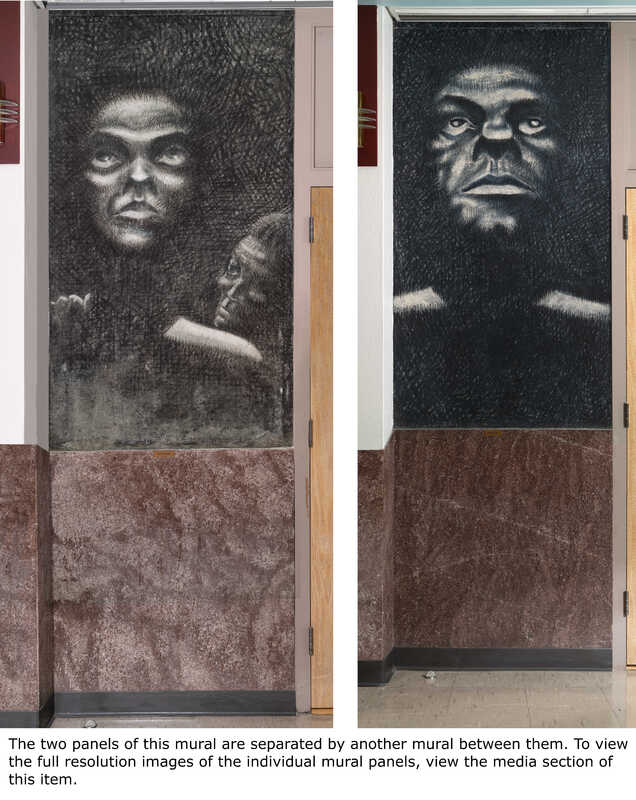
The graphic strength of Oliver's portraits is clearly evident in these two panels. By limiting his palette to black and white, the artist underscores the powerful gazes of the figures. Because of his enthusiasm and talent, Oliver was allowed to create additional murals when empty spaces were available.
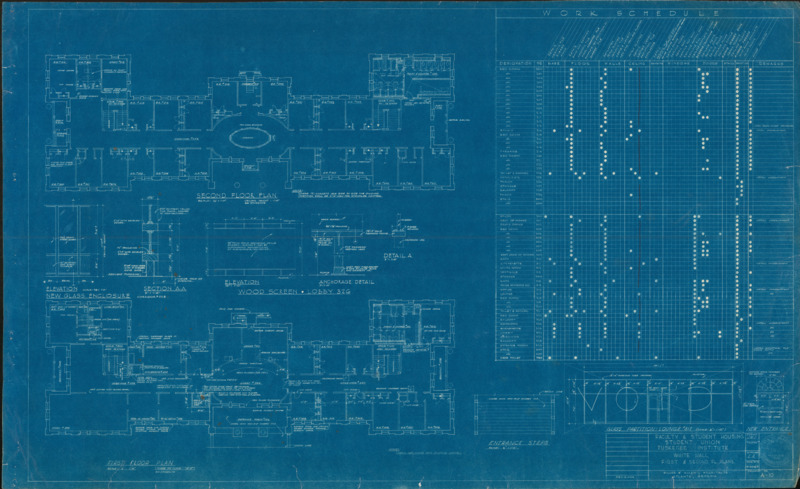
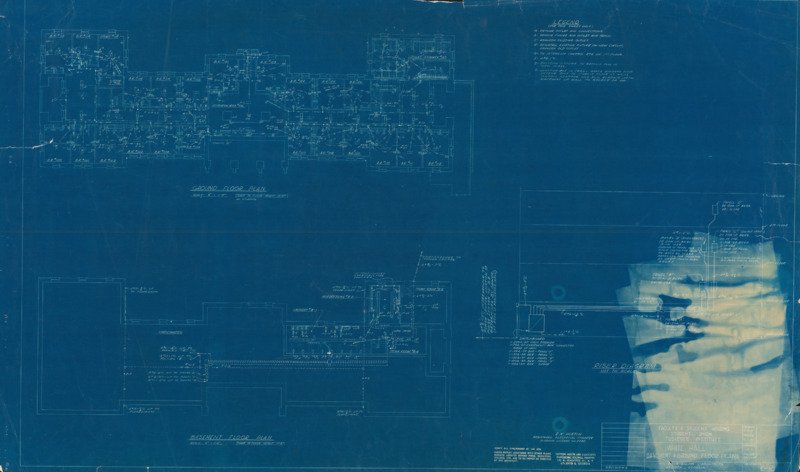
10th Architectual section drawing of the White Hall at Tuskegee Institute 1st and 2nd Floor plans. Drawing also shows work schedule for the renovations.
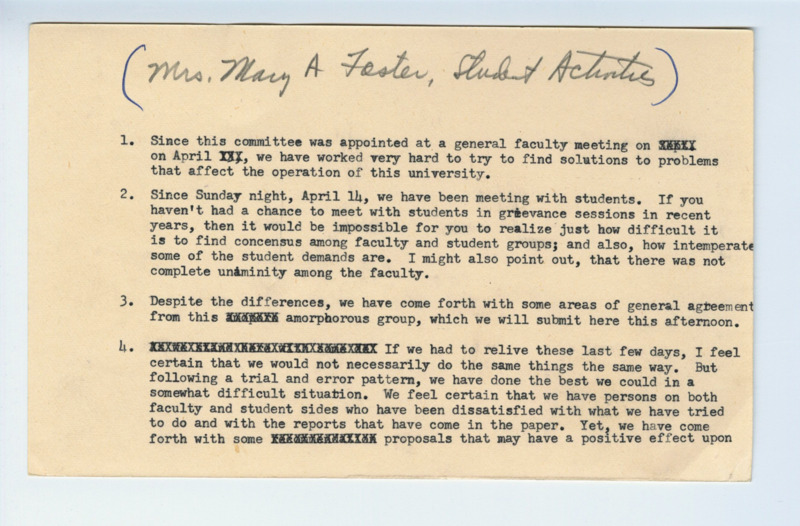
An outline of the report by the FAMU Faculty Administration Committee addresses the crisis following MLK’s assassination and the resulting student revolts. The committee highlights President Gore's efforts to seek constructive change while maintaining university operations and preserving FAMU's reputation amidst the closure.
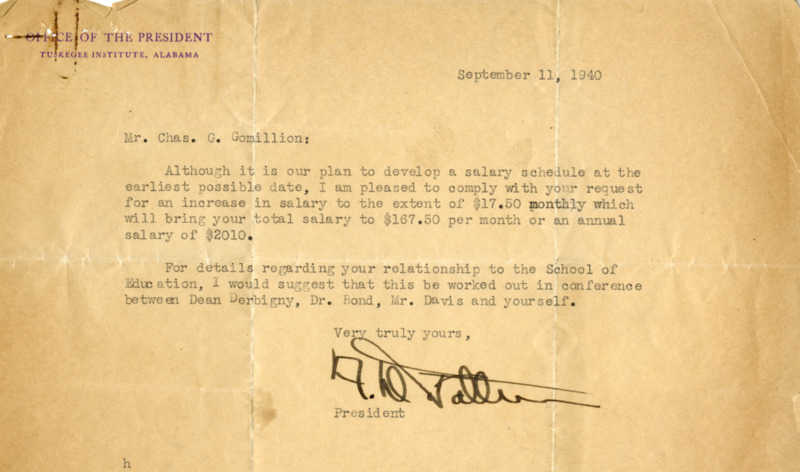
A letter from the third President of Tuskegee University, Dr. Frederick D. Patterson, confirming that Charles G. Gomillion will receive an increase in salary and continue his work at Tuskegee University.
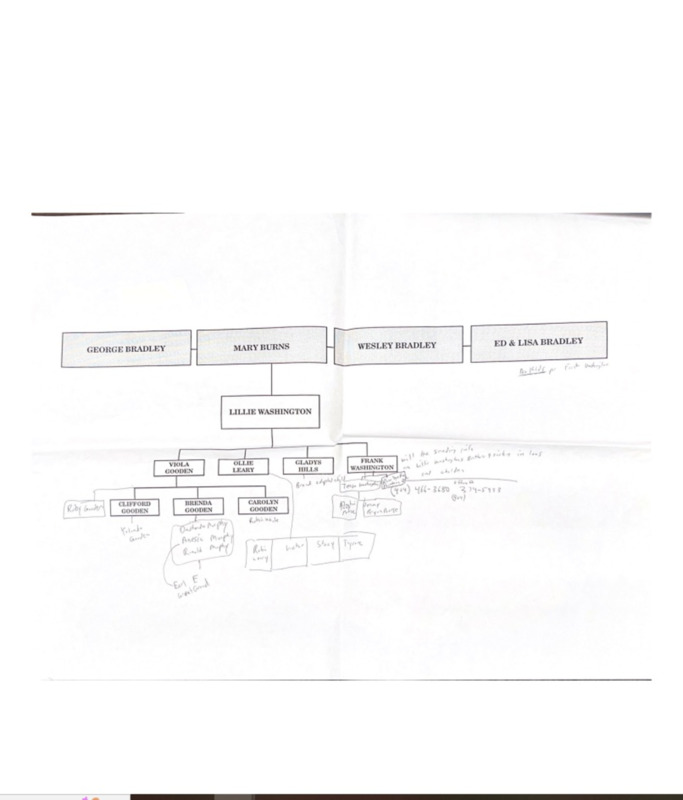
Genealogies based on the Transmit Confirmation Report and related correspondence, designed to track the descendants of the 1923 Rosewood massacre victims. It outlines the process of verifying familial connections to ensure the accurate identification of descendants for historical recognition and potential compensation.
Sifuentes shows multiple generations of a family, painted in a geometric style. Sifuentes borrows visual symbols from his teacher, Dr. Biggers, including the tortoise (longevity) and the serpent (danger and rebirth). Guardian ancestors are represented by figures with angel wings.
This document features seven detailed family trees of families deeply connected to the 1923 Rosewood massacre in an attempt to trace lineage, preserve historical value, and validate claims for compensation. They provide vital links to history to ensure descendants are recognized and connected to their heritage and the events of Rosewood.
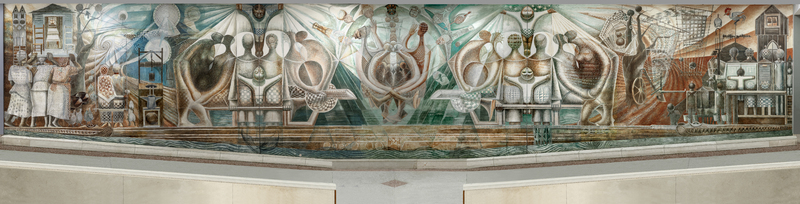
Texas Southern University students commissioned Biggers to paint this mural in the cafeteria of the student center. Composed of several distinct but interrelated images, Family Unity features several Afrocentric motifs that Biggers developed, including sacred geometry (checkerboards and spirals), shotgun houses, and husband-and-wife pairs. At the center is what Biggers called the “morning star,” which shows a couple embracing with their form suggesting a womb.
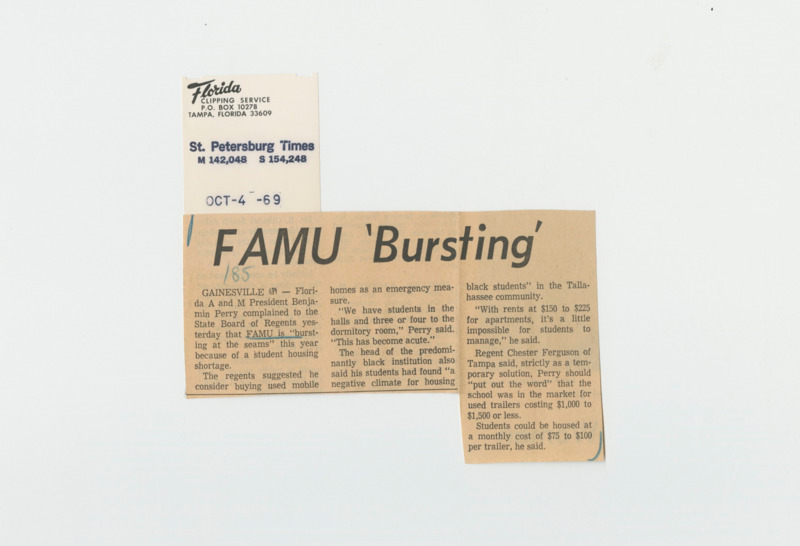
A 1969 newspaper clipping from the St. Petersburg Times describes an interaction between Florida A&M President Dr. Benjamin L. Perry and the State Board of Regents. Perry complained that “FAMU is ‘bursting at the seams’ because of a student housing storage,” a problem the institution has recurringly faced in recent years.
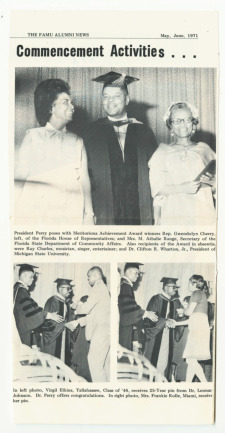
The FAMU Alumni News reported on the Summer 1971 Commencement, which some high-profile figures attended. Names include Senior Ebony Editor Lerone Bennett (commencement speaker, not pictured), Florida House Rep. Gwendolyn Cherry, Secretary of the Florida State Department of Community Affairs M. Athalie Range, and Ray Charles (absent from the event).
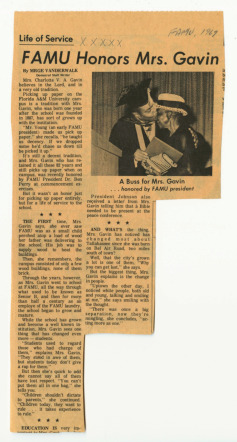
A timeless piece from the Tallahassee Democrat on a woman who essentially grew up with Florida A&M University. Born a year after the institution’s founding, 1888, Charlotte V. A. Gavin offers historical insight into both the early days of FAMU and the growth of Tallahassee’s community through integration.
A product made from muscadine grapes grown at Florida Agricultural and Mechanical University's very own vineyard. Muscadine grapes are a unique variety native to the southeastern United States, known for their thick skins and sweet, musky flavor.
A beverage product made from muscadine berries grown at Florida Agricultural and Mechanical University. Muscadine berries are a type of grape native to the southeastern United States.
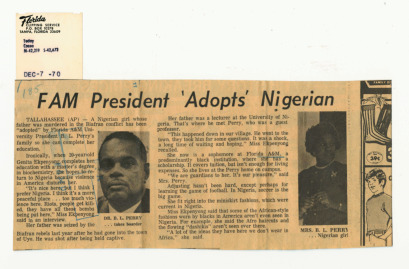
When 20-year-old Genita Ekpenyong’s father was murdered in Nigeria’s Biafran conflict, B. L. Perry (who met her father when he was a guest professor in Nigeria) temporarily became her guardian so she could complete her education. Despite this, Ekpenyong was itching to return to Nigeria because the violence in the U.S. was too much for her to bear.
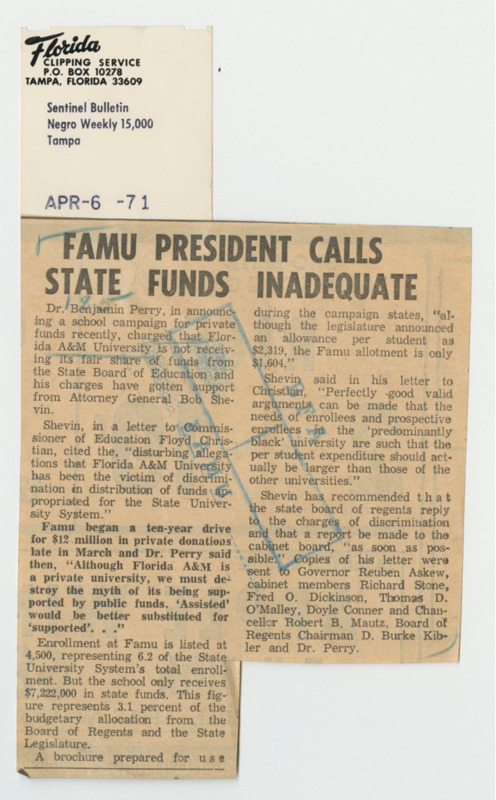
In the early 1970s, President Dr. Benjamin Perry announced a private funding campaign for the university after asserting that the State Board of Education was withholding FAMU’s fair share of funds, granting them only 3.1% of the budget from the Board of Regents and the State Legislature. Then-Attorney General Bob Shervin supported his statements.
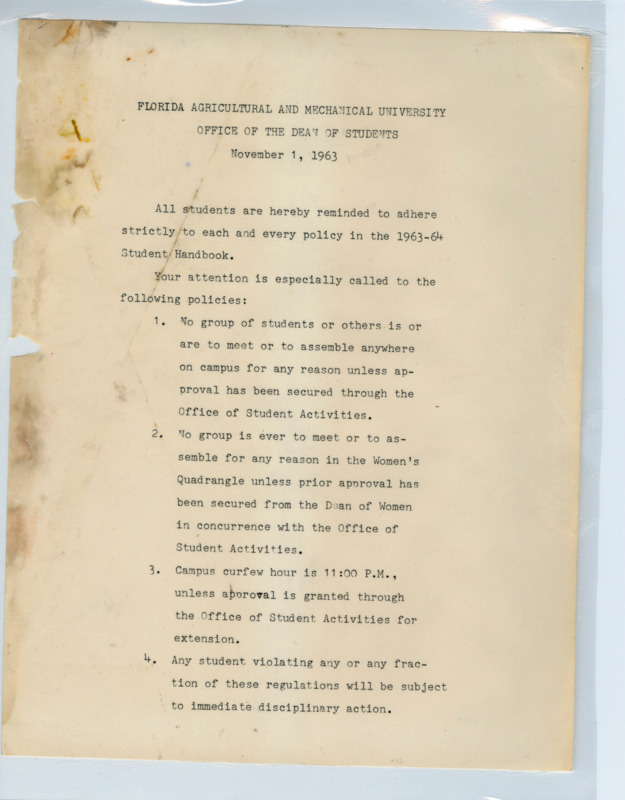
In mid-November 1963, a letter was sent detailing updates to the student handbook, outlining behavioral expectations and consequences. It was followed by another letter informing students that those involved in a county court conviction would face strict probation for the remainder of the trimester, with severe academic and disciplinary penalties.
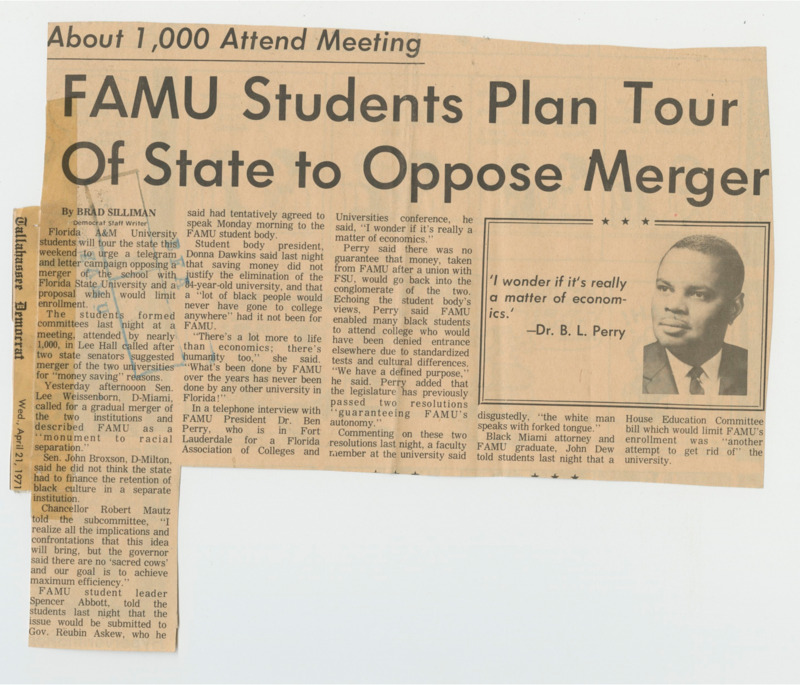
Journalist Brad Silliman, writing for the Tallahassee Democrat, discusses a plan created by students at Florida A&M University to tour the state of Florida on a telegram and letter campaign to the Florida Congress. This protest was in response to a suggestion by two state senators to merge the two institutions to save costs.
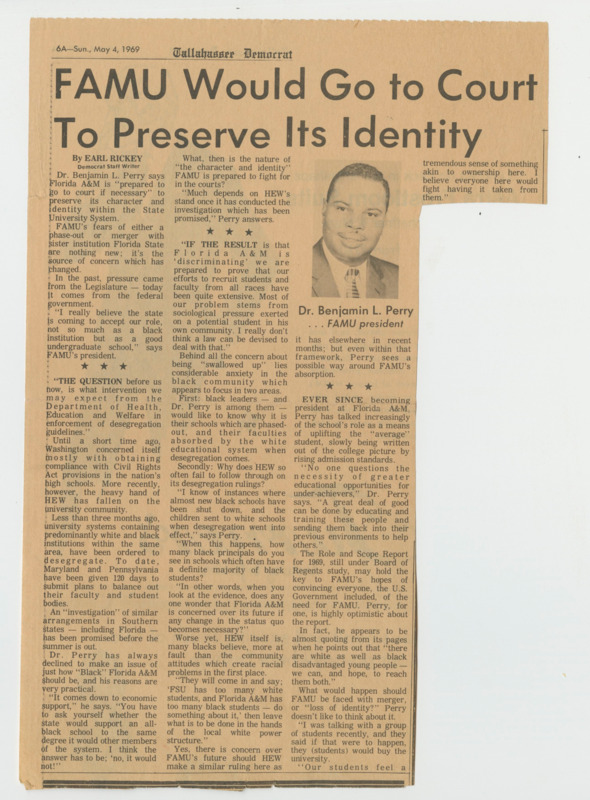
In the late 1960s to mid-1970s, threats of Florida A&M being phased out like other small, predominantly Black institutions or merged with Florida State University (a predominantly white institution) were recurrent. However, university President Benjamin L. Perry held his ground, threatening legal action against the Florida State University System.
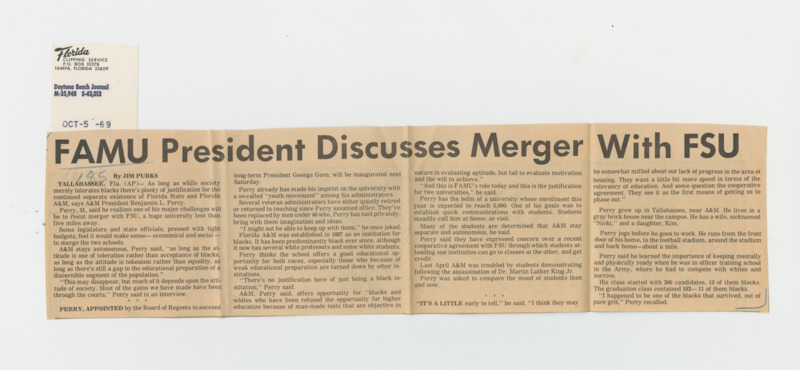
This article provides a more nuanced position Benjamin L. Perry held on merging with Florida State University. While he was adamant about maintaining Florida A&M’s autonomy, Perry made sure to say that the institution “offers opportunities for blacks and whites” as justification for that stance.
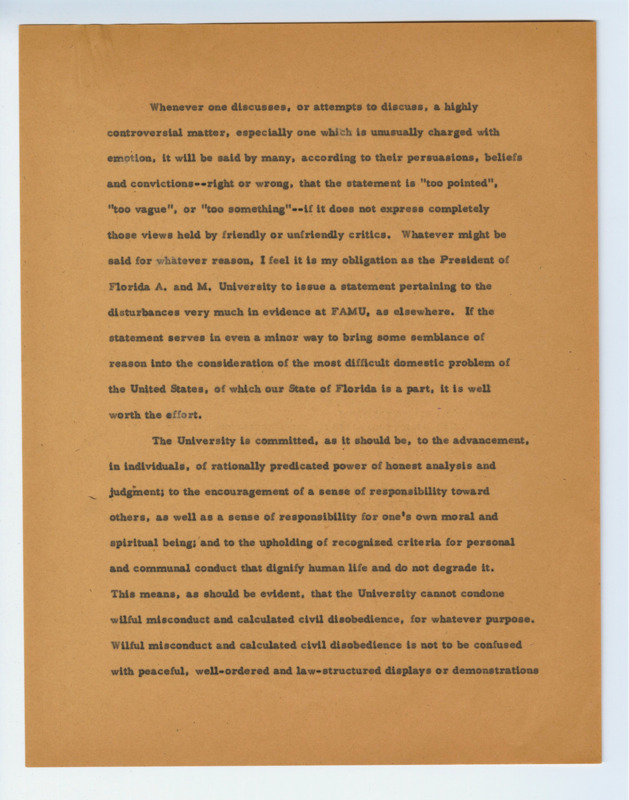
In 1960, following a civil riot, FAMU released a statement addressing student demonstrations. The university faced criticism for suspending two students and placing 30 on strict probation, asserting that the disciplinary actions were essential to restoring order and upholding its standards.