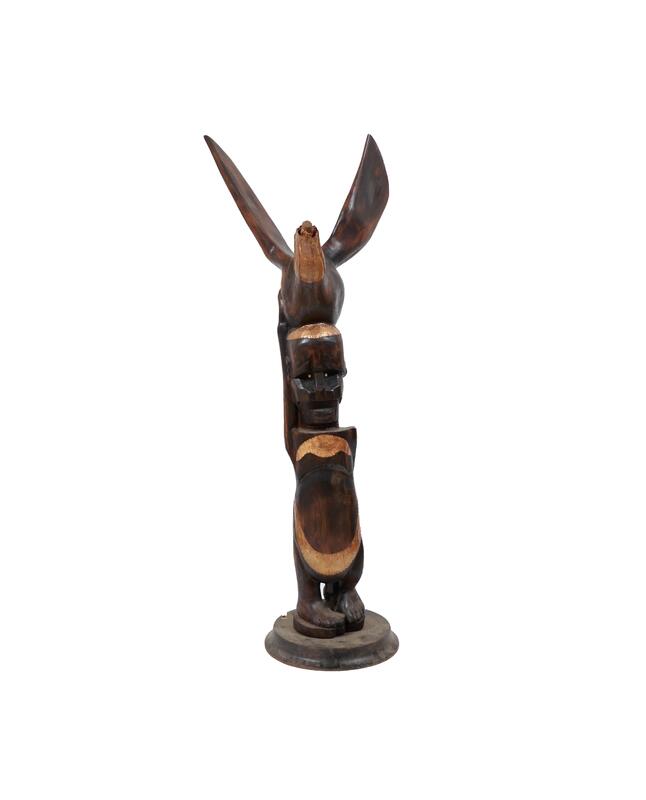
Edward L. Pryce was a landscape architect and artist from Lake Charles, LA. "Fisherman with Cormorant" is a medium-sized carving of a man fishing with a cormorant, a species of aquatic bird, on his head.
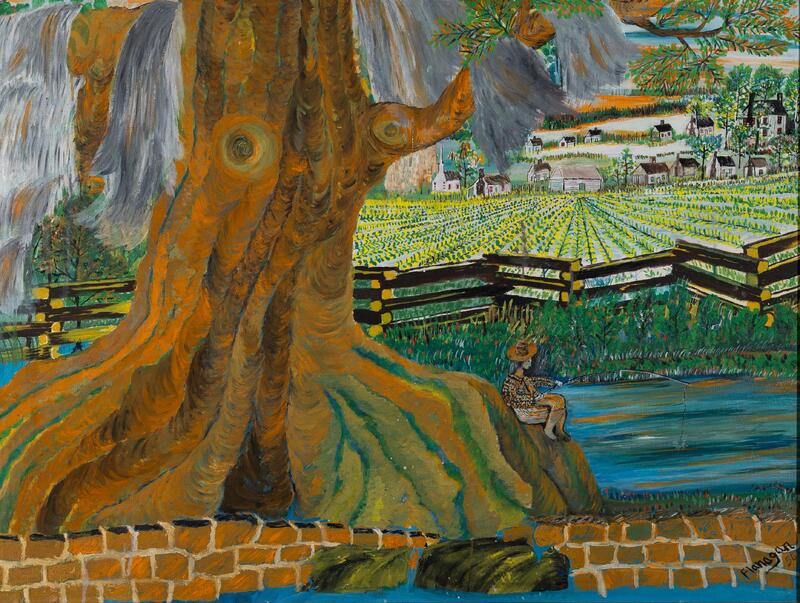
Thomas Jefferson Flanagan was an artist and activist from Florence, GA. "Fishing on the Quarters" is a landscape painting with a large tree and a person fishing from a body of water. The tree and fisherman are in the foreground, while a wooden gate borders an acreage of colorful crops painted linearly.
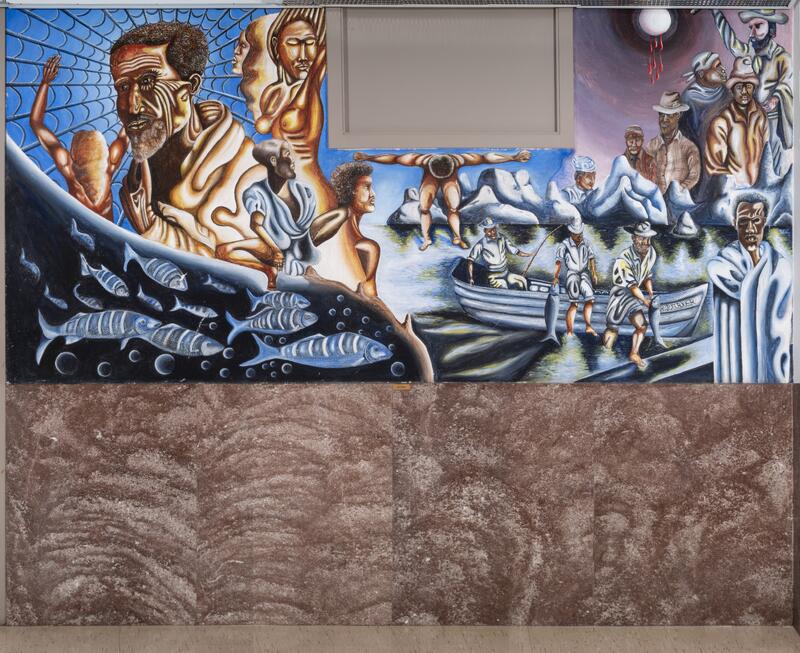
The mural shows fishing life along the water. In the middle and on the right, a man is doubled over from his burden, while a group of fishermen brings their catch to shore. On the left, an elderly man and other figures suggest the trials and challenges of the ancestors.
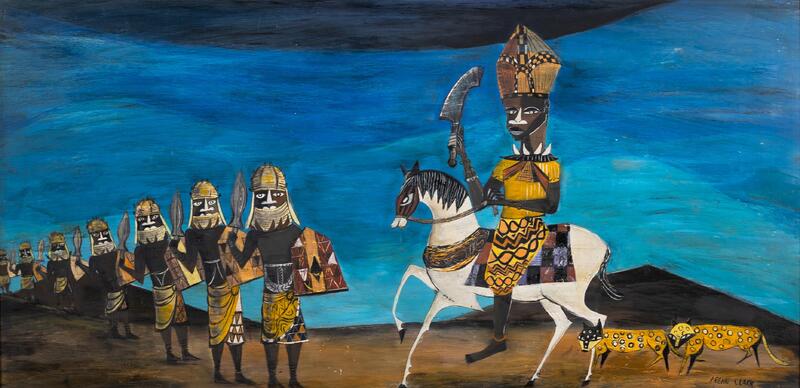
Irene V. Clark was a diasporic folklore artist from Washington, D.C. "Five Centuries Ago" depicts Black warriors preparing for battle. In the lead is a man on a horse holding a weapon with an animal by his side. He faces the warriors who follow him as they march under a dark blue sky.
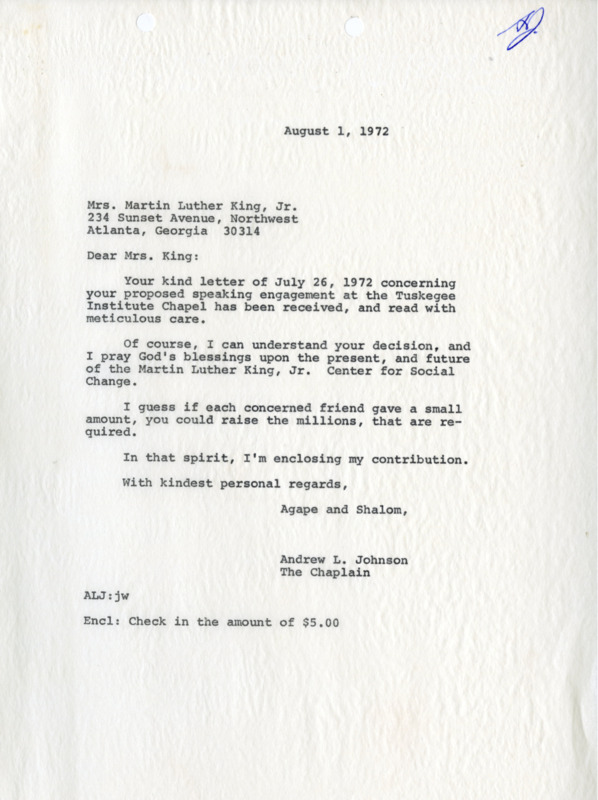
A letter from Chaplain Johnson to Coretta Scott King wishing her well with fundraising for the Martin Luther King Center for Social Justice and a five dollar contribution.
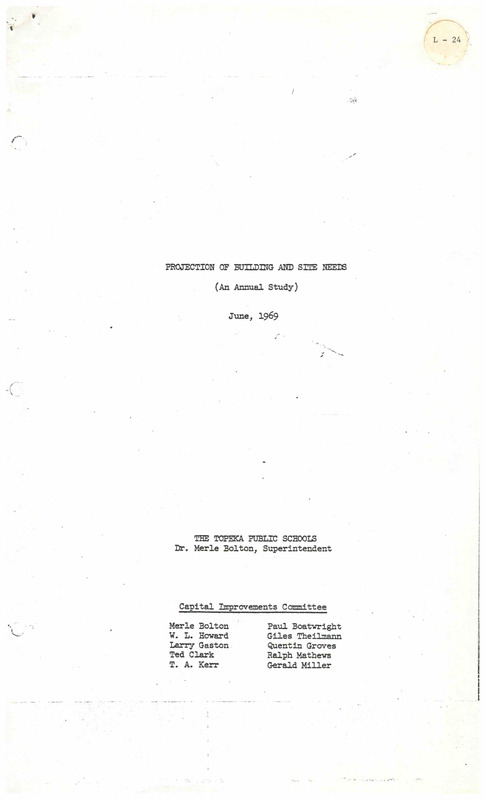
Case Data and Exhibits for Brown III, a relitigation of Brown v. Topeka Board of Education (1954) that corrected resegregation issues caused by open enrollment school choice in 1992. A June 1969 report from the Topeka Public Schools Capital Improvements Committee examining building and site needs and construction recommendations for the district.
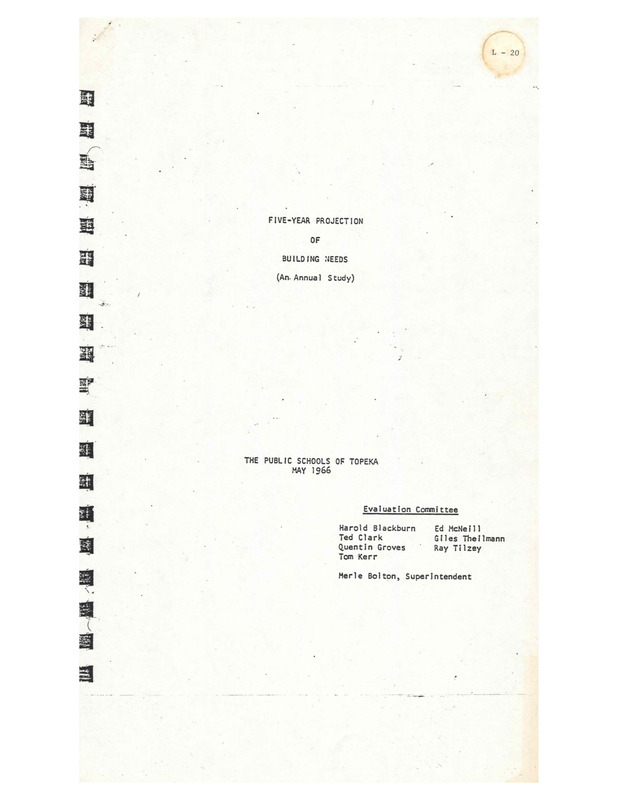
Case Data and Exhibits for Brown III, a relitigation of Brown v. Topeka Board of Education (1954) that corrected resegregation issues caused by open enrollment school choice in 1992. A report prepared in May 1966 by The Topeka Public Schools Evaluation Committee about a five year projection for building needs for the public schools of Topeka.
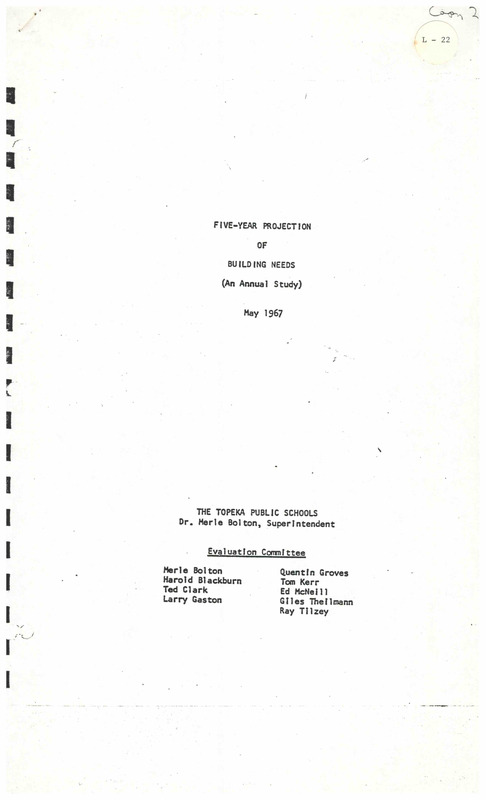
Case Data and Exhibits for Brown III, a relitigation of Brown v. Topeka Board of Education (1954) that corrected resegregation issues caused by open enrollment school choice in 1992. A May 1967 report from the Topeka Public Schools Evaluation Committee examining building and site needs for the district and giving recommendations on construction.
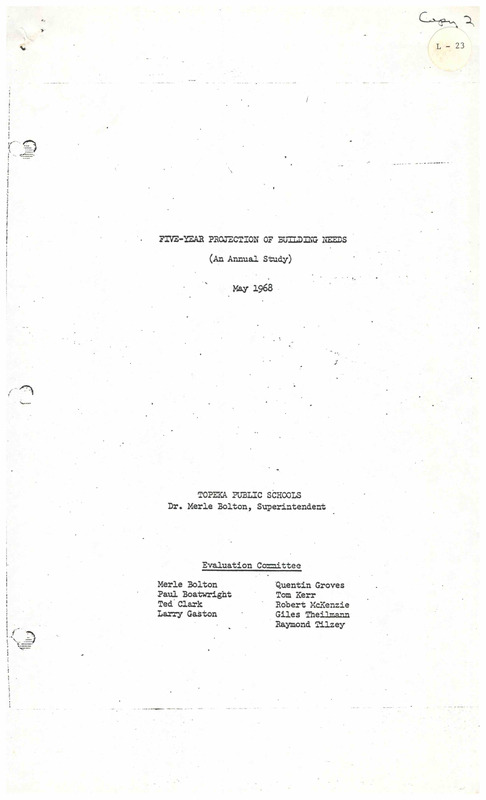
Case Data and Exhibits for Brown III, a relitigation of Brown v. Topeka Board of Education (1954) that corrected resegregation issues caused by open enrollment school choice in 1992. A May 1968 report from the Topeka Public Schools Evaluation Committee examining building and site needs for the district and giving recommendations on construction.
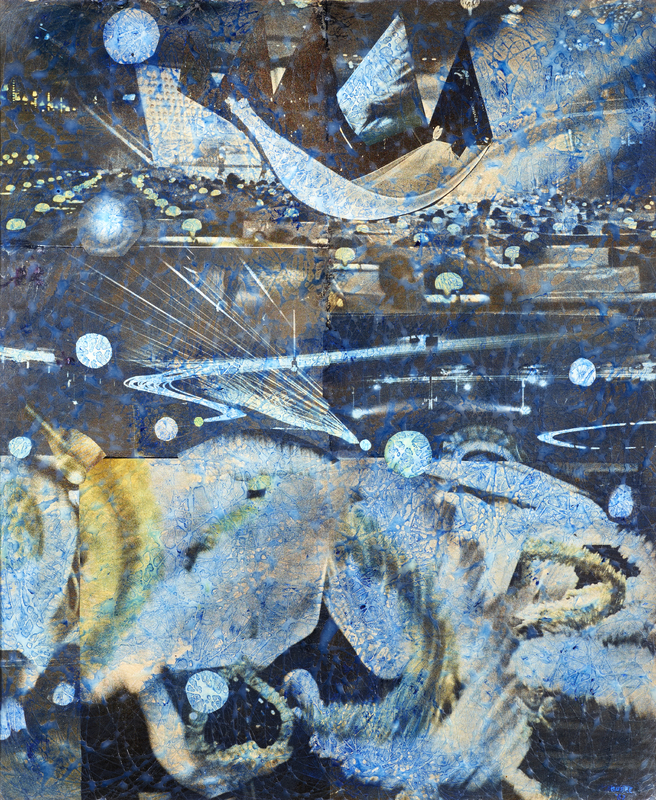
Hayward Oubre was a multimedia artist and educator from New Orleans, LA. "Flight Into Space" is an abstracted cosmoscape. Oubre uses geometric shapes and gestural strokes, colored in shades of blue and black, to display the complexities of space.
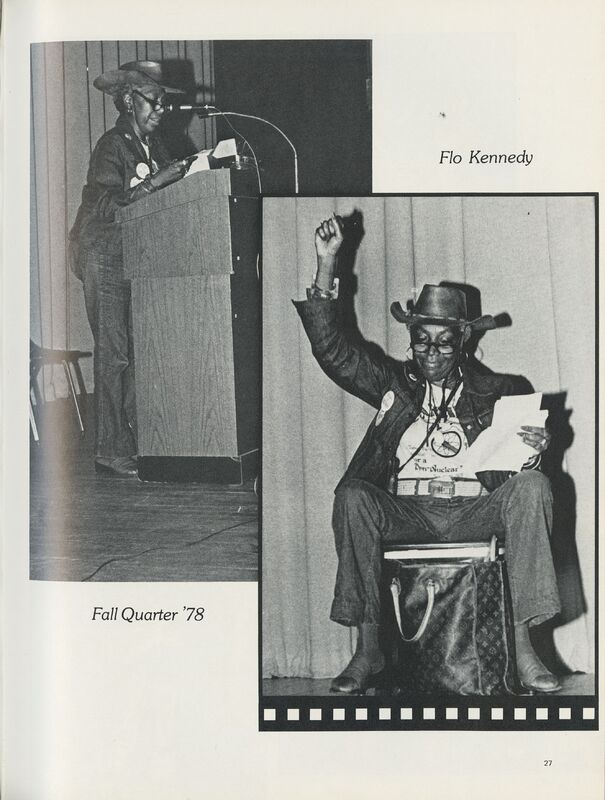
Florynce “Flo” Kennedy was a radical feminist lawyer who represented H. Rap Brown and the Black Panthers and established the Feminist Party, which nominated Congresswoman Shirley Chrisholm for president in 1972. Kennedy visited Florida A&M University in the fall of 1978 and spoke to its students.
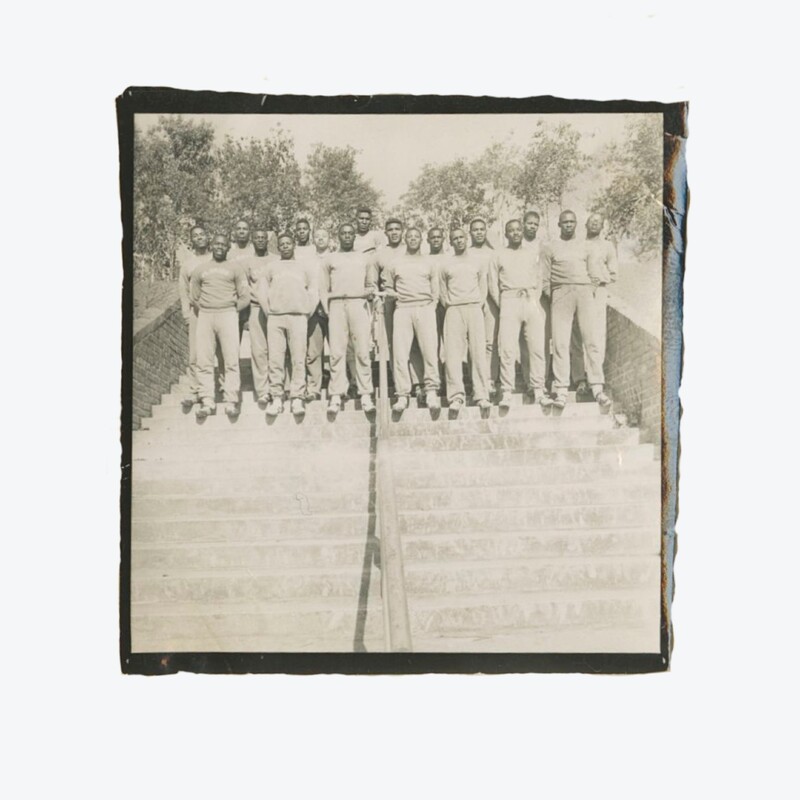
This photograph, taken by Nipper (as inscribed on the back), shows what appears to be a Florida A&M men’s sports team standing on the staircase by the Pete Griffin Track field. The two men in the center of the photo appear to be holding a baton, but it is unclear to say with certainty when this was taken or which sports team this was due to fading.
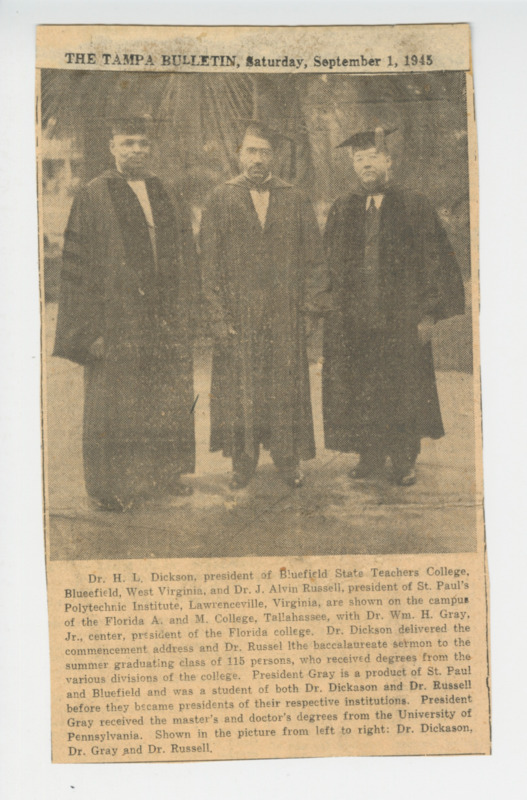
In the Tampa Bulletin, FAMC’s 1945 summer session was praised for its success, with 115 students graduating. President Gray was joined by Mr. H. L. Dickson and Dr. J. Alvin Russell in the celebration. Dickson gave the commencement address and Russell delivered the baccalaureate sermon, acknowledging the graduates’ accomplishments.
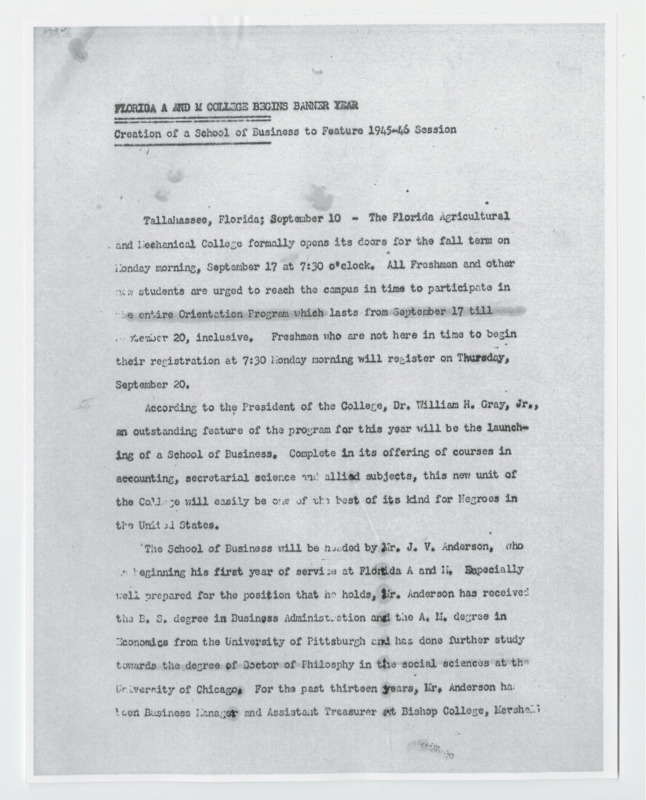
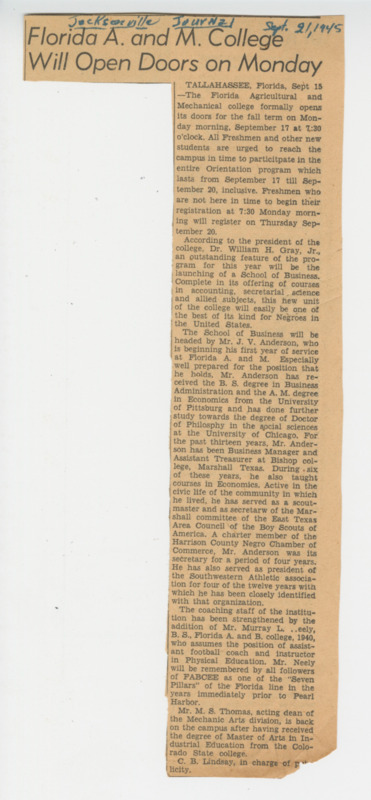
This document outlines the official formal opening of the Florida Agricultural and Mechanical College’s School of Business for the first year in 1945-1946. The press release also discusses a new addition to FAMC faculty and an “in memorium” segment.
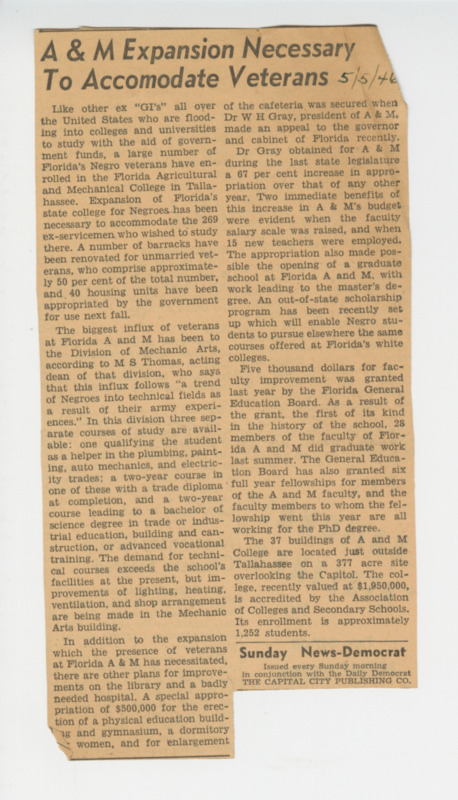
FAMC expanded to accommodate an influx of Florida Negro veterans enrolling, particularly in the Division of Mechanic Arts and technical fields. With $500,000 allocated for a new physical education building and recreation gymnasium, Dr. Gray also introduced out-of-state scholarships and the first GI Bill at FAMC to support veterans' education.
The Jacksonville Journal announced FAMC's Fall 1945 semester opening, spotlighting the School of Business and the arrival of new professors. Mr. M.S. Thomas, returning professor with a master’s degree, was appointed dean. She oversaw academic growth and leadership in the Mechanic Arts department, enhancing the university's commitment to excellence.
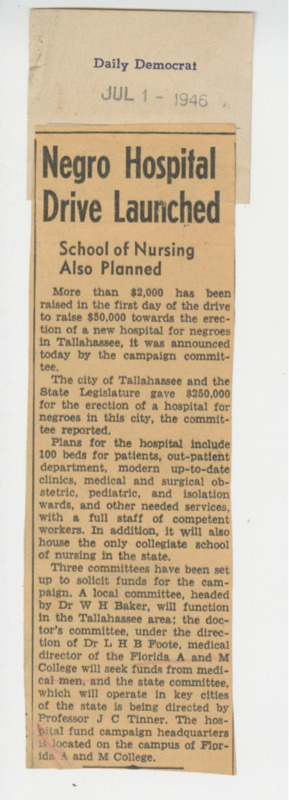
In 1946, FAMC launched a hospital campaign under Dr. L.H.B. Foote’s leadership, raising $2,000 and securing $250,000 from Tallahassee and the state legislature. The project aimed to build a 100-bed hospital with modern clinics, isolation wards, and outpatient services. It was supported by three fundraising committees to strengthen Black healthcare.
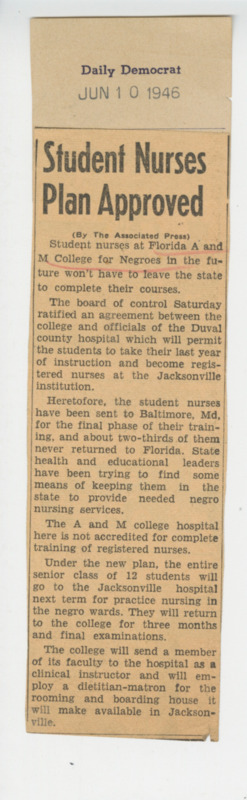
The Daily Democrat celebrated a milestone for FAMC nursing students, who no longer had to leave Florida to complete their training. The new agreement allowed 12 seniors to finalize their education in Duval County, Jacksonville, overcoming FAMC hospital's accreditation gap and advancing opportunities for future nurses.
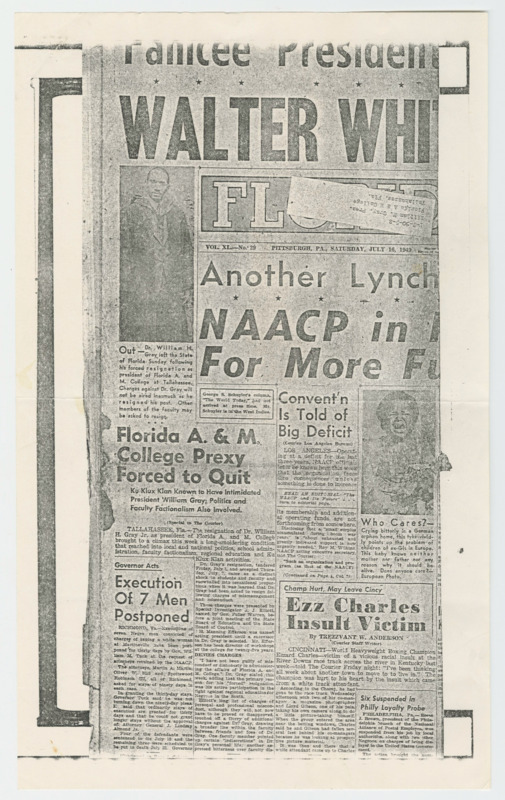
The Pittsburgh Courier discusses Dr. William H. Gray, Jr.'s resignation as president of Florida A&M College. While the reason was unclear, the circumstances surrounding his resignation—charges brought by the federal government, political and faculty allegiances, and Ku Klux Klan intimidations—all climaxed with the end of Gray’s tenure.
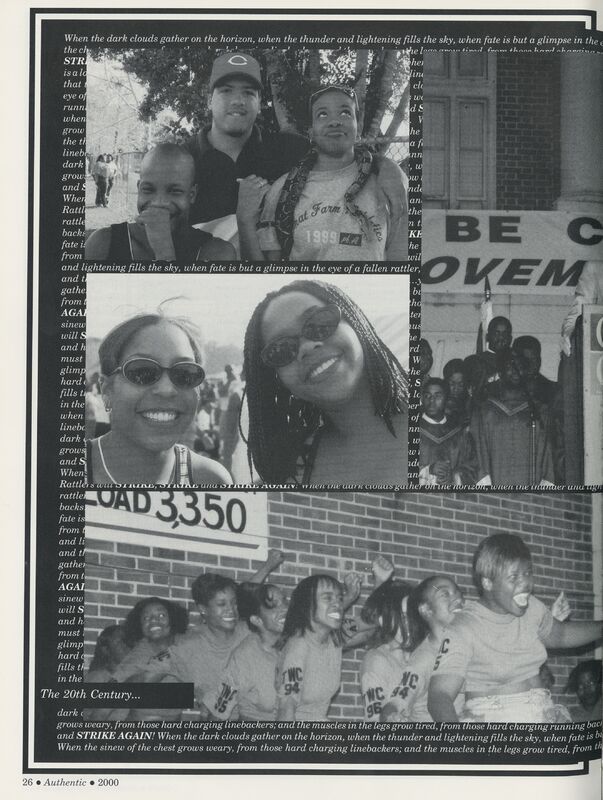
This two-page spread featured in the 2000 Rattler Yearbook showcases various events on Florida A&M’s campus from 1995 to 1998. Titled “A Glimpse Into History,” the spread honors the past by showing political campaigning by Hilary Clinton during the 1996 election, student organizations, and other aspects of student life.
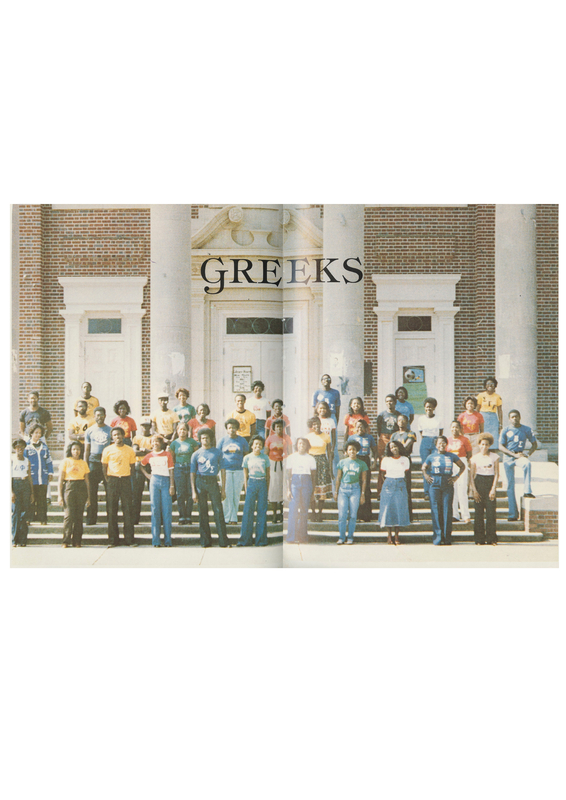
This two-page spread in the 1979 Florida A&M Rattler Yearbook features members from the chapters of FAMU’s Divine Nine fraternerities and sororities. In their organization’s t-shirts and jeans, these Greeks stand on the steps of Coleman Library.
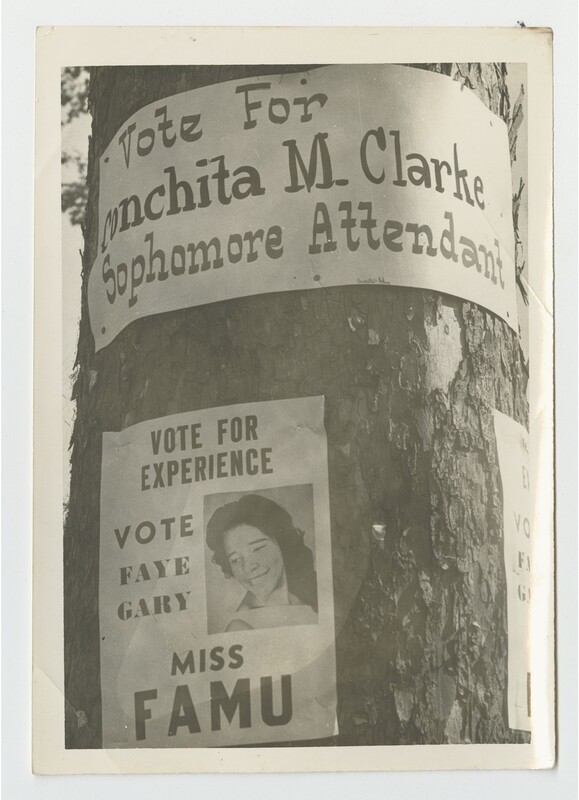
This photograph features three (two fully visible) student campaign posters for Florida A&M University’s Royal Court, students who represent the class bodies. One says “Vote For Conchita M. Clarke Sophomore Attendant” while the other says “Vote For Experience Vote Faye Gary Miss FAMU.”
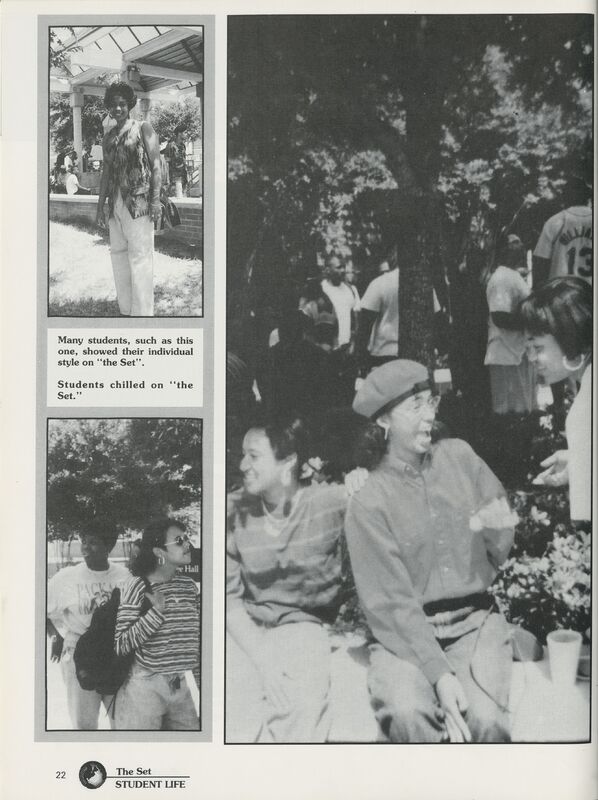
This two-page spread was featured in the 1994 Rattler yearbook, showcasing student life at the time. “The Set” was a location on campus in front of the Student Union where students regularly hung around during downtime. These images also highlight the clothing trends of the early ‘90s with baggy jeans, plaid and patterns, and letterman jackets.
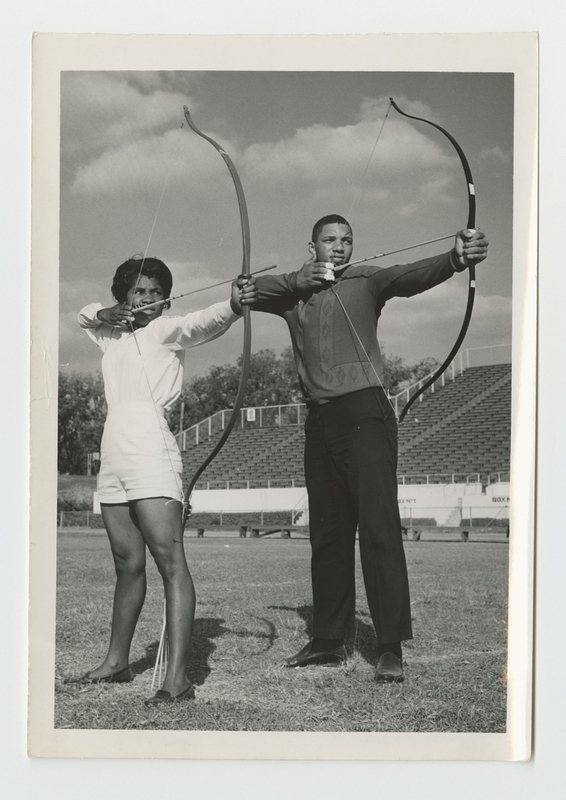
This photograph features two male and female students using a bow and arrow on the field of Bragg Memorial Stadium. Because Florida A&M University does not have an archery club or team, this photograph represents a lost aspect of FAMU student life. It’s unclear when this image was taken or who took it.
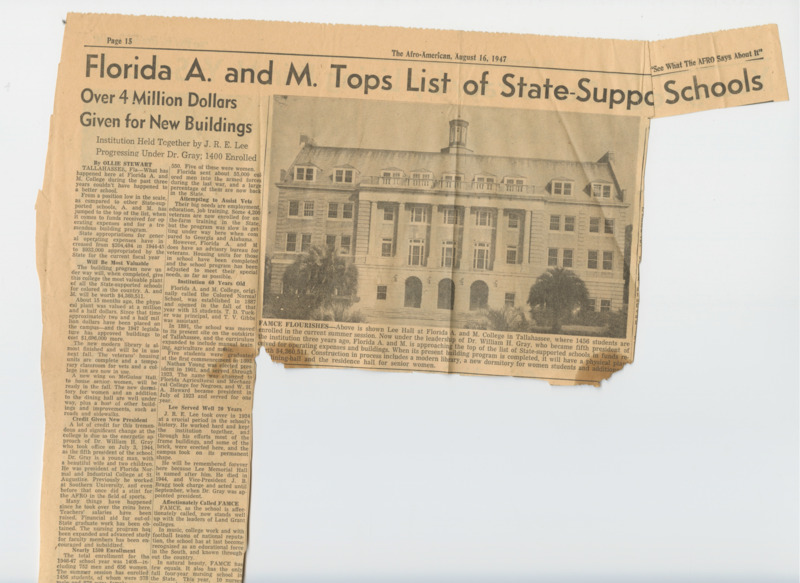
In the article “Florida A&M Tops List of State-Supported Schools,” FAMC’s historic role in education was lauded. The piece honored President J.R.E. Lee’s two-decade tenure and credited President W. H. Gray for his current leadership. The announcement of a $4 million grant highlighted the university’s commitment to progress and veteran support.
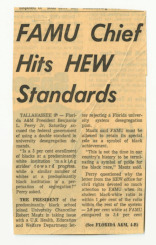
In this news article, Florida A&M President Benjamin L. Perry Jr. questioned the federal government, stating, “Is a 3% enrollment of blacks at a predominantly white institution ‘making strides’ toward progress while a similar number of whites at a predominantly black institution is a perpetuation of segregation?”
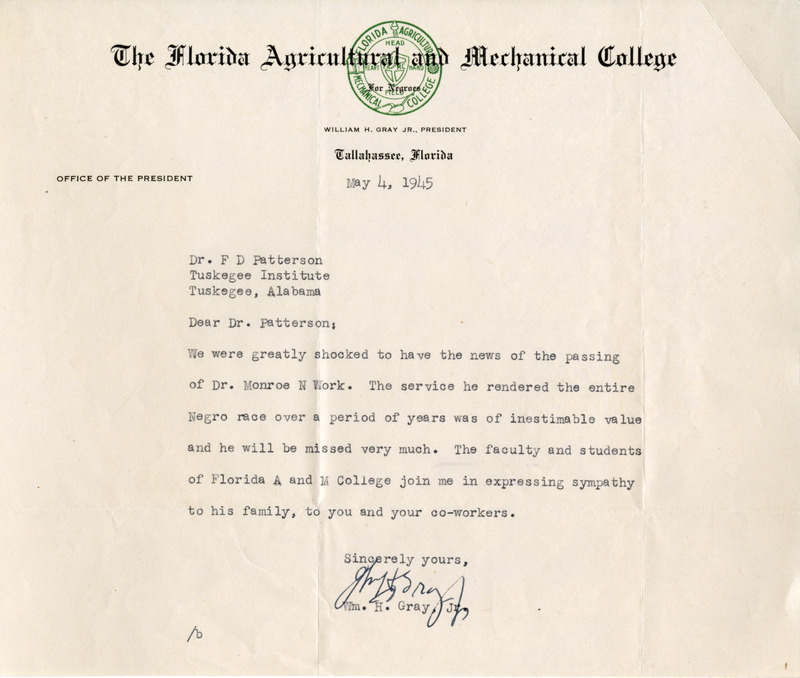
One-page document from Florida Agricultural & Mechanical University's fourth president William H. Gray Jr. offering condolences to Tuskegee president Dr. Frederick D. Patterson on the loss of Monroe N. Work. The work that Monroe N. Work did for the negro race is immeasurable.
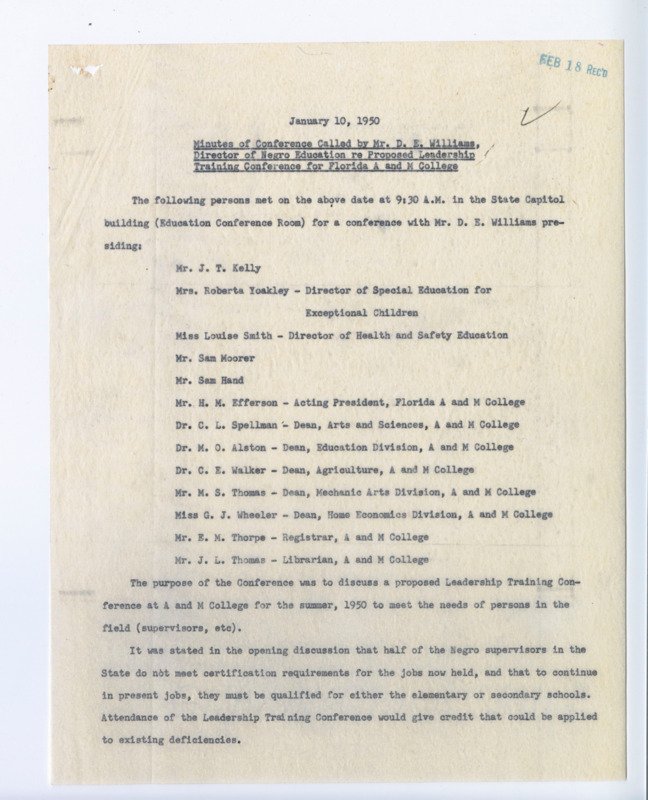
The Florida Department of Education conducted numerous conferences over the years. Florida A&M College/University strived to maintain the improvements and promises from the Department of Education years down the line.