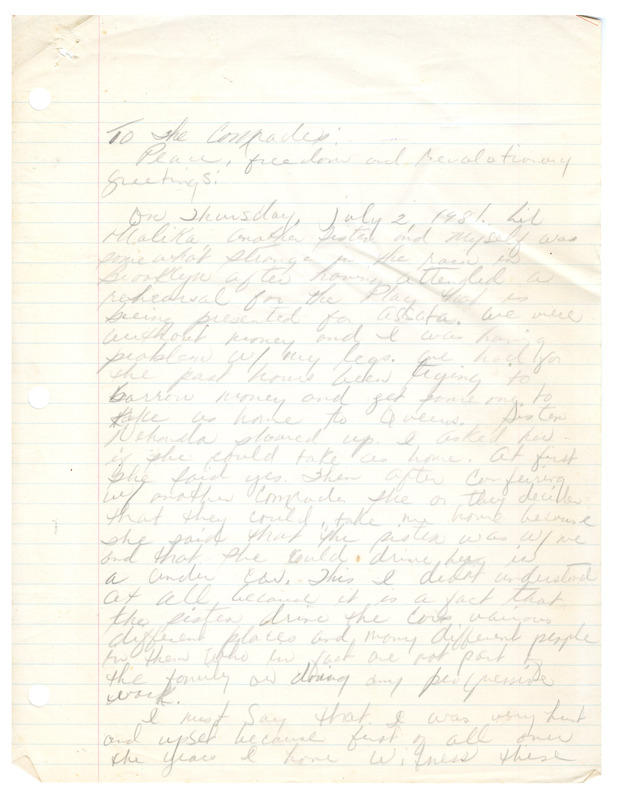
A short essay about the revolutionary killing of cops. The author, Frankye Adams Johnson (Malika), gives two recent examples of revolutionaries killing cops, saying the killers are urban guerillas who constitute the military arm of the Black Liberation Army (BLA). The tagline of the essay is “All Power to the New Urban Guerilla, War to the End.”
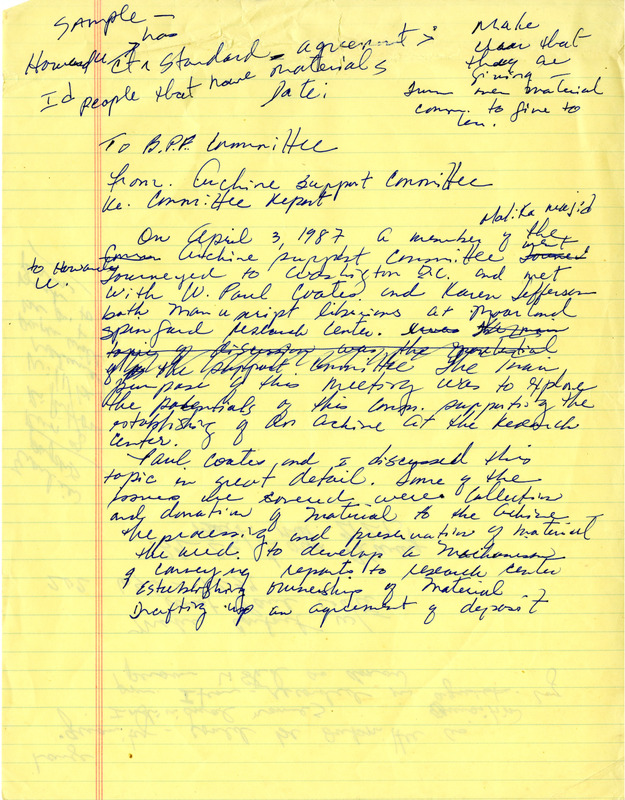
Handwritten notes and a draft of a committee report by Frankye Adams-Johnson (Malika) to the Black Panther Foundation Committee. The report gives details about her visit to the Moorland Spingarn Research Center on April 3, 1987. She met with the manuscript librarians there about the possibility of establishing a Black Panther Archive.
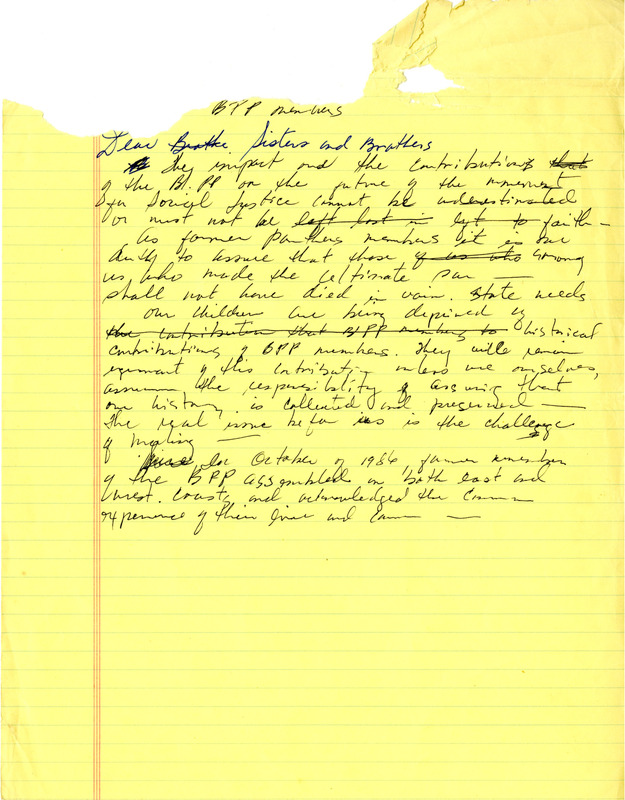
Handwritten draft of a speech by Frankye Adams-Johnson (Malika) about the Black Panther Foundation. The speech explains the importance of the preservation of Black Panther History for those members that have died fighting the struggle.
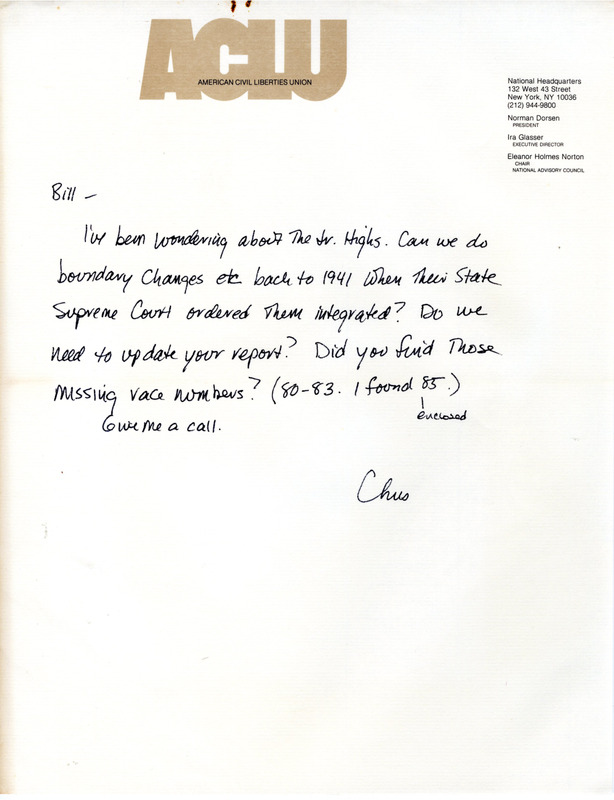
Handwritten letter from ACLU Attorney Chris Hansen asking William Lamson about updates for a report about boundary changes for junior high schools in Topeka dating back to 1941 when the state supreme court ordered the schools to be integrated.
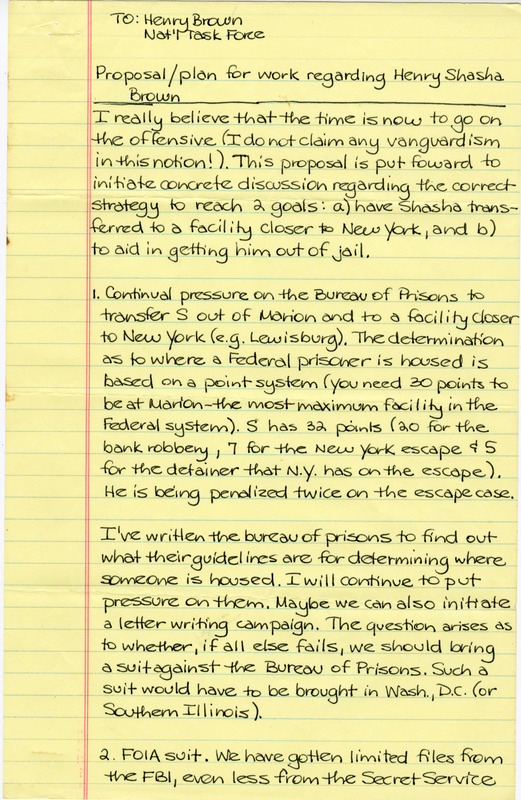
Handwritten memo to the Henry Brown National Task Force titled "Proposal/plan for work regarding Henry Shasha Brown." Brown was an imprisoned Black Liberation Army (BLA) member. The memo outlines actions to reach the goals of having Brown transferred to a facility closer to New York and to aid in getting him out of jail.
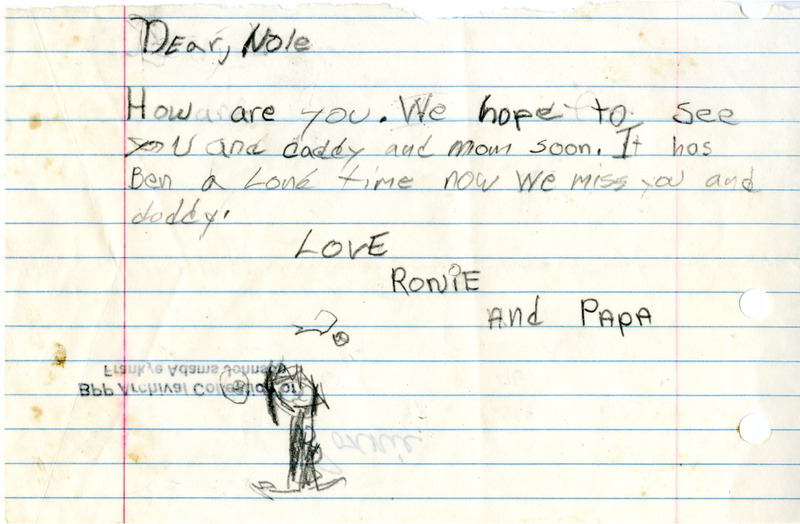
A note from “Ronie and Papa” to “Nole." The note is in children's handwriting. The sender tells the recipient that it's been a long time, and they are missed.
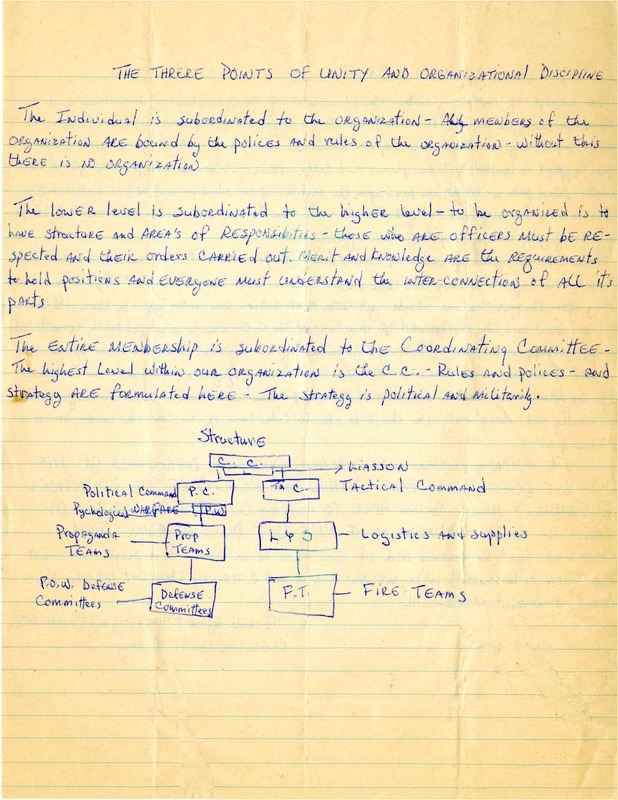
Handwritten notes about the organization of the Black Panther Foundation. Sections: "The Three Points of Unity and Organizational Discipline;" "Correcting Mistaken Ideas;" and "Suggestions on Propaganda Teams."
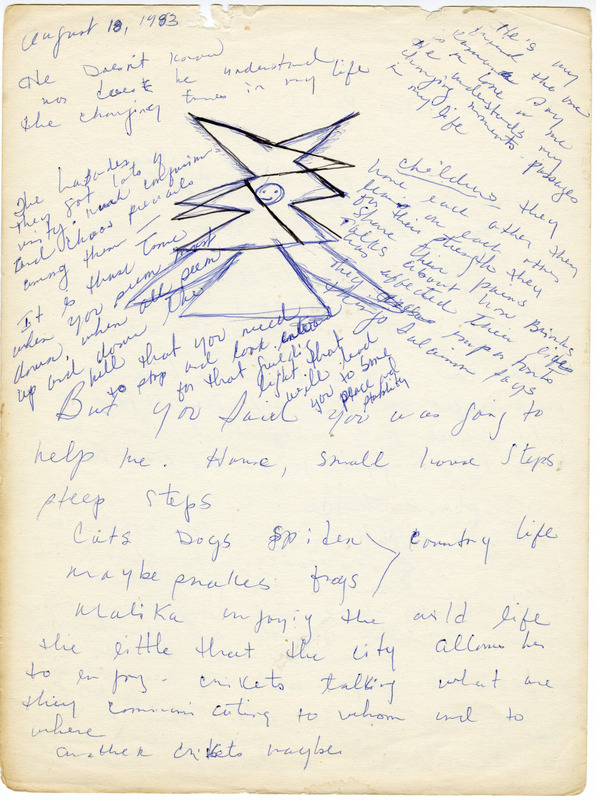
Sketches and handwritten notes by Frankye Adams-Johnson (Malika) about family life. The topics she writes about include disciplining children, male-female relationships, and country life.
These undated handwritten notes, spanning several sheets, contain President Gore's remarks for various meetings and convocations. The notes also include an excerpt on structural unemployment and general unemployment, offering insights into the challenges of the time and Gore's reflections on economic issues.
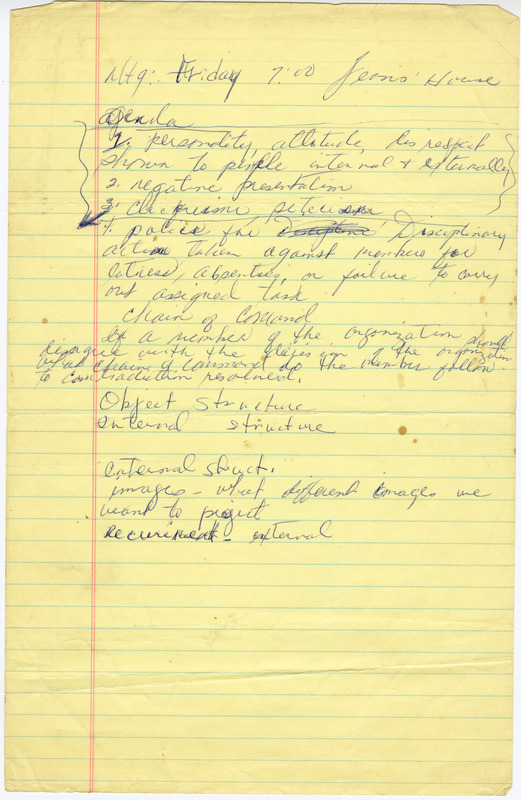
Handwritten notes of an agenda for a meeting of the Black Panther Foundation. Personality, attitude, behavior, disciplinary policies, and organizational structure were discussed.
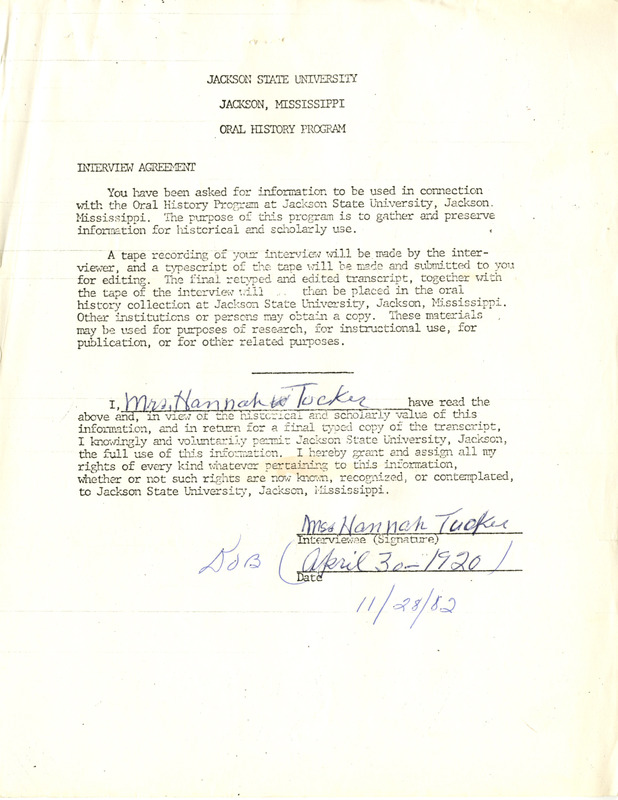
Hannah Tucker moved to the Farish Street District in 1935 and opened Eat & Beat It Cafe in 1952. She talks about growing up in the district and some of the jobs she had. She also discusses some of the changes in the district over the years and her decision to soon move her business out of the district. Transcript is edited with handwritten notes.
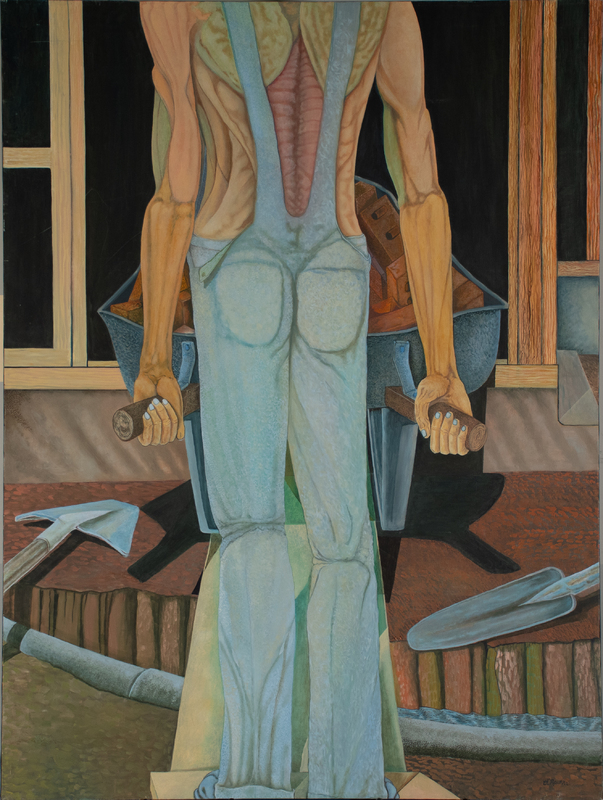
Renfro’s painting displays an image of a working man dressed in overalls from behind. The man is wheeling bricks towards a construction site. His bones and muscles are made visible in the composition, perhaps to highlight the physical demands of his labor. Dr. Biggers taught his students to portray the human form with care and detail, particularly oft-neglected features like hands and feet.
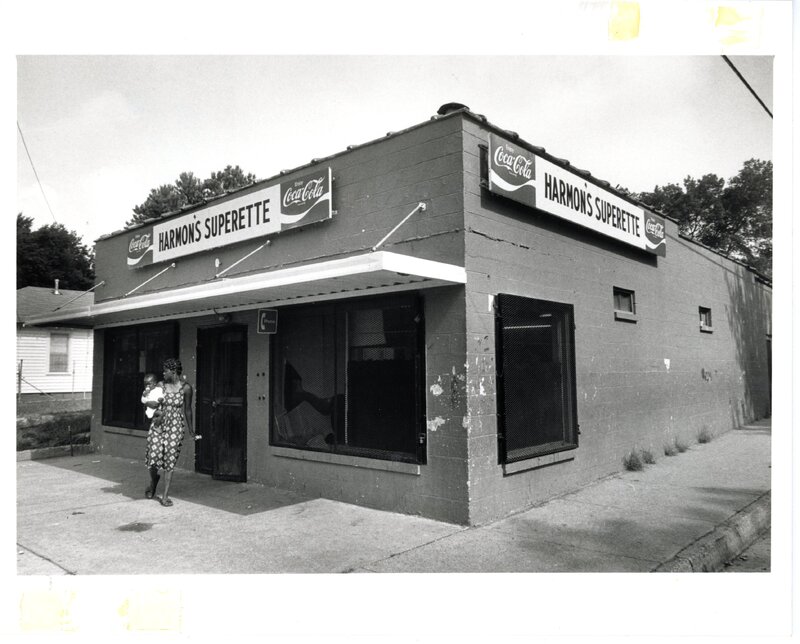
A photograph of Harmon's Superette, a shop on East Monument Street in the Farish Street Historic District. At the time of the photograph, the business was closed and the building was in disrepair.
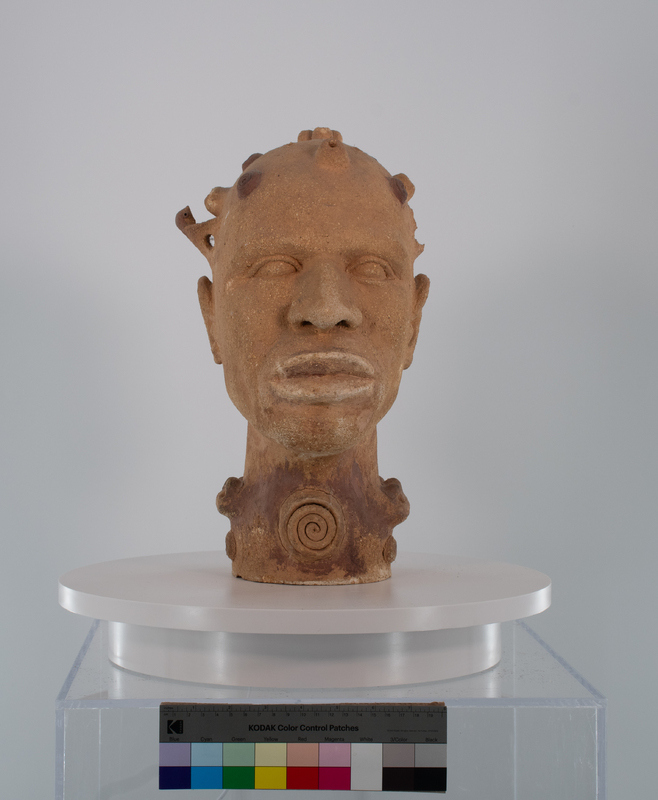
Vital’s bust was created during his time as an art student at TSU. Under the instruction of Professor Carroll Harris Simms, artists would create self-portraits embellished with decorations like spirals and accentuated crown pieces, like in Vital’s sculpture. These busts are inspired by Nok terracotta sculptures and Ife busts, which Simms saw during his travels to Western Africa. Vital later became a member of TSU’s art faculty.
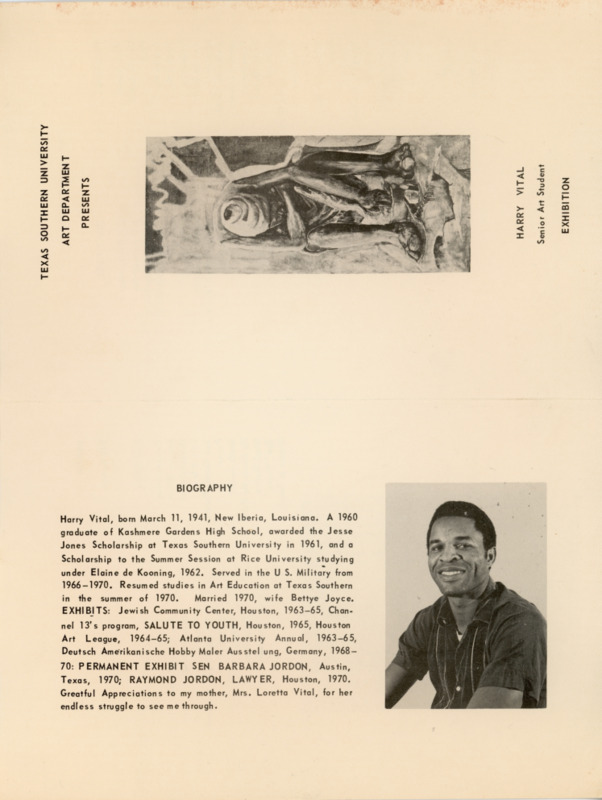
This is a brochure for Vital’s senior art exhibition. The culmination of the Texas Southern art curriculum is a senior exhibition where students showcase artwork created over the course of their undergraduate studies. The brochure features a portrait of Vital, a brief biography, a catalog of the artwork featured in the exhibition, and a photo of one of his paintings and sculptures. After graduating, Vital returned to TSU to teach art for many years.
Vital’s senior notebook includes his written philosophy of art, photographs of the artist’s works and his process, and a copy of his senior exhibition brochure. As a part of the Texas Southern art curriculum under Dr. John T. Biggers and Professor Carroll Harris Simms, students would create these notebooks to explain their artistry and showcase the works they created as students.
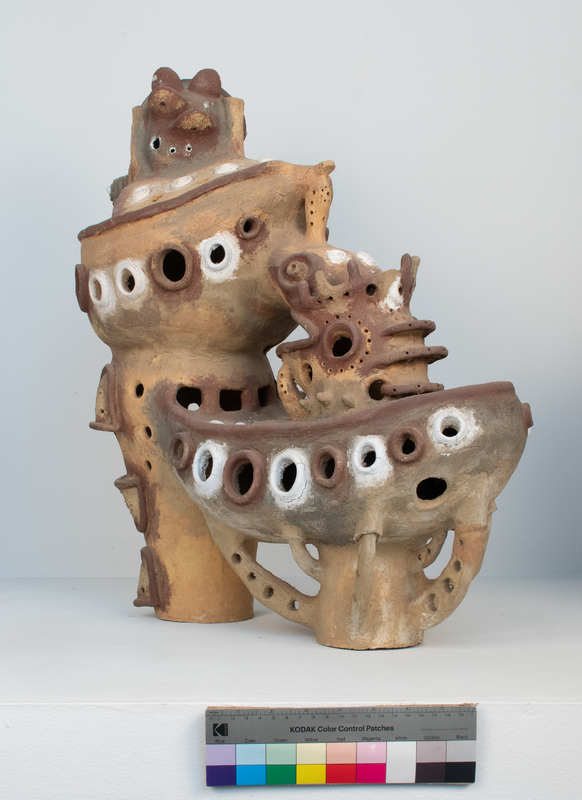
Harvey L. Johnson’s “Shrine” includes embellishments painted with white and brown slips, with small holes punched in various placements along the body of the sculpture. A variety of shrines are featured in the collection of student artists at Texas Southern University. These shrines were inspired by Professor Carroll Harris Simms’ travels to Nigeria.
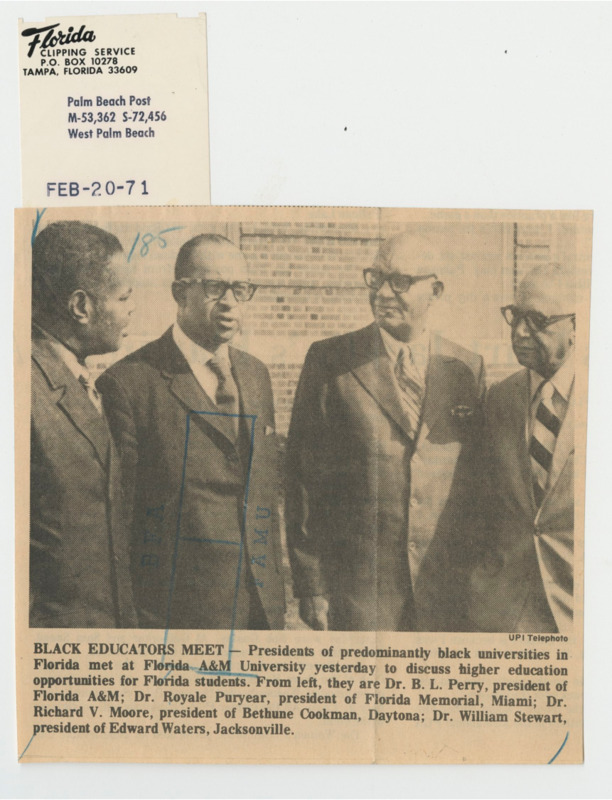
Sourced from the Palm Beach Post, this newspaper clipping is a literal snapshot of the state of Black higher education in the early 1970s. The photograph depicts four HBCU presidents, Dr. B. L. Perry, Dr. Royale Puryear, Dr. William Stewart and Richard V. Moore, meeting at Florida A&M University to discuss Florida student opportunities.
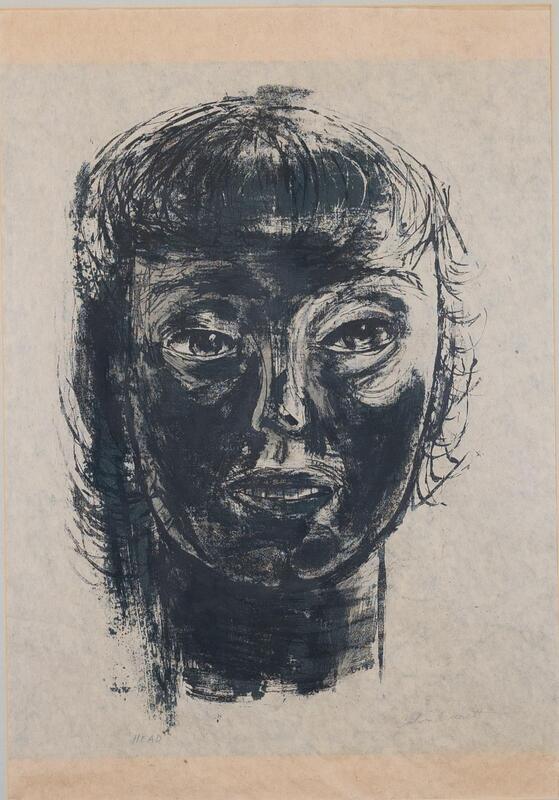
Calvin Burnett was a graphic artist, illustrator, painter, designer, and art teacher from Cambridge, MA. "Head" is a bust-view portrait of a woman with fine hair, a thin nose, and full lips. Burnette draws the subject with a passive expression, looking past the viewer. He uses shadowing to further define the features of the subject
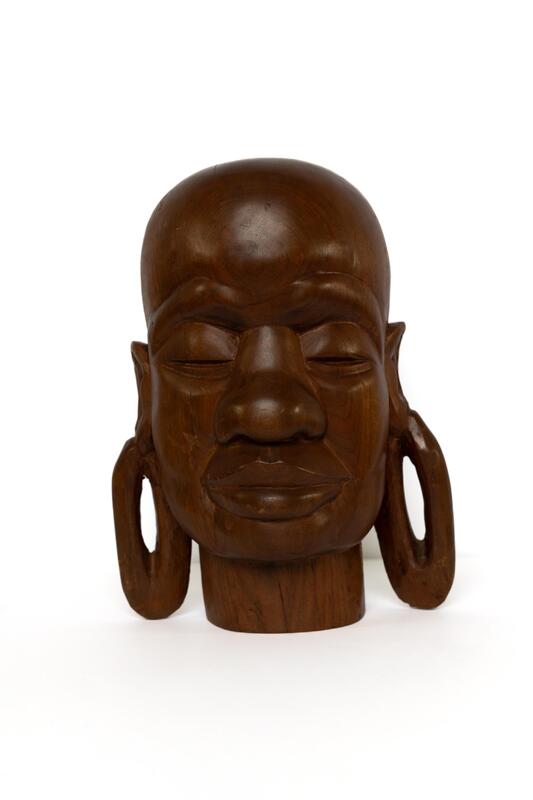
Houston E. Chandler was a sculptor, printmaker, painter, and teacher from Saint Louis, MO. "Head" is a wooden bust of an indigenous African subject.. Chandler crafts a voluminous mouth, nose, and forehead and elongated ears that enhances its indegneity.
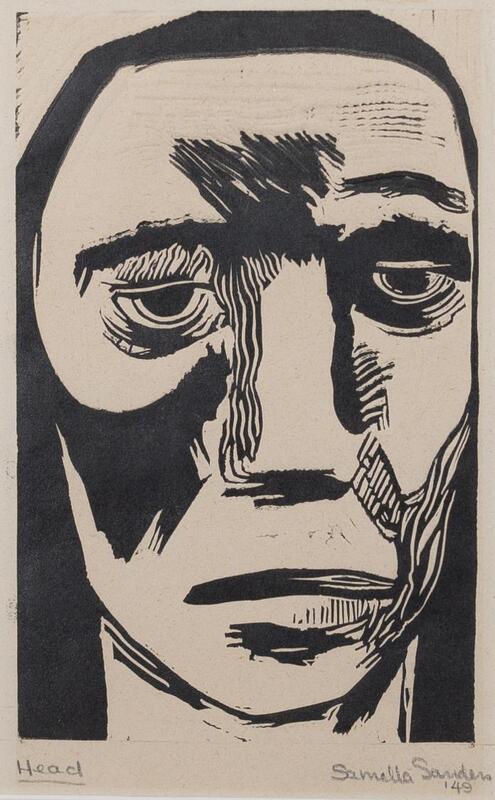
Samella Sanders Lewis, born in New Orleans in 1923, was a printmaker, painter, sculptor, and art historian. "Head" is a print portrait of a male face just below the chin to slightly above the front hairline. The contrast in deep shadows and light creates a composition of distinctive cheekbones, a broad nose, and baggy eyes.
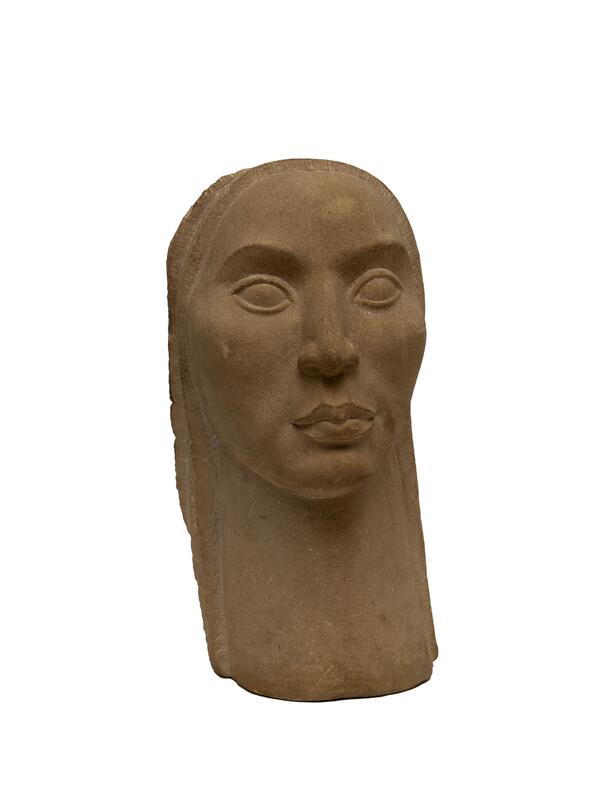
William Artis was a sculptor from Washington, NC. "Head of a Young Lady" is a limestone bust of a woman. The subject has pursed lips and a broad neck, maintaining a critical expression toward the viewer.
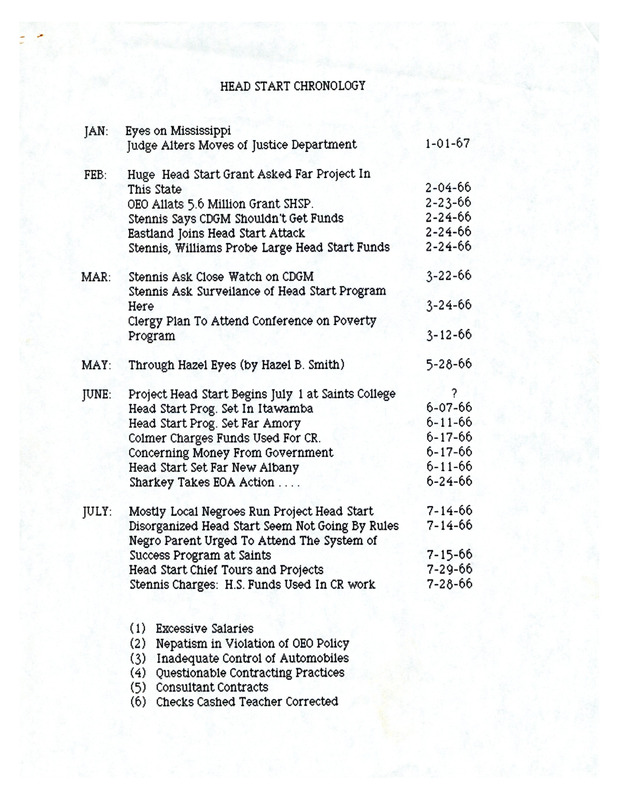
A chronology of major events in the development of Head Start in Mississippi from January 1, 1966 to December 27, 1966. This timeline covers the sequence of events leading to the genesis of Head Start in Mississippi. The first date on the chronology is mislabeled.
Helen Ware was involved with the Greenwood, Mississippi, Head Start program in Leflore County from its initial planning stages in 1969. She talks about her time working as a social worker for Head Start, including her role going into the community to get parents excited about enrolling their children.
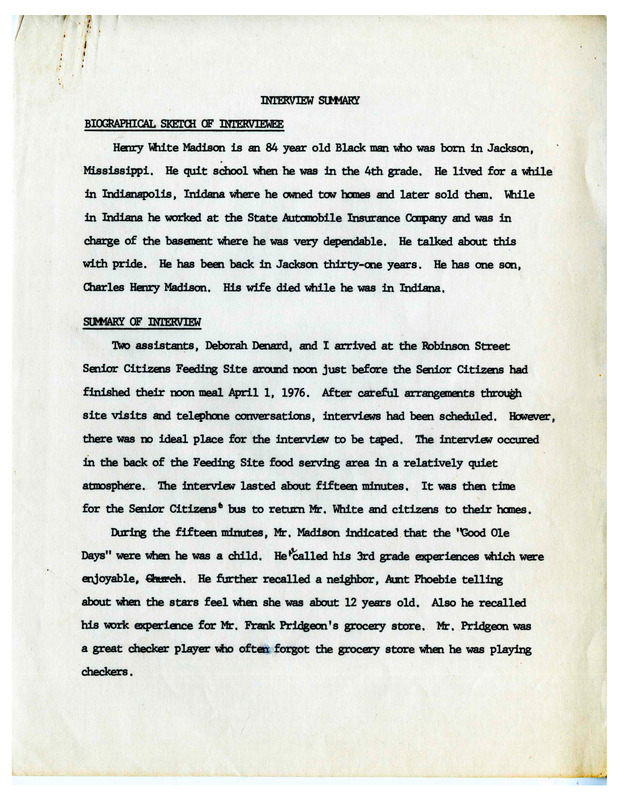
Henry White Madison was born in Jackson, Mississippi, in 1892. Mr. Madison talks about his first voting experience and recalls the "Good Old Days" when he was a youth with his own band (Madison Band), playing baseball, and working for Pridgeon's Grocery Store in Jackson, Mississippi. The transcript is heavily edited with handwritten notes.
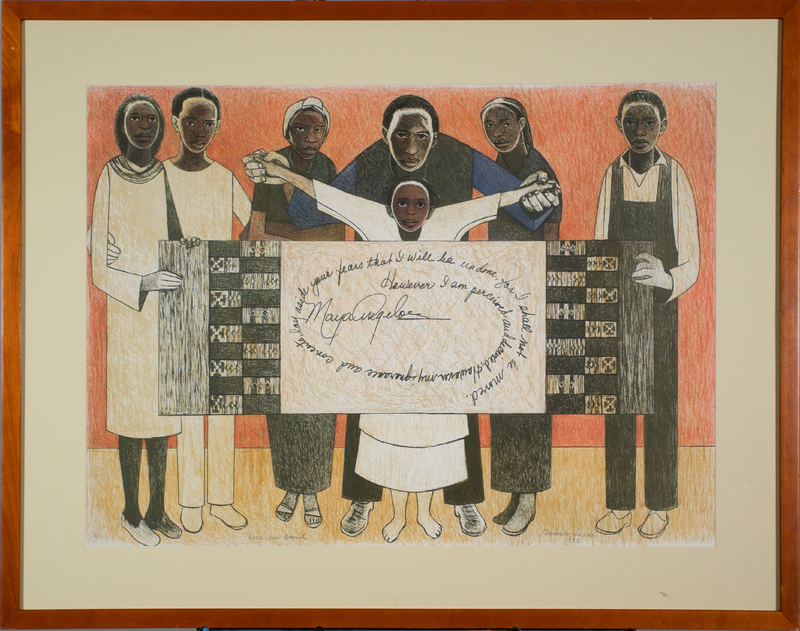
Lewis’s print shows a group of people holding a Kente-style textile, inscribed with the words, “However I am perceived and deceived, however my ignorance and conceits, lay aside your fears that I will be undone, for I shall not be moved," a selection from Maya Angelou’s poem Our Grandmothers; John Biggers also created illustrations to accompany Angelou's poem. Lewis was a leading African-American artist and art historian. She and Biggers studied together at Hampton University.
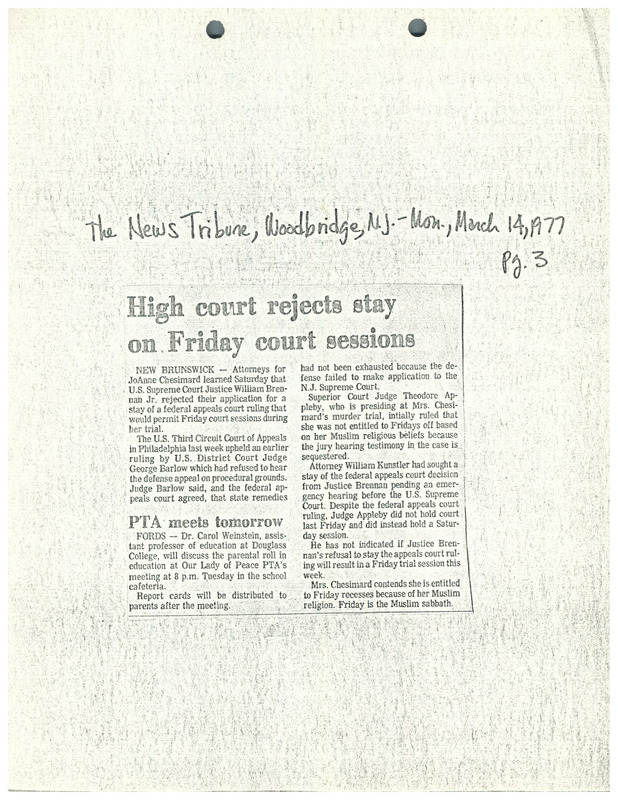
A newspaper article from The News Tribune about the question of Friday recesses asked for by the defense because of the Muslim faith of Assata Shakur (JoAnne Chesimard), who was on trial for the 1973 killing of a state trooper. The question has been a feature of the trial and the defense, prosecution, and judge continue to argue over it.
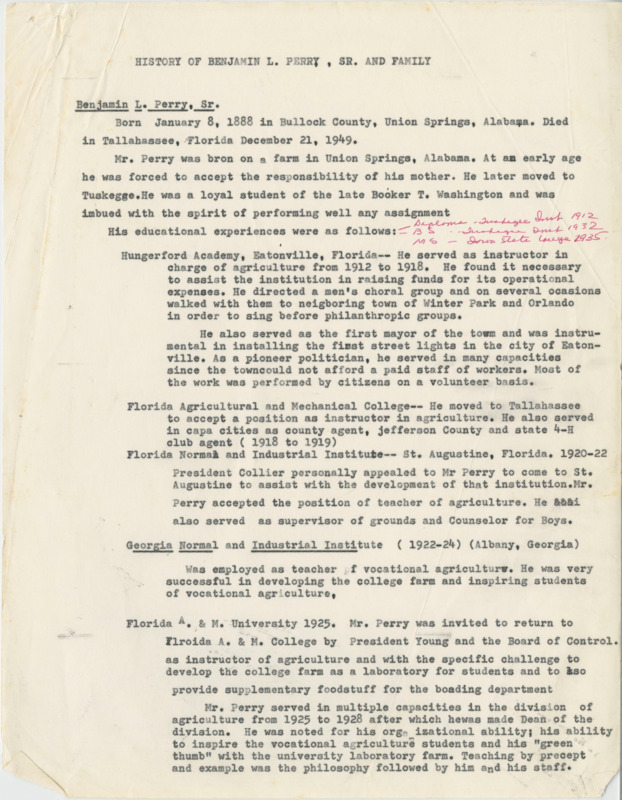
A detailed account of Benjamin L. Perry Sr.’s life, covering his educational pursuits, influential publications, and key accomplishments. The narrative extends to his son, Benjamin L. Perry Jr., reflecting on his academic journey, early career, and dedication to continuing his father’s legacy as a professor and leader.