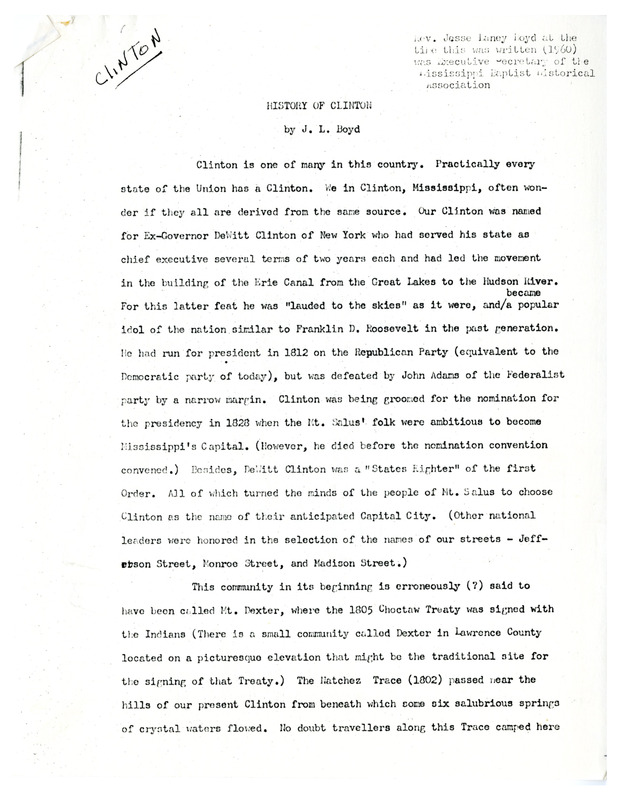
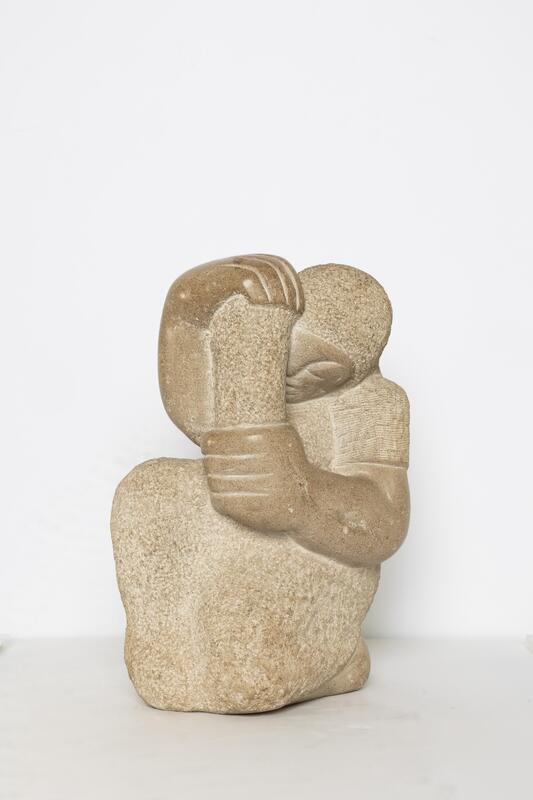
Gregory L. Ridley, Jr. was an artist from Smyrna, TN. "Hold On" is a limestone sculpture of a figure securing itself to a pole-like form. The piece is heavily textured, distinguishing between skin, hair, clothing, and natural materials.
Hollis Watkins was a Civil Rights organizer in Mississippi in the 1960s. This interview was recorded in a meeting of Dr. Alferdteen Harrison's Oral History class at Jackson State and featured questions from Dr. Harrison and several students. Mr. Watkins talks about his experiences with the Civil Rights Movement and the beginnings of Head Start.
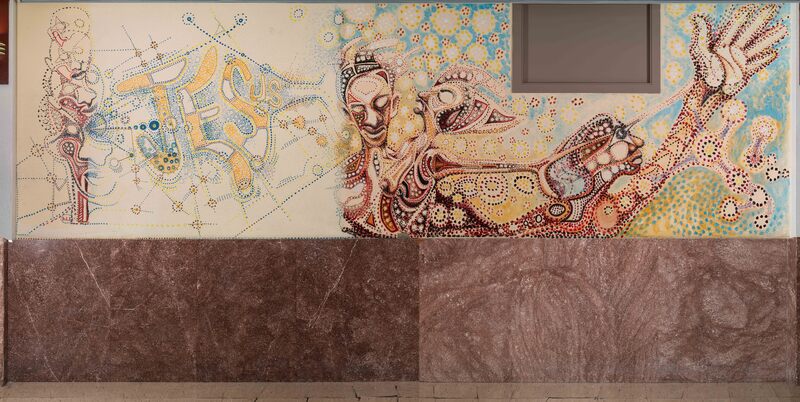
The only Hannah Hall mural in a pointillist style, it was partly destroyed during renovations. Edwards returned to repaint it. Perhaps because of the time demands of the pointillist technique, the repainted left side is less detailed than the right. Jesus, Mary, and Joseph are painted in abstract forms.
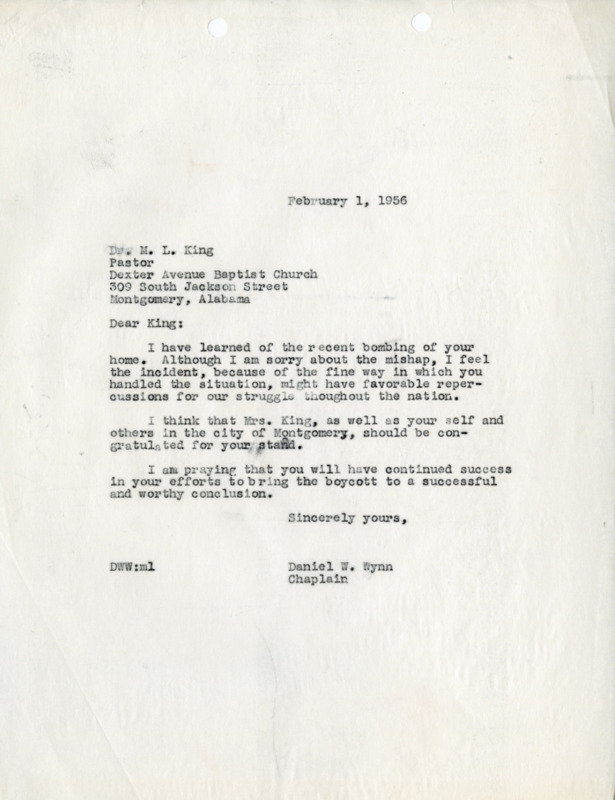
A letter from Chaplain Wynn to Dr. Martin Luther King Jr. on onion paper, offering support to the King after their family home was bombed and offering unwavering support for the Montgomery Bus Boycott.
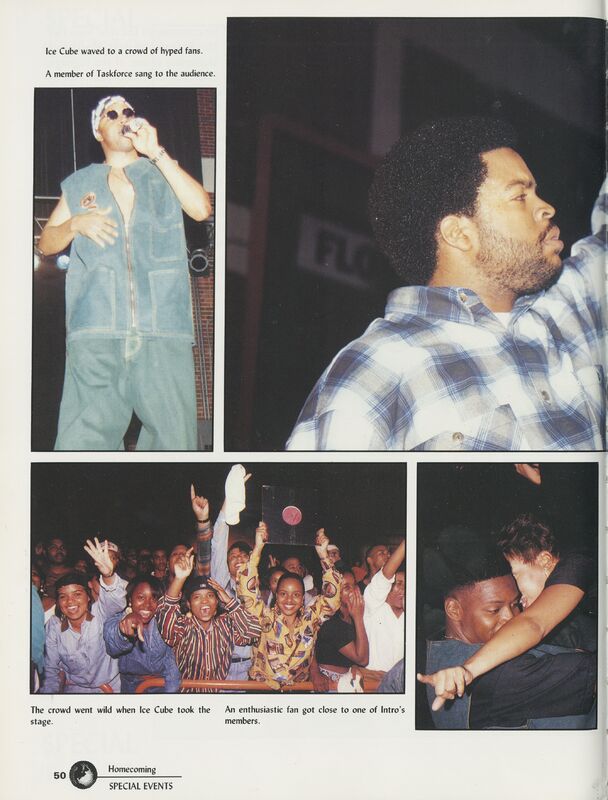
Homecoming is an event most historically Black institutions participate in as an annual celebration of their alums, rich history, and current student bodies. One of the main events besides the football game is the Homecoming concert. For Florida A&M’s in 1993, the Student Government Association got rapper Ice Cube and R&B group Intro to attend.
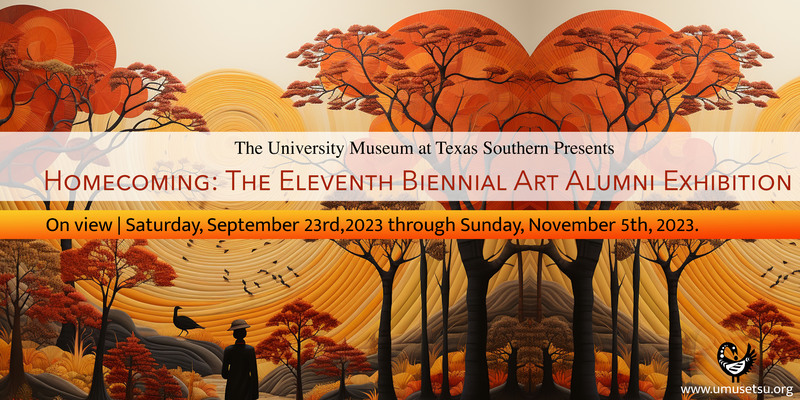
This is a digital flyer for the Fall 2023 Homecoming: The Eleventh Biennial TSU Art Alumni Exhibition at the University Museum at Texas Southern. The University Museum hosts an art alumni exhibition every other fall, alternating with an art faculty exhibition. Alumni showcase their artwork, which ranges from paintings, prints, and photographs to sculpture, jewelry, and wood carving.
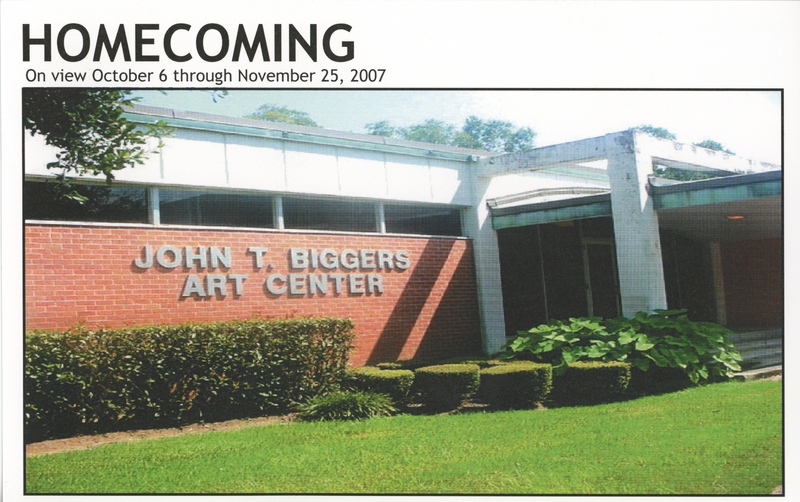
This is an invitation to the Fall 2007 Homecoming: The Third Biennial TSU Art Alumni Exhibition at the University Museum at Texas Southern. The University Museum hosts an art alumni exhibition every other fall, alternating with an art faculty exhibition. Alumni showcase their artwork, which ranges from paintings, prints, and photographs to sculpture, jewelry, and wood carving.
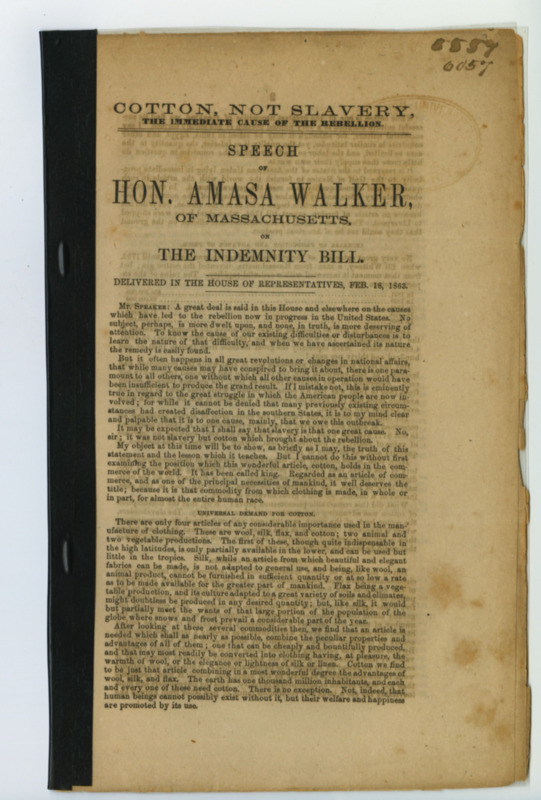
Hon. Amasa Walker’s speech addressed the universal demand for cotton in manufacturing, noting its rising value and production. He argued for keeping the slave trade open to sustain labor demands, highlighting Northern opposition to Africanization and the South’s reliance on enslaved labor, deeming secession inevitable.
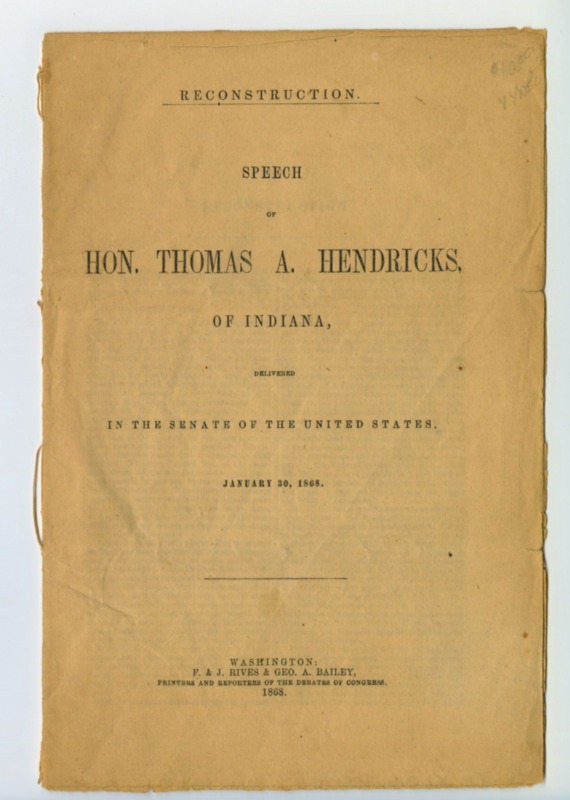
A notable speech given by Thomas A. Hendricks, a U.S. Senator from Indiana, during the post-Civil War era. This speech was delivered as part of the ongoing national debate over Reconstruction policies aimed at reintegrating the Southern states that had seceded during the Civil War and addressing the rights of freed African Americans.
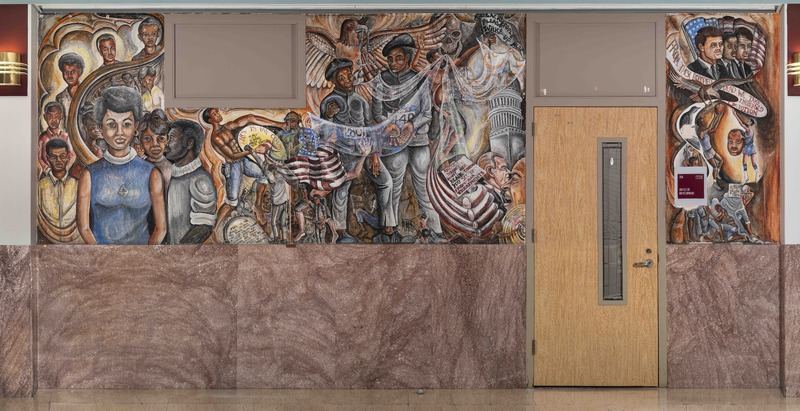
Ellison’s pair of murals speaks to political and social issues of the 1960s and 1970s. The murals express hope through resistance, in spite of the challenges facing Black America. In the middle, a bald eagle holds a broken lynch rope in its beak and “the law” in its talons.
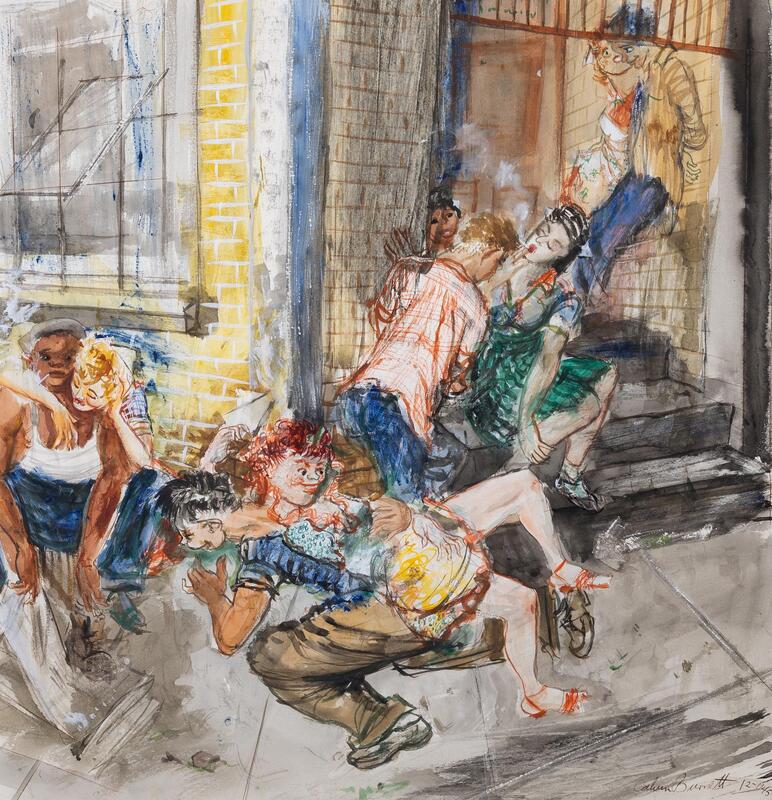
Calvin Burnett was a graphic artist, illustrator, painter, designer, and art teacher from Cambridge, MA. "Horseplay" is a watercolor depiction of an interracial group of young adults socializing. Two pairs are in a romantic embrace, one pair is dancing, and a trio shares a cigarette.
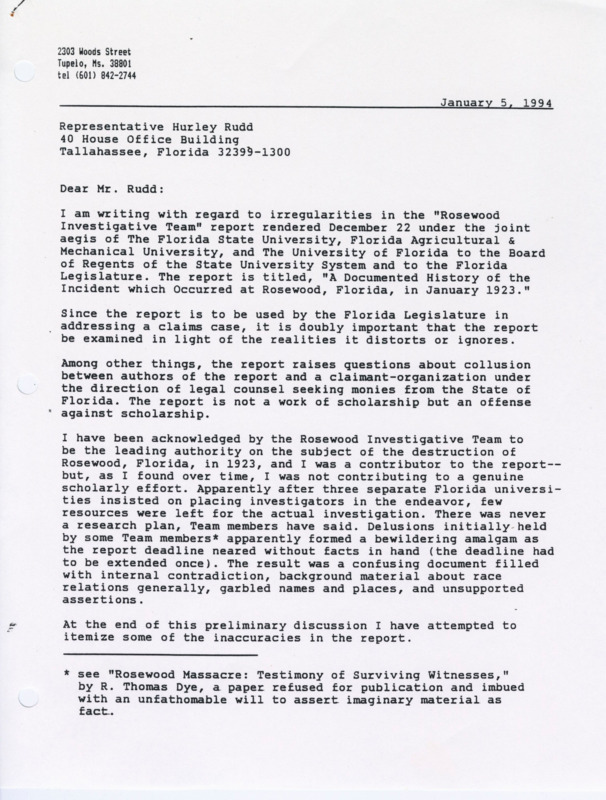
House bills introduced during the Rosewood investigation specifying sections for various committees to review and address. These bills focused on documenting the events of the 1923 Rosewood Massacre and included provisions for compensation and the establishment of processes to support ongoing research and investigation into the tragedy.
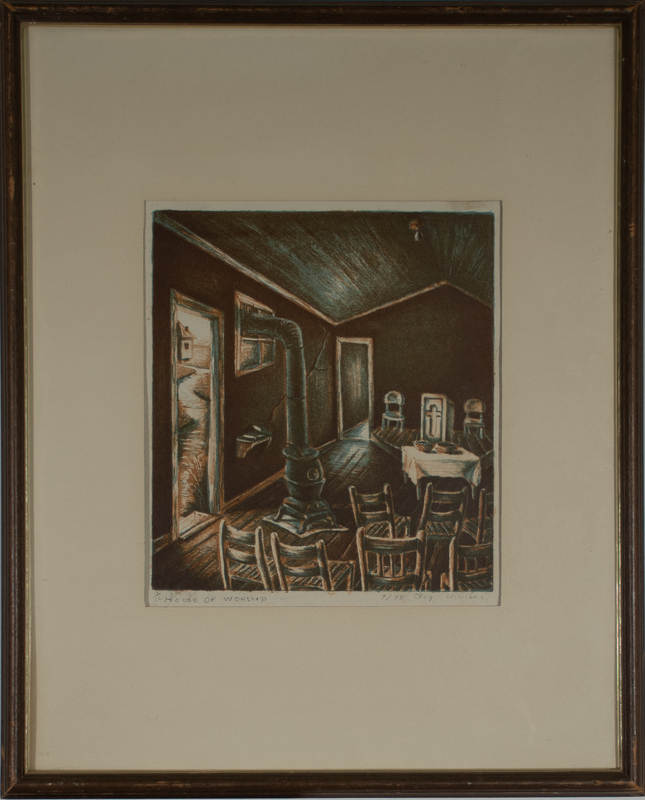
This print by Roy Williams depicts a modest Christian worship house. The door is open, and the seats are arranged as if a service is about to begin or has just ended. A fireplace warms the church, and a path out the door snakes through a field. Dr. John T. Biggers taught students the craft of printmaking while he was a professor at Texas Southern University.
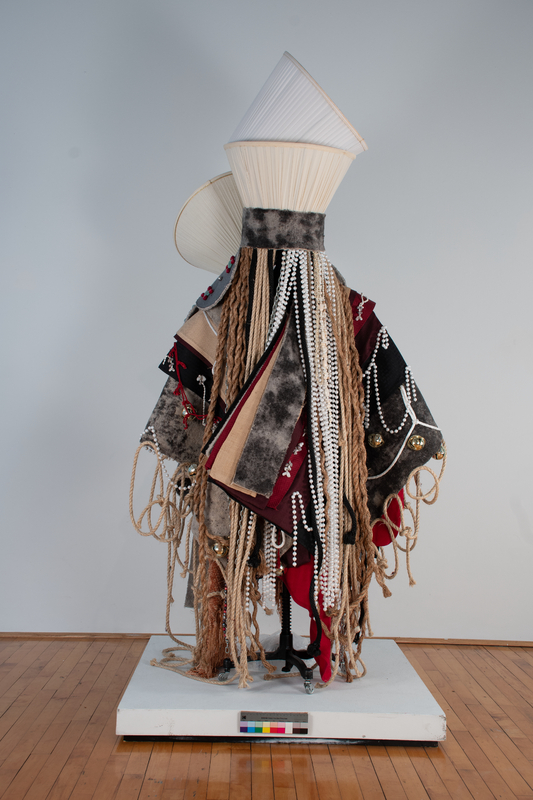
Noah is a Cameroonian artist who had a residency at TSU in Spring 2023. The work was inspired by Bamiléké masquerades and the Demeure 5 costume by Étienne-Martin, and is made of materials from second-hand shops in Houston. Noah wore the costume during an interactive procession down the Tiger Walk, TSU’s central campus walkway. The costume became part of the exhibition, Memory Palaces: Creations of Franck Kemkeng Noah.
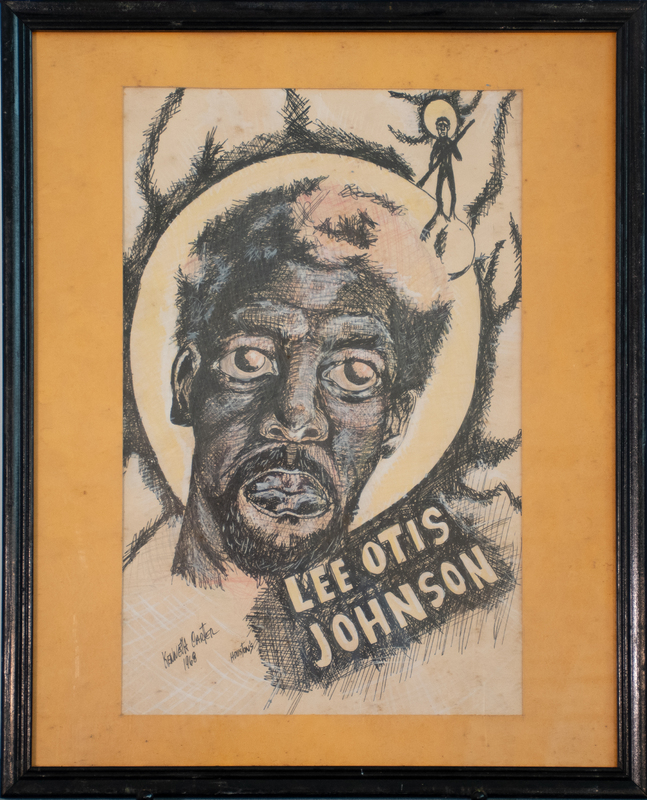
Carter’s drawing is of Lee Otis Johnson, a former TSU student, organizer, and leader of the Houston Student Non-Violent Coordinating Committee. Houston police repeatedly targeted Johnson, and in 1968 they arrested him for passing marijuana to an undercover officer, and a judge sentenced him to 30 years in prison. This injustice gained widespread notoriety, and “Free Lee Otis” became a rallying cry.
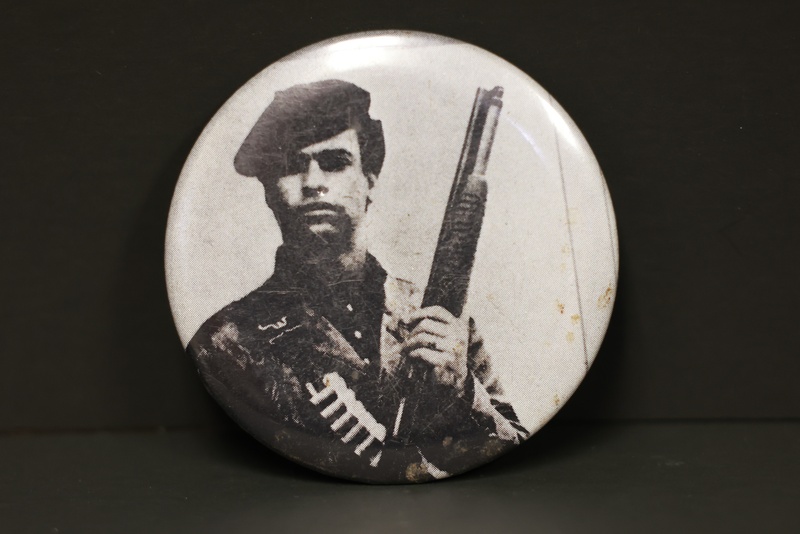
A button with a black and white photo of Huey Newton holding a shotgun. Huey Newton, alongside Bobby Seale, founded the Black Party for Self Defense in Oakland, California, in 1966. The Black Panther Party held an ideology of armed self-defense against the oppressive and racist forces of the United States government and police.
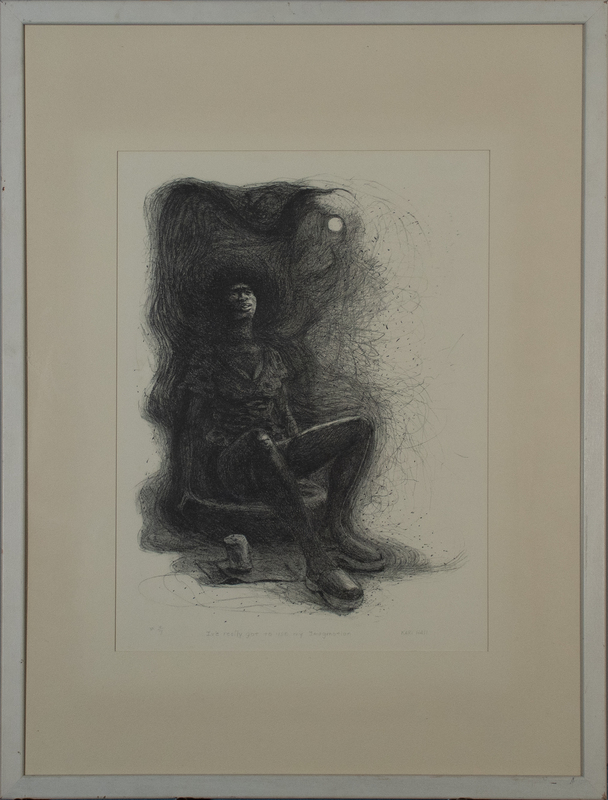
Hall's print depicts a seated woman with a dark aura around her. A candle sits near her feet, perhaps just having been blown out. Light from the moon reflects on her face, knee, and shoe. The sketched lines extending out from the figure may suggest her imagination expanding past her physical form. Hall later became a longtime art teacher in Houston Independent School District.
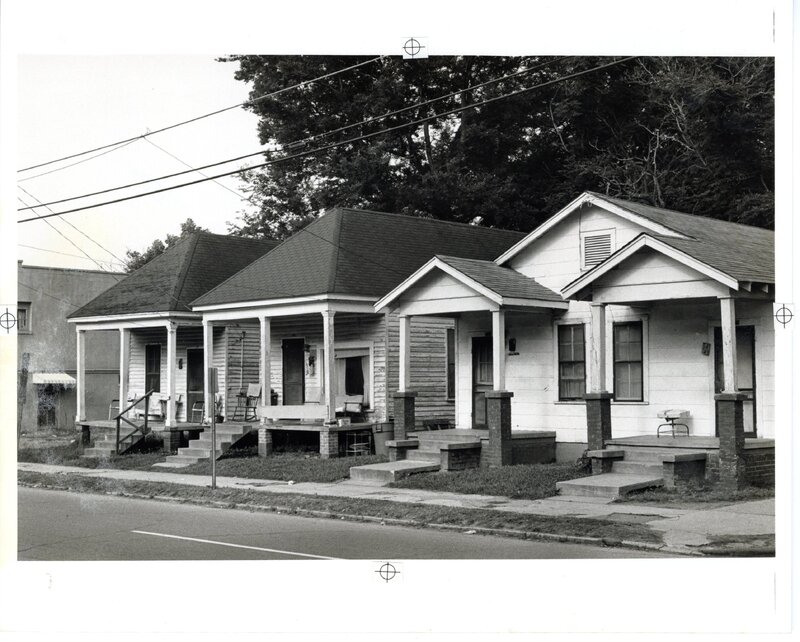
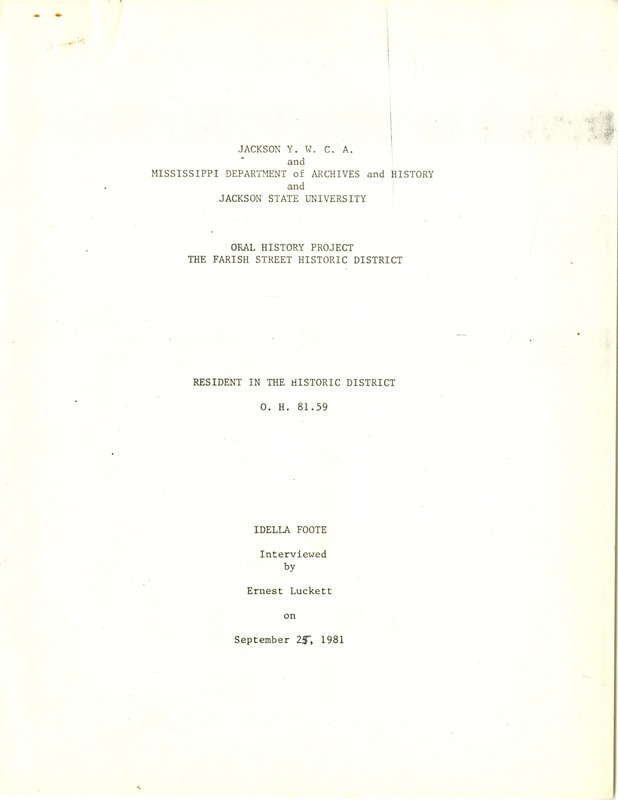
Idella Foot moved to the Farish Street District in 1931 and lived her entire life on multiple different streets in the district. Ms. Foote discusses her children and her church affiliation. She also talks about the changes the district has undergone over the decades, saying that the district underwent big changes after the older generation died.
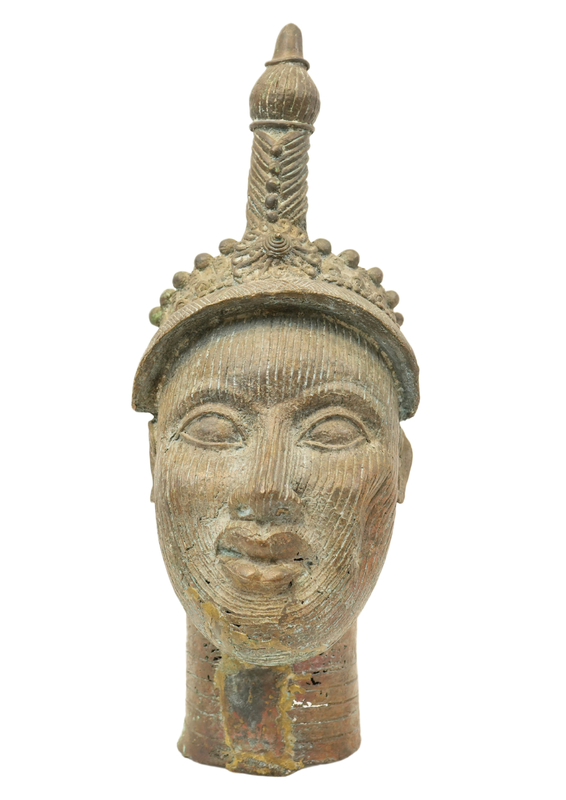
This rare sculpture unearthed in Nigeria belongs to the Yoruba people of that region. It is believed that a single individual or workshop created this copper alloy sculpture between the 12th and 15th centuries to represent a king or highly respected warrior figure.
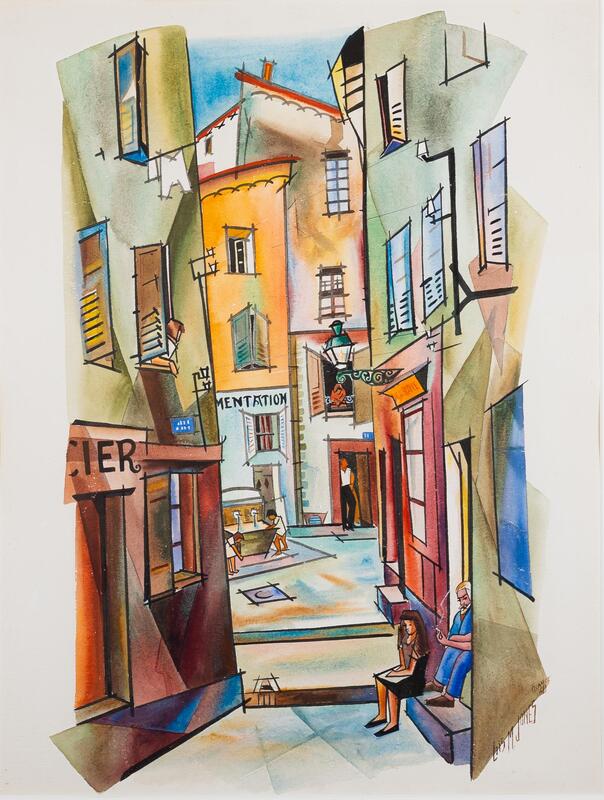
Lois Mailou Jones was an artist and art educator who worked in textile design, watercolor, painting, and collage from Boston, MA. "Impasse De L'Oratoire Grasse" depicts a dead-end market street in Grasse, France. This piece provides a glimpse into the social life of the people of Grasse. There are several people performing their everyday lives in the piece, including activities like: smoking cigarettes, spending quality time and shopping.
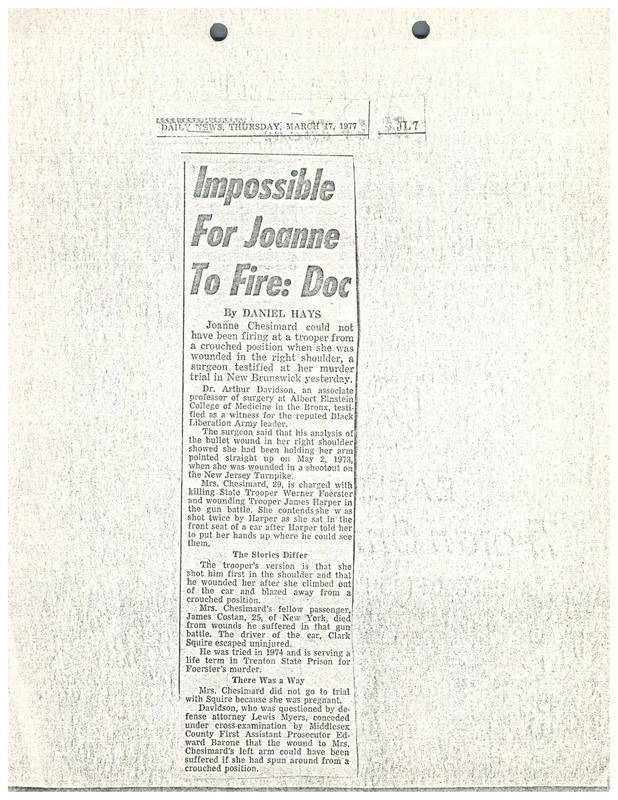
A newspaper article from Daily News about the testimony of defense witness Dr. Arthur Davidson during the trial of Assata Shakur (JoAnne Chesimard) for the 1973 killing of a state trooper. He testified that the wound in her right shoulder showed that she was holding her right arm pointed straight when she was wounded in the shootout.
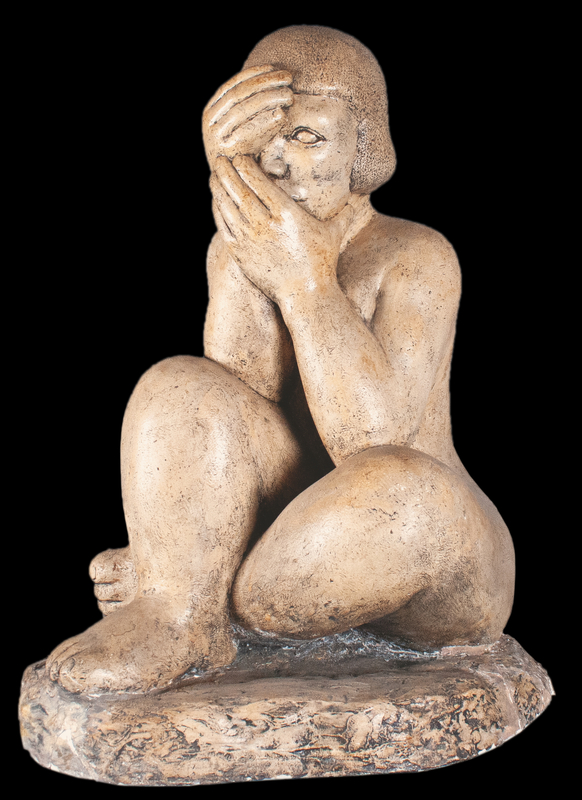
Hayward Oubre was a multimedia artist and educator from New Orleans, LA. "In a Pensive Mood" is a sculpture of a woman sitting in a worried position. Her hands cover her mouth and right eye as she sits with her left leg tucked under her right.
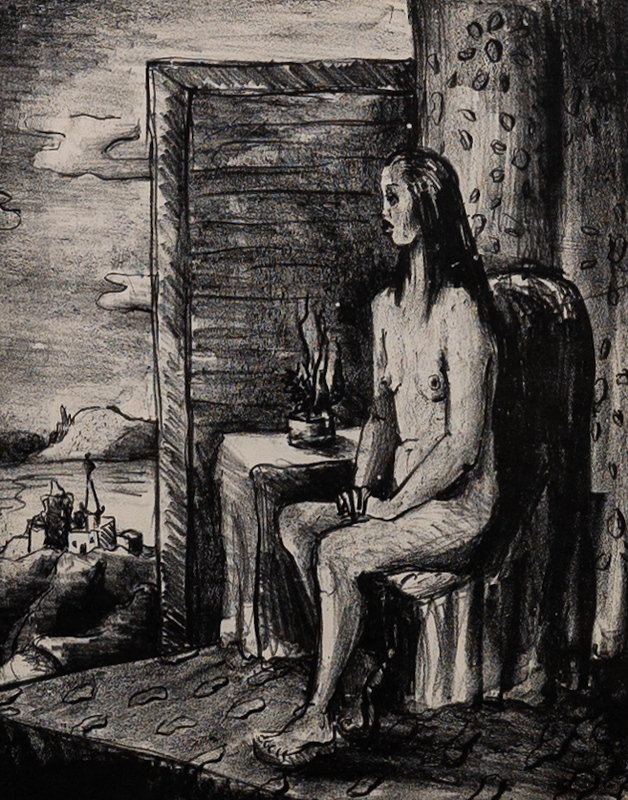
Jenelsie Walden Holloway was an artist and art educator from Atlanta, GA. In a World Alone is a sketch of a nude woman. The sketch depicts the nude woman in a reflective pose, sitting on a porch with a cityscape in the distance.
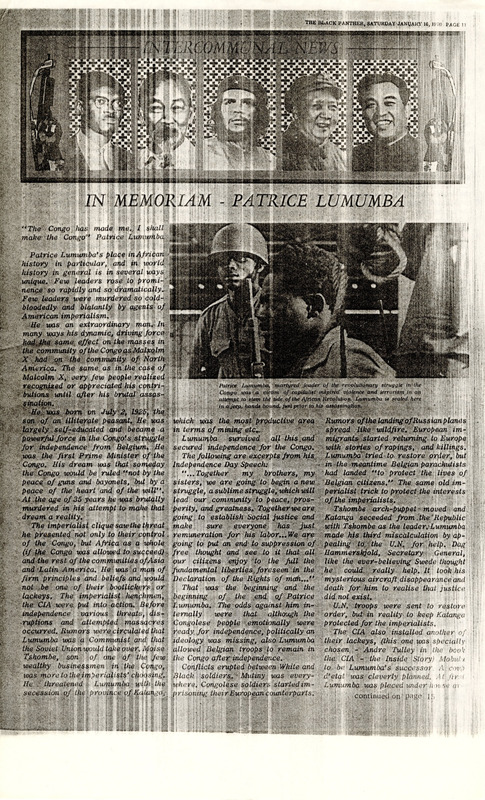
A newspaper article from The Black Panther telling the story of Patrice Lumumba, who became the first prime minister of the Republic of the Congo in June of 1960, shortly after Congo gained independence from Belgium. He was assassinated in January of 1961 and is an icon in the anti-colonial movement that was embraced by the Black Panther Party.
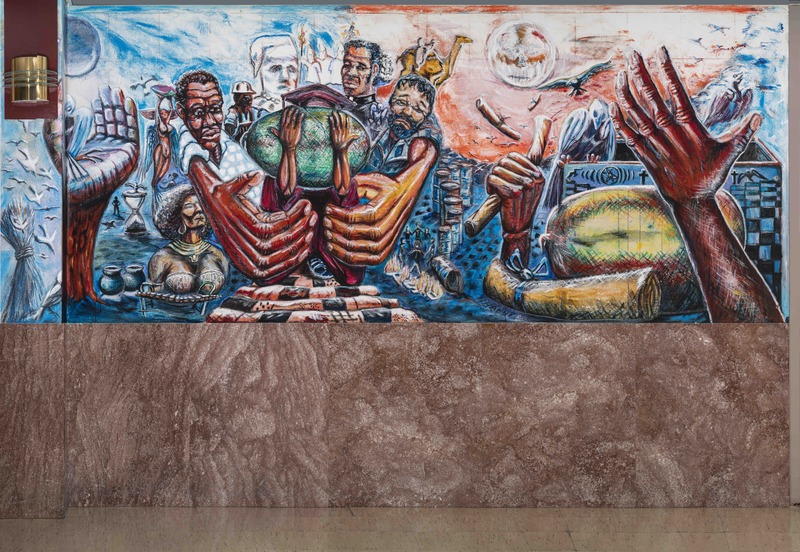
The artist boldly tackles the often stereotypical image of the watermelon while depicting the hypocrisy of organized religion in the Black community and the constant threat of the Klan. The large, reaching hands pull at a recent graduate, whose face is obscured by the watermelon they are holding.