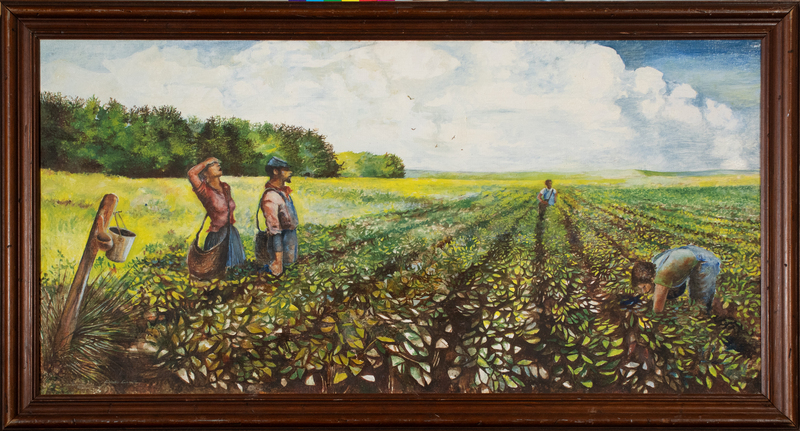
Curnell's painting shows a field of crops stretching into a cloudy horizon, with four people working the field. Two men are actively picking, while a man and woman stand to the side, resting next to a water pail. The figures’ dress and posture seem to suggest that this may be a family farm, rather than a plantation scene depicting slavery.
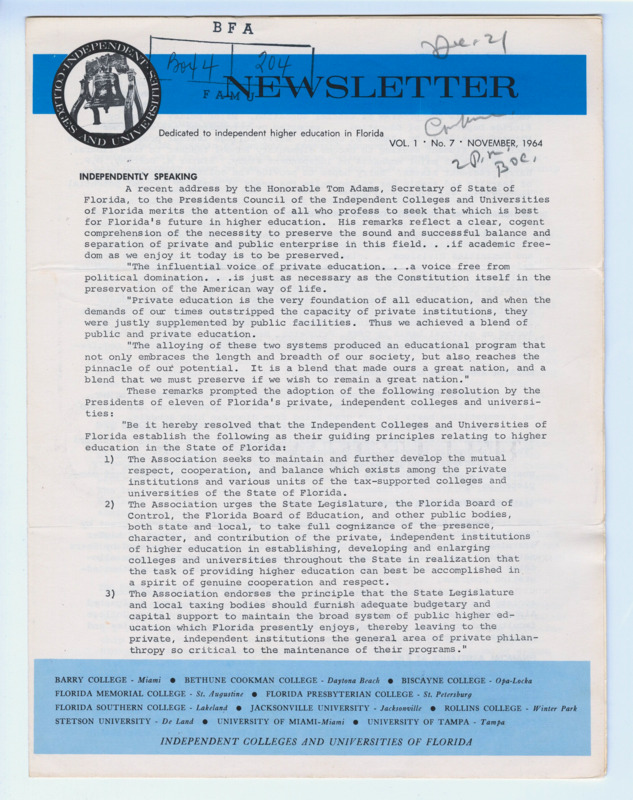
The 1964 Vol. 1 and 1965 Vol. 2 editions of this newsletter promoted Florida's higher education, showcasing institutions like Bethune-Cookman, Stetson, and Florida Memorial. These editions highlighted the historical contributions and values of public and private colleges across the state.
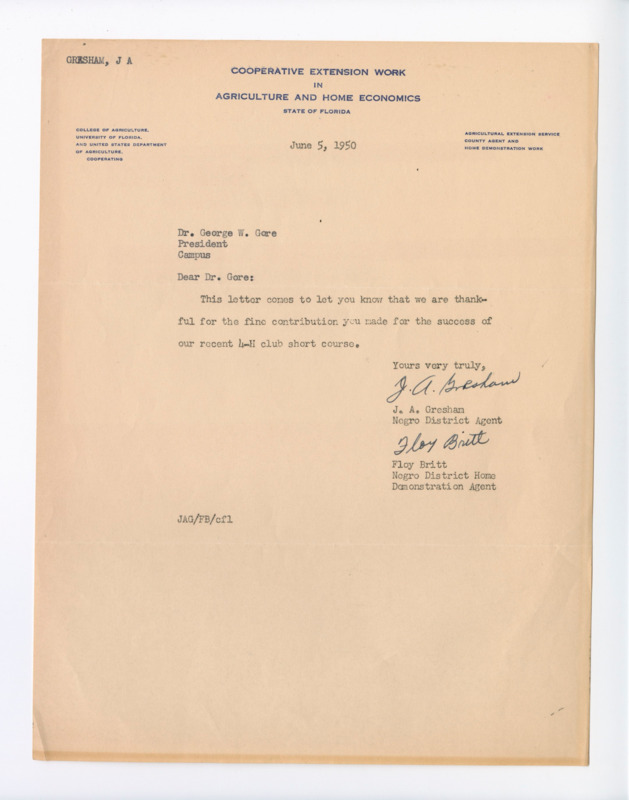
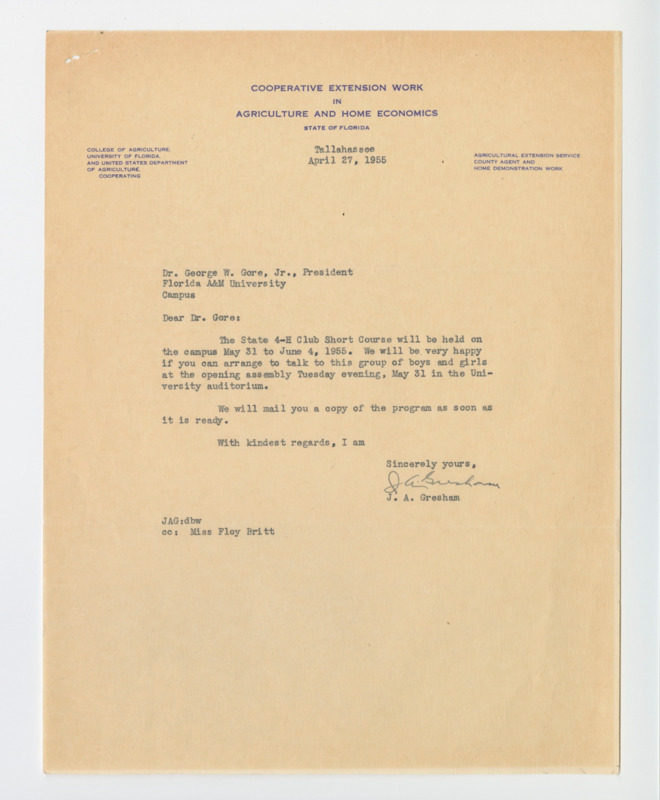
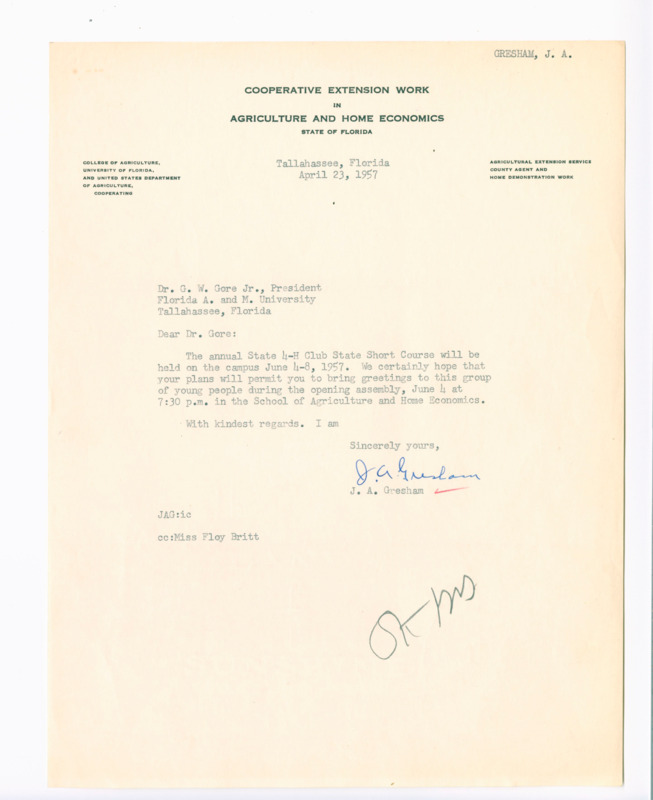
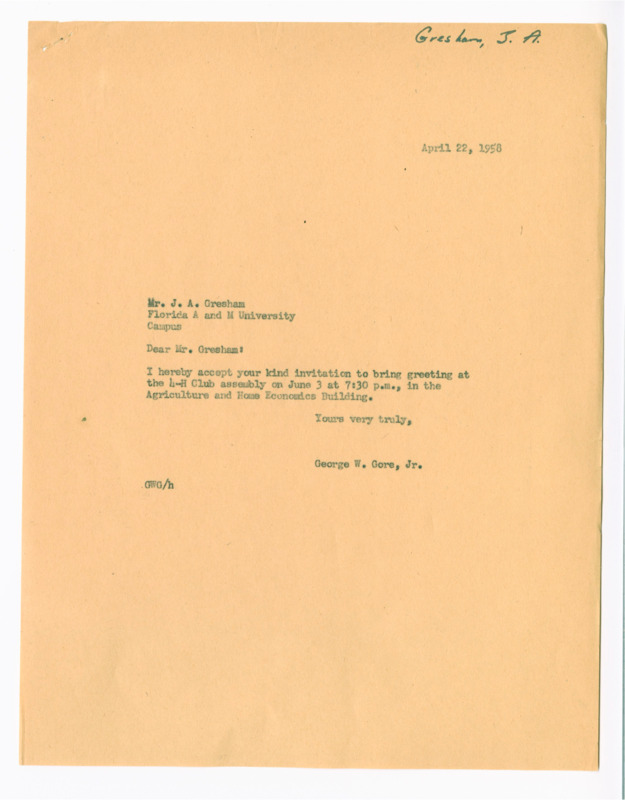
Initial letters between President Gore and Negro District Agents regarding the 4-H Club, the Annual Agricultural & Home Demonstration Agents Conference, and efforts to enhance educational standards in Florida. These exchanges include invitations, detailed program statistics, and agents' personal information.
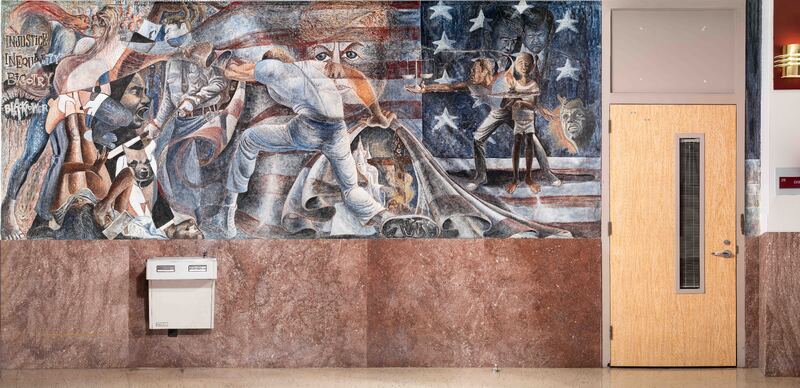
Mills’s mural depicts a nation in turmoil, with scenes of racial violence, and pushback by Black protestors. A figure lifts the American flag to reveal white supremacy. On the right side, Stokely Carmichael’s face bursts through the flag, alluding to the 1967 TSU Invasion. During the invasion, 488 TSU students were arrested and Houston Police fired almost 5000 bullets into the men's dormitory.
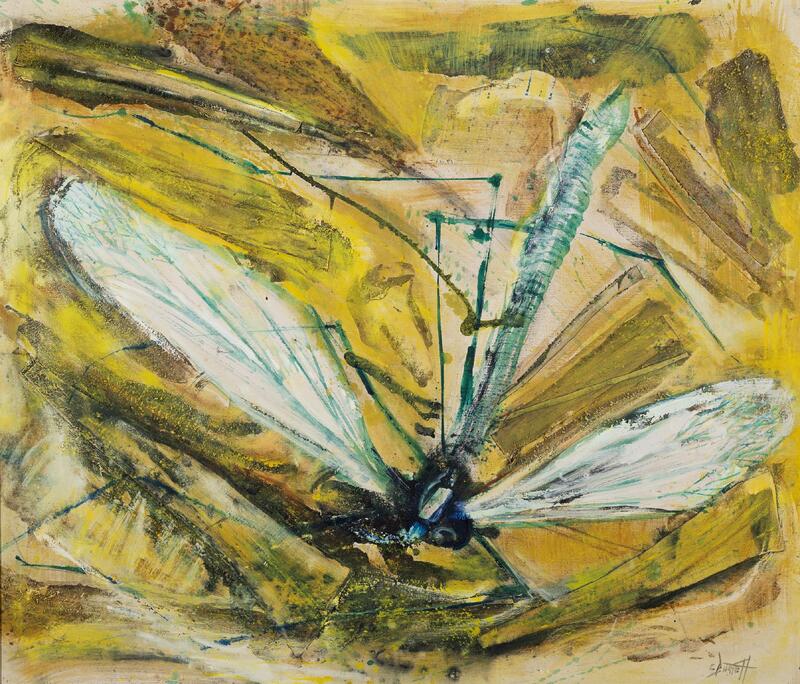
Calvin Burnett was a graphic artist, illustrator, painter, designer, and art teacher from Cambridge, MA. Insect is a painting of a dragonfly in a close-up perspective. The dragonfly is primarily bright green with long, thin legs, two white wings, and a dark blue head. A naturalistic setting of bright yellows, browns, and greens surrounds it.
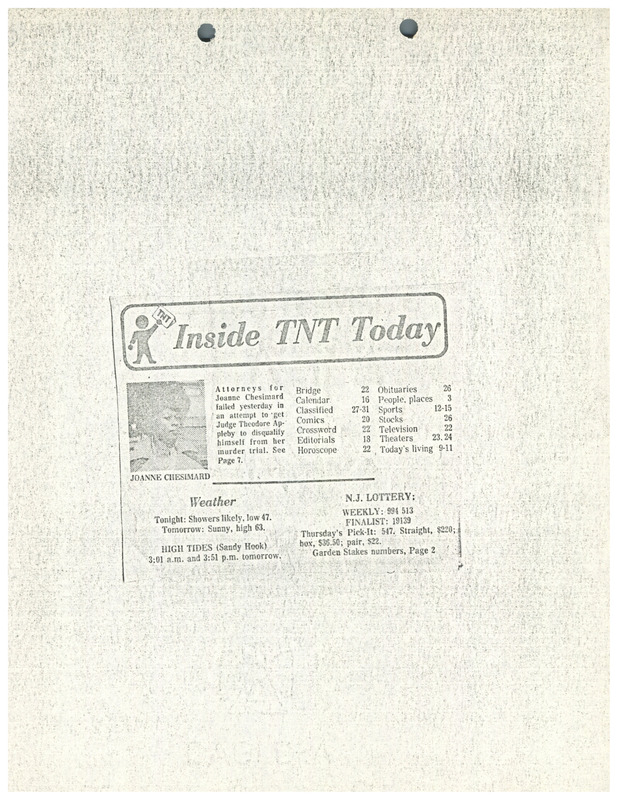
A news blurb from The News Tribune about the failure of defense attorneys to have Judge Theodore Appleby disqualify Assata Shakur (JoAnne Chesimard) from her murder trial for the 1973 killing of a state trooper. Shakur was convicted in 1977 of the killing and escaped prison in 1979.
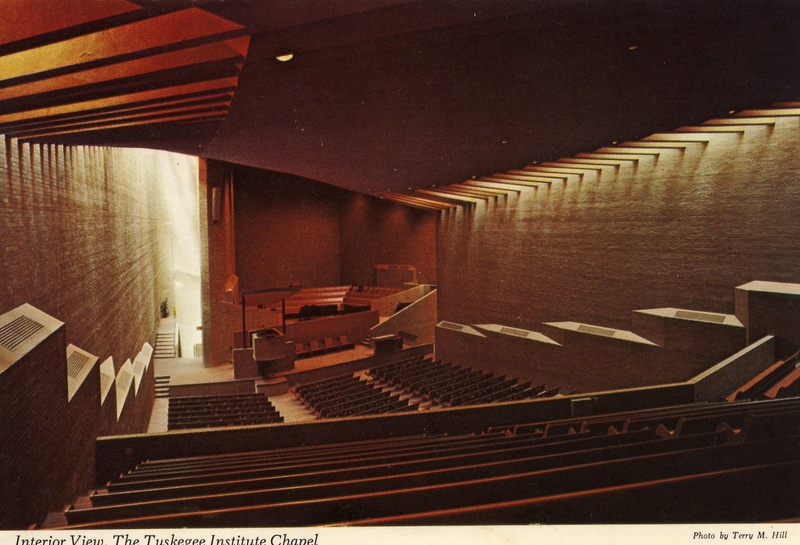
A colored image of the interior of the new Tuskegee Institute Chapel, designed by Paul Rudolph, John A. Welch, and Louis Fry. Welch and Fry were former Tuskegee students.
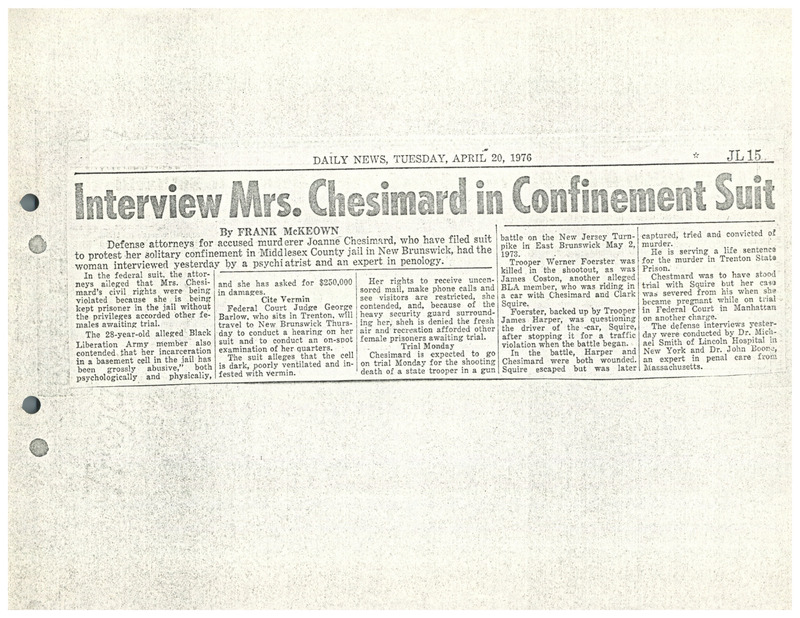
A newspaper article from The Daily News about Assata Shakur (JoAnne Chesimard) being in New Jersey to stand trial for the May 1973 killing of a state trooper and the federal suit her attorneys filed for alleged horrible living conditions and violation of civil rights. Shakur was convicted in 1977 of the killing and escaped prison in 1979.
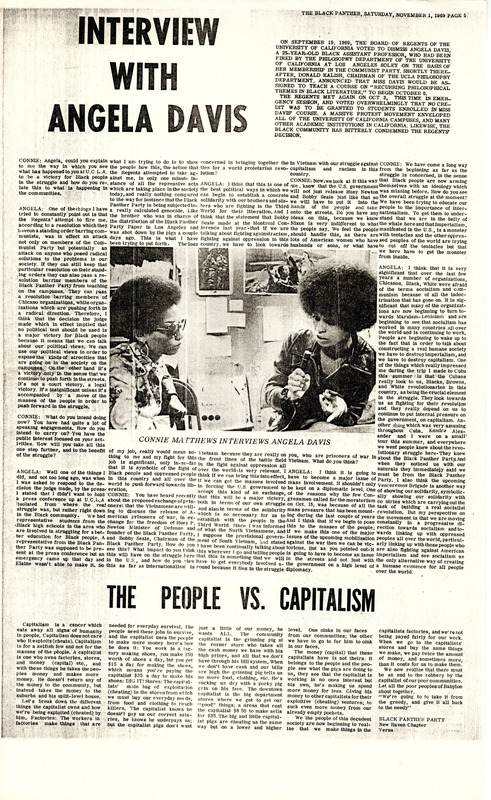
A newspaper article from The Black Panther. Connie Matthews interviews Black Panther Party Member and assistant professor Angela Davis following her dismissal from the University of California in September 1969 after she had been fired by the Philosophy Department on the basis of her membership in the Communist Party.
A specialized team formed to investigate the 1923 Rosewood Massacre, collaborating closely with the Civil Rights Office. Through extensive research, interviews with survivors, and cross-referencing historical records, they sought to uncover the truth, hold the state accountable, and document the community’s painful history.
Recurring letters between President Gore and Negro District Agents consistently include the agents' thanks and hopes for more events, along with invitations to the 4-H Annual Short Course and program statistics. These letters underscore ongoing efforts to elevate educational standards in Florida's agricultural and home demonstration programs.
Recurring correspondence between President Gore and Negro District Agents regularly includes agents' gratitude and anticipation for future events, as well as invitations to the 4-H Annual Short Course and program statistics, highlighting continued efforts to enhance educational standards in Florida's agricultural and home economics programs.
Recurring letters between President Gore and Negro District Agents feature agents' thanks and invitations to the 4-H Annual Short Course with program statistics, underscoring efforts to elevate educational standards in Florida’s agricultural and home economics programs. Gore, however, was unable to speak at the annual conference.
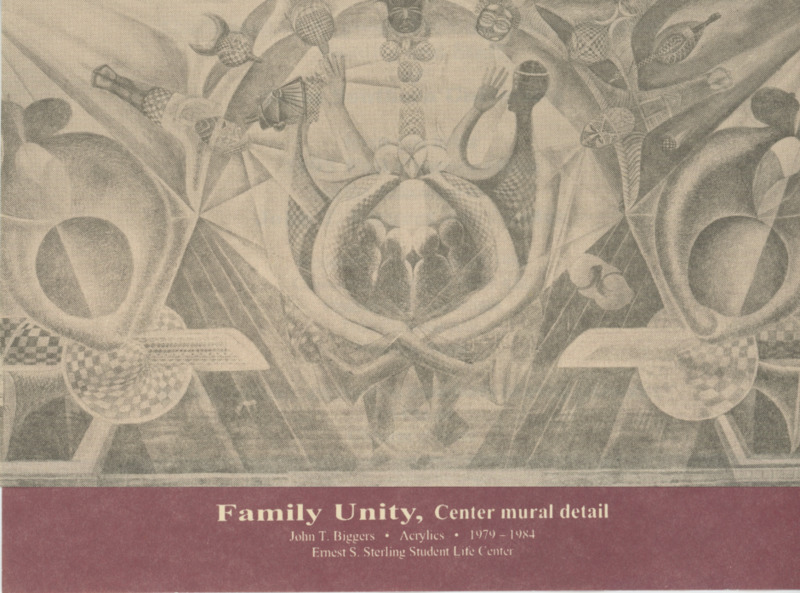
This is an invitation to Texas Southern University's Fall 1995 convocation and the dedication of the John T. Biggers Art Center. Biggers founded the university’s art department in 1949 and taught classes until 1983. The invitation features a detail shot of Biggers’ mural Family Unity, which is located in the cafeteria of the Sterling Student Life Center on TSU’s campus. The invitation is printed in TSU’s maroon and gray colors.
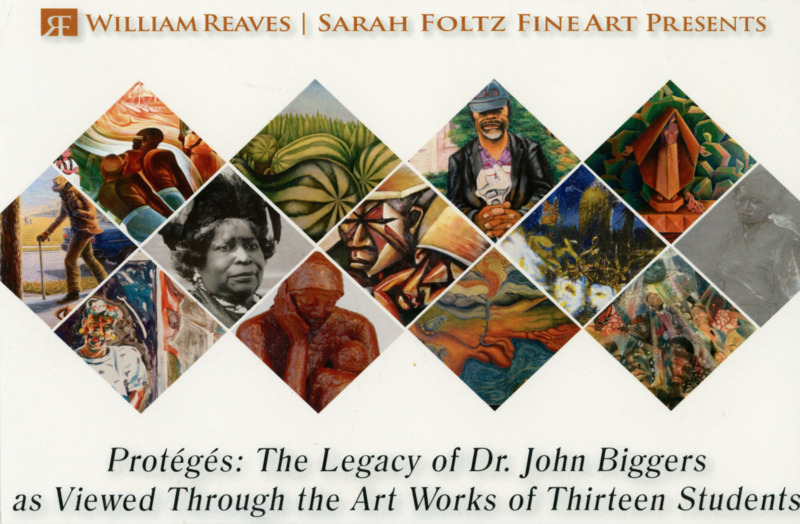
This is an invitation from William Reaves - Sarah Foltz Fine Art gallery to the exhibition Protégés: The Legacy of John Biggers As Viewed Through the Artworks of Thirteen Students. The featured artists - Charles Criner, Geraldine Crossland, Karl E. Hall, Earlie Hudnall, Jr., Harvey Johnson, Earl S. Jones, Josie Mendoza Postel, Robert Meyers, Elizabeth Montgomery Shelton, Kermit Oliver, Jesse Sifuentes, Charles Thomas, and Roy Vinson Thomas - are all Texas Southern alumni and students of Dr. Biggers.
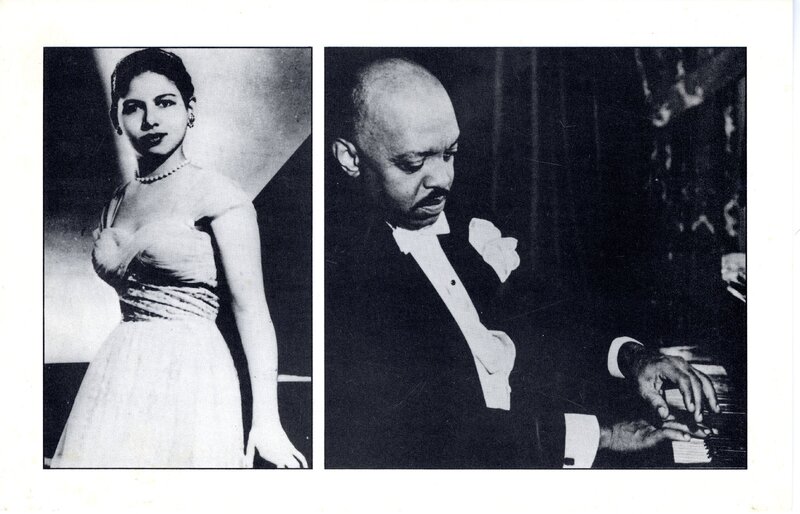
A postcard serving as an invitation for an event at the Schomburg Center for Research in Black Culture in the Harlem neighborhood of New York City. The event on November 5, 1995, is a celebration and concert in honor of Kathryn Talalay's book “Composition in Black and White: The Life of Phillipa Schuyler.”
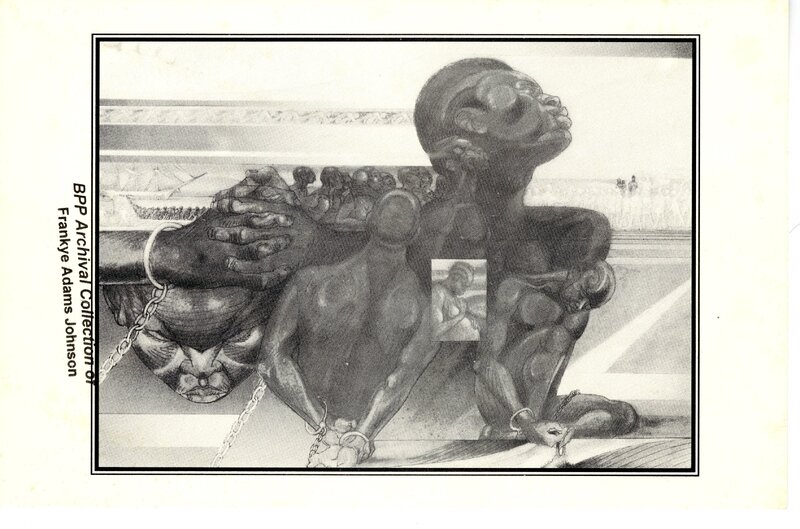
Postcard serving as an invitation for an event at the Schomburg Center for Research in Black Culture in the Harlem neighborhood of New York City. The event is a members preview exhibition opening and book signing on November 9, 1995, at 7:00pm for Tom Feelings' "Middle Passage," which would go on to be the author and cartoonist’s most famous work.
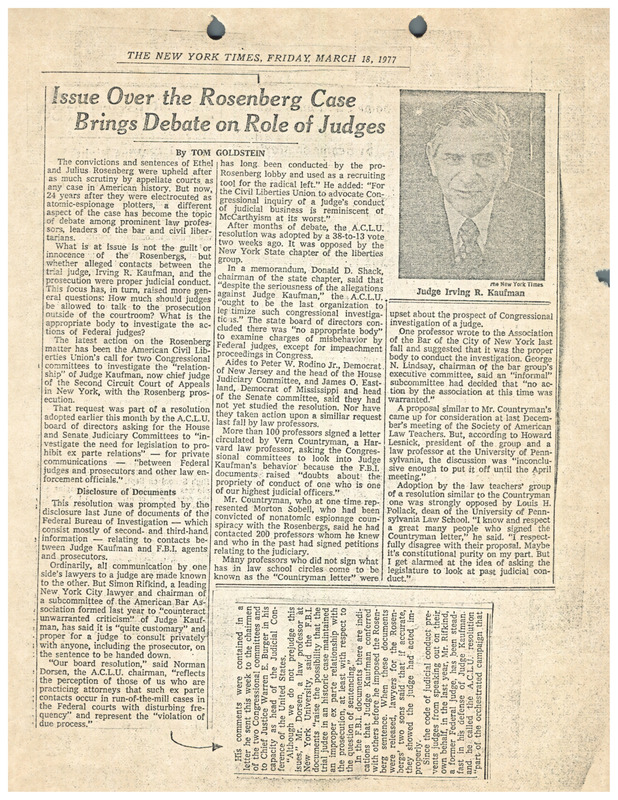
A newspaper article from The New York Times about the espionage case against Julius and Ethel Rosenberg and the judicial issue that had arisen in recent years: whether alleged contacts between the trial judge and the prosecution were proper judicial contact. The couple were convicted of espionage against the U.S. in 1951 and executed in 1953.
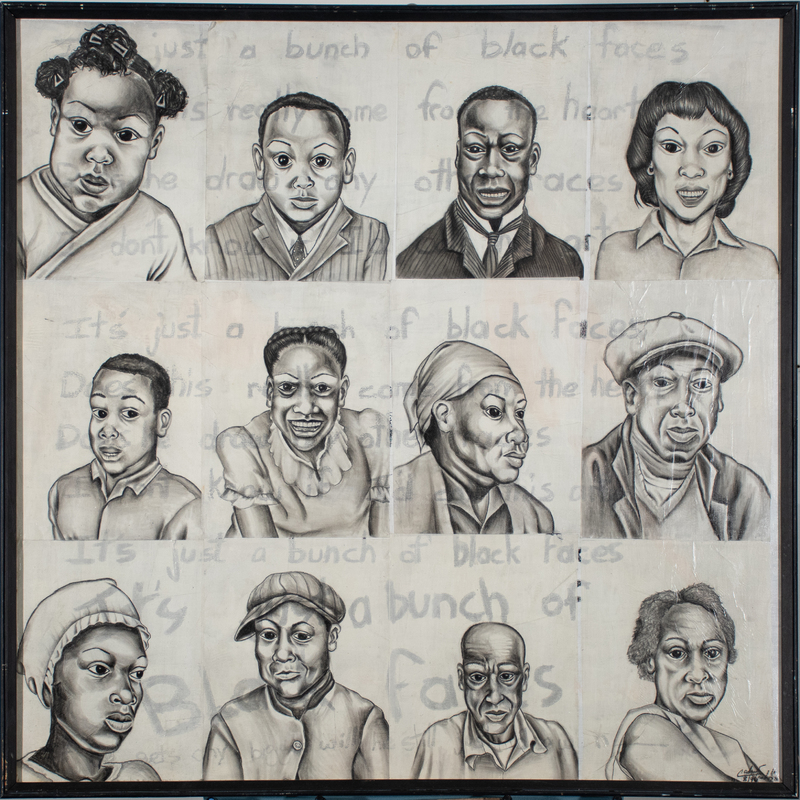
Franklin’s painting contains 12 portraits of Black people, ranging in age from children to elders. The postures and facial expressions range from smiles to blank stares, and there is also a range in attire from formal to casual wear. Behind the faces are the words: “It’s just a bunch of black faces/Does this really come from the heart/Does he draw any other races/I dont know if I’d call this art (2x)/It’s just a bunch of black faces/It’s just a bunch of Black faces/If he gets any bigger will he still just draw n___”
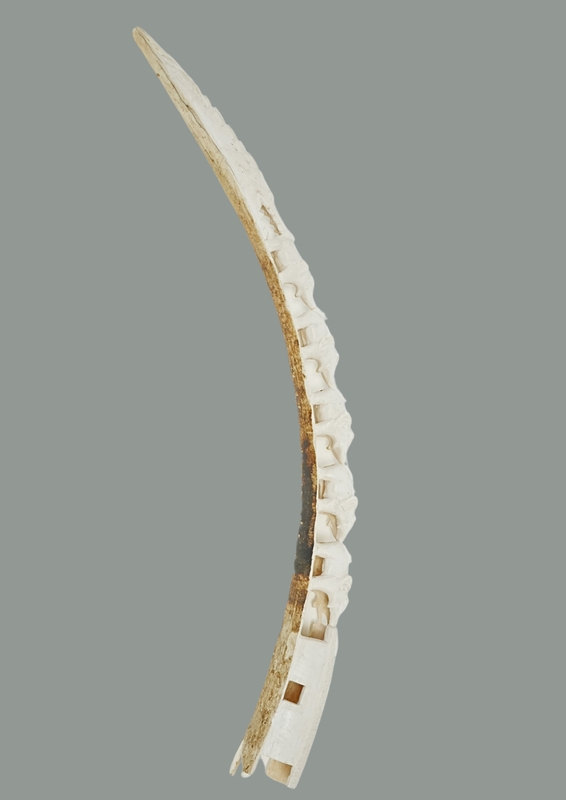
Ivory tusk carvings are exquisite representations of artistry and craftsmanship, often depicting intricate scenes, figures, and cultural symbols. These carvings have deep cultural significance, reflecting social, spiritual, and historical narratives within African societies.
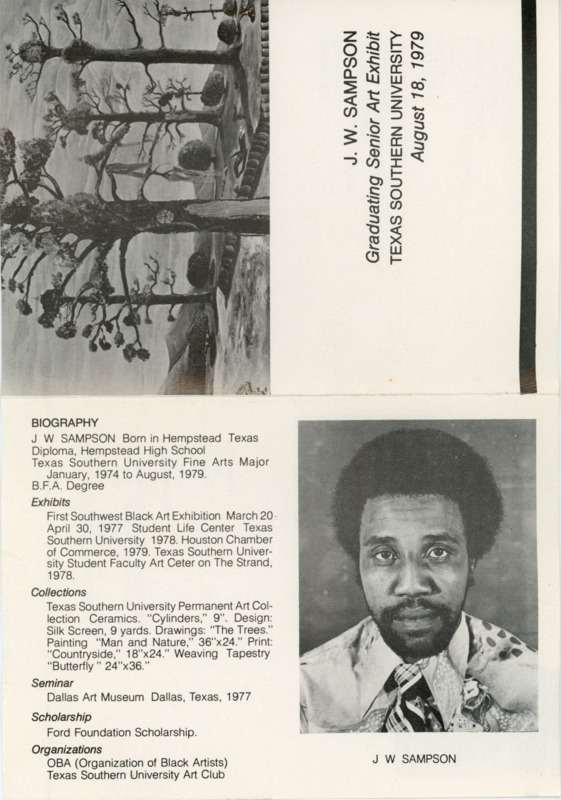
This is a brochure for Sampson’s senior art exhibition. The culmination of the Texas Southern art curriculum is a senior exhibition where students showcase artwork created over the course of their undergraduate studies. The brochure features a photo of Sampson, a brief biography, a catalog of the artwork featured in the exhibition, a photo of one of his tapestries, and photos of two of his paintings.
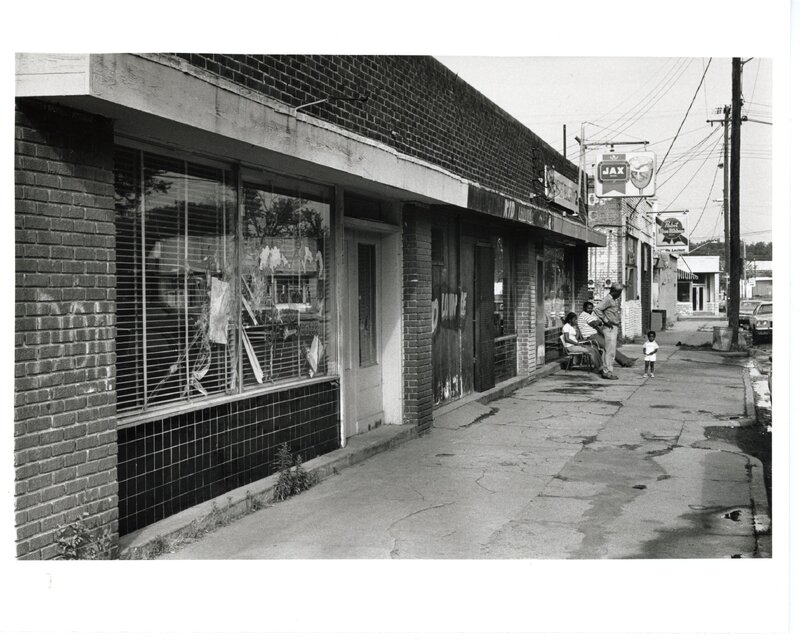
A photograph of the old Jackson Advocate offices near Farish Street in the Farish Street Historic District. The Jackson Advocate is an African American weekly newspaper founded in Jackson in 1938 by Percy Greene, a World War I veteran and Civil Rights leader in the 1940’s and 1950’s.
A newspaper article from The Home News about a 133 page report from American Foundation, Inc., Institute of Corrections that finds the conditions of Middlesex County Jail, specifically the basement where Assata Shakur (JoAnne Chesimard) is being held while on trial for the 1973 killing of a state trooper, to be "grossly inadequate."
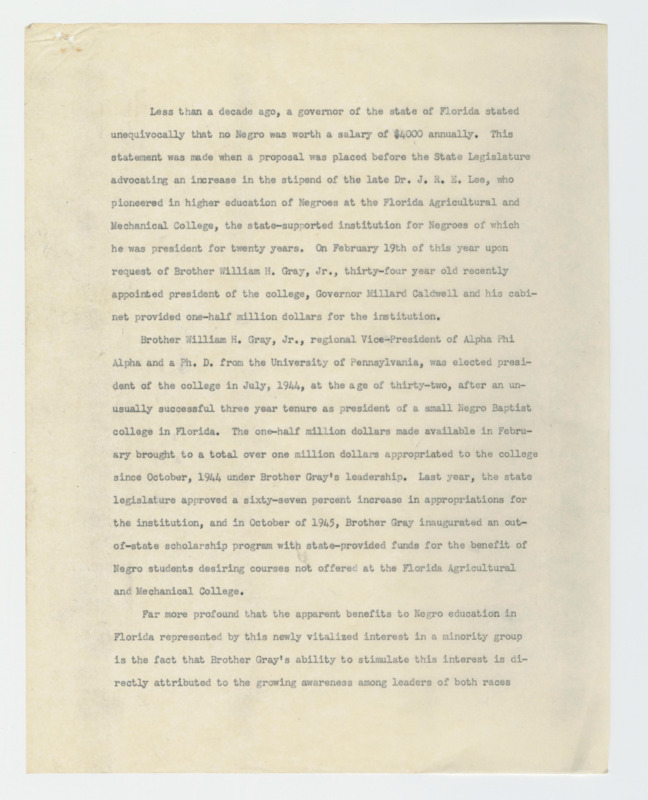
In this speech delivered by James D. Brown, Jr. to the Gamma Mu Lambda Chapter of Alpha Phi Alpha Fraternity, Brown praises Florida A&M University President William H. Gray, Jr. He discusses the trailblazing path Gray has been on, from securing substantial funds for his HBCU to providing it the buildings, care, and equipment it needed.
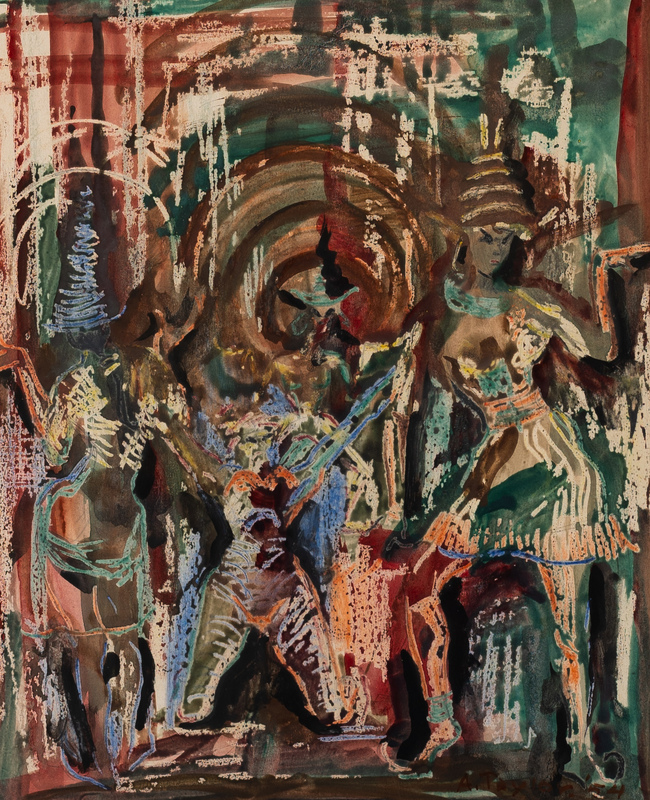
Archie Taylor was an artist from Montgomery, AL. Javanese Ritual is an abstract depiction of an indigenous Indonesian spiritual ceremony. The Javanese have rituals for coming-of-age, marriage, appeals to nature, and secret initiations.
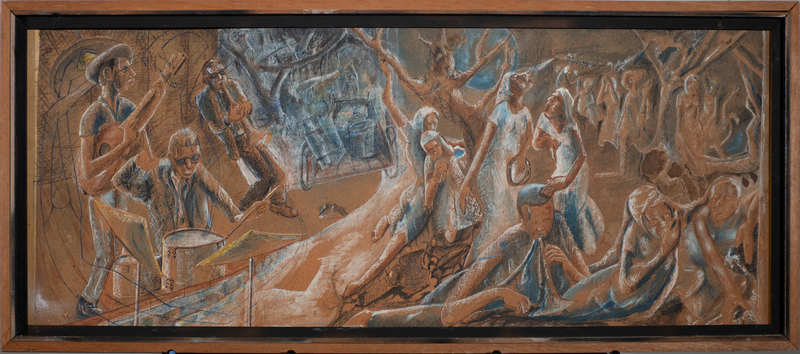
Vital’s drawing may be a mural pre-study. The scene depicts a spirit of revelry, with musicians entertaining a large crowd gathered to enjoy the music and dance. The instruments vary from those of a typical blues and jazz ensemble, like the drum set, trumpet, and guitar, to the tambourine, often associated with southern gospel. The figures' fluidity suggests movement and freedom.
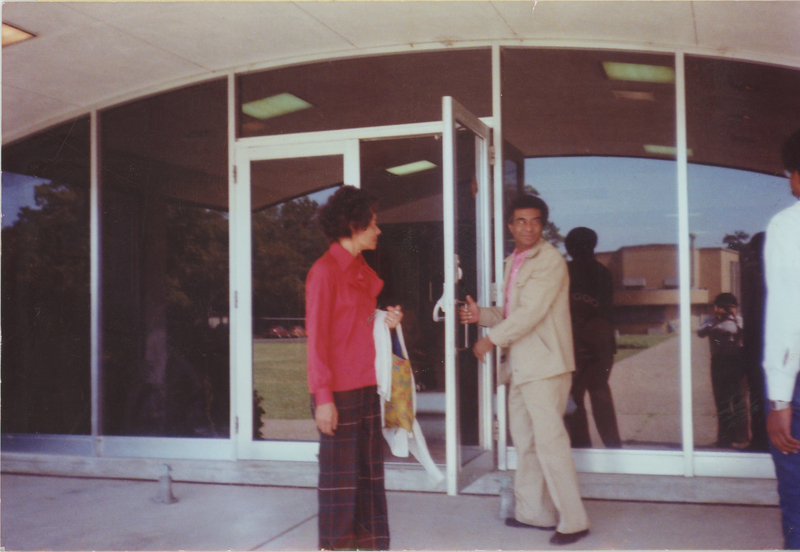
In this photograph, Dr. John Biggers opens the door to Texas Southern's art building, which was dedicated as the John T. Biggers Art Center in 1995. Dallas-based artist Jean Lacy stands to the left of Dr. Biggers. Biggers founded the university's art department in 1949 and retired in 1983.
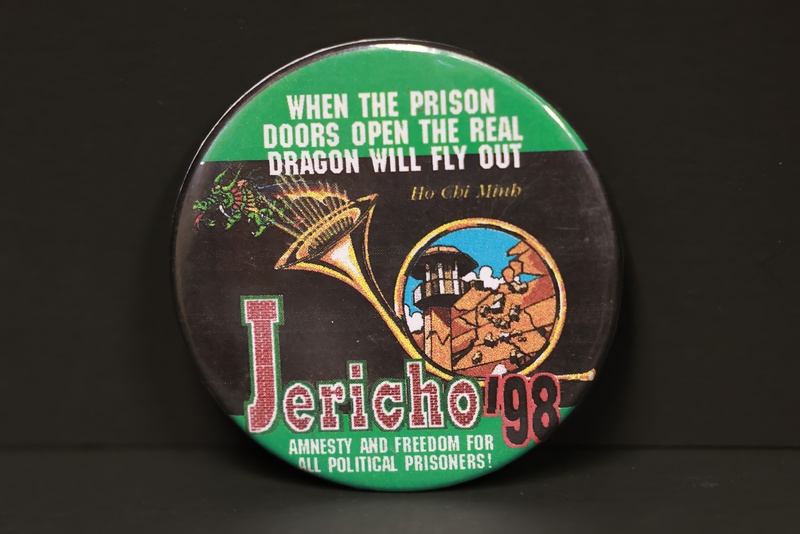
A black and green button for Jericho '98: Amnesty and freedom for all political prisoners. At the top of the button is a quote from Ho Chi Minh: "When the prison doors open the real dragon will fly out." Jericho 98 was a protest held in Washington, D.C. on March 27, 1998. The 5,000-7,000 attendees called for the release of all political prisoners.