The 1972 Founder's Day celebration at Tuskegee Institute underscored education's role in overcoming poverty and promoting equality, as Dr. Sidney P. Marland Jr. praised Tuskegee's leadership, announced increased federal funding for Black colleges, and called for continued commitment to minority education and urban studies.
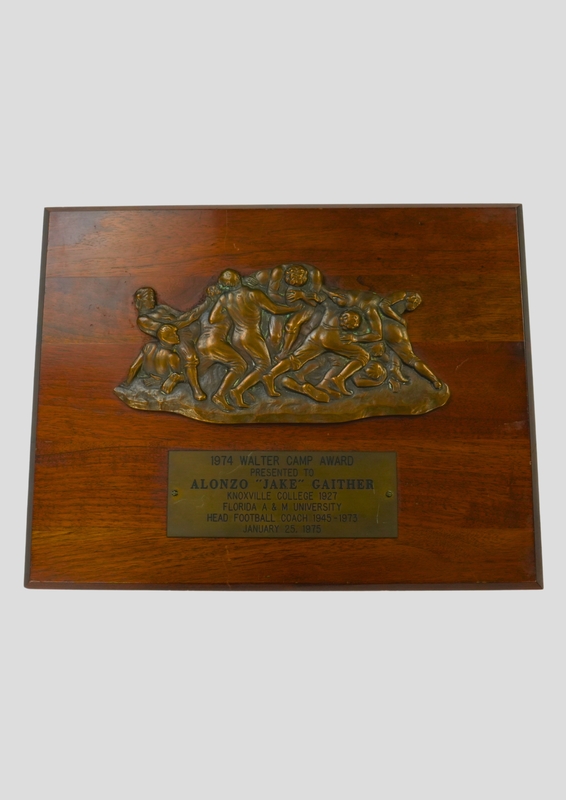
The 1974 Walter Camp Award, presented to legendary coach Jake Gaither, recognized his outstanding contributions to college football and leadership. Gaither was celebrated for his exceptional coaching skills and commitment to student-athlete development, and his influence extended beyond the field.
1975 Founders' Day reflects on the lives of three recently deceased senior citizens who were deeply committed to the Tuskegee community and the education of its students. The sermon highlights the necessity of not just hearing God's word but also doing it and growing in faith.
The 1976 Fall Convocation at Tuskegee Institute emphasized faith, community, and personal growth, urging students to uncondition themselves, embrace leadership, and pursue transformative dreams with moral and spiritual strength to help build a better world.
The President’s Essay Contest, sponsored by the Trinity Church of Boston Massachusetts, award prizes to the students who wrote and delivered the best papers on the given subjects assigned for the competition.
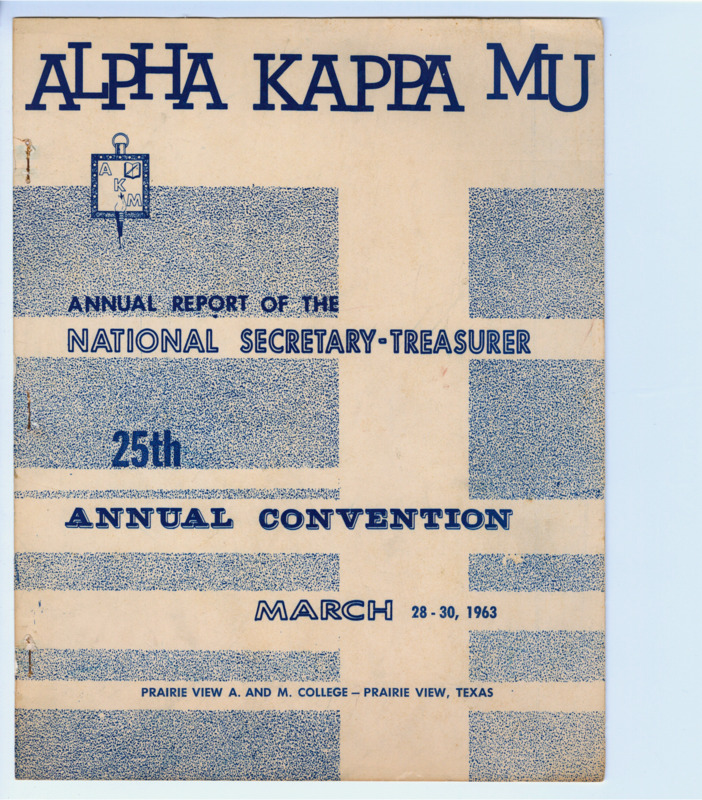
Written by the Secretary-Treasurer of Alpha Kappa Mu National Honor Society, George W. Gore, Jr., this report marks the 25th annual convention of the organization. An organization first created to develop an intellectual community of HBCU students nationwide, this report was proof of its enduring success since Gore first started the initiative.
Lillie Kate Walker was an artist from Atlanta, GA. "276 Chestnut Street" is a faux naive depiction of a house on a neighborhood street. Walker uses broad, simplistic strokes of mostly primary colors to craft a residential scene
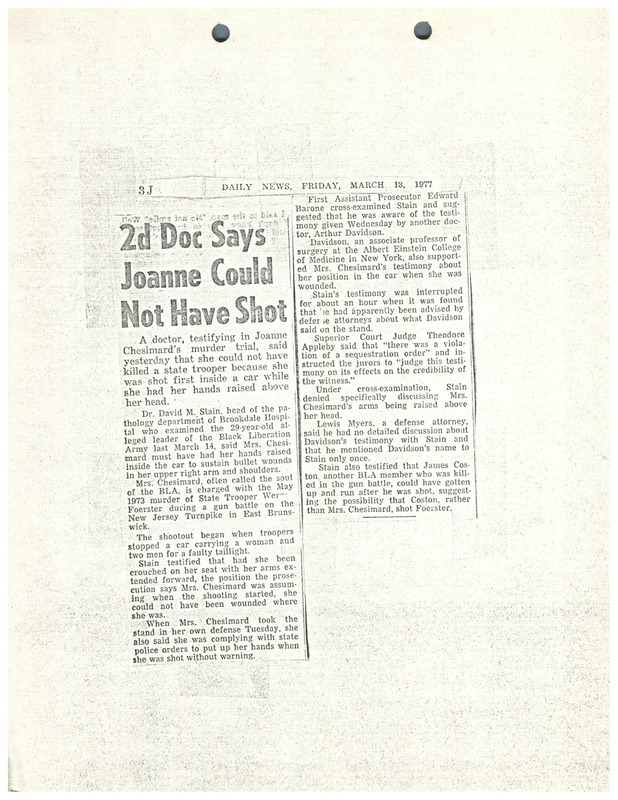
A newspaper article from Daily News about the testimony of defense witness Dr. David Spain during the trial of Assata Shakur (JoAnne Chesimard) for the 1973 killing of a state trooper. He testified about the wounds she sustained, arguing that she couldn’t have shot from a crouching position due to the position of her wounds from the shootout.
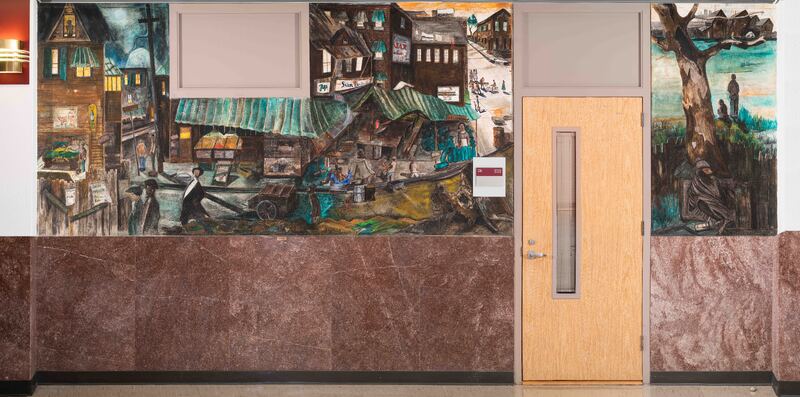
Taylor offers a snapshot of Houston’s Third Ward in the mid-20th century. Growing up in Third Ward, Taylor saw it grow and change. The scene is a busy one and depicts various storefronts and residents of the neighborhood. Taylor named the pool hall in the lower left corner after himself.
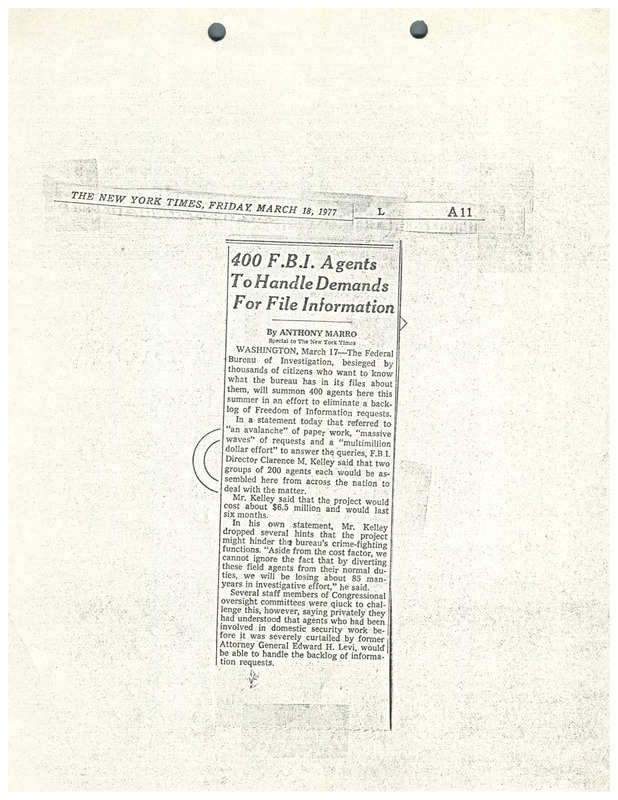
A newspaper article from The New York Times about the FBI assigning 400 agents to help eliminate a backlog of Freedom of Information requests. The agents will have a $6.5 million budget and it will take about 6 months to clear the thousands of requests that the FBI had received, causing the backlog of paperwork.
Graham Allen, Ronald Reagan, Martin Luther King Jr., and Carl Rowan discussed the role of institutions like Tuskegee University in shaping leaders, the importance of addressing justice and equality, education, and understanding to overcome systemic racism and social divisions.
Ambassador John J. Akar from Sierra Leone on "what is the relevance of Black institutions in a land which we like it or not can not chose to led the inevitability of its multiracism?"
Dr. Bernard C. Watson discussed the historical significance of Tuskegee Institute and its commitment to excellence, while emphasizing the importance of accountability and responsibility for the institution's future.
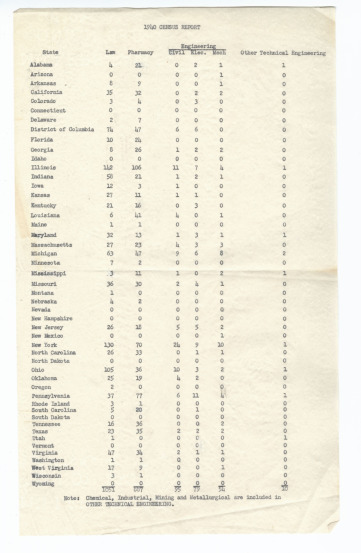
The 1940 Census Report included data on student enrollment in majors like engineering, law, and pharmacy across all 50 states. It also featured financial details of Baker House dining services, including expenses and net profit, along with grants for Negro land-grant colleges, denoting funding support for these institutions.
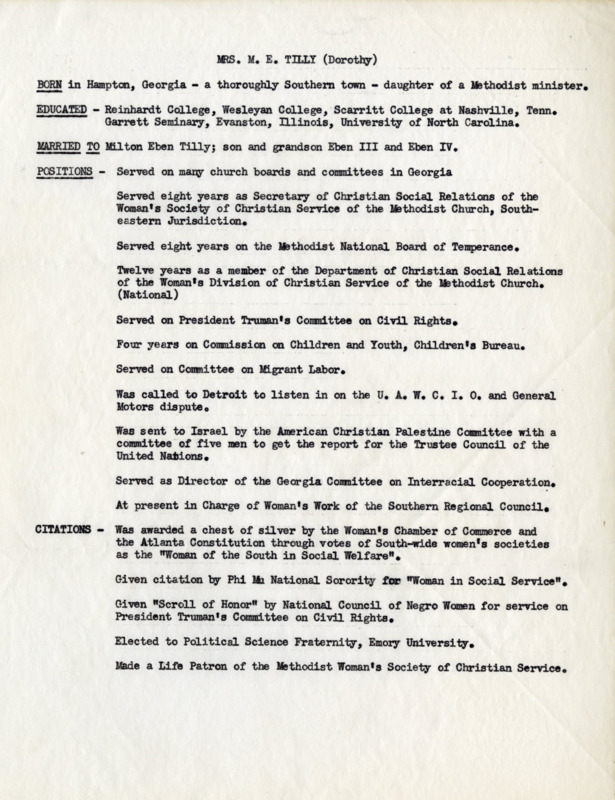
A program created by the Tuskegee Civic Association governing board to show the rest of the organization and community of the accomplishments of Mrs. M.E. Tilly.
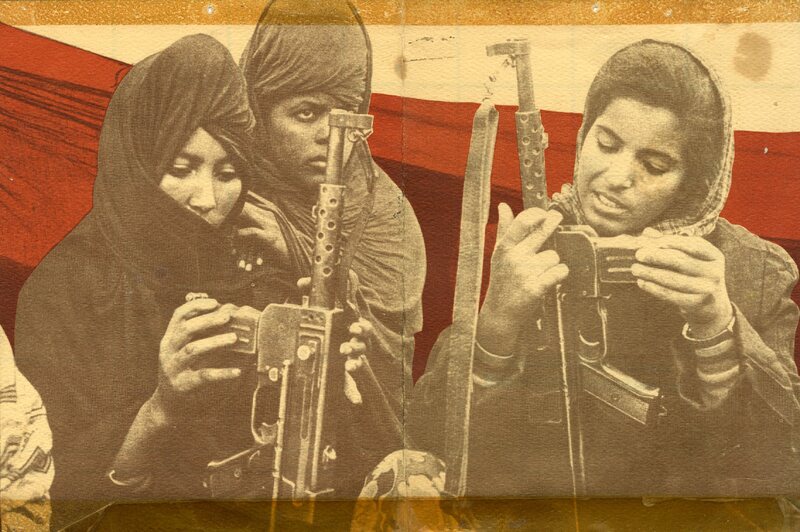
A calendar from October (year unknown). Picture of Zimbabwe liberation fighters on the front. The calendar marks the dates of the People's Republic of China's founding, the formation of the Patriotic Front (Zimbabwe), and the USSR October Revolution.
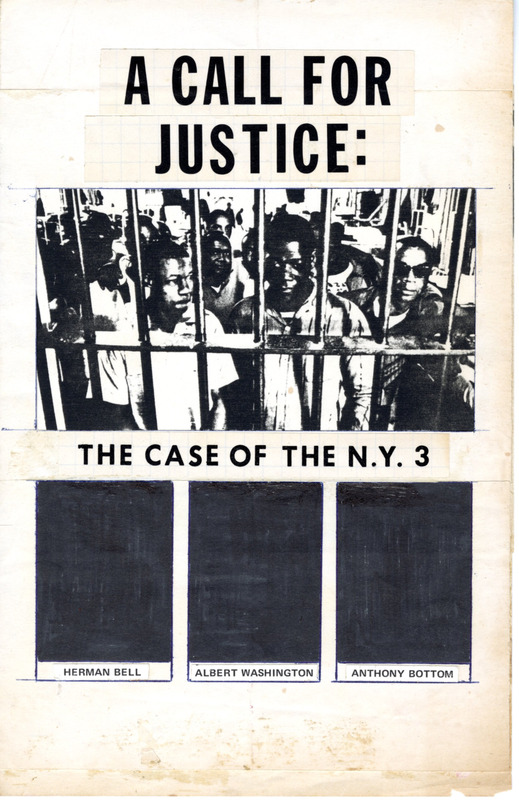
A handmade flier with a picture of prisoners behind bars. The pictures of Herman Bell, Albert Washington, and Anthony Bottom have been blacked out. The three men, known as the New York 3, were Black Panther Party and Black Liberation Army (BLA) members who were arrested and convicted of the May 21, 1971, killing of two police officers in Harlem.
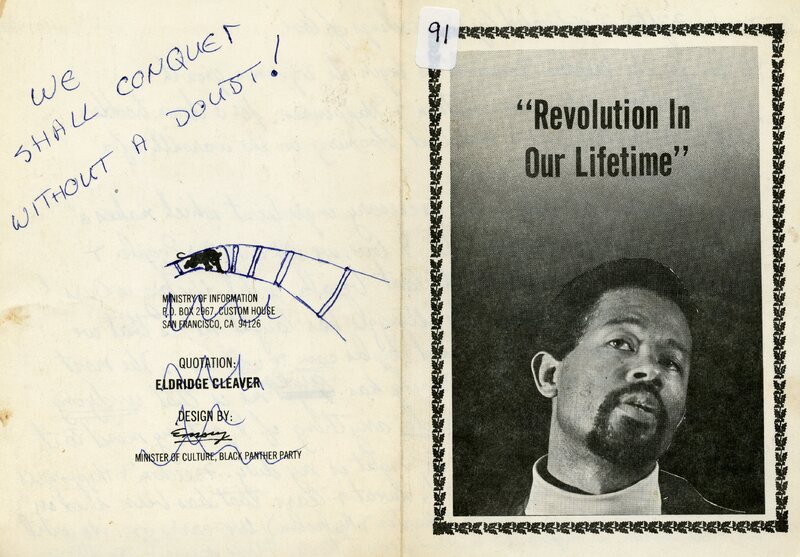
On the card is a picture of Eldridge Cleaver with the quote "Revolution in our lifetime." The sender stresses the need for a movement to start immediately that will instill love and self-determination in the people. They explain that it is out of their love for the People that they fight as a revolutionary, and that they will win.
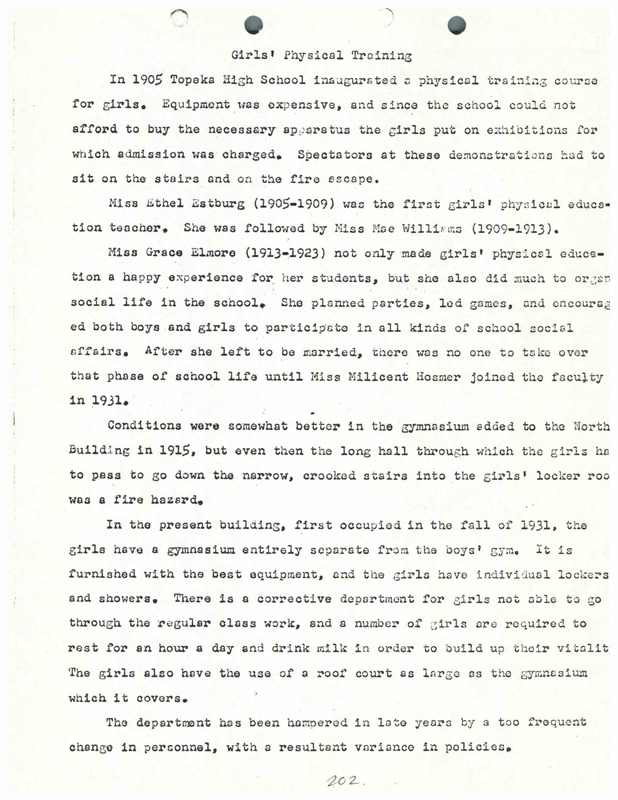
Case Data and Exhibits for Brown III, a relitigation of Brown v. Topeka Board of Education (1954) that corrected resegregation issues caused by open enrollment school choice in 1992. Pages 202-253 of a 1954 centennial history of the Topeka Public School System created by retired teachers of the Topeka Public School System
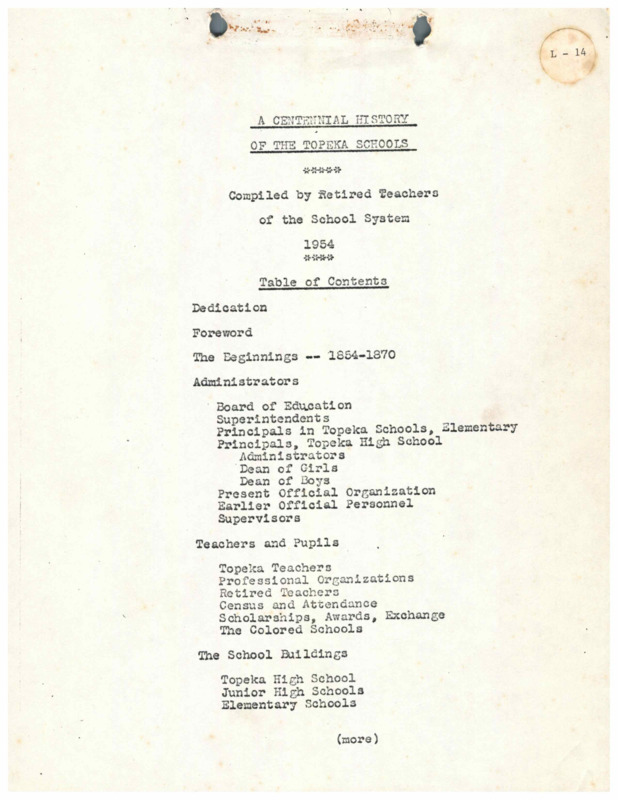
Case Data and Exhibits for Brown III, a relitigation of Brown v. Topeka Board of Education (1954) that corrected resegregation issues caused by open enrollment school choice in 1992. Pages 1-201 of a 1954 centennial history of the Topeka Public School System created by retired teachers of the Topeka Public School System
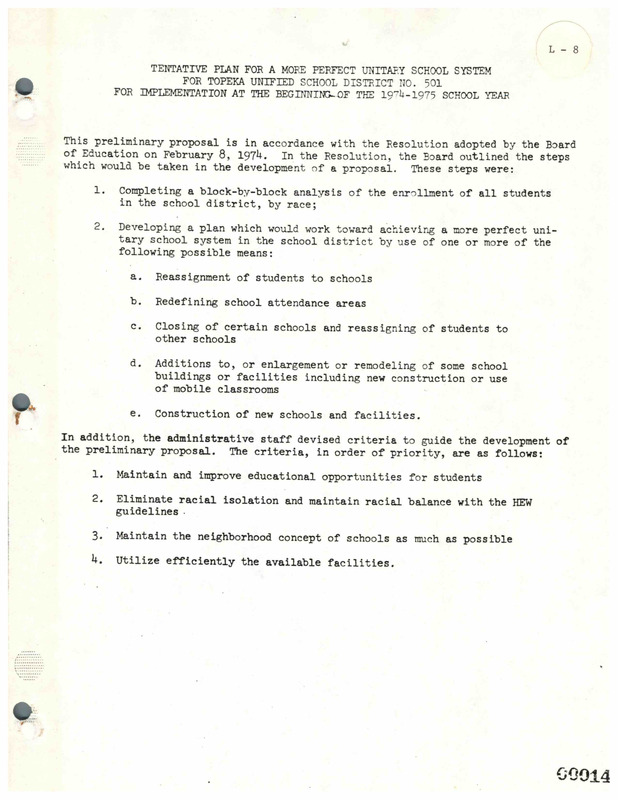
Case Data and Exhibits for Brown III, a relitigation of Brown v. Topeka Board of Education (1954) that corrected resegregation issues caused by open enrollment school choice in 1992. The documents about 1974-1975 school closings and renovations include a tentative plan, a note to parents from the Board of Education, boundary maps, and more.
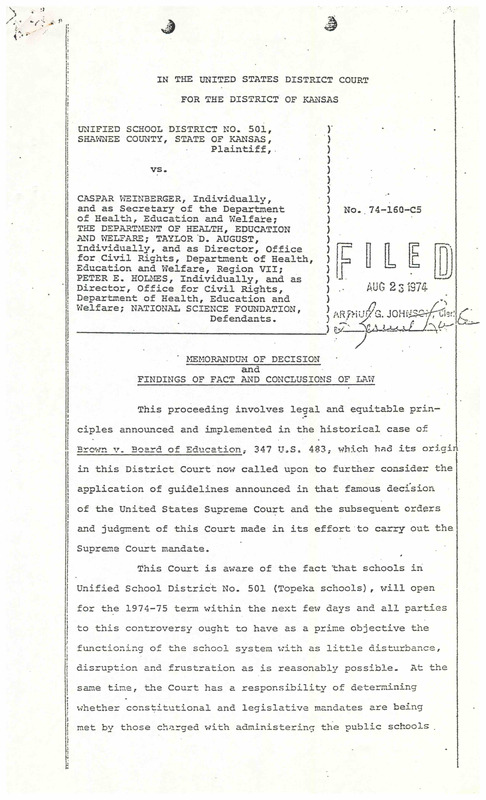
Case Data and Exhibits for Brown III, a relitigation of Brown v. Topeka Board of Education (1954) that corrected resegregation issues caused by open enrollment school choice in 1992. These documents from the Topeka Schools v. Kansas Department of Health, Education, and Welfare case concern compliance with Title VI of the Civil Rights Act of 1964.
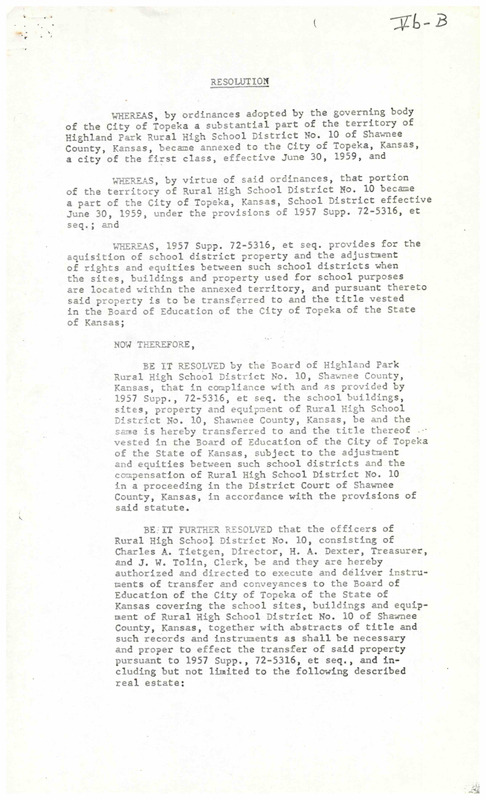
Case Data and Exhibits for Brown III, a relitigation of Brown v. Topeka Board of Education (1954) that corrected resegregation issues caused by open enrollment school choice in 1992. Miscellaneous documents and paperwork pertaining to annexation activities within the Topeka Public School District.
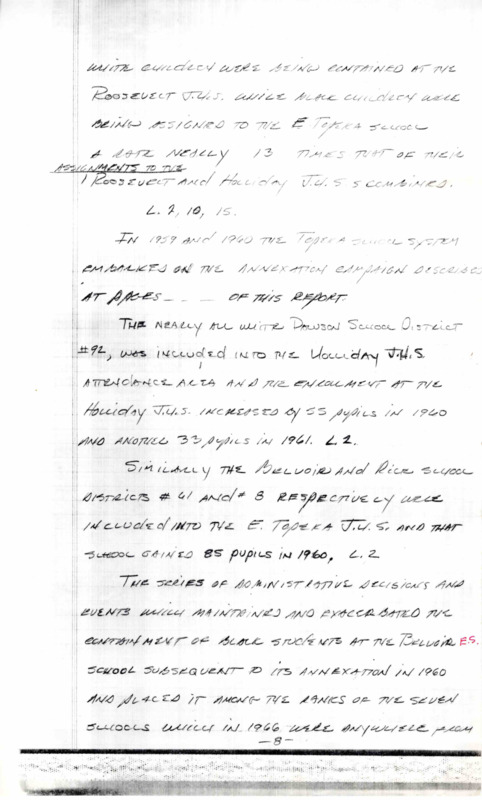
Case Data and Exhibits for Brown III, a relitigation of Brown v. Topeka Board of Education (1954) that corrected resegregation issues caused by open enrollment school choice in 1992. Handwritten analysis and notes and a draft of a report on Topeka Junior High Schools by William Lamson. Some original pages and some photocopied pages.