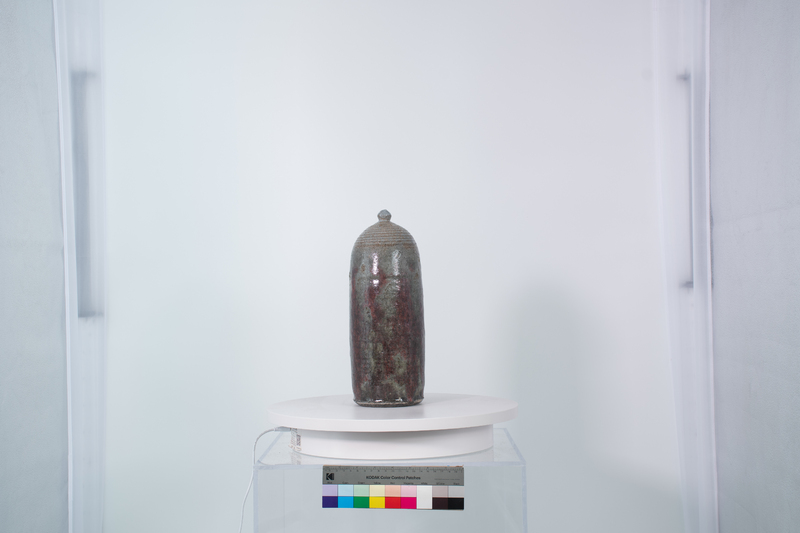
Simms’ ceramic vessel is round and stout, with ridges and a node at the top, and has a maroon and gray glaze. Carroll Harris Simms worked alongside Dr. John T. Biggers to establish the Texas Southern University Art Department. Simms taught sculpture, ceramics, and jewelry-making classes.
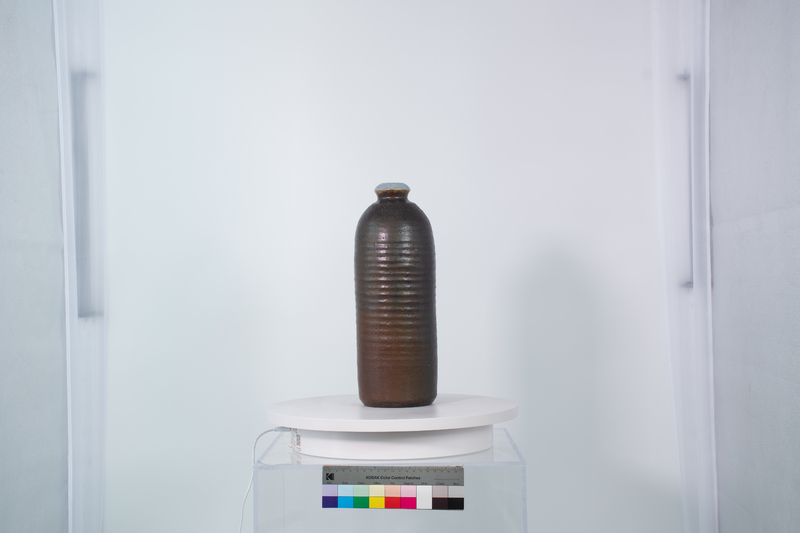
Simms’ ceramic vessel is hollow, with an opening at the top, and has ridges and a dark maroon glaze. Carroll Harris Simms worked alongside Dr. John T. Biggers to establish the Texas Southern University Art Department. Simms taught sculpture, ceramics, and jewelry-making classes.
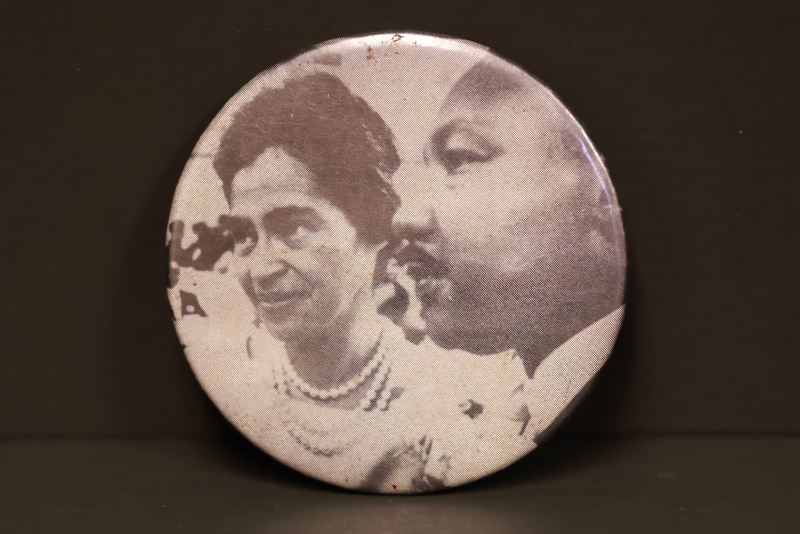
A button with a black and white photo of Dr. Martin Luther King Jr. and Rosa Parks. Dr. King was a co-founder of the Southern Christian Leadership Conference (SCLC) and remained its leader until his death. Rosa Parks’ refusal to give up her seat on a bus in 1955 sparked the Montgomery Bus Boycotts, which were led by Dr. King.
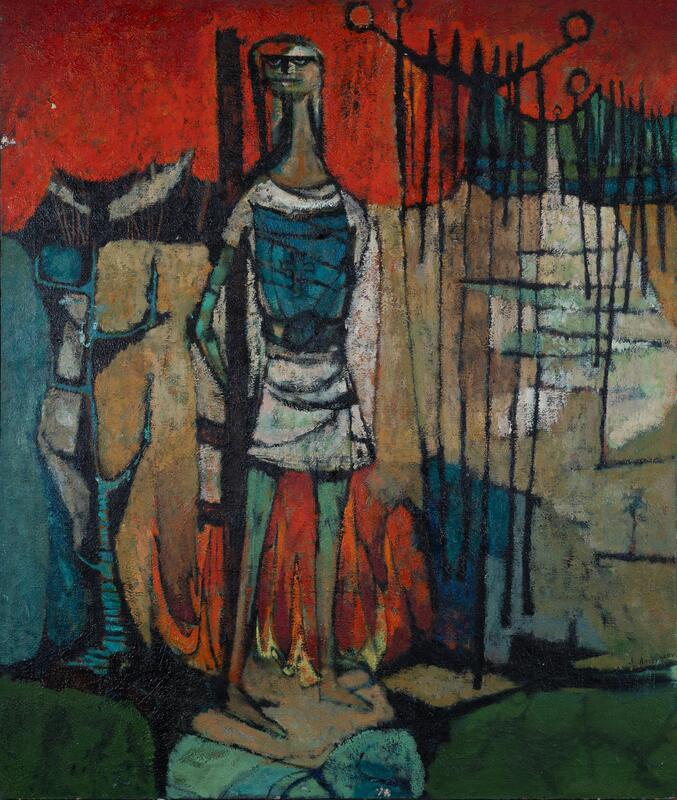
John Arterberry was an artist who worked in the art department at Langston University from Tallahassee, FL. Martyr shows a woman wearing a top with a cross and standing barefoot in a natural setting. The woman looks straight ahead, slightly smiling as a small fire sits behind her.
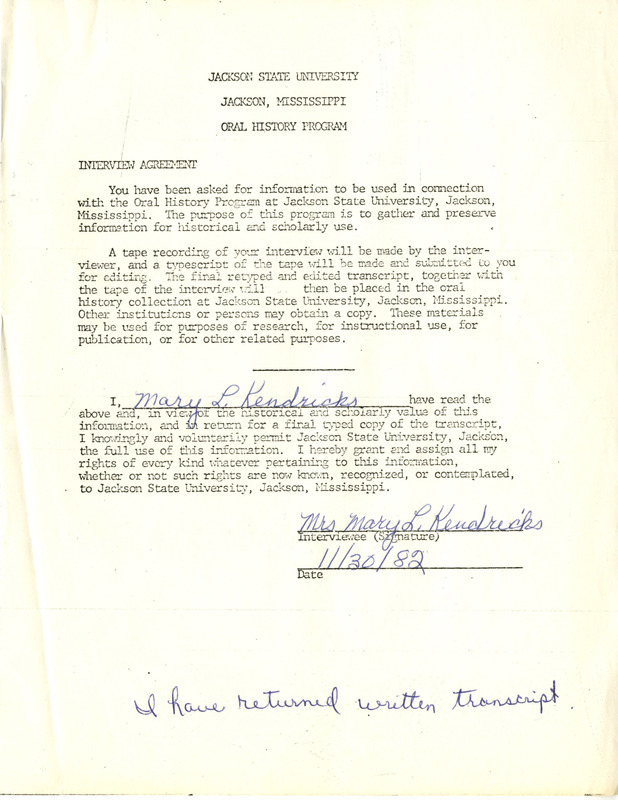
Mary L. Smith Kendricks moved to the Farish Street District in 1929 and worked at several businesses in the district. She recounts her experiences as a child during the Great Depression and then her experiences with entertainment in the district in the 1940s and the present state of the district. Transcript is heavily edited with handwritten notes.
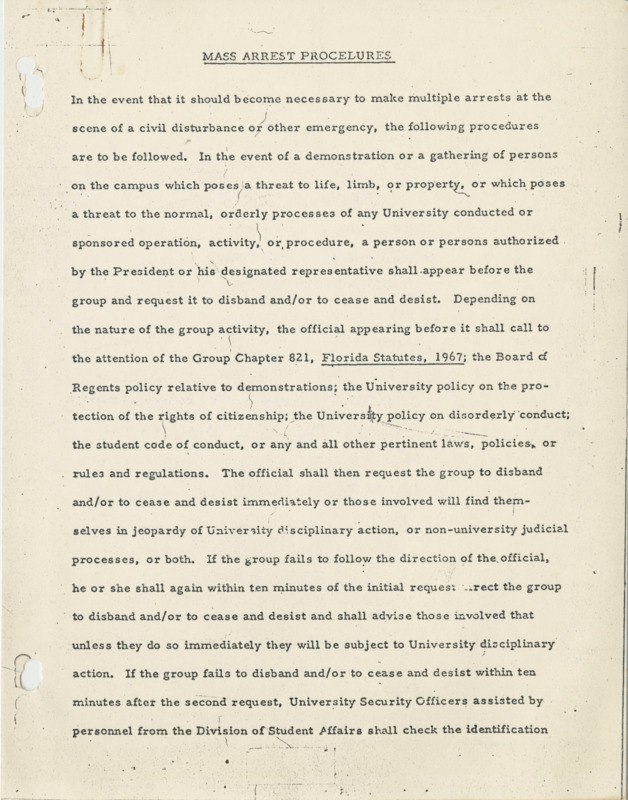
A document outlining mass arrest procedures for situations requiring multiple detentions due to disorderly conduct. It includes a detainee arrest form to ensure proper documentation and consistent handling of suspects during large-scale events, emphasizing the need for efficiency and adherence to legal protocols from the Florida Statutes of 1967.
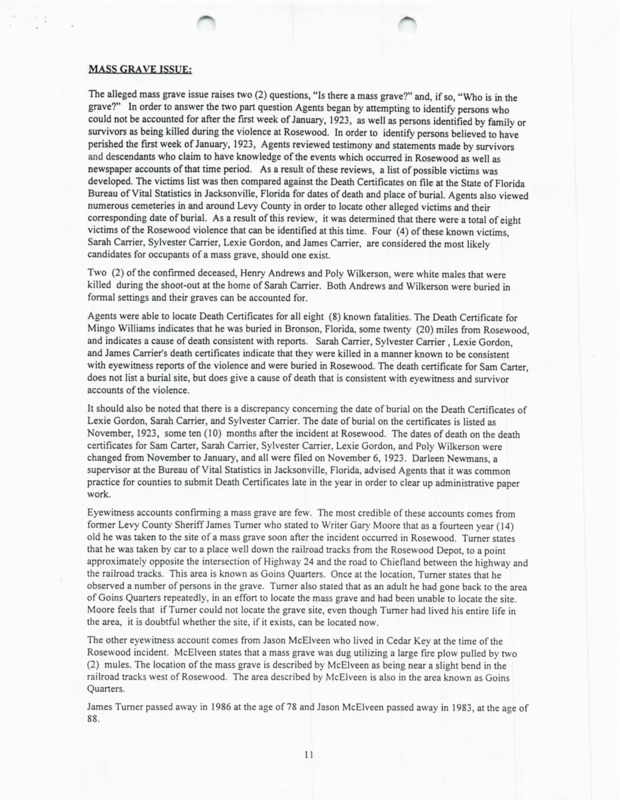
This document is an excerpt from a larger report. It focuses on the “alleged mass grave issue,” where investigators of the 1923 Rosewood Massacre tried to determine the location and names of unaccounted-for unidentified persons after the first week of the massacre, where burning, looting, and killing were at their peak.
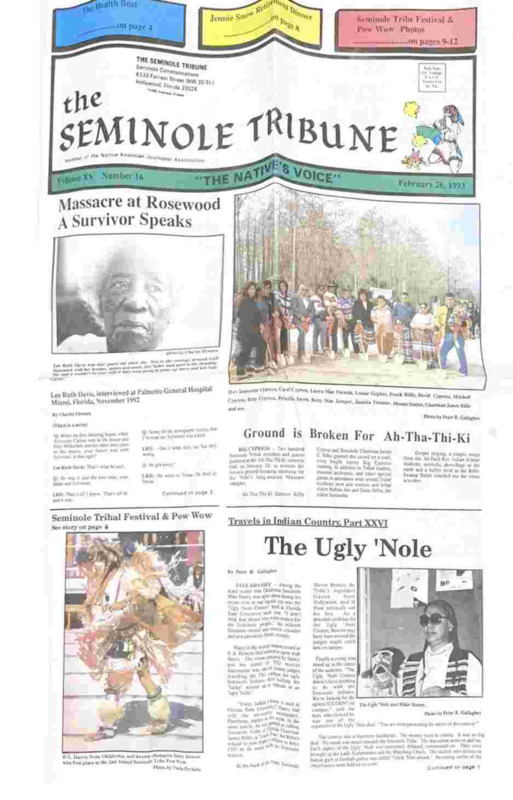
This newspaper clipping from the February 1993 issue of the Seminole Tribune features testimony from the 1923 Rosewood Massacre. Lee Ruth Davis was interviewed by one of their journalists at Palmetto General Hospital in Miami, Florida in November 1992.
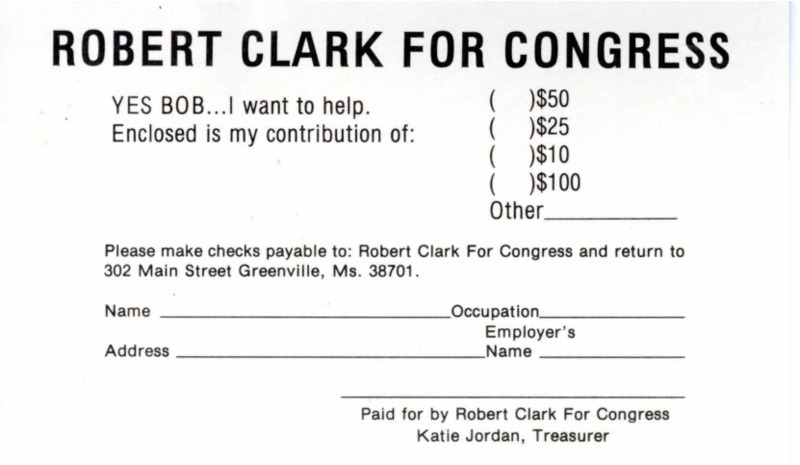
Collection of campaign materials from Robert Clark's 1984 campaign for the United States House of Representatives, 2nd Congressional District of Mississippi. This collection consists of letters, mailers, fliers, and more.
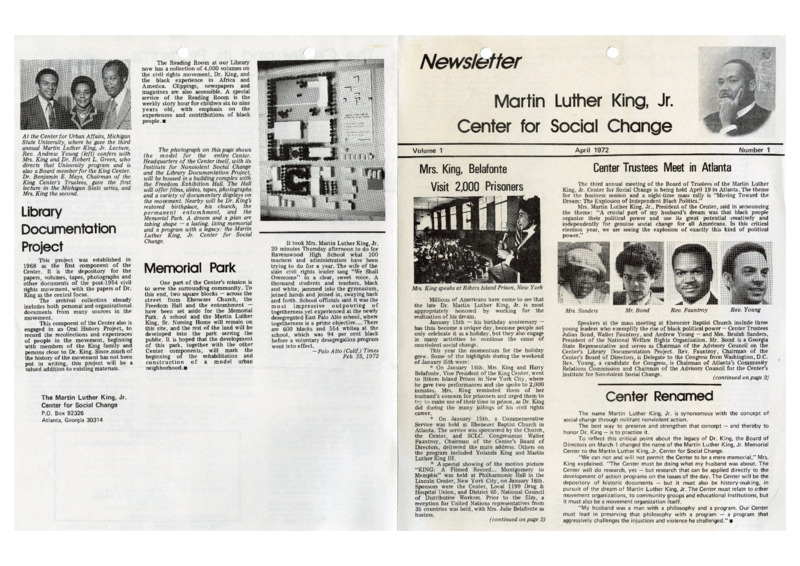
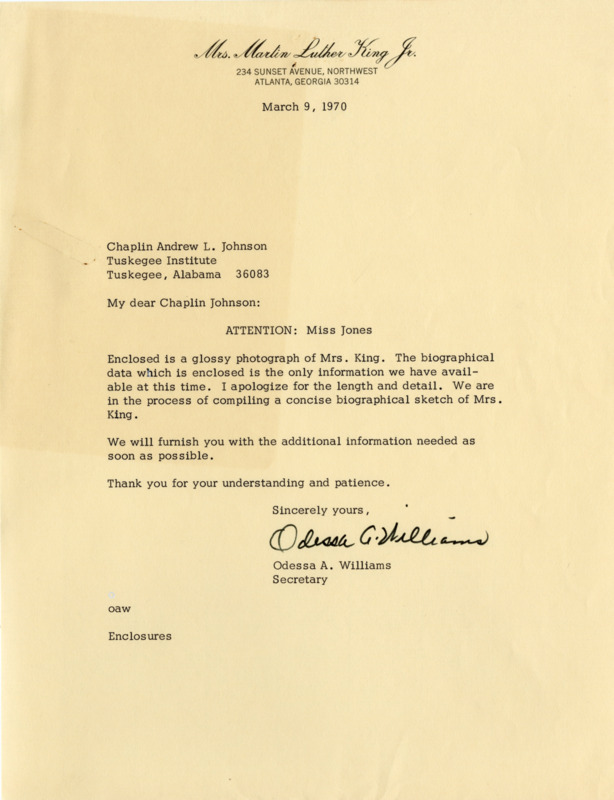
A letter from Odessa Williams Mrs. King's secretary to Chaplain Johnson providing a glossy black and white photo and biographical sketch of Coretta Scott King.
Mathew Thomas worked for Mississippi Action for Progress (MAP) as an accountant for the Head Start programs in Mississippi. He discusses some of the racial dynamics in MAP and Head Start. He also talks about the current state of young people and his ideas on re-focusing what Head Start should look like in the future.
Mattie Bell began working at Head Start in 1965 recruiting students for the program and working as a teacher's aid. She talks about her time as a Head Start Area Teacher Guide in Sharkey County and Issaquena County in Mississippi. She worked the same job for 20 years (even though the title changed a couple of times).
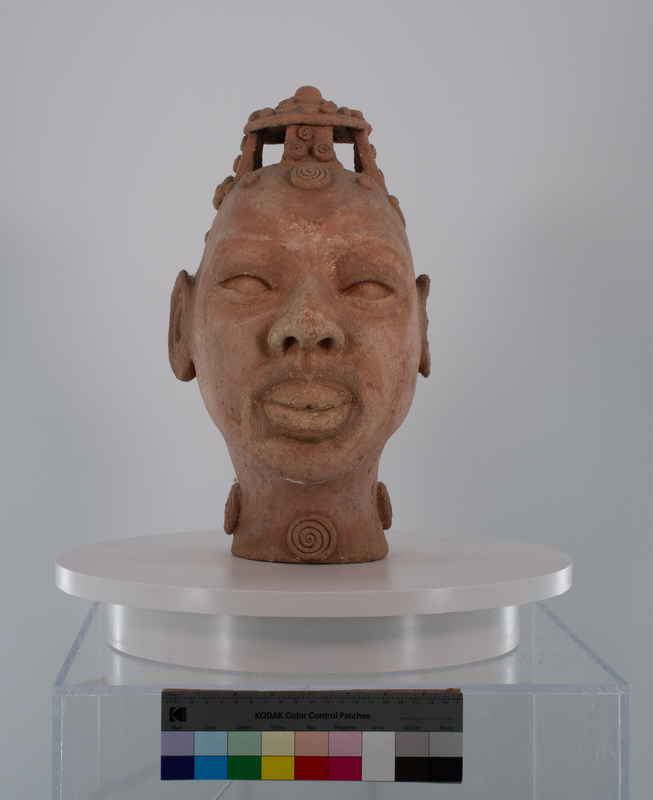
Ellison’s bust was created during his time as an art student at TSU. Under the instruction of Professor Carroll Harris Simms, artists would create self-portraits embellished with decorations like spirals and accentuated crown pieces, like in Ellison’s sculpture. These busts are inspired by Nok terracotta sculptures and Ife busts, which Simms saw during his travels to Western Africa.
Ellison’s senior notebook includes his written philosophy of art, photographs of the artist’s works and his process, and a copy of his senior exhibition brochure. As a part of the Texas Southern art curriculum under Dr. John T. Biggers and Professor Carroll Harris Simms, students would create these notebooks to explain their artistry and showcase the works they created as students.
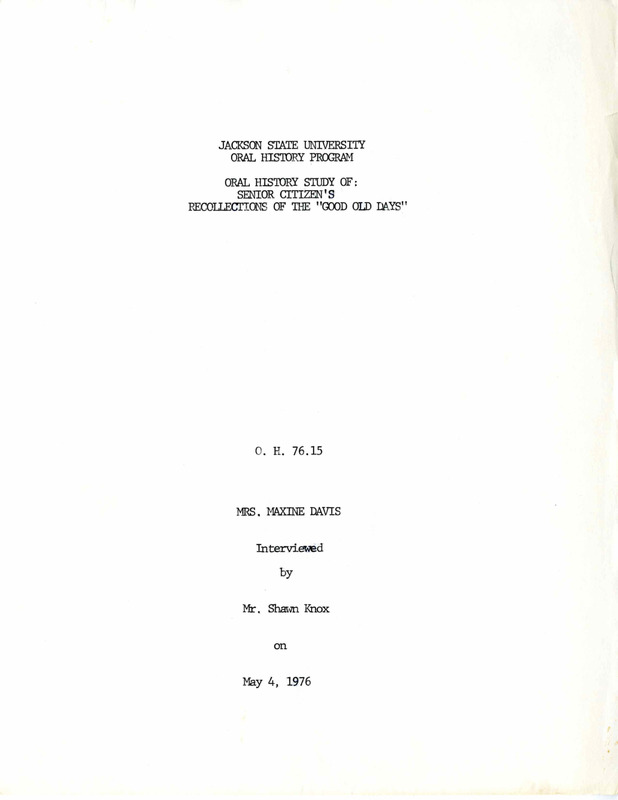
Maxine Davis was born in Forrest, Mississippi, in 1907 and came to Jackson around 1934. She believes the “Good Old Days” are in the present because race relations are better now. She talks about experiencing the Civil Rights Movement. She remembers the use of coal and wood stoves, kerosene lamps, and people growing their food when she was younger.
Maxine Hudson began her education at a Head Start program in a church in Louisville, Mississippi, and she discusses the good it did for her in her educational life and career. She became a teacher herself at Eiland Middle School in Louisville, Mississippi.
Mayor Phillip Curtis West returned to Mississippi from Chicago in 1964 to become involved in the Civil Rights Movement. Becoming involved with the NAACP at Alcorn State University led him to eventually end up in Mississippi politics, being elected to the Mississippi House of Representatives in 1997 and Mayor of Natchez, Mississippi in 2004.
Meeting minutes From a Topeka Board of Education meeting on June 21, 1965. Topics discussed include the adoption of the Topeka Plan; a report on the five year projection of building and site needs; a new site for Highland Park Junior High School; and an experimental remote teaching project.
Meeting minutes From a Topeka Board of Education meeting on September 8, 1964. Topics discussed include the naming of a new school; a report on the five year projection of building and site needs; an enrollment report; and purchases.
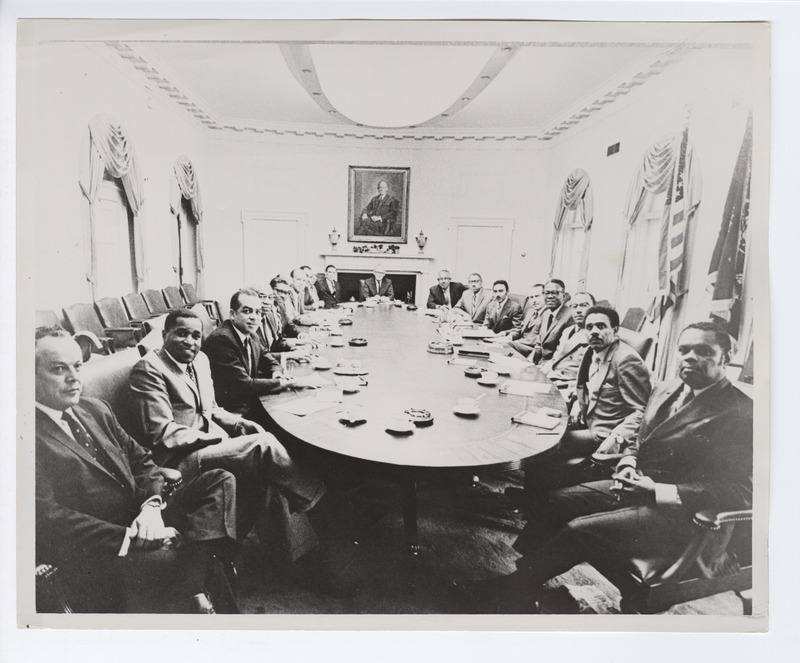
On May 20, 1970, various Historically Black Colleges/Universities presidents met with President Richard Nixon to represent their schools for the National Association of Equal Opportunity in Higher Education. Those included were Florida A&M President Benjamin L. Perry, Jr., Meharry Medical College leader Lloyd C. Elam, and many more.
Melba Smith heard about Head Start for the first time in 1968 and after attending a community meeting, she started working for Head Start with the title of Head Teacher. She went on to work as an internal auditor with Head Start. She discusses her roles in those positions as well as other community service oriented jobs she worked over the years.
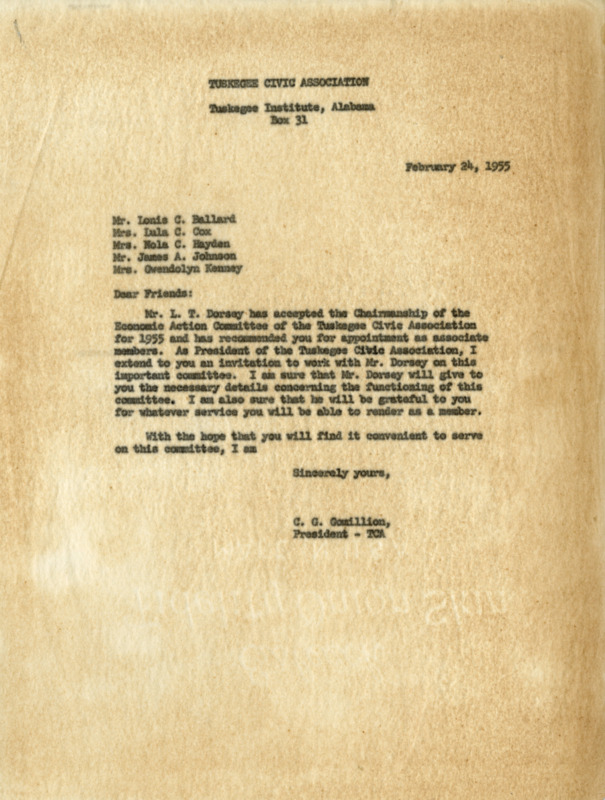
A letter from the president of the Tuskegee Civic Association Charles G. Gomillion addressed to all active members of the TCA. He is inviting members to join a new committee headed by L.T. Dorsey.
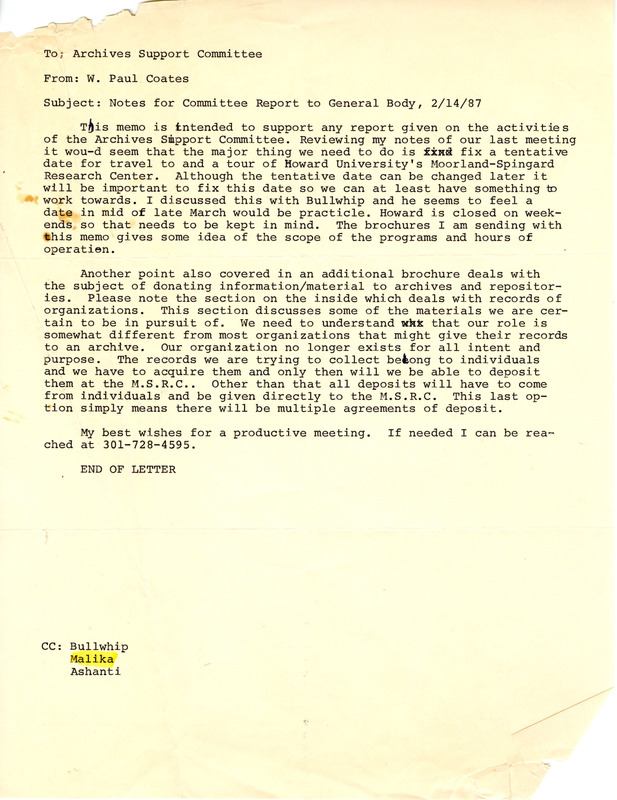
A memo from W. Paul Coates of the Black Panther Foundation to the Archives Support Committee about a proposed upcoming trip to Howard University's Moorland-Spingarn Research Center. Coates writes that the role of the foundation is to acquire records from individual members and then get those records into the archive at the research center.
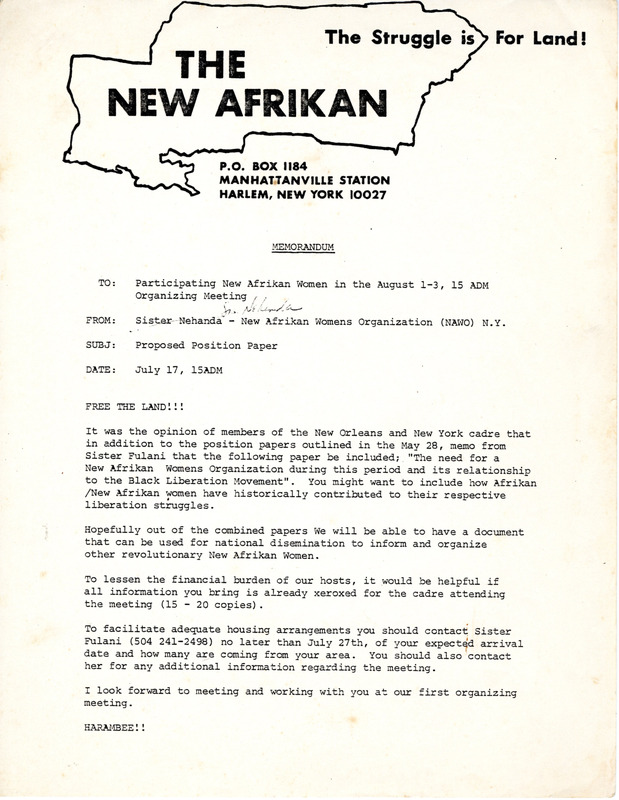
A memo from Black revolutionary woman Nehanda Abiodun, who was exiled to Cuba in 1982, suggesting that a document be created that can be used for dissemination to inform and organize other revolutionary New Afrikan Women around the country. The heading reads: “The New Afrikan: The Struggle is for Land!” The memo is dated July 17, 15 ADM.
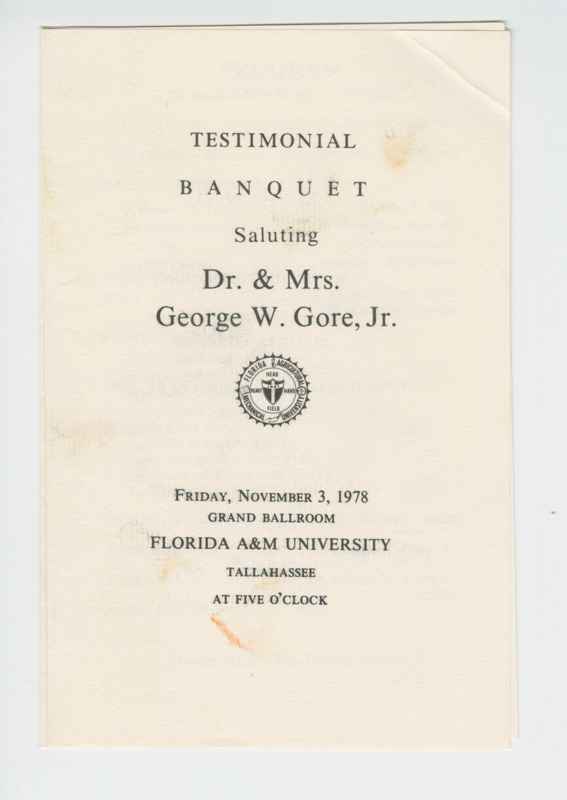
Memorabilia from President Gore's tenure at FAMC and FAMU include newspaper clippings, door plaques, and a special ten-year celebration schedule. These items mark the milestones of his leadership, serving as a testament to his enduring legacy and impact on the institution.
Memorabilia from President Gore’s 1982 Alpha Kappa Mu fraternity includes letters of condolence and recognition of his achievements. The collection also features invitations to dinner parties and luncheons honoring both Dr. Gore and his wife, Mrs. Pearl Gore, to celebrate their lasting contributions to the university and community.