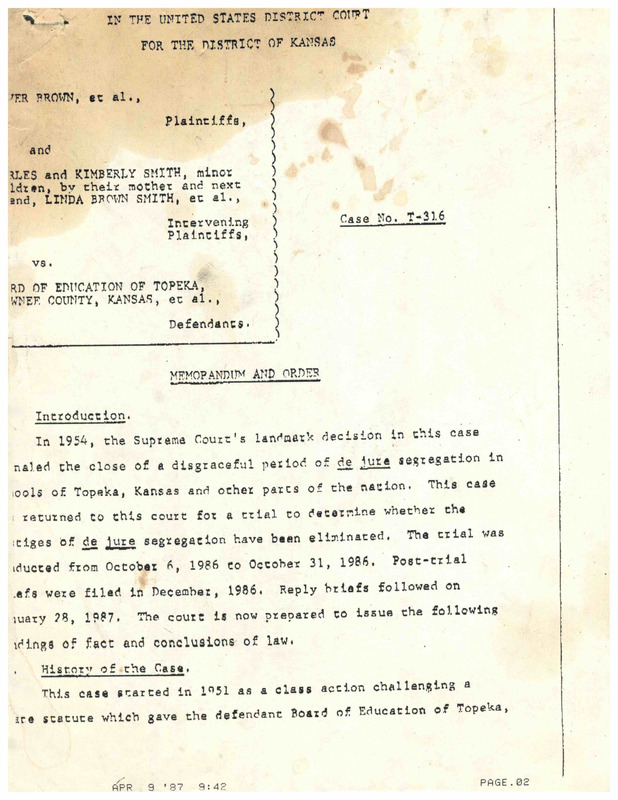
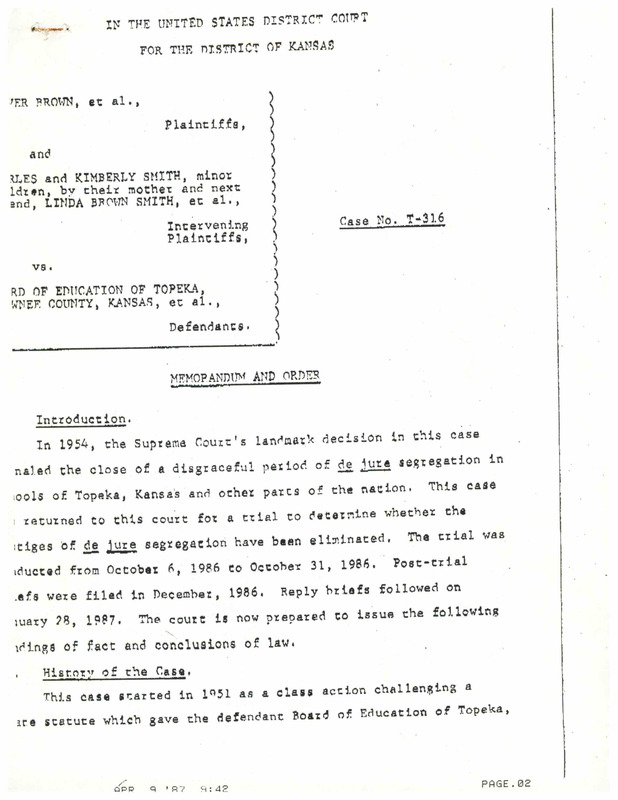
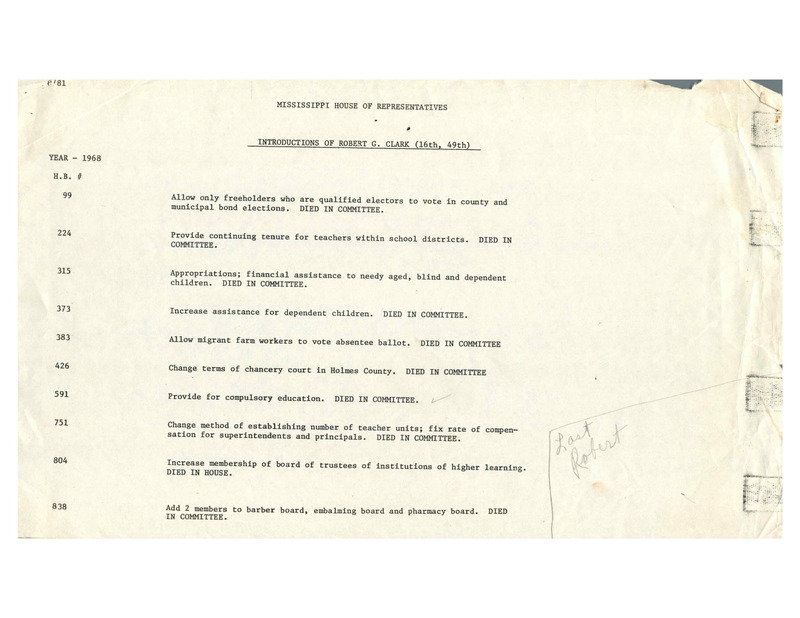
Case Data and Exhibits for Brown III, a relitigation of Brown v. Topeka Board of Education (1954) that corrected resegregation issues caused by open enrollment school choice in 1992. In this court order, United States District Judge Richard D. Rogers denies the plaintiffs' claims for relief, writing "the district has a unitary system of education."
Case Data and Exhibits for Brown III, a relitigation of Brown v. Topeka Board of Education (1954) that corrected resegregation issues caused by open enrollment school choice in 1992. United States District Judge Richard D. Rogers’ opinion on the case. He states the Topeka School District is unitary and the plaintiff’s claims for relief are denied.
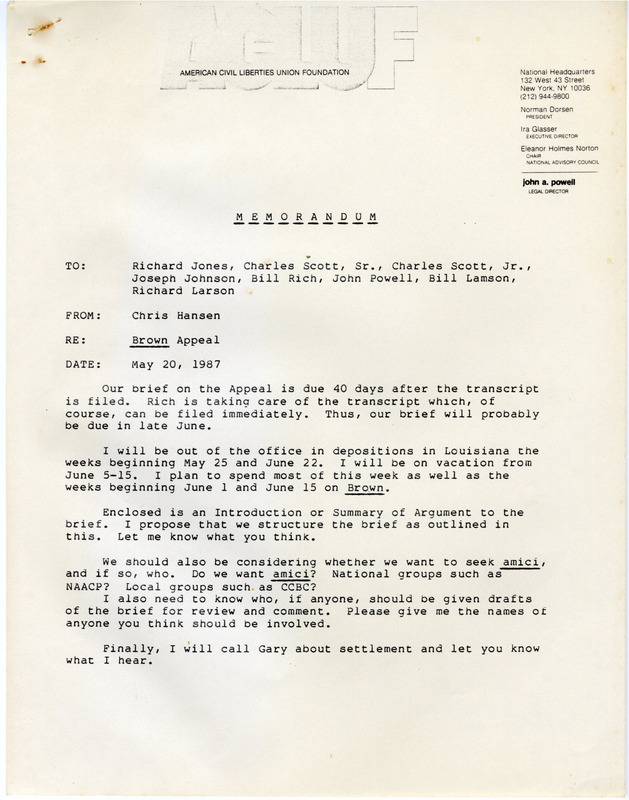
Case Data and Exhibits for Brown III, a relitigation of Brown v. Topeka Board of Education (1954) that corrected resegregation issues caused by open enrollment school choice in 1992. A memo from Chris Hansen of the ACLU to William Lamson, et. al. with summaries of the history of the Brown III case and strategies for the upcoming appeal.
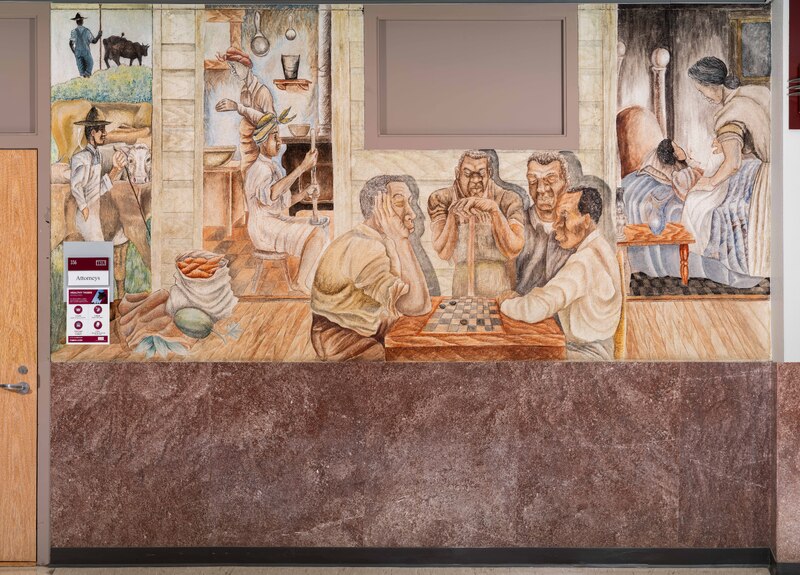
Ross’s mural represents Black rural life in the early to mid twentieth century. The composition highlights the gendered division of labor, and how women’s work focuses on maintaining the home. Ross grew up in Huntsville, Texas, and this scene may represent his background and experiences.
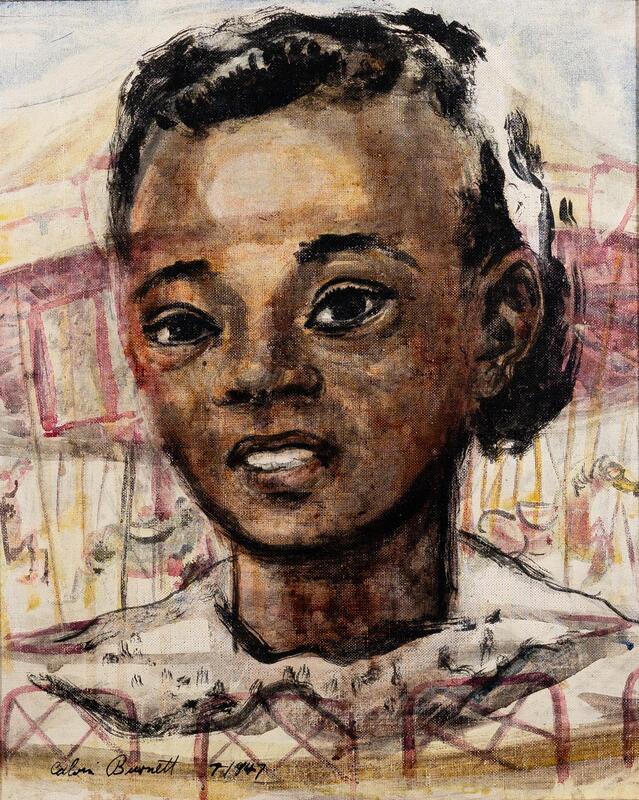
Calvin Burnett was a graphic artist, illustrator, painter, designer, and art teacher from Cambridge, MA. Merry-Go-Round depicts a young Black girl smiling in a park. Burnett overlays a limpid red merry-go-round over the girl's face.
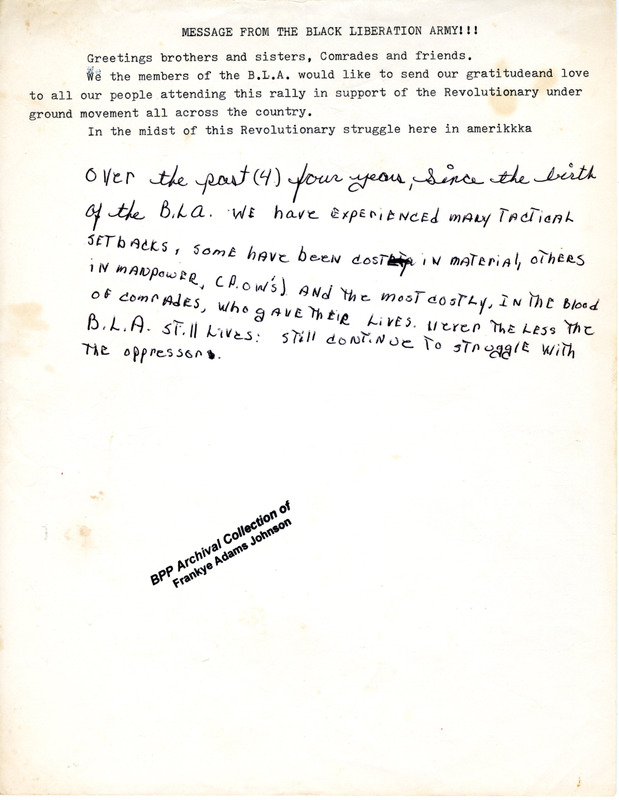
Brief greetings given on behalf of the Black Liberation Army (BLA) to people attending a rally in support of revolution. With handwritten notes by Frankye Adams-Johnson (Malika) about some of the tactical setbacks the BLA has experienced, the most costly of which being the loss of people who gave their lives to the struggle.
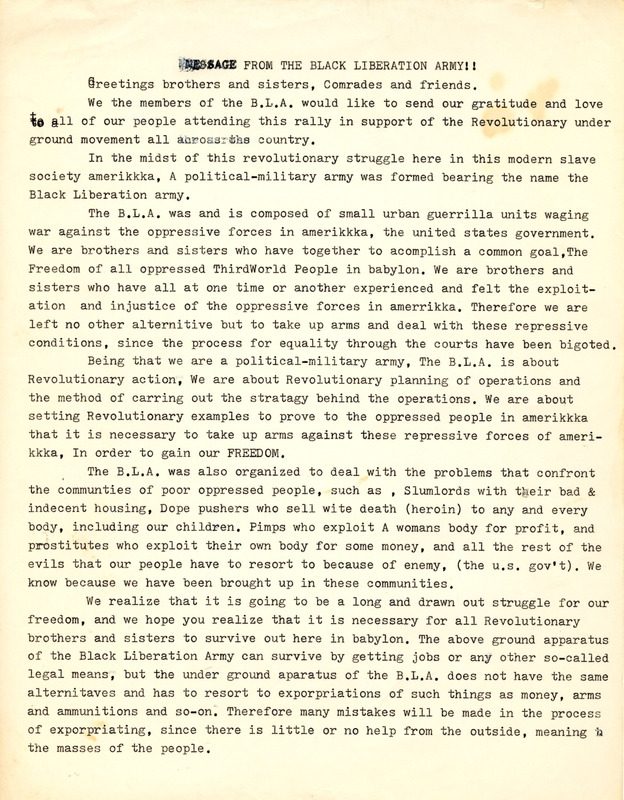
A message from the Black Liberation Army (BLA) to brothers and sisters, comrades and friends attending a rally. The message briefly outlines the history and tenets of the organization, including taking up arms against the oppressive government as well as combatting ills in the community such as slumlords, drug pushers, and pimps.
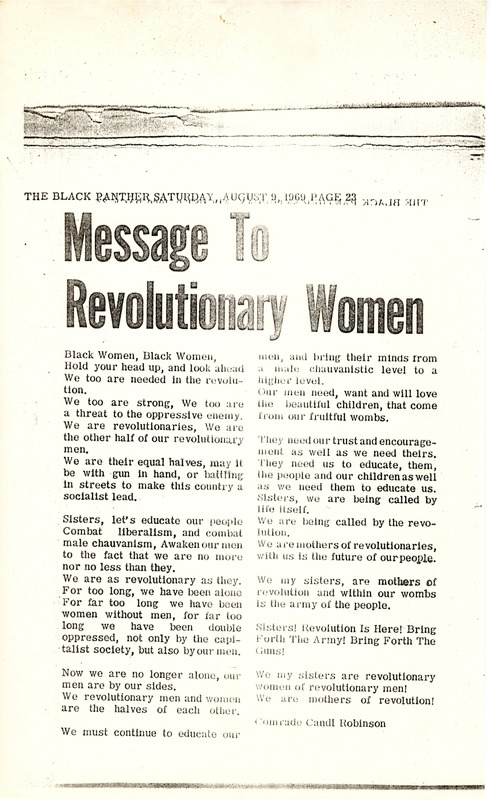
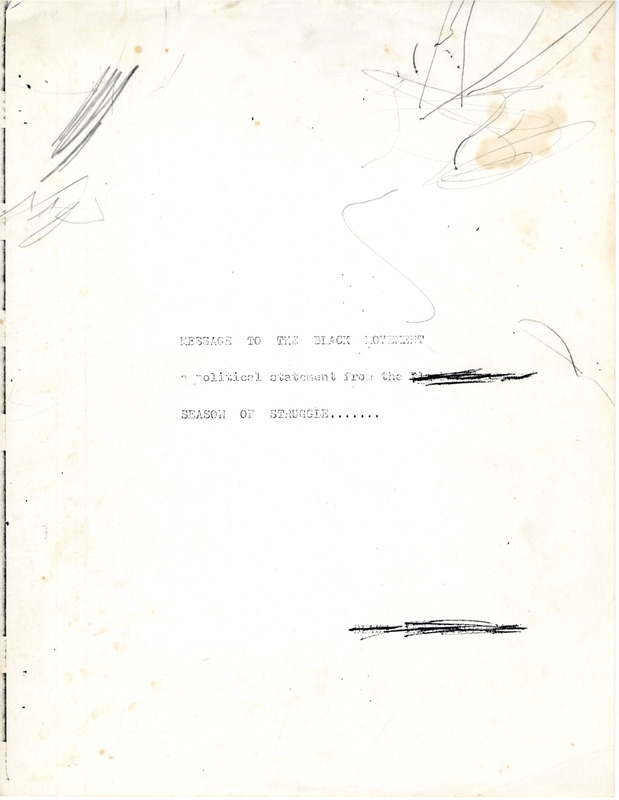
A message declaring the revolutionary intentions of the Black Liberation Army (BLA). The author sets up a dystopian military state scene and writes that revolutionaries must be prepared to do anything, including infiltration, violence, and more. The author also writes that those who die for the cause of revolution must be celebrated, not mourned.
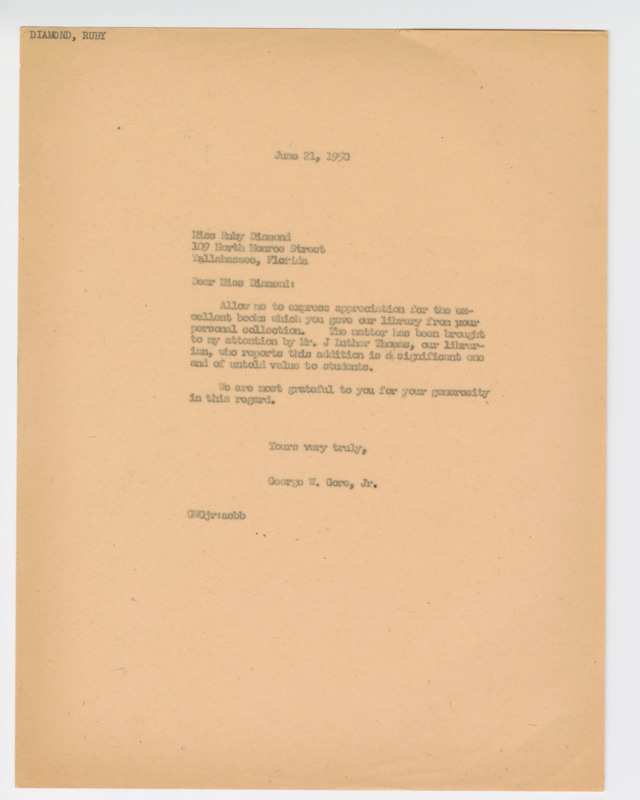
Devoted to expanding educational access, FSU alumnae Ms. Ruby Pearl Diamond corresponded with President George W. Gore to establish FAMU’s first scholarship of $200.00. Aimed at supporting a Black woman in Leon County, this scholarship marked a milestone for academic opportunity and empowerment at FAMU.
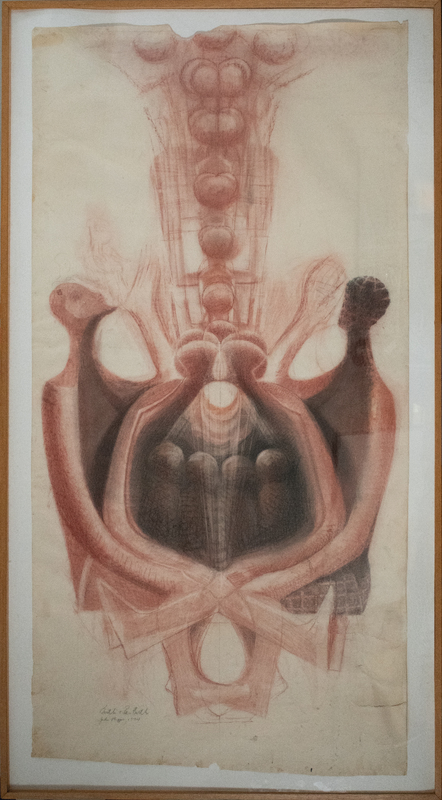
Biggers’ drawing shows several linked and overlapping human figures, with babies within the open space their bodies create. Above their heads, children divide and multiply like cells. The lower half of the drawing resembles the shape of the female reproductive system. Biggers called this form the "morning star." A very similar image to this piece appears in Biggers’ mural Family Unity. His artwork often emphasizes themes of motherhood, family, and life cycles.
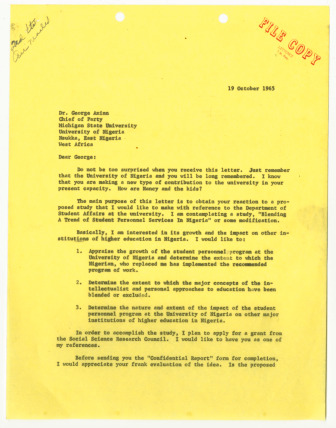
These letters detail the story of Florida A&M’s collaboration with Michigan State University to develop a Nigeria-based outreach program at B. L. Perry, Jr.’s behest. They provide a glimpse into his interest, the successes of the program, especially from a student’s perspective, and the abrupt interruption of it due to geopolitical upheaval.
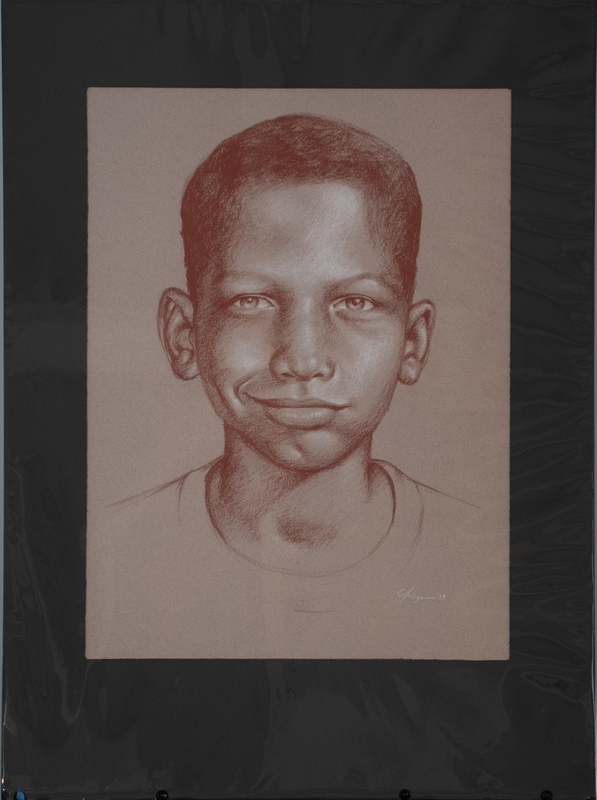
Onyeiwu’s drawing is of a young boy wearing a smirk on his face. Onyeiwu creates incredible, realistic portraits with fine details. Originally from Nigeria, Onyeiwu received his undergraduate arts degree from Texas Southern, and has since returned to teach drawing and painting classes at TSU.
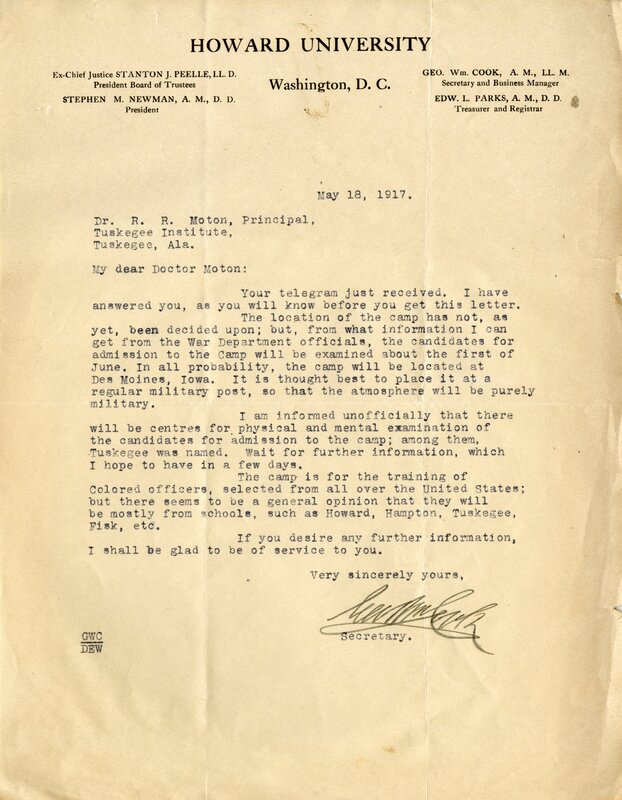
A letter written to Dr. Moton, the Principle of Tuskegee University, then Tuskegee Normal and Industrial Institute that no official decision on the location for the military training camp has been decided. Mr. Parks also notes that the camp will be a center to test the physical and mental capacities of the negro recruits.
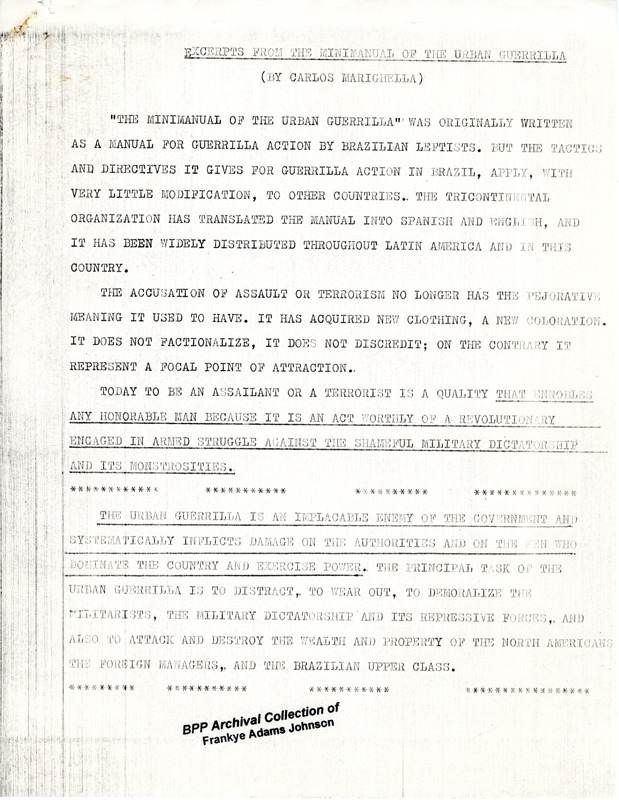
Excerpts from Carlos Marighella's Minimanual of the Guerrilla. It lays out tactics for struggle against an oppressive state. Marighella, a Brazilian Marxist–Leninist revolutionary, published the book in 1969 and it became popular in revolutionary circles, including within Black Nationalistic circles in the United States.
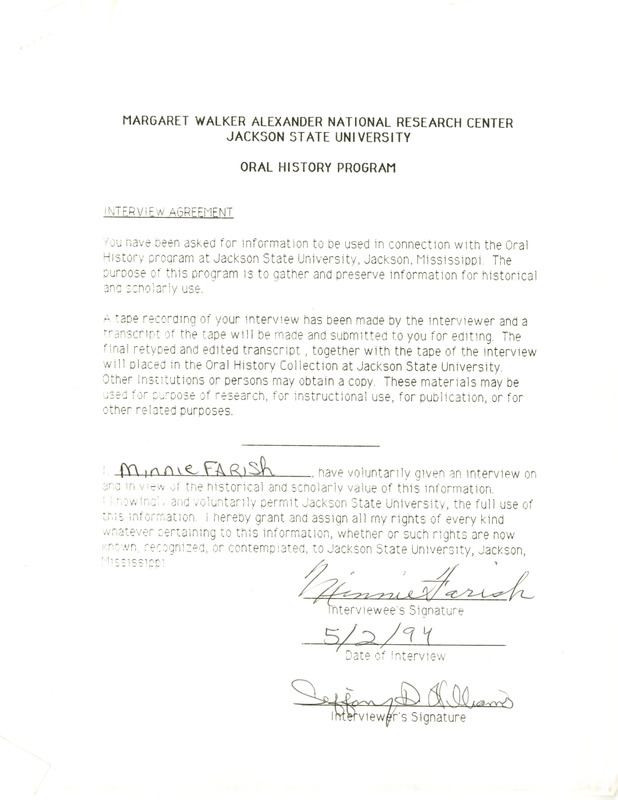
Minnie Farish was born on Farish Street and lived her life there. Ms. Farish talks about her childhood on Farish Street and her time at Smith Robertson School and Lanier High School. She recounts the homes and businesses on Farish Street and talks extensively about her family. She also talks about what it was like living in the Jim Crow Era.
Minnie Ripley helped bring Head Start to Mayersville, Mississippi. She talks about her experiences in the Civil Rights Movement, including her story of registering to vote and being put in jail. She also recounts her position as chairwoman of the board of the Mayersville Head Start program, one of the earliest in Mississippi.
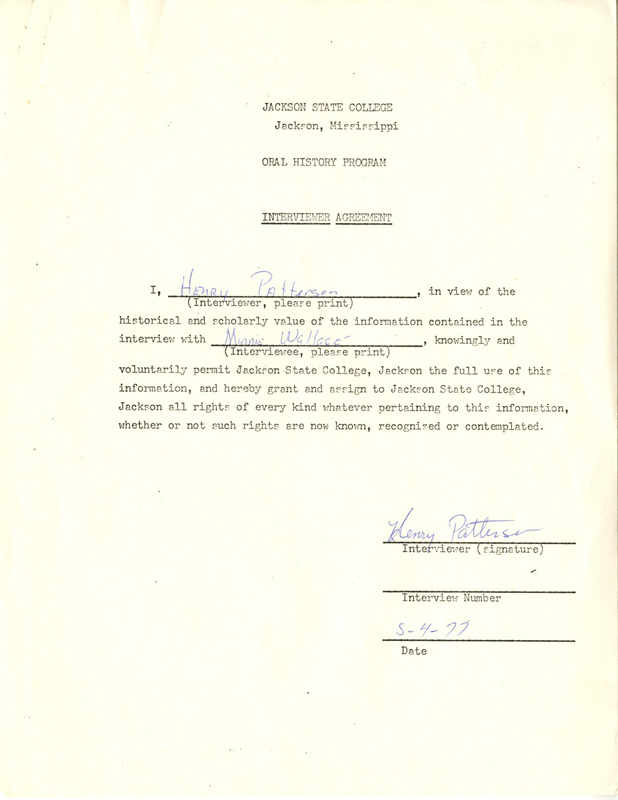
Minnie Wallace was born in Winston County, Mississippi, in 1910 and moved with her preacher father to Yazoo City, Mississippi, in 1929. She talks about her childhood, saying it was difficult because the family worked as sharecroppers. She also discusses her education through graduating from Jackson State College in 1943. Transcript is handwritten.
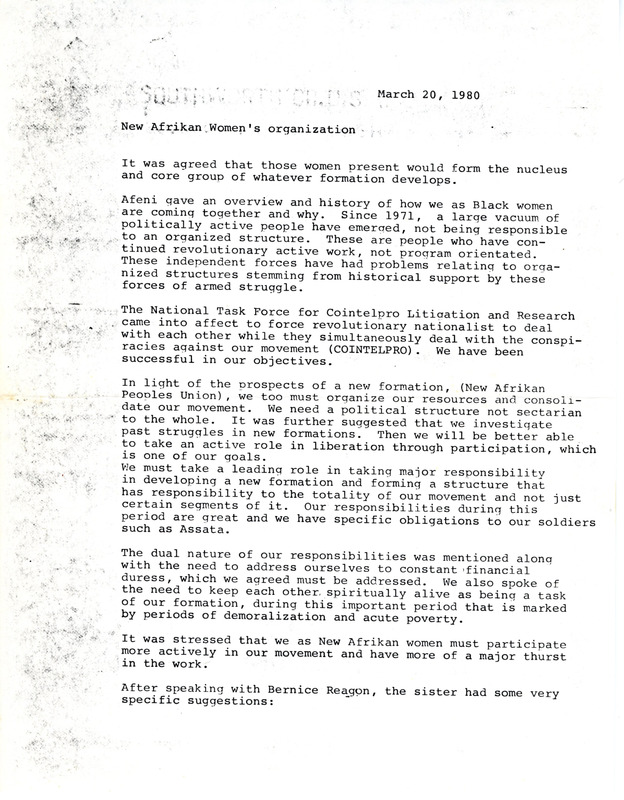
Minutes from a meeting of the New Afrikan Women’s Organization. Organizational plans to move forward with the new organization are discussed, especially in light of the vacuum left since 1971 in radical movements. Finances, future conferences, and methods of operation were also discussed in the meeting.
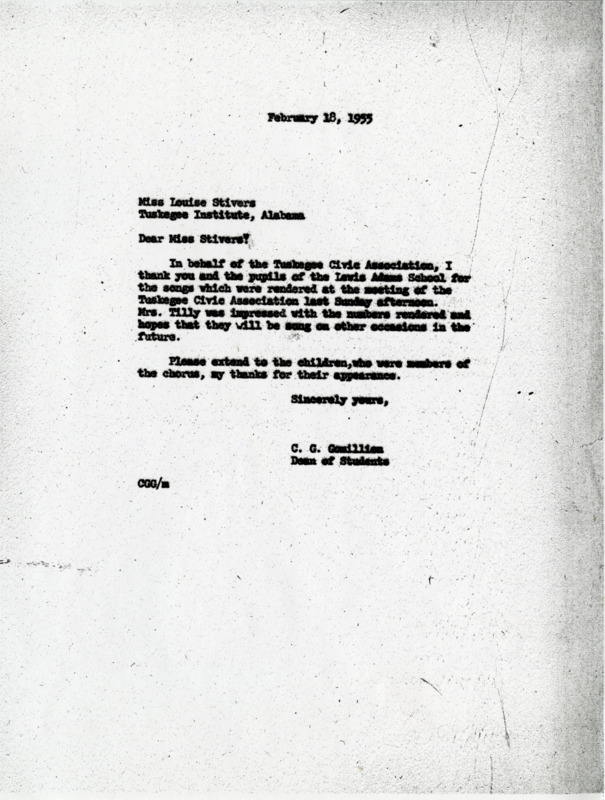
A thank you letter for Charles Gomillion on behalf of the Tuskegee Civic Association thanking Miss Stivers for the songs that were played at the past TCA meeting.
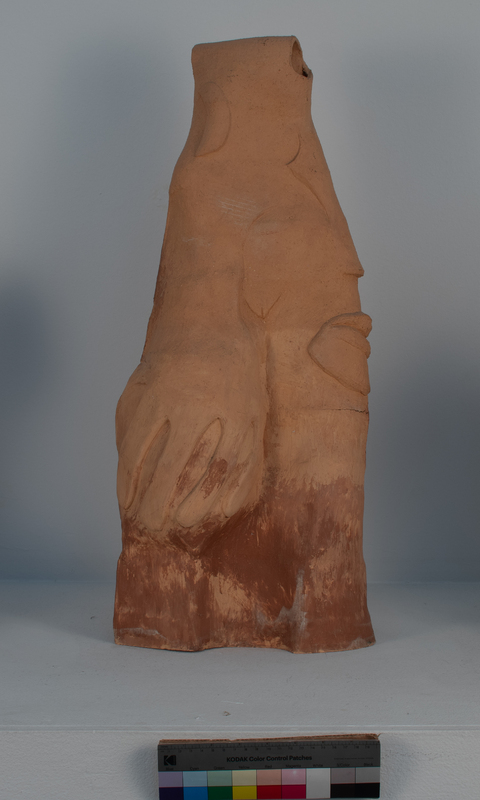
This sculpture is of an abstract side face profile, prominently featuring the nose and lips, with a large hand on one side of the sculpture. The oversized hand is an example of the influence of Dr. John Biggers’ style. This sculpture is two-toned due to varying levels of oxidation of the clay. The structure bears some resemblance to the Moai of Rapa Nui (also known as Easter Island heads).
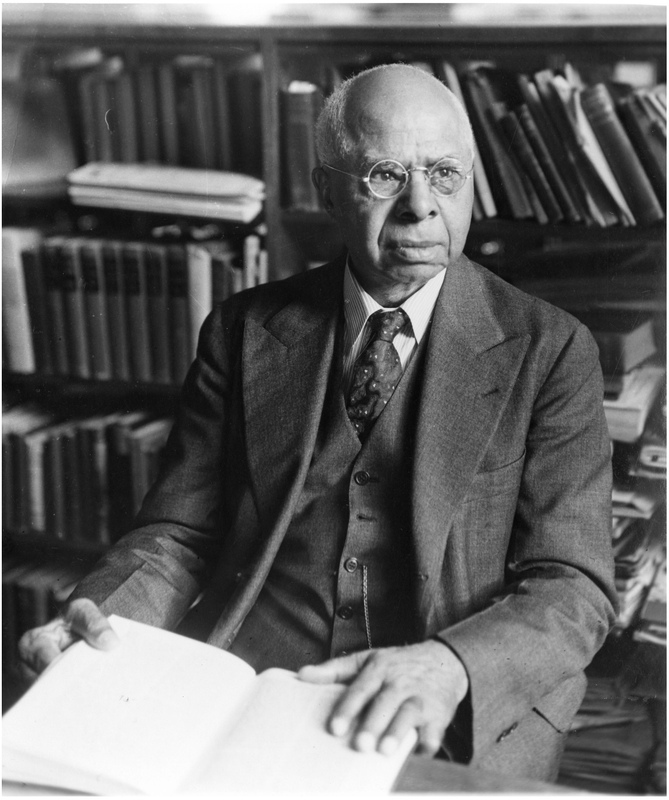
Black and white image of an older Monroe N. Work. Mr. Work was an African American sociologist and founder of the Department of Records and Research at Tuskegee University, formerly known as Tuskegee Institute.
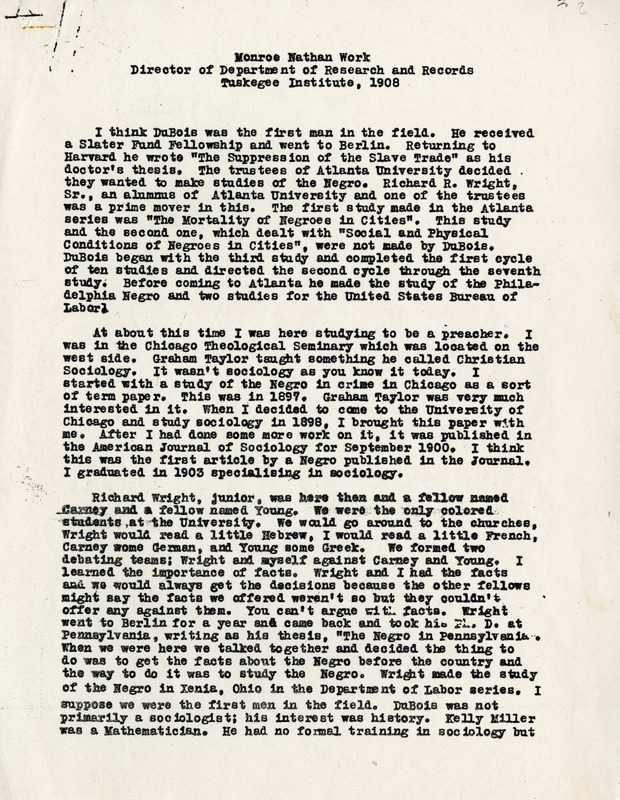
A four-page statement by Monroe N. Work to Lewis A. Jones about the origins of the field of Black studies, Work's initial involvement with the field, his activities at Tuskegee, and Work's sociological influences.
A 25-page academic paper about Monroe N. Work's activities as an African scholar over the course of his career. Contains direct quotes from Work's papers. At the time of writing, James Preston was an instructor of African history at Tuskegee.
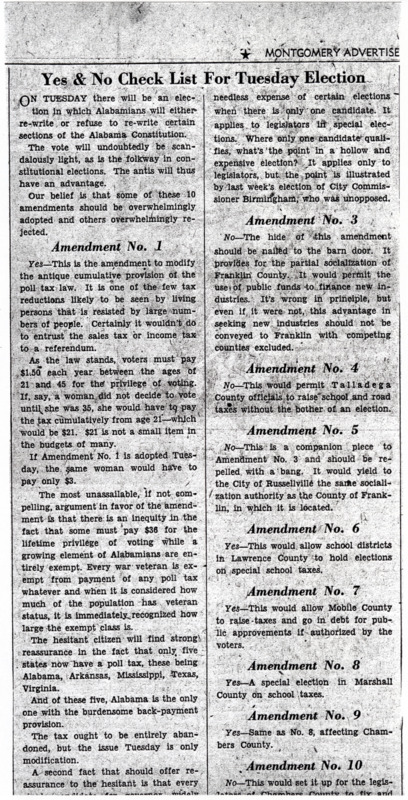
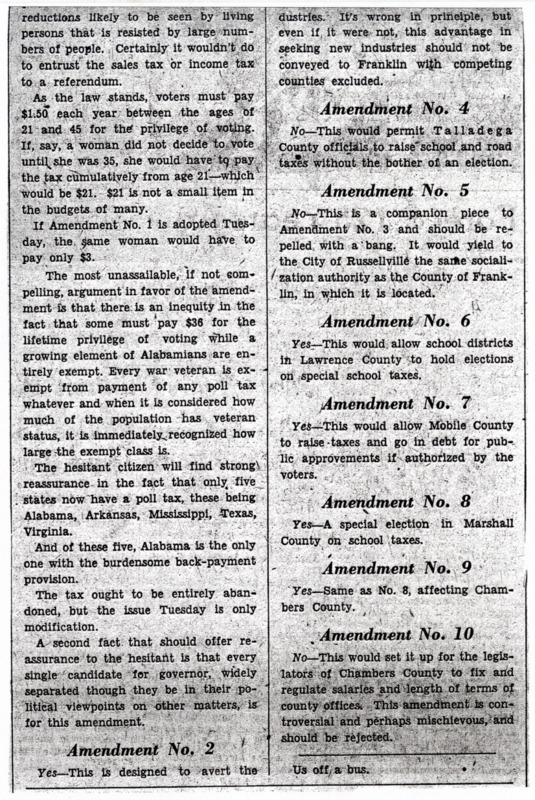
A collaboration between the NAACP and Negro Alabama Progressive Democratic Association. These groups are informing the Black community of the importance of voting for Poll Tax Reduction Amendment.
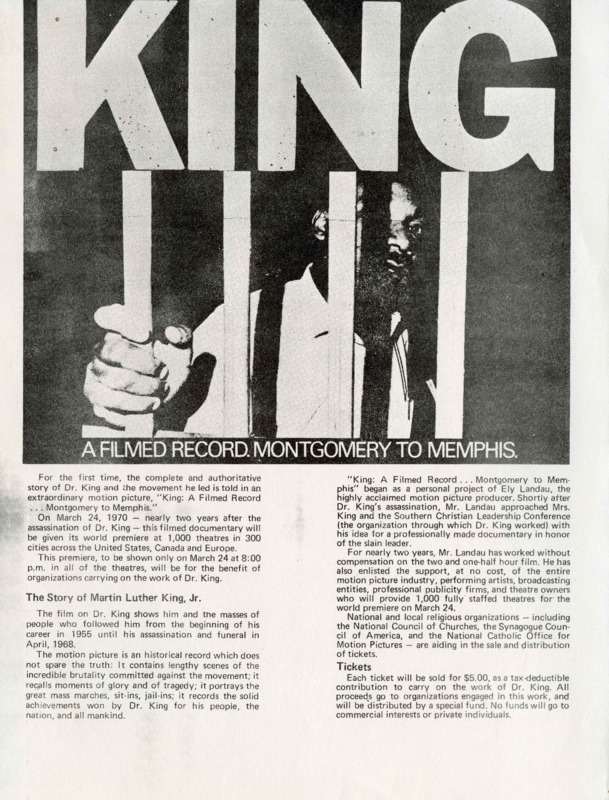
A document that will show the life of Dr. Martin Luther King, Jr. from the beginning of his career in 1955 to his assassination and funeral in 1968 will be available for one time only.
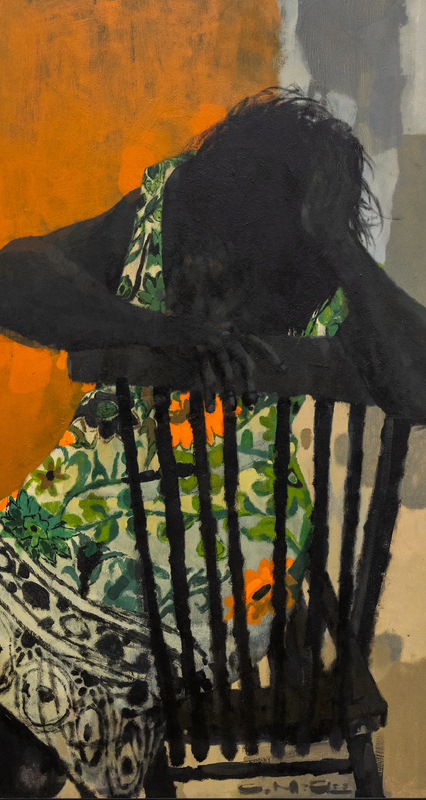
Charles McGee was an artist and educator from Clemson, SC. Moods of Martha is a portrait of a young Black woman sitting with her head down hiding her face. Her hair and skin are black and almost blend in with the black chair she sits in. She wears a bright flower dress that is mostly green with orange flowers.