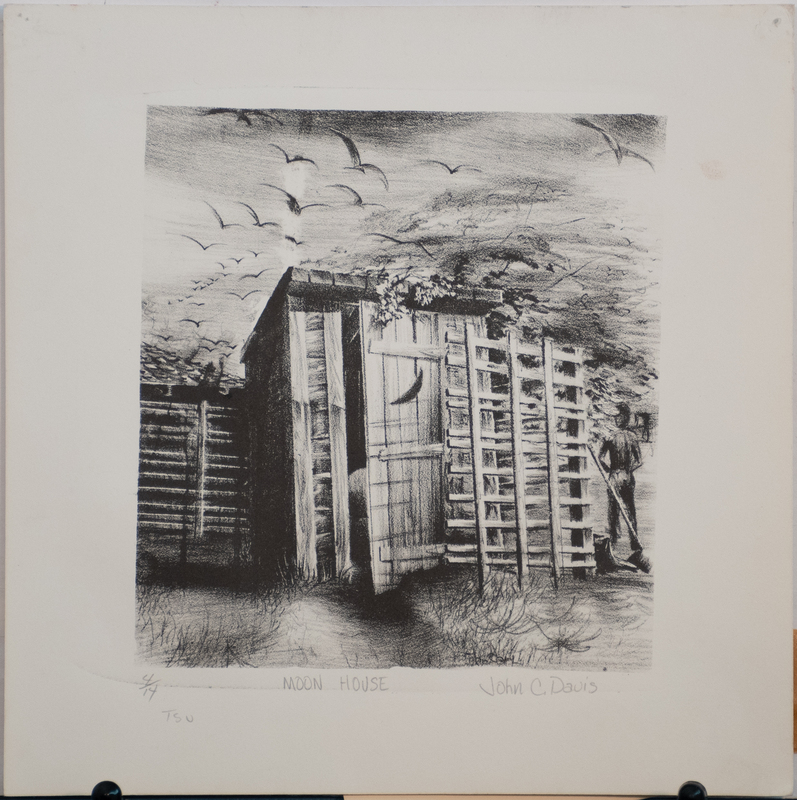
Davis’s print is of an outhouse, colloquially referred to as a moon house. In modern imagination, the crescent moon on an outhouse door has become an identifying symbol of frontier living. Davis’ print also shows a shirtless man zipping up his pants upon exiting the outhouse, while a huge flock of birds fly overhead.
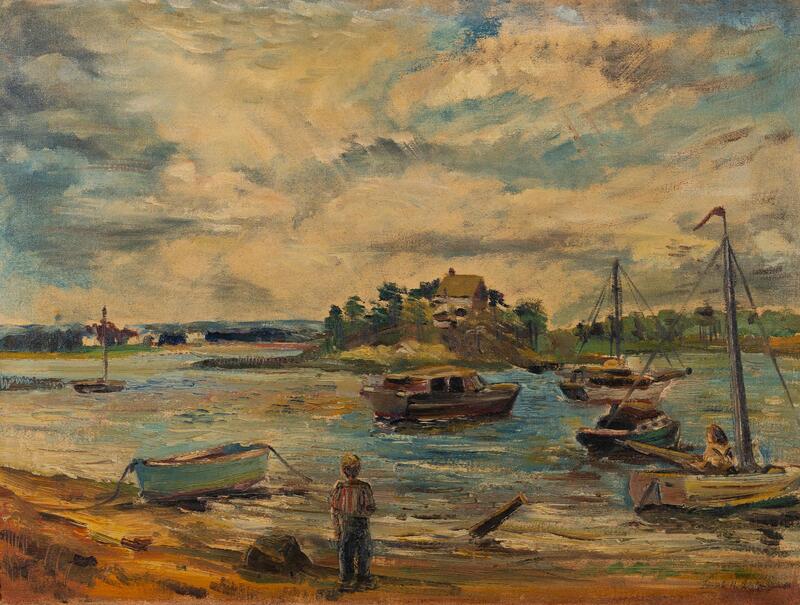
Frank H. Alston, Jr. was an artist and teacher from Providence, RI. Morning on Cape Cod illustrates a cloudy morning along the coast of a peninsula on the Massachusetts Coast. The image depicts a boy standing at the shoreline, boats sailing across the water, a house on top of a hill, and a residential area in the distance.
In this interview, Texas Southern art alumnus Moses Adams, Jr. discusses his experiences as a student in the class of 1969. He found his undergraduate courses challenging because he lacked a deep background in art, and the TSU faculty had high standards. Adams created a sprawling, abstract mural reflecting on drug addiction and urban decay.
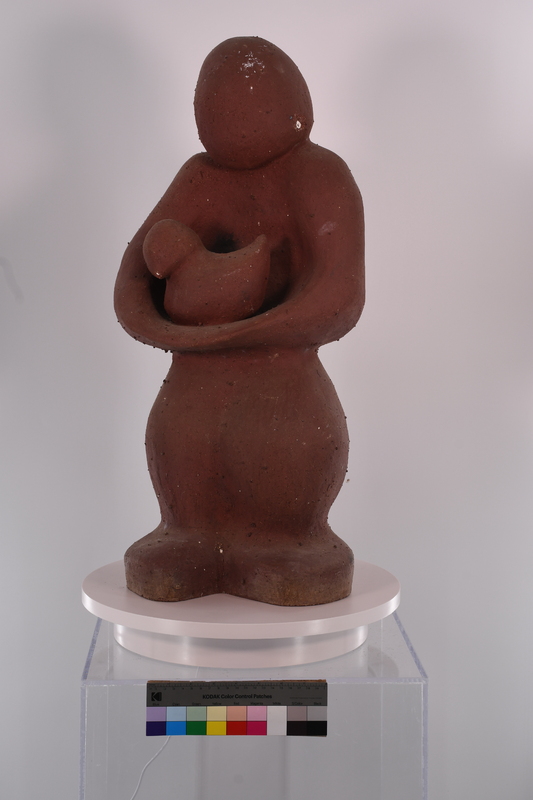
Windle’s terracotta portrays a figure embracing a bird in its arms. The exterior of the sculpture is smooth and lacking any of the decorative motifs typically featured on Texas Southern students’ terracottas. The embrace reflects the compassion of a mother and her child, while also displaying interspecies grace and kindness through the act of picking up this bird.
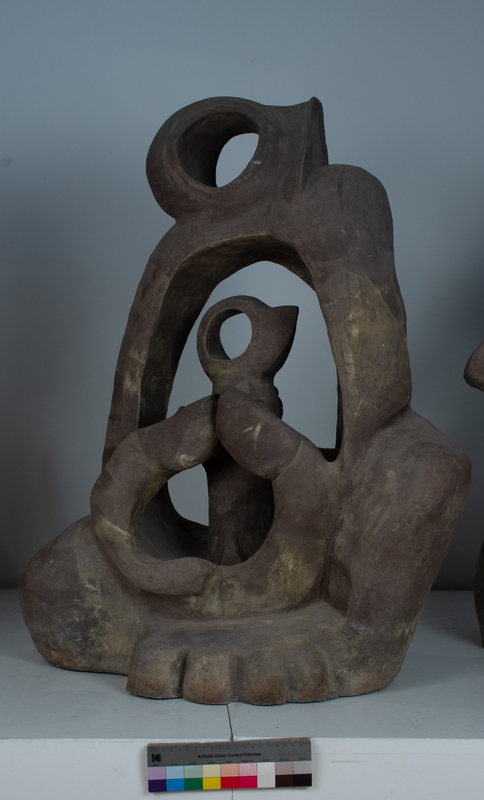
“Mother and Child,” by Warren Williams, reflects a theme of unity. The smaller figure is placed in the lap of the larger, held in place by two fingers connecting to form a circle. The sculpture’s form resembles a mother and child bird, perhaps perched in their nest. The mother-child relationship is an important motif in Texas Southern artwork.
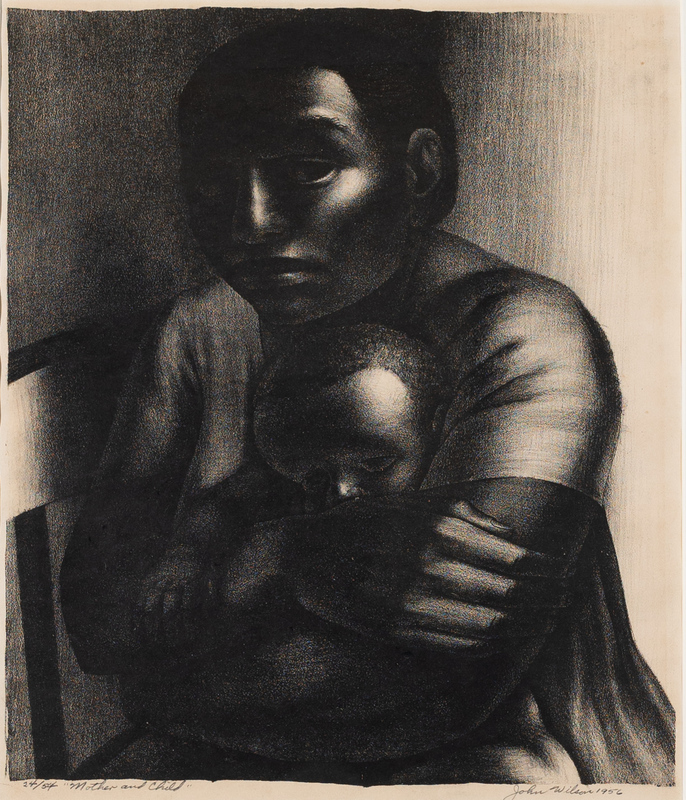
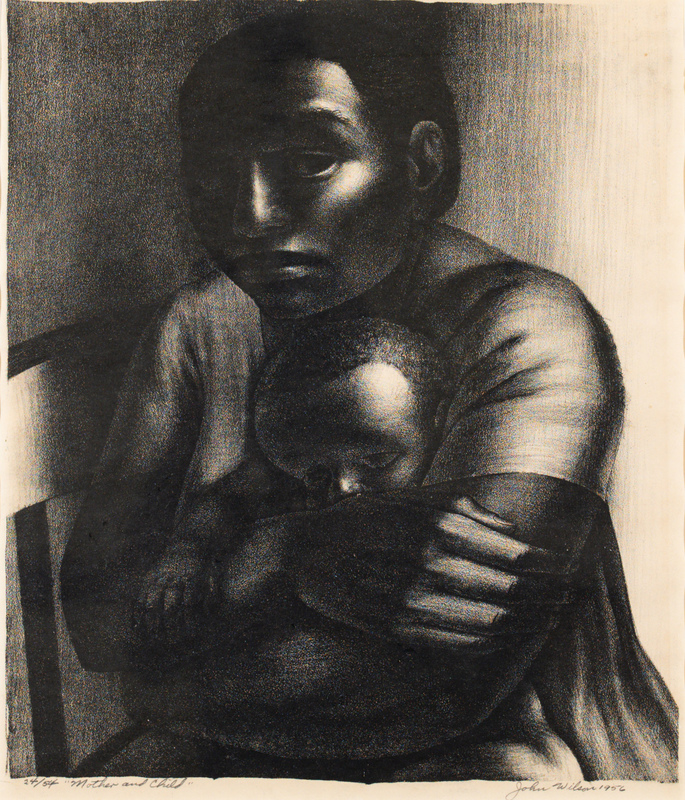
John Woodrow Wilson was a famous painter known for his creative portraits and stylistic approach to social justice. Mother and Child is a black-and-white depiction of a mother embracing their child. The mother has a solemn expression as she looks away from the viewer; her child is tucked into her arms, facing the viewer.
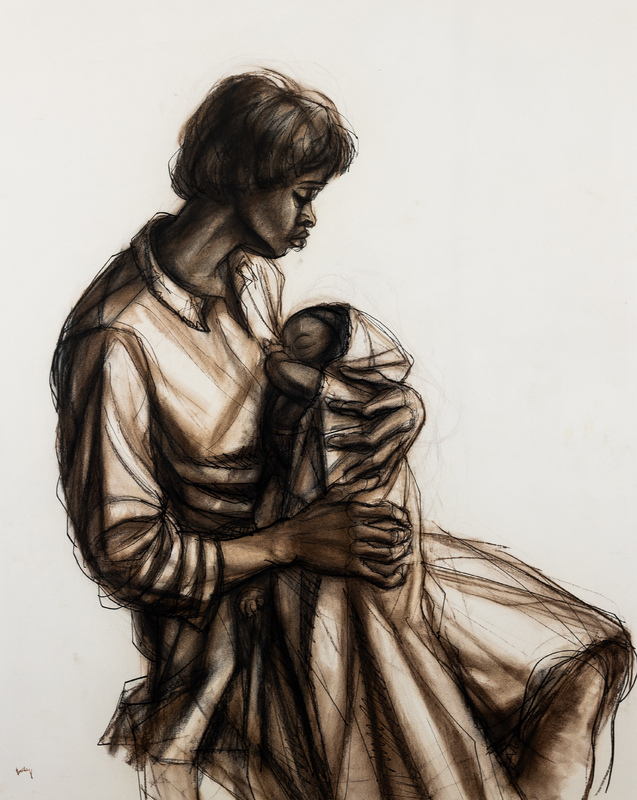
Herman "Kofi" Bailey was an artist from Chicago, IL. Mother and Child is a sepia-toned depiction of a Black mother holding her child in her lap. The mother looks down at the child as a blanket covers them.
John Woodrow Wilson was a famous painter known for his creative portraits and stylistic approach to social justice. Mother and Child is a black-and-white depiction of a mother embracing their child. The mother has a solemn expression as she looks away from the viewer; her child is tucked into her arms, facing the viewer.
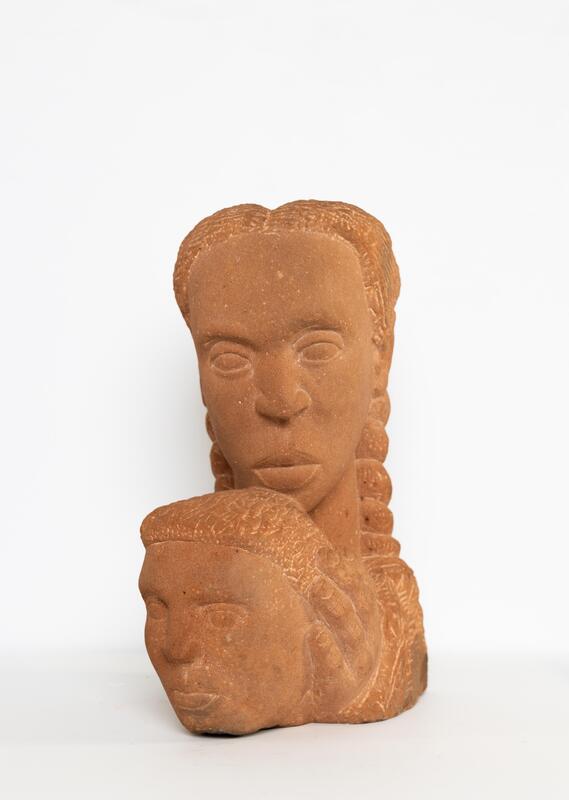
Marion Perkins was a sculptor from Marche, AK. Mother and Child is a limestone bust of its namesake. The mother is placed behind the child as she holds his head. The mother looks toward the viewer as the child looks away.
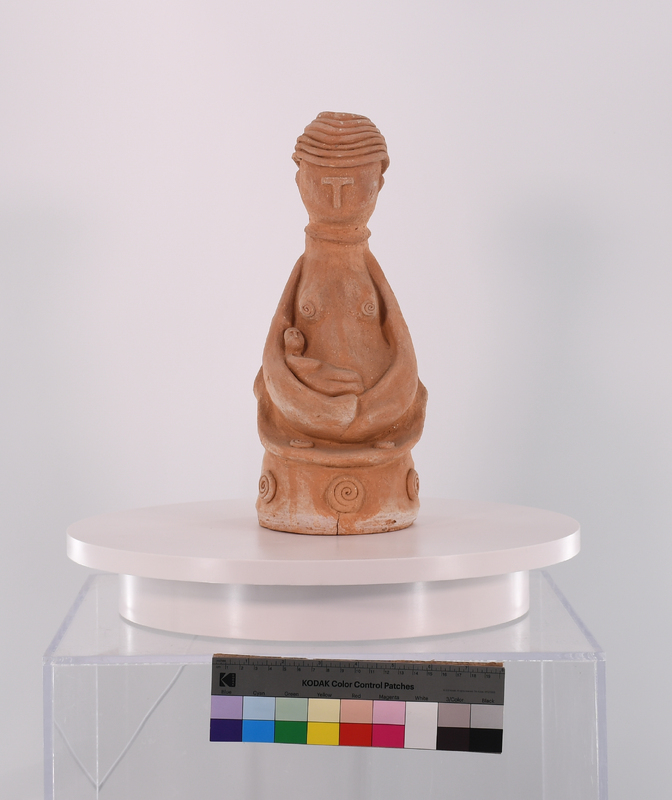
This terracotta maquette is of a woman cradling a child in her arms. The woman is shown naked, with simplified facial features. A circular base supports the sculpture, and spiral motifs are embedded throughout the piece. The crown of the head is topped with layered rings to indicate hair texture. The mother and child theme is prevalent in TSU’s terracotta collection.
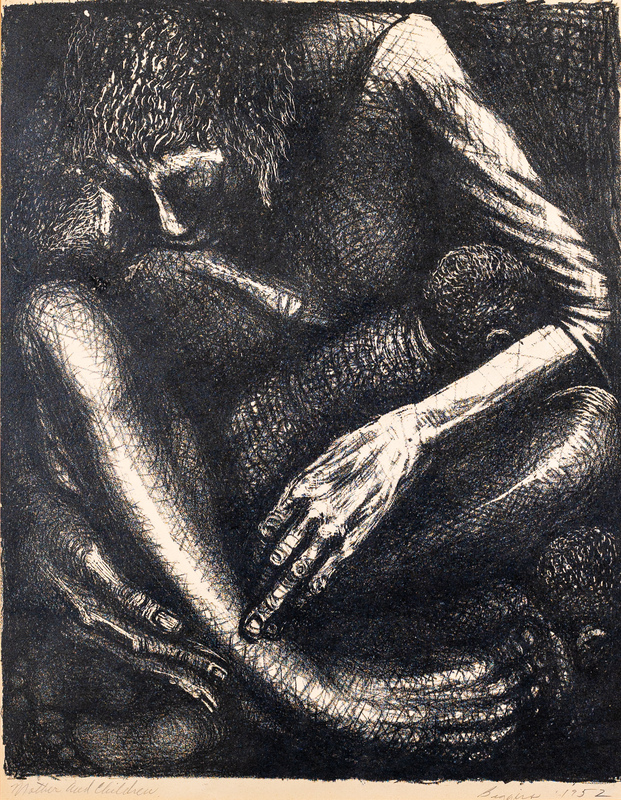
John T. Biggers was an educator, painter, and muralist from Gastonia, NC. Mother and Children depicts a woman sitting with her legs crossed and a baby in her lap. The baby’s face is hidden as they are turned downward in the woman’s lap. The woman hunches over the baby, folding her arms while looking down.
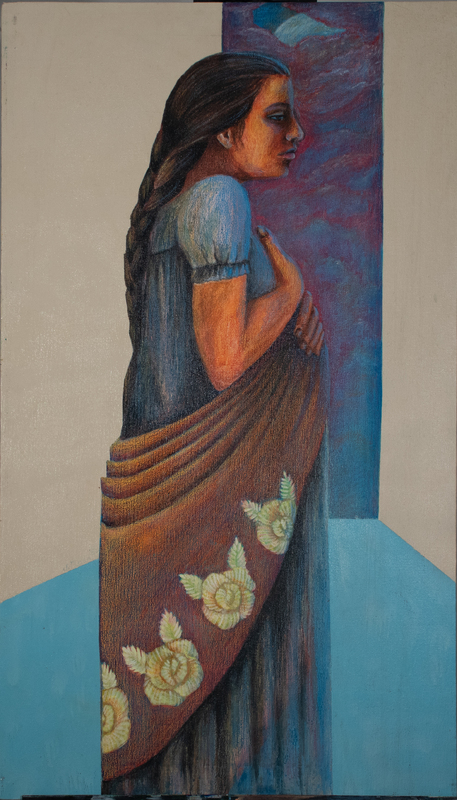
Mendoza's painting depicts an expecting mother gazing into the distance and wearing a traditional Mexican rebozo. Rebozos can be used by pregnant women to support their bellies, as this woman appears to be doing. Mother and child is a prevalent theme in art by Texas Southern Art Department students, found in drawings, sculptures, murals, and paintings.
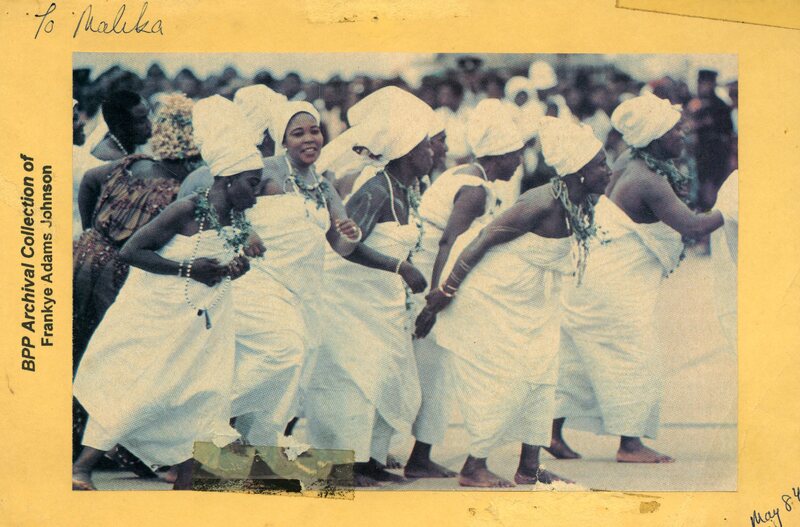
On the front of the Mother’s Day card there is a picture of a group of women. On the back of the card, Black Liberation Army (BLA) member Ashanti Alston expresses his Mother's Day wishes to Frankye Adams-Johnson (Malika), and he says that one day may come where there is no struggle because she deserves so much more from life.
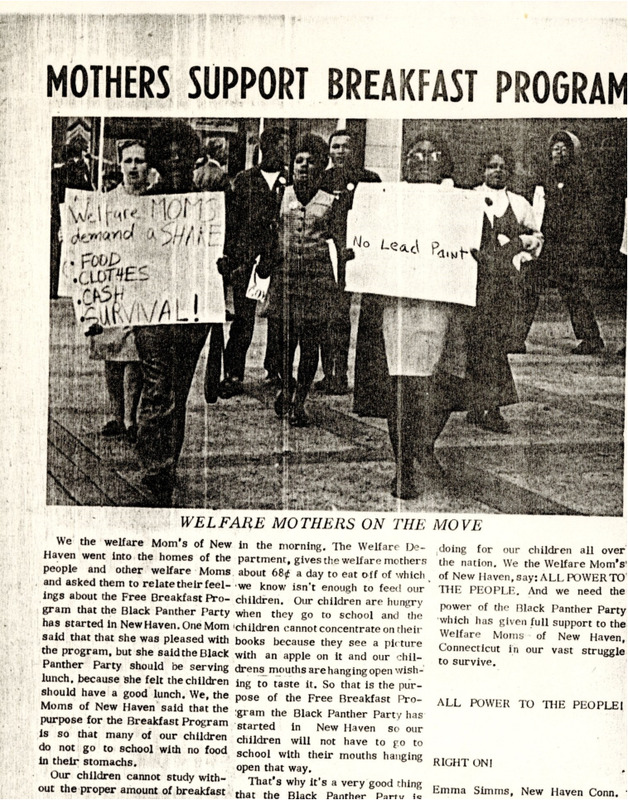
A newspaper article by Emma Simms of New Haven, Connecticut, in The Black Panther about the free breakfast program in New Haven. She writes on behalf of “the welfare moms of New Haven,” saying that welfare money doesn’t provide enough money for adequate food for children and the Black Panthers are filling that void in the community.
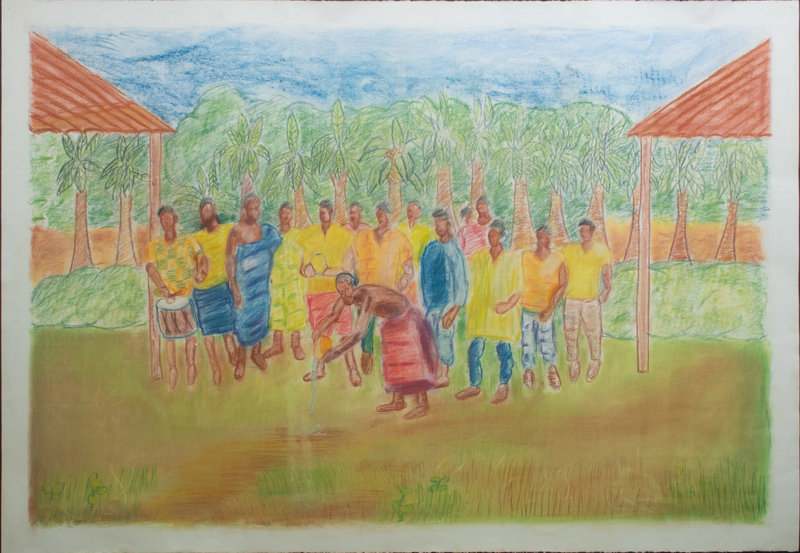
The work shows a group gathering for a libation ceremony in a field; as one member is pouring water into the ground, the other members are playing musical instruments. A libation ceremony is when liquid is poured into the ground as an offering to and in remembrance of a deceased loved one. This ceremony is practiced across the African diaspora.
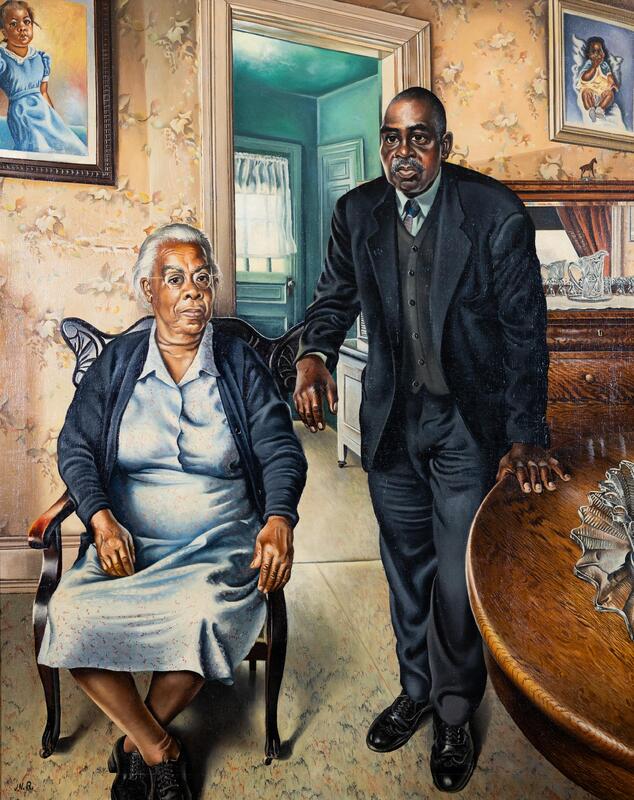
John N. Robinson, born in Washington, D.C., was a self-taught painter. Mr. and Mrs. Barton is an oil painting of an elderly black couple inside their home. The husband is standing in a suit, while the wife is sitting in a sweater and gray dress. Behind them are two framed portraits, a vanity, and the doorway to the kitchen.
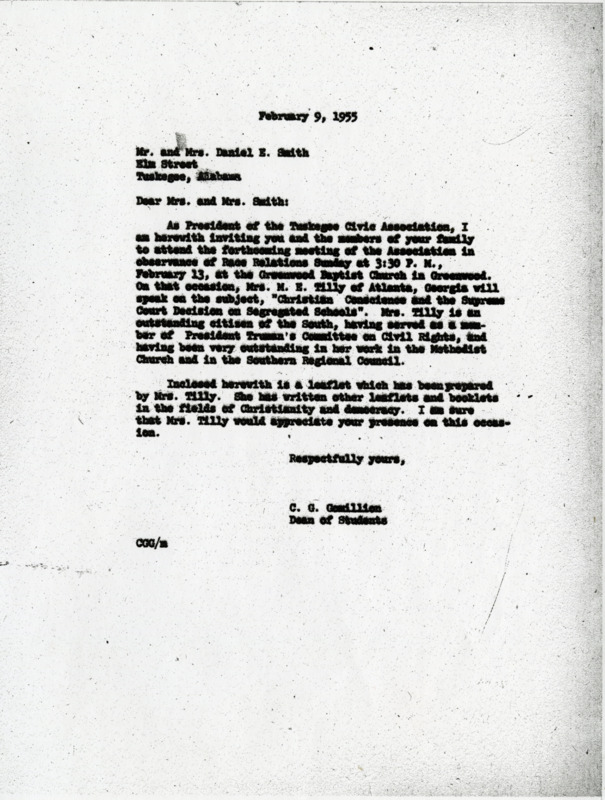
A invitation letter written by Charles Gomillion to Mr. and Mrs. Smith to hear Mrs. Tilly give a lecture on race relations at Greenwood Baptist Church.
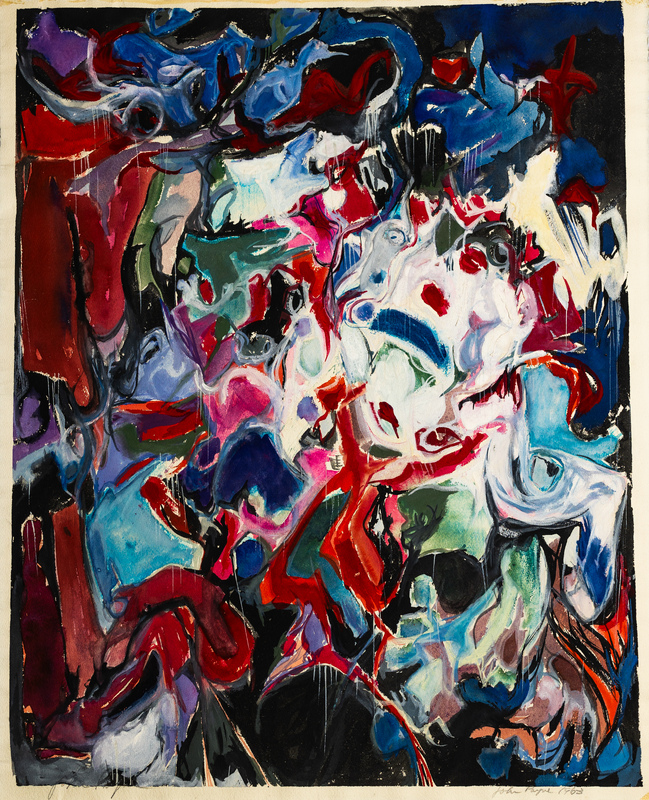
John Payne was an artist from New Orleans, LA. Mr. Mardi Gras is an abstract depiction of a male figure in the midst of the euphony of colors that represent the vibrance of Mardi Gras.
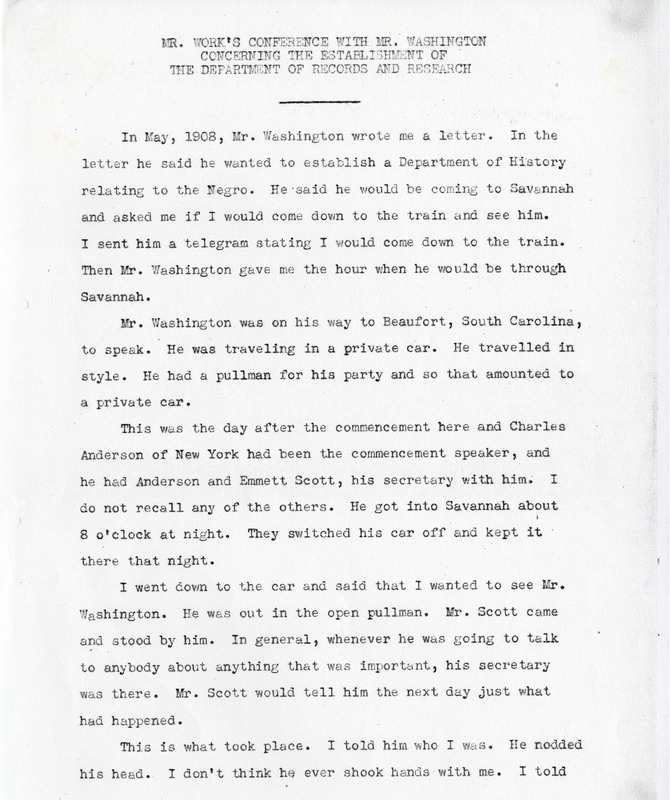
Four-page document summarizing Monroe N. Work's May 1908 meeting with Booker T. Washington in Savannah, Georgia as well the origins of the Records and Research Department at Tuskegee.
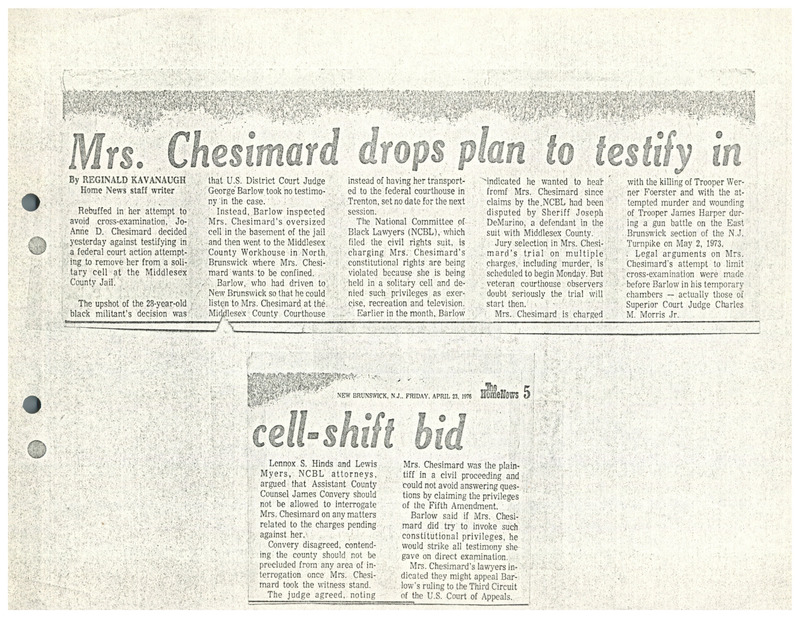
A newspaper article from The Home News about Assata Shakur (JoAnne Chesimard) dropping her plan to testify in her attempt to get moved to a larger cell while in Middlesex County to stand trial for the May 1973 killing of a state trooper. Shakur was convicted in 1977 of the killing and escaped prison in 1979.
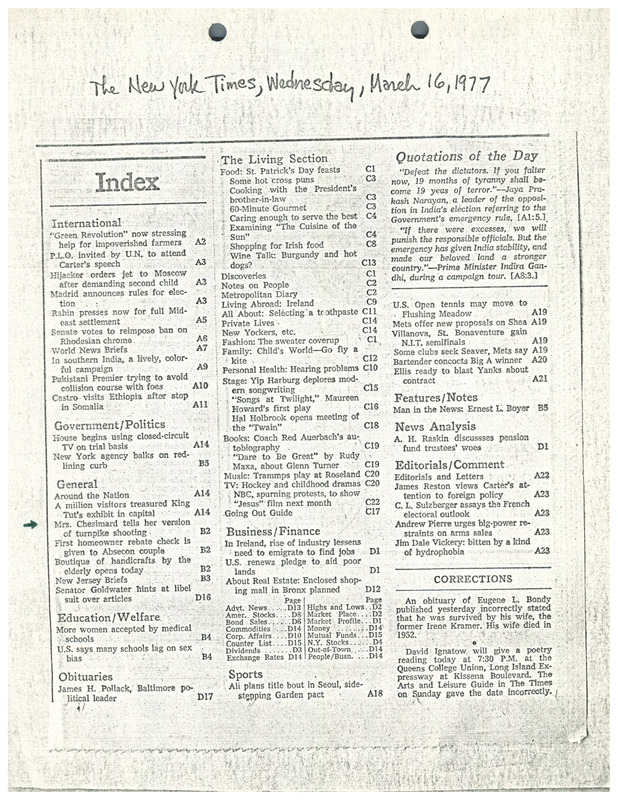
A newspaper article from The New York Times detailing the testimony Assata Shakur (JoAnne Chesimard) gave during her trial for the 1973 killing of a state trooper. In her testimony, she denied shooting anyone, or possessing a firearm, and gave her account of what happened that day.
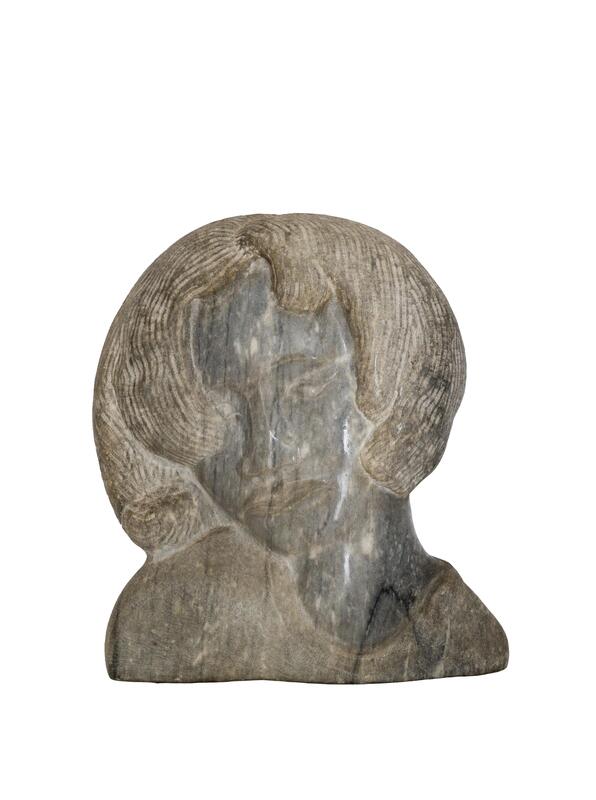
James H. Green, Jr., was an artist from Orangeburg, SC. Mrs. Pepper depicts a woman with a textured bob hairstyle chiseled into stone. Her head is titled in a expression of inquiry.
Willie Payton began with Head Start holding meetings at churches to encourage people in the community to get involved. She ultimately helped with the opening of the first Head Start Center in the Pearson Community in Rankin County, Mississippi. She discusses her experiences with voter registration work in Mississippi in the 1960s.
Muhammad Ali discussed his life since defeating Cleveland Williams in the Astrodome, his conversion to the Nation of Islam, and his decision to change his name from Cassius Clay to Muhammad Ali. Ali then discussed his views on the efforts of the major Civil Rights leaders and their movement to seek equality.
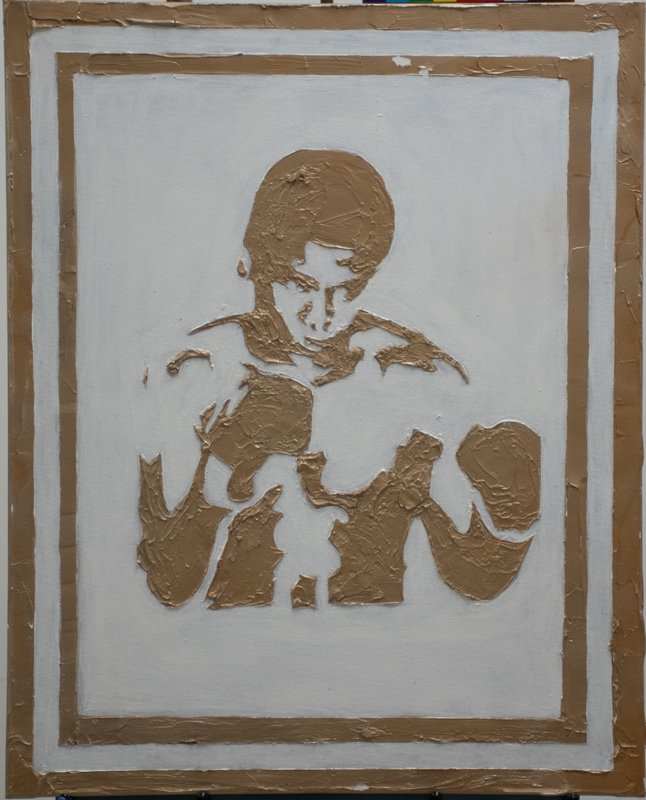
Morris’ painting is a golden portrait of boxer Muhammad Ali raising his fists and preparing for a strike. The painting is inspired by a photograph taken in the 1960s at the height of his athletic career. Ali gained acclaim, controversy, and celebrity not just for his boxing achievements, but also for his conversion to Islam, civil rights activism, and refusal to fight in the Vietnam War.
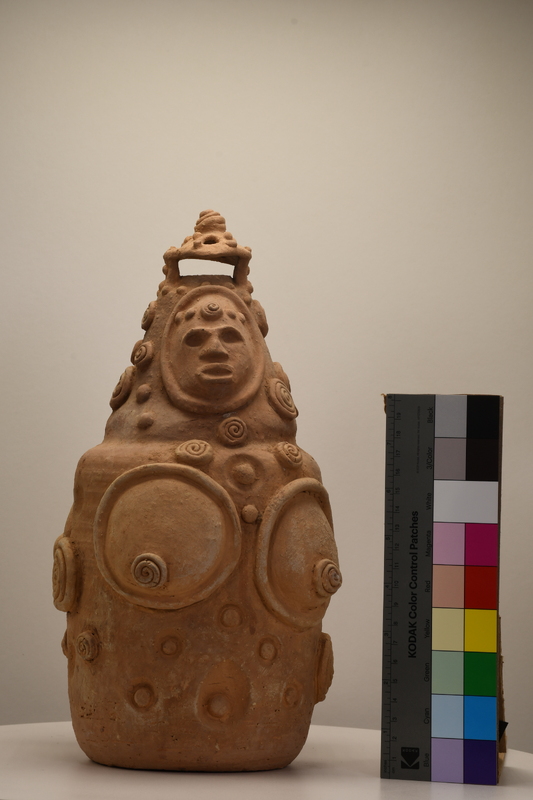
This is a maquette created by an unknown Texas Southern University art student. This maquette displays a stout figure with various swirls on the body. The swirls are a required component for the maquette project, as Carroll Harris Simms pushed his students to richly embellish their works.
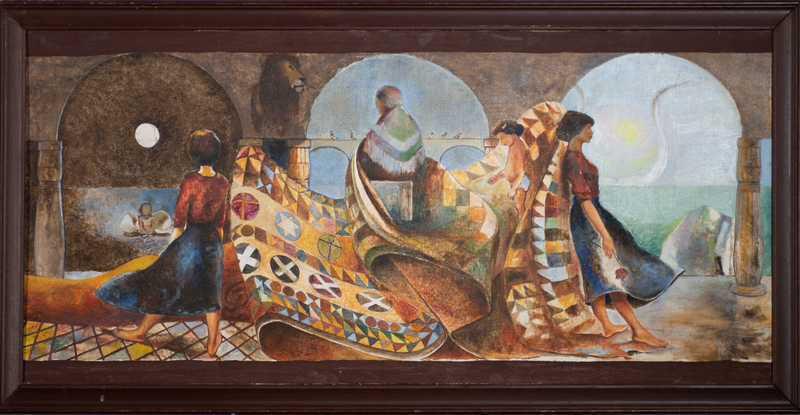
Curnell’s painting is a pre-study of her mural “Awakening” in Hannah Hall. The mural shows a reflection of Curnell’s past, present, and future life. She is seen pictured here as an infant, at her current age, and her future self as an elder. The quilt that stretches across the composition features various religious symbols, including the cross, the star of David, and the ankh.
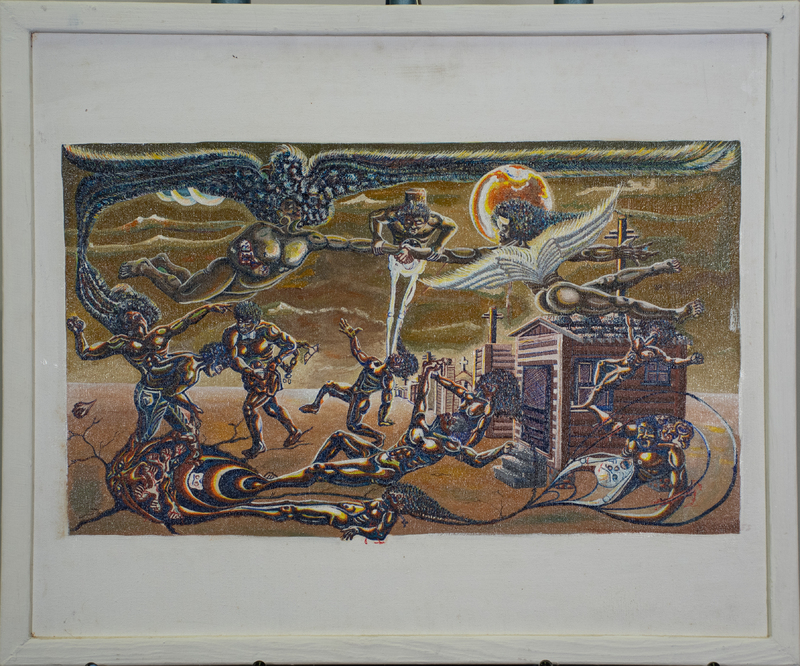
Settles' mural study depicts muscular, mostly naked men and women seemingly being sucked into a portal. An angel attempts to pull them away, while two men are stripped of their skin and bones. The figures’ hair is painted with great detail and seems imbued with special powers. The backdrop shows a horizon of shotgun homes. Settles’ final mural nearly replicates this earlier draft.