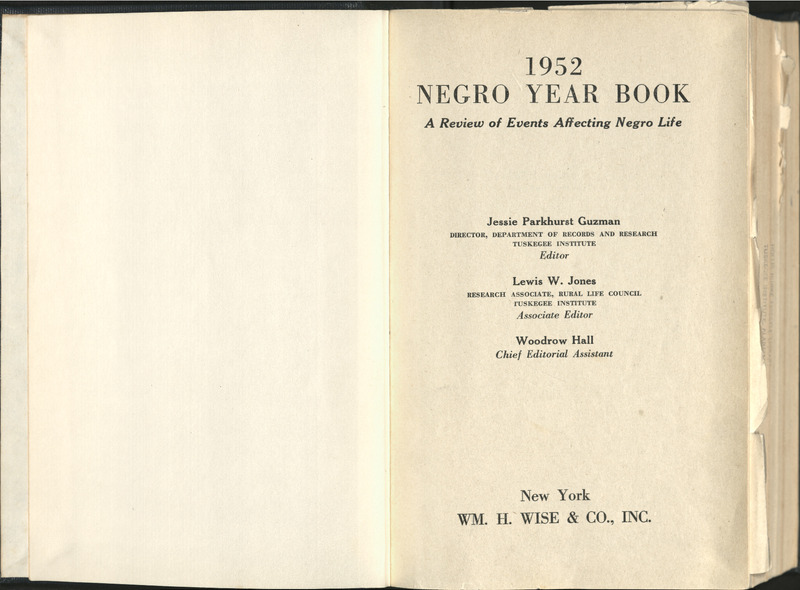
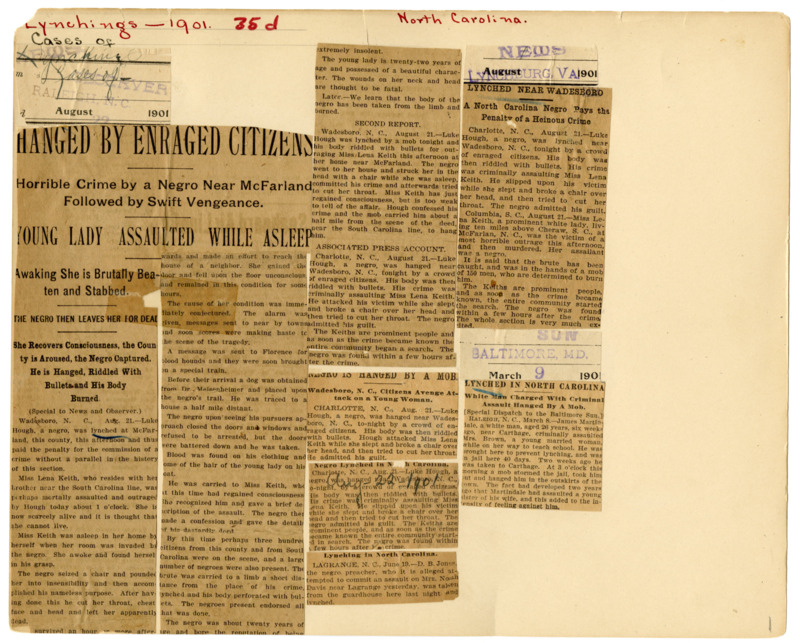
The Negro Yearbooks were an annual encyclopedia of the negro published at Tuskegee University from 1912-1952. A chapter describing the Negro in health and medical facilities.
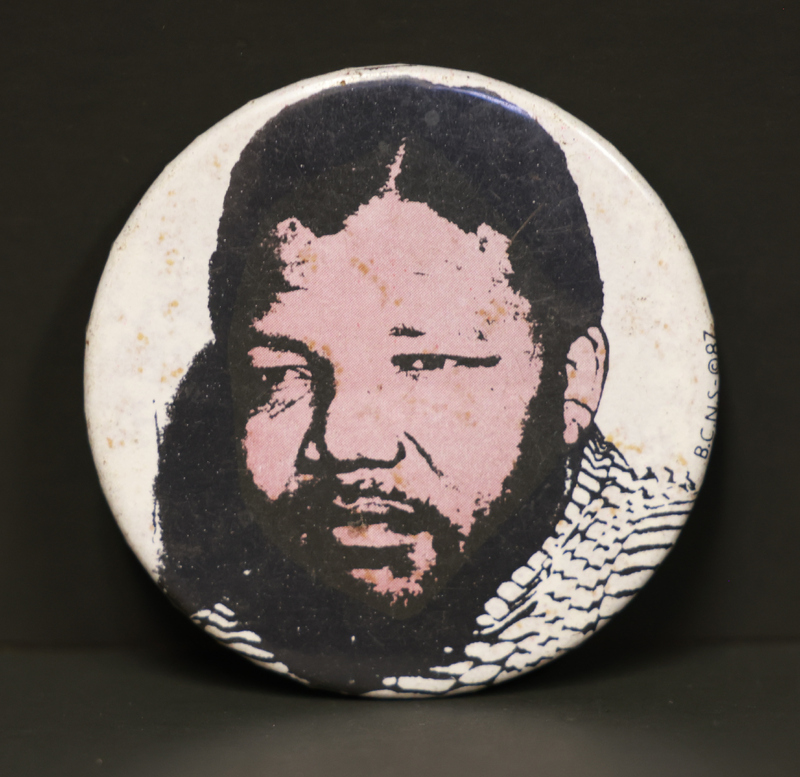
A button with a sketch of a photo of Nelson Mandela. Nelson Mandela was an anti-apartheid activist in South Africa. After being imprisoned for 27 years due to his African Nationalist ideology, he was released in 1990 and led efforts to end apartheid. He was elected president in 1994 in the country's first fully democratic election.
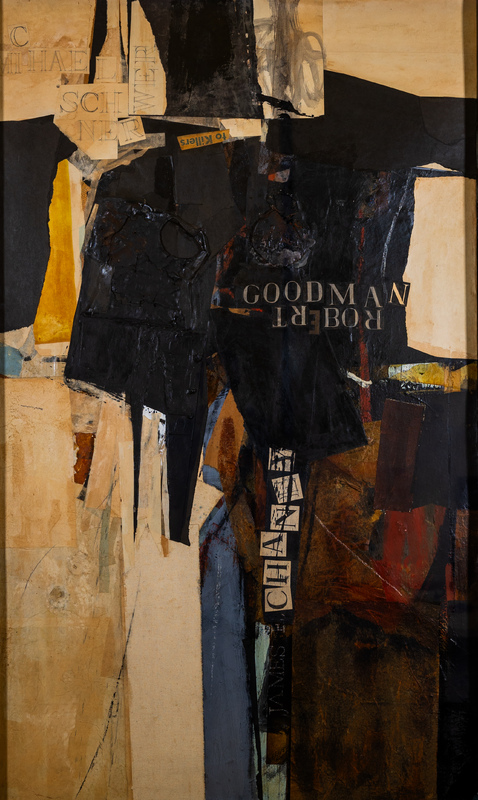
Alvin Smith was an artist from Brooklyn, NY. Neshoba Spectre is a collage that memorializes the Freedom Summer murders in Neshoba County, Mississippi. The piece displays the names of the victims: James Chaney, Andrew Goodman, and Michael Schwerner.
Netterine Theodore was one of the founders of the Turkey Creek Head Start Center near Gulfport, Mississippi, in 1964. She worked for Head Start as a teacher and committed the entirety of her life to school and education. Ms. Theodore discusses the origins of Head Start in the Turkey Creek community and the effect that had on race relations.
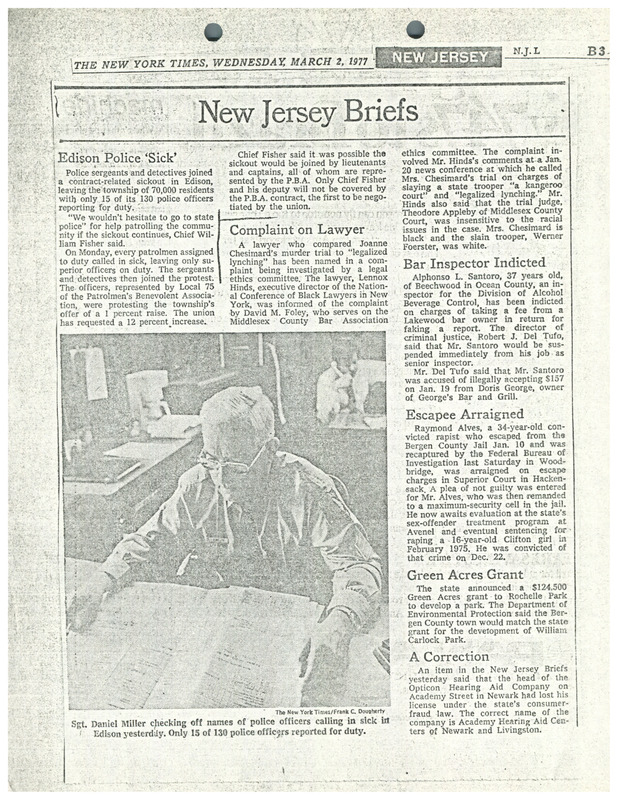
A news blurb from The New York Times about Lennox Hinds, president of the National Conference of Black Lawyers, speaking out against his critics for his support of Assata Shakur (JoAnne Chesimard), in her trial for the 1973 killing of a state trooper, after being cited by The Ethics Committee of the Middlesex County Bar Association.
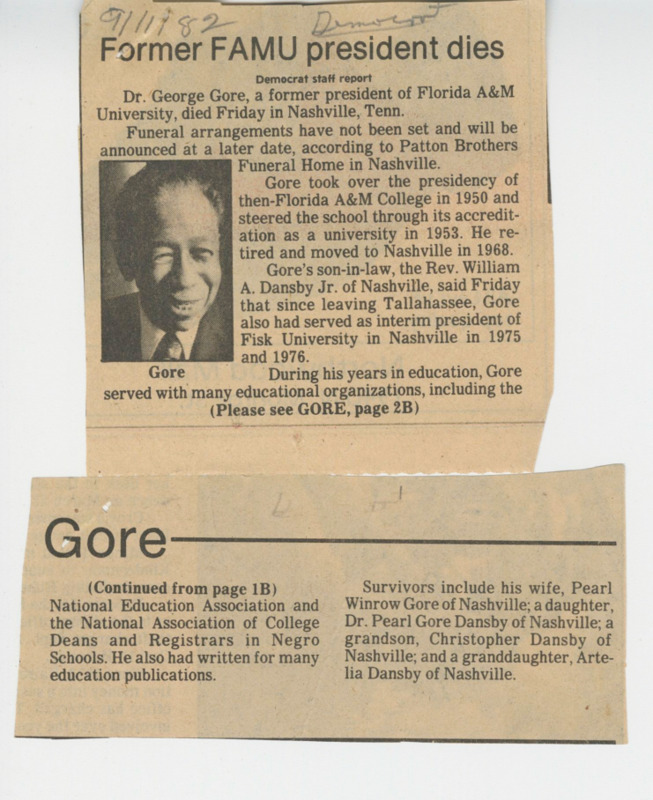
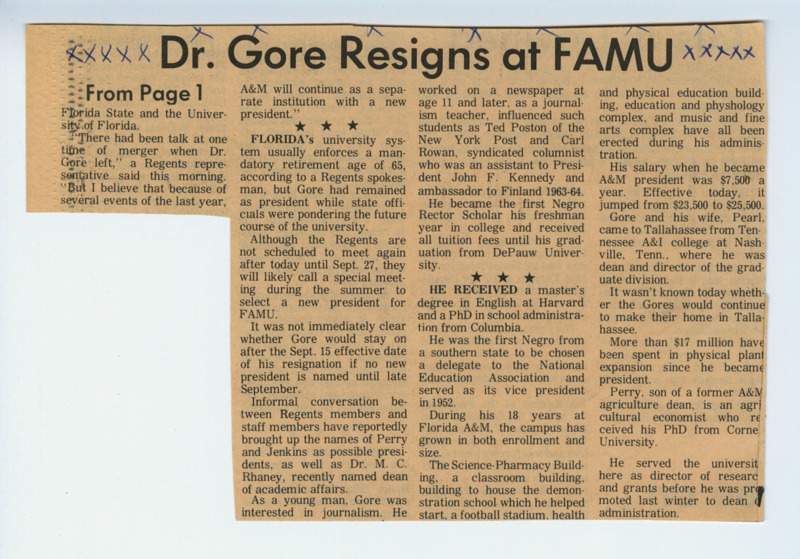
Newspaper clippings and an article from The FAMUAN honor President Gore’s remarkable legacy with heartfelt expressions of respect, fidelity, and admiration. The pieces celebrate his transformative leadership, unwavering dedication to FAMC and FAMU, and his lasting impact on education, students, and the broader university community.
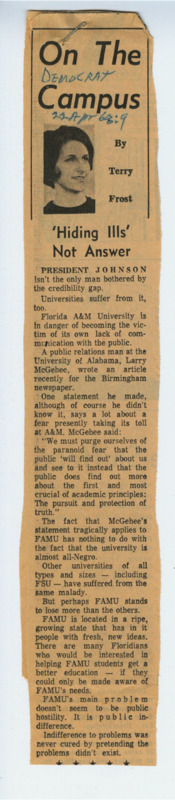
Newspaper clippings from 1968 detail FAMU students' civil rights reform efforts after several arrests. President Gore sought to calm tensions, discouraging protests to preserve stability and FAMU’s reputation. Despite his stance, the movement continued, and his resignation later followed these events.
Newspaper clippings and an article from *The FAMUAN* reflect on President Gore’s resignation in 1968, marking the end of a distinguished era of leadership. The pieces highlight his transformative contributions to FAMC and FAMU, his dedication to education, and the enduring legacy he left on the university and its community.
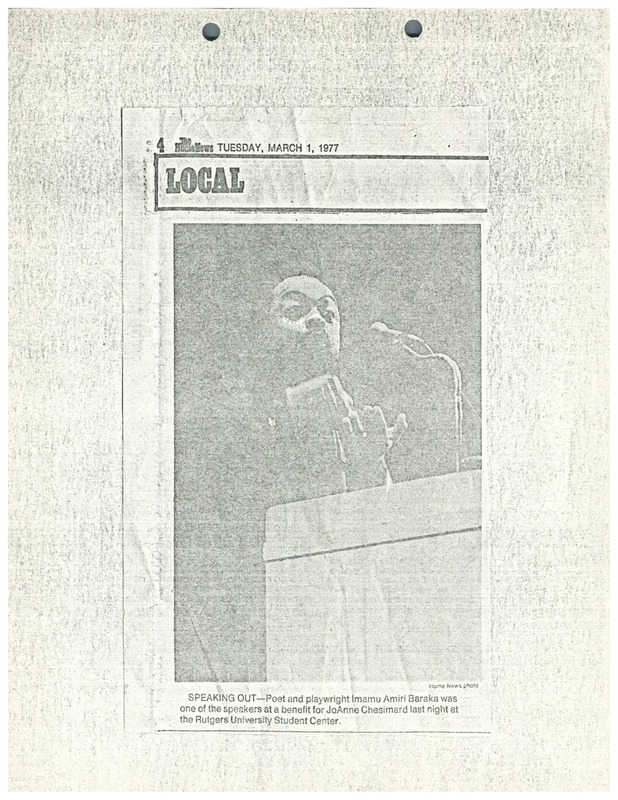
A photograph from the newspaper The Home News of poet and playwright Amiri Baraka speaking at a benefit for Assata Shakur (JoAnne Chesimard) at the Rutgers University Student Center in New Jersey. Shakur was on trial for the 1973 killing of a state trooper. Baraka was one of several speakers speaking on Shakur’s behalf at the benefit.
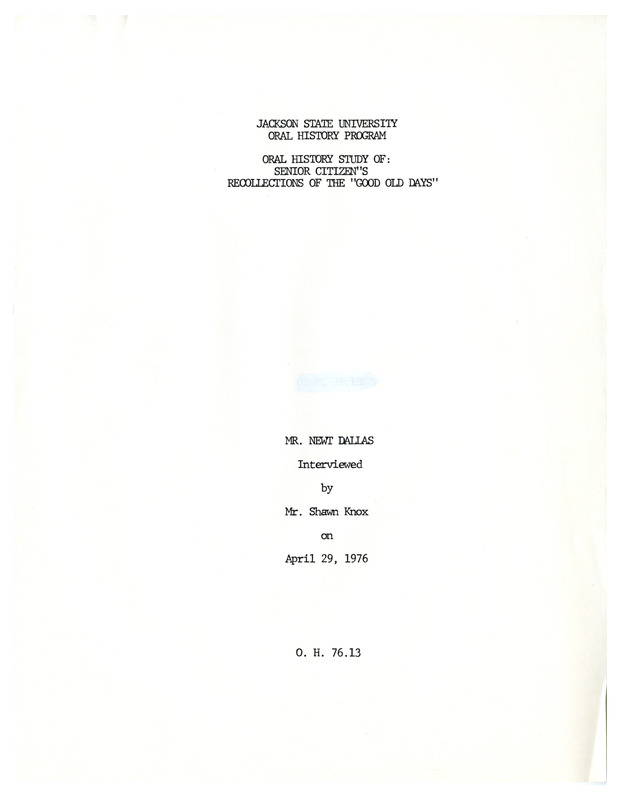
Newt Dallas moved to Jackson in 1926 at the age of 18 to work for the city and talks about some of the other jobs he had over the years. He talks about his family and the different places in Jackson he has lived as well as some Black owned businesses he remembered. He remembers the "Good Old Days" as those days he did nothing but work every day.
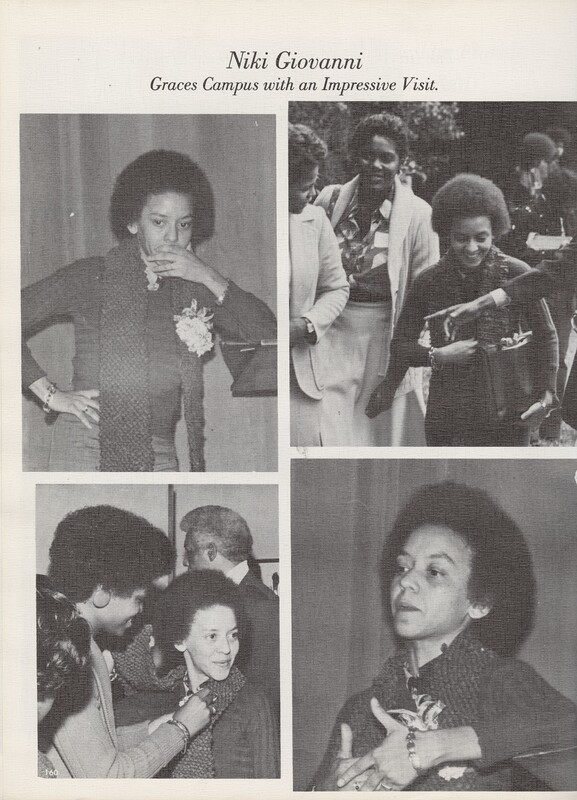
Nikki Giovanni, a highly awarded African American poet, visited the campus of Florida A&M University in 1975. In these images, Giovanni is seen being gifted a corsage by students, walking around campus, and speaking on a stage.
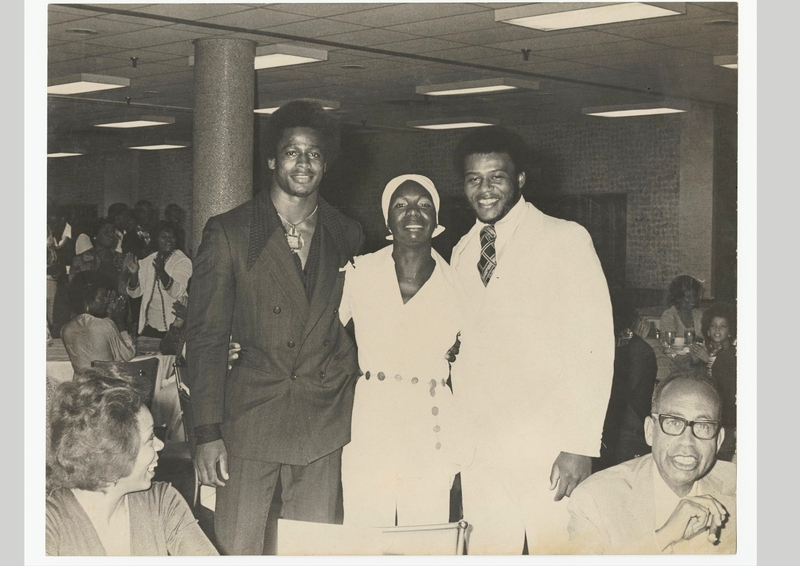
In this rare photograph, Nina Simone stands with A. Poole (as inscribed on the back of the photo) and another unidentified Black male. The trio is posing in the middle of what appears to be a Florida A&M event banquet, as people eat around them while others dance in the background. It’s unclear when this was taken.
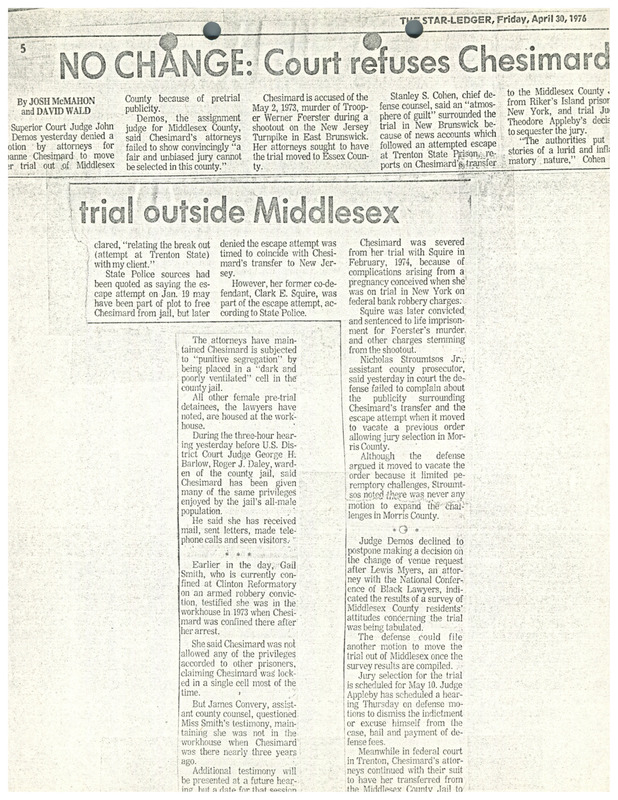
A newspaper article from The Star Ledger about Superior Court Judge John C. Demos denying a motion to move the murder trial of Assata Shakur (JoAnne Chesimard) for the 1973 killing of a state trooper out of Middlesex County because of the defense's inability to show that an unbiased jury couldn't be selected.
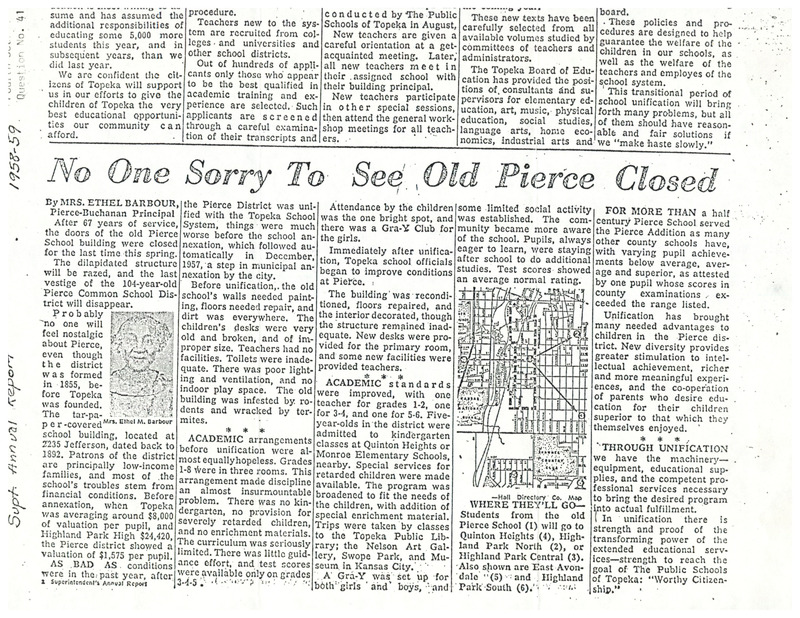
An article from an unknown newspaper about the closing of the dilapidated Pierce School building and the end of the Pierce Common School district after its unification with the Topeka Public School System.
Nolan Tate began his involvement with Head Start in 1964 when he was recruited by Charles Mosley to the Child Development Group of Mississippi (CDGM). He started out as head of supplies and transportation. He talks about his work during the Civil Rights Movement including working with Medgar Evers in getting people registered to vote.
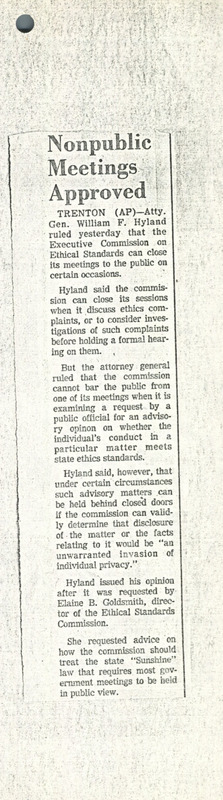
A newspaper article from the Asbury Park Press about Attorney General William F. Hyland ruling that the Executive Commission on Ethical Standards can close its meetings to the public on certain occasions. This article pertains to hearings in the trial of Assata Shakur (JoAnne Chesimard) for the 1973 killing of a state trooper.
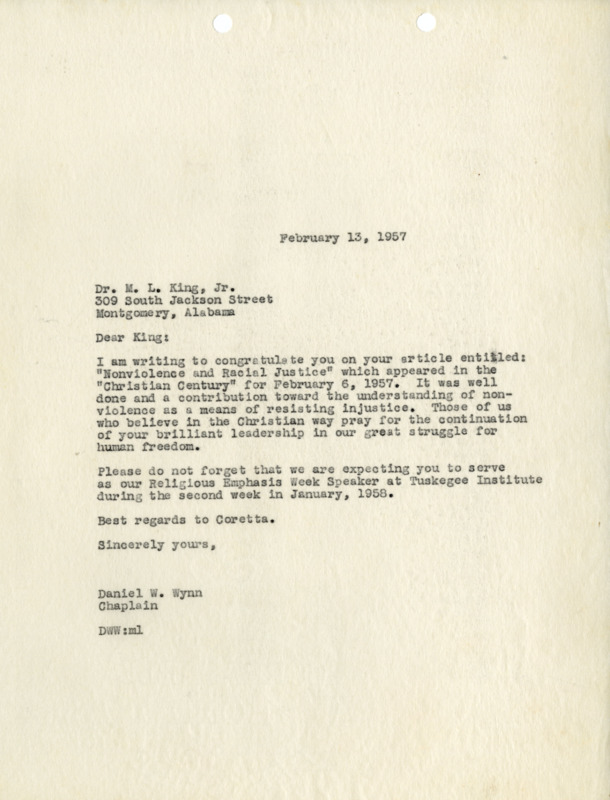
A letter from Chaplain Wynn to Dr. Martin Luther King Jr. congratulating him on his article Nonviolence and Racial Justice in the Christian Century Newspaper. Chaplain Wynn also reminded Dr. King that, he is expected to serve in Religious Emphasis Week in 1958.
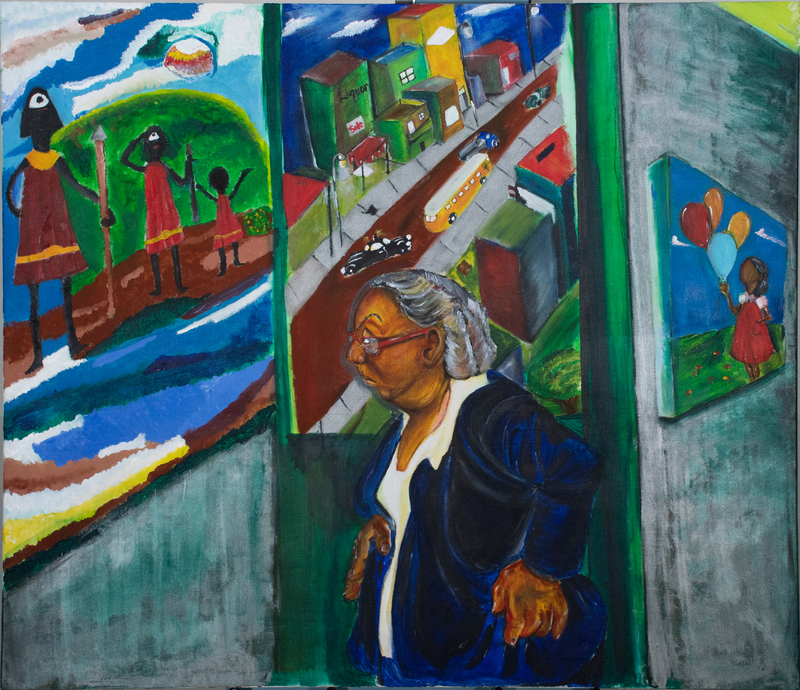
Caldwell’s painting reflects a comical scene from an art museum. An elderly woman walks past the artworks exhibited, glaring with a dubious expression on her face. Her posture and facial expression suggest disapproval and criticism. The leftmost piece pictured in Caldwell’s painting is “Landscape” by Marrion Cole, a textile piece from Texas Southern’s permanent collection. This is one example of how art students interact with TSU’s art legacy.
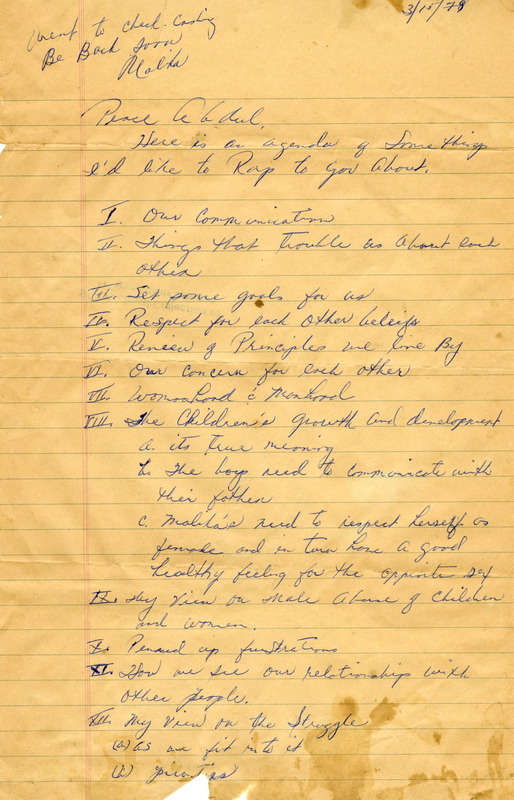
A note from Frankye Adams-Johnson (Malika) to her husband, Nuh Abdul Qaiyum, who was sentenced to prison in 1975 for a 1971 Black Liberation Army (BLA) connected shooting of police officers in New York. The note outlines some points to a conversation she wants to have with him about their life, their love, their beliefs, and the struggle.
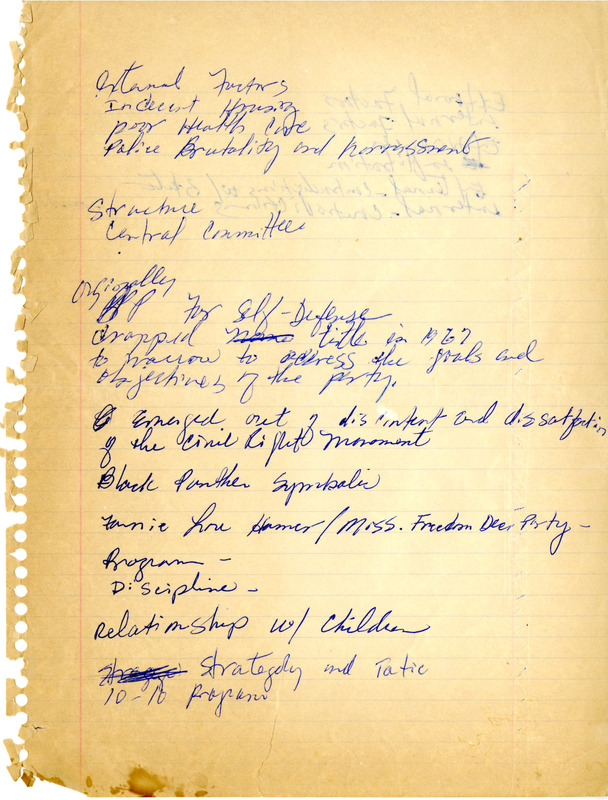
Three pages of notes about internal and external factors that led to the development of the Black Panther Party. Some of those factors included indecent housing, poor healthcare, and police brutality and harassment.
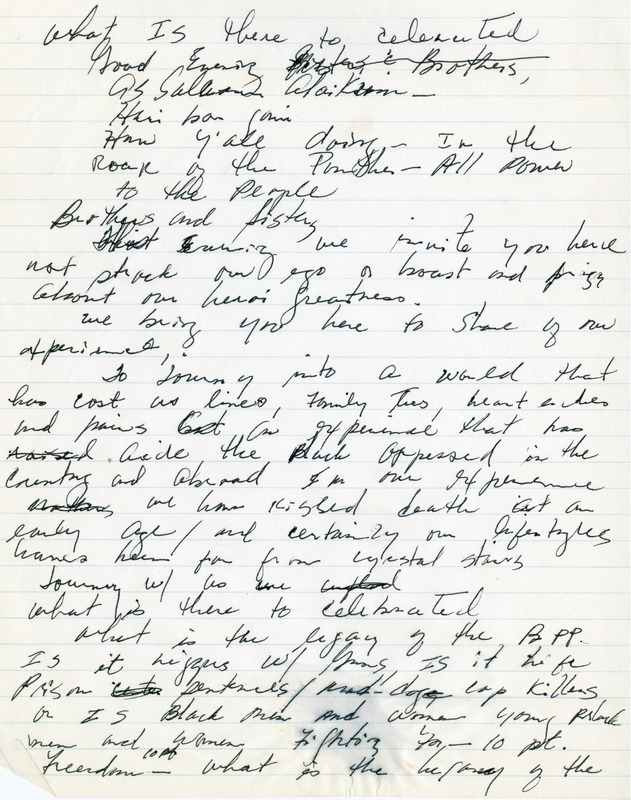
Notes and a draft of a speech by Frankye Adams-Johnson (Malika) reflecting on the Black Panther Movement. Page one outlines an opening to the speech and its purpose. The second page explores the use of education in the fight for liberation. The last pages cover government agencies and the decline of the Party.
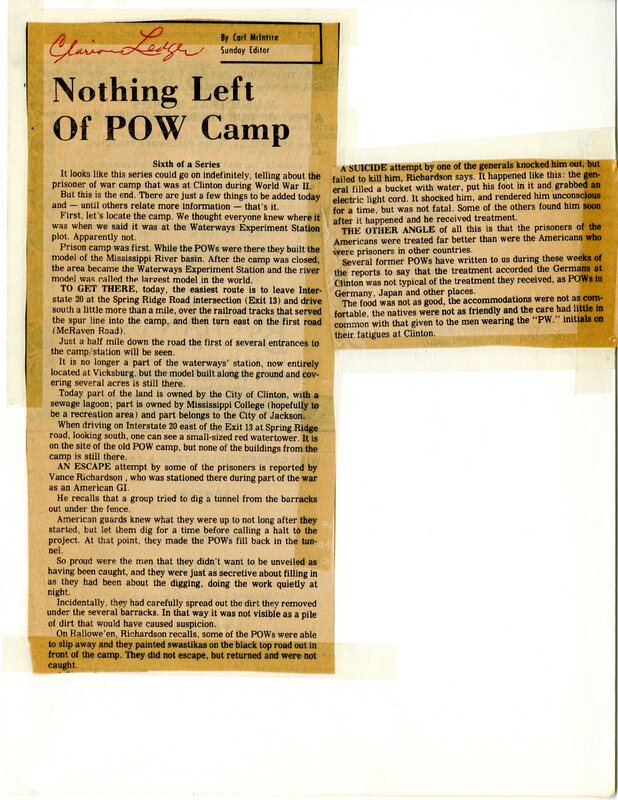
A newspaper article from the Clarion Ledger (Jackson, Mississippi) providing historical context to the Clinton Project Oral History Collection. The article pinpoints the location of the former POW camp and talks about the treatment of prisoners there.
The 1994 Notice of Hearings from the state of Florida proposed $7.2 million in compensation for the destruction of Rosewood, a Black community subjected to a violent, racial attack. The hearings aimed to address the lasting impact of the massacre and sought justice and acknowledgment for the survivors and their families.
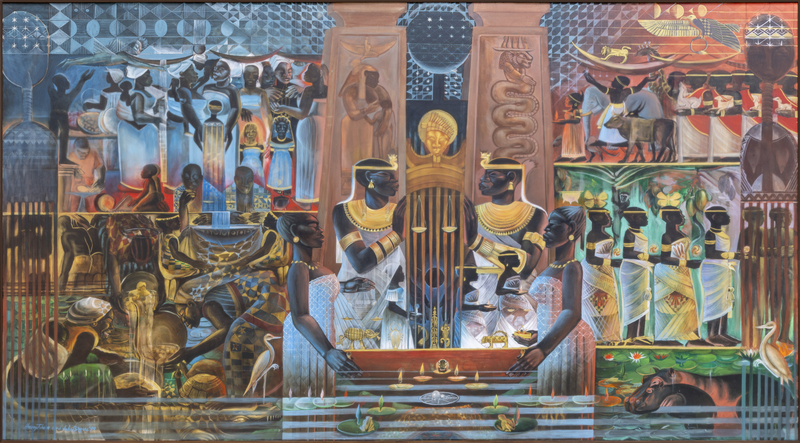
Biggers and Harvey Johnson, a former TSU art professor and student of Dr. Biggers, painted this mural in the lobby of the Jesse H. Jones School of Business. It speaks to the history of commerce and the wealth of Africa. NUBIA is full of visual symbols drawn from African art, including ceremonial combs, gold weights, and several meaningful animals, like the hippo, buzzard, sacred ibis, double crocodile, spider, tortoise, and more.
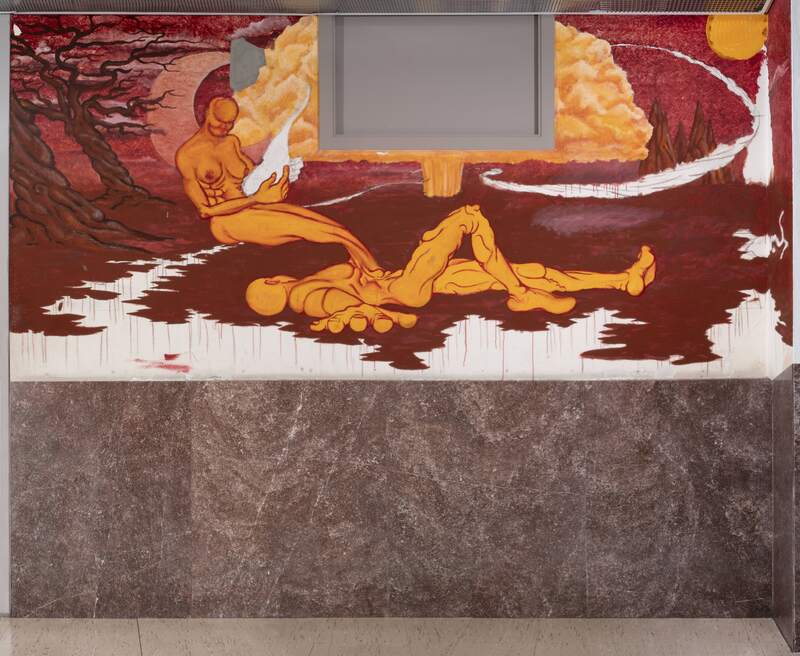
The red and orange-hued apocalyptic scene shows the moments after an explosion. In the middle, a dying woman’s soul leaves her body. The mural appears to have been left unfinished, as the baby, one hand, and parts of the foreground and background are not painted in.
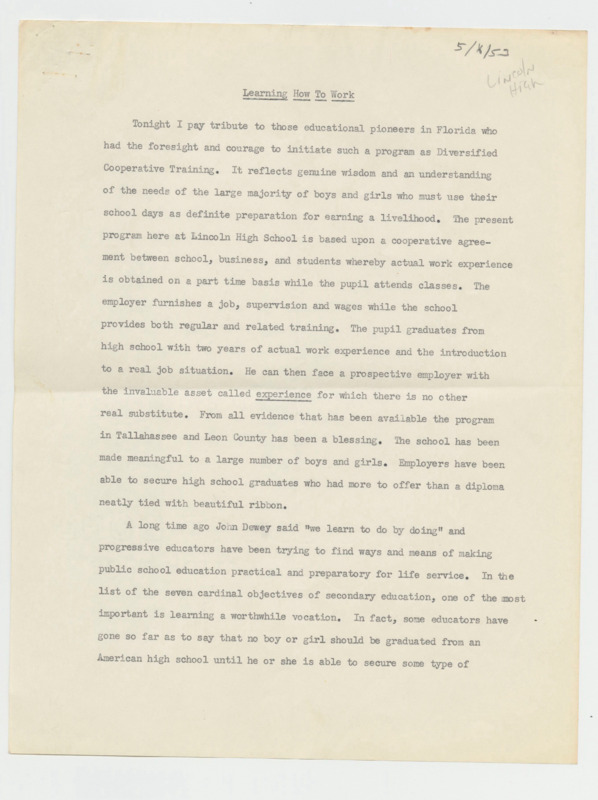
President Gore’s speech at Lincoln High School outlined his vision for a Diversified Cooperative Training (DCT) program. He detailed plans to expand practical education for young workers statewide, emphasizing innovation, opportunity, and the power of education to transform Florida’s workforce.
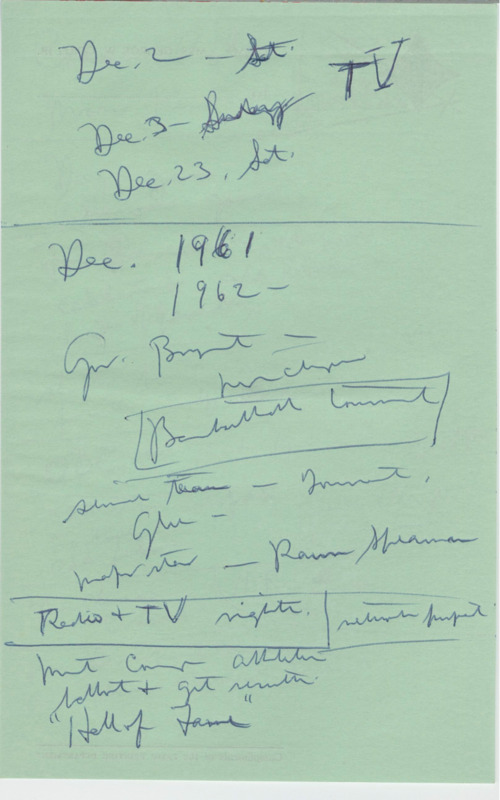
President Gore’s handwritten speeches from 1961 to 1963 encompass remarks delivered at various meetings and convocations. These speeches reflect his vision for Florida A&M University, emphasizing academic growth, community involvement, and the university’s ongoing commitment to excellence during a pivotal period in its history.
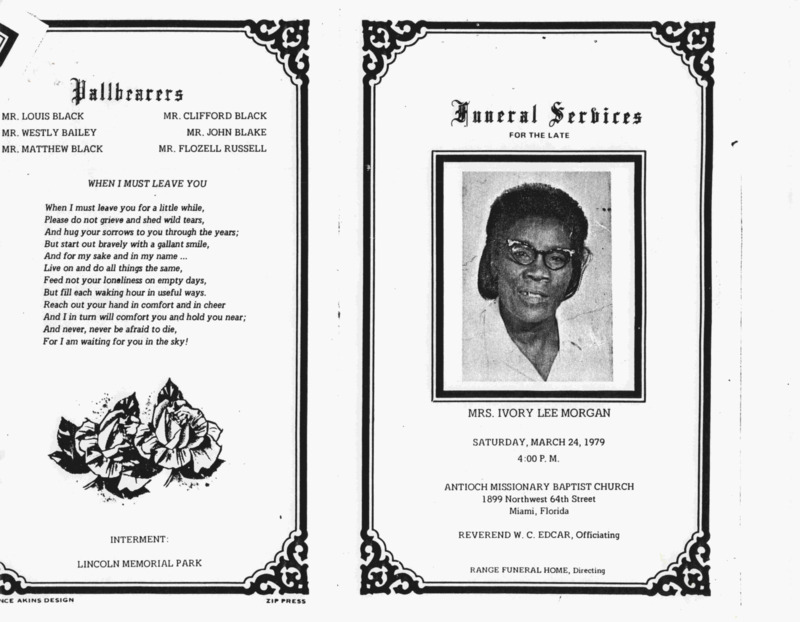
Obituaries from descendants of Rosewood used to verify the death of family members and prevent false claims. These obituaries honor those who survived the massacre by detailing their contributions to the community and preserving the legacy of resilience and strength endured through generations.