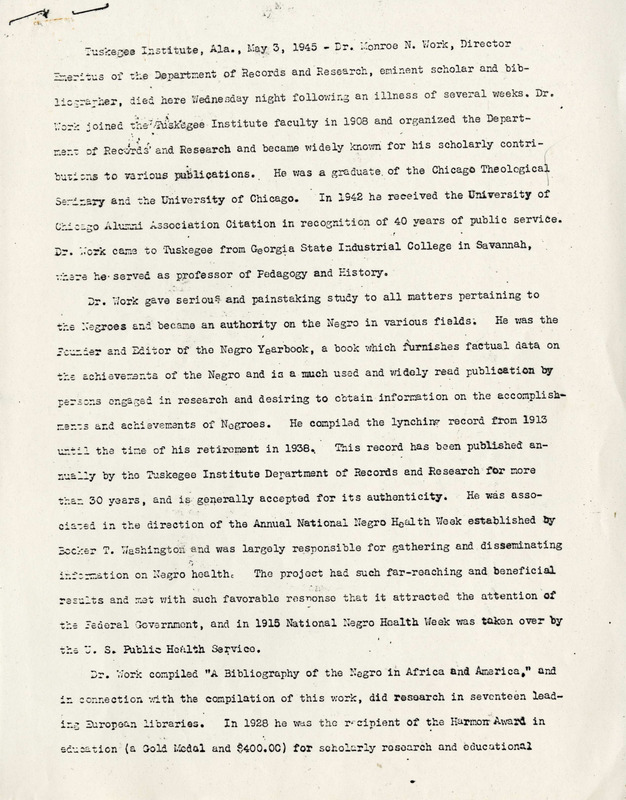
Two-page obituary or press release from Tuskegee regarding the life and death of Monroe N. Work. Includes information on scheduled funeral services, rites, and internment for Dr. Work.
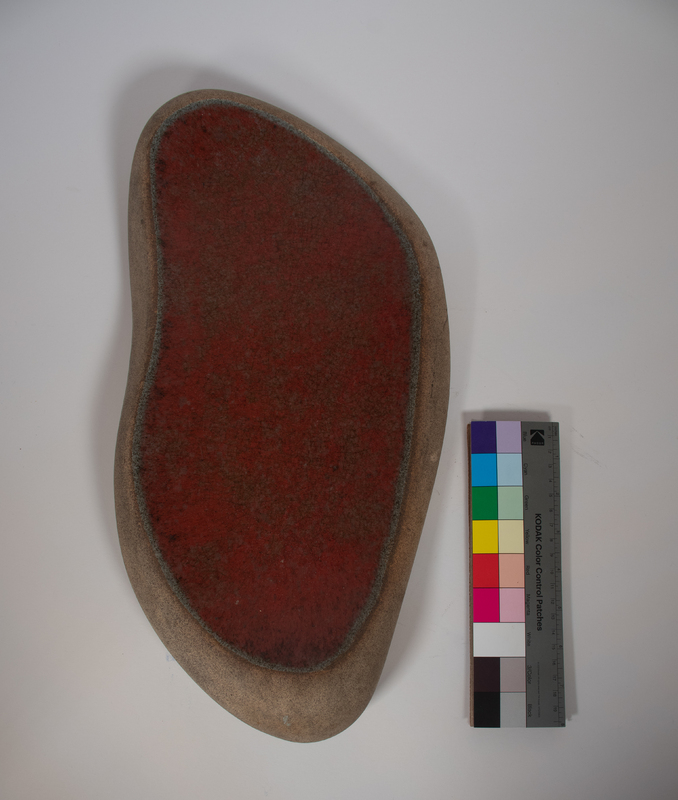
This large, oblong ceramic plate created by Carroll Harris Simms has a red glaze. This piece is among those that Professor Simms chose to feature in the 1976 book he co-authored with Dr. Biggers and John Edward Weems, Black Art in Houston: The Texas Southern Experience.
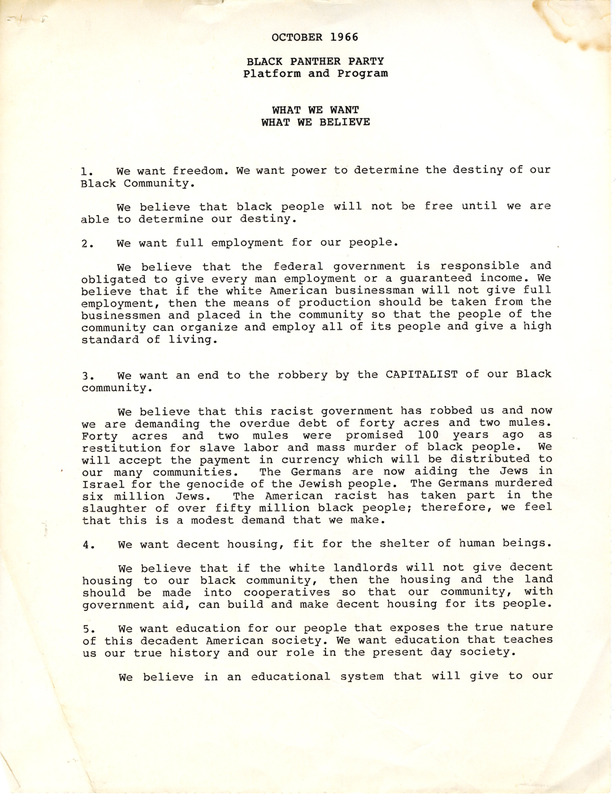
A copy of the Black Panther Party Ten Point Program. The Ten Point Program was created in 1966 by the founders of the Black Panther Party, Huey P. Newton and Bobby Seale. It serves as both the ideological underpinning of the Party as well as a day-to-day guide to living for members.
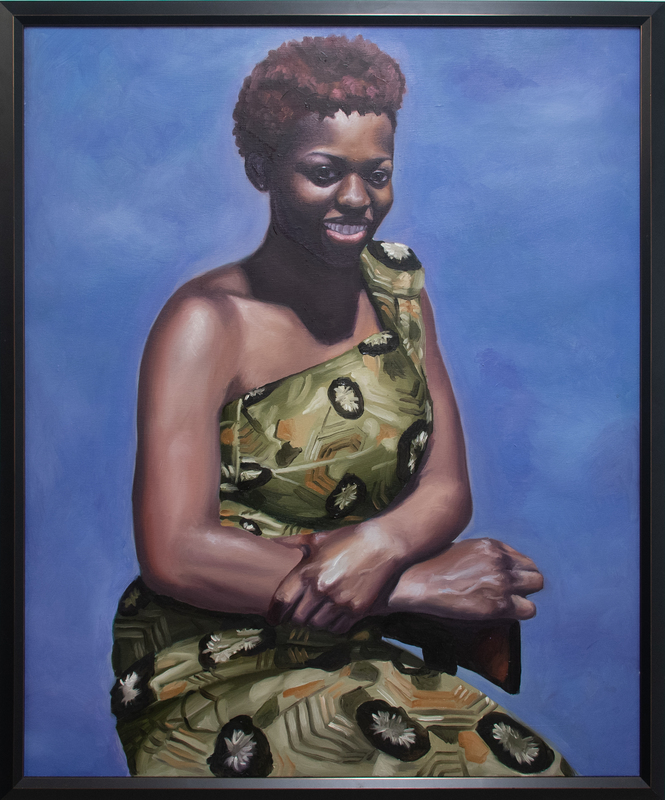
Onyeiwu's painting depicts a smiling woman wearing a green dress with geometric designs, against a blue background. The artist is a Texas Southern alumnus and current art professor, teaching painting, drawing, and murals courses. Much of his work highlights the beauty of Black women.
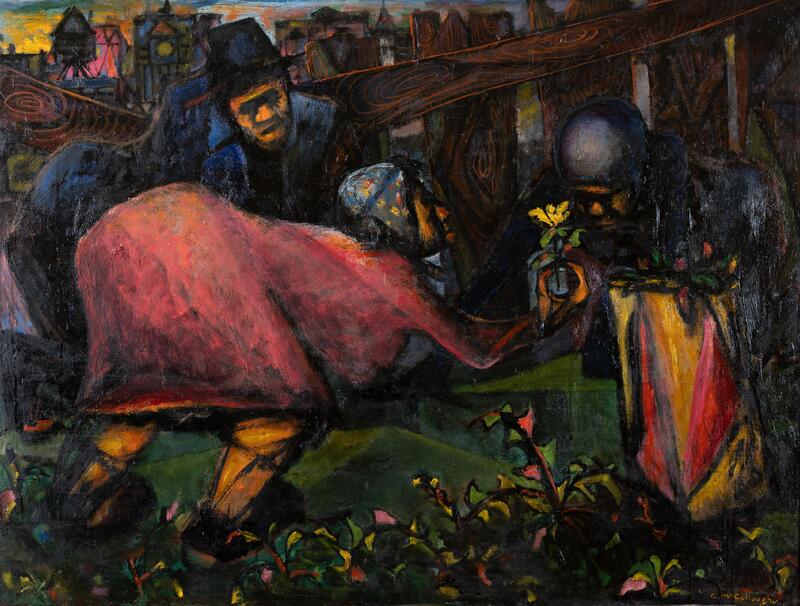
Geraldine McCullough was a renowned painter and sculptor from Kingston, AR. Of Hope depicts three figures picking flowers along a picket fence. In the foreground are two women and a man; one of the women is bent over in a red dress and holds a yellow flower. In the background is an urban skyline.
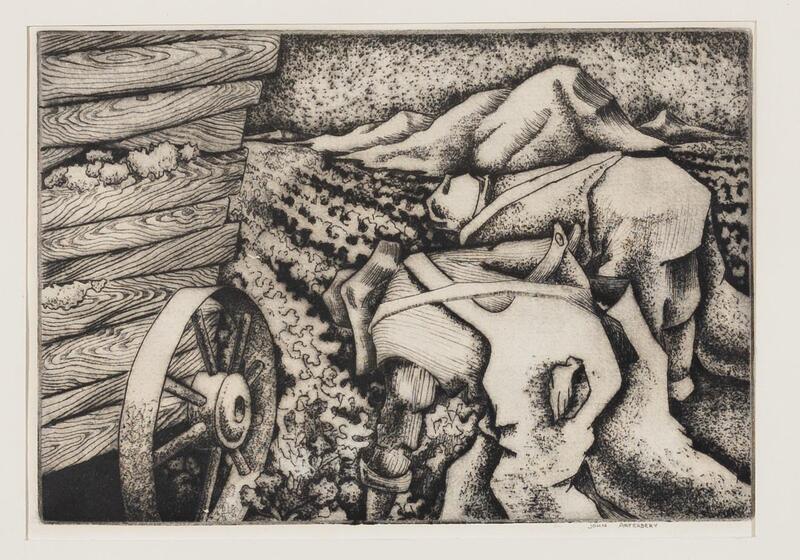
John Arterberry was an artist who worked in the art department at Langston University from Tallahassee, Florida. Of the Soil is a print depicting two farmers working the land. The two workers, dressed in overalls and straw hats, are bent over, picking crops to place in their wagons.
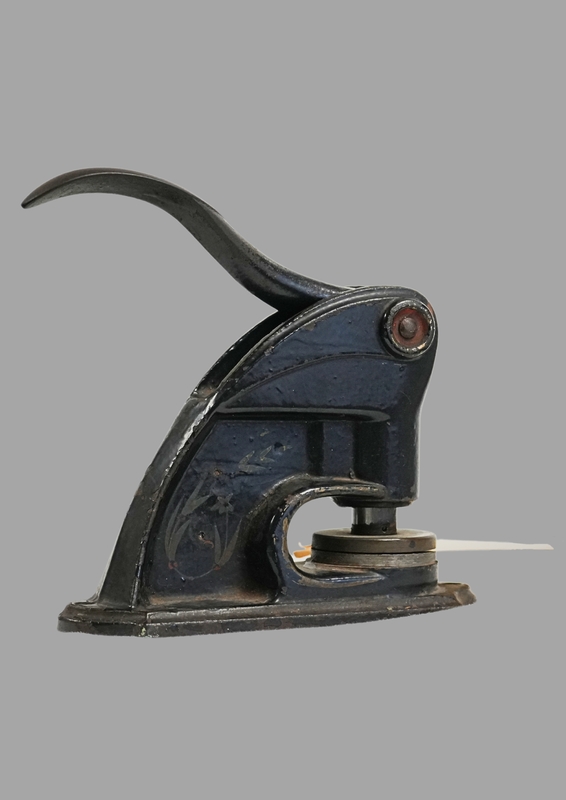
Florida A&M School for Negroes embossing stamp is a significant artifact from the institution's early history, representing the legacy of African American education in Florida. This brass stamp, used for official documentation, embodies the resilience and determination of the community in pursuit of educational opportunities.
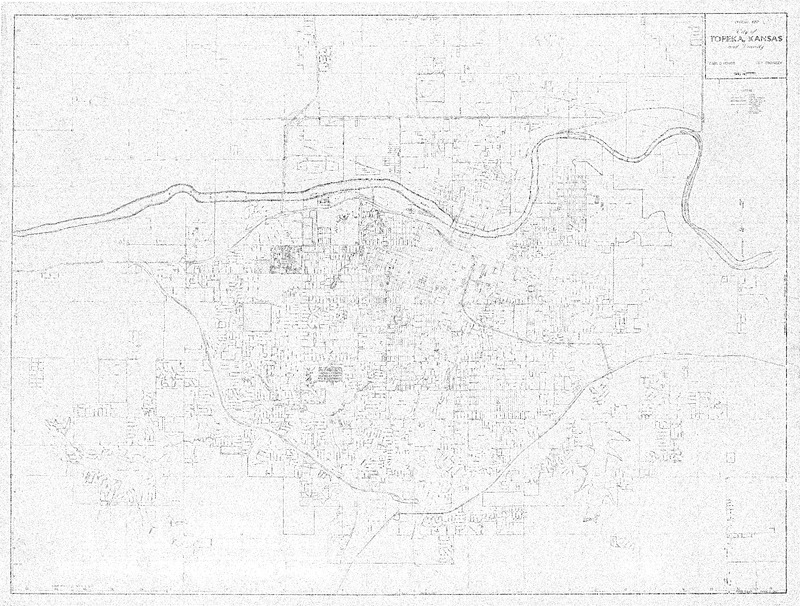
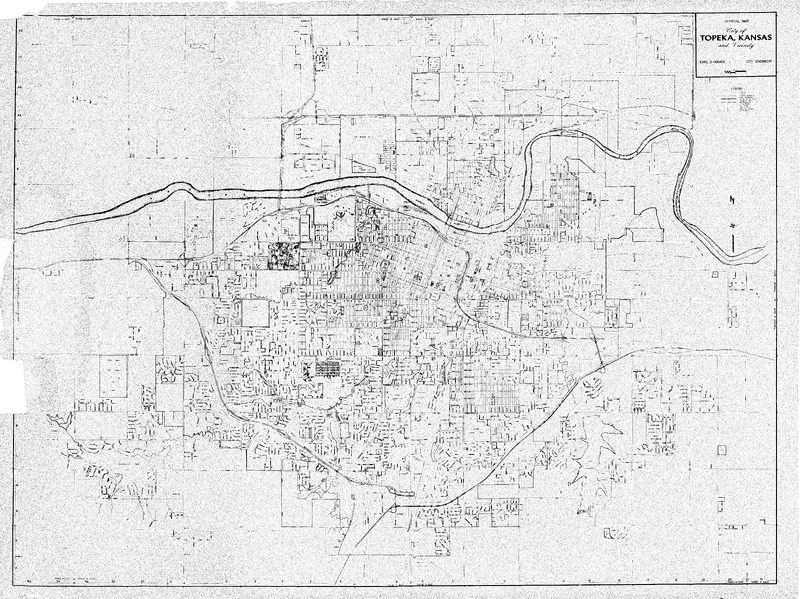
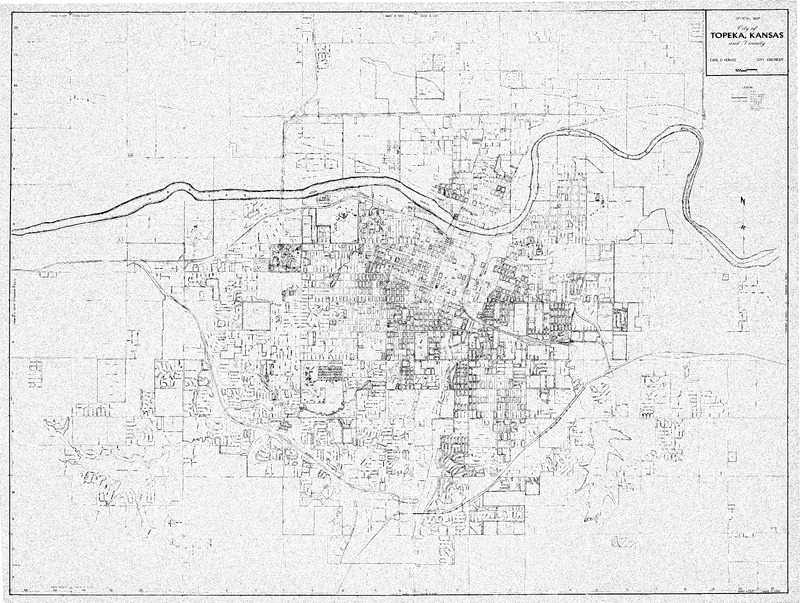
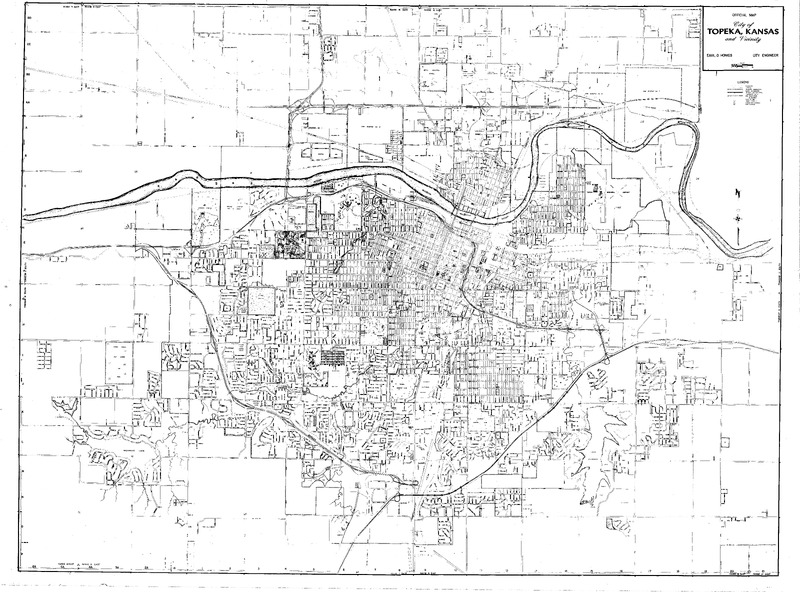
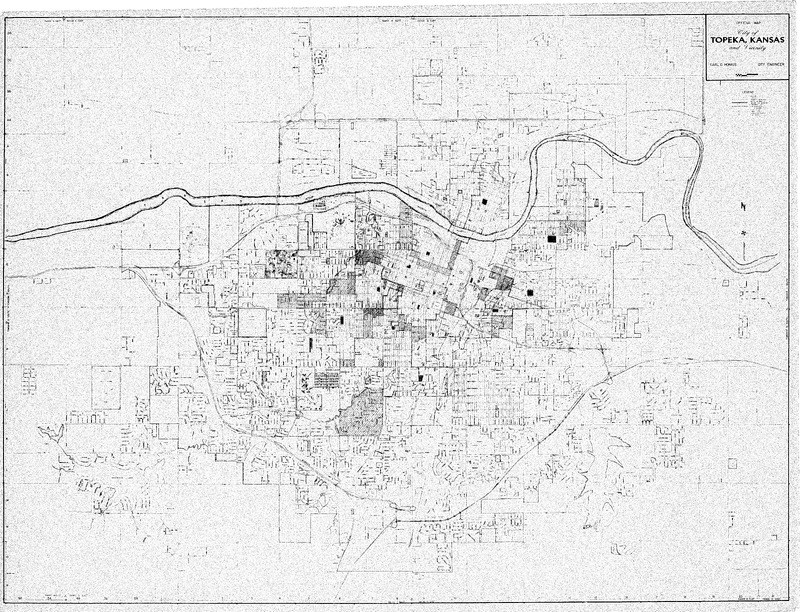
Case Data and Exhibits for Brown III, a relitigation of Brown v. Topeka Board of Education (1954) that corrected resegregation issues caused by open enrollment school choice in 1992. The legend marks all elementary schools, trade schools, junior high schools, and high schools, as well as block boundaries in Topeka and the surrounding vicinity.
Case Data and Exhibits for Brown III, a relitigation of Brown v. Topeka Board of Education (1954) that corrected resegregation issues caused by open enrollment school choice in 1992. The legend marks all trade schools, junior high schools, and high schools in Topeka and the surrounding vicinity.
Case Data and Exhibits for Brown III, a relitigation of Brown v. Topeka Board of Education (1954) that corrected resegregation issues caused by open enrollment school choice in 1992. The map legend marks trade schools, junior high schools, and high schools as well as railroads, streams, and several boundaries and section lines.
Case Data and Exhibits for Brown III, a relitigation of Brown v. Topeka Board of Education (1954) that corrected resegregation issues caused by open enrollment school choice in 1992. The legend marks all elementary schools, trade schools, junior high schools, and high schools, as well as corporate limits in Topeka and the surrounding vicinity.
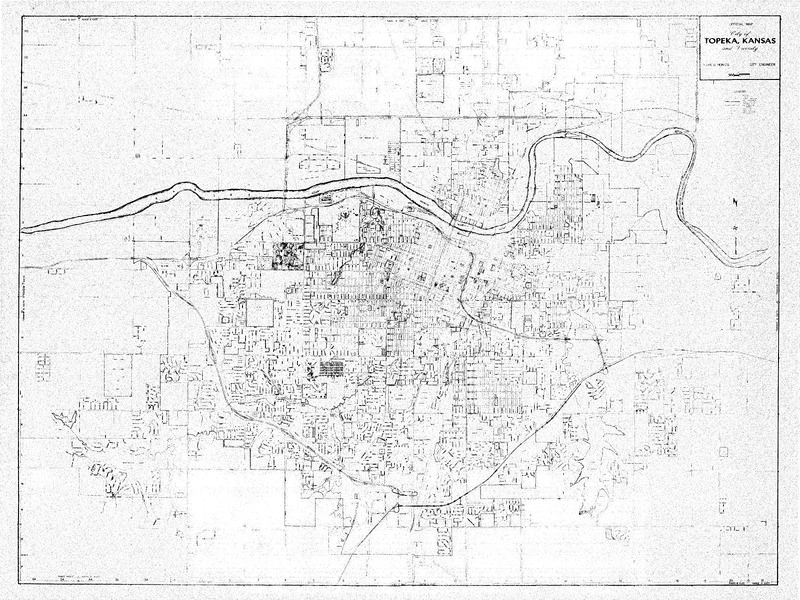
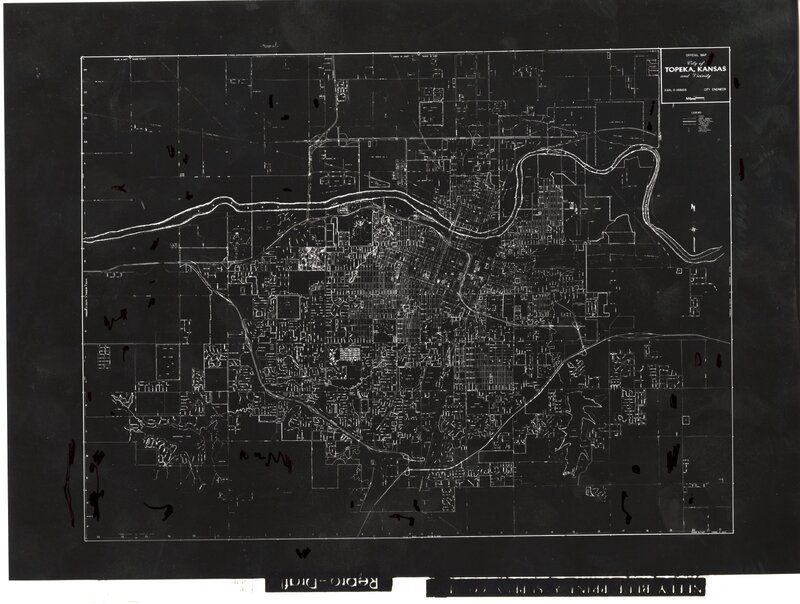
Case Data and Exhibits for Brown III, a relitigation of Brown v. Topeka Board of Education (1954) that corrected resegregation issues caused by open enrollment school choice in 1992. Overhead projector transparency of a map City of the city of Topeka, Kansas, and Vicinity.
Case Data and Exhibits for Brown III, a relitigation of Brown v. Topeka Board of Education (1954) that corrected resegregation issues caused by open enrollment school choice in 1992. The legend marks all boundaries and schools in Topeka and surrounding vicinity.
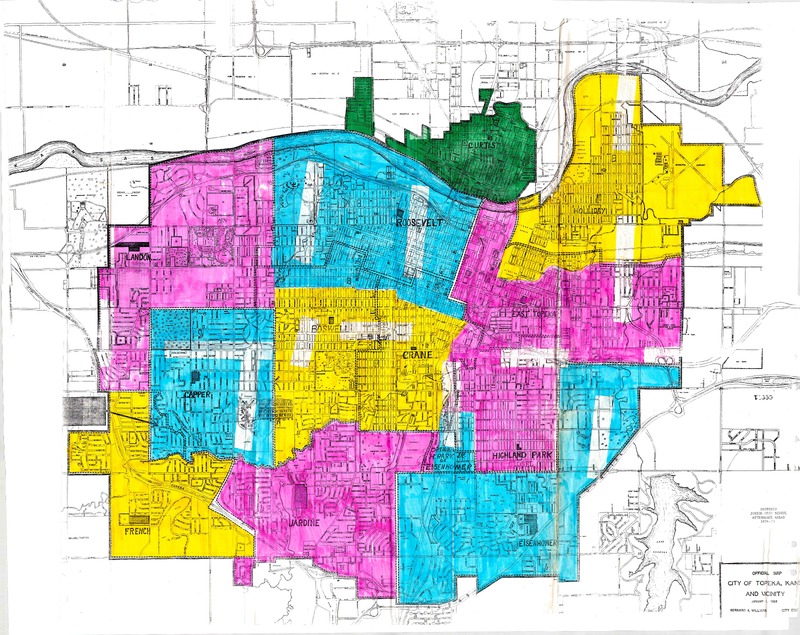
Case Data and Exhibits for Brown III, a relitigation of Brown v. Topeka Board of Education (1954) that corrected resegregation issues caused by open enrollment school choice in 1992. The map shows Proposed Junior High School Attendance Areas for Topeka Public Schools for 1974-1975. William Lamson colored each area with pens and marked the schools.
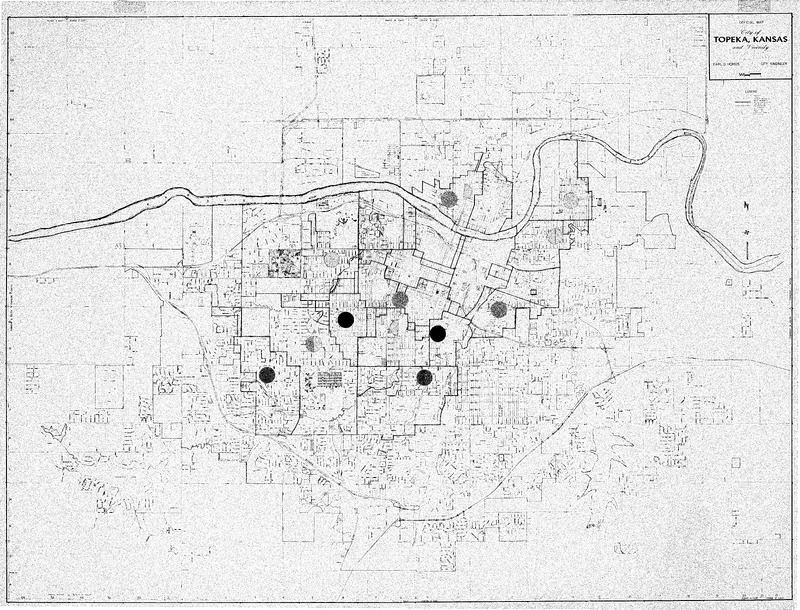
Case Data and Exhibits for Brown III, a relitigation of Brown v. Topeka Board of Education (1954) that corrected resegregation issues caused by open enrollment school choice in 1992. William Lamson used circle-shaped stickers to mark the locations of several schools on the map.
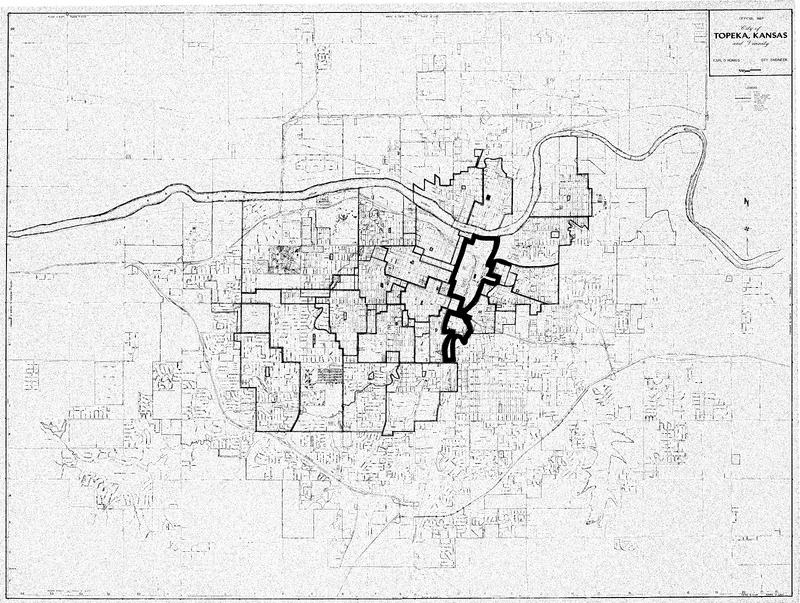
Case Data and Exhibits for Brown III, a relitigation of Brown v. Topeka Board of Education (1954) that corrected resegregation issues caused by open enrollment school choice in 1992. The map includes hand drawn neighborhood and school district boundary markers by William Lamson.
Case Data and Exhibits for Brown III, a relitigation of Brown v. Topeka Board of Education (1954) that corrected resegregation issues caused by open enrollment school choice in 1992. The map includes hand drawn markings by William Lamson that mark different schools, homes, and sections of neighborhoods.
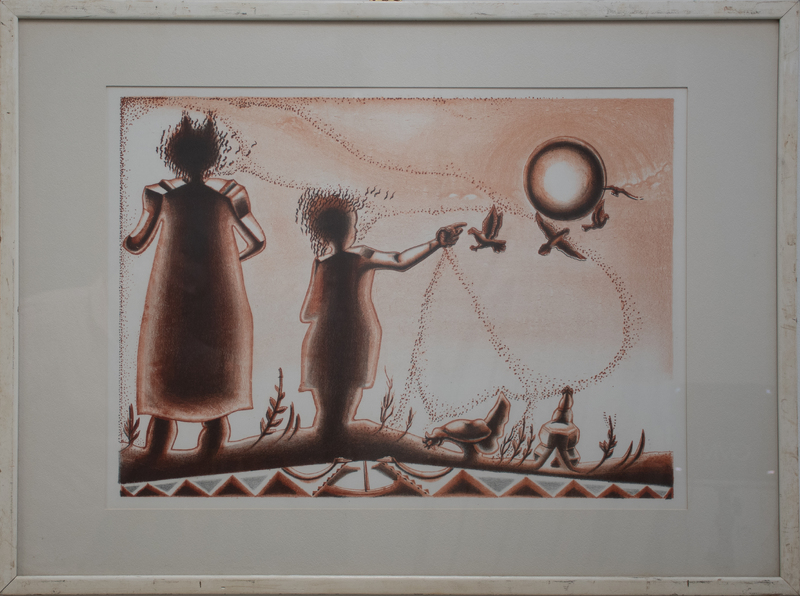
This print by Bennie Settles shows a mother and child standing in a field and feeding chickens and other birds. Settles' illustration of seeds is reminiscent of the way John Biggers paints seeds in his mural "Web of Life." Settles' work can be recognized by the power imbued in his careful portrayal of Black hair.
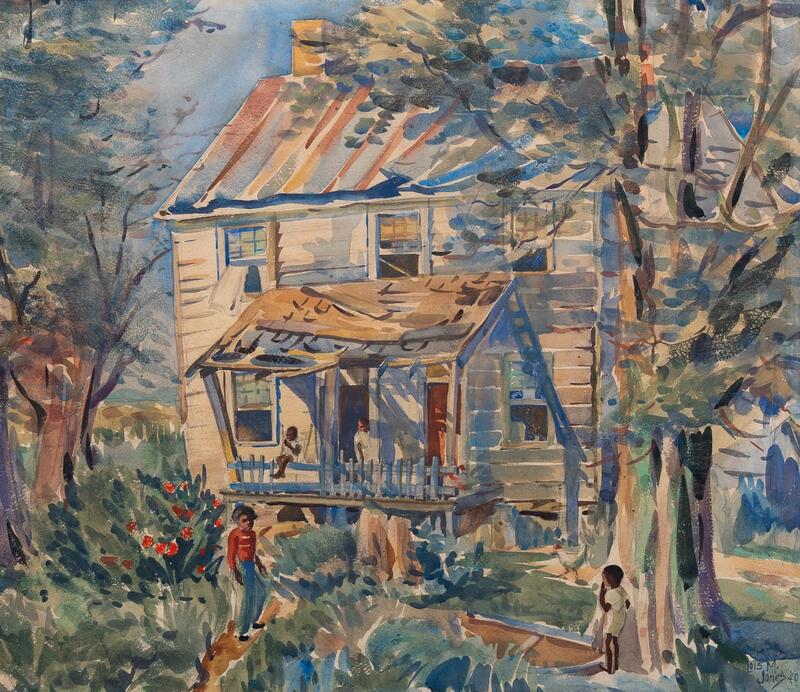
Lois Mailou Jones was an artist and art educator known for her costumes, textile designs, watercolors, paintings, and collages. Old House Near Frederick, Virginia depicts a slightly dilapidated house near Frederick, VA, a county about 50 miles from Washington, D.C., in watercolor. There are two children on the porch and two children and a chicken.
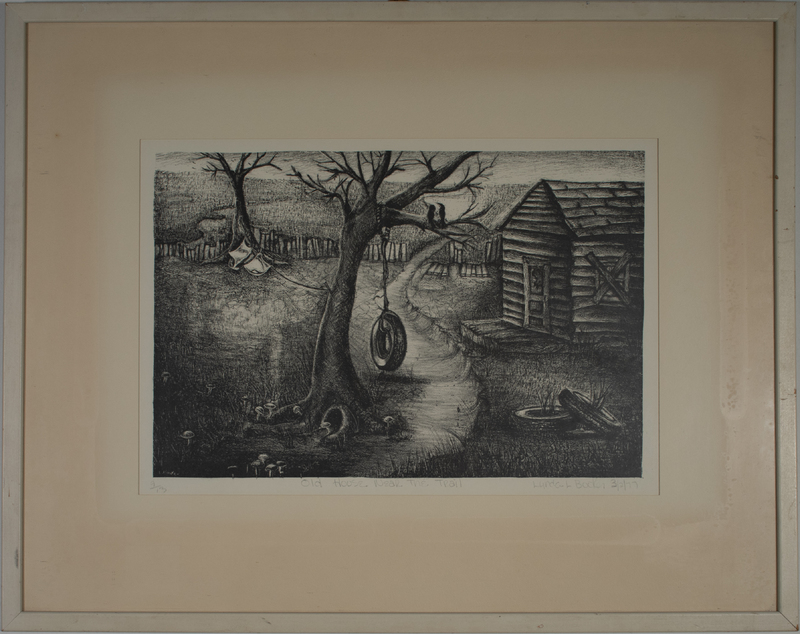
The print by Booker shows a rural landscape featuring a small, neglected house. A tire swing and clothesline hang from the two trees. The area appears not to be frequented by people, as suggested by the boarded window, overgrown weeds, and mushrooms.
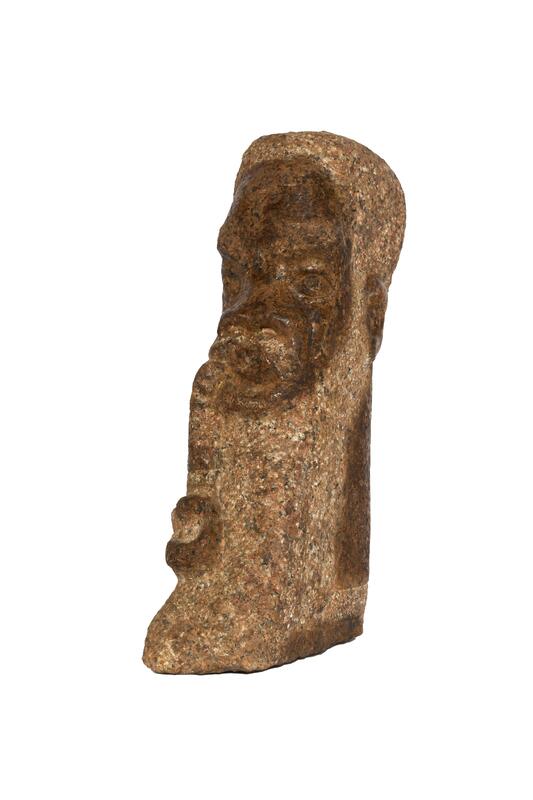
Dr. Eddie Jordan, Sr. was a Southern artist from Wichita Falls, TX. Old Slave is a granite sculpture depicting an elderly Black man. The subject has a full, long beard and is smoking a pipe.
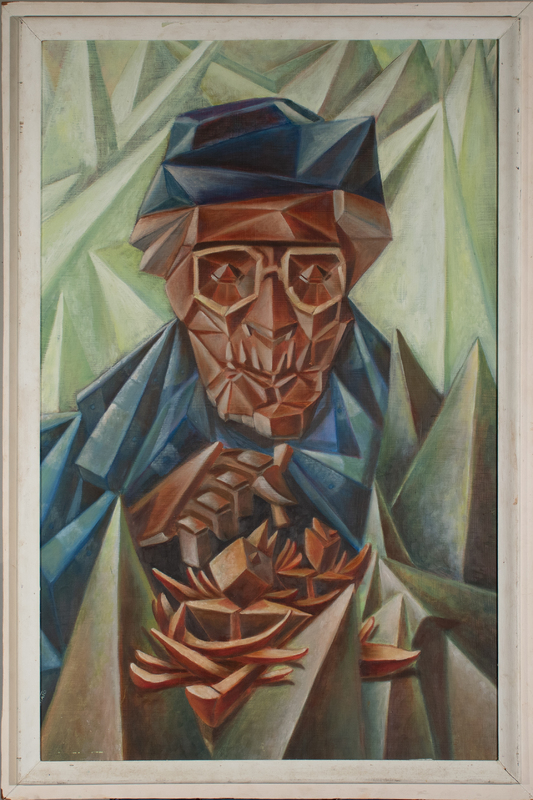
Donato’s painting portrays an elderly woman feeding hungry birds. This particular geometric style of painting is characteristic of students of Dr. Biggers who attended Texas Southern in the mid-to-late 1970s. The mother-child relationship is a common motif in the artwork of TSU students, usually a human mother and child or an animal mother and child. This painting seems to be unique in its depiction of a cross-species maternal relationship.
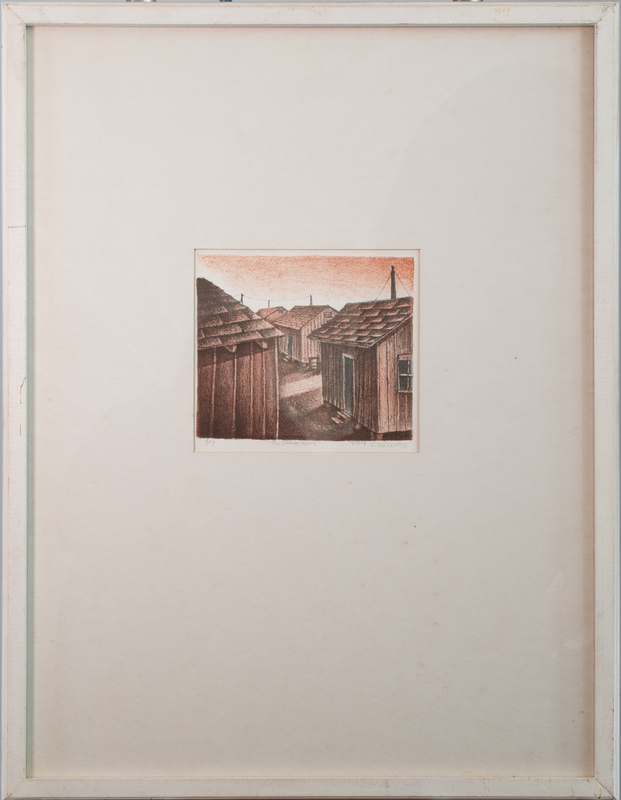
Sifuentes’ print shows a series of shotgun houses. The composition portrays Oleander Homes, a public housing complex in Galveston, Texas, the artist's hometown. The complex was destroyed by Hurricane Ike in 2008 and was rebuilt and reopened in September 2024. Shotgun houses and urban environments are common settings for Texas Southern student artworks.
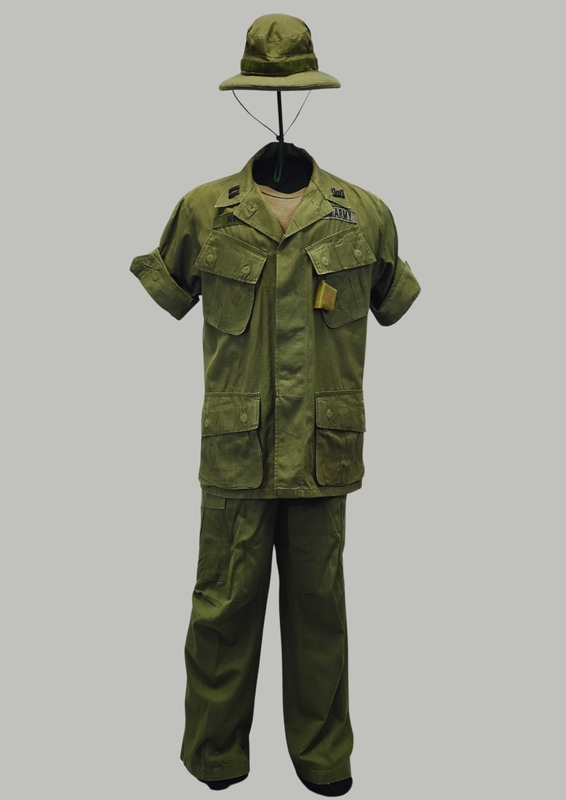
Clothing worn by FAMU alumnus, Captain James L. Moran when deployed to Honduras, Central America. The mission was called in Spanish, "Ahaus Tara Dos" (Big Pine Two). Captain Moran was tasked with the construction of housing for military personnel and a temporary C 130 Aircraft Runway to deliver supplies and transporting of military personnel.
Parson’s senior notebook includes his written philosophy of art, photographs of the artist’s works and his process, and a copy of his senior exhibition brochure. As a part of the Texas Southern art curriculum under Dr. John T. Biggers and Professor Carroll Harris Simms, students would create these notebooks to explain their artistry and showcase the works they created as students.
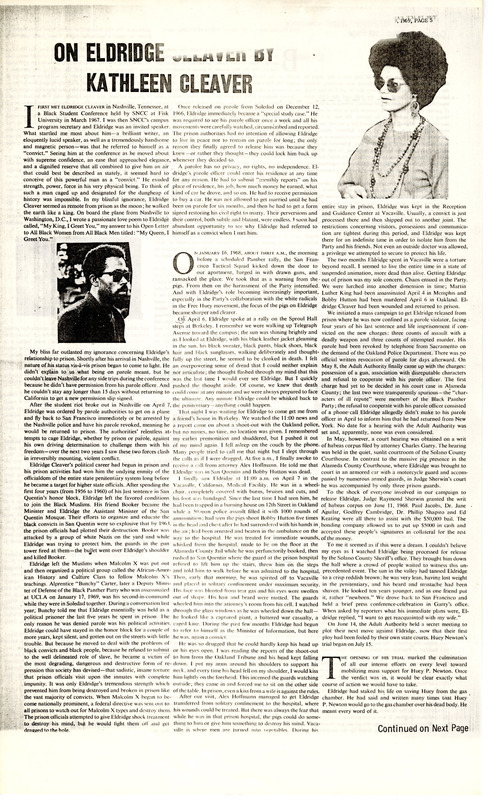
A newspaper article from The Black Panther by Kathleen Cleaver about her relationship with her then-husband Eldridge Cleaver and the legal issues he faced after an April 6, 1968, shootout with the police in Oakland, California. It is noted at the end of the article that it was reprinted from Ramparts Magazine.
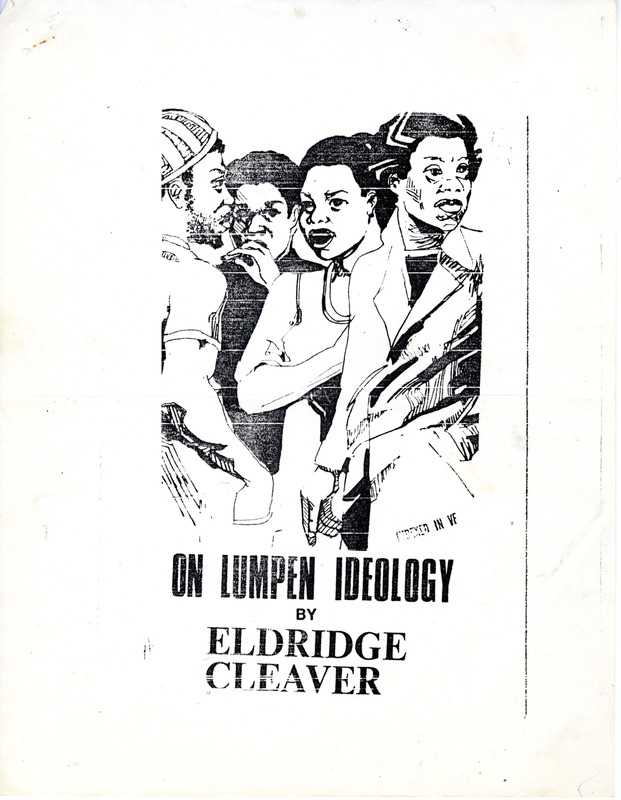
A journal article originally published in The Black Scholar in 1972. In the article, former Black Panther Eldridge Cleaver writes about Black liberation and the lumpenproletariat. Marx and Engels identified the lumpen as the underclass devoid of class consciousness. Cleaver, however, argues that the class can be organized and used in the movement.
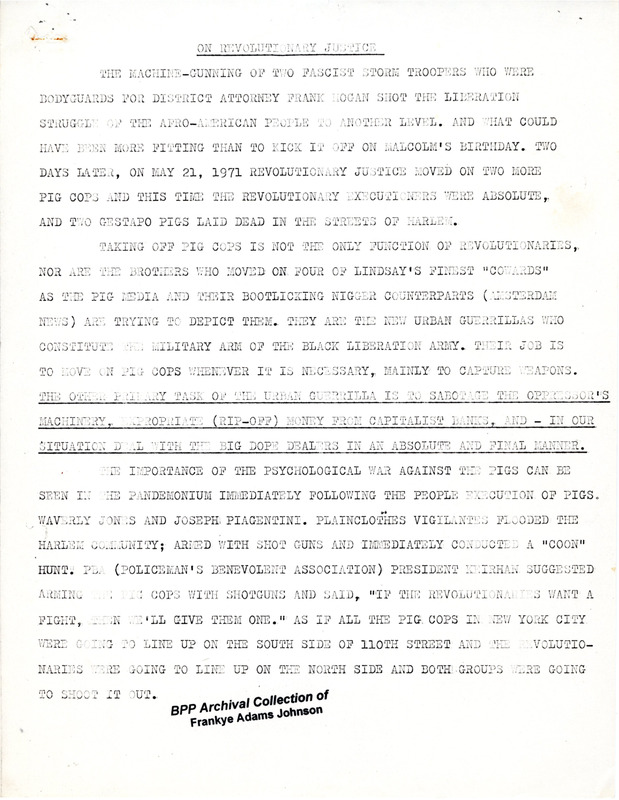
A short essay about the revolutionary killing of cops. The author gives two recent examples of revolutionaries killing cops, saying the killers are urban guerillas who constitute the military arm of the Black Liberation Army (BLA). The tagline of the essay is “All Power to the New Urban Guerilla, War to the End.”
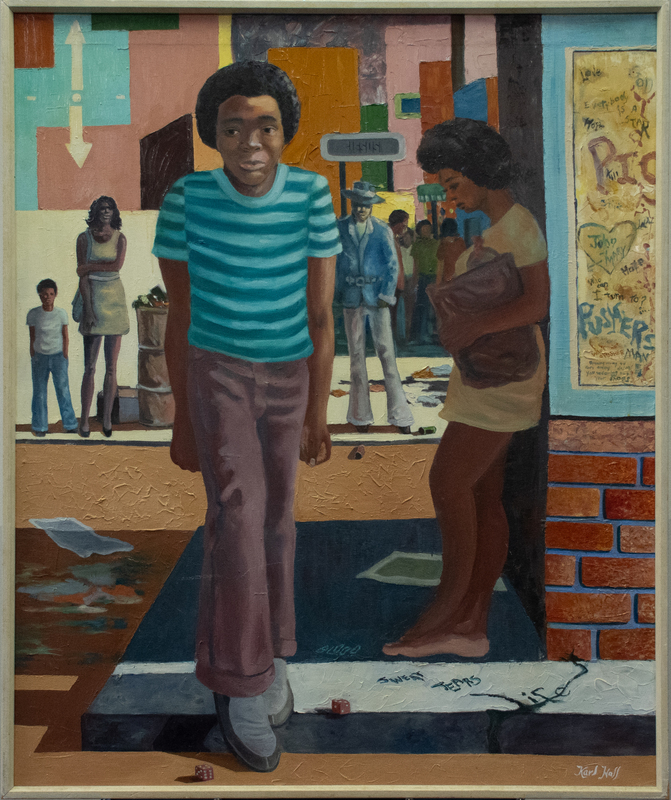
Hall's colorful painting highlights the view of a busy street corner. The main figure walks through the scene with tense shoulders and a balled fist, with a crowd of people lining the background. Graffiti, dice, and litter are seen on the street, sidewalk, and walls. This may be a depiction of Hall’s experiences growing up in Sunnyside, a historically Black neighborhood in southeast Houston.
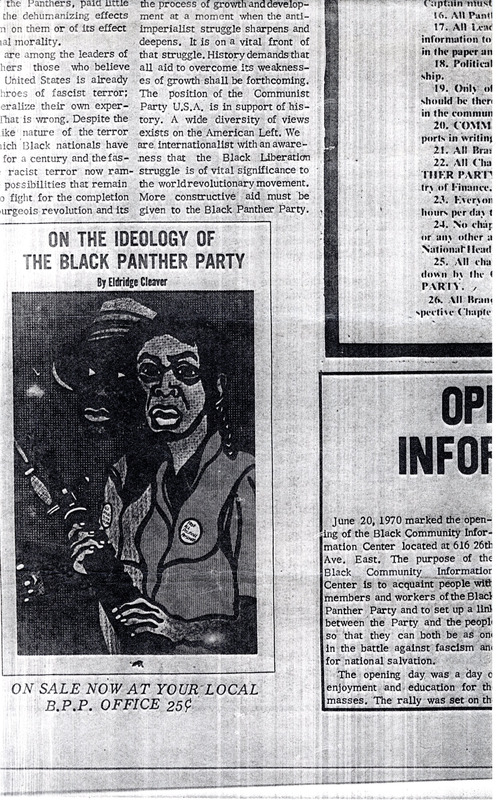
The artwork and advertisement in the newspaper The Black Panther for a series of articles titled “On the Ideology of the Black Panther Party” by Eldridge Cleaver. At the time, Cleaver was serving as Minister of Information for the Black Panther Party in Oakland, California.