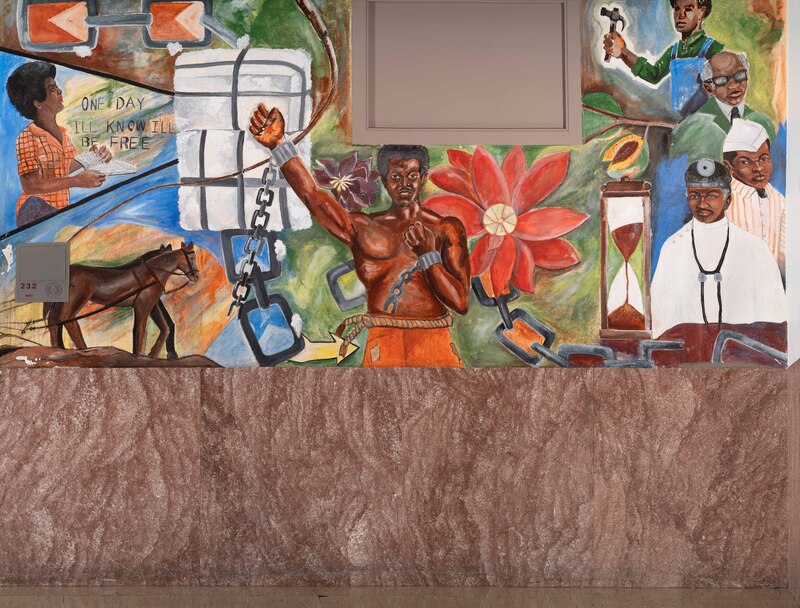
This mural reflects themes of emancipation and progress. The figure of a Black man raises his fist, while broken chains dangle from his waist. The bales of cotton and chains allude to slavery. Black men in various professions represent changes brought by emancipation.
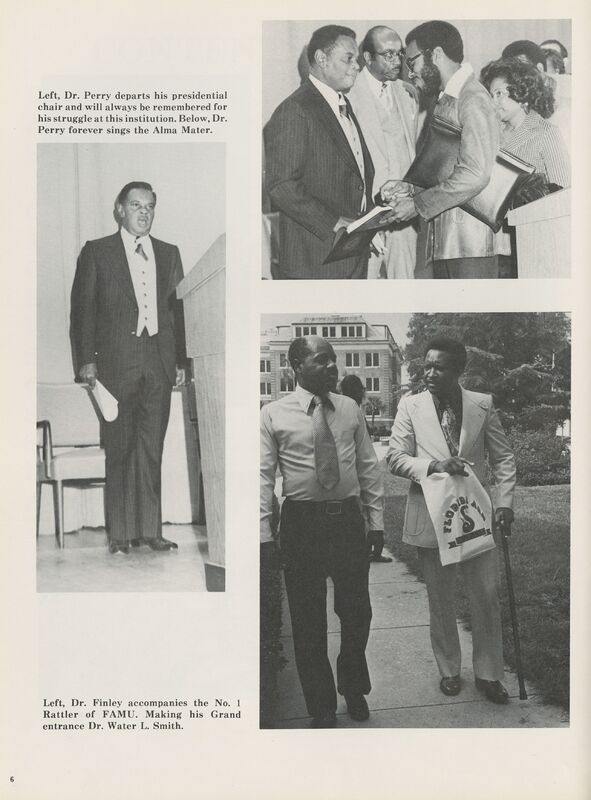
These images were featured in the 1978 Rattler Yearbook. It shows the transition of Florida A&M president Dr. Benjamin L. Perry to new president Dr. Walter L. Smith. Perry is seen singing the FAMU Alma Mater while Smith strolls around campus with faculty member Dr. Finley.
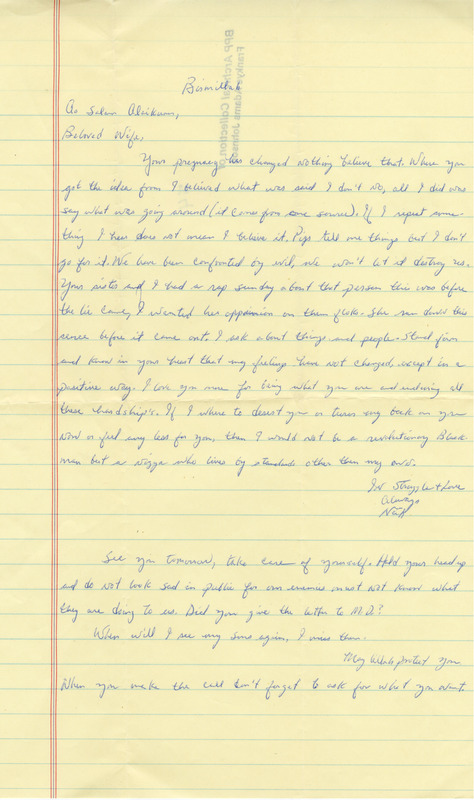
Nuh Abdul Qaiyum, who is imprisoned, is writing to reassure Frankye Adams-Johnson (Malika) of his love for her regardless of her pregnancy. He goes on to explain the things people tell him and the evil that comes for them. He tells her that they will remain strong in faith and in public.
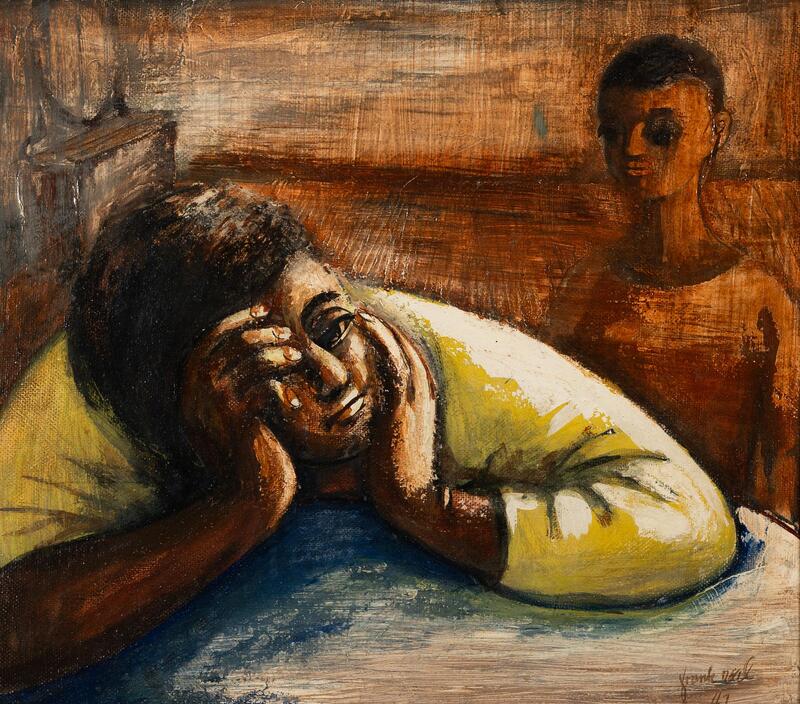
Frank W. Neal was a multidisciplinary artist born in Texas but raised in New York City. Oppression depicts a child watching a weary woman sitting at a table. The woman is at the table, resting her head in her hands in a yellow shirt. The child and the house's interior, including a vanity, is sepia-toned.
A List of interviews conducted as part of the "Good Old Days" Oral History Project. Each entry in the bibliography includes the name of the interviewee as well as biographical information, interview date, interviewer name, length of interview, and catalog number.
Materials from an oral history workshop held at Jackson State University in conjunction with the Clinton Project Oral History Collection. Includes staff handbook, reading assignments, and schedules.
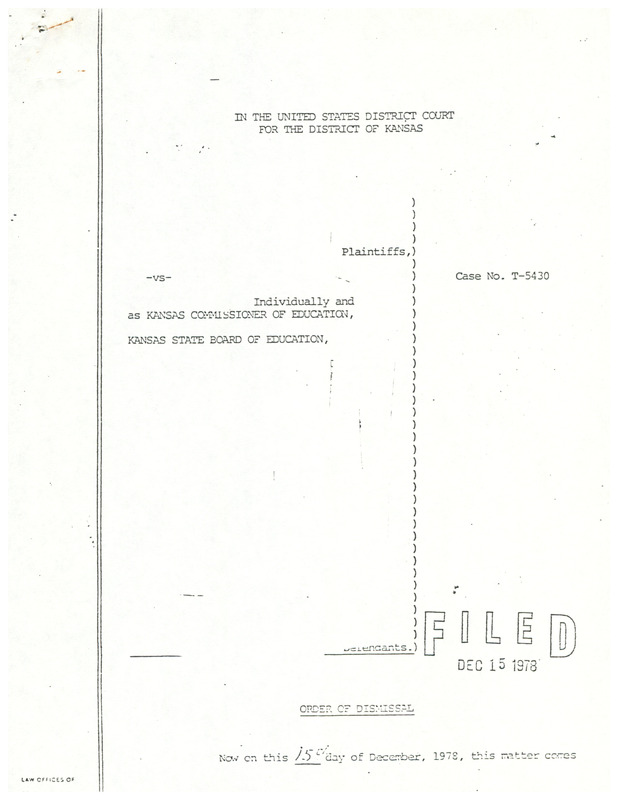
Case Data and Exhibits for Brown III, a relitigation of Brown v. Topeka Board of Education (1954) that corrected resegregation issues caused by open enrollment school choice in 1992. A court order dismissing a plaintiff (name is redacted because they are a minor) and affirming a $19,500 plus costs settlement for the plaintiff.
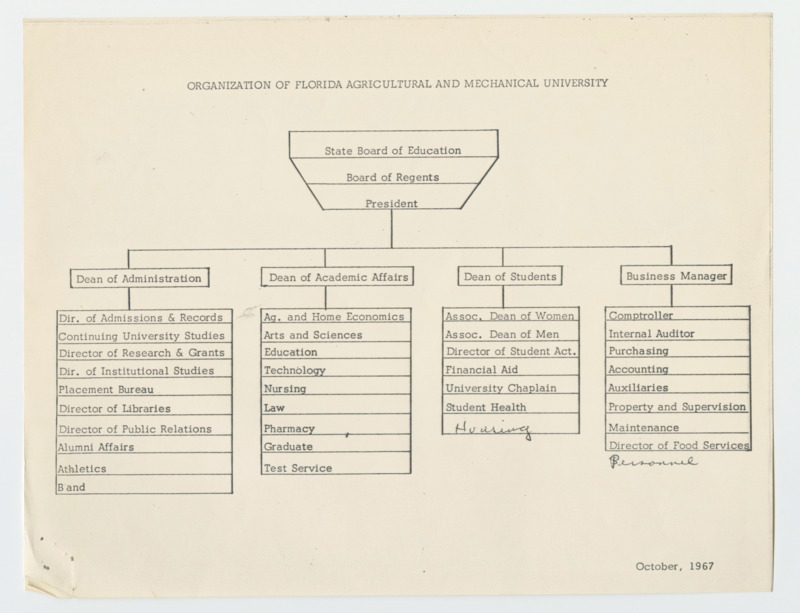
This collection holds a graphic of the FAMU institutional leadership hierarchy and an attached letter between President George W. Gore, Jr. and Dr. B. L. Perry, Jr., dated November 29, 1967. The graphic breaks down the organization of leadership and lists each role’s title and the offices they oversee/report to.
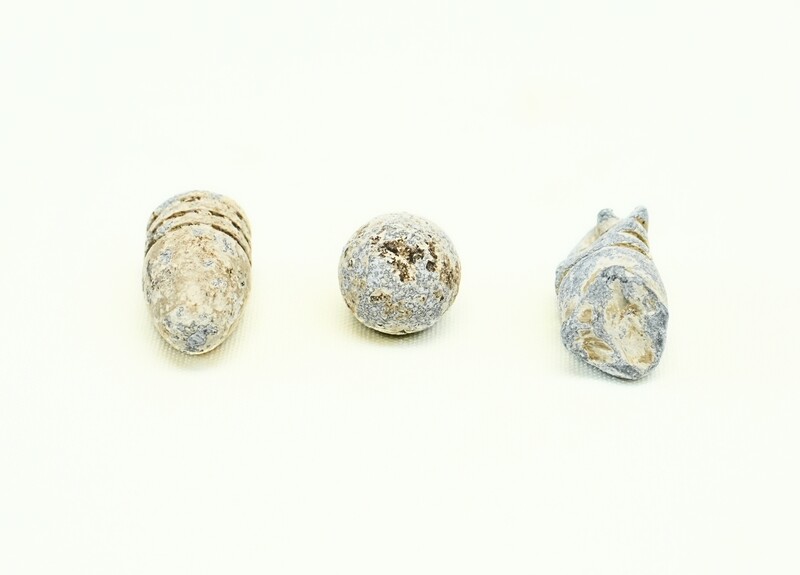
These original Civil War bullets serve as tangible reminders of the intense conflict that defined a nation divided. Each bullet reflects the technology of the era and the harsh realities faced by soldiers on the battlefield. Collected from various historic sites, they illustrate the significant role of firearms in shaping military strategies.
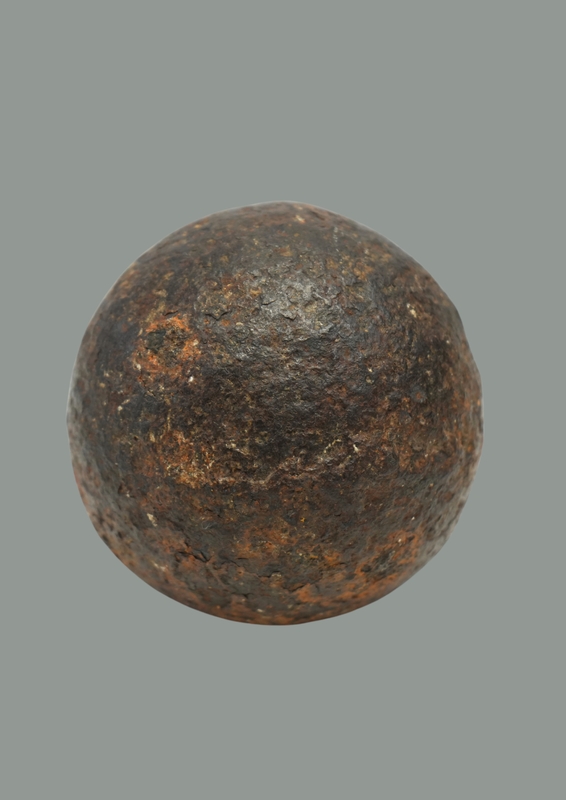
These original Civil War cannonballs exemplify the artillery used during one of America’s most tumultuous periods. Crafted from iron, they were designed for devastating impact in battles, symbolizing the intensity and destruction of war.
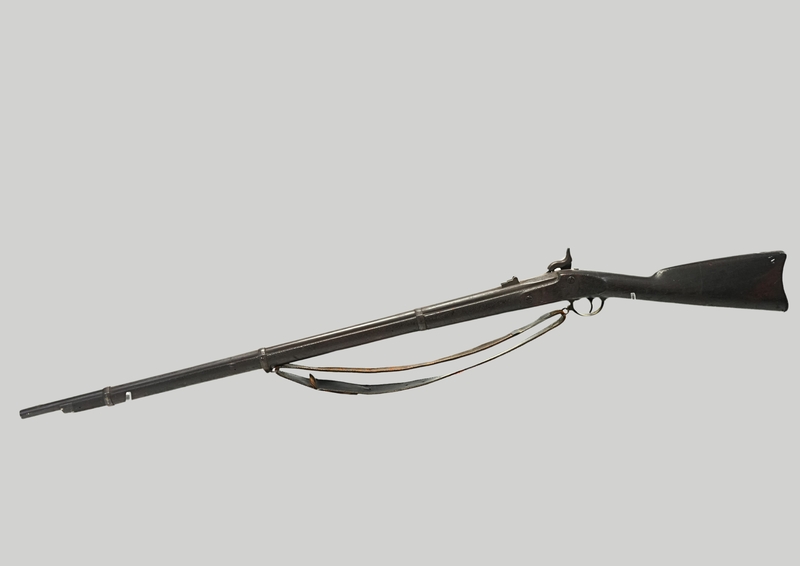
This original Civil War musket, complete with a strap, represents the military history and conflicts that shaped America during the 19th century. Crafted for accuracy and durability, the musket served soldiers on both sides of the war, symbolizing the struggle for freedom and unity.
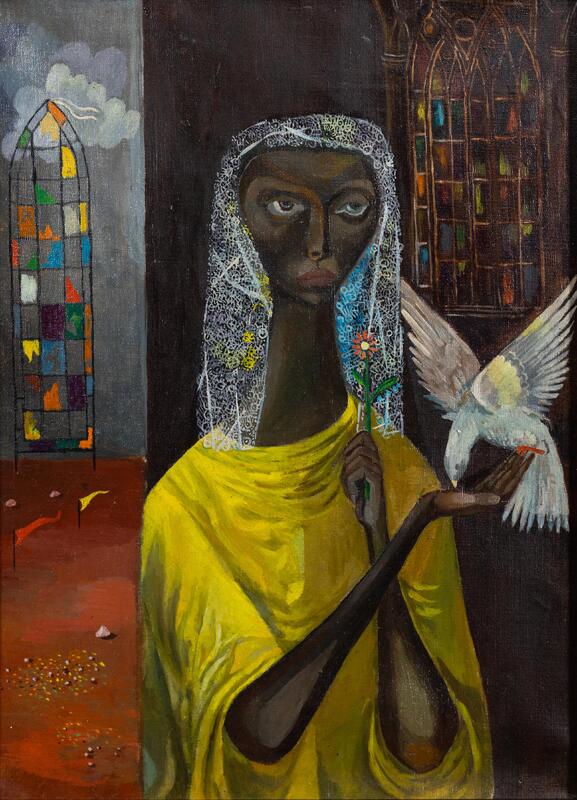
Frederick D. Jones, Jr. is a mid-twentieth-century African-American artist from South Carolina. Our Lady of Peace is a surrealist painting utilizing nature and religious symbols. The painting depicts a veiled Black woman with an elongated neck holding a flower and feeding a bird in a church with broken stained-glass windows
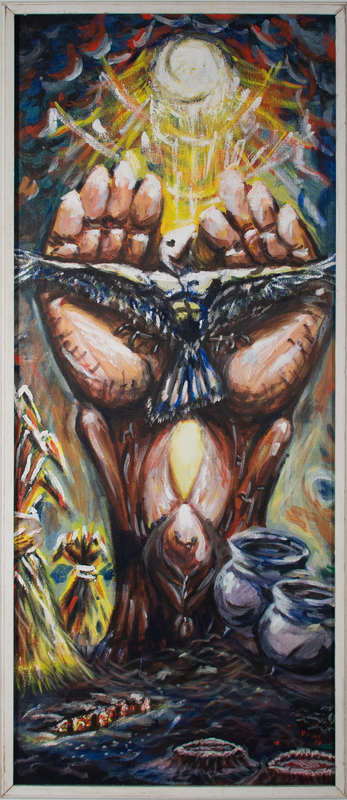
This detailed painting by Barry Morris includes a pair of hands rising up and clasping a bird. There are also bundles of wheat and a set of vessels. This work is very similar to the leftmost section of Morris's Hannah Hall mural and may have served as a partial study for the mural. Oversized, detailed hands and birds are frequent motifs in the artist's work.
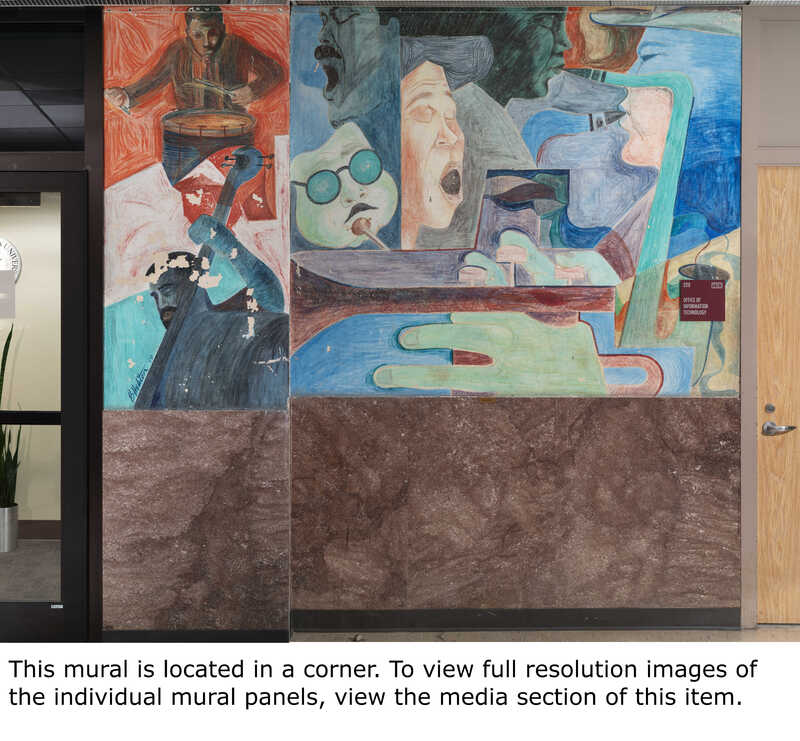
The mural captures the emotion and creative environment of a mid-20th century jazz club. Heliton chose a corner spot for his mural, which lends a sense of depth to the piece. The overlapping of patterns, portraits, and instruments suggests the intimacy of a small club interior.
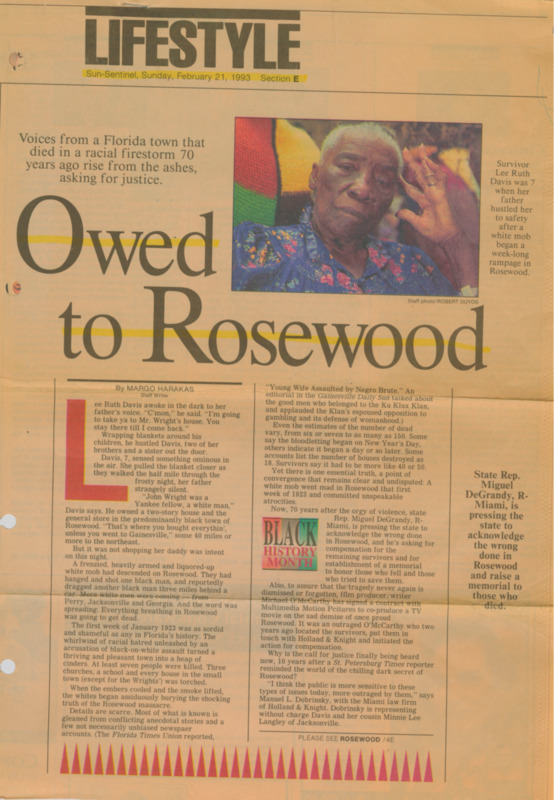
This February 1993 Lifestyle Sun Sentinel article was written by Margo Harakas. Harakas interviewed a survivor of the 1923 Rosewood Massacre, Lee Ruth Davis. Davis was 7 when her father woke her in the dead of night to take her to John Wright’s home, a white man who harbored the Black residents of Rosewood while the mob raged on outdoors.
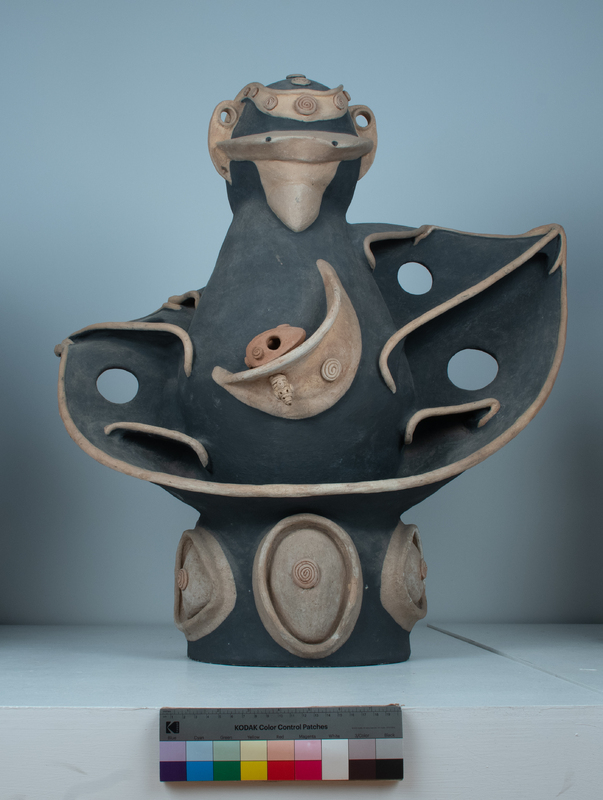
“Owl,” by Oliver Parson, features spiraled embellishments on the head and symmetrical holes on the wings, with a gray slip painted on the body. In the middle of the figure’s body, a crescent shape cradles a small egg, perhaps referencing owls’ nocturnal natures. Parson experimented with different clay colors in his terracotta sculptures.
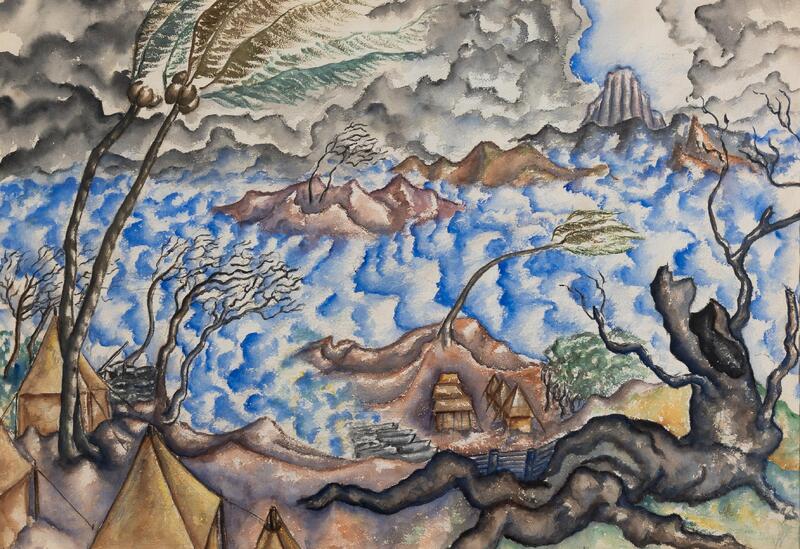
Born in Georgia, Robert Willis was an artist who studied art at Morehouse College. Pacific Movements is a watercolor painting of a landscape during a storm. The piece shows pitched tents surrounded by trees blowing in the wind under a dark clouded sky and rolling ocean waves.
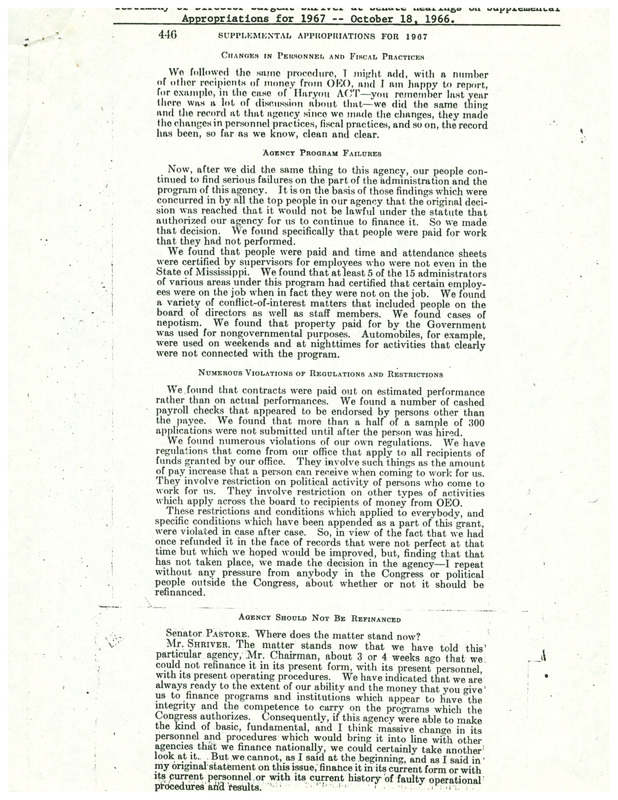
In this report on supplemental appropriations by the Office of Economic Opportunity (OEO) for Child Development Group of Mississippi (CDGM), the OEO outlines the decision not to fund CDGM because an investigation showed discrepancies in finances and operating procedures. OEO suggests funding can be regained if CDGM makes operational changes.
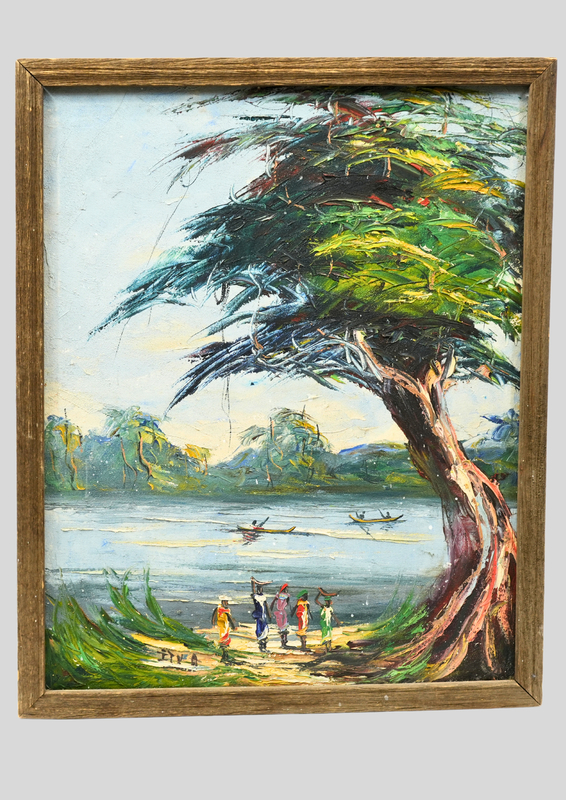
This untitled painting from the FAMU Black Archives/Caribbean Art Collection has limited identification for proper attribution. However, the vibrant blue, green, and orange paint jumps out of the frame, showcasing a glimpse into life in the Caribbean.
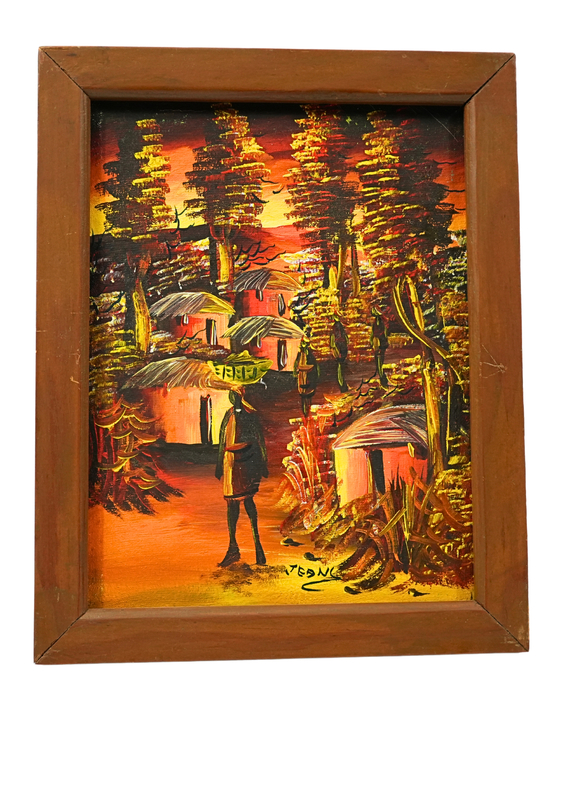
This untitled painting from the FAMU Black Archives/Caribbean Art Collection has limited identification for proper attribution. While it appears to be the same artist from the collection, this piece depicts a village scene with bright orange lighting basking from a setting, or rising, sun – a contrast from the blue paintings seen earlier.
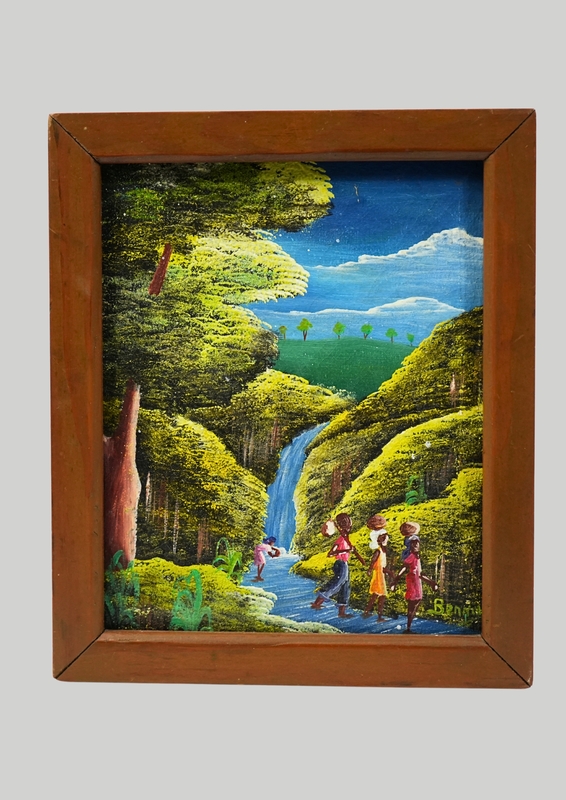
This untitled painting from the FAMU Black Archives/Caribbean Art Collection has limited identification for proper attribution. It features a lush green scene, complete with a cascading blue waterfall and four people strolling in it.
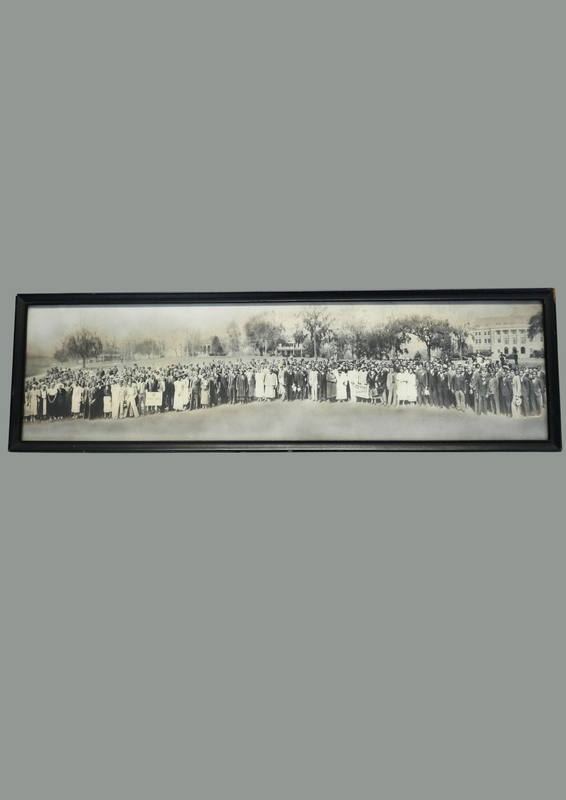
A 1934 panoramic group picture on the campus of Florida A&M University. The picture was taken in the midst of the Great Depression. It captures members of the Fourth State Basketball Tournament, and members of the 42nd Annual Florida State Teachers Association (FSTA), including Dr. Mary McLeod Bethune, founder of Bethune Cookman College.
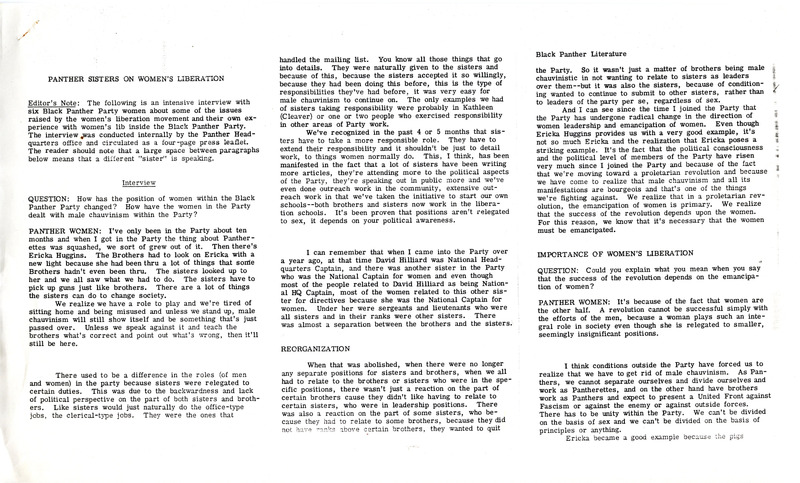
An interview with six unnamed Black Panther Women about the women's liberation movement and their experience with women's liberation within the Black Panther Party itself. The interviews were conducted at the Black Panther Party Headquarters on September 17, 1969 and circulated as a 4 page leaflet.
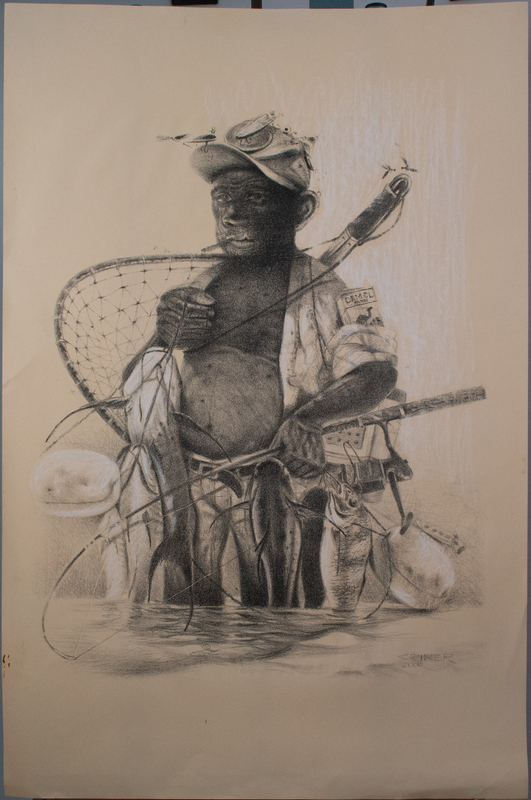
Criner’s print shows a man fishing; he is holding several catfish that he has caught. He is wading in the water with his hands full of fishing gear. Criner learned printmaking firsthand from Dr. John Biggers and was the longtime artist-in-residence at Houston’s Museum of Printing History.
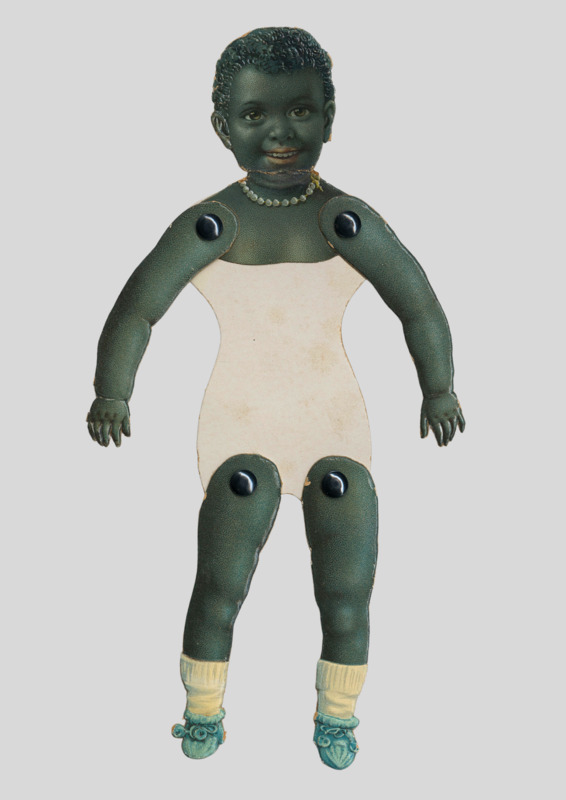
Black paper doll features movable joints, cut from paper and assembled with small fasteners. The doll, reflecting 19th-century craftsmanship. These dolls, often simple in design, were popular children's toys, but also highlight complex themes of race and identity in post-Reconstruction America.
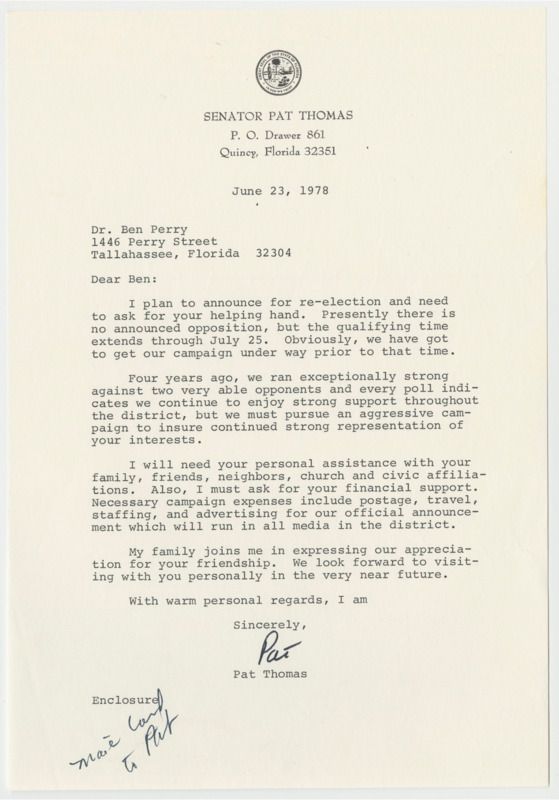
A series of letters from Democratic Senator Pat Thomas asking for his friend, Dr. B. L. Perry Jr.’s, help in his re-election bid, and a $25 donation check from Dr. Perry to Thomas’ campaign made on August 2, 1978. Thomas requested Dr. Perry’s personal connections and financial support and expressed his thanks once successfully re-elected.
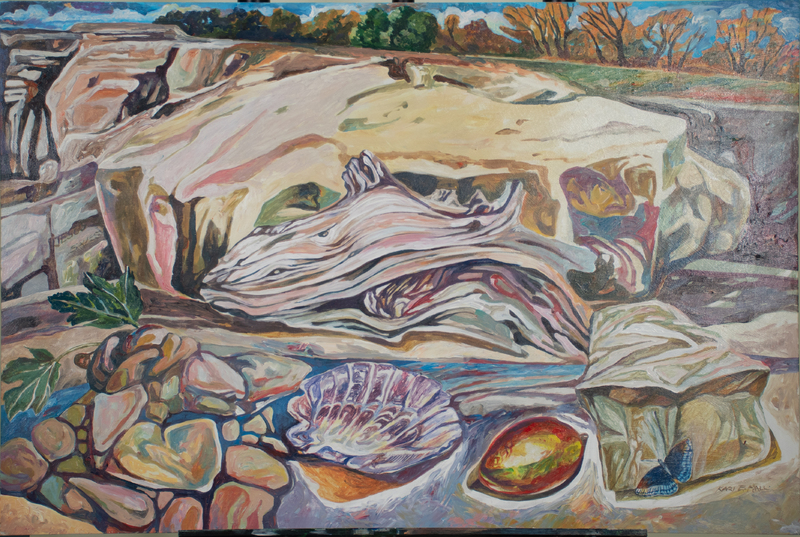
Hall’s painting is a surreal landscape of water flowing through a creek with various items along the path. There is also a faint inscription that reads “Jesus Saves” on a boulder to the far left. A mango, fossil, and butterfly are all pictured in the foreground. The loose and fluid paint strokes are reminiscent of impressionist paintings and characteristic of Hall’s style, particularly his more recent works.
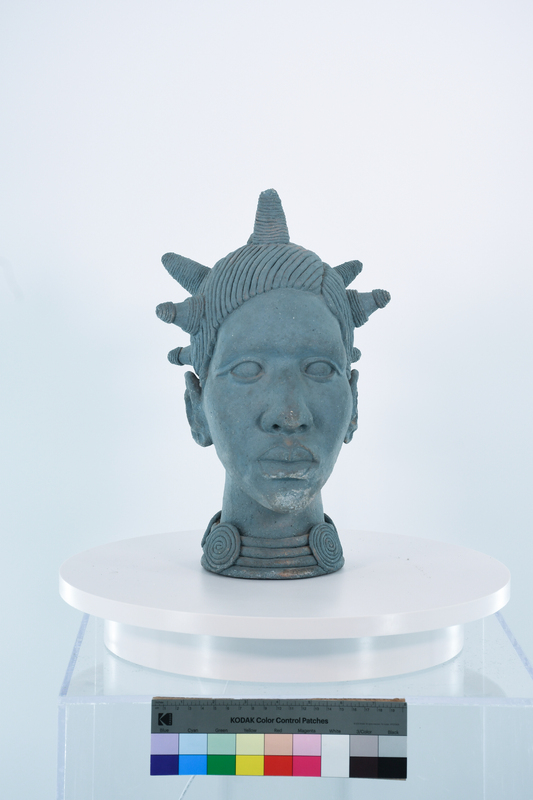
Morris's sculpture depicts a stylized version of the artist's own head and neck. As was required by Professor Simms, the artist adorned her self-portrait with swirls on the neck and rear of the scalp. The bust's blue hue is unique within the Texas Southern terracotta collection.
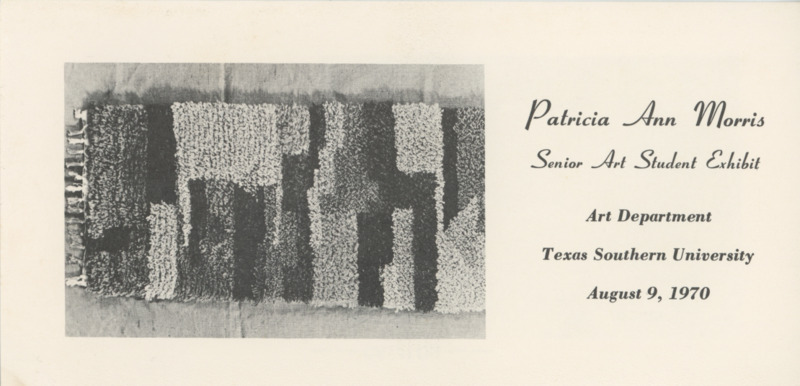
This is a brochure for Morris’ senior art exhibition. The culmination of the Texas Southern art curriculum is a senior exhibition where students showcase artwork created over the course of their undergraduate studies. The brochure features a catalog of the artwork featured in the exhibition, a photo of one of her textiles, and a photo of one of her paintings.
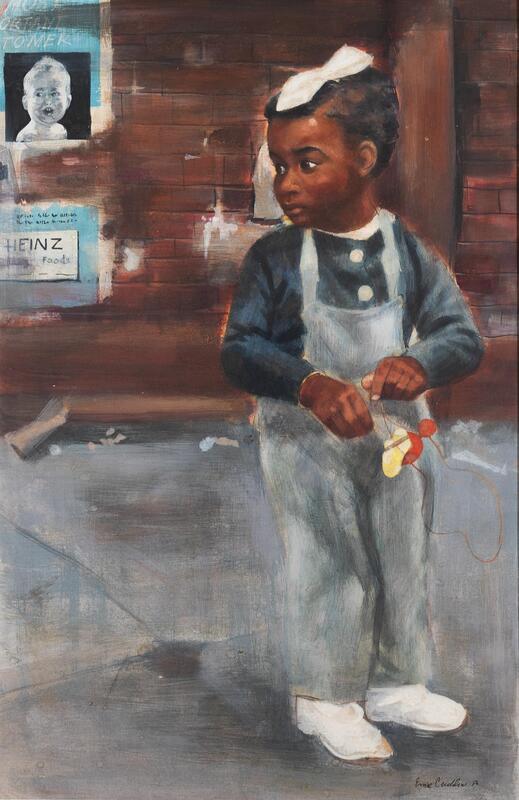
Ernest Chrichlow was a narrative painter and illustrator from Brooklyn, NY. In 1940, he started a picture book series displaying Black children in positive roles. Paulette depicts a young Black girl playing with a toy. She is wearing overalls, a navy shirt, white sneakers, and a white bow. Behind her is a Heinz Food poster with a white baby.