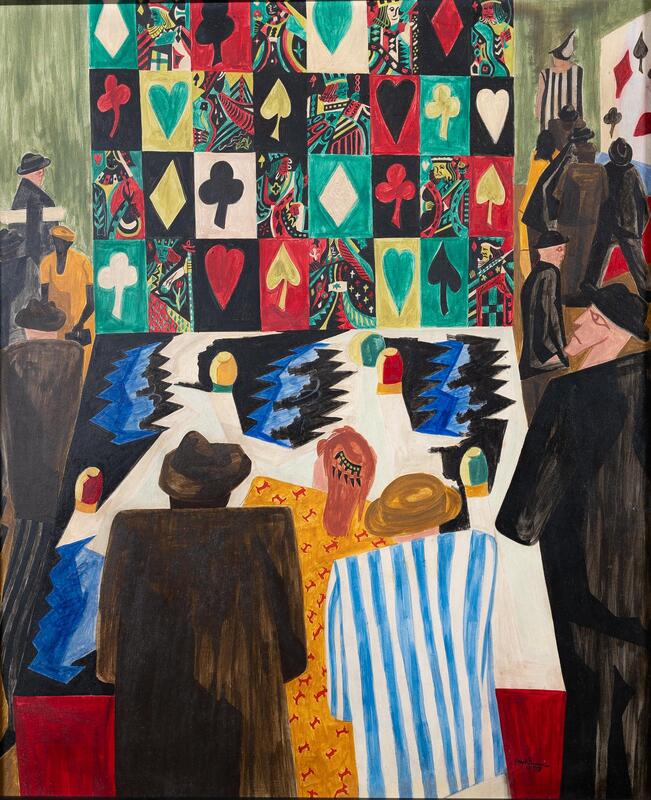
Jacob Lawrence was a renowned painter from Atlantic City, NJ. Playland shows a room with people standing around a table with a crowd. The majority wear black trench coats and fedoras. Three people wear yellow dresses, and two wear striped clothing and headwear. Gambling occurs in front of a decorated wall with various suits of playing cards.
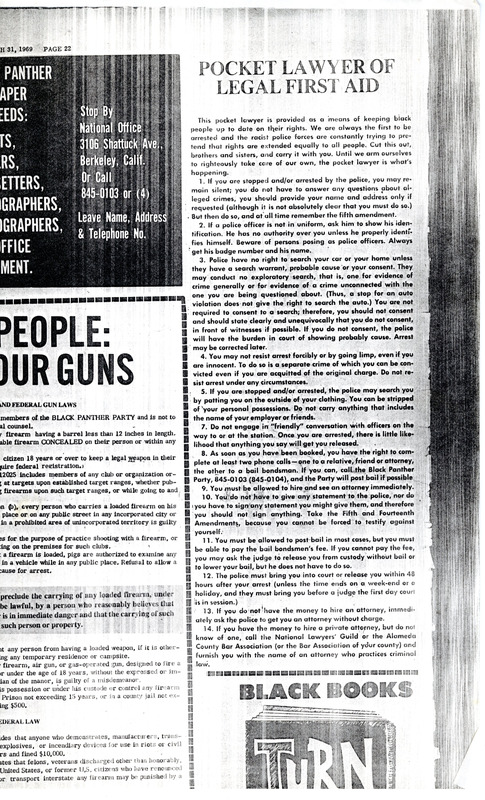
A newspaper article from The Black Panther. It outlines the 14 steps for Black people concerning Constitutional rights if confronted or arrested by the police. The article suggests that readers cut the article out of the paper and carry it with them in case of confrontations with the police.
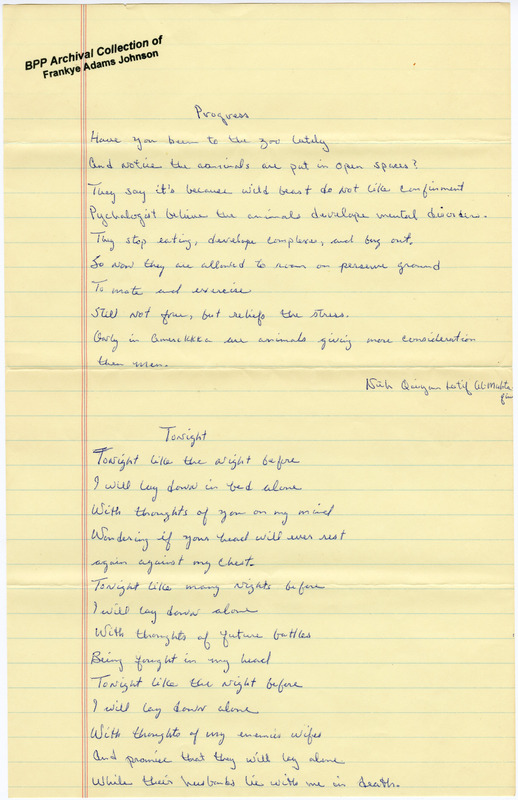
Poems by Nuh Abdul Qaiyum, who was sentenced to prison in 1975 for a 1971 Black Liberation Army (BLA) connected shooting of police officers in New York. This collection of poems is titled "I am Told" and explores themes such as freedom, humanity, and emotion.
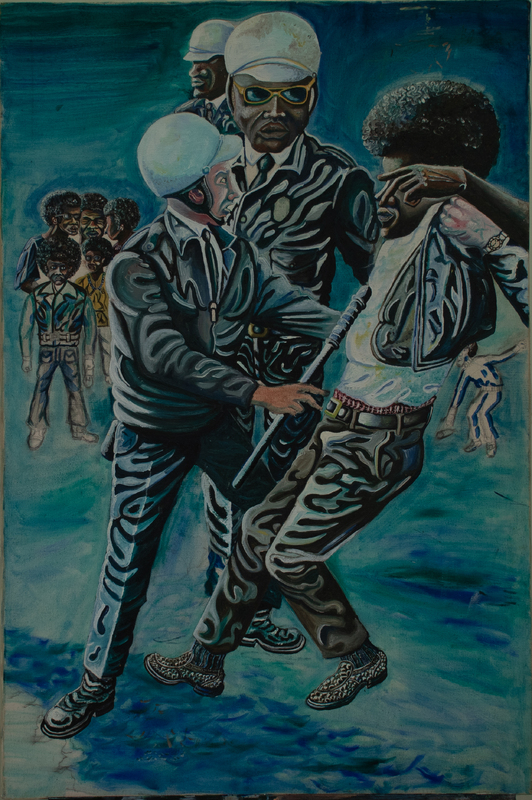
Settles' painting tackles the ongoing issue of police brutality against and harassment of Black Americans. The fluid swirls on the men's clothing, the anxious onlookers, and the white officer's drawn baton illustrate the high intensity and precarious emotion of the piece.
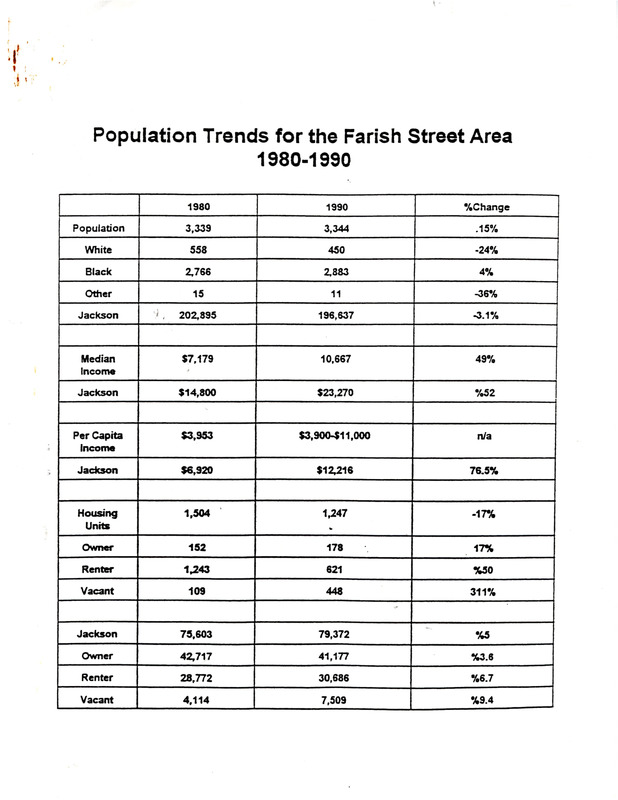
A chart showing trends such as population, income, and number of housing units for the Farish Street Historic District between the years 1980 and 1990.
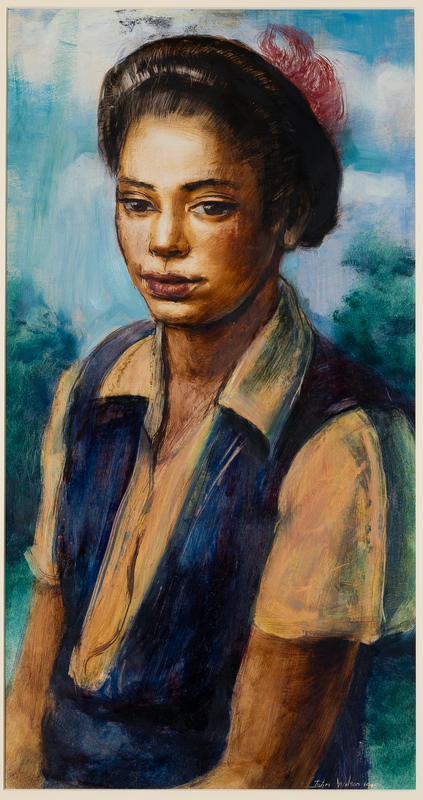
John Woodrow Wilson, a sculptor, painter, and printmaker from Roxbury, MA, was known for his creative portraits. Portrait of Claire is a portrait of a young Black woman. Her black hair is styled upwards, and a pink ornament is pinned. She wears a yellow collared blouse, a blue vest, and blue bottoms.
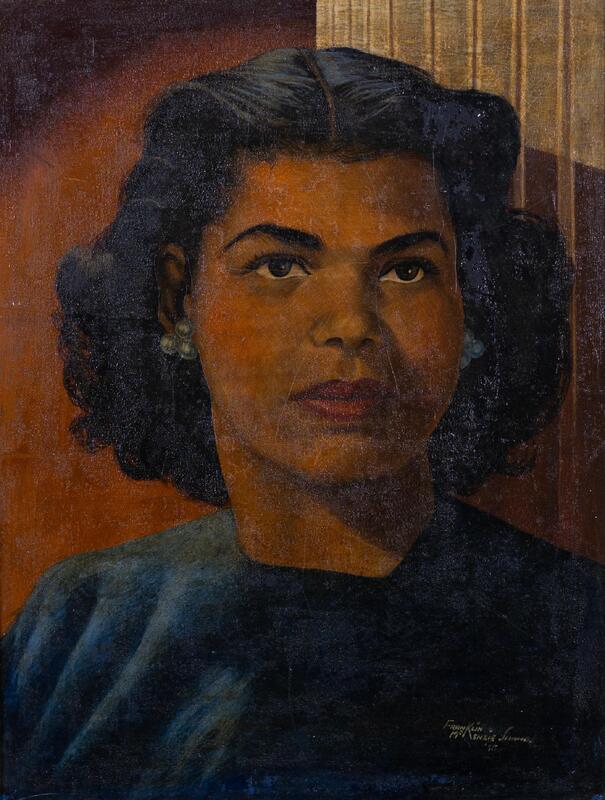
Franklin Shands was a painter from Cincinnati, Ohio. Portrait of Jo is a portrait of a woman looking sternly into a distance as a light shines on the left side of her face. The woman, named Jo, wears her black hair pinned upwards, wears a blue top, small earrings, and red lipstick.
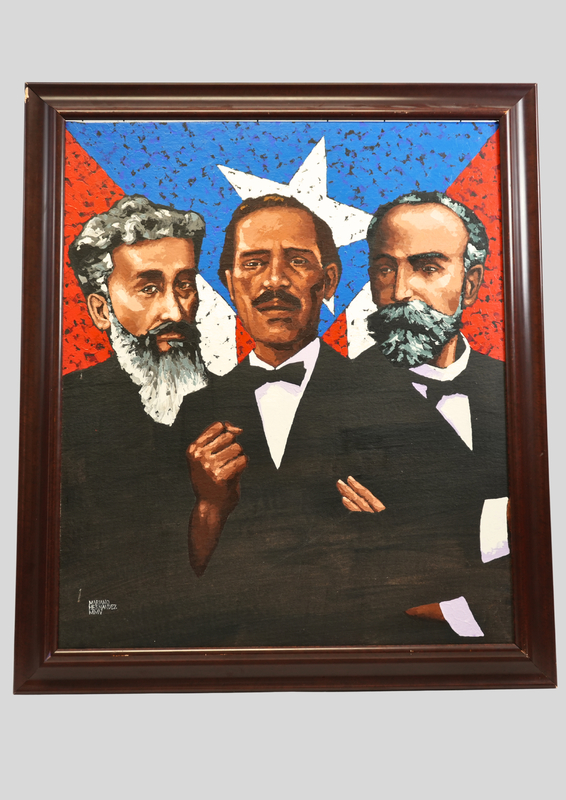
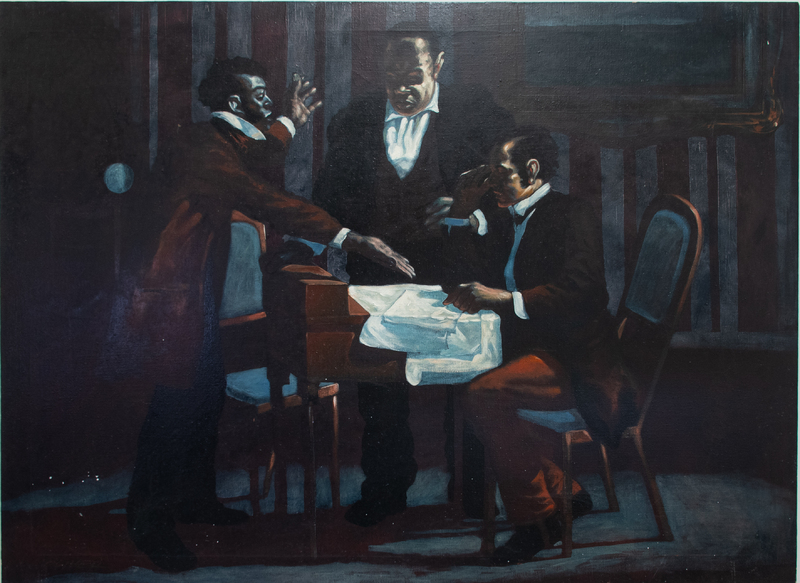
In this original 2005 piece by Mariano Hernandez, physician Ramon Emetrio Betances and attorneys Pedro Albizo Campos and Eugenio Maria de Hostos are honored as instrumental leaders in the Puerto Rican independence movement. FAMU alum and former assistant director for the Meek-Eaton Black Archives Dr. Will Guzman donated this artwork.
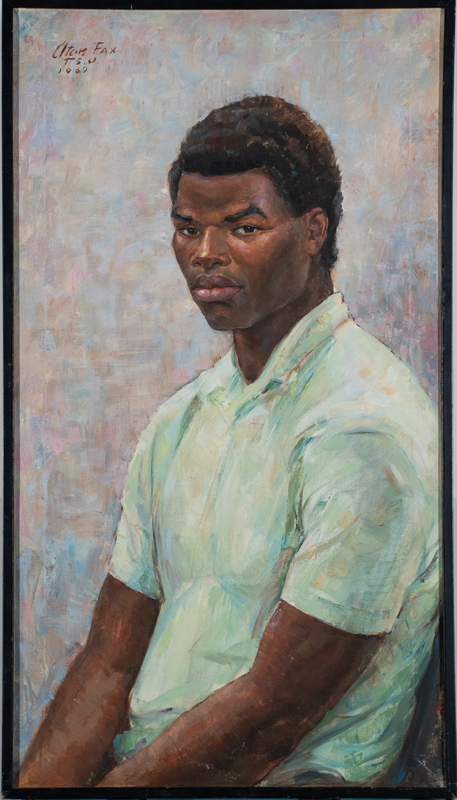
Fax’s painting is a portrait of a young man sitting with his hands in his lap. Yearbook photos suggest the subject may be George Latson, who was an art student at TSU at this time. During his career, Fax taught and held residencies at a variety of institutions, including Texas Southern University. He became internationally acclaimed for his work as a cartoonist, illustrator, and writer.
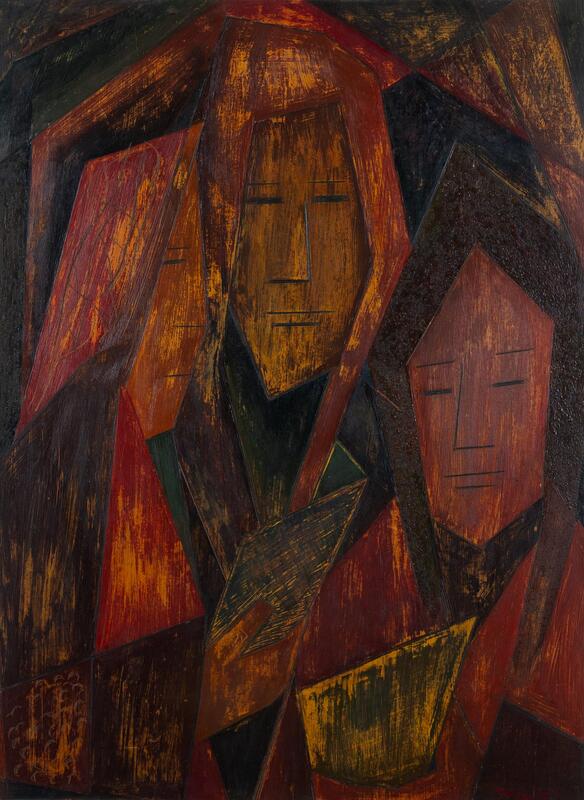
Merton D. Simpson was an abstract expressionist painter and African art collector from Brooklyn, N.Y. Portrait of The Wise Men is an oil painting of the three male Biblical magi. The men on the left and right hold texts, and the central man's head is visible between them. Simpson uses muted colors throughout the piece.
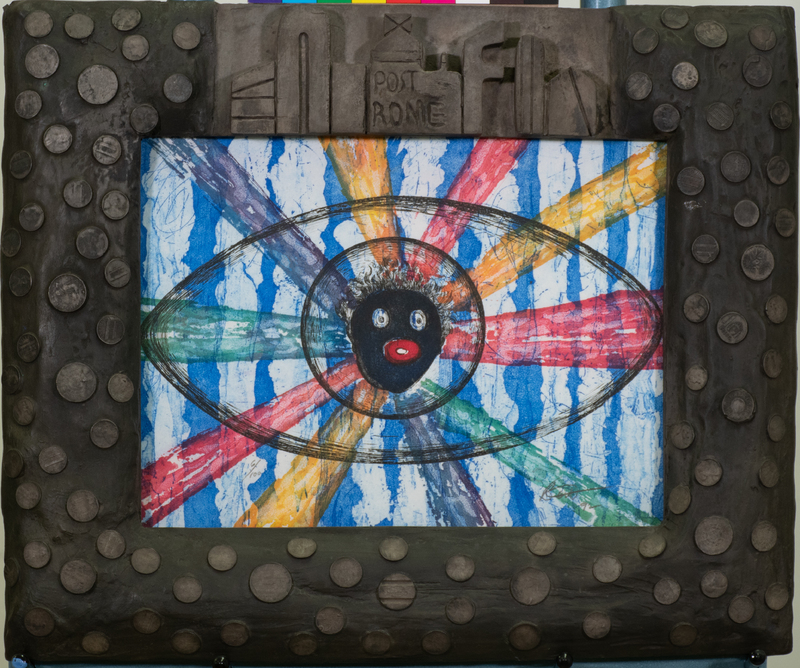
Long’s print was created during his 1990 Prix de Rome fellowship. At the center of the design is a large, oval-shaped eye. This is a frequently used motif in Long’s artwork, across many different mediums. The vertical and diagonal rays and bars draw attention towards the eye, which features a man’s face where the pupil would be. The frame, made from cast bronze, features a city skyline, embedded coin shapes, and the words “Post Rome.”
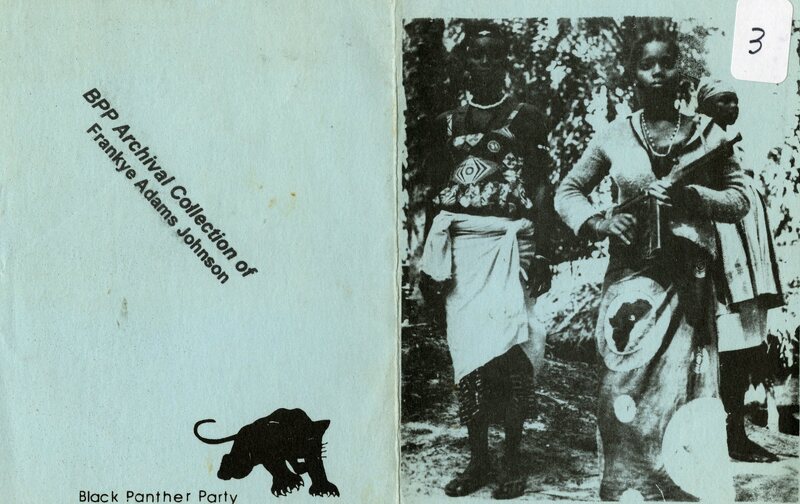
In this postcard, Frankye Adams-Johnson (Malika)’s husband, Nuh Abdul Qaiyum, who is imprisoned, writes about seeing a young family member and the good that does for him. He updates his wife on the current situation with some of the comrades in the Black Panther Party. He mentions the solutions he must create and says he has much to learn.
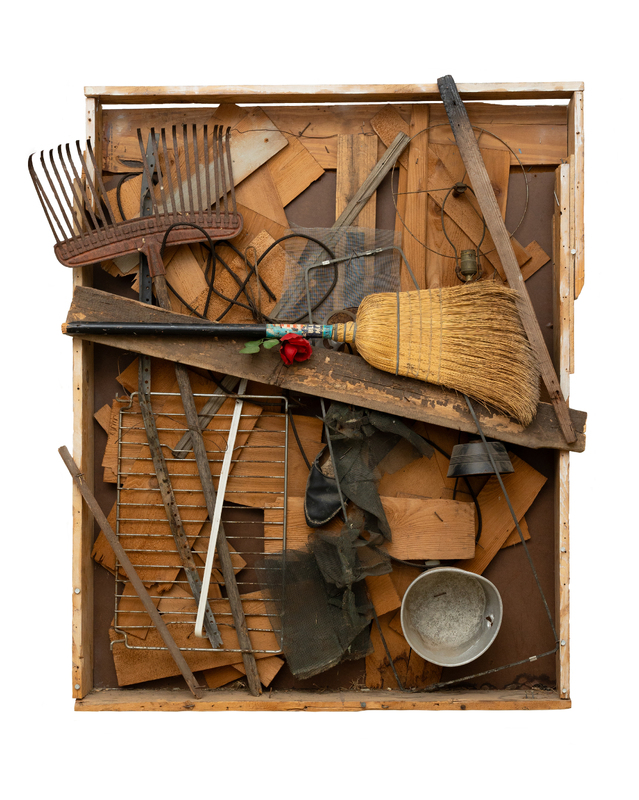
Dr. Arthur L. Britt was an artist and educator from Cuthbert, GA. Poverty Toy Chest is an installation that displays items impoverished children use for recreational play. It shows the disparity and ingenuity of people with little resources.
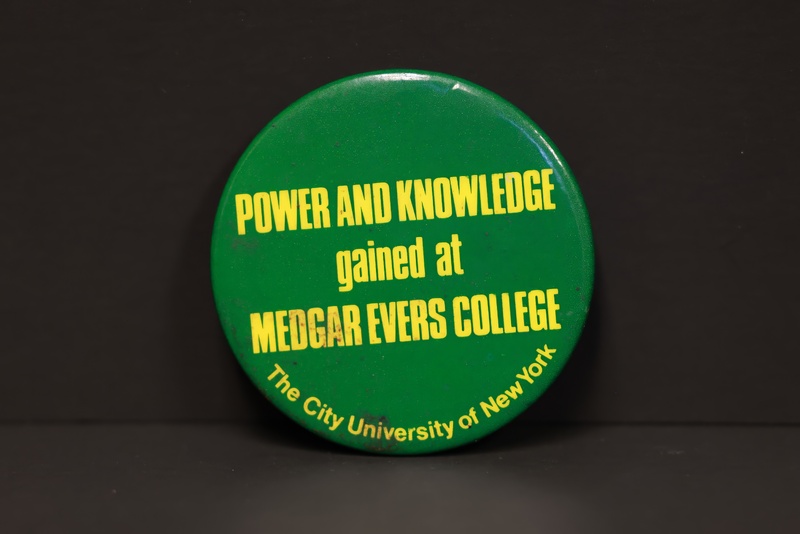
A green button that says: "Power and knowledge gained at Medgar Evers College." Text on the bottom of the button also says: "The City University of New York." Medgar Evers College was established in Brooklyn, New York, in 1970 as part of the Central University of New York (CUNY). The college is a public, 4-year, degree granting institution.
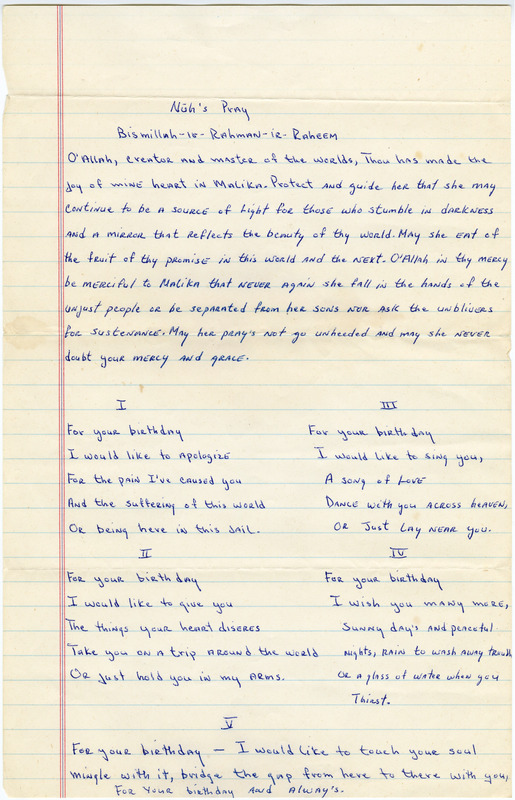
A letter from Nuh Abdul Qaiyum, who was sentenced to prison in 1975 for a 1971 Black Liberation Army (BLA) connected shooting of police officers in New York, to his wife Frankye Adams-Johnson (Malika). He sends a prayer and poems for her birthday.
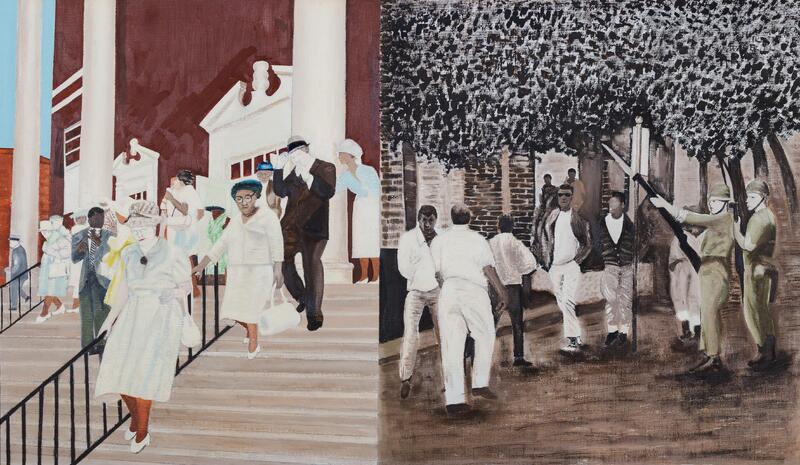
Al Tyler was an artist known for his figurative murals and landscape paintings. Prayer for Freedom shows two scenes from the fight for Civil Rights. On the left, black and white people are leaving a courthouse, and on the right, armed officials are stopping Black men from entering a building.
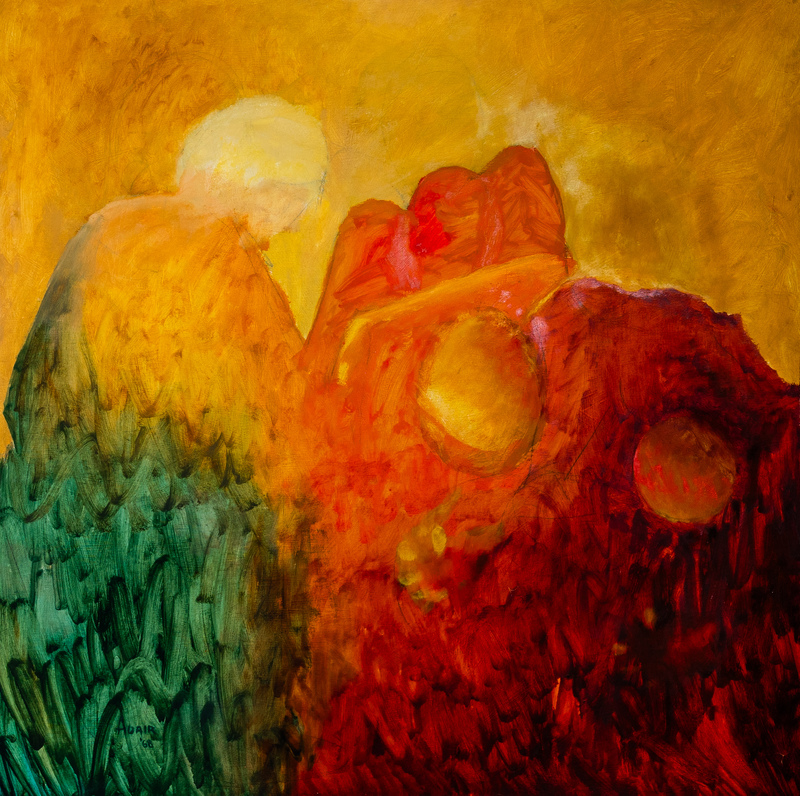
James Adair was an artist from Atlanta, GA. A prayer Meeting is an abstract depiction of a group of people practicing a religious ritual. Adair uses broad brush strokes of green, red, and yellow to create this scene of piety.
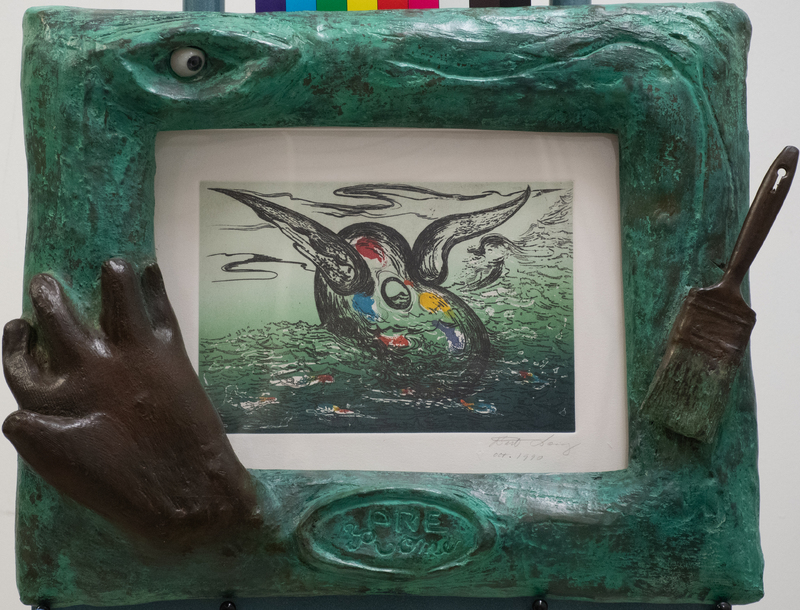
Long’s print was created during his 1990 Prix de Rome fellowship. The print features two aquatic animals, possibly whales or birds, emerging from the water, while other colorful creatures float around and within them. The cast bronze frame features the words “Pre Rome,” a hand, a paintbrush, and an eyeball, which is one of the motifs that appears most frequently in Long’s artwork.
Oliver's painting depicts vanguard Black politicians from the Reconstruction period following emancipation. Radical Reconstruction saw the election of dozens of Black lawmakers in former slave states like Texas. After 1897, Texas didn't elect another Black legislator until 1966.
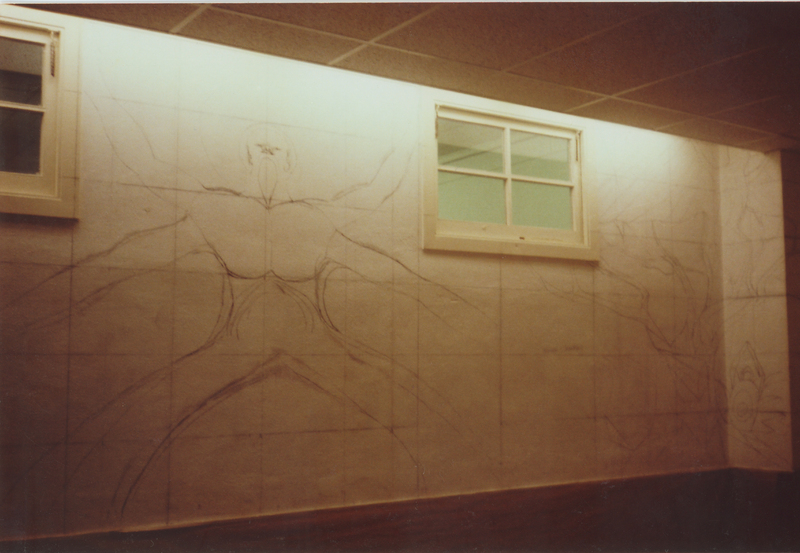
The pre-sketch stage of Texas Southern alumnus J.W. Sampson's mural on the first floor of Hannah Hall is shown here. Before he took paint to the wall, Sampson first made a grid (to help with scaling up to the large mural size) and then drew out his intended design. His final, geometric design is characteristic of Dr. Biggers's teaching at the time.
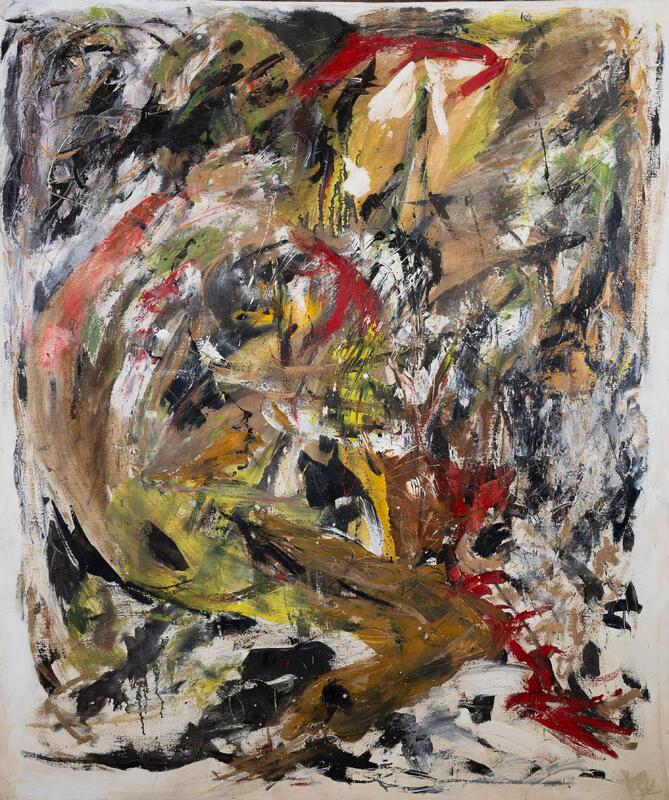
Alexander S. McMath was a painter and educator from Clinton, SC. Prelude to a Kiss is a non-figurative abstraction consisting of gestural brush strokes.
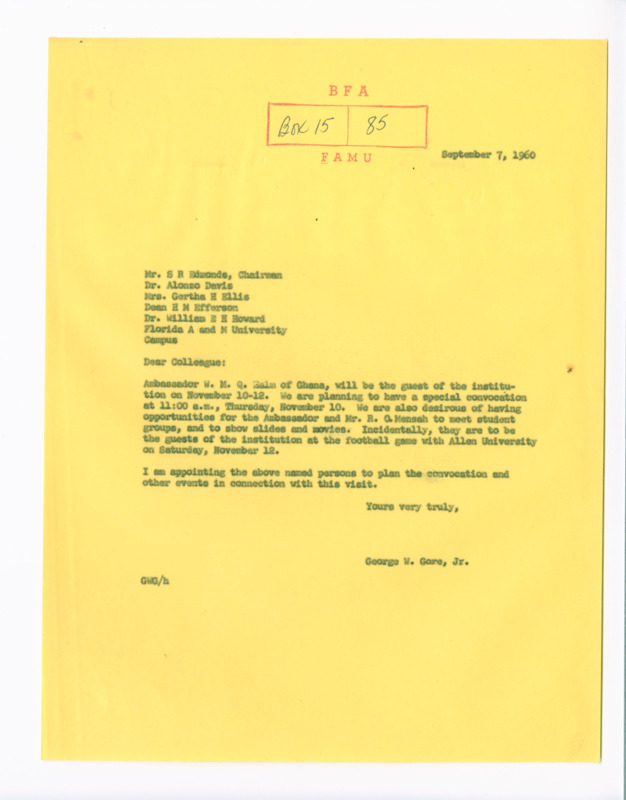
Letters between President Gore and the Embassy of Ghana discuss plans to strengthen educational ties at FAMU for increased access for future Ghanaian students. These exchanges cover scholarship options, academic opportunities, and an invitation for the Ambassador to attend a FAMU football game.
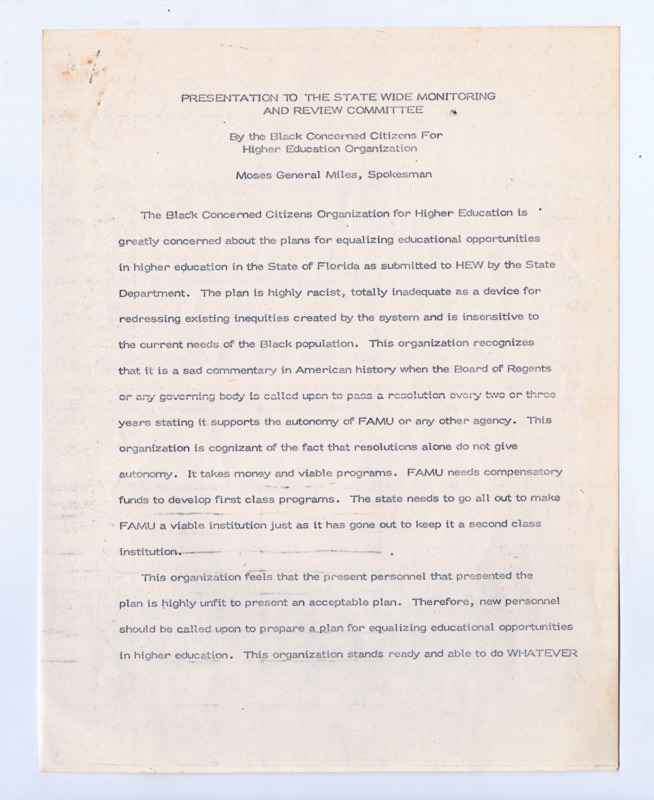
Moses General Miles was the spokesman for the Black Concerned Citizens for Higher Education Organization. The committee was brought together for a presentation to the Statewide Monitoring and Review Committee in response to new HEW standards, which the group claimed were ‘racist,’ ‘inadequate… for redressing existing inequities’ and ‘insensitive.’
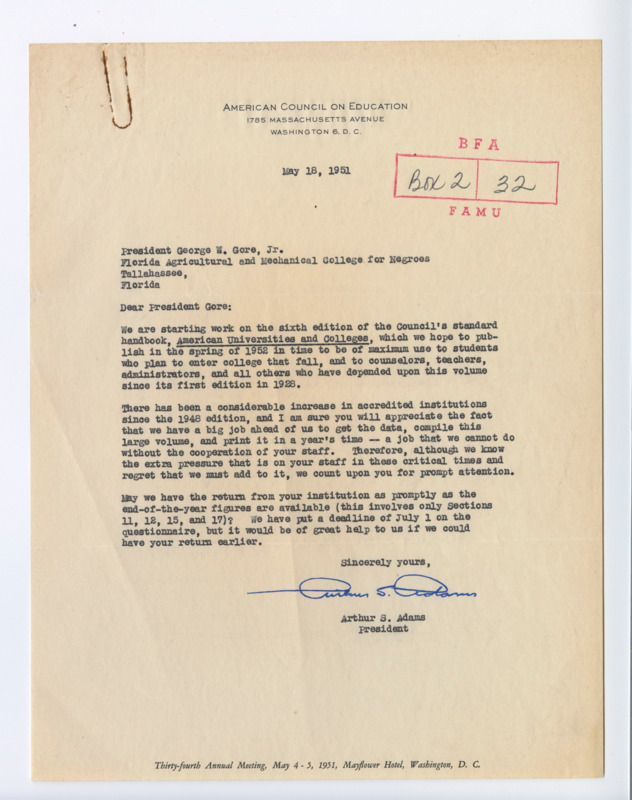
President Adams requested FAMC’s undergraduate and financial statistics for the college handbook to showcase the institution's remarkable academic growth and financial strength following desegregation. This provided prospective students and stakeholders a vibrant snapshot of FAMC’s promising future.
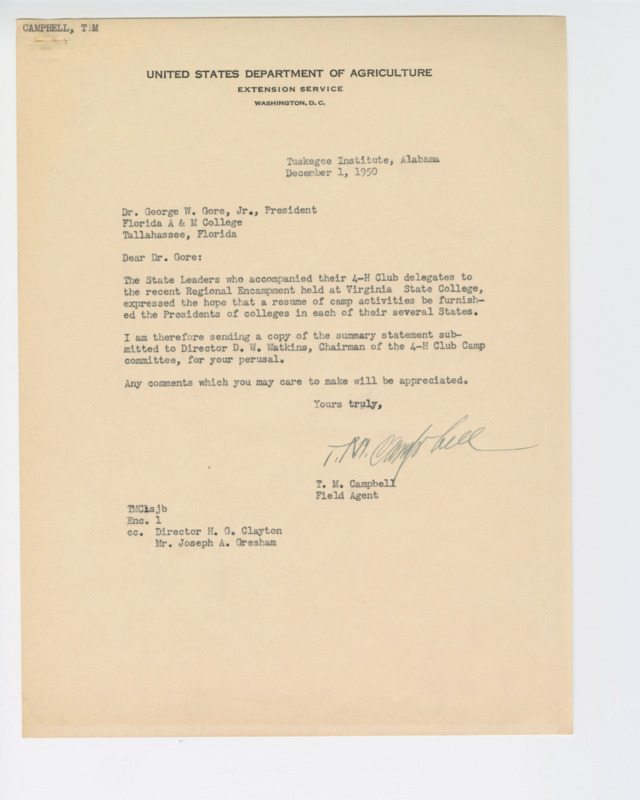
President Campbell of the United States Department of Agriculture engaged with university administrators who attended the 4th Regional Conference. He showcased the exciting developments at Florida A&M College while stressing the importance of collaboration among institutions, especially through innovative partnerships in higher education.
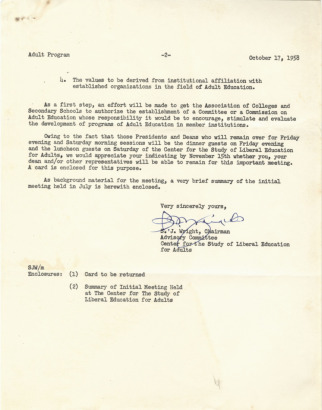
Messages between Mr. Peter Siegle, Research Director at the Center for the Study of Liberal Education for Adults, and President Gore, discuss specific concerns about the challenges faced by the Black community in the South and expanding higher education opportunities for adults.
A series of letters between (or CC’d) George W. Gore, Jr. and A. S. Gaither discussing varying topics and an attached Atlanta Daily World article written by Gaither. Over the years, Gore congratulated Gaither and coordinated with him over a Bethune Cookman/Althea Gibson celebration/campus visit, football game schedules, and leadership changes.