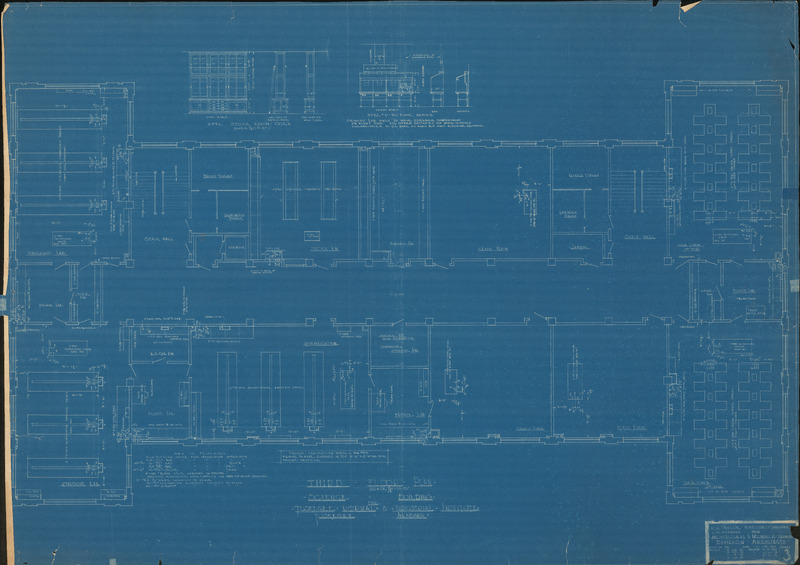
A construction floor plan of the third floor plan of Science Building at Tuskegee Normal and Industrial Institute. This floor plan includes the building's corridor, placement of labs, restrooms, and extra construction notes.
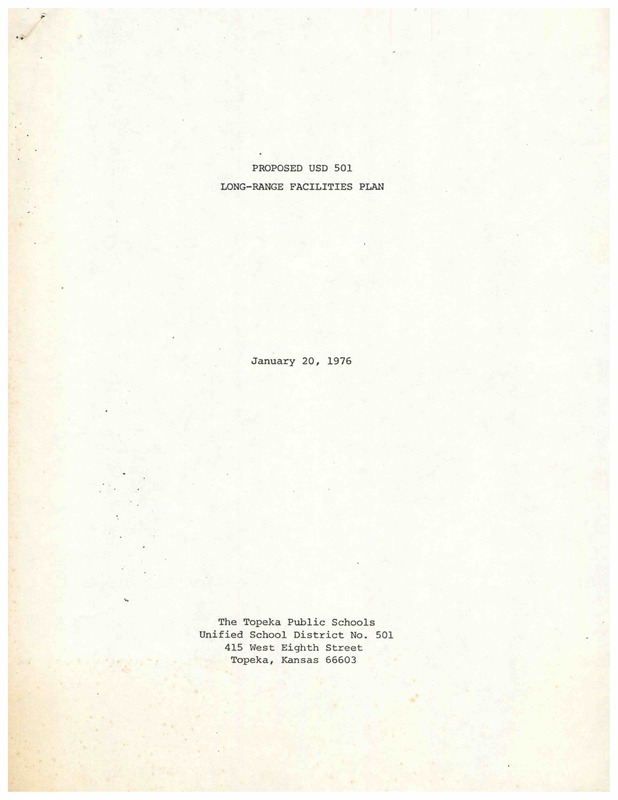
Case Data and Exhibits for Brown III, a relitigation of Brown v. Topeka Board of Education (1954) that corrected resegregation issues caused by open enrollment school choice in 1992. A January 1976 report from the Topeka Public Schools Office of Planning and Evaluation that explains the long-term plan for facilities improvements.
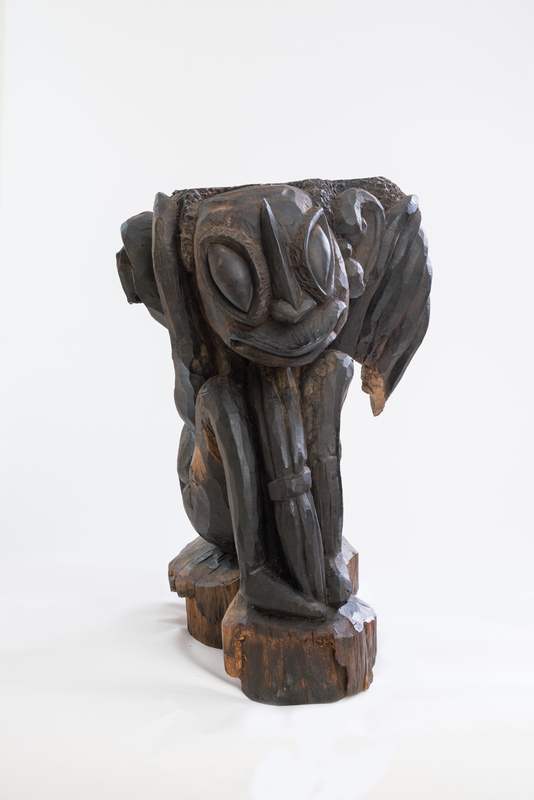
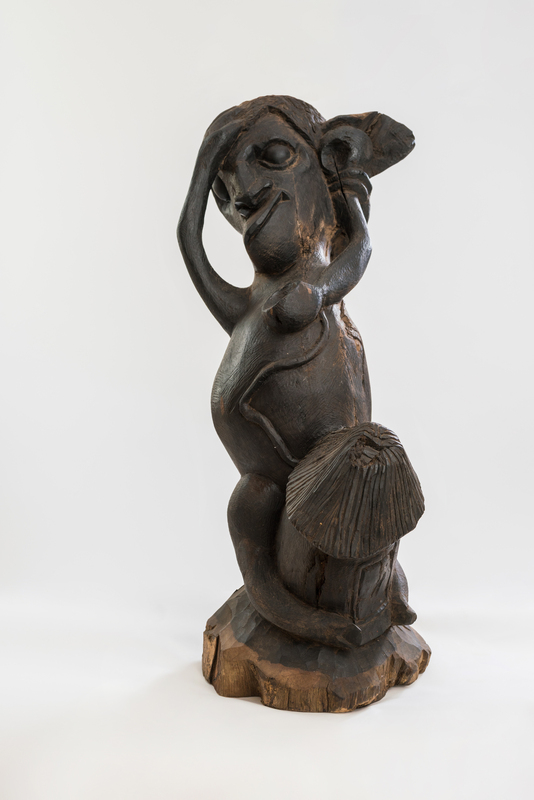
Entrusted to FAMU based on the university's study in agriculture, the Protector of the crops is a spirit deity carved and placed on a farmer's land in Africa as a threat to anyone attempting to trespass. This spirit holds a coiled serpent while protecting a plantain between its feet.
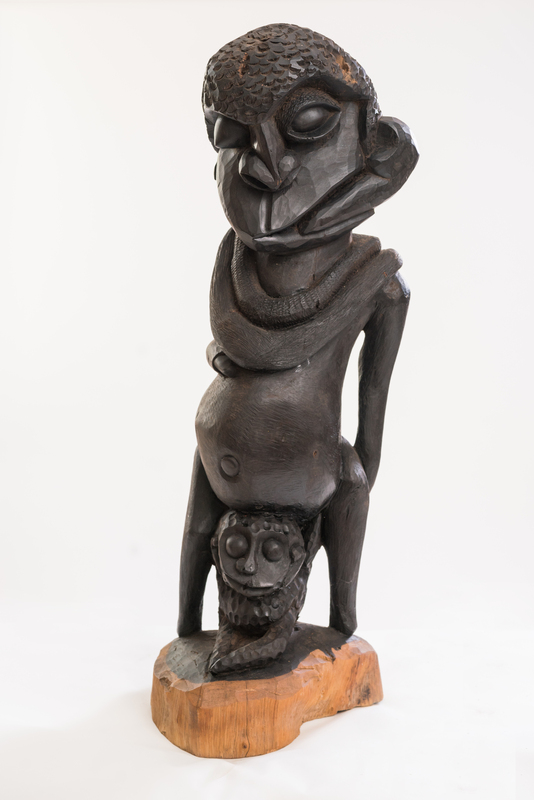
The Protector of the Flocks safeguards sheep from malevolent spirits and trespassers. The spirit is being bitten by the serpent that is wrapped around its neck. This demonstrates its willingness to accept pain and suffering in order to defend and protect. It highlights the resilience of African American agricultural heritage.
Protector of the home is one of the oldest pieces in the collection. This spirit protects a specific domain which is the home. The early pieces demonstrates a willingness to suffer and to accept pain rather subject trespassers to it. It holds cultural significance at the FAMU as it honors the legacy of agriculture in African American history.
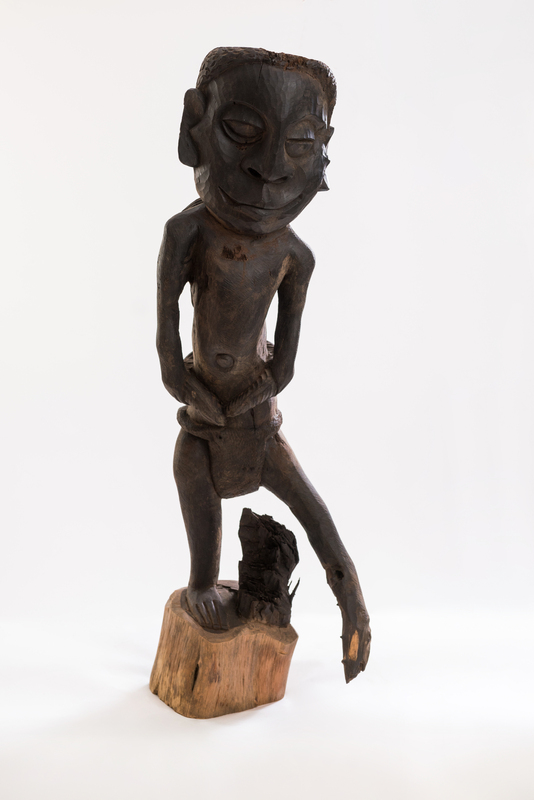
Entrusted to Florida A&M because of the university’s studies in agriculture, the Protector of the Providers demonstrates the artisan’s craftsmanship by allowing the figure to rest on a single leg without falling over. These sculptures were placed on farmland in Ghana, Africa, to detour those who trespass.
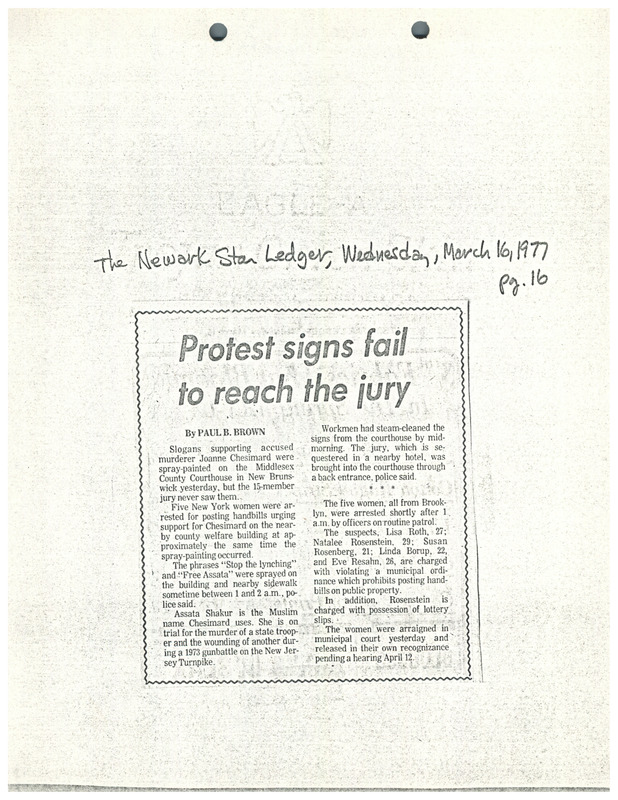
A newspaper article from The Star Ledger about slogans spray painted on the Middlesex County Courthouse in support of Assata Shakur (JoAnne Chesimard) during her trial trial for the 1973 killing of a state trooper. Five women were arrested for another incident where pro-Shakur handbills were posted on the nearby county welfare office.
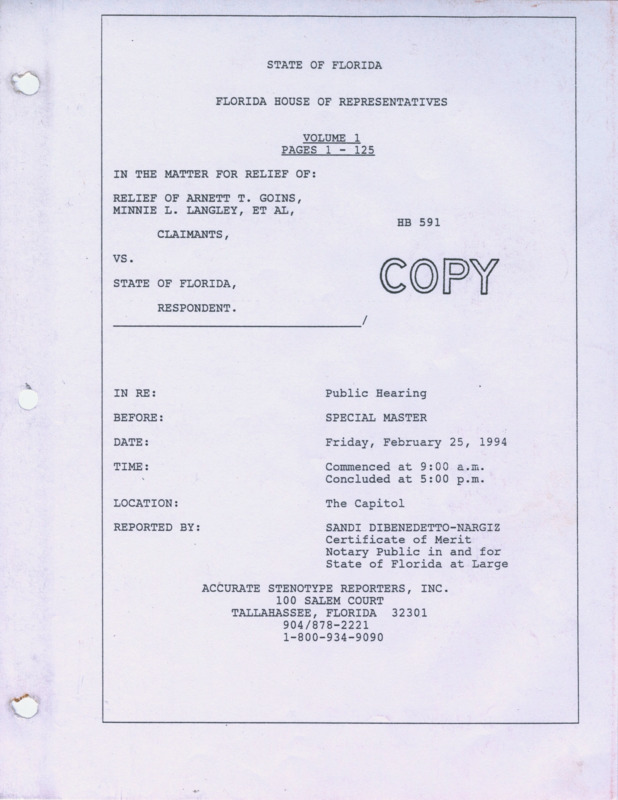
Public hearing transcripts that recount the brutal events of the Rosewood Massacre, detailing murders, rapes, and violent acts committed by white mobs, town officials, and deputies. They also capture the defiance of Black residents, who fought back to protect their families despite the overwhelming threat to their lives.
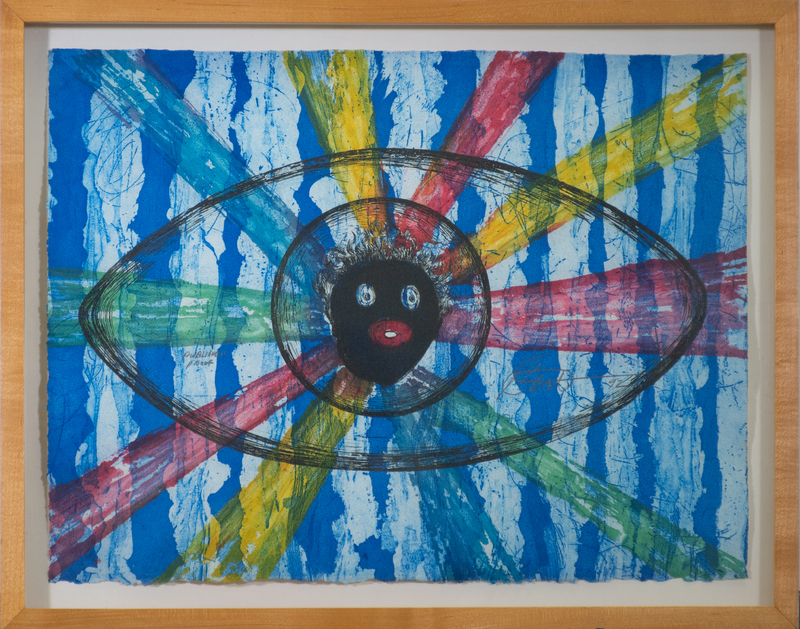
This is a publisher’s proof for Long’s print Post Rome, which was created during his 1990 Prix de Rome fellowship. At the center of the design is a large, oval-shaped eye. This is a frequently used motif in Long’s artwork, across many different mediums. The vertical and diagonal rays and bars draw attention towards the eye, which features a man’s face where the pupil would be.
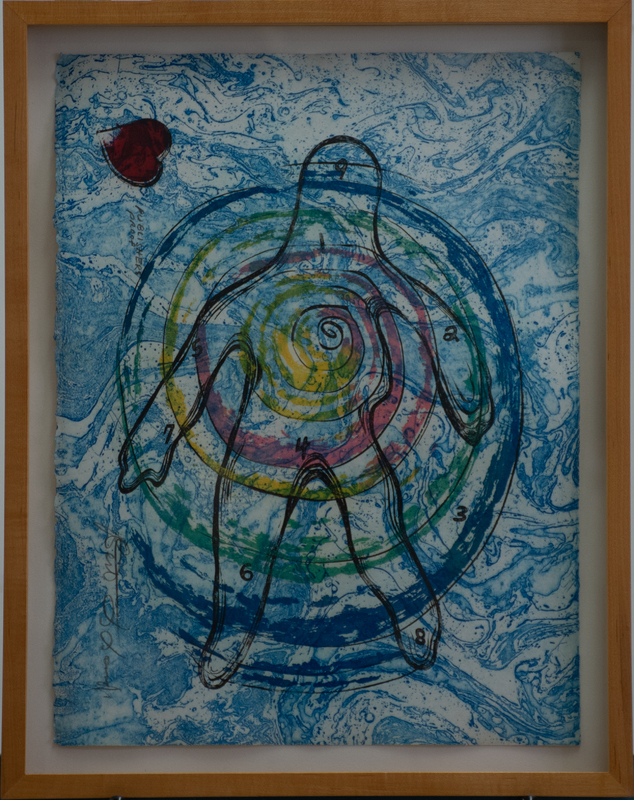
This is a publisher’s proof for Long’s piece Roma, which was created during his 1990-91 Prix de Rome fellowship. Featuring a blobby figure and colorful swirls, the composition is somewhat reminiscent of Da Vinci’s Vitruvian Man. Long rose to prominence as an “outsider artist” without formal training, later becoming one of the co-founders of Project Row Houses.
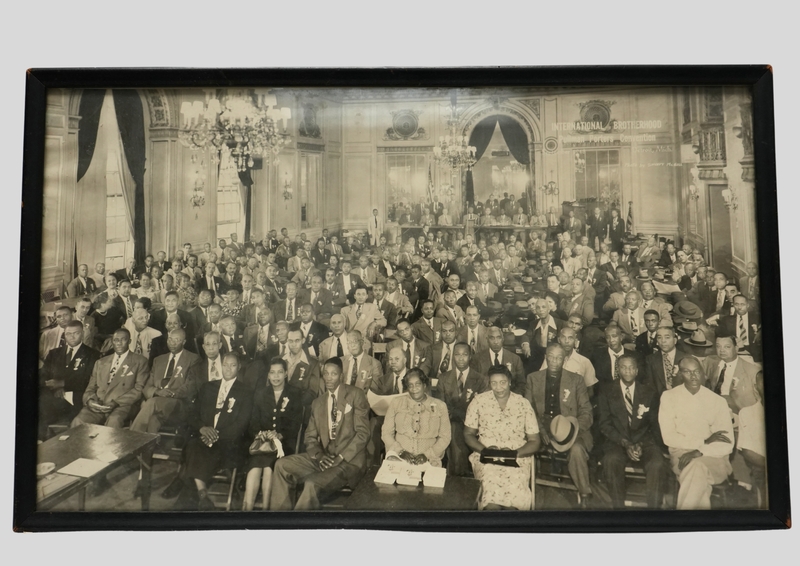
The Brotherhood of Sleeping Car Porters was the first Black-led labor union. It was headed by A. Phillip Randolph, who created the organization to protect the African American men who worked for the Pullman railroad company. Photographer Snuffy McGill snapped this photograph at the union’s September 1948 convention in Detroit, Michigan.
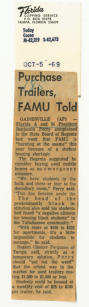
After Florida A&M President Benjamin Perry told the State Board of Regents about FAMU’s overflow due to a housing shortage, the Board suggested he consider buying used mobile homes. Though it was a “strictly temporary” solution, this response to Perry bringing up a “negative climate for housing black students” was interesting, to say the least.
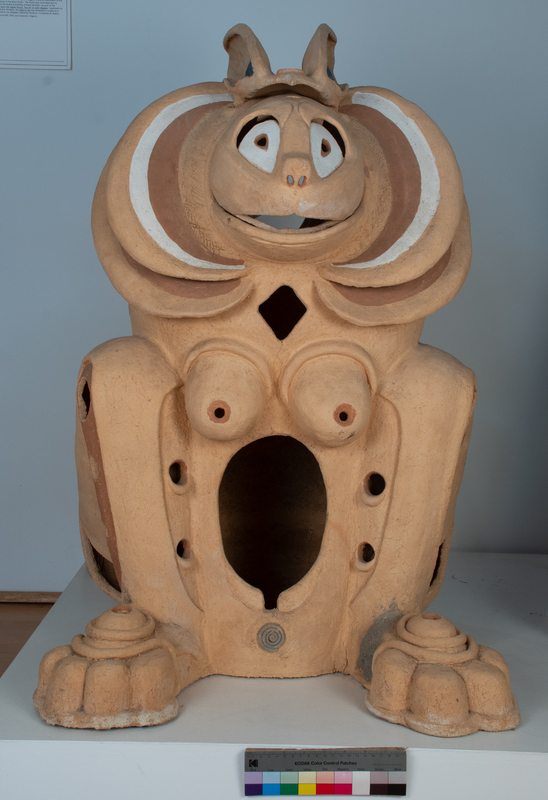
“Queen Rabbit,” by Earl Jones, features a mythical female rabbit. The center of the body includes an oval-like opening with identical circular holes on the legs and feet, creating balance. The rabbit’s ears are constructed with a removable crown piece; the same technique is used in several busts created by other Texas Southern artists.
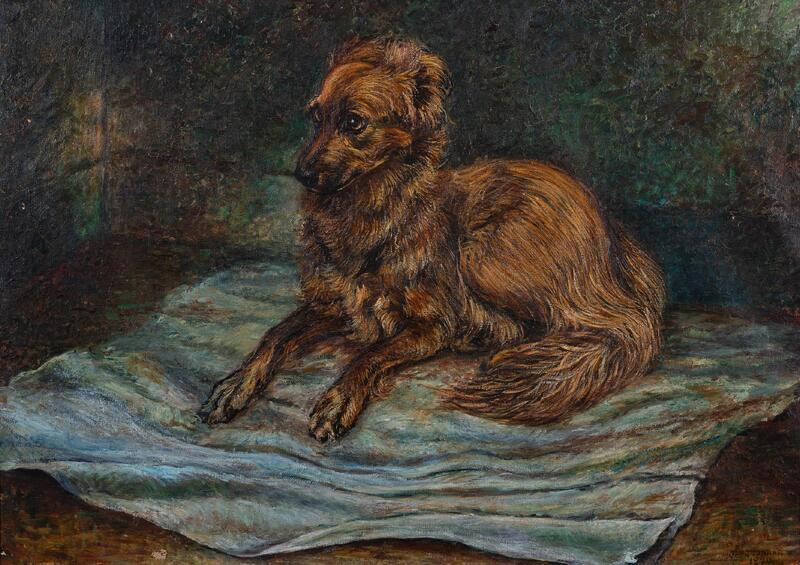
John Farrar was a child prodigy who won the 3rd Atlanta Art Annuals at age 15. His winning piece, Queenie, is a realist depiction of a dog lying on a white sheet in a dark room.
James Conroy Yeargans was a painter from Kansas City, MI. Quest of Blue is an abstract painting with colored layers that create a myriad of forms. The word “quest” can be seen as the letters are connected by gestured strokes and lines.
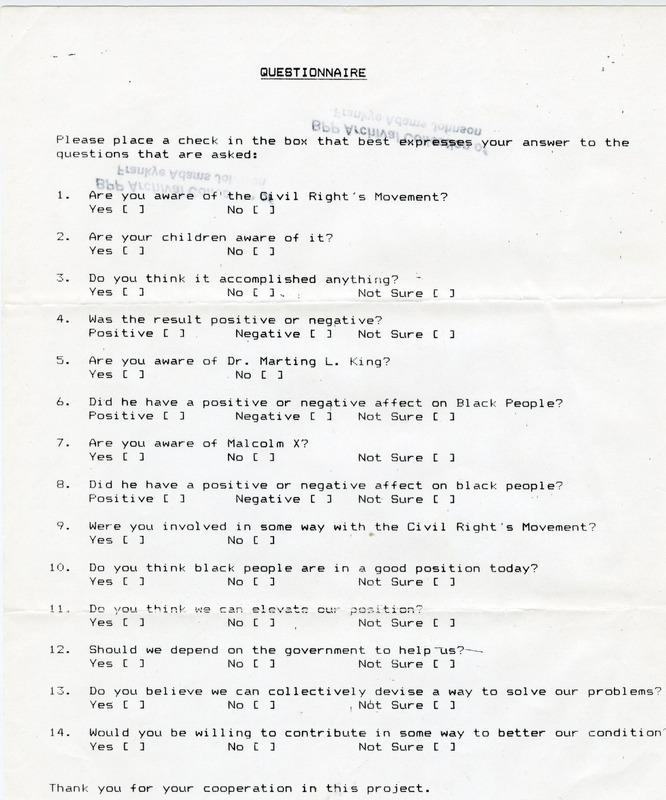
A questionnaire about the Civil Rights Movement and its impact on Black people. The questionnaire has 14 yes/no/not sure questions and has not been filled out. Questions include: “Are you aware of the Civil Rights Movement?;” “Do you think it accomplished anything?;” and “Do you think Black people are in a good position today?”
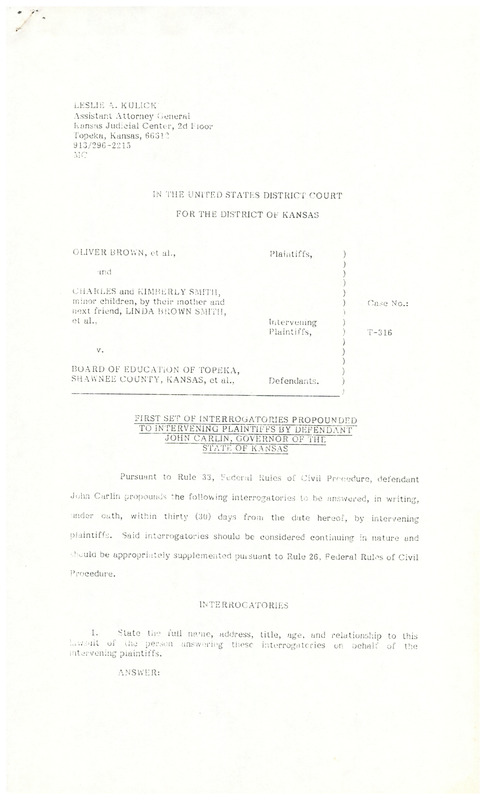
Case Data and Exhibits for Brown III, a relitigation of Brown v. Topeka Board of Education (1954) that corrected resegregation issues caused by open enrollment school choice in 1992. Document containing questions submitted to the Brown III Plaintiff Attorneys by Defendant John Carlin, Governor of Kansas.
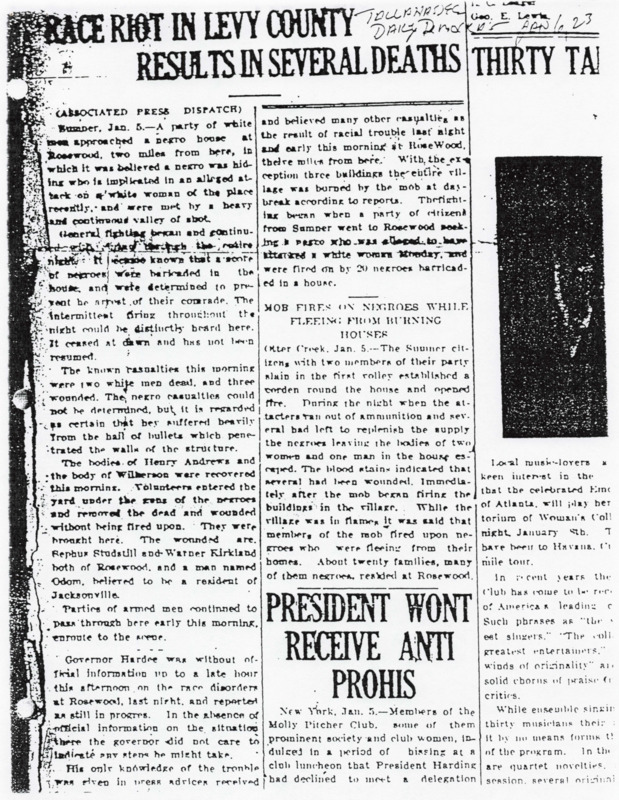
This newspaper article, dispatched from the Associated Press, was featured in the January 1923 issue of the Tallahassee Daily Democrat. It details the background of the massacre, the death toll, and the lack of information from the governor at the time, Cary Hardee, and other local officials.
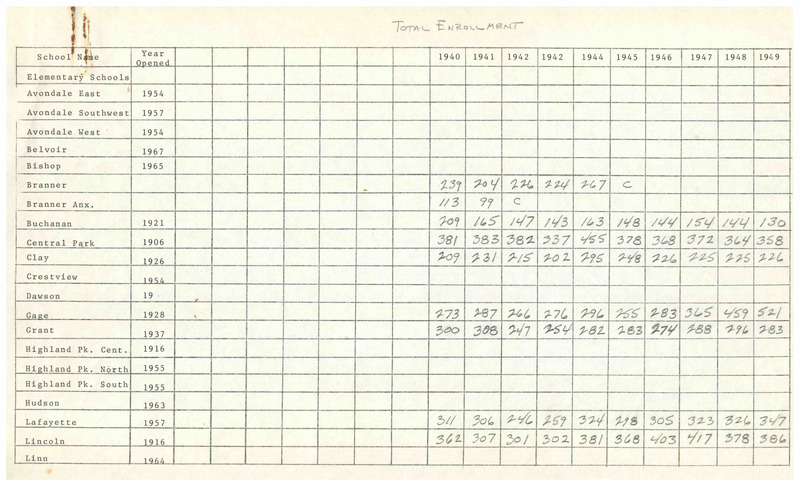
Case Data and Exhibits for Brown III, a relitigation of Brown v. Topeka Board of Education (1954) that corrected resegregation issues caused by open enrollment school choice in 1992. Handwritten charts and spreadsheets by William Lamson analyzing total student enrollment and breakdowns of that enrollment by race in Topeka Public Schools.
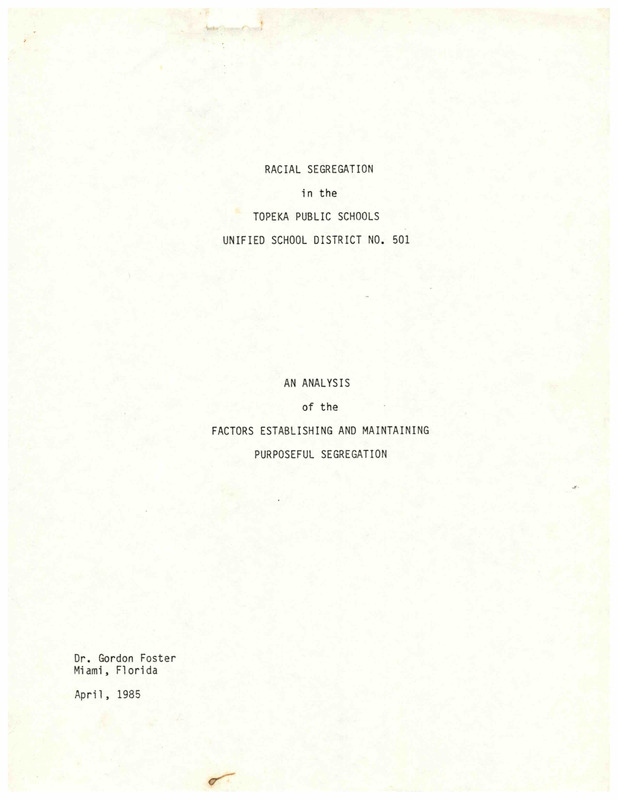
Case Data and Exhibits for Brown III, a relitigation of Brown v. Topeka Board of Education (1954) that corrected resegregation issues caused by open enrollment school choice in 1992. An April 1985 report by Dr. Gordon Foster that examines racial segregation in Topeka Schools. He concludes that complete desegregation has not taken place.
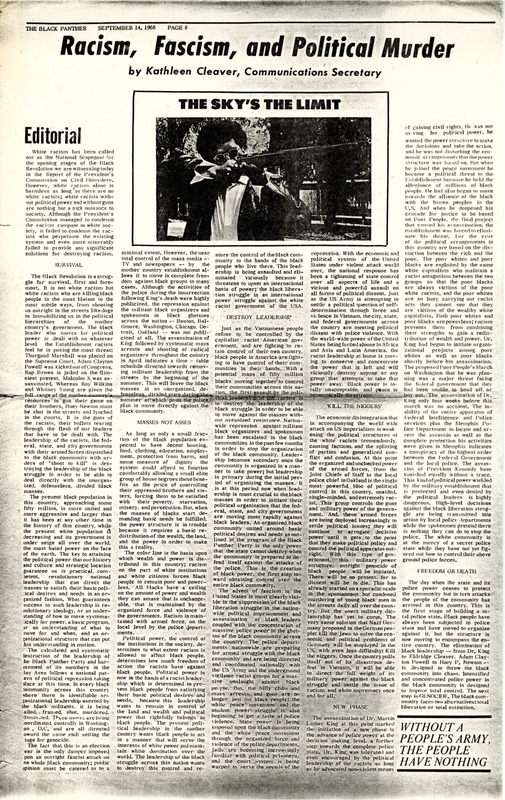
A newspaper article written by Communications Secretary Kathleen Cleaver in The Black Panther. The article, in response to the Kerner Commission report ordered by President Lyndon B. Johnson to look into the causes of the 1967 uprisings in several U.S. cities, argues that the government hadn’t done enough to combat systemic racism.
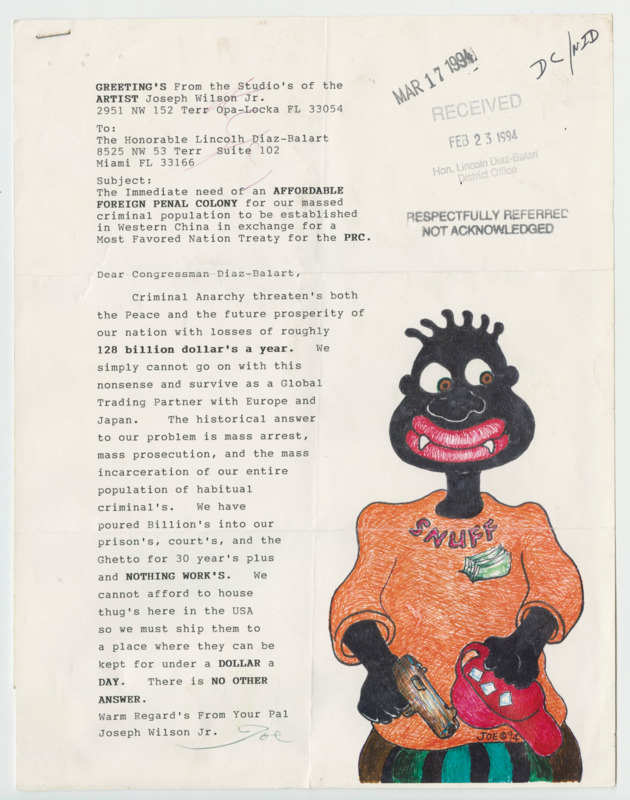
A 1994 hate mail letter from Joseph Wilson, Jr. sent to Lincoln Diaz-Balart, a Cuban-American U.S. House Rep representing Florida. The letter recommended shipping all of America’s “thugs” to a penal colony as an economic solution to crime; it also featured hand-drawn art – a racist caricature of a Black man with a gun and dollar bills.
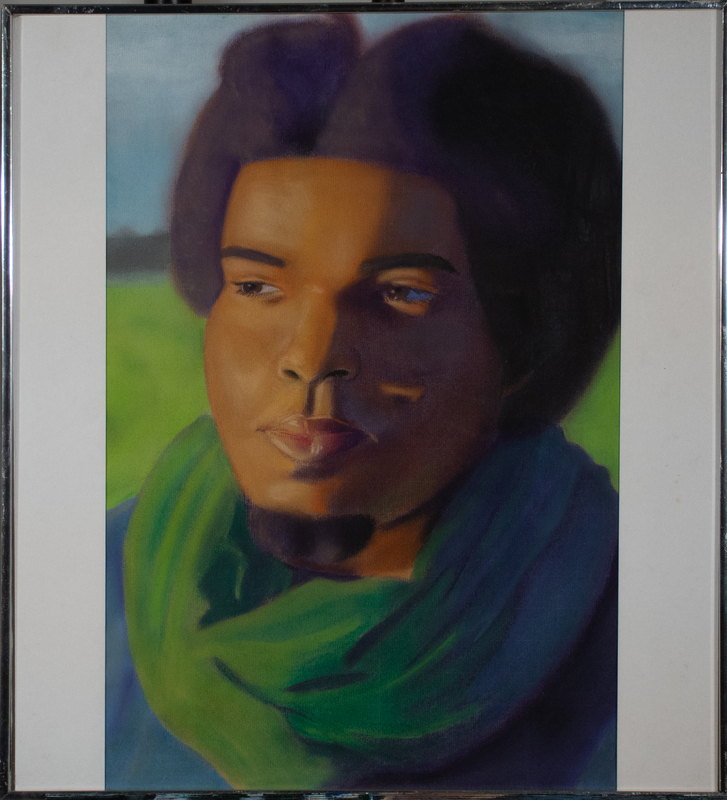
This work by Raheem Bellard is a self-portrait of the artist, with his face illuminated by the sun, wearing a green scarf. Cool colors are used throughout the piece, which enhances the tranquility of the composition.
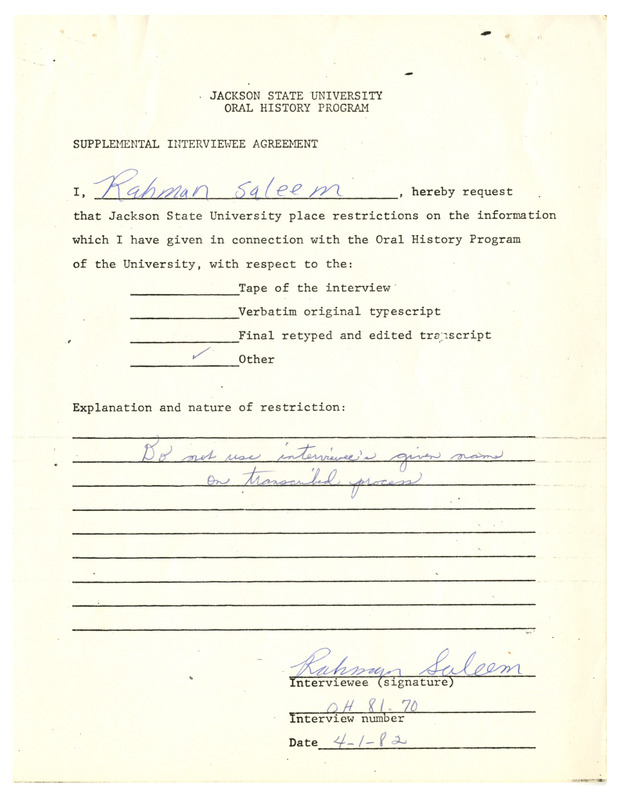
Rahman Saleem was a student at Smith Robertson School starting in 1956 when he was 5 years old. He talks about his experience at the school and tells other stories of his childhood in Jackson. The transcript is heavily edited with handwritten notes.
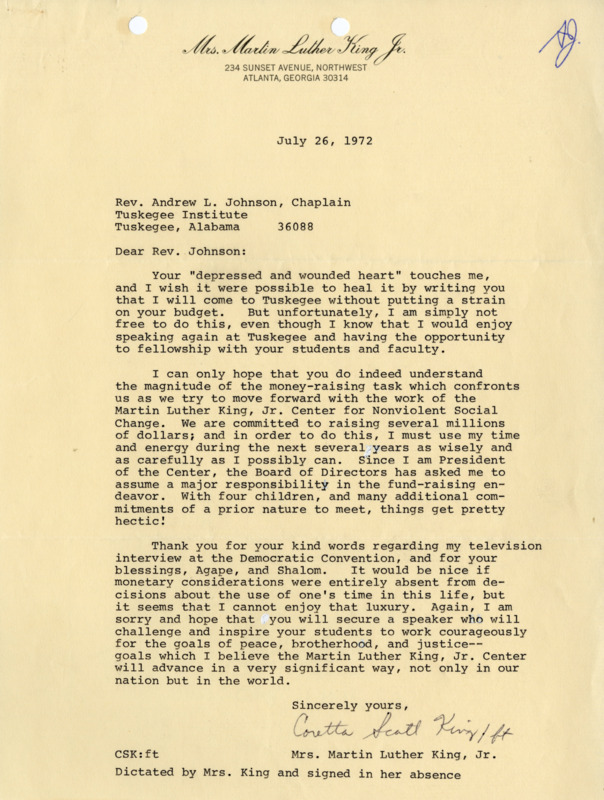
A letter from Coretta Scott King to Chaplain Johnson stating that she will not be able to speak at this time due to her trying raise money for the upcoming center.
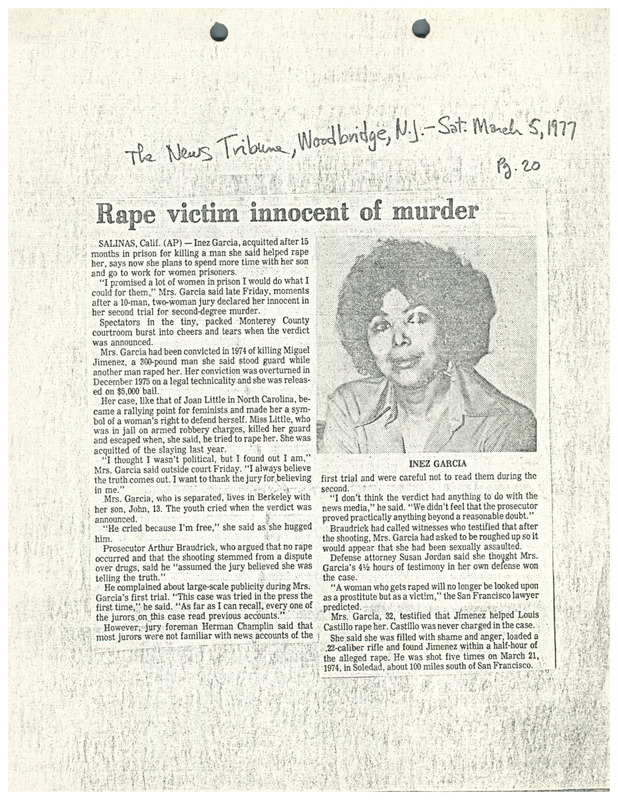
A newspaper article from The News Tribune about Inez Garcia, a woman whose case became a rallying cry for feminists after she was acquitted for killing a man she says helped rape her. Garcia became a symbol for a woman’s right to defend herself. She says that she will go on to help other women who are imprisoned.
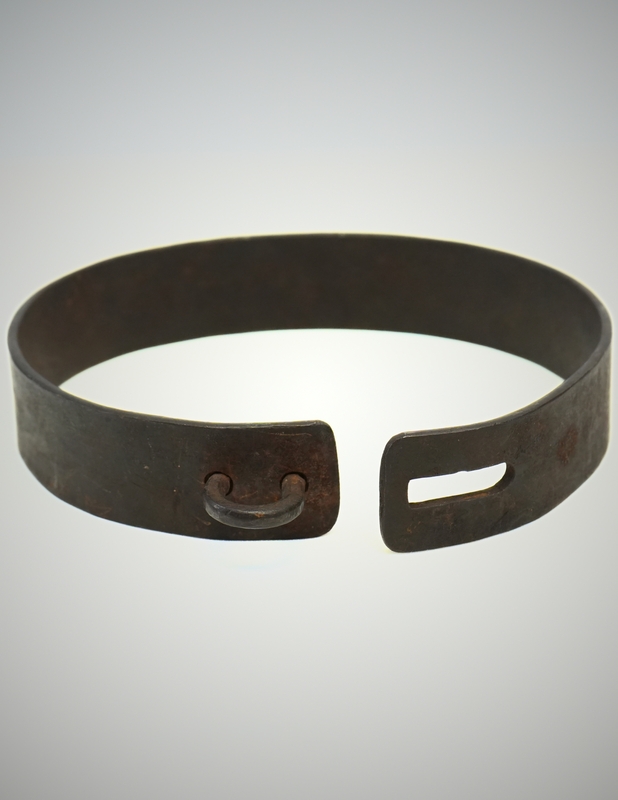
This rare cast iron collar, used to enslave individuals, symbolizes the severe oppression and dehumanization during the enslavement period. Designed to restrain and control, it reflects the brutality faced by those who were enslaved.
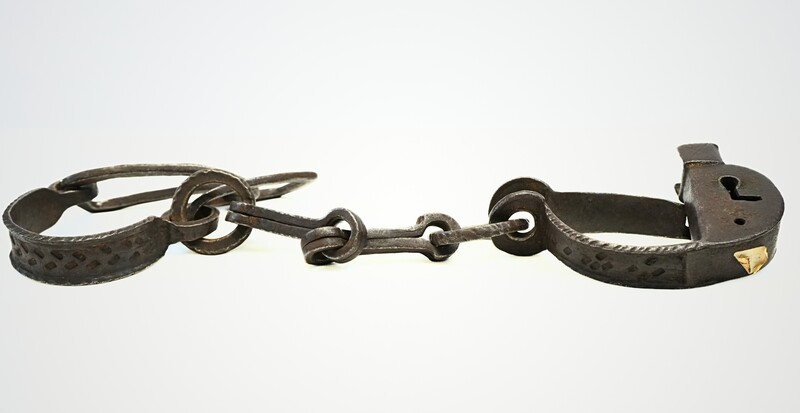
These rare cast iron shackles, used during the enslavement period, serve as haunting artifacts that symbolize the brutal reality of slavery. Designed to restrain and control, they reflect the dehumanization and suffering endured by enslaved individuals.