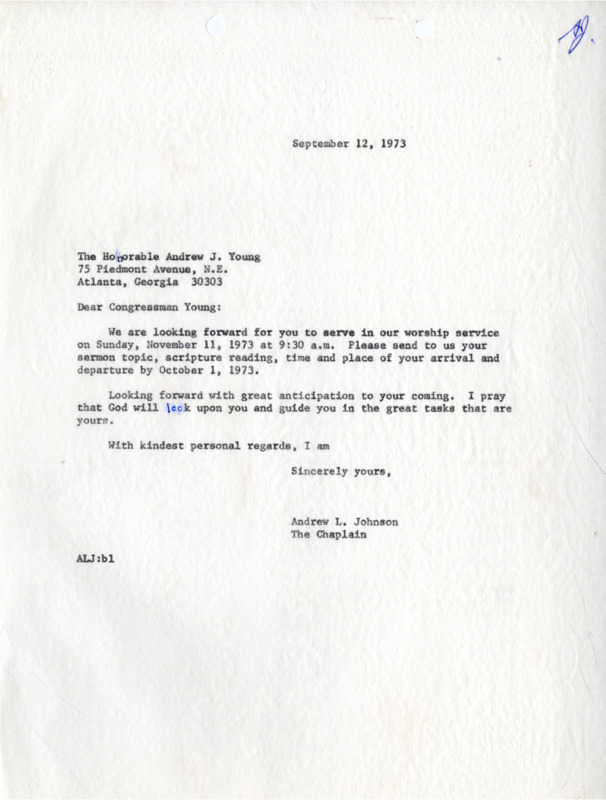
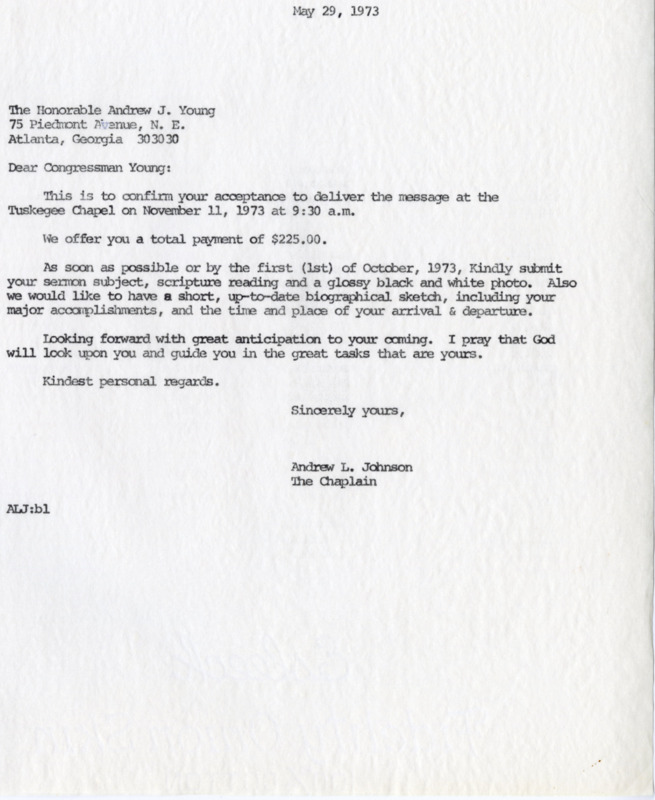
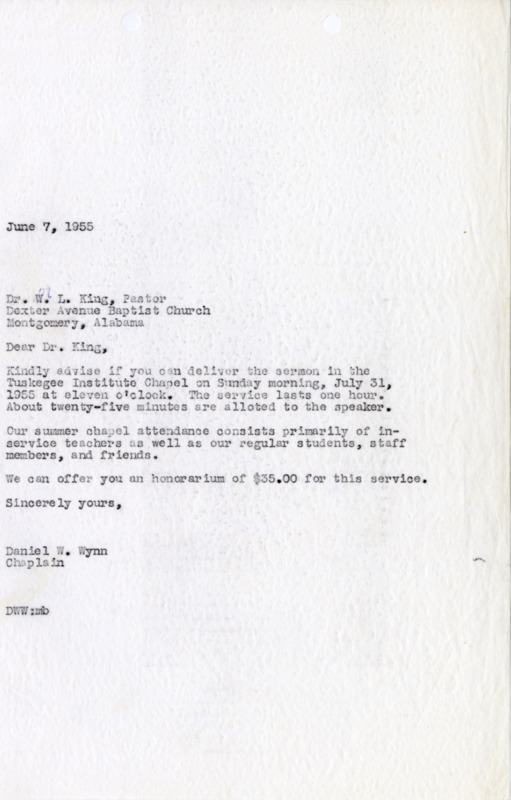
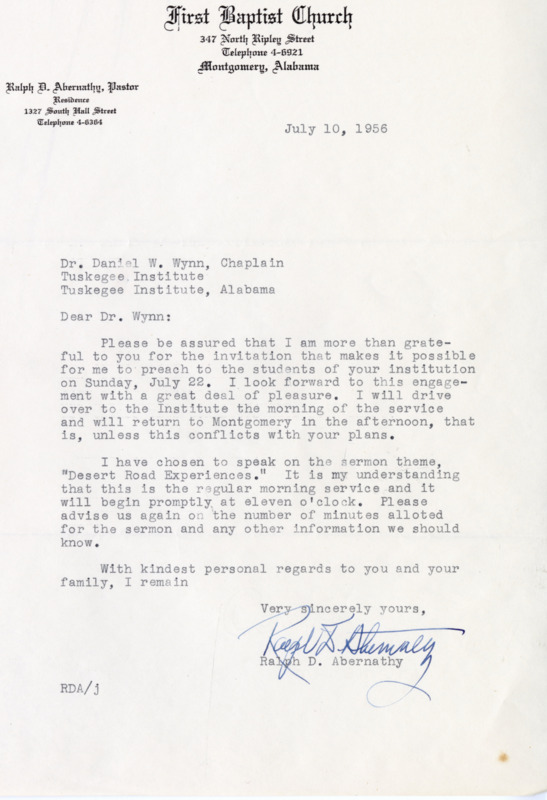
A letter from Chaplain Wynn to Dr. Martin Luther King Jr. asking if he can preach a sermon on 07/31/1955. Those who will be in attendance would be in-service teachers, as well as students, staff members and friends.
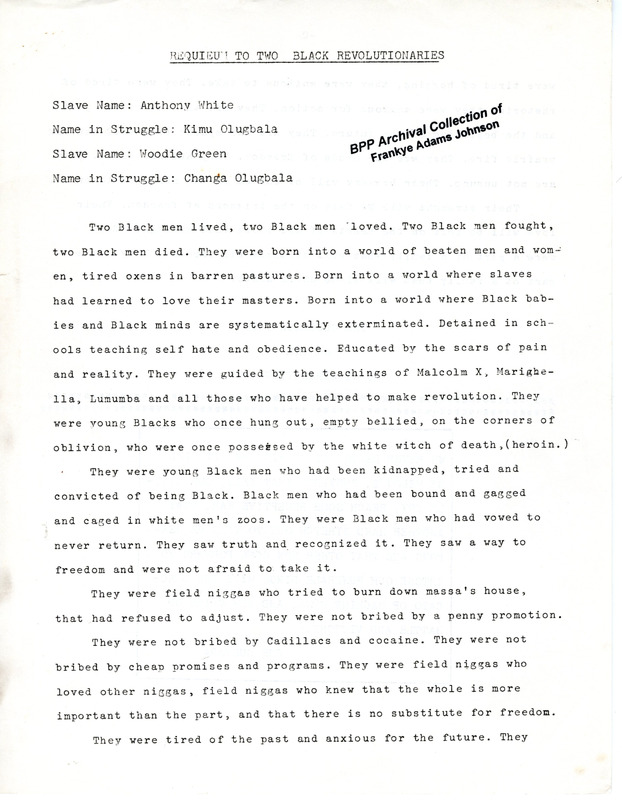
A requiem written to Anthony White (Kimu Olugbala) and Woodie Green (Changa Olugbala), two members of the Black Liberation Army (BLA) who died in prison. The author writes that their memory will be used as fuel for the ongoing struggle against oppression. A quote from Argentine Marxist revolutionary Che Guevara is printed at the bottom of page 2.
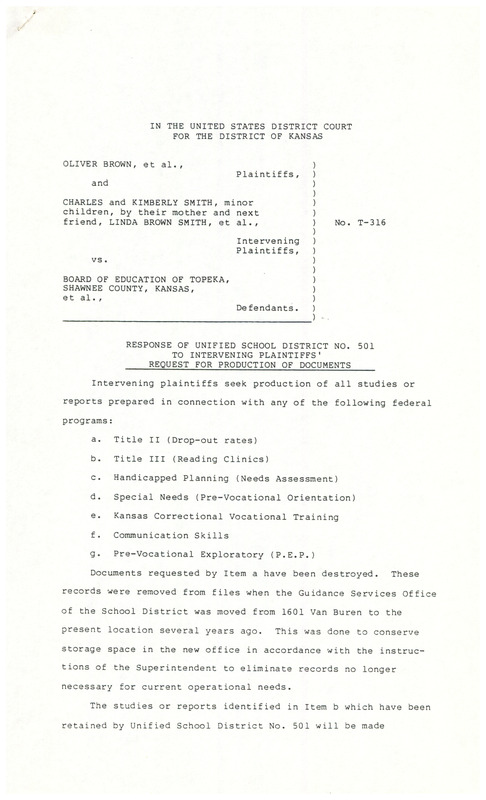
Case Data and Exhibits for Brown III, a relitigation of Brown v. Topeka Board of Education (1954) that corrected resegregation issues caused by open enrollment school choice in 1992. Response of Topeka Public Schools defense attorneys to plaintiff attorneys request for production of documents. Many of the documents requested no longer exist.
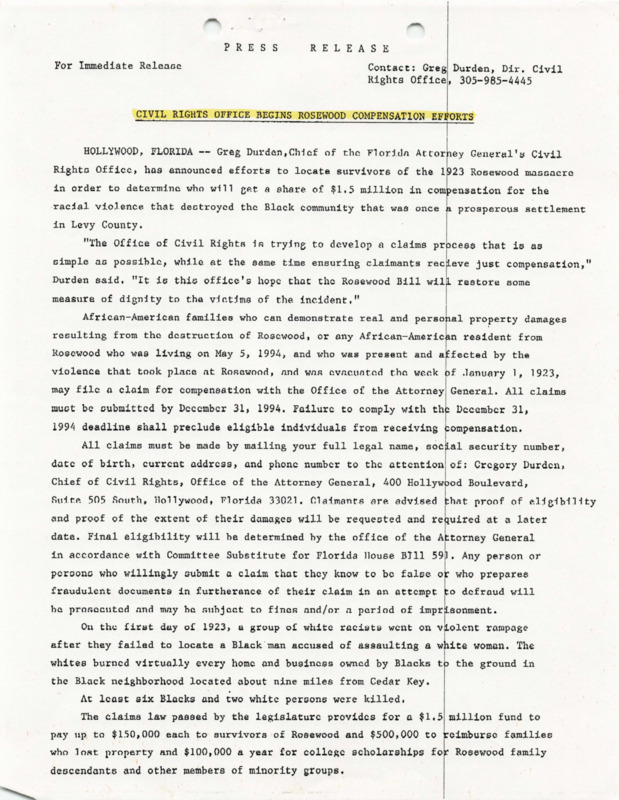
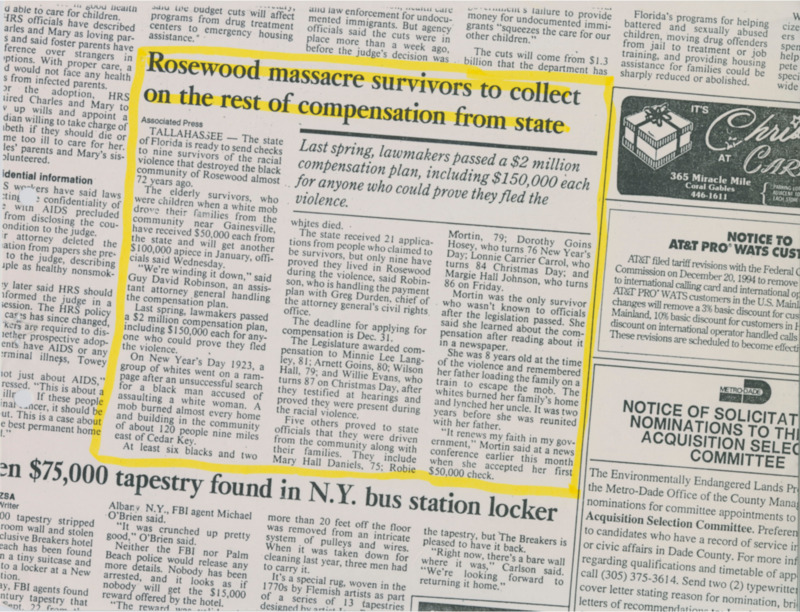
A 1995 newspaper clipping highlighting Minnie Lee Langley’s written plea for compensation tied to the 1923 Rosewood Massacre. A survivor of the event, Langley recounts the devastating events, the personal losses she endured, and her pursuit of justice decades after the destruction of the all-Black community.
Newspaper clippings from 1995 document Minnie Lee Langley’s efforts to secure compensation for the 1923 Rosewood Massacre. Through her written statements, Langley shares vivid accounts of the tragedy, reflecting on the losses endured and her pursuit of justice for her community.
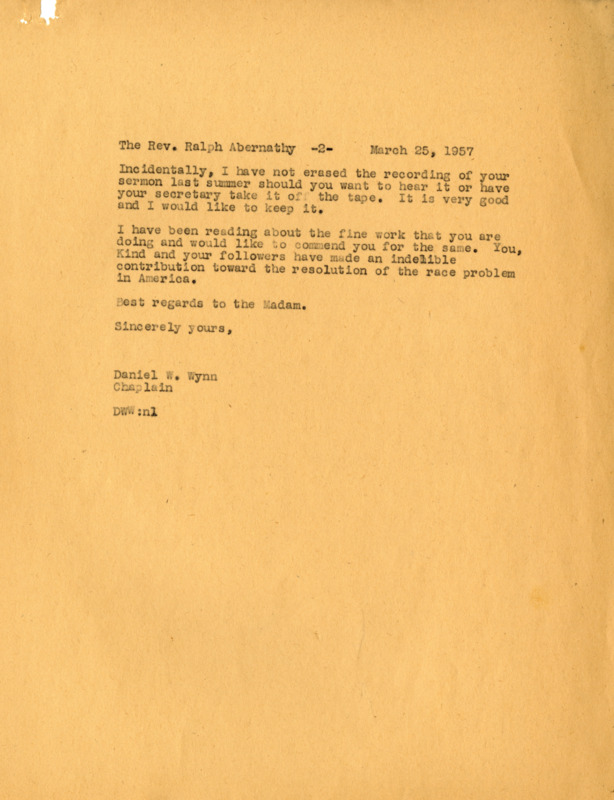
The second page of a letter from Chaplain Wynn to Rev. Abernathy stating that they kept his recording from the previous summer and commend him on his work in the Civil Rights Movement.
Rev. Coleman Turner was a Methodist minister and became involved with the Child Development Group of Mississippi (CDGM) through his ministry. He talks about his time as a member of the CDGM board and becoming the chairman of the board later.
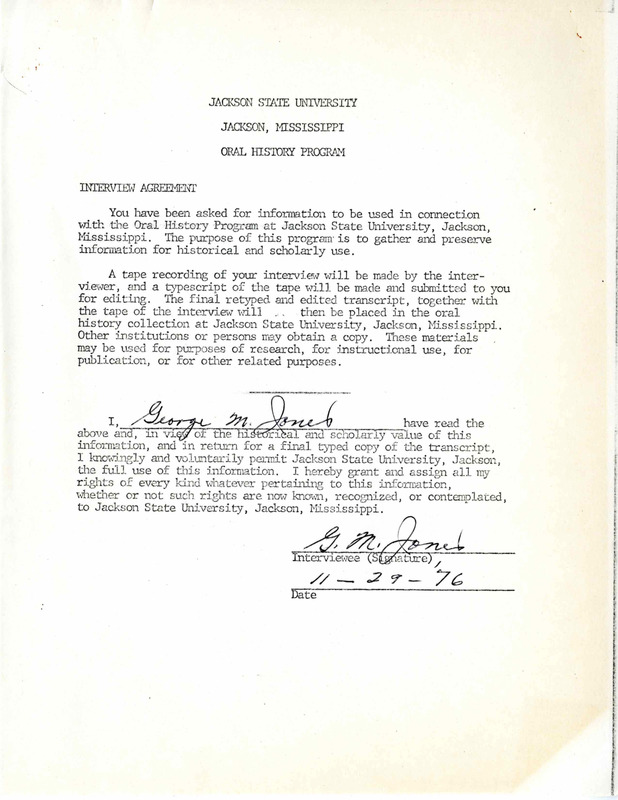
Rev. George Jones was born in 1903 in Hermanville, Mississippi. He says the “Good Old Days” was the time about 40 years ago when he enjoyed baseball games and the fashions of the time. He talks about his education and his career as a teacher and principal, eventually moving to the Jackson area to teach. The transcript contains handwritten edits.
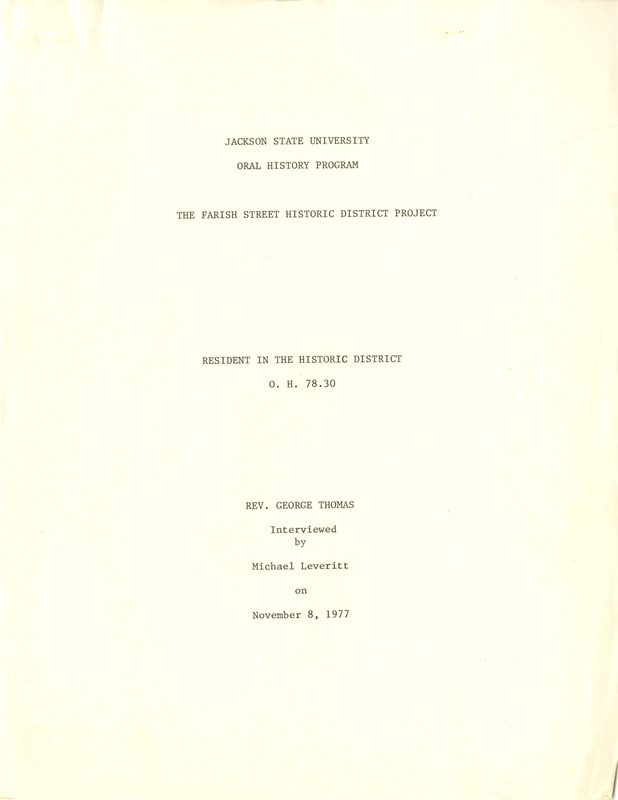
Rev. George Thomas was a pastor at a church in Terry, Mississippi, and also worked as a contractor and carpenter. He possessed several plans from early buildings which he built in the Farish Street District. He talks about the construction of new roads and buildings as Jackson converted from dirt roads and horses to a more metropolitan space.
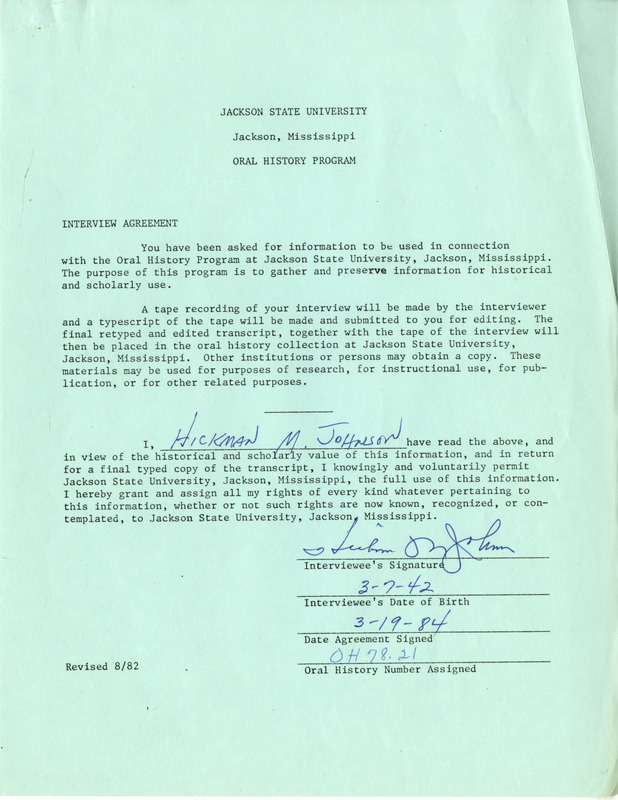
Hickman M. Johnson came to Jackson in 1967 and had just finished his 10th year as pastor of Farish Street Baptist Church. He talks about the civil rights activist spirit that existed there in 1967. He goes on to discuss the deterioration of the district and discusses his ideas about how to revitalize the area. Transcript contains handwritten edits.
Rev. Horace L. Buckley was elected to the Mississippi House of Representatives in 1975 to a four year term. In the interview, he reflects on his time in politics and working with Robert Clark. He also discusses what made him run for a representative seat as a pastor, and the connections he made within the church community and the legislature.
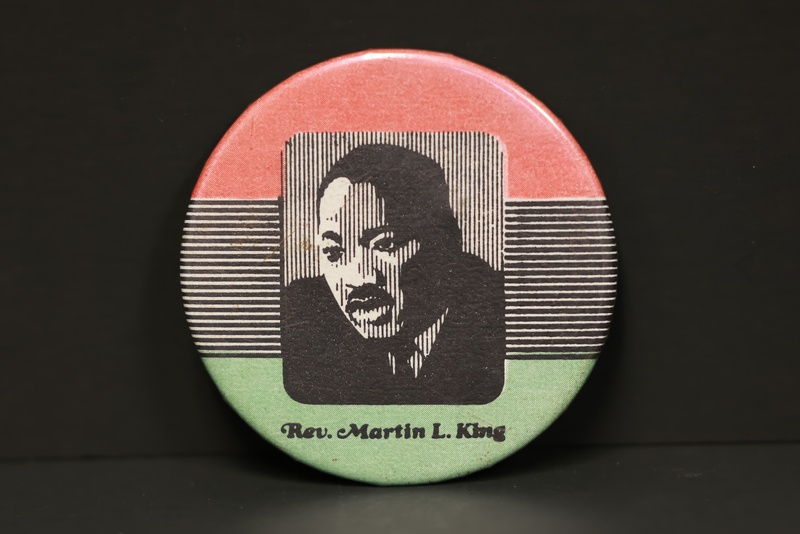
A red, green, and black button with an image of Dr. Martin Luther King Jr. Dr. King was a co-founder of the Southern Christian Leadership Conference (SCLC) and remained its leader, and the most prominent leader of the Civil Rights Movement in the South, until his assassination in Memphis in 1968.
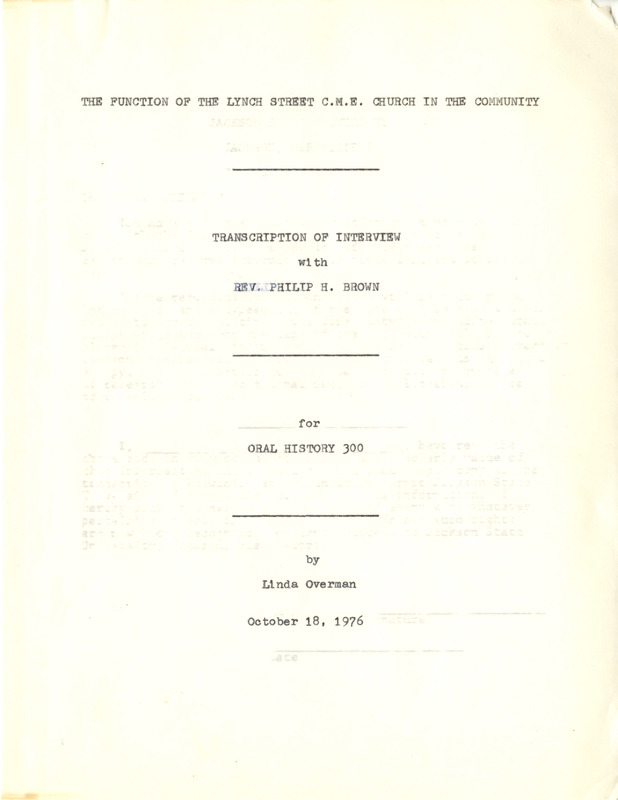
Rev. Phillip Brown was a minister at Lynch Street C.M.E. Church from 1952-1953. The purpose of the interview was to learn about the function of the Lynch Street C.M.E. Church in the community. Rev. Brown talks about being a life-long member of the church since its inception. The transcript is edited with handwritten notes.
At the time of the interview, Rev. R.L.T. Smith was on the board of directors of Mississippi Action for Progress (MAP), which was part of his larger work within the community for people in need. He tells the story of how Head Start came to be in Mississippi.
Rev. Rims Barber came to Mississippi in 1964 to assist in the Civil Rights Movement. He talks about his work in the movement and Delta Ministry and about the connection between the Child Development Group of Mississippi (CDGM) and Delta Ministry in bringing Head Start to Mississippi through grassroots organizing and community development.
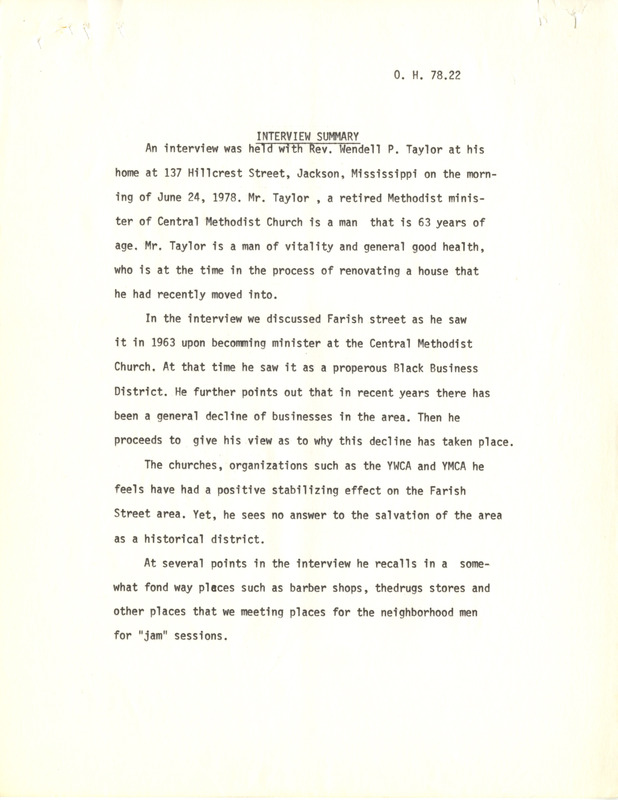
Rev. Wendell P. Taylor became minister at Central Methodist Church in the Farish Street District in 1963 and was retired at the time of the interview. He talks about the district being prosperous for Black businesses at that time but that a decline has taken place since businesses have left. The transcript is heavily edited with handwritten notes.
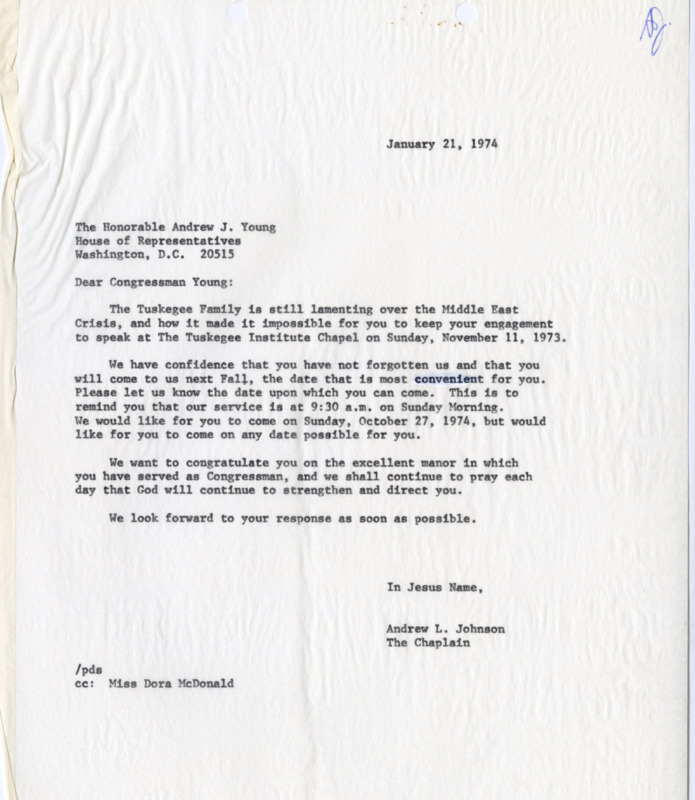
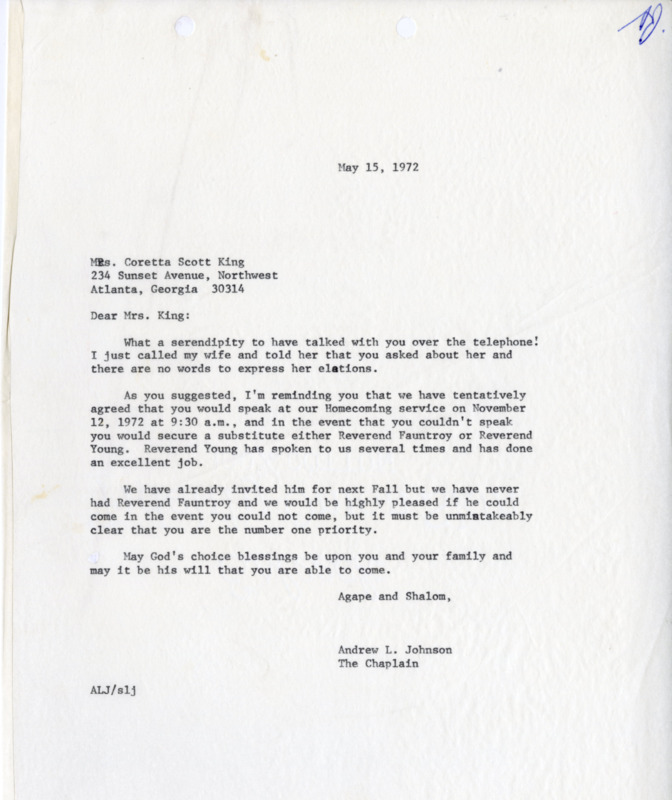
A letter from Chaplain Johnson to Coretta Scott King advising that she is the number one priority to have speak however, if she could not Rev. Fauntroy would be a welcomed second choice.
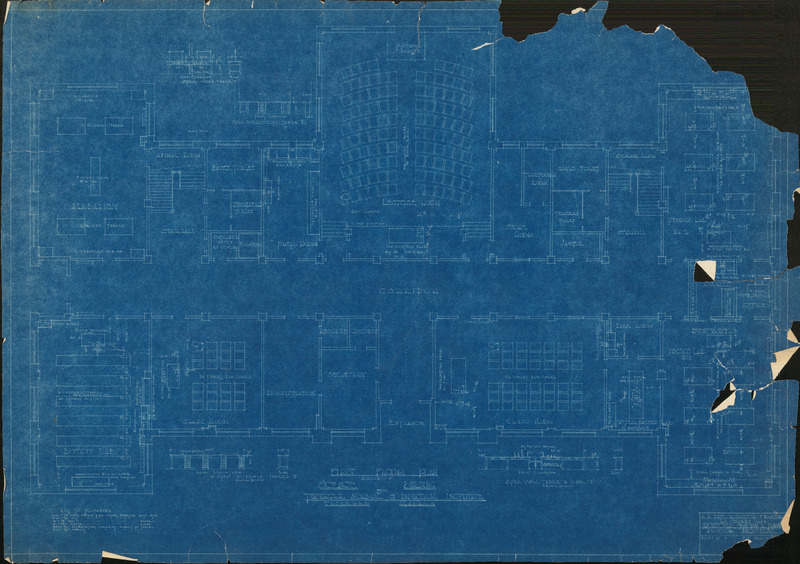
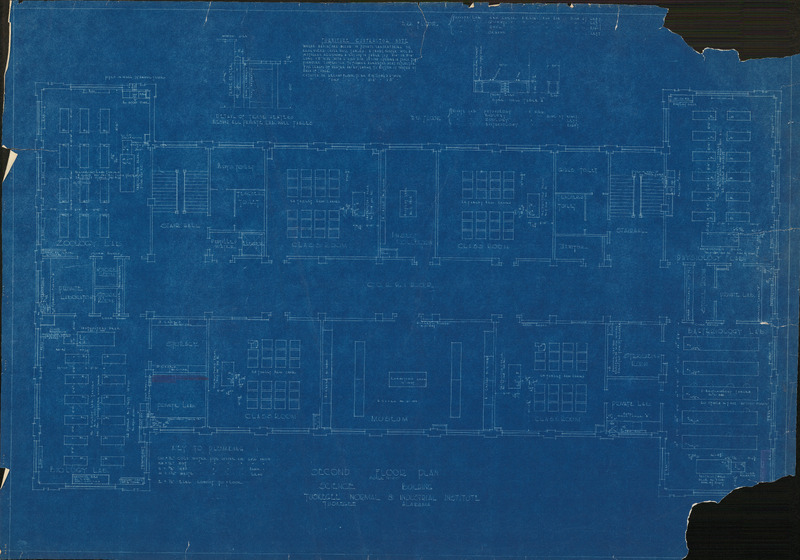
A revised construction floor plan blueprint for the first floor of Science Building at Tuskegee Normal and Industrial Institute at Tuskegee, Alabama. This floor plan includes science labs, offices, restrooms, lecture room with seating arrangements, and measurements for table spacing.
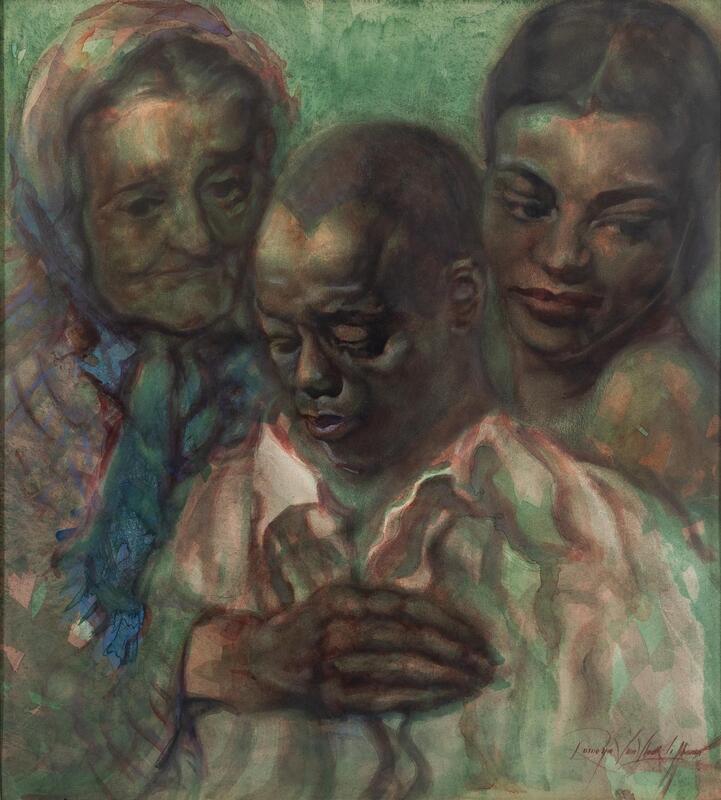
Romeyn van Vleck Lippman was a 19th-century painter and educator. Revival depicts three figures standing in a position of grief and consolation. The central Black boy is looking down grievingly, a Black woman is behind him with an averted gaze, and to his left is a veiled elderly White woman gazing at him while holding his chest.
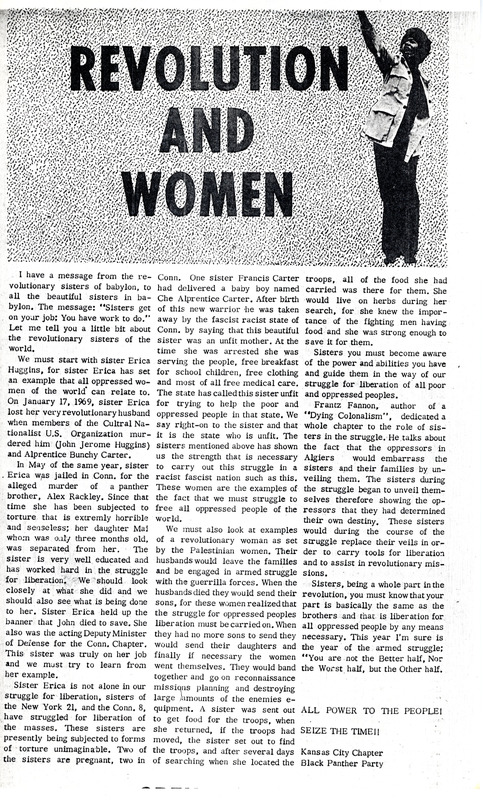
A newspaper article from The Black Panther recounting several examples of the role Black women have played in the movement for Black liberation (date unknown). The article is credited to the Kansas City Chapter of Black Panther Party. A poem about Black women is also included in the article, author unknown.
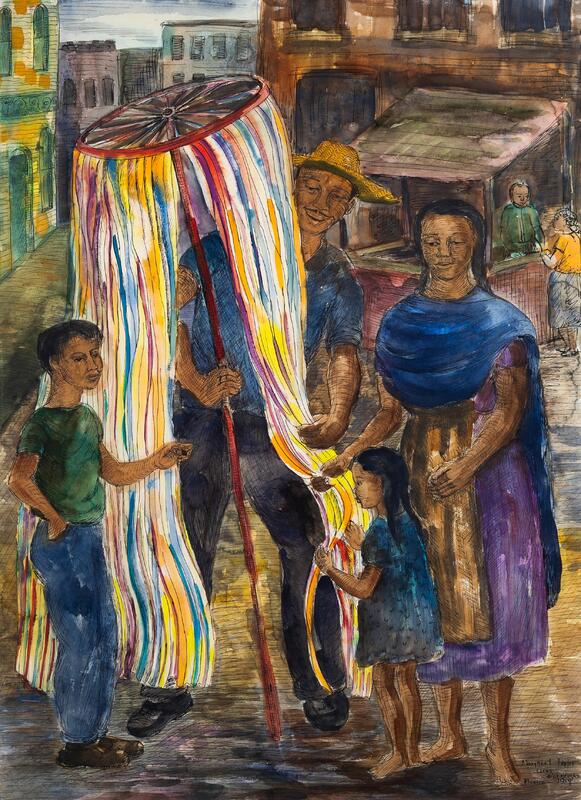
Margaret Taylor Goss Burroughs was an artist, historian, teacher, and writer from St. Rose, LA. Ribbon Man: Mexico City Market is a watercolor scene of a mother buying ribbons for her children. The ribbon seller joyously sells his colorful ribbons in the middle of a market in Mexico City, MX.
In this interview, Texas Southern art alumnus Richard "Sunnyside" Williams discusses his experiences as a student who graduated in 1994. He learned from faculty like Biggers, Simms, and Vital, and cites classmates and fellow alumni Roy Vinson Thomas and Karl Hall as influences. Williams taught at Worthing High School for years after graduating.