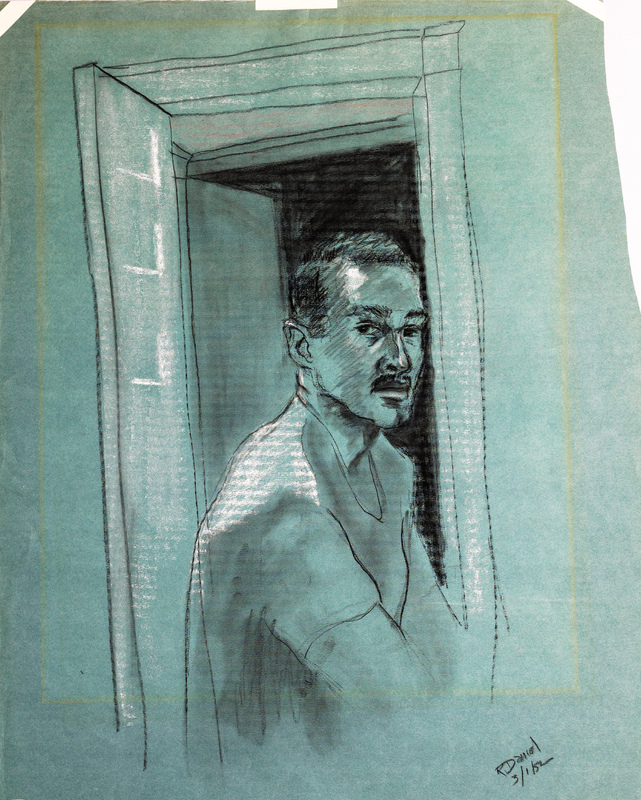
Robert A. Daniel was an artist from Tallahassee, FL. Self Portrait depicts the artist in a door frame, looking toward the viewer. Daniel overlays a muted blue watercolor and a gold sketched frame, further centering him as the subject.
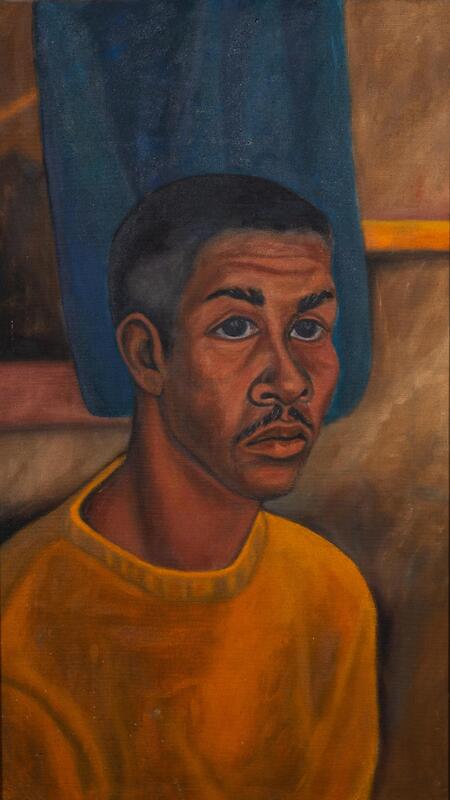
Thomas Edward Goodwin was an artist from Chicago, Ill. Self Portrait is a painting of the artist staring toward the viewer. Goodwin wears a yellow sweater in a room with neutral colors and a dark blue curtain. His saturated skin, round eyes, and short black hair help to depict the artist.
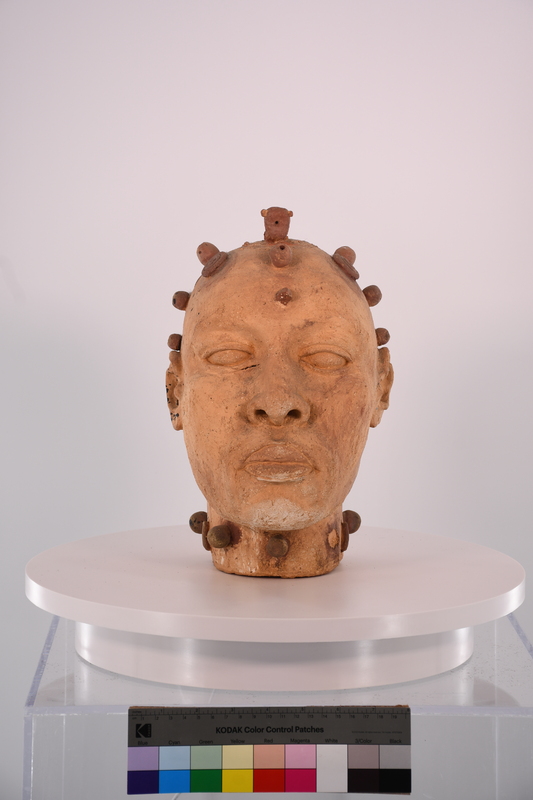
This unknown student’s bust was created during their time as an art student at TSU. Under the instruction of Professor Carroll Harris Simms, artists would create self-portraits embellished with decorations like spirals and accentuated crown pieces, like in this sculpture. These busts are inspired by Nok terracotta sculptures and Ife busts, which Simms saw during his travels to Western Africa.
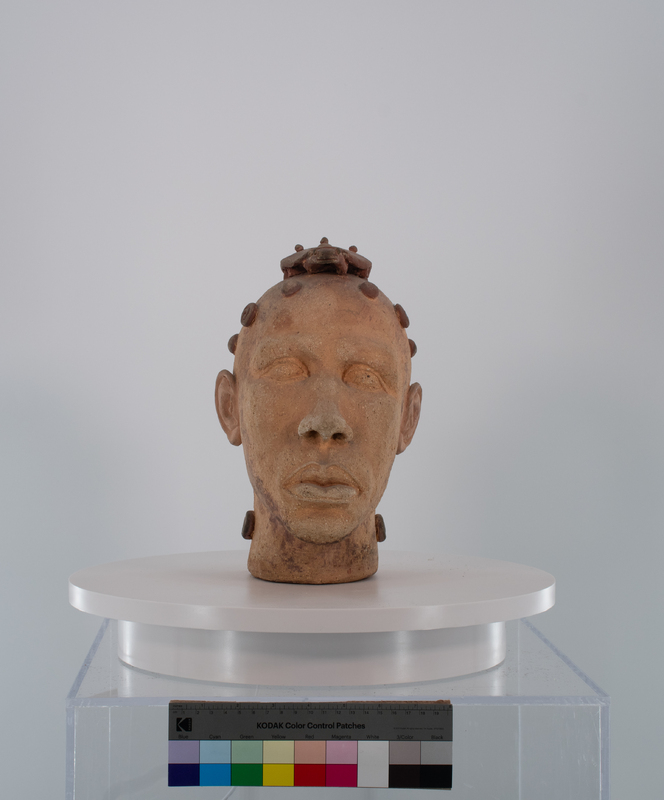
This unknown student’s bust was created during their time as an art student at TSU. Under the instruction of Professor Carroll Harris Simms, artists would create self-portraits embellished with decorations like spirals and accentuated crown pieces, like in this sculpture, which features a tortoise, a common symbol of longevity. These busts are inspired by Nok terracotta sculptures and Ife busts, which Simms saw during his travels to Western Africa.
Sen. Alice Varnado Harden served in the Mississippi State Senate from 1988 until her death in 2012. She talks about her work with Robert Clark and the Mississippi Black Caucus. She also discusses the many issues she lobbied for as an elected official and her relationships with other members in the state legislature.
Senator David L. Jordan began serving on the Mississippi State Senate in 1993 and has been serving for 31 years. He recounts growing up on a plantation in Greenwood, Mississippi. The interview focuses on the work he did with Robert Clark in the Mississippi Legislature to support and obtain funds for Historically Black Colleges.
Sen. Johnnie Walls Jr. served on the Mississippi State Senate from 1993-2010. He details the strides made in the Senate for the HBCUs and other institutions in the state. He points to key situations and circumstances that show Robert Clark’s integrity and his influence and thanks him for his leadership of the Black Caucus and his mentorship.
Sen. Willie Simmons served in the Mississippi Senate from 1993 to 2020. He details the opposition and challenges he faced while fighting for education reform and better treatment of the Black colleges in Mississippi. He looks at his career retrospectively and ponders over how he would like to be remembered.
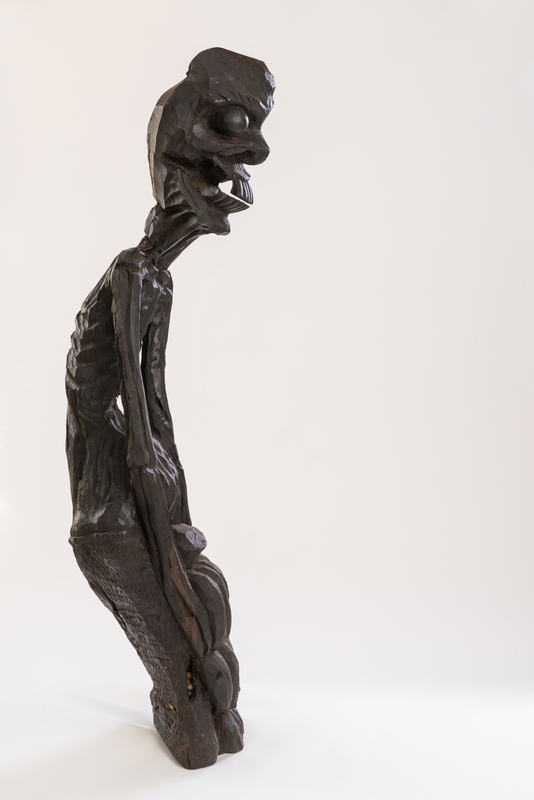
Entrusted to FAMU based on the university's studies in agriculture, the Sentry to the Fields, protects crops, like the plantains it is holding, from trespassers in Ghana fields. This spirit itself shows evidence of violence, decay and death.
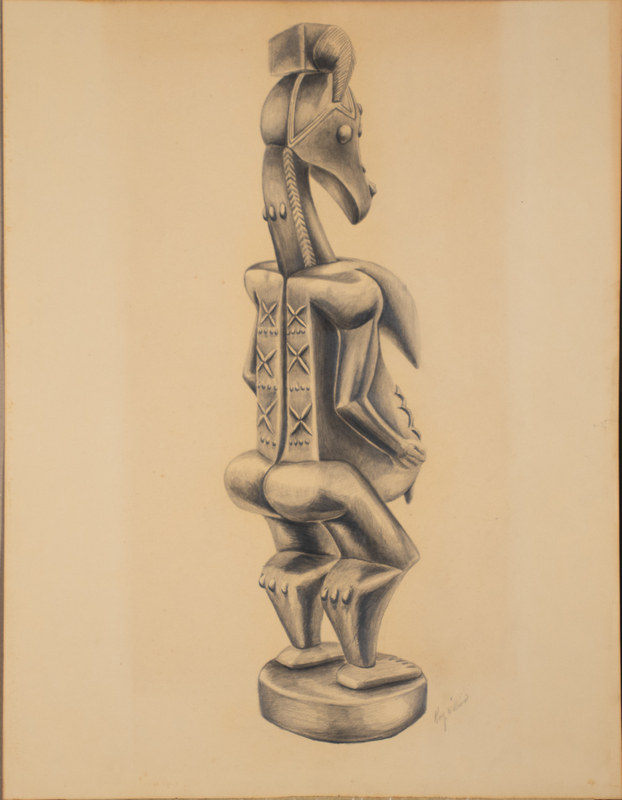
Williams' drawing is of a Senufo female carving. Texas Southern art students would often use the African Art collection on campus to create drawings like this. Dr. Biggers, the founder of the art department, would bring artwork from his travels to Africa back to Houston. This practice allowed students to get a glimpse of African customs and art, which was a key part of the Afrocentrist curriculum that Biggers worked to develop.
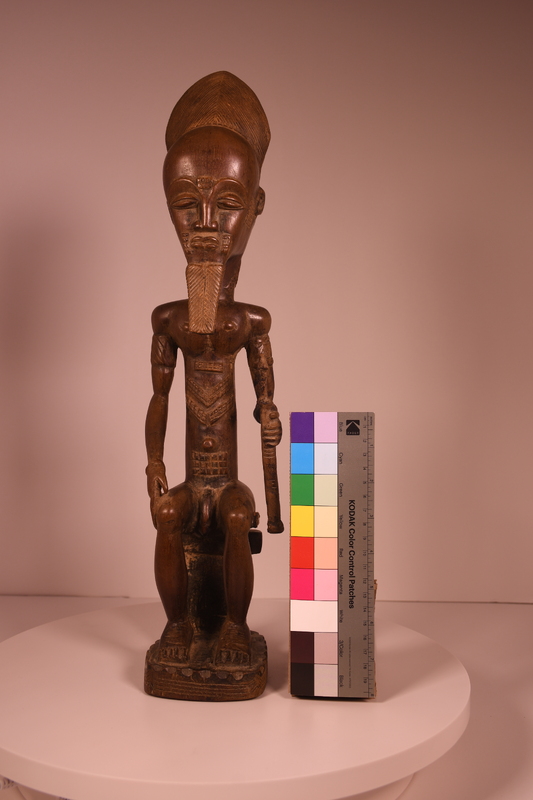
Along with the paired woman and child figure, this male counterpart is heavily covered with facial and body markings as he is regally seated on a decorated stool. The man is holding a sword or spear. His postiche, or false metal beard, is prominent while his upright posture asserts his status. This piece originates from the Senufo people of West Africa
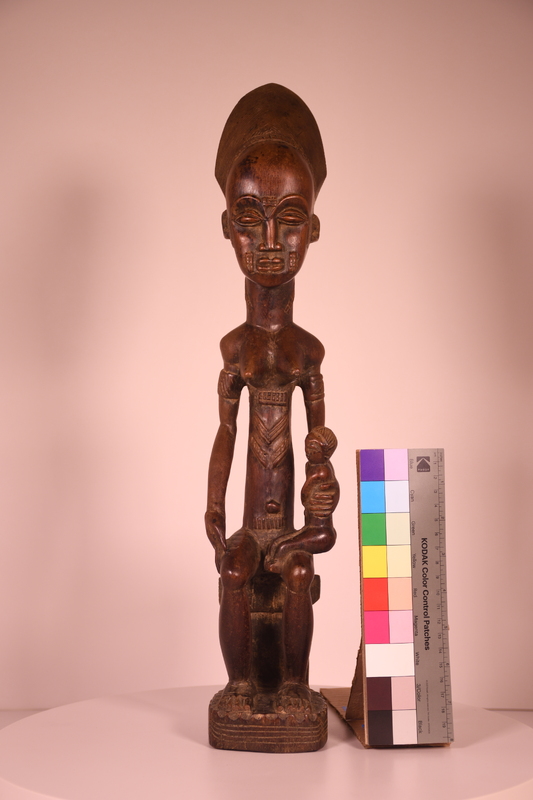
This intricate work of a seated mother and child, possibly royalty, originates from the Senufo people of West Africa. Detailed body modifications and scars cover the mother's body as she calmly looks out. A child on her left leg is cradled close to her body. This piece is paired with a corresponding male figure.
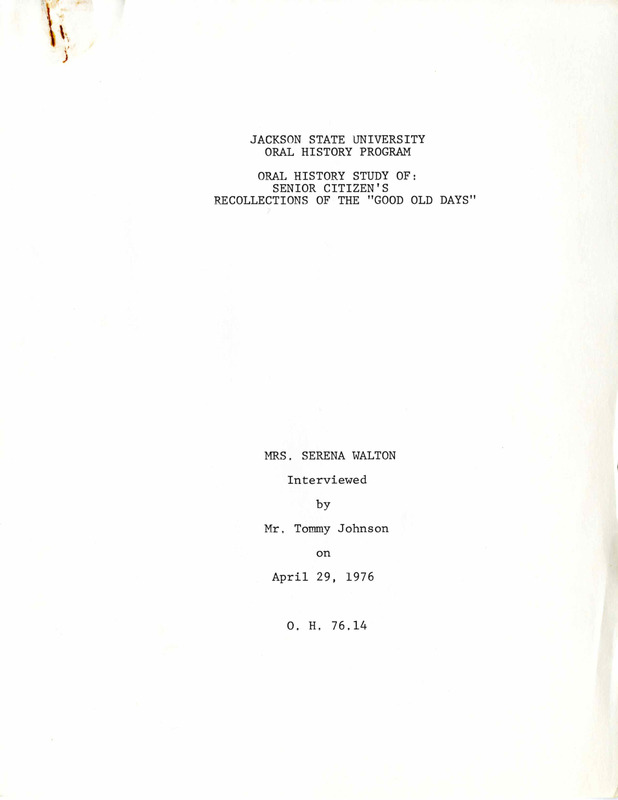
Serena Walton was born in 1908 and moved to Jackson in 1937 after marriage. She recalls the “Good Old Days" as being days of fun, misery, and everyday existence during the 1930's through 1950's. Ms. Walton talks about her younger days and then her time at college during the Great Depression. She also discusses her time teaching in Yazoo County.
Andrew L. Johnson stresses the importance of asking the right questions in faith and life, drawing on the prophet Jeremiah’s warnings to King Zedekiah to emphasize genuine inquiry, gratitude and futures to faithful obedience.
Arthaniel Harris emphasize divine guidance and attentiveness in leadership, drawing on Moses’ early life, the importance of responding to others’ needs and God’s call, and the role of early nutrition in brain development.
Benjamin N. Smith's sermon highlighted the majesty and universality of God's love, exploring its four dimensions and the promise of eternal life, while honoring the Boone Methodist choir and Dr. Joseph S. Hines for his academic and Christian contributions.
Gerhardt W. Hyatt discussed the human struggle with powerlessness, referencing biblical stories of John the Baptist and Jesus feeding the multitude, and stressed the importance of recognizing personal limitations and seeking divine help.
John Hurst Adams criticized modern society's reliance on human institutions and technological solutions, arguing that true solutions lie in spiritual commitment and moral excellence.
Vincent A. Edwards presents Jesus as the gate for the sheep to stress authentic Christian living, urging believers—especially educators in Head Start programs—to model integrity, responsibility, and righteous guidance, and concluding with a prayer for wisdom, strength, and moral grounding for the Tuskegee Institute community.
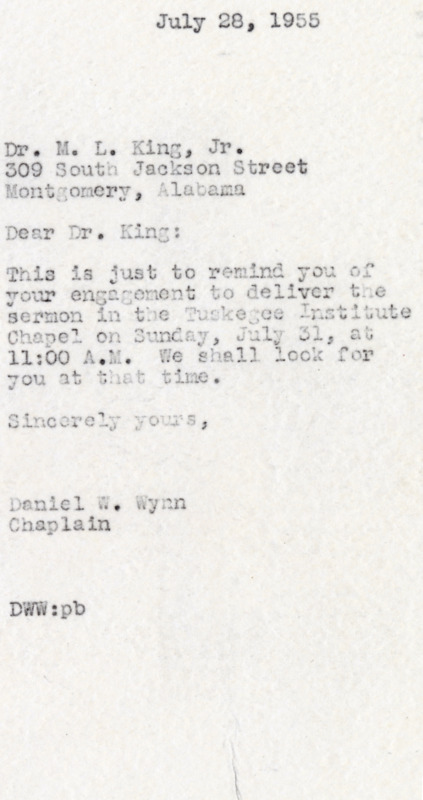
A letter from Chaplain Wynn to Dr. Martin Luther King Jr. on onion skin paper reminding Dr. King of his preaching engagement on 07/31/1955 at Tuskegee Institute’s Chapel at 11am.
Dr. Benjamin E. Mays’ sermon at Tuskegee University urged students to integrate tradition with progress, value historical memory, and pursue noble ideals over longevity, emphasizing that a meaningful life is defined by purpose and self-reflection.
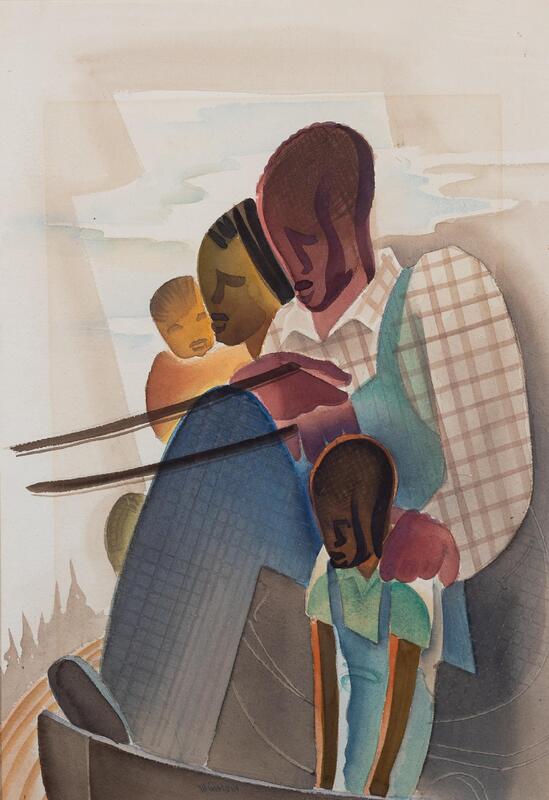
Born in Ohio, Vernon Winslow studied at the Art Institute of Chicago. Sharecropper’s Migration is a watercolor painting of a family with gestural features. With a muted red skin tone, the father rests his hand on his son’s shoulder to reassure him. The family wears a sad but hopeful expression as they ride on a horse carriage.
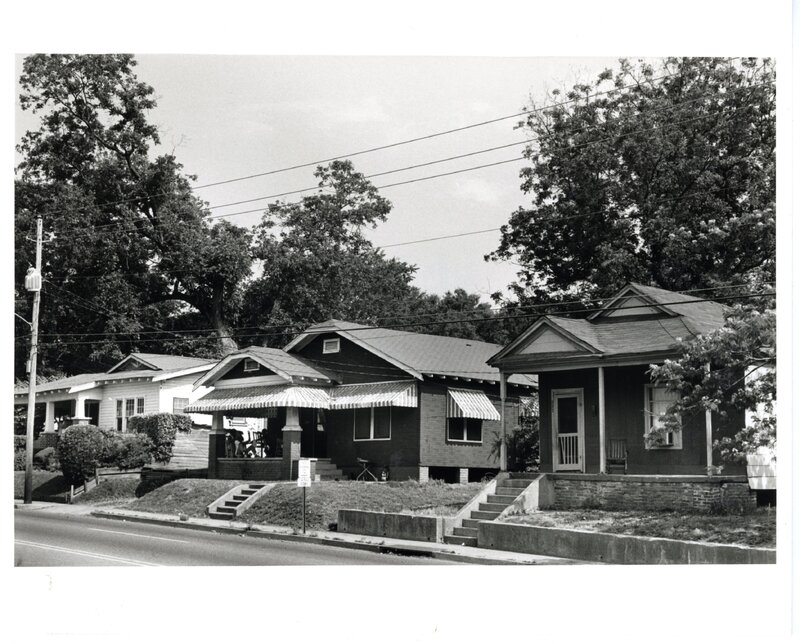
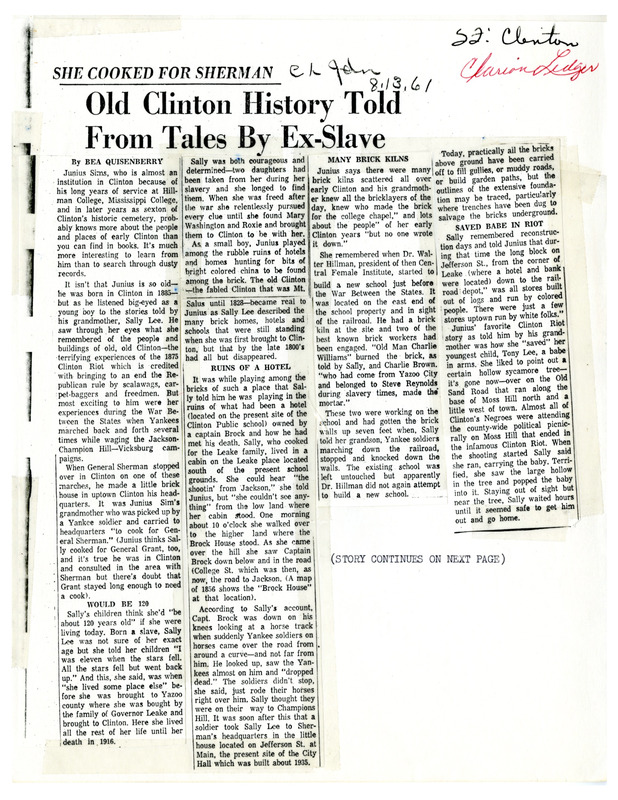
A newspaper article from the Clarion Ledger (Jackson, Mississippi) providing historical context to the Clinton Project Oral History Collection. The article tells stories about Sally Lee, a formerly enslaved woman who worked on the land that would become Clinton, Mississippi.
Shirley Chisholm, the first black woman elected to serve in the U.S. Congress, emphasizing the need for systemic change and collective action to achieve racial equality and social justice.
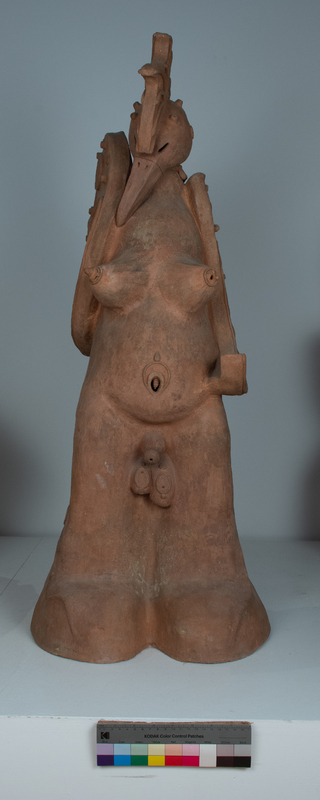
“Shrine #2,” by Harry Vital, features an intersex bird with both male and female features. This is a common theme found in Dogon sculptures originating from West Africa; these types of statues play a role in fertility rituals. The body has a smooth surface, while the wings and head are embellished with spiral designs.
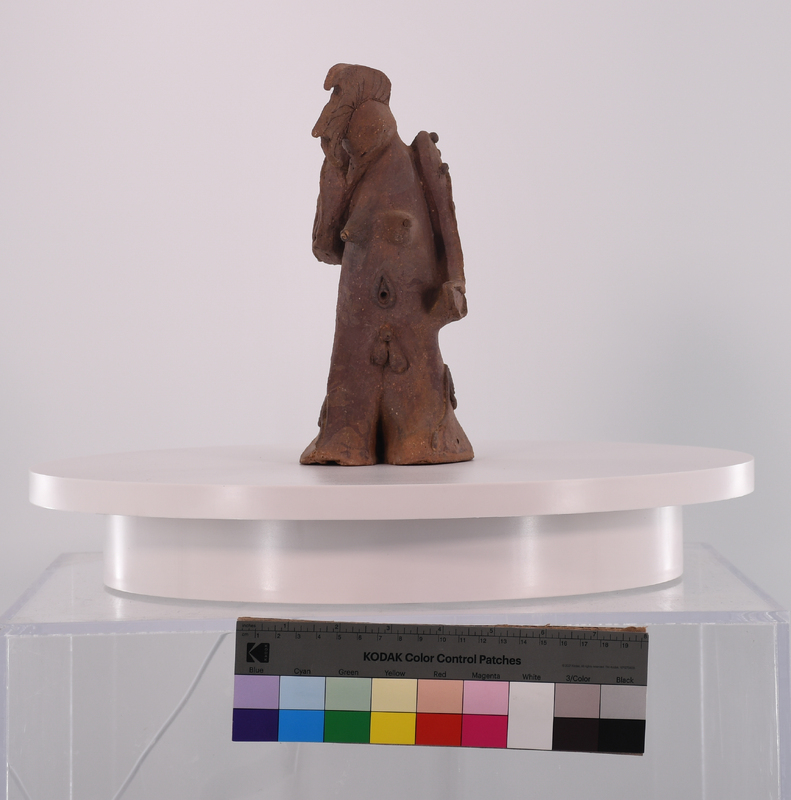
Vital's maquette appears to portray an intersex human-chicken hybrid, which displays both male and female sex organs. The artist adorned the sculpture with swirl embellishments, a common motif in TSU terracottas. Vital would go on to make a full-scale version of this sculpture.
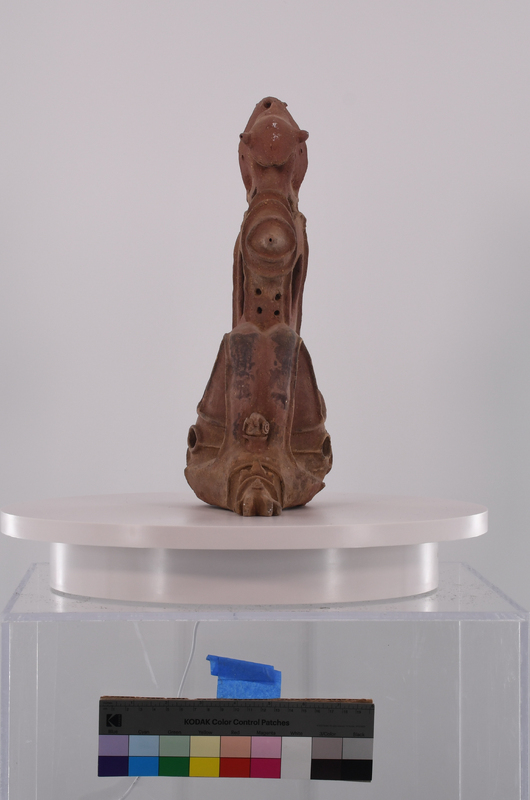
Like his other sculptures, Vital's maquette highlights hybridism, animal forms, and sexuality. Overall, the sculpture's form resembles a person sitting on a throne. On both sides of the top, a reptile creature sits above the shape of an open eye or breast. Towards the bottom, a phallic form is decorated with swirls, while a single claw-like structure supports the sculpture. The sculpture makes use of negative space in multiple sections.
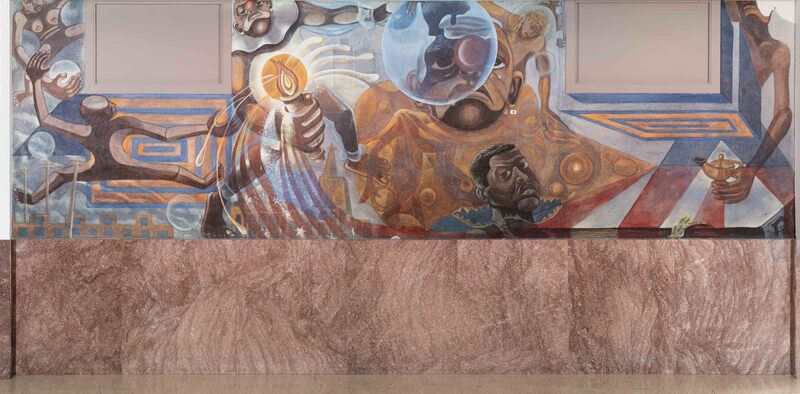
Thomas’ mural depicts an abstracted circus scene. In the center, three clowns, perhaps self-portraits, dressed in collars and muted colors, look seriously towards the viewer. The figures’ contemplative expressions stand in sharp contrast to their dress and profession.