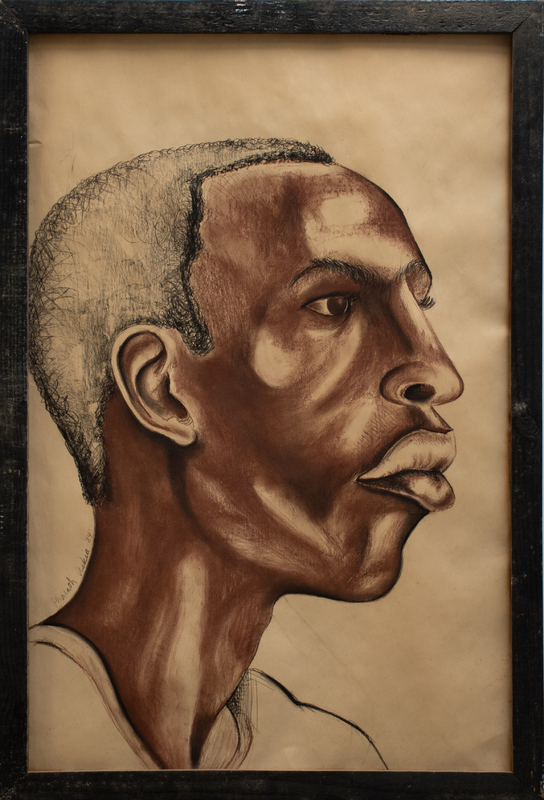
Askia’s drawing is a side portrait of a man looking into the distance. There is no background and only a sliver of his shirt is visible, implying the man is not confined to a specific time or setting. Many of Askia’s pieces are similar - drawn with pastel on paper, and placing the subjects outside of time and space.
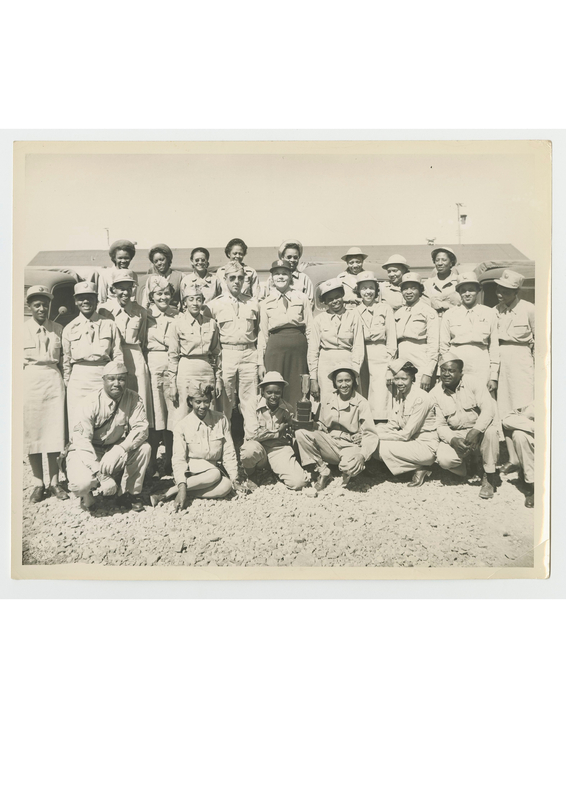
This photograph belongs to the Signal Corps, U.S. Army. Within this picture, two Black female soldiers squat and kneel with a trophy while others smile and pose for the camera. This interracial, intergender photograph shows the inclusivity of the U.S. military.
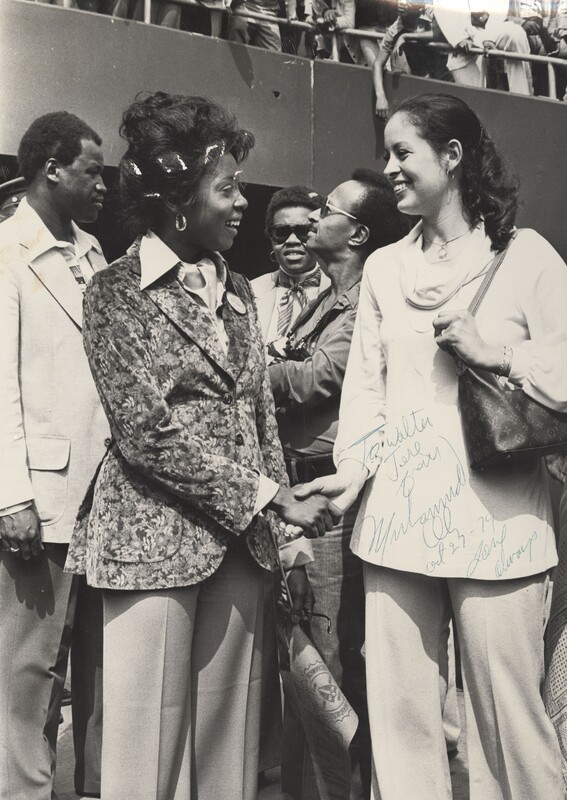
This black and white photograph features the third wife of Muhammad Ali, Veronica Porché Ali, shaking hands with an unidentified female holding a Florida A&M flag. The photo is also blessed with a note and signature from Muhammad Ali, stating, “To Walter… Muhammad Ali Oct 27 - 79 Love always.”
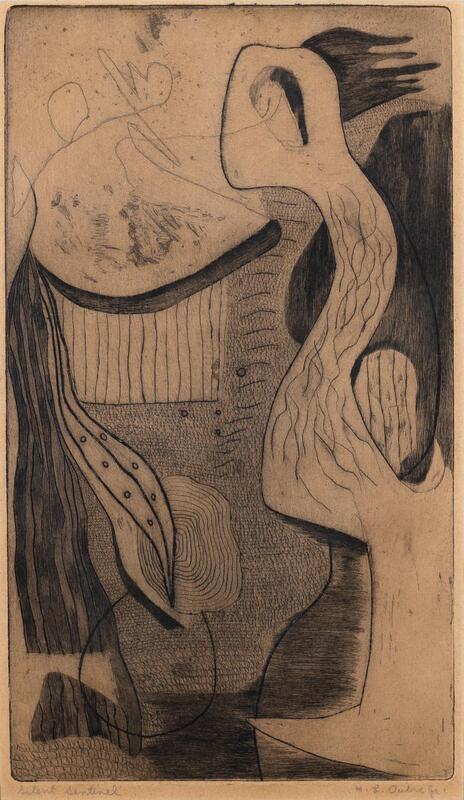
Hayward Oubre was a multimedia artist and educator from New Orleans, LA. His etching Silent Sentinel, created during his MFA at the University of Iowa, reflects his interrogation of social realism and cultural symbology.
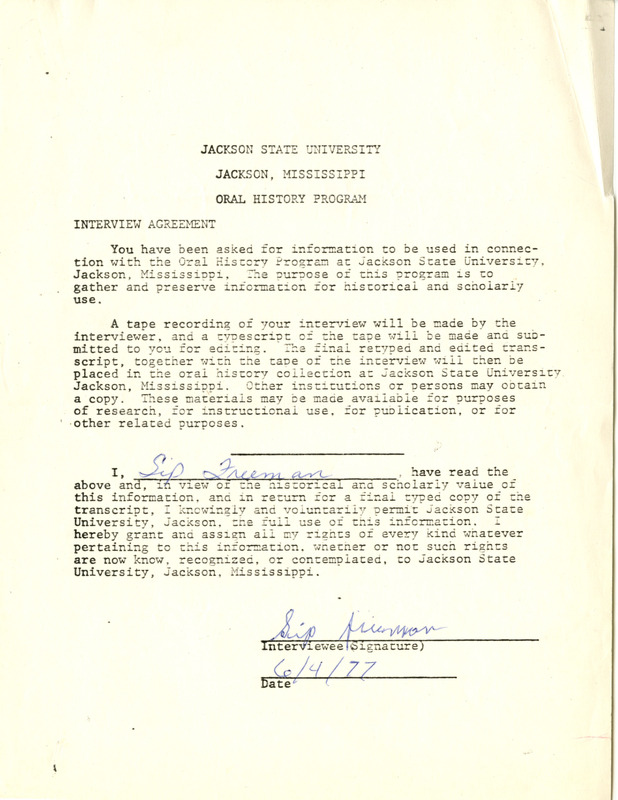
Sip Freeman’s earliest memories were from when he was 8 years old. He talks about his childhood, his family and his church. He also talks about some experiences with White people and shares some stories about slavery that had been passed down through his family. The transcript is handwritten.
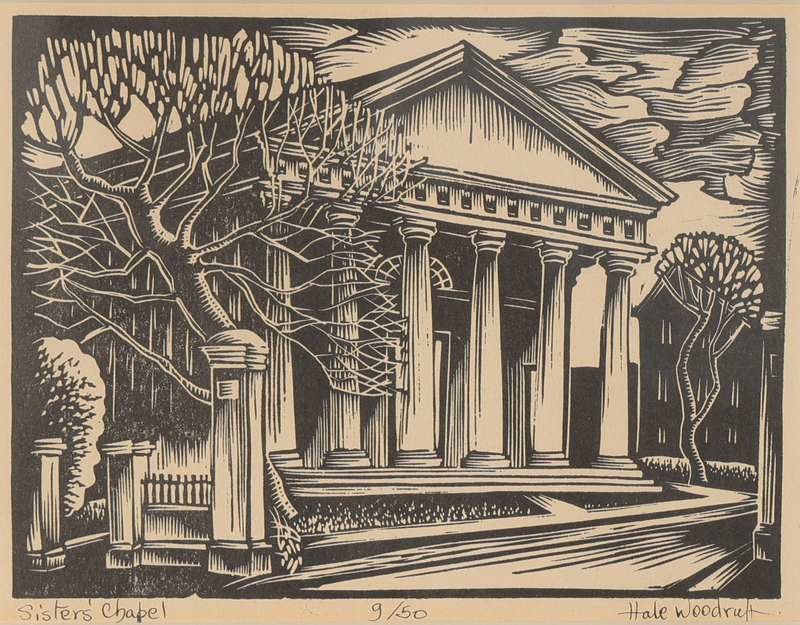
Hale Aspacio Woodruff was an artist and art educator known for his murals, paintings, and prints from Cairo, IL. "Sister's Chapel" depicts a religious building on Spelman College's campus. Sister's Chapel now serves as a center for students to engage in theology through Womanist theory and praxis.
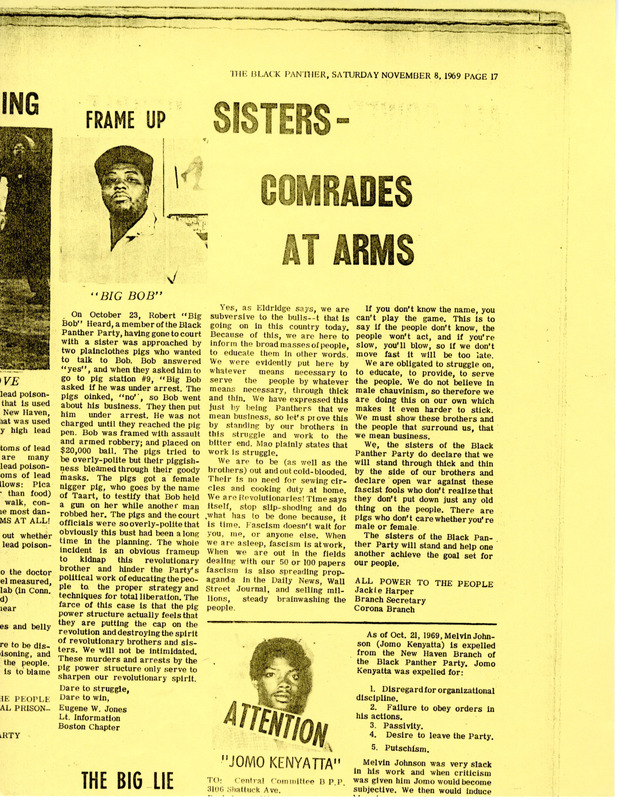
A newspaper article from The Black Panther by Jackie Harper, Branch Secretary of the Corona Branch of the Black Panther Party. She tells the story of Robert “Big Bob” Heard who was framed for assault by the police and declares that the women of the Party will stand in solidarity with their brothers in the Party against the racist police forces.
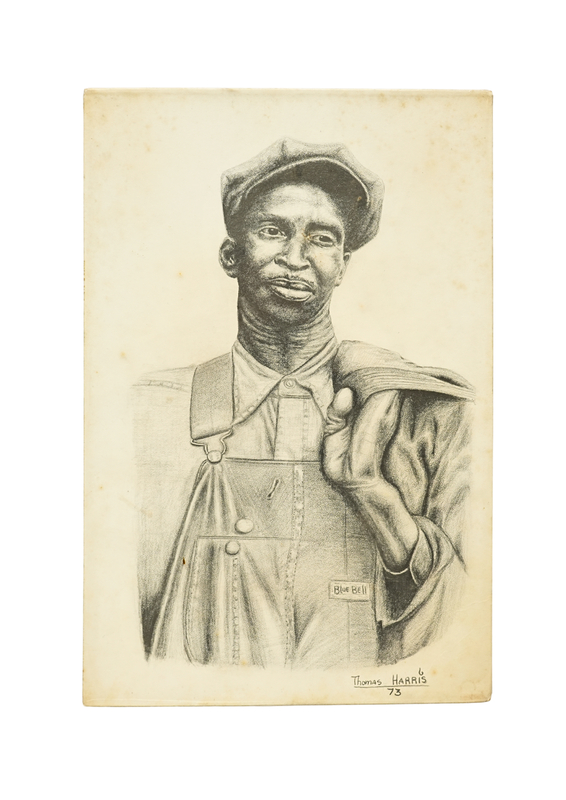
A 1973 pencil sketch of an African American Blue Bell man by Thomas Harris. The hat-wearing man is looking off to the side with his jacket draping his shoulder, showing off his “Blue Bell”-tagged apron (or overalls) and collared shirt.
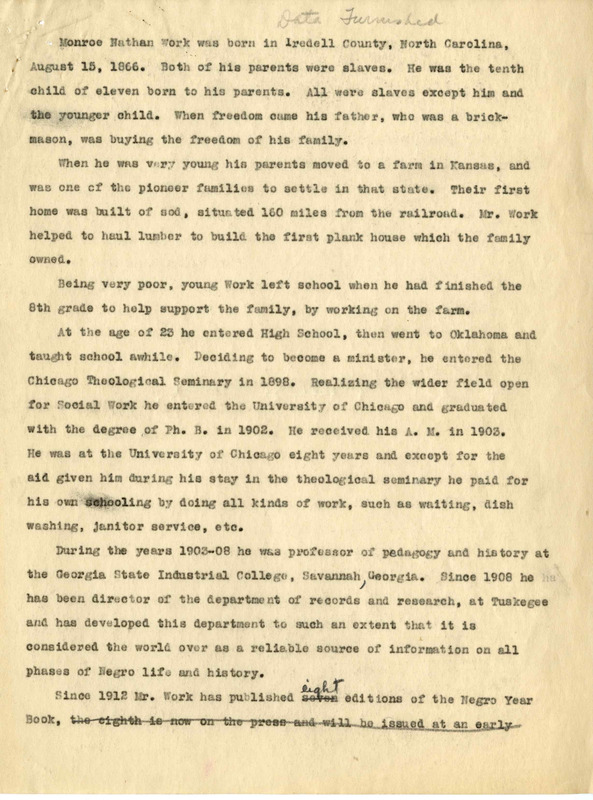
Four-page document containing biographical information about Monroe N. Work, such as his early life, education, professional accomplishments, and membership in organizations. The summary ends with an overview of Work's relationship with his wife, Florence Henderson Work.
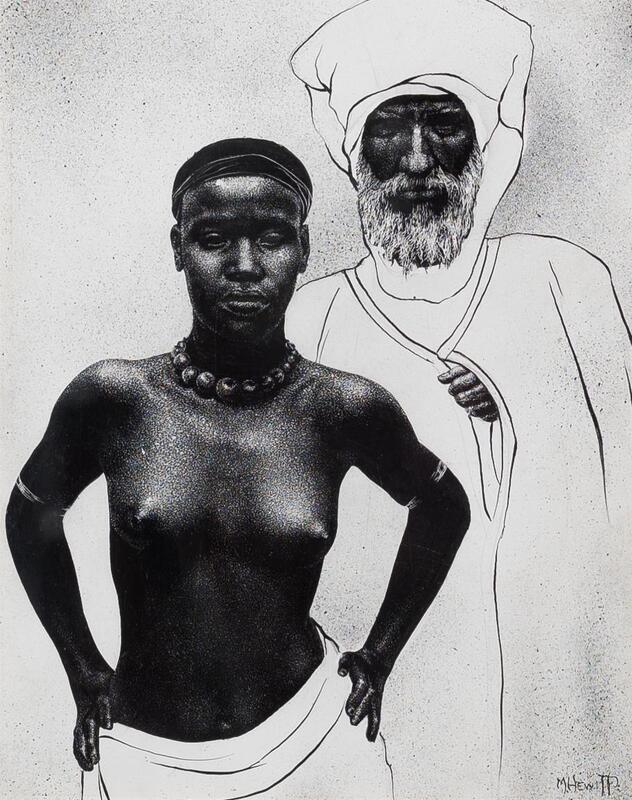
Mark Hewitt was an artist from Boston, MA. Slave Girl is a black and white print of a young African woman standing before a bearded man wearing all white. The man’s hand rests on his chest, and the shirtless woman wears a solemn expression and looks towards the viewer.
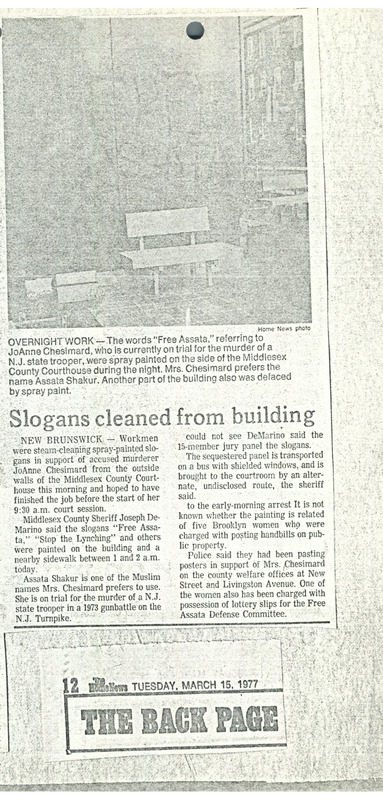
A newspaper article from The Home News about workmen cleaning painted slogans in support of Assata Shakur (JoAnne Chesimard), on trial for the 1973 killing of a state trooper, from the Middlesex County Courthouse. Slogans such as “Free Assata” and “Stop the Lynching” had been spraypainted on the building between 1-2am.
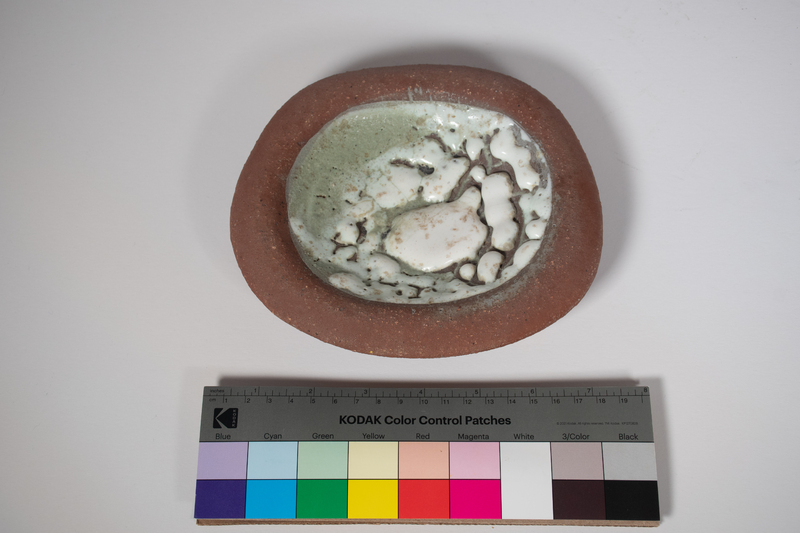
This small ceramic plate created by Carroll Harris Simms is made from red clay with a white, bubbling glaze. It has slightly raised, curved edges. Simms worked alongside Dr. John T. Biggers to build Texas Southern's art department from the ground up. Simms' decorative artworks remain in high demand by collectors.
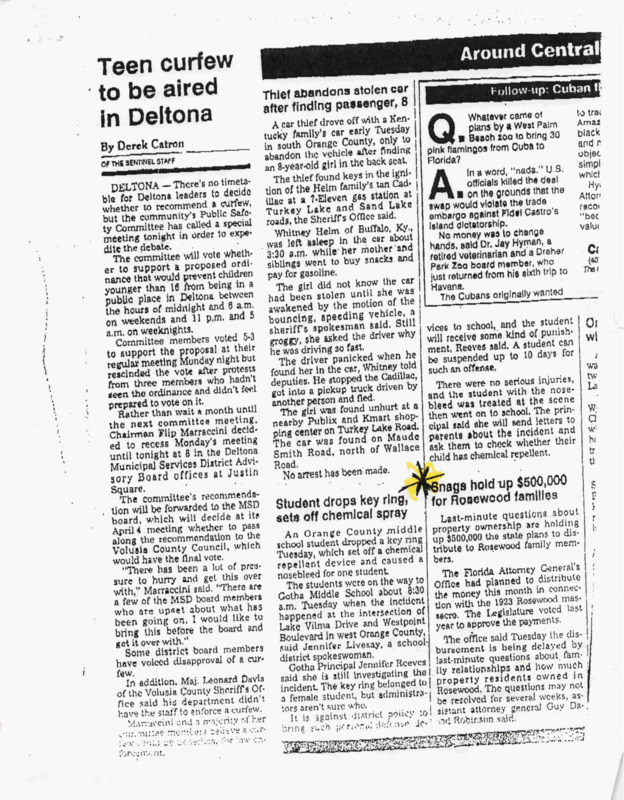
In this newspaper article by members of the Sentinel Staff, Rosewood families were set to receive $500,000 as a part of an approved payment from the Florida Attorney General’s Office and Legislature. However, the payments were delayed for several weeks due to last-minute questions about family relationships and property ownership.
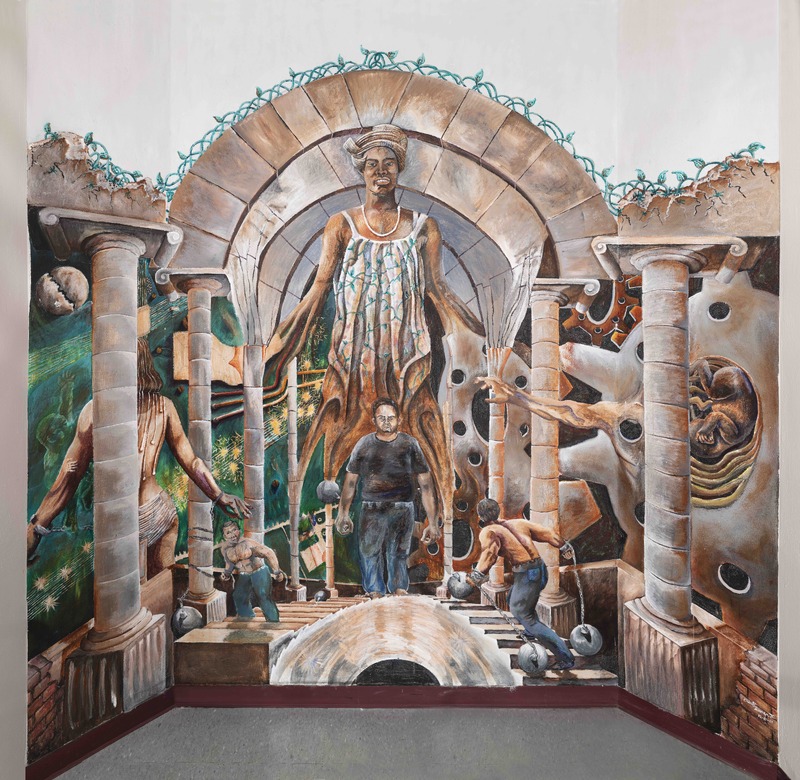
The mural centers an image of Mother Nature as a Black woman. In the foreground of the center panel, the artist stands in front of the towering female figure. On either side of Turner, men are weighed down by heavy irons. On the right, an embryo is gestating in a womb within a gear.
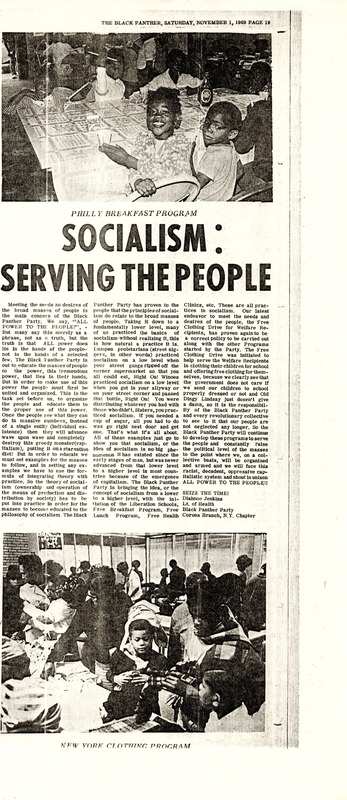
A newspaper article by Lieutenant of Health of the Corona Branch, NY chapter of the Black Panther Party, Diahnne Jenkins, from The Black Panther about the Black Panther programs such as free breakfast, free health care, and free clothing drives. She writes that these programs are all a part of organizing and educating the masses.
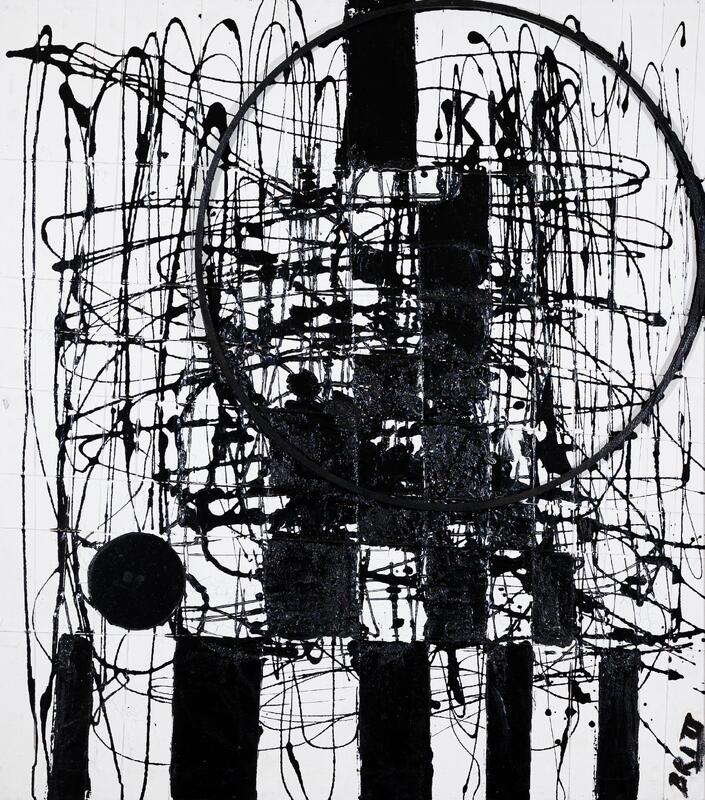
Dr. Arthur L. Britt was an artist and educator from Cuthbert, GA. Society Wheels is an abstraction that uses black and white to enact visual chaos and composition. The inclusion of "KKK" positions it as a critique of American race relations and racial violence.
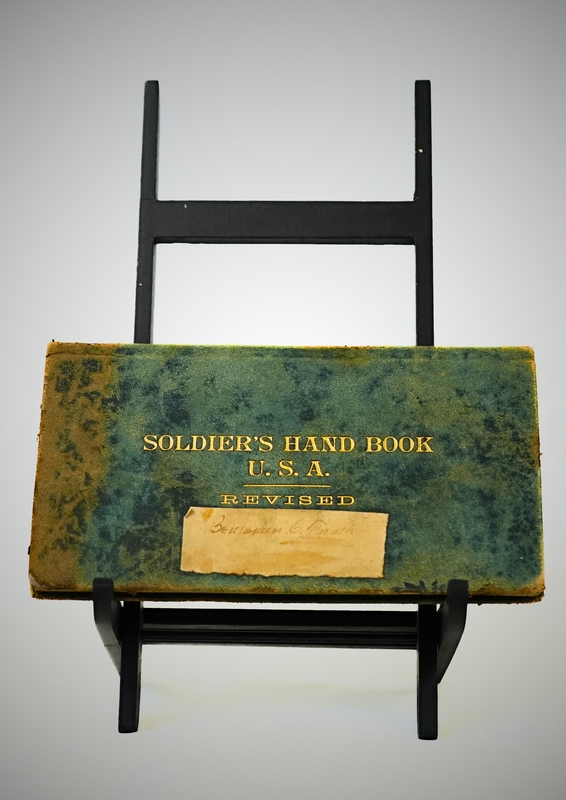
The Soldier's Handbook, U.S.A., revised in 1898, is a vital historical document designed to guide soldiers in military conduct, tactics, and survival techniques during the Spanish-American War. Featuring practical advice and regulations, it reflects the military culture of the era.
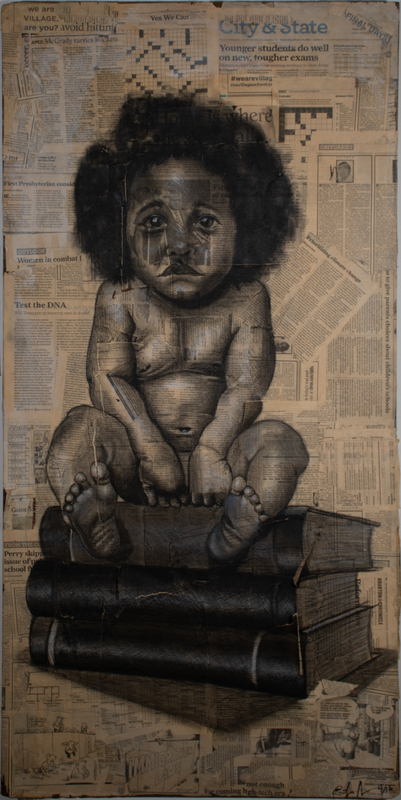
This drawing by Prinston Nnanna shows a Black baby sitting on a pile of books. Behind the baby, there is a collection of various political newspaper clippings and headlines, which may be provoking the child's saddened disposition.
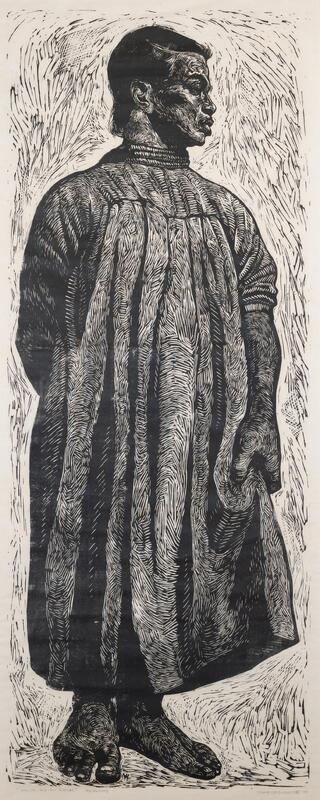
Charles White was a painter, printmaker, muralist, and educator known for his stylistic approach to African American subjects from Chicago, IL. Solid as a Rock is a print of the profile of a robed Black man. The barefoot man is holding on to his robe with his left and hides his right hand.
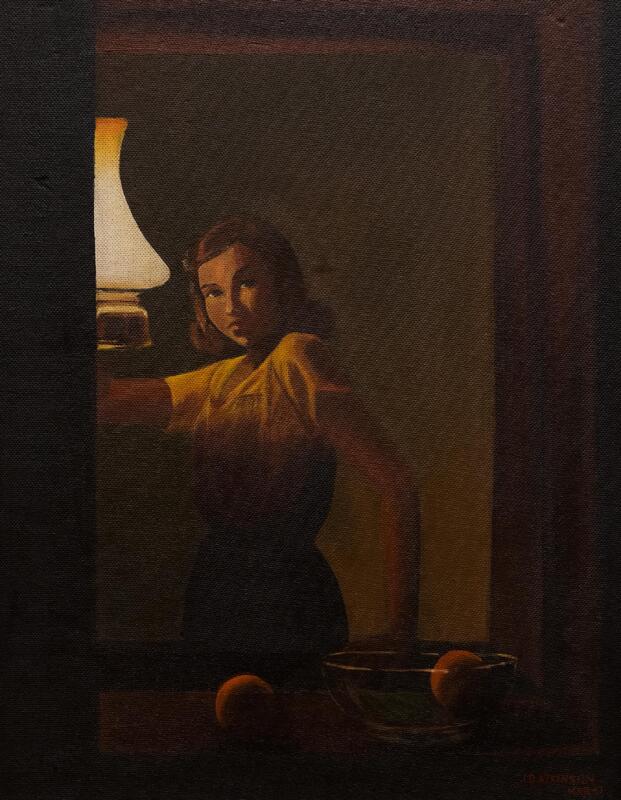
Joseph D. Atkinson, Jr., was an artist from Atlanta, GA. Solitude depicts a white woman posing in front of a mirror, illuminating her with a lamp. The woman stands slightly profiled while facing the viewer; her right hand is raised, and the left is in a fruit bowl.
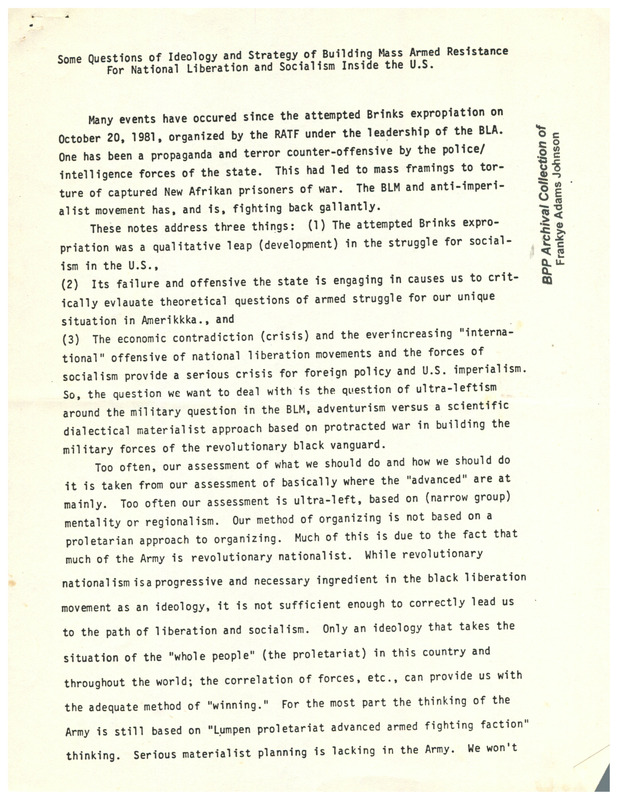
An essay about the Black Liberation Army (BLA) and the need for politically mobilizing an armed populace toward the collective goal of Marxism-Socialism-Leninism in America. The author writes that the BLA must do a better job of organizing the Black working class to achieve liberation and socialism.
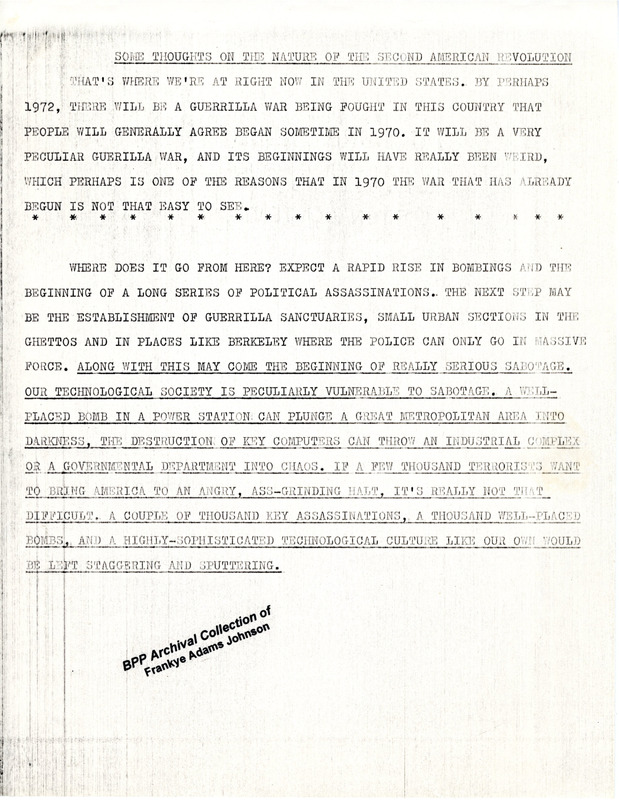
An essay from an unknown author sharing thoughts about the idea of an upcoming guerilla war in the United States and the tactics that would be necessary. The author writes that the years after 1970 could see a rise in political assassinations, bombings, and sabotage of power plants and technological systems.
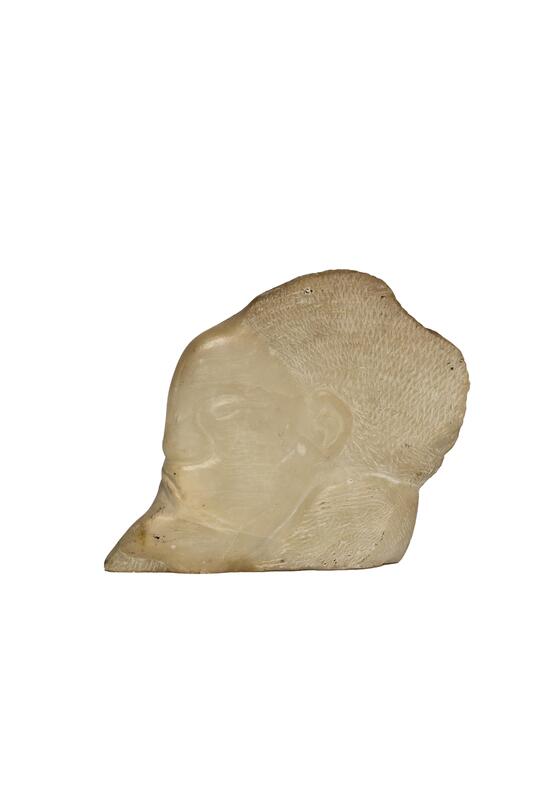
Charles W. Stallings was a painter, printmaker, sculptor, and educator from Springfield, MO. Soothsayer is a marble sculpture of a psychic medium. The smooth texture of the face contrasts with the rougher texture depicting the hair.
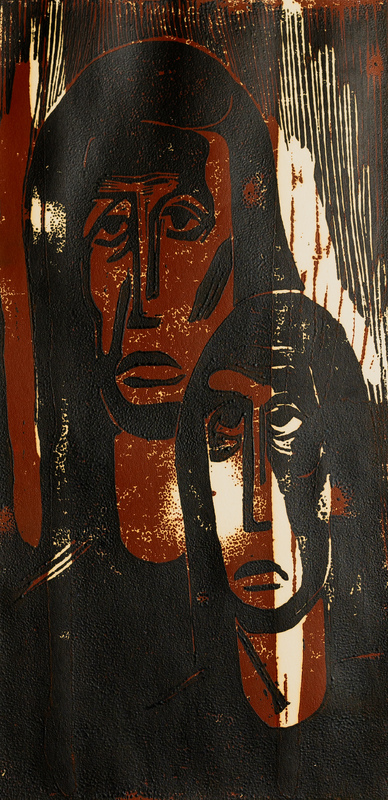
Charles W. Stallings was a painter, printmaker, sculptor, and educator from Gary, IN. Sorrowing Woman is a print depicting a woman with a sad expression. Stallings overlays two images of the woman: in the foreground, her expression is contemplative as she looks upward, and in the background, she wears a solemn expression.
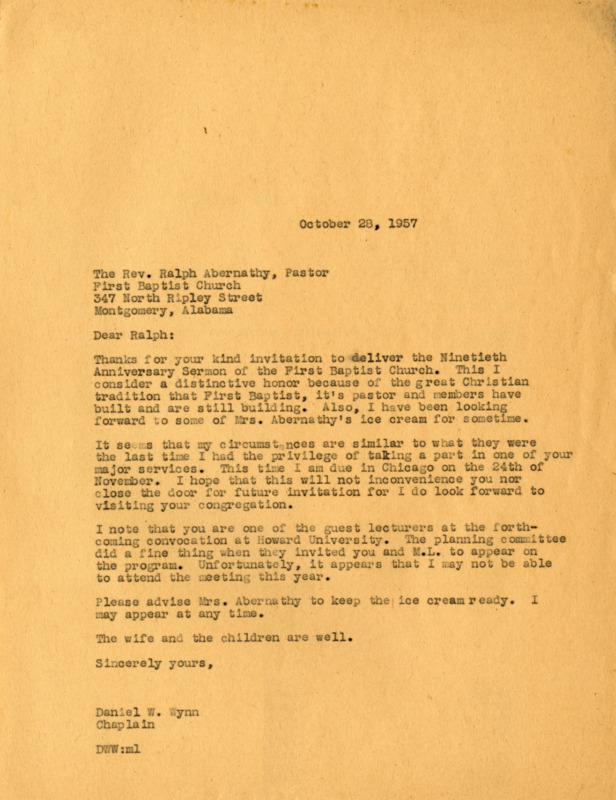
A letter from Chaplain to Rev. Ralph Abernathy expressing his regret that he will not be able to be the guest speaker for First Baptist Church nintieth celebration.
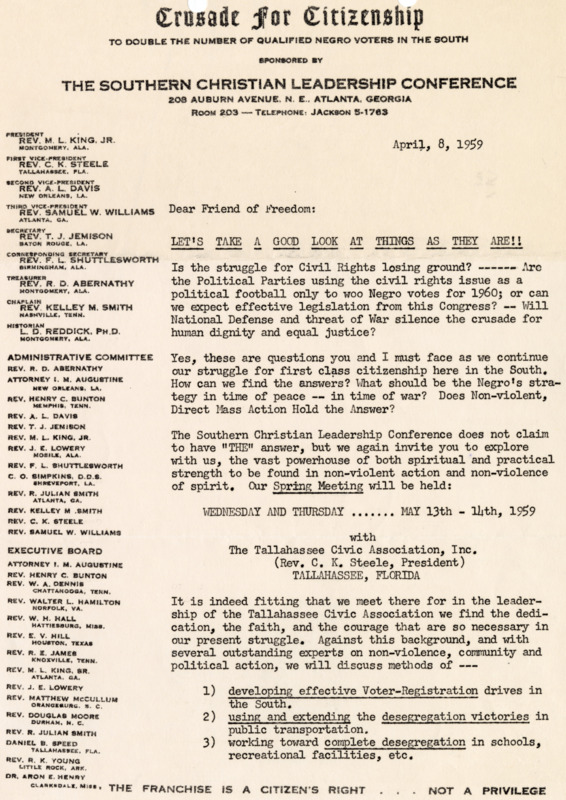
A program detailing the events of the Southern Christian Leadership Conference being held in Tallahassee, FL during May 13-14 1959. Dr. King is inviting people who are interested in hearing and learning about the practices of non-violence to attend the conference hosted by the Tallahassee Civic Association.
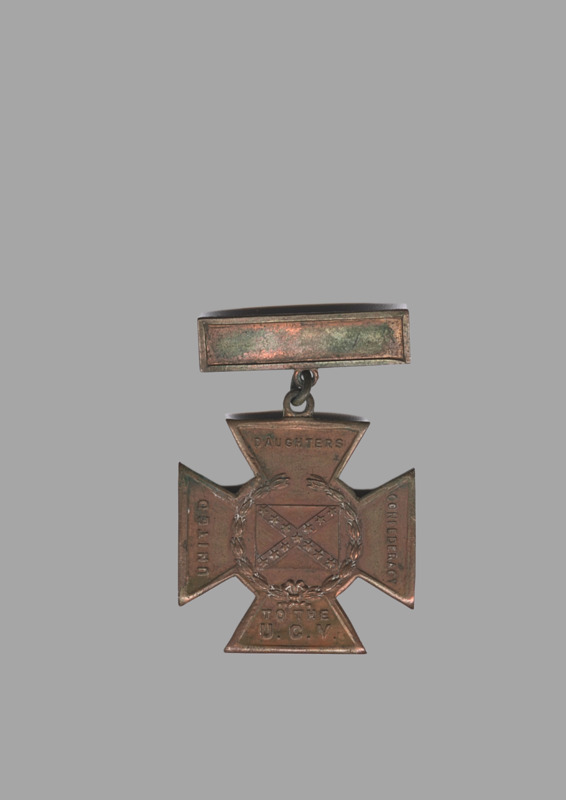
The Southern Cross of Honor "Deo Vindice" medal was awarded to Confederate veterans for their service during the Civil War. Bearing the Latin phrase "God will vindicate," it symbolizes the Lost Cause ideology and Southern pride. This medal, bestowed by the United Daughters of the Confederacy.
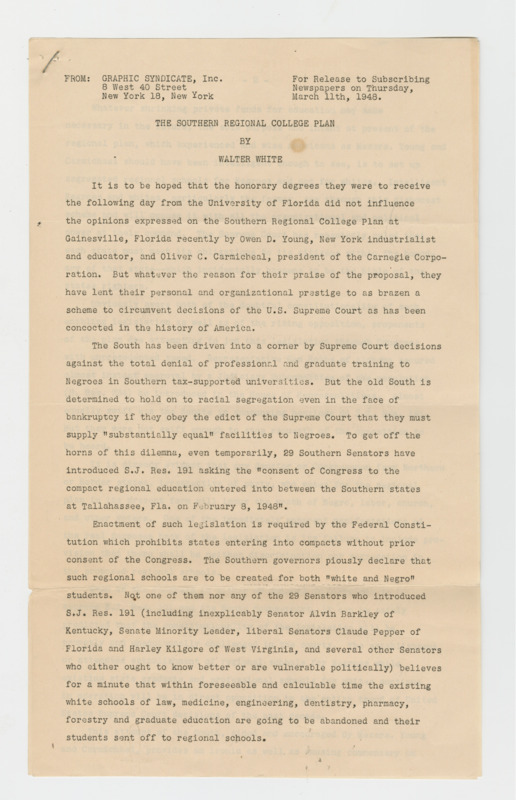
This 1948 abstract by Walter White is on the Southern Regional College Plan, a proposal meant to address the “total denial of professional and graduate training to Negroes in Southern tax-supported universities,” in the wake of new legislation proposed by Congress that appears to create segregated Negro schools.
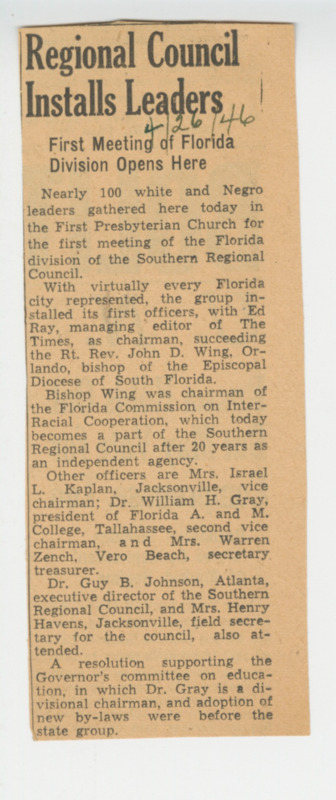
In 1946, nearly 100 Black and white leaders gathered at a Presbyterian church for the first Florida Division meeting of the Southern Regional Council. Under Dr. Gray’s leadership as divisional chairman, they adopted bylaws that would shape future efforts for regional cooperation, justice, and social change.
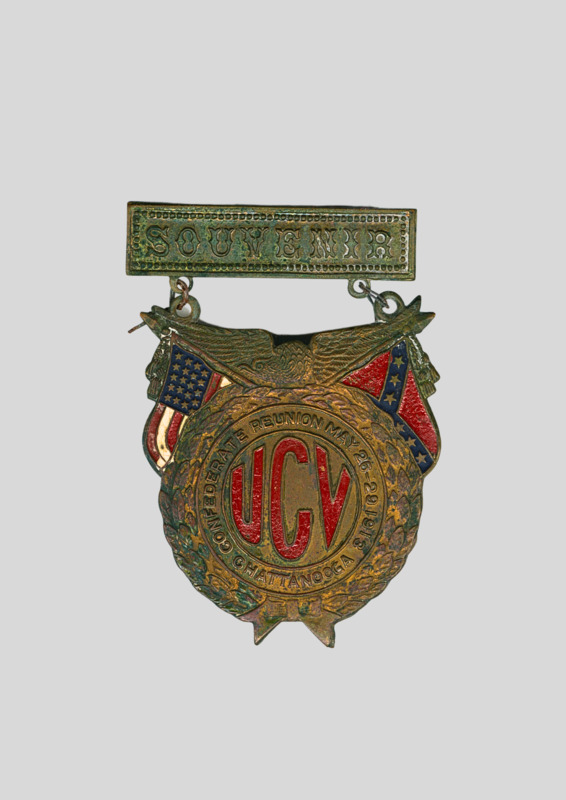
This 1913 Confederate Reunion medal, a souvenir from the United Confederate Veterans (UCV) gathering in Chattanooga, commemorates veterans of the Civil War. The medal features Confederate symbols and celebrates the reunion of former soldiers.