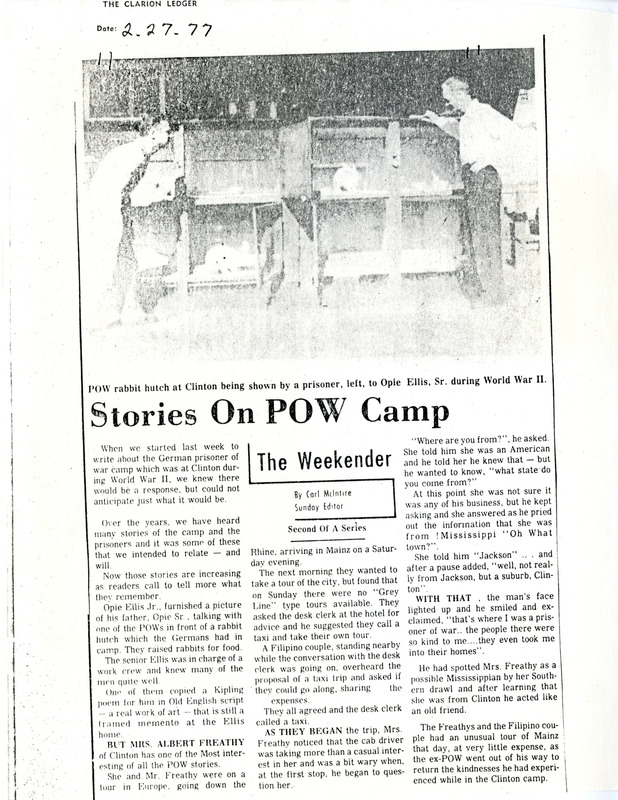
A newspaper article from the Clarion Ledger (Jackson, Mississippi) providing historical context to the Clinton Project Oral History Collection. The article includes stories from Clinton, Mississippi, residents telling their stories about the World War II POW camp in the town.
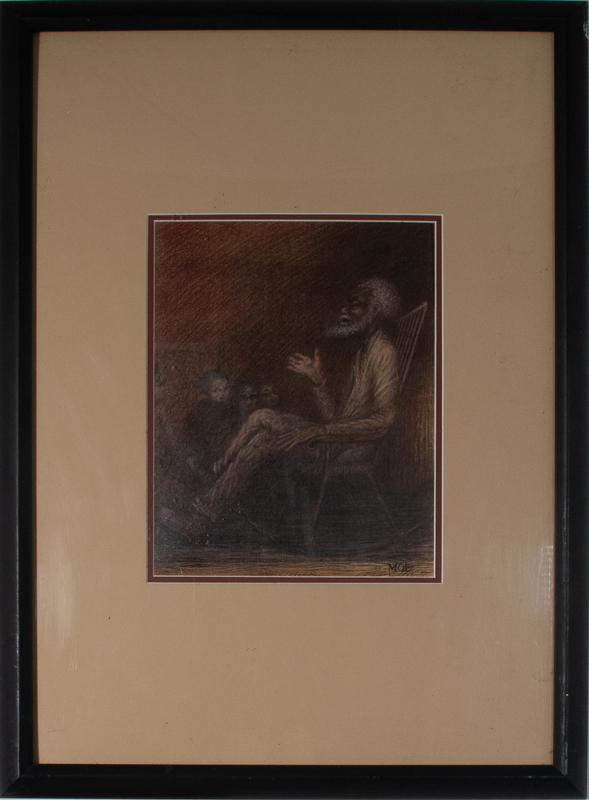
In this drawing by Willie Moe, a group of children gather around an elderly man in a rocking chair to hear his stories. Oral storytelling is an essential part of preserving the past, particularly in communities that have been denied the opportunity to write their own histories.
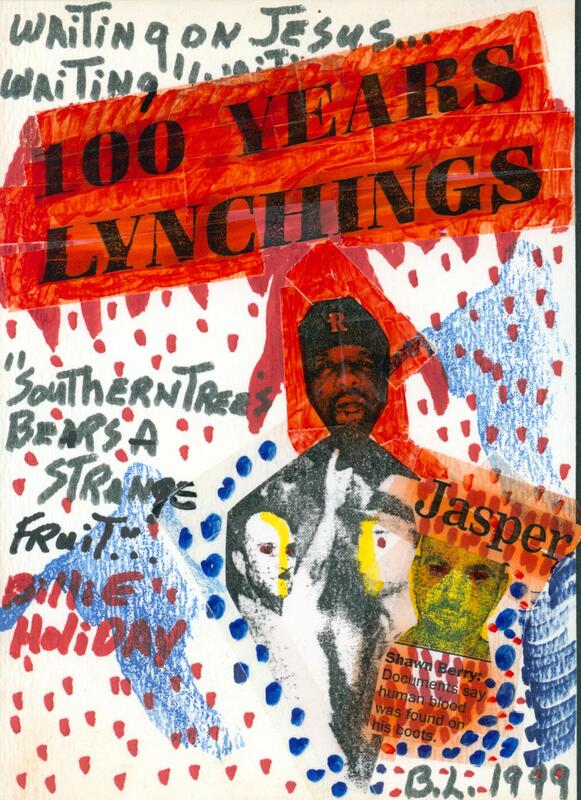
Lee’s collage speaks to the 1998 lynching of James Byrd, Jr., in Jasper, Texas. Byrd’s murder provided part of the impetus for the passage of stronger anti-hate crime laws in Texas and federally. The collage references the anti-lynching poem/song “Strange Fruit,” made famous by Billie Holiday. Lee, sometimes called “Da Mayor of Fifth Ward,” grew up in Houston’s Fifth Ward, but his family traces its roots to Jasper, where three white supremacists lynched Byrd and desecrated his body.
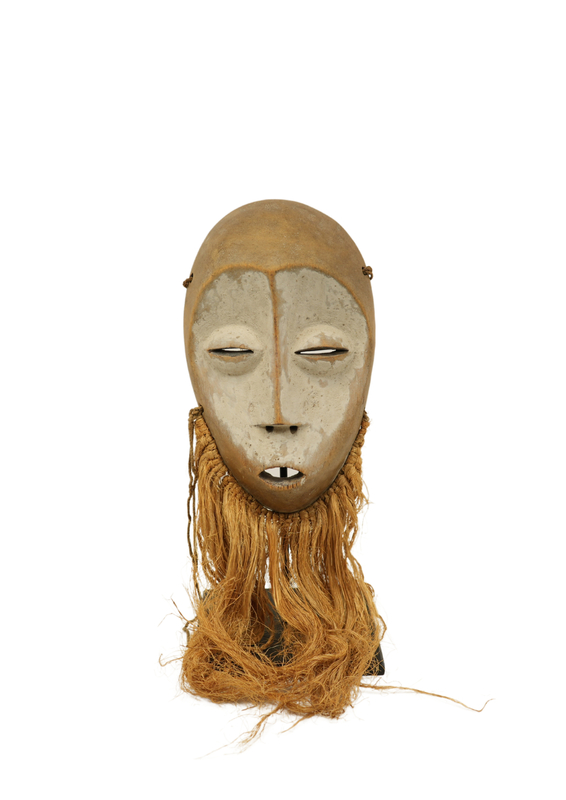
In the Western context, this item is a “mask” because it covers the face, but technically in Bwami culture, this piece is a sculpture. The Bwami society of the Lega people is located in the Democratic Republic of the Congo; they use these masks for initiation rituals, with five types to signify different ranks, and for ancestral veneration.
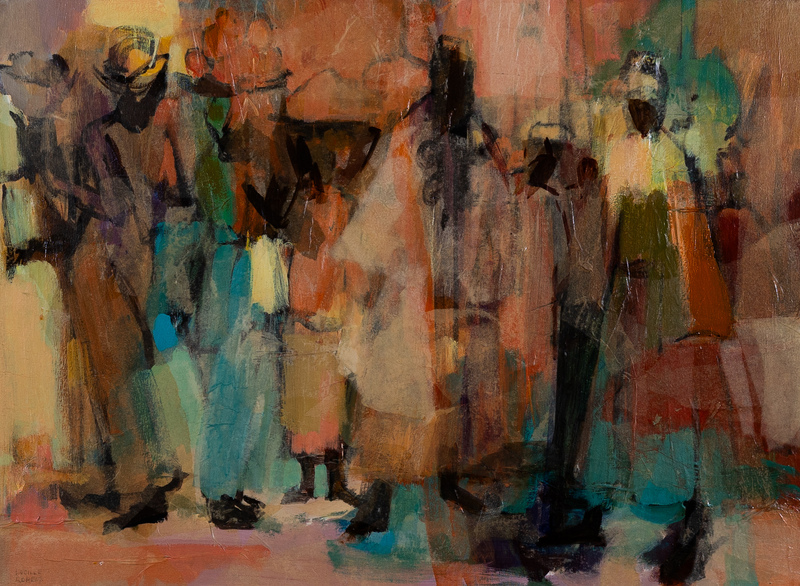
Lucille Malkia Roberts was a painter and educator from Washington, D.C. Street in Senegal is an abstract depiction of people shopping on a market street in Senegal, West Africa. Roberts uses muted colors to create the robust marketplace environment and emphasizes the shoppers and their goods with Black silhouettes.
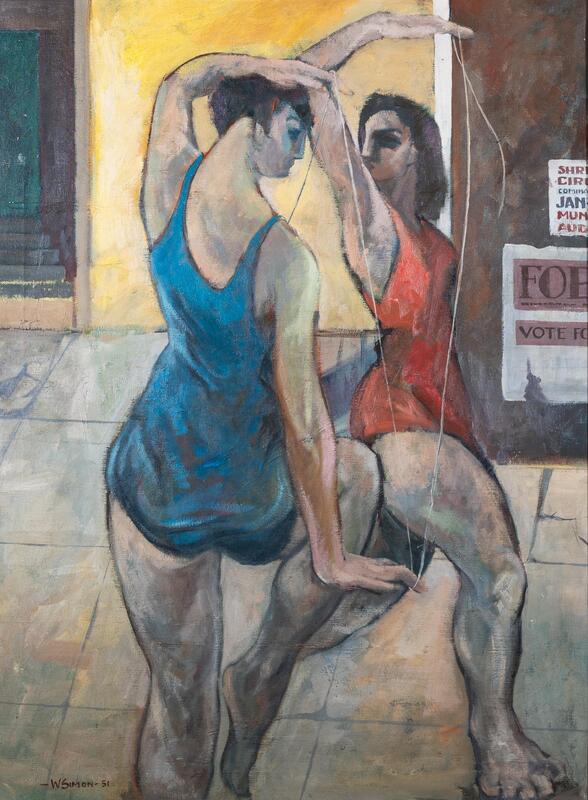
Walter Augustus Simon was an art historian, professor, and artist best known for his abstract oil paintings from Petersburg, VA. String Dance shows two women dancing with a thin white string. Their arms are stretched above their heads to pull the string as they dance together barefooted.
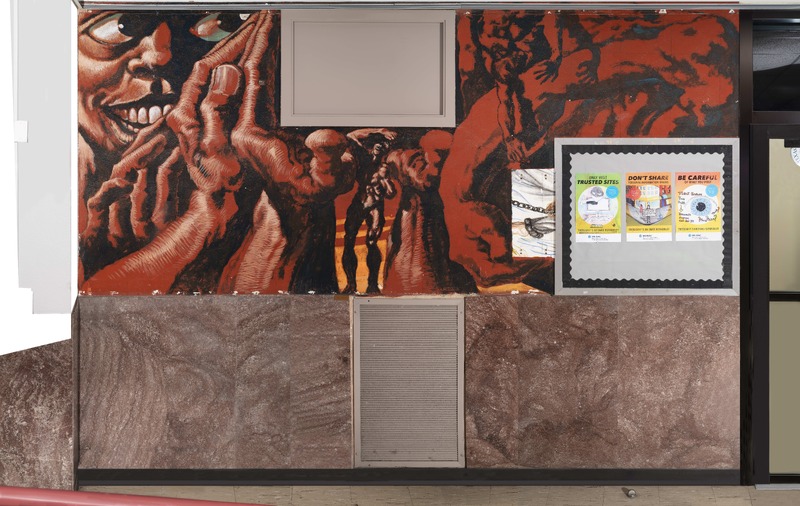
Oliver's mural reflects his classical painting style in a composition that shows Black men struggling to lift up an imposing weight above them, represented by the closed window on the wall. The mural appears to have been painted over an older design, as can be seen in the lower right section.
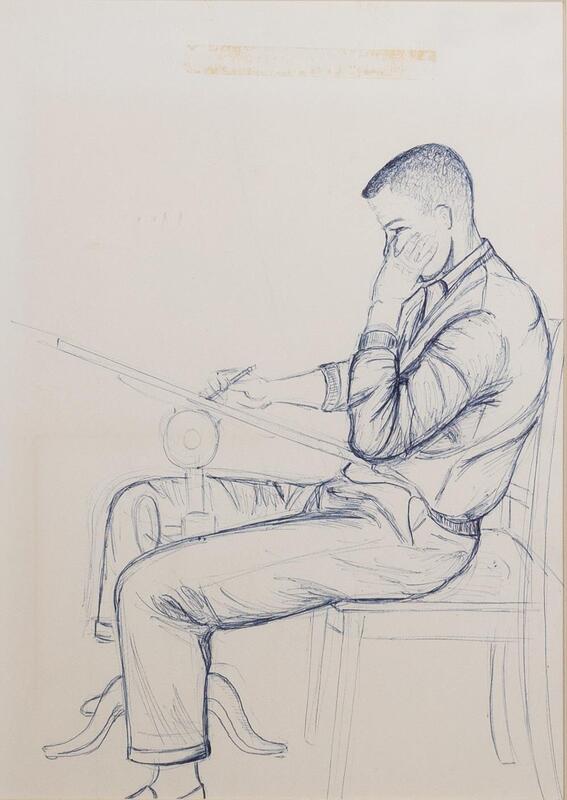
Zenobia Hammonds was an artist from Hampton, VA. Student Artist is a sketch of a male student working at a tabletop easel. The artist has his head resting on his hand as he creates his own art.
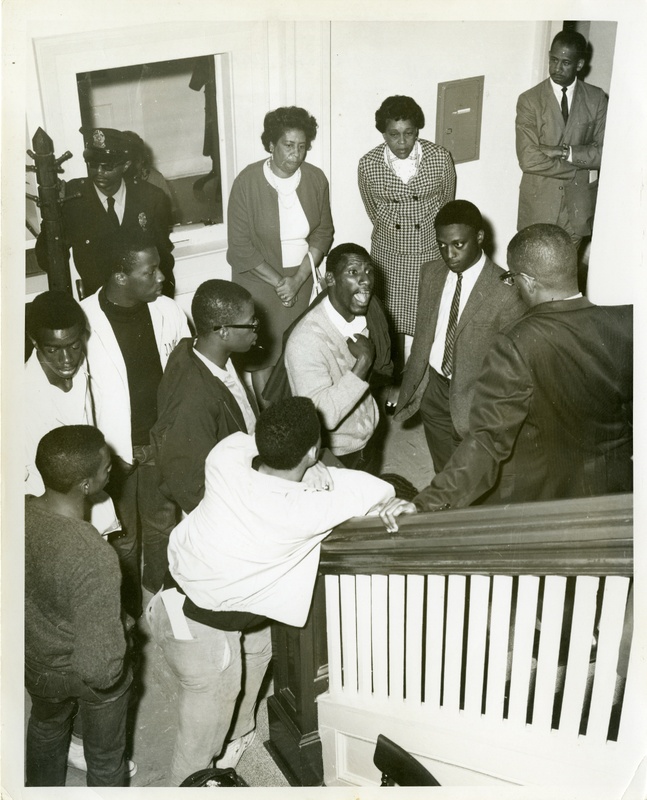
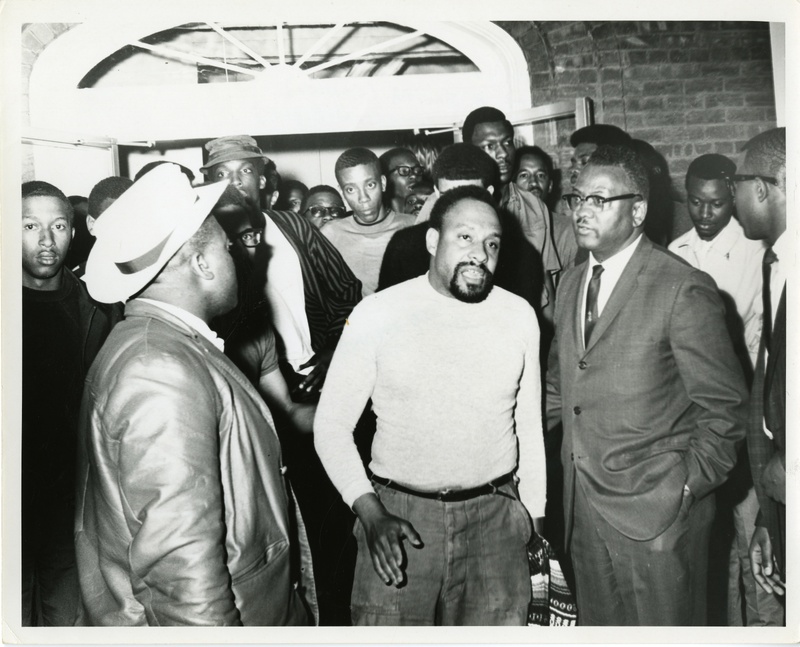
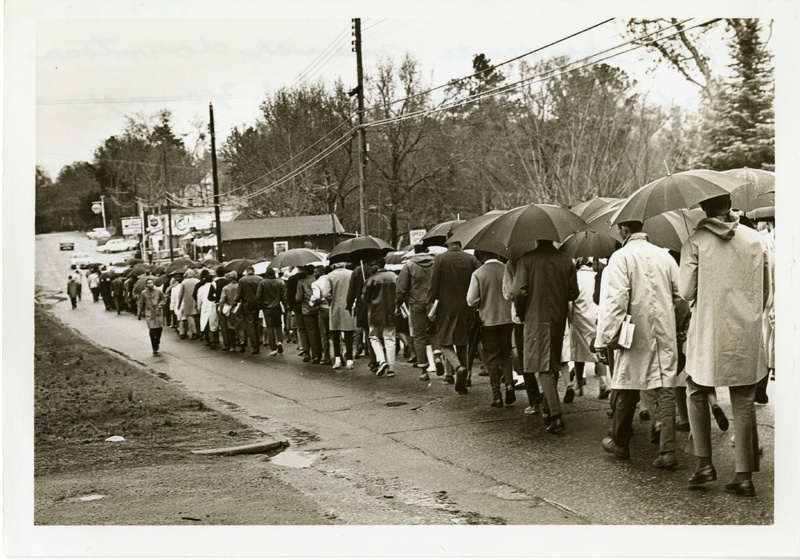
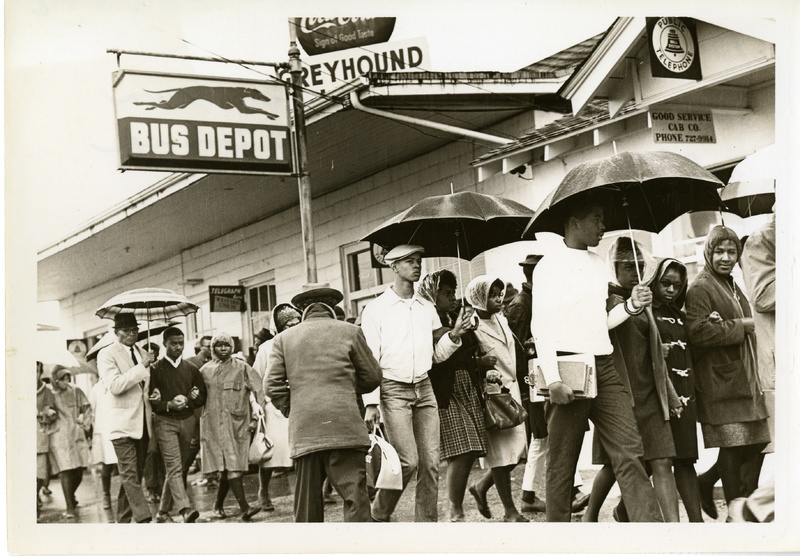
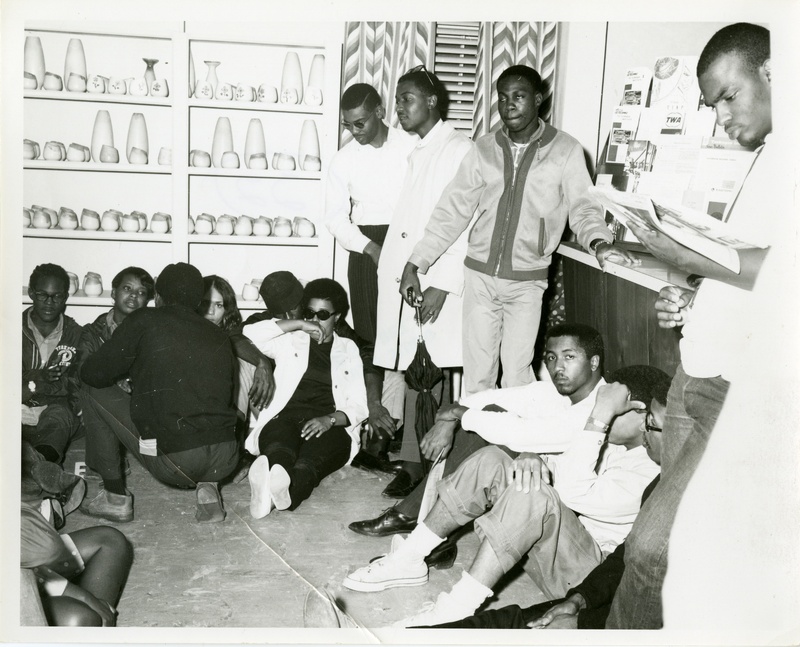
Black and white image of Tuskegee Institute students marching in response to the shooting and death of SNCC member and Tuskegee Institute political science student Sammy Younge Jr. in 1966.
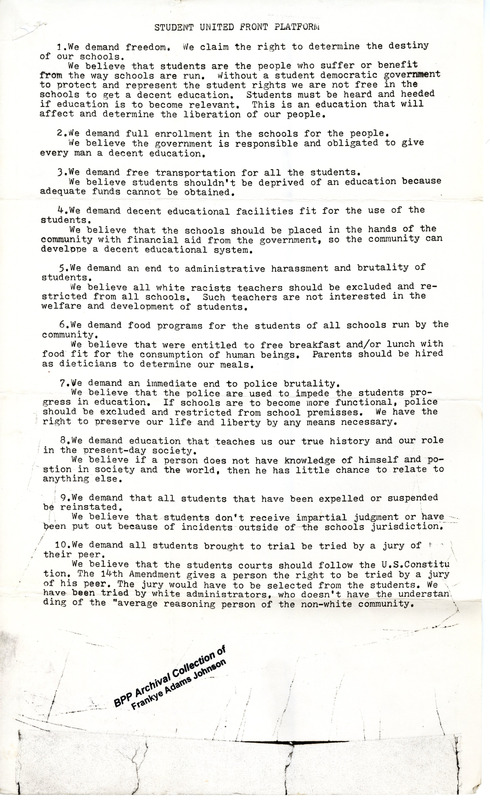
A 10 point platform for the Student United Front. The platform, drawing inspiration from the Black Panther Party Ten Point-Point Program, is a list of demands by students for better services on campus as well as a call for expelling all white racist teachers, free education for all, and the exclusion of police from school premises.
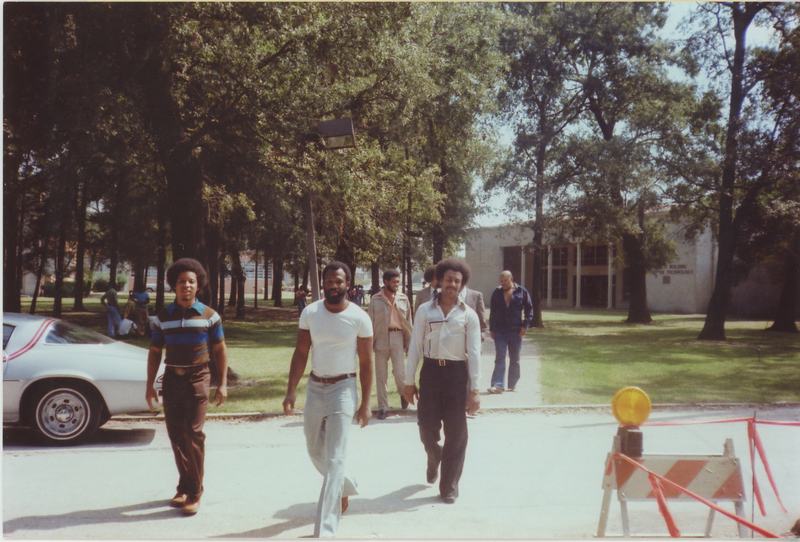
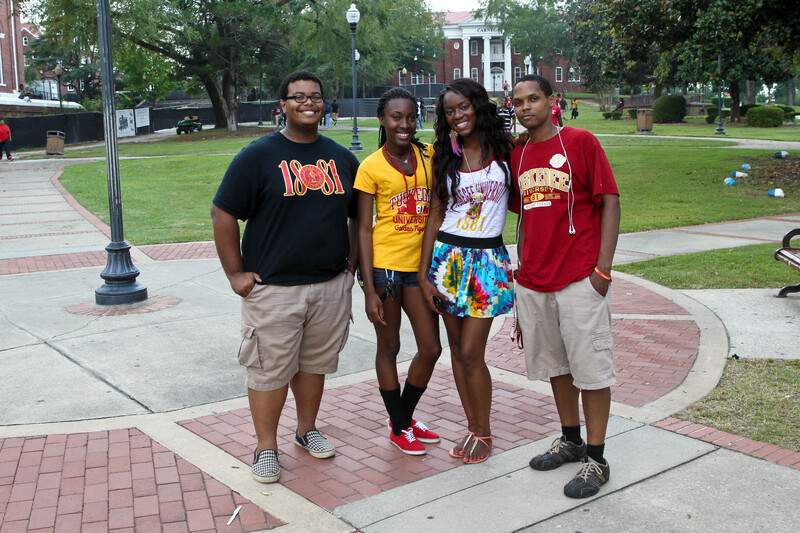
Pictured here, left to right, are Texas Southern art alumni Bert Samples, John C. Davis, Harvey Johnson, Leon Renfro, former art student Rickey Donato, and Professor Carroll Harris Simms walking on the campus of TSU. Johnson and Renfro would later go on to teach art at TSU.
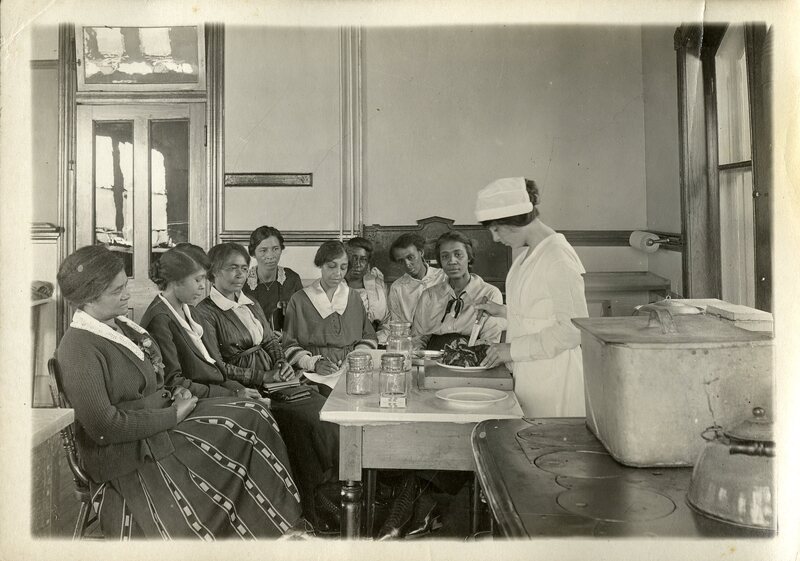
A photo taken by C.M. Battey showing the early years of Tuskegee University. This is an image of Black female students learning the skill to preserve products in a can.
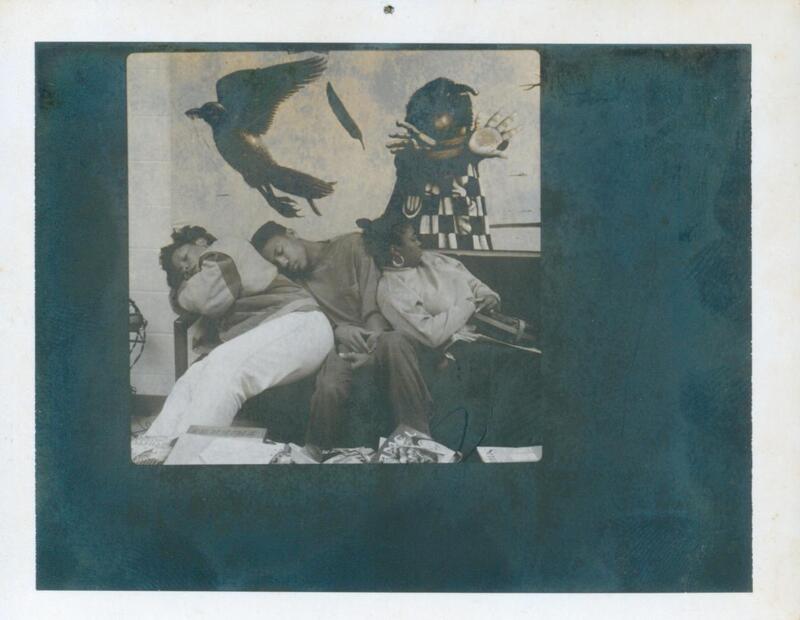
This photograph shows three students sleeping on a couch in the lounge of Texas Southern University’s John T. Biggers Art Center. Captured by longtime campus photographer Earlie Hudnall Jr., the students rest while Oliver Parson’s The Crucifix (Judas) hangs behind them. Selections from the Permanent Collection are displayed in the art building on a rotating basis. Hudnall was a student, mentee, and friend of Dr. Biggers.
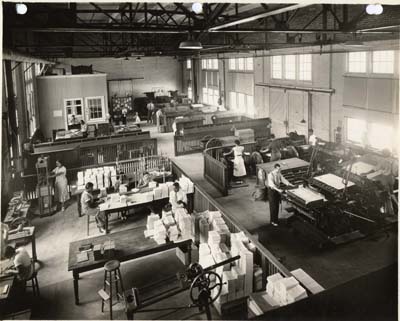
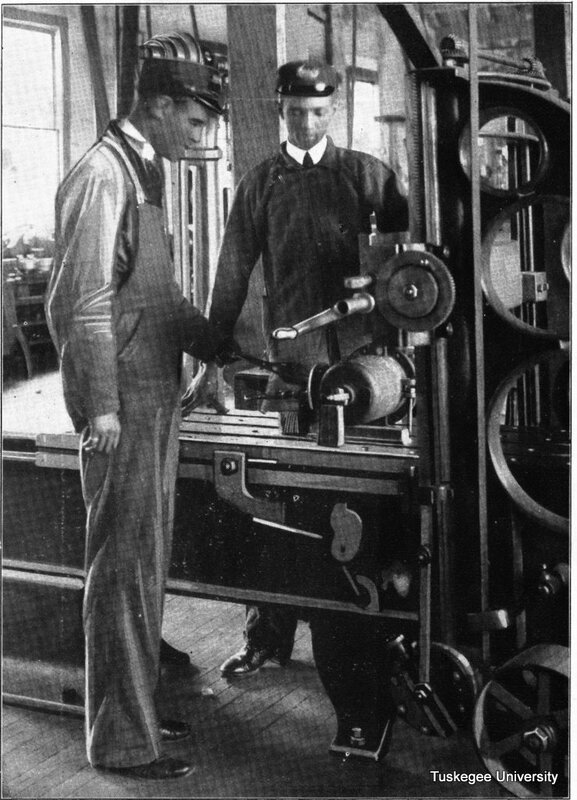
A black-and-white image of two male Tuskegee Institute students operating a planer machine in a metalworking or woodworking class in the early twentieth century.
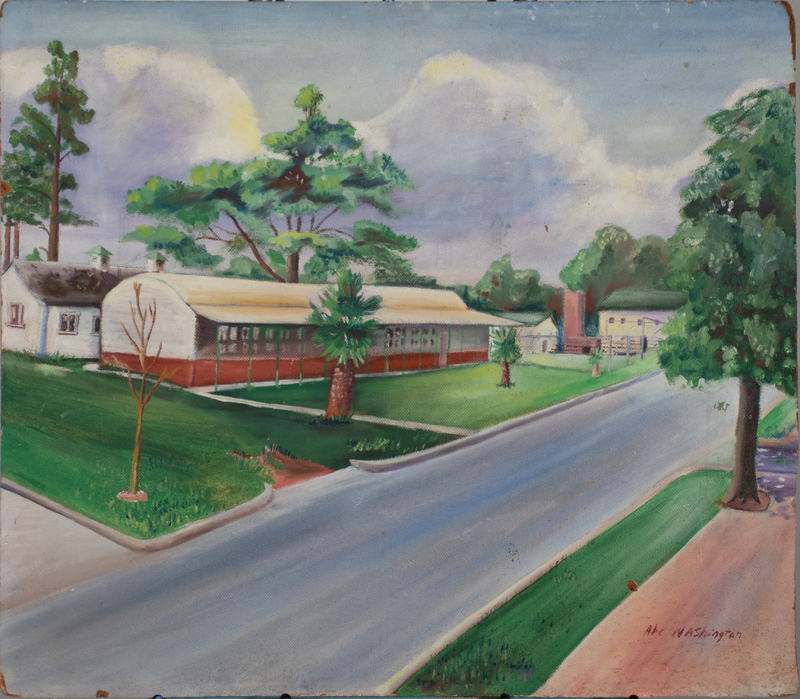
Washington’s landscape painting shows a suburban setting, with a paved road, low homes, and a mix of palm and deciduous trees. Washington grew up in Port Arthur, Texas, a small oil city along the Gulf Coast. This scene is perhaps reminiscent of Washington’s home and early life. Dr. John Biggers encouraged Texas Southern student artists to create art based on what they saw – perhaps this instruction inspired Washington’s painting.
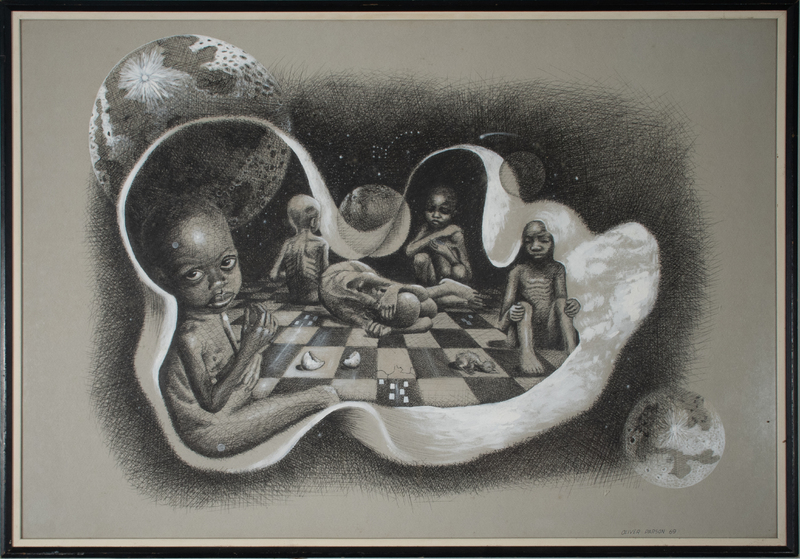
This drawing by Oliver Parson shows a group of emaciated children seated on a checkerboard patterned floor. There is also a chick, just hatched from its egg, that seems to be struggling to survive. Parson has an incredible talent for conveying powerful emotions in his works. The checkerboard and other sacred geometry imagery appear frequently in the works of Dr. Biggers's students.
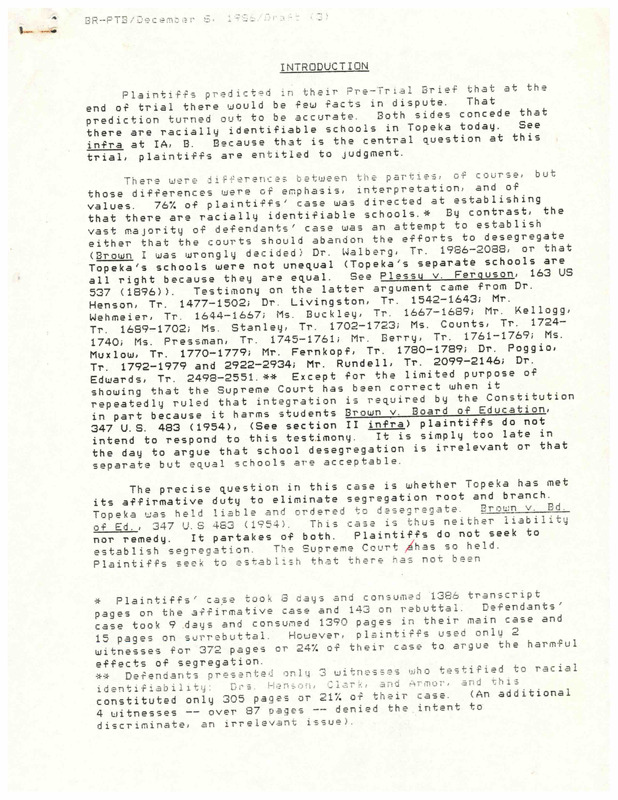
Case Data and Exhibits for Brown III, a relitigation of Brown v. Topeka Board of Education (1954) that corrected resegregation issues caused by open enrollment school choice in 1992. This paper is a full summary of the case up to December 1986. Includes some handwritten notes from William Lamson.
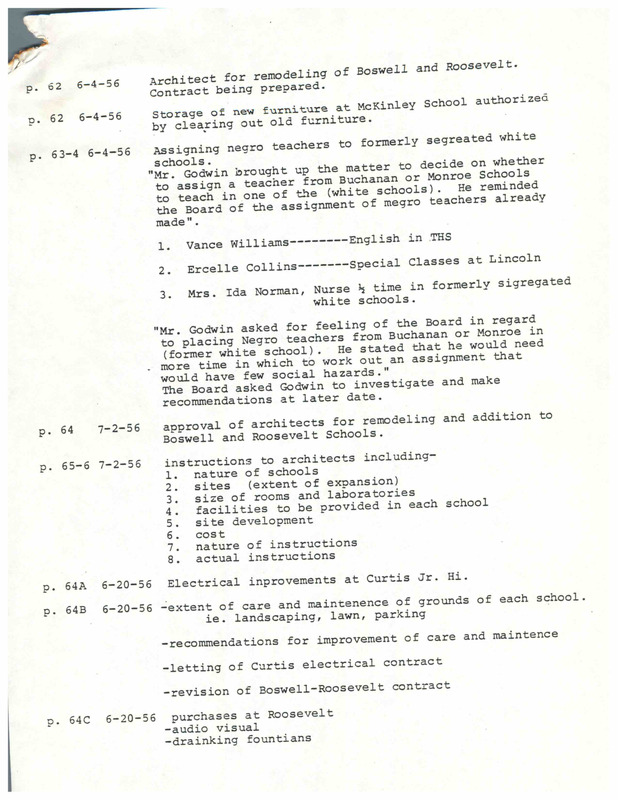
Case Data and Exhibits for Brown III, a relitigation of Brown v. Topeka Board of Education (1954) that corrected resegregation issues caused by open enrollment school choice in 1992. A document summarizing minutes from meetings of the Topeka School Board from 1956-1979.
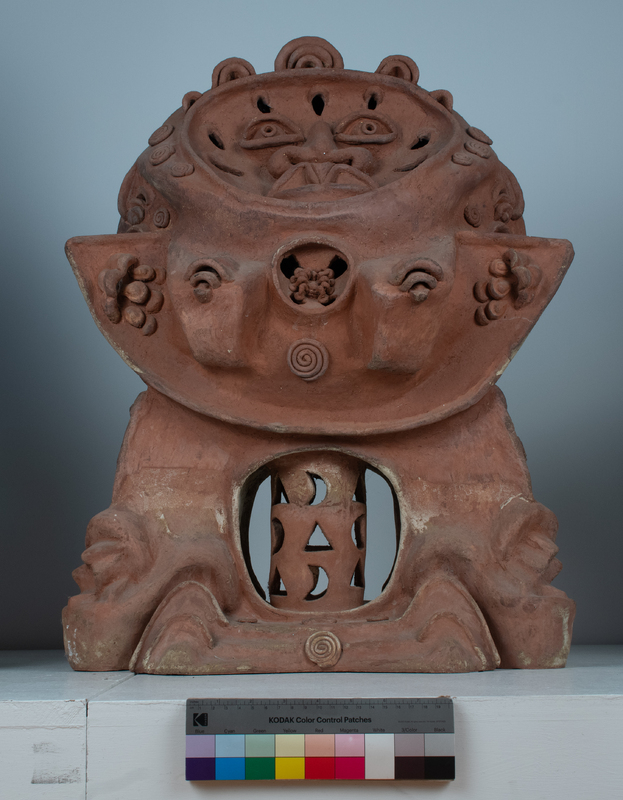
“Sun Stool,” created by Anthony Haynes, resembles an Ashanti stool, a seat for royalty of the Ashanti Empire. The sculpture is decorated with spiral embellishments, triangles, moons, and other indentations. Facial features are also included at the front head of the stool; the rear face of the stool resembles a baboon's face.
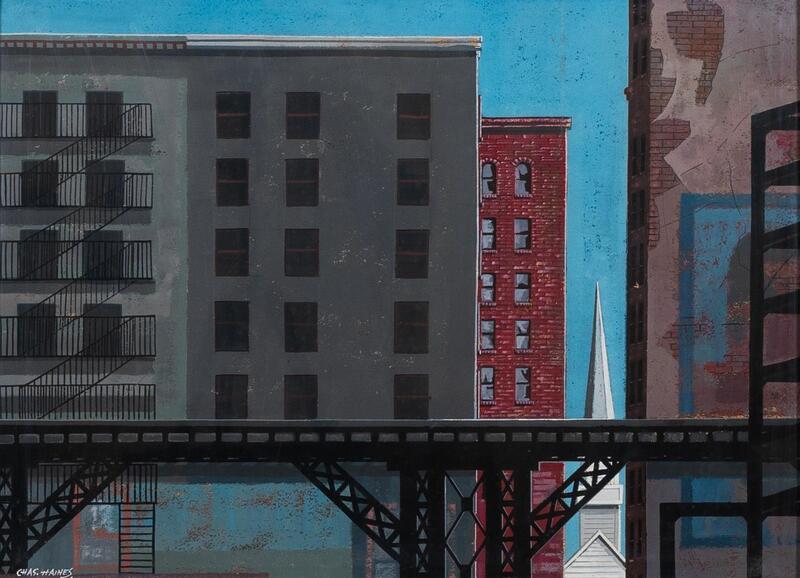
Charles E. Haines was an artist from Indianapolis, IN. Sunday Morning is an urban cityscape under a bright blue sky. In the foreground of the piece is an elevated railway and residential buildings, In the background is a red brick building and a church's spire.