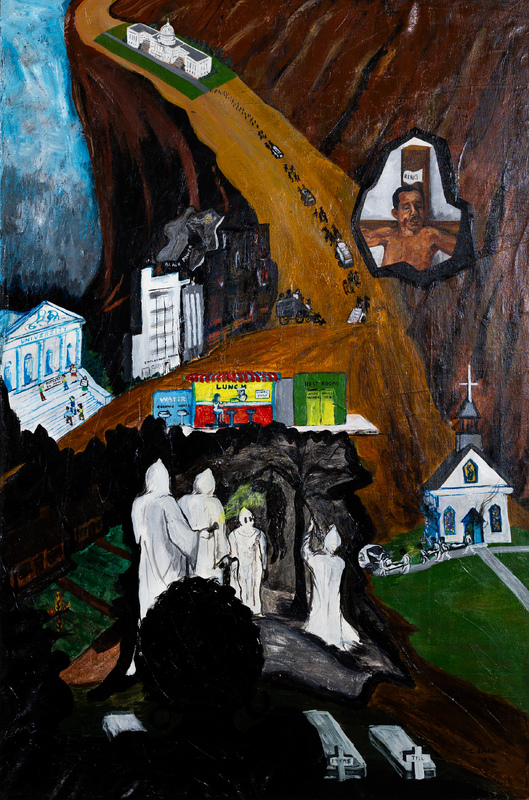
Eva Booker was an artist from Atlanta, GA. The Road we Trod depicts Black American experiences with white supremacy during the Civil Rights Movement. The piece critiques the KKK, lynching, lunch counter discrimination, education inequality, job orientation, religious hypocrisy and Black people's long march toward freedom in spite of.
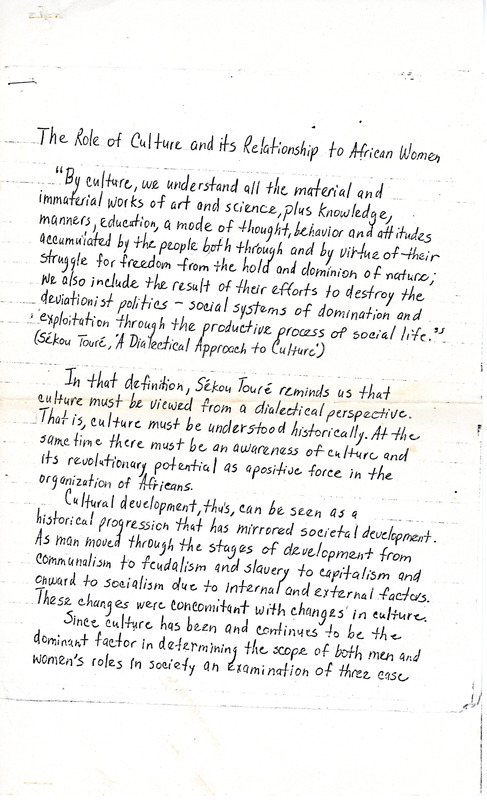
Photocopy of a handwritten essay by Jolynn Brooks of the Role of Women Task Force. The author uses examples of revolutionary women in Algeria, Mozambique, and Zimbabwe to argue that culture must be understood for its revolutionary potential in organizing African people, specifically women.
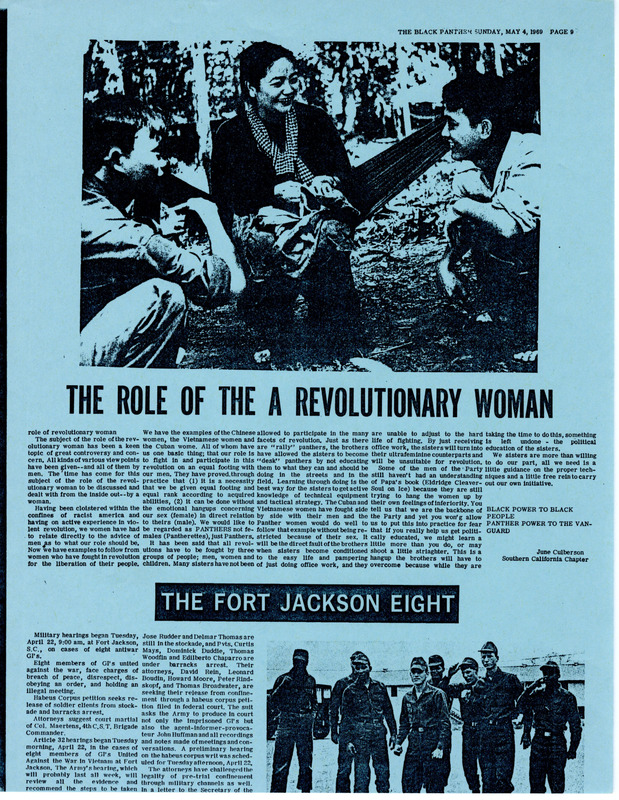
A newspaper article from The Black Panther by June Culberson about the historical and worldly context of women in revolutionary movements. She writes that examples by women from China, Cuba, and Vietnam shows that women can and should be on equal footing with men in the revolutionary actions of the Black Panther Party.
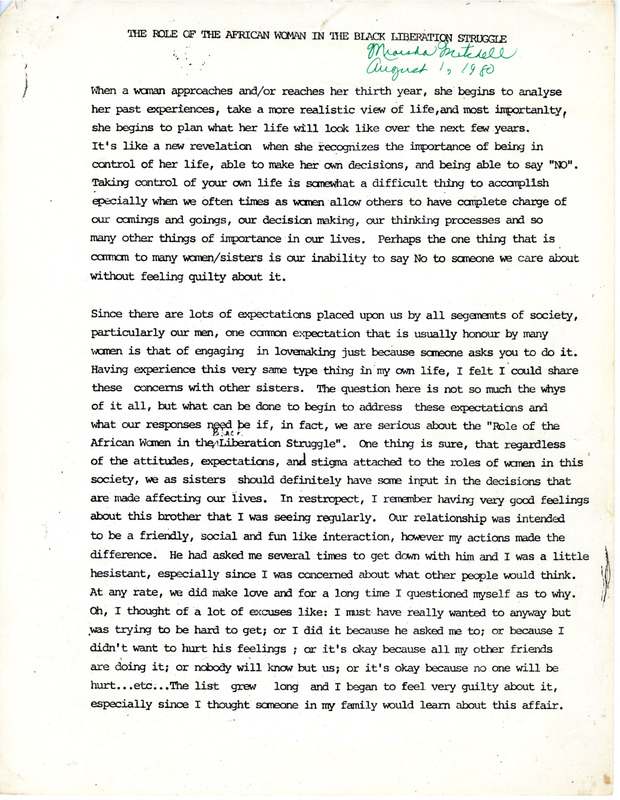
Black liberation activist Miaisha Mitchell writes about the role of women in the Black liberation struggle, arguing that the men and women in the movement need to be disciplined in their personal relationships with each other as the divisions those can cause can have an effect on the greater movement.
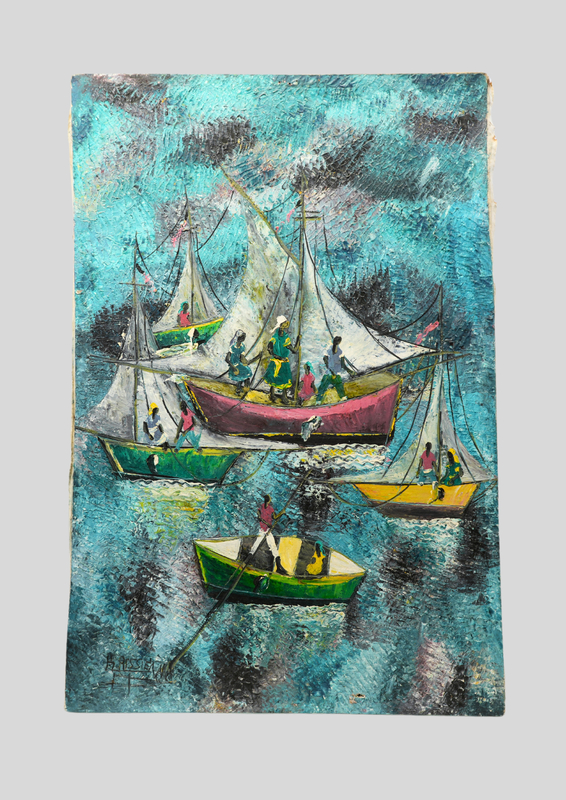
This untitled painting from the FAMU Black Archives/Caribbean Art Collection has limited identifiers for proper attribution but is associated with Dr. James Eaton and Frank Pinder Collections. The piece is of a boating community sailing in the ocean and features an illegible inscription on the lower left corner that could be the artist’s signature.
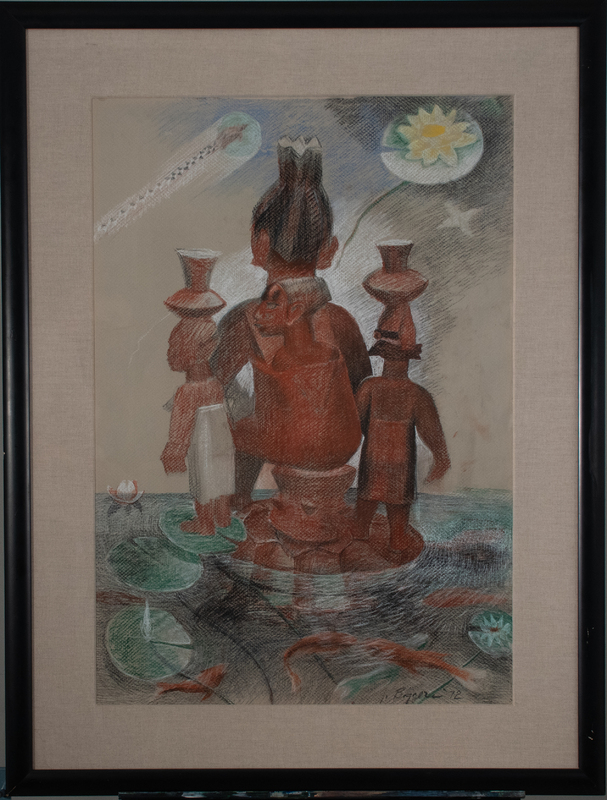
In the center of this drawing, a mother, wearing her child on her back, floats on the back of a tortoise, flanked by a female and male carving. Lilypads float alongside them, while fish swim throughout the pond. In the sky, a lily covers the full moon, while a turtle flies into the night, representing the connection between the terrestrial and celestial. While living in Houston, Dr. Biggers often walked along Buffalo Bayou in the morning, watching fish swim as the sun slowly replaced the moon in the sky.
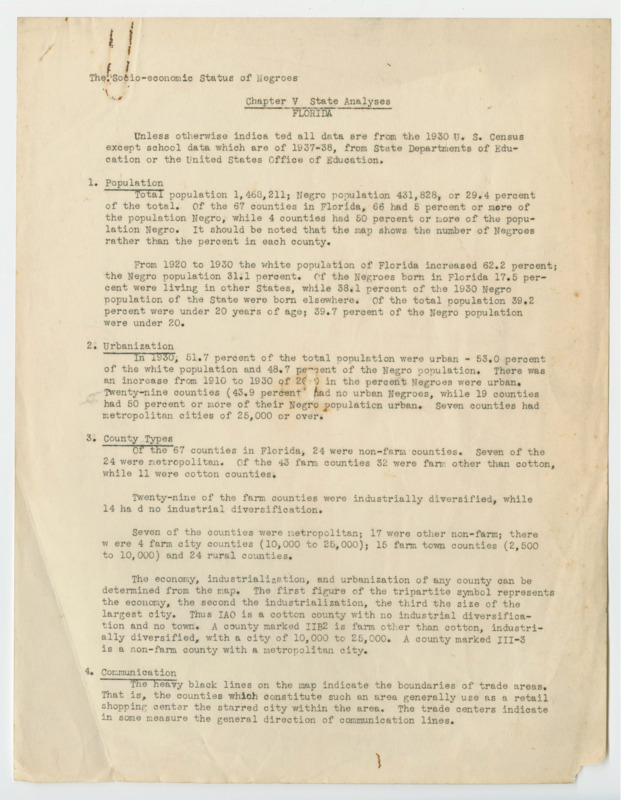
Utilizing data from the 1930 U.S. Census and 1937-1938 school data from the State Departments of Education and the United States Office of Education, this study is an analysis of Florida’s Negro population. It holds statistics on the Negro population, economic status, higher education opportunities, occupations, and more.
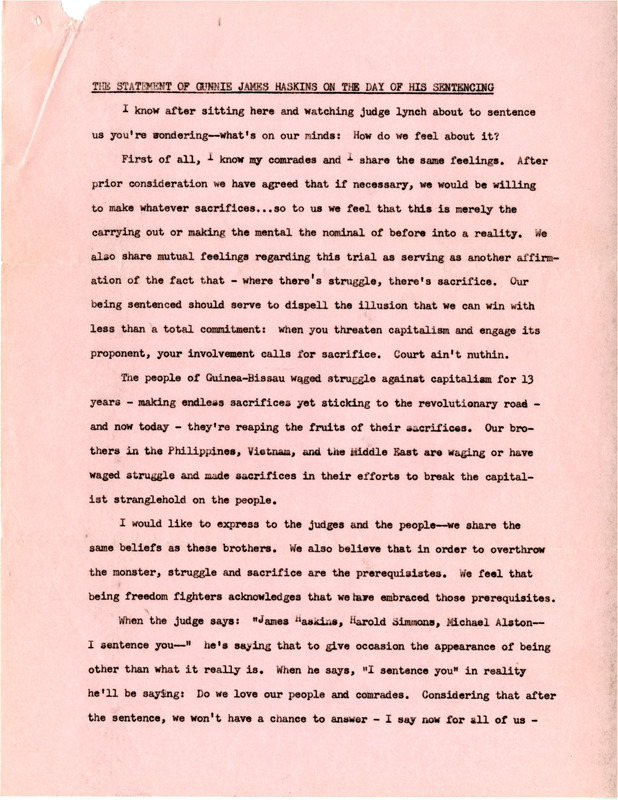
Gunnie James Haskins was a Black Liberation Army (BLA) member who was imprisoned in 1974 for a robbery to raise money for the BLA. This is the statement he gave on the day of his sentencing for his role in attempting to free BLA members from prison. He acknowledges their sentencing as another sacrifice in the struggle for Black Liberation.
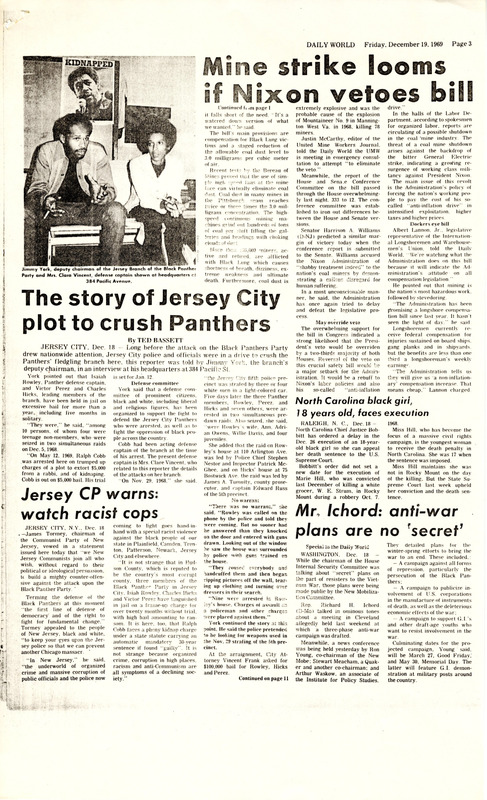
A newspaper article from Daily World, a newspaper in Jersey City, New Jersey. Jimmy York, the deputy chairman of the Jersey Branch of the Black Panther Party, talks to the writer about harassment the Black Panthers in the city face from the police, including bogus arrests with excessive bail and raids on homes and Party headquarters.
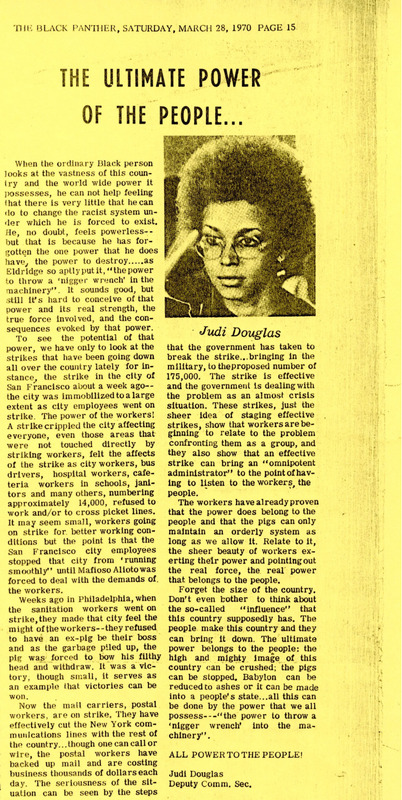
A newspaper article from The Black Panther by Deputy Communications Secretary Judi Douglass recounting instances from around the country where workers successfully organized and participated in strikes, showing that the power does lie in the hands of the people.
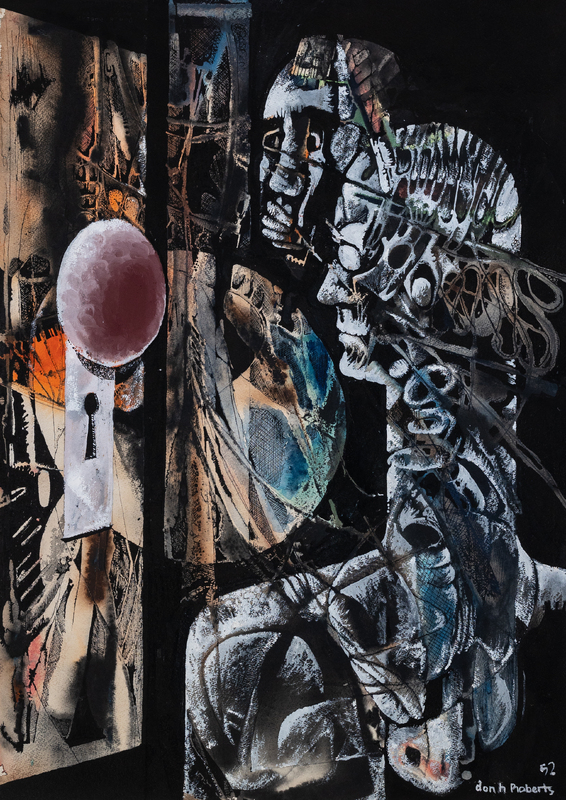
Donald H. Roberts was a painter, photographer, architecture professor, and U.S. Army Vet from Washington, D.C. The Uninvited depicts a technofuture centering a humanoid machine. The humanoid machine is looking toward a keyhole with refracted images surrounded by a dark void.
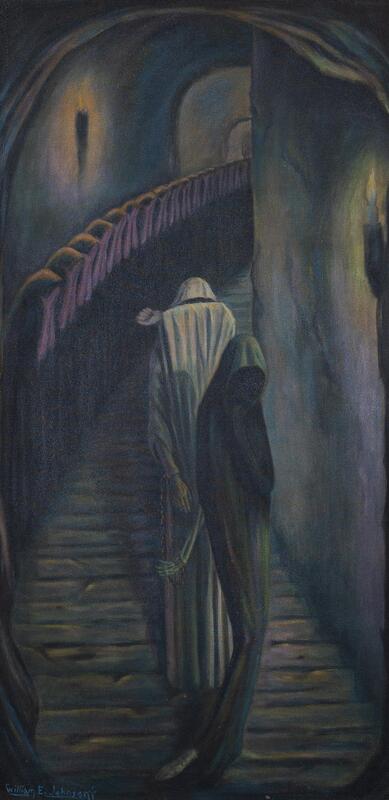
Estella W. Johnson was an artist from New York, NY. The Way of the Flesh is a cultic depiction of a cloaked figure ascending a stairwell. The figure cloaked in white has another black cloaked figure attached to it as they pass a line of cloaked figures with bowed heads.
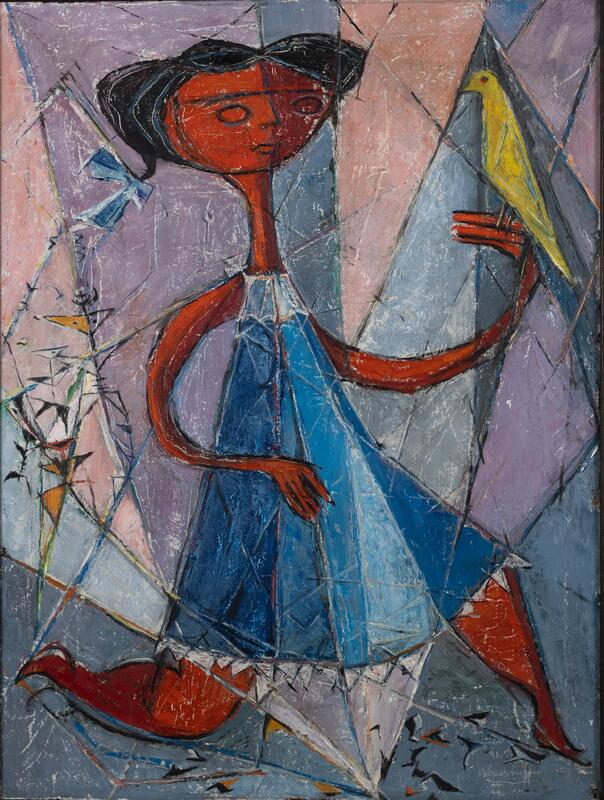
Hale Aspacio Woodruff was an artist and art educator known for his murals, paintings, and prints from Cairo, IL. The Yellow Bird is a cubist depiction of a yellow bird perched on a Black girl’s hand. The girl wears a blue dress with multicolored ribbons hanging from her hair.
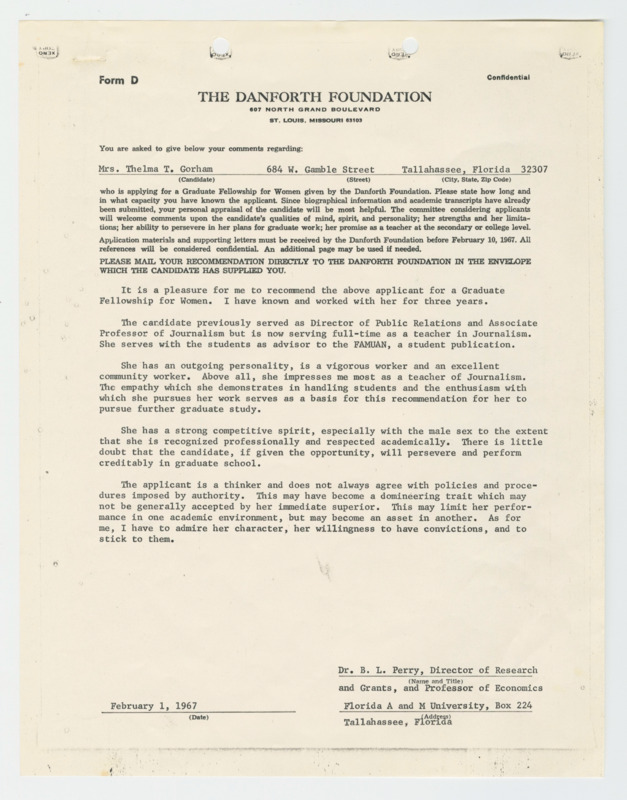
In this form, Dr. B. L. Perry, then serving as the Director of Research and Grants, pens a fervent letter of recommendation for a young Thelma T. Gorham, applying for a Graduate Fellowship for Women by the Danforth Foundation. Gorham would go on to become the founder and Dean of Florida A&M University’s distinguished Journalism school (SJGC).
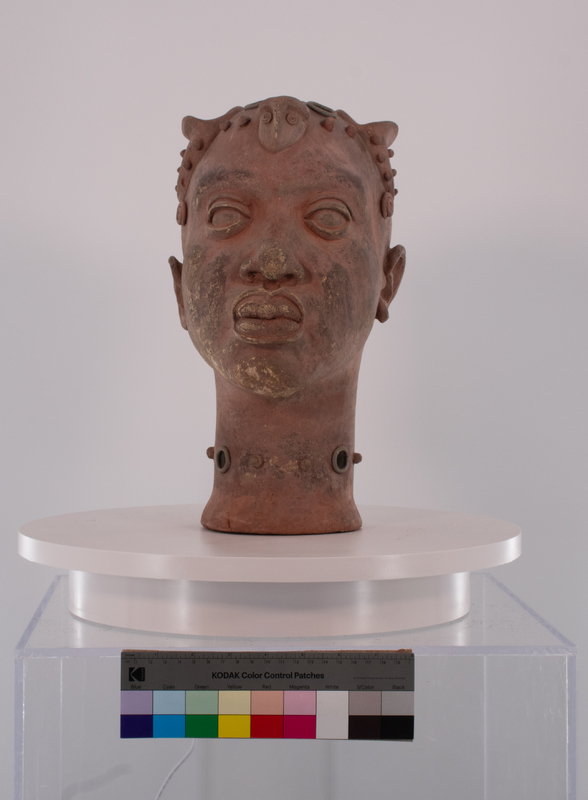
Moore’s bust was created during his time as an art student at TSU. Under the instruction of Professor Carroll Harris Simms, artists would create self-portraits embellished with decorations like spirals and accentuated crown pieces, like in Moore’s sculpture. Moore’s crown details include horns on both sides, green holes in the head, and a miniature mask in the center of the forehead. These busts are inspired by Nok terracotta sculptures and Ife busts, which Simms saw during his travels to Western Africa.
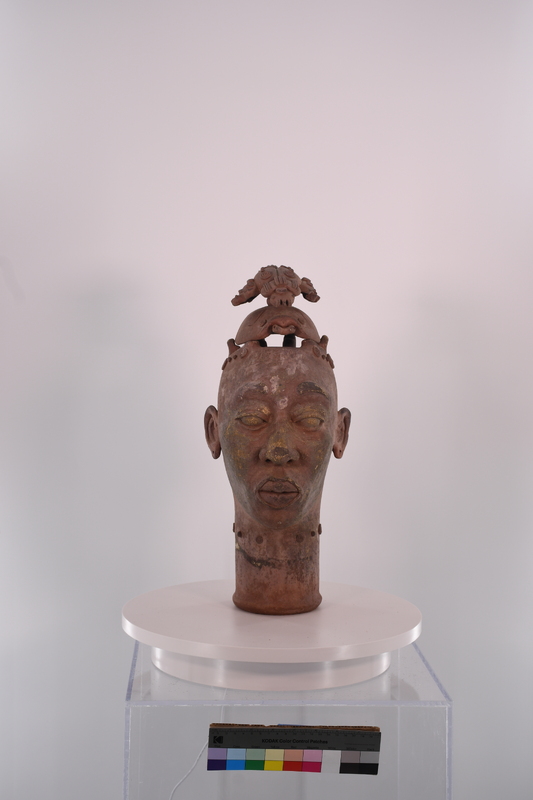
Davis's sculpture depicts a stylized version of the artist's head and neck, with a removable crown piece. The crown looks like a turtle with an insect atop it. The neck, crown, and forehead are all adorned with swirls, the most common motif in the terracottas of Simms' students.
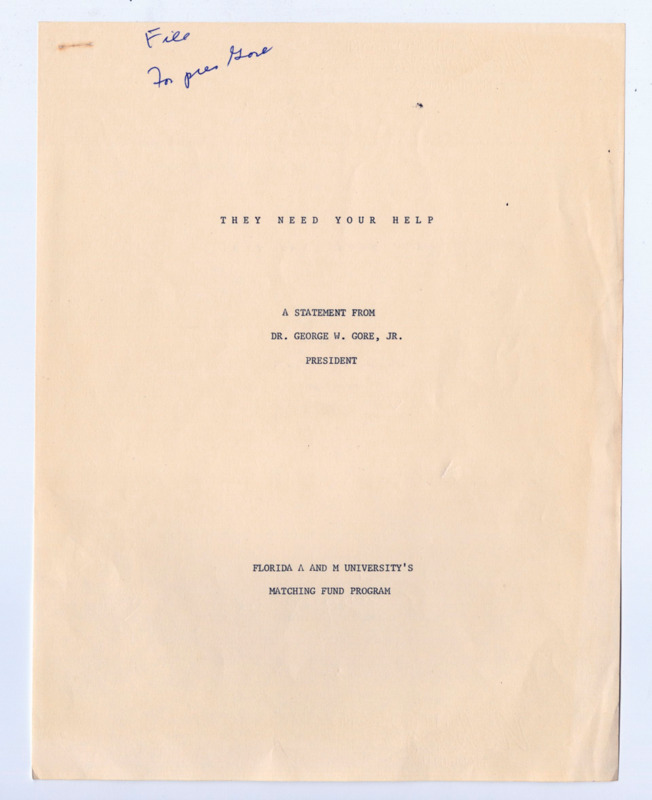
As President of Florida A&M University, Dr. George Gore made a plea to supporters on this mailing list asking for volunteer donations. For every dollar raised in the NDEA and Federal Work-Study programs, nine dollars were to be matched in grants, but because FAMU didn’t raise enough money, it lost out on funds at a detriment to its students.
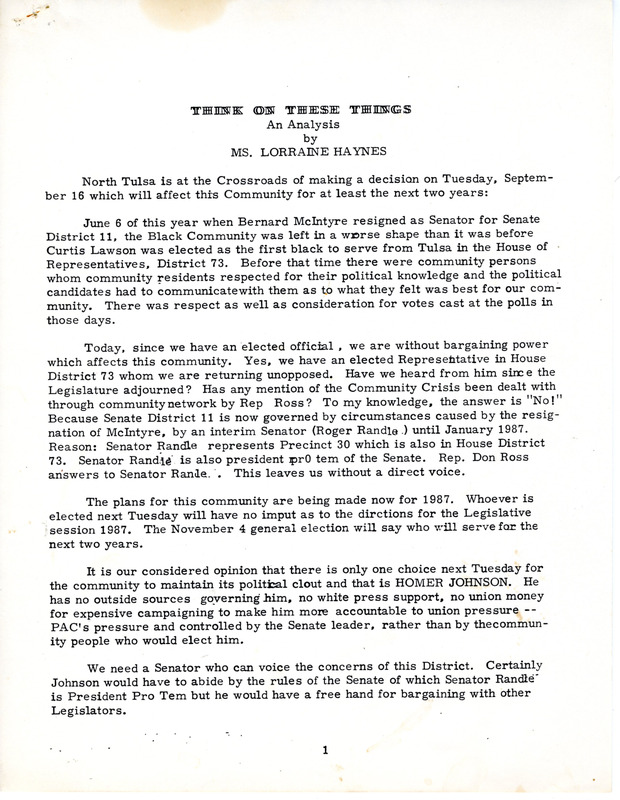
An analysis by Lorraine Haynes of an upcoming election for representative of House District 73 in Oklahoma, which encompasses North Tulsa, an area where a large percentage of Tulsa’s African American population resides. Haynes supports Homer Johnson as the best candidate to represent the community as he has no ties to outside influences.
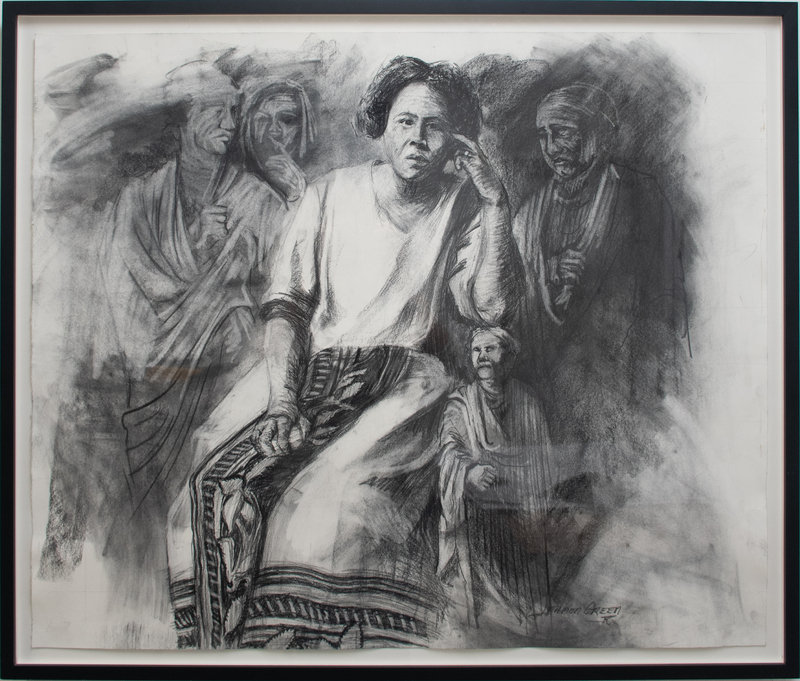
Green's drawing depicts a central female figure, deep in thought, surrounded by faint, whispering figures. The scene is reminiscent of a queen's court, with the monarch encircled by attendants and advisors. Green taught painting and printmaking courses at Texas Southern until his retirement in 2024.
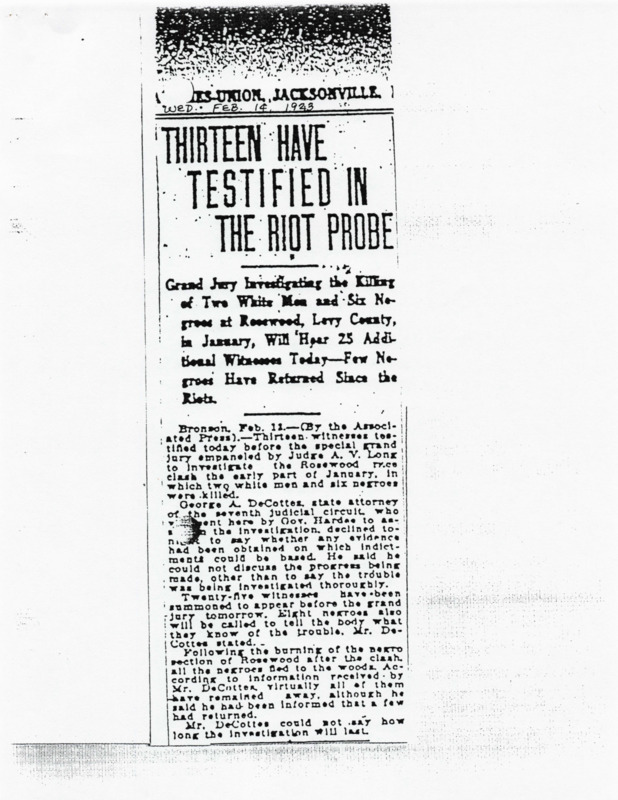
In this February 1923 article by the Jacksonville Times-Union, the paper details a report sent by the Associated Press. A special grand jury investigating the Rosewood Massacre, with Jude A. V. Long on the panel, got thirteen witnesses to testify with twenty-five more to testify the next day.
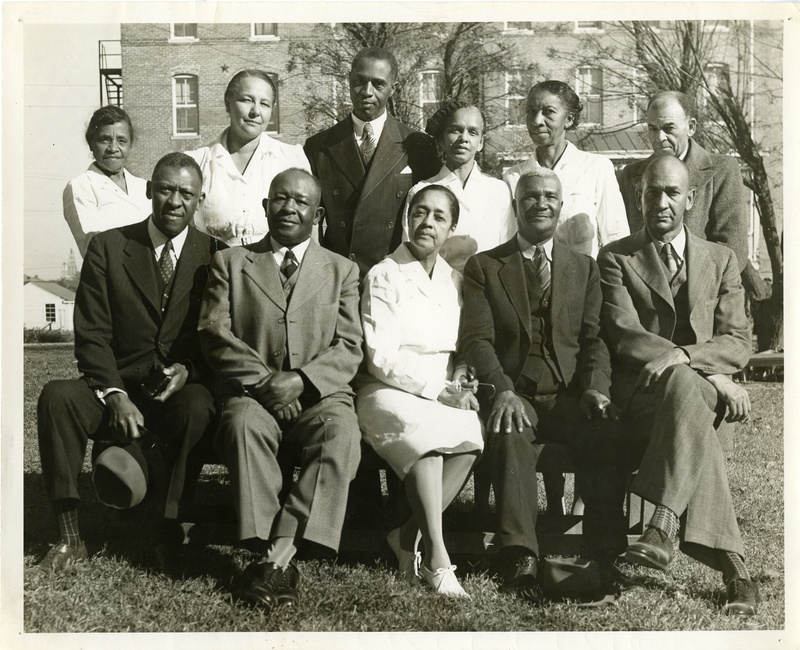
A black and white image of Thomas Monroe Campbell Sr., the first Black U.S. Extension agent, with other Mississippi agents. Mr. Campbell is seated on the left in the first row.
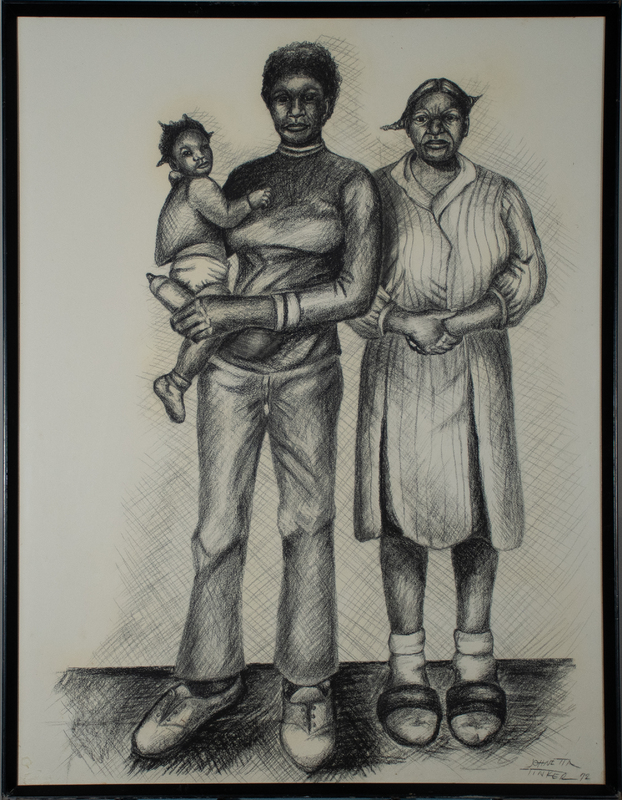
Tinker's drawing appears to portray three generations of women, with a baby, her mother, and her grandmother. The mother holds her daughter and her bottle; the grandmother stands behind them with her hands crossed. Dr. Biggers’ artwork often centered women and their contributions to the family and society. He passed these themes along to his students, who, like Tinker, frequently highlight the relationship between mother and child.
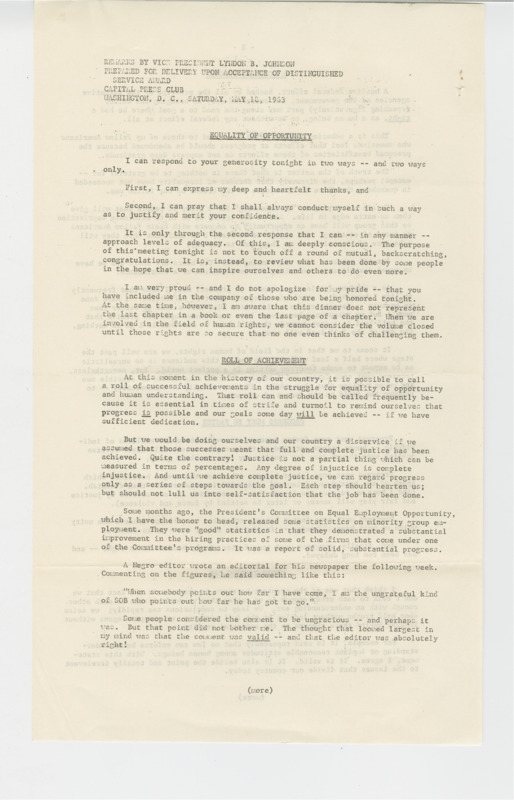
Vice President Lyndon B. Johnson's speeches included two addressing the Negro in America and the pursuit of social justice, advocating for equality and civil rights. The third speech focused on the importance of the educational system and higher education, emphasizing its role in fostering opportunity and progress for all Americans.
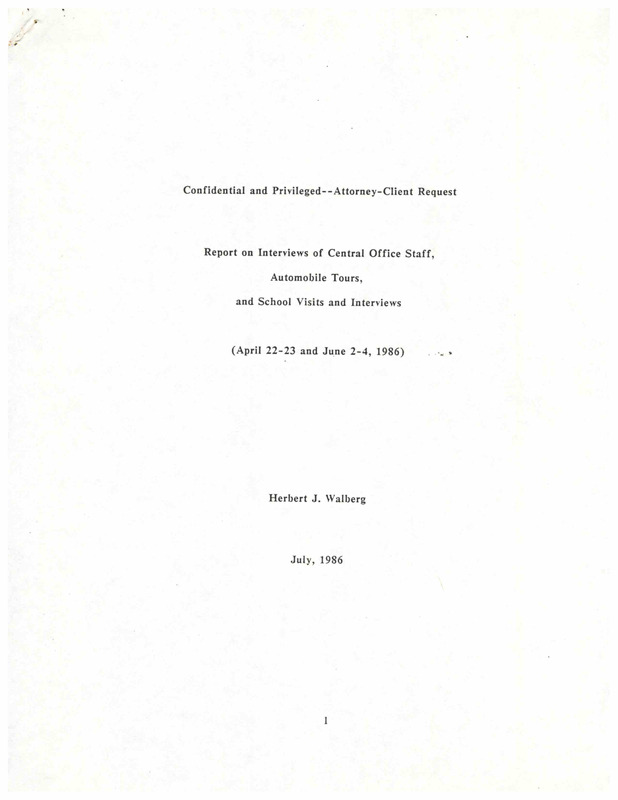
Case Data and Exhibits for Brown III, a relitigation of Brown v. Topeka Board of Education (1954) that corrected resegregation issues caused by open enrollment school choice in 1992. The papers include interviews with central office staff, a bibliography of studies of desegregation and learning outcomes, and a report on education programs.
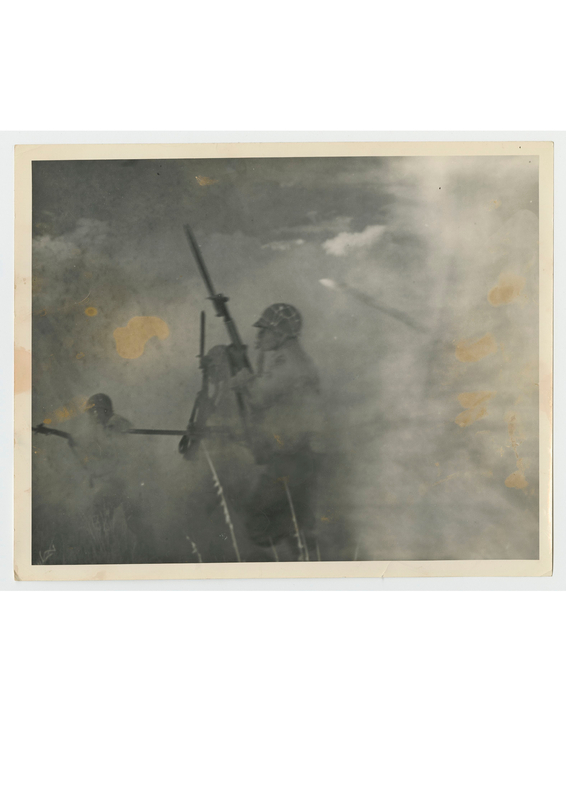
This riveting black-and-white photograph is an action shot of three running soldiers seemingly engaged in battle, holding weapons and engulfed in smoke. It is unclear who took this picture or when, but it was found in the Thelma Gorham collection, the former Florida A&M Dean of Journalism and Graphic Communication and wife of a Black soldier.
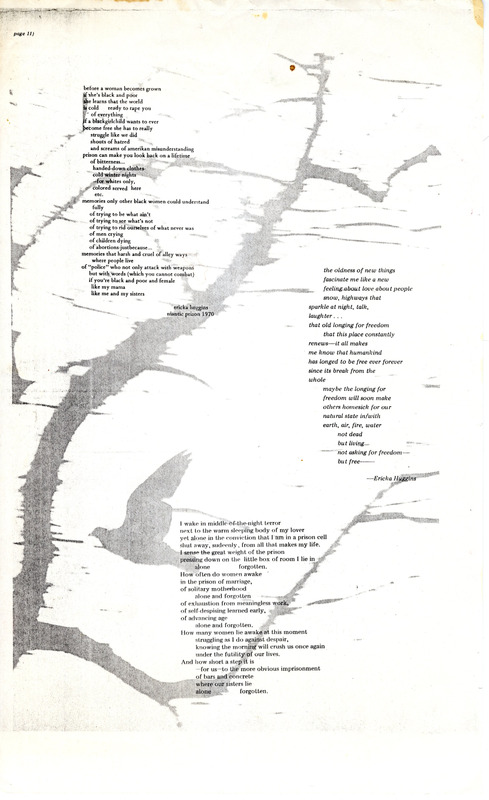
Three untitled poems written by Ericka Huggins. She signs first poem with her name and “Niantic Prison 1970” in reference to the York Correctional Institution in Connecticut. Each of the three poems makes reference to prison and themes of freedom and longing.
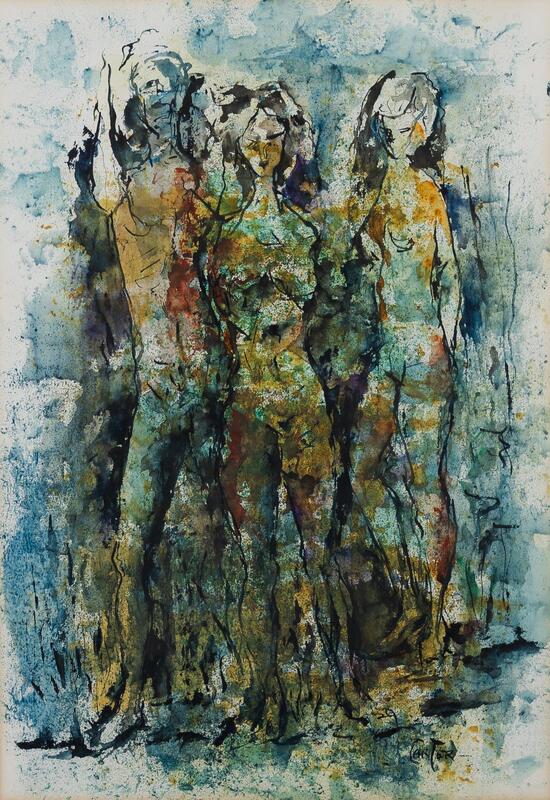
William S. Carter was an abstract, landscape, still-life, and figurative painter from St. Louis, Missouri. Three Women (figures) depicts three nude women drawn over muted watercolors. The women maintain a confident pose that separates them from their abstract background.
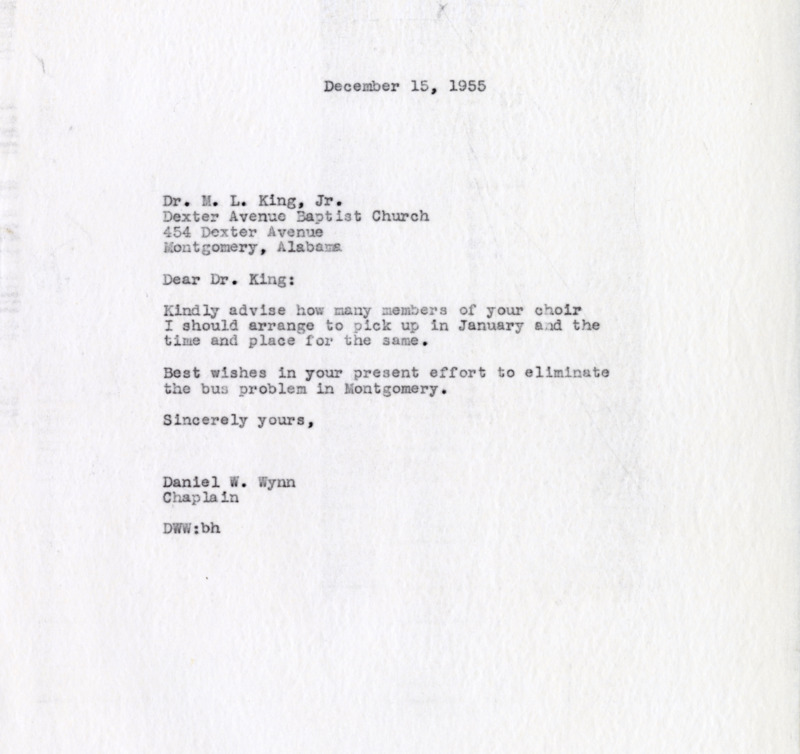
A letter on onion paper from Chaplain Wynn to Dr. Martin Luther King Jr. asking how many members of the choir does he need to pick up and at what time and place.