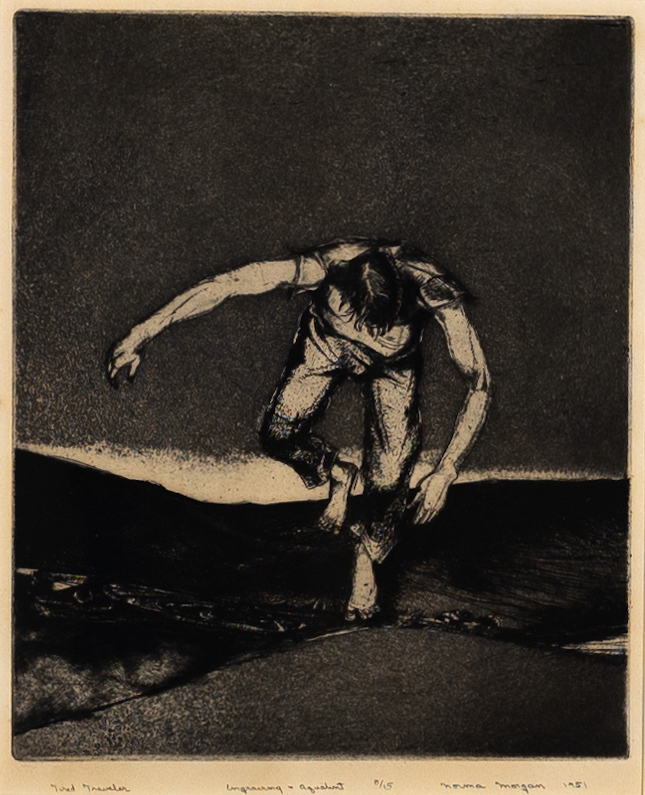
Norma Morgan was a painter from New Haven, Connecticut. Tired Traveler depicts a human figure tilting forward with their arms swinging outward. The figure is in the center of a dark landscape of an ocean shore.
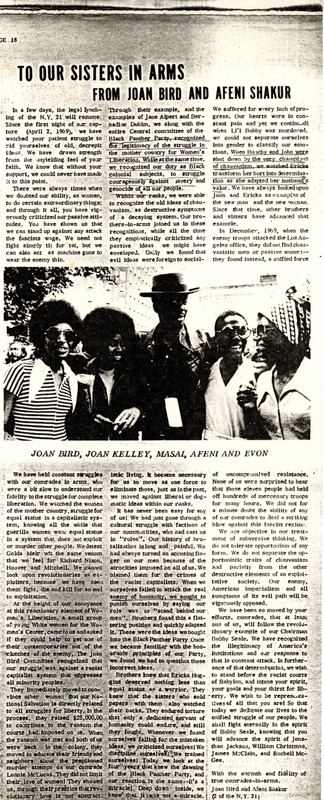
A newspaper article from The Black Panther detailing the importance of women in the Black Panther Party and calling on other women to find their strength to fight for liberation. The article was written by Joan Byrd and Afeni Shakur, two of the New York 21 who were arrested in 1969 for allegedly planning the bombing of buildings in New York City.
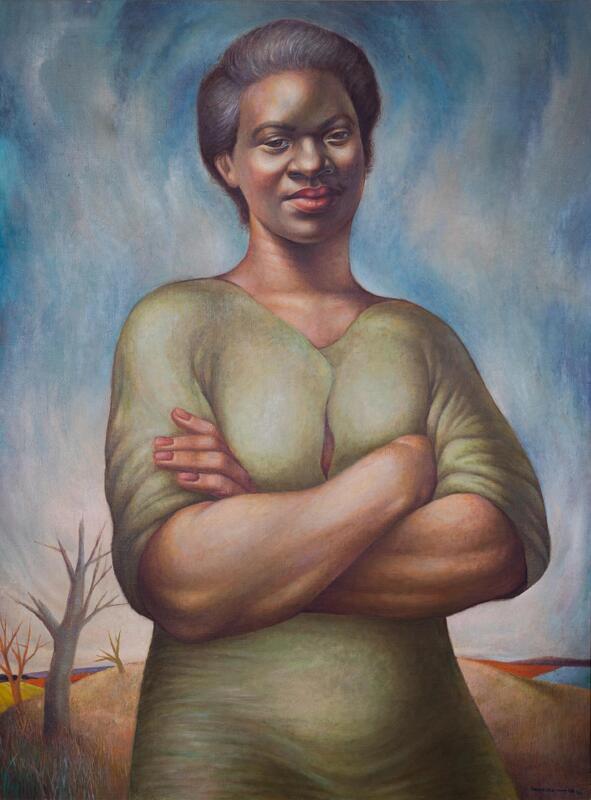
Charles White was a Black draftsman, printmaker, and painter who illustrated the Southern Black struggle. To the Future shows a Black woman standing cross-armed in front of hills and barren trees; she is scaled more significantly than the landscape. It speaks to African Americans being bigger than their past and a tradition of looking forward.
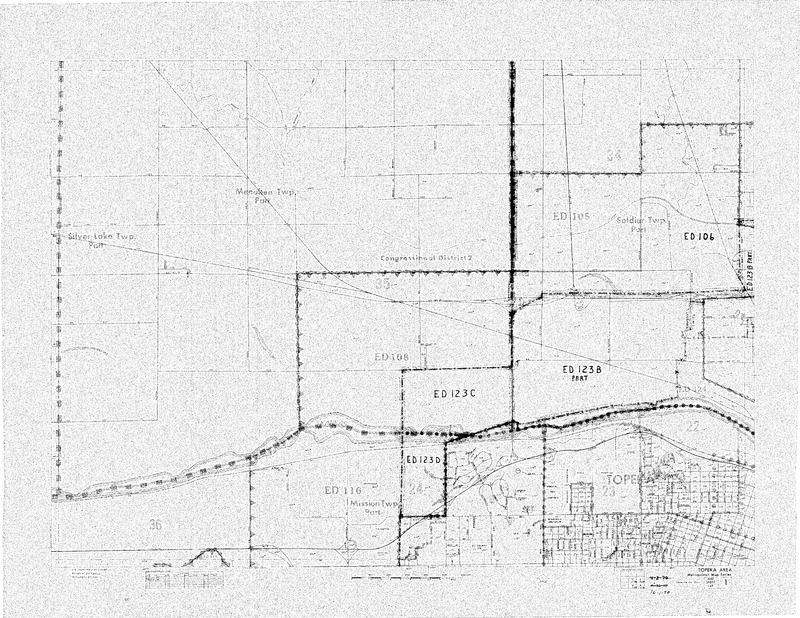
Case Data and Exhibits for Brown III, a relitigation of Brown v. Topeka Board of Education (1954) that corrected resegregation issues caused by open enrollment school choice in 1992. Topeka Area Metropolitan Map Series (Map Sheet L-25 1) with hand drawn markings by William Lamson marking school district boundaries.
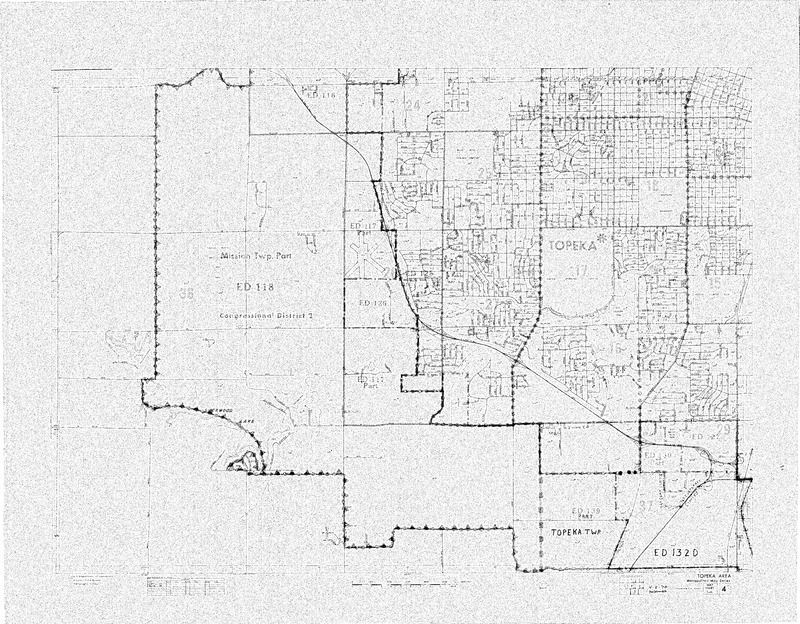
Case Data and Exhibits for Brown III, a relitigation of Brown v. Topeka Board of Education (1954) that corrected resegregation issues caused by open enrollment school choice in 1992. Topeka Area Metropolitan Map Series (Map Sheet L-26 4) with hand drawn markings by William Lamson marking school district boundaries.
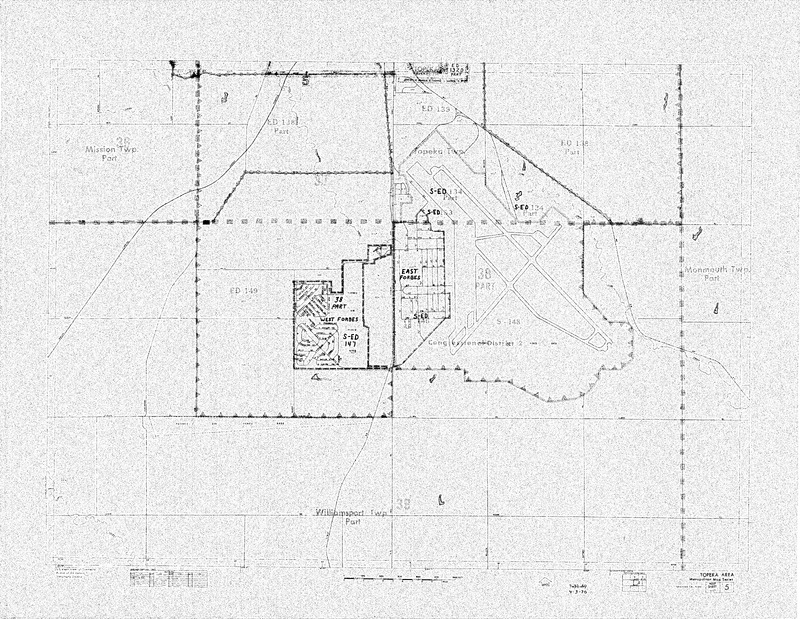
Case Data and Exhibits for Brown III, a relitigation of Brown v. Topeka Board of Education (1954) that corrected resegregation issues caused by open enrollment school choice in 1992. Topeka Area Metropolitan Map Series (Map Sheet L-27 5) with hand drawn markings by William Lamson marking school district boundaries.
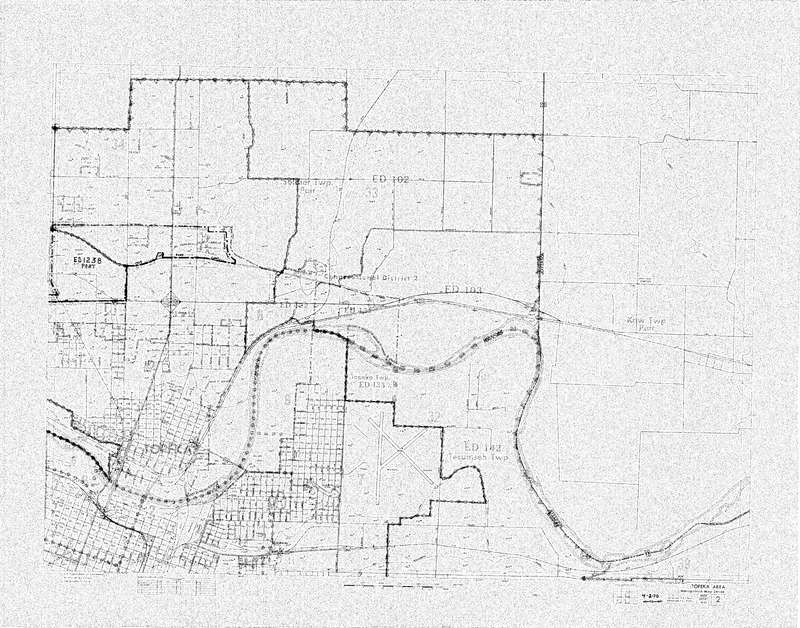
Case Data and Exhibits for Brown III, a relitigation of Brown v. Topeka Board of Education (1954) that corrected resegregation issues caused by open enrollment school choice in 1992. Topeka Area Metropolitan Map Series (Map Sheet L-25 2) with hand drawn markings by William Lamson marking school district boundaries.
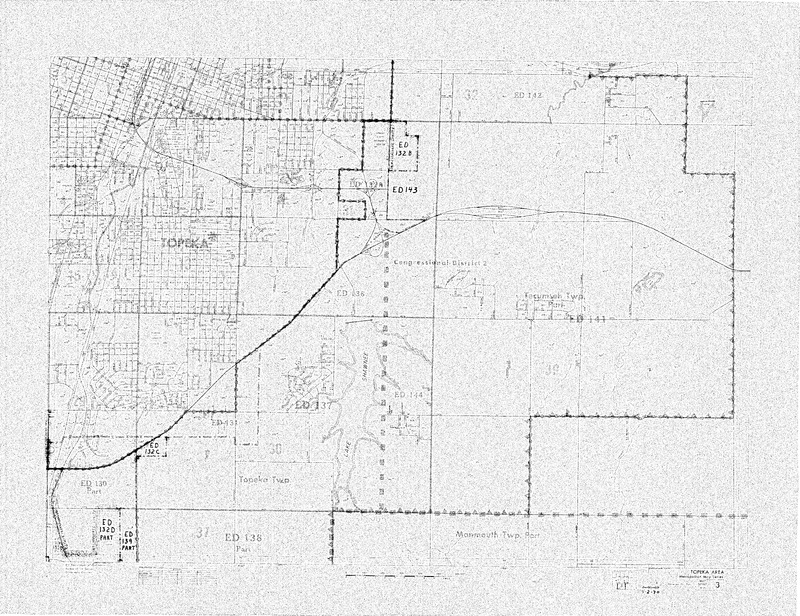
Case Data and Exhibits for Brown III, a relitigation of Brown v. Topeka Board of Education (1954) that corrected resegregation issues caused by open enrollment school choice in 1992. Topeka Area Metropolitan Map Series (Map Sheet L-26 3) with hand drawn markings by William Lamson marking school district boundaries.
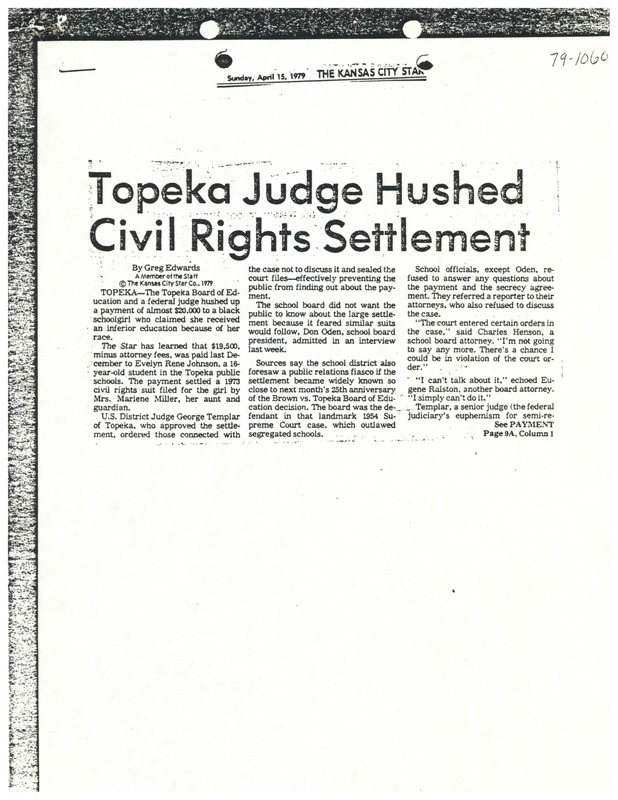
A newspaper article from the Kansas City Star about a payment of $19,500 to Evelyn Rene Johnson to settle the 1973 civil rights suit filed on her behalf. The judge ordered all parties to be silent and sealed the documents.
Case Data and Exhibits for Brown III, a relitigation of Brown v. Topeka Board of Education (1954) that corrected resegregation issues caused by open enrollment school choice in 1992. Report prepared for the Board of Education of public schools in Topeka, Kansas, by The Bureau of Educational Research at the University of Denver School of Education.
Case Data and Exhibits for Brown III, a relitigation of Brown v. Topeka Board of Education (1954) that corrected resegregation issues caused by open enrollment school choice in 1992. A 1973 report from the Topeka Public Schools Capital Improvements Committee that explains decisions on which large-scale capital improvement projects to approve.
Case Data and Exhibits for Brown III, a relitigation of Brown v. Topeka Board of Education (1954) that corrected resegregation issues caused by open enrollment school choice in 1992. A December 1974 report from the Topeka Public Schools Office of Planning and Evaluation that explains the short-term plan for facilities improvements.
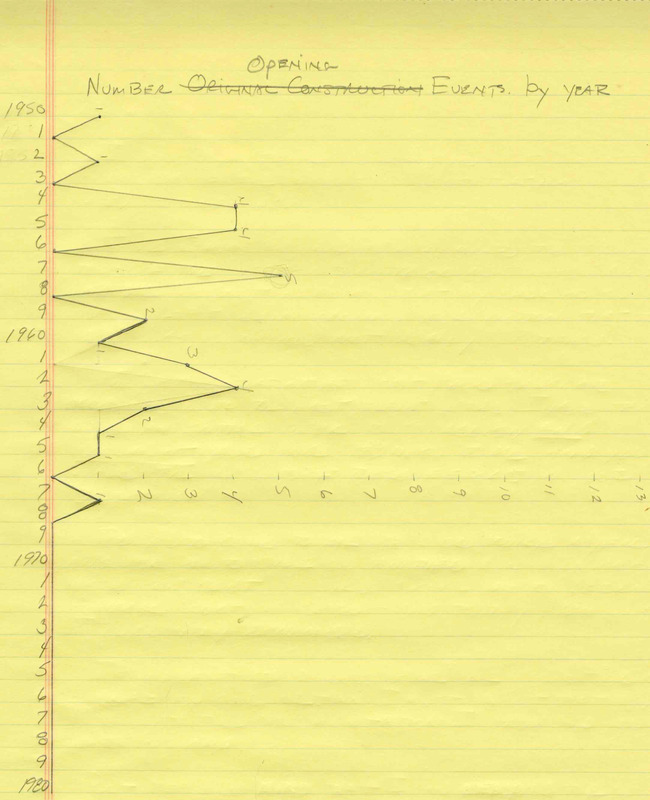
Case Data and Exhibits for Brown III, a relitigation of Brown v. Topeka Board of Education (1954) that corrected resegregation issues caused by open enrollment school choice in 1992. Handwritten charts and timelines by William Lamson breaking down the years 1950-1980 by new school construction, boundary changes, classroom additions, and more.
Case Data and Exhibits for Brown III, a relitigation of Brown v. Topeka Board of Education (1954) that corrected resegregation issues caused by open enrollment school choice in 1992. Handwritten charts and analysis by William Lamson comparing census data on race by decade from 1950-1980 in Topeka, Kansas.
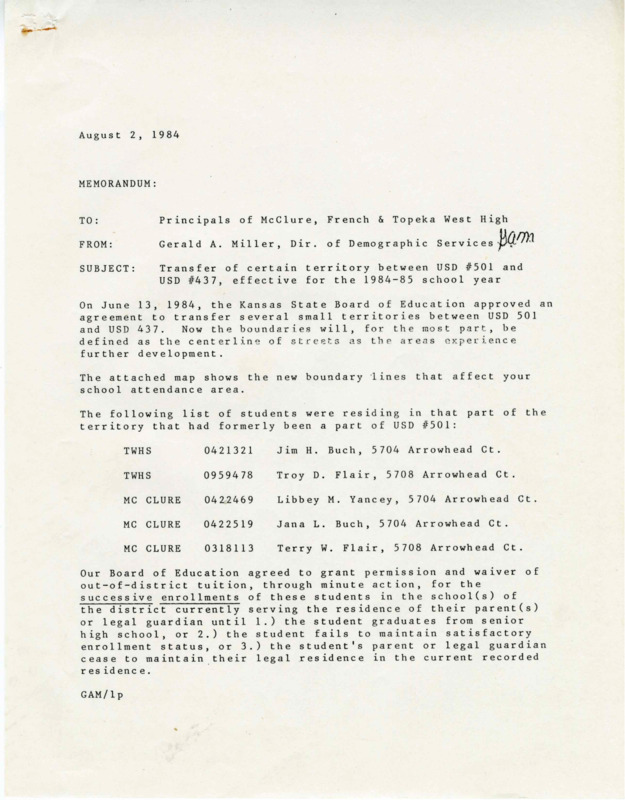
Case Data and Exhibits for Brown III, a relitigation of Brown v. Topeka Board of Education (1954) that corrected resegregation issues caused by open enrollment school choice in 1992. Demographic reports, memorandums, maps with overlays, and handwritten notes titled "Historical Racial Trends in U.S.D. 501's High Schools by William Lamson."
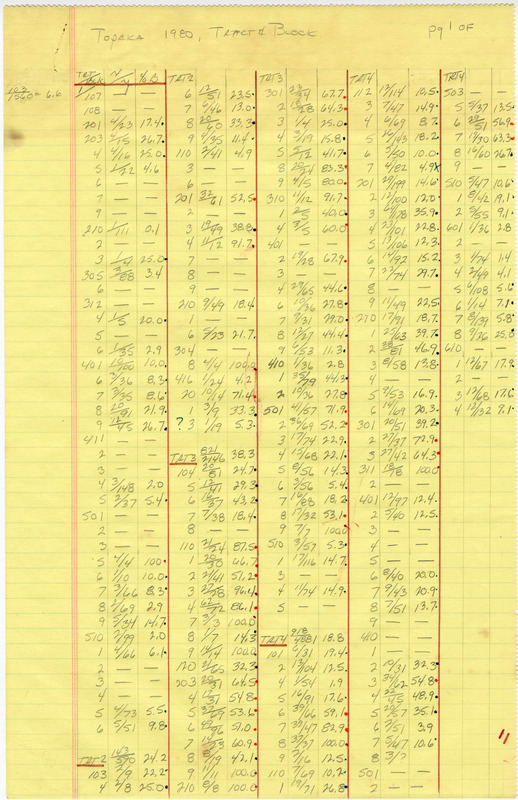
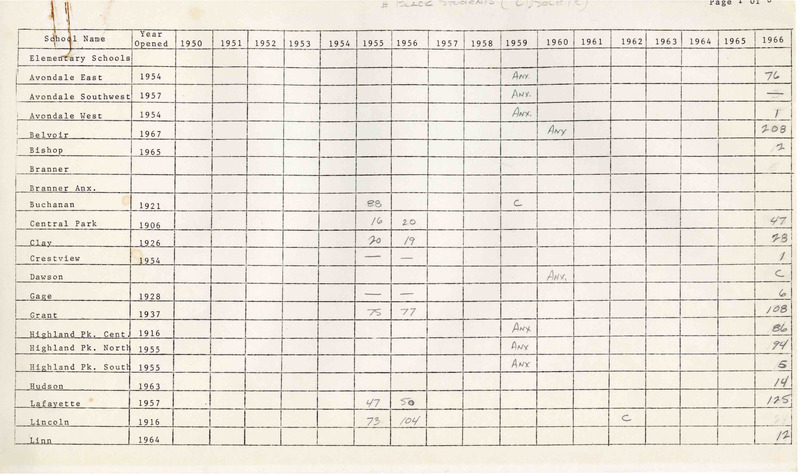
Case Data and Exhibits for Brown III, a relitigation of Brown v. Topeka Board of Education (1954) that corrected resegregation issues caused by open enrollment school choice in 1992. Handwritten charts and spreadsheets by William Lamson analyzing Topeka Public School students by percentage Black, with each individual school broken out.
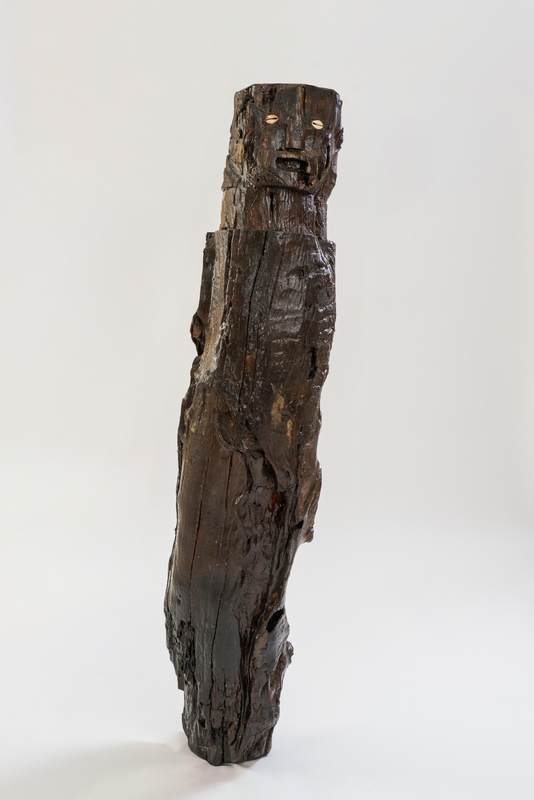
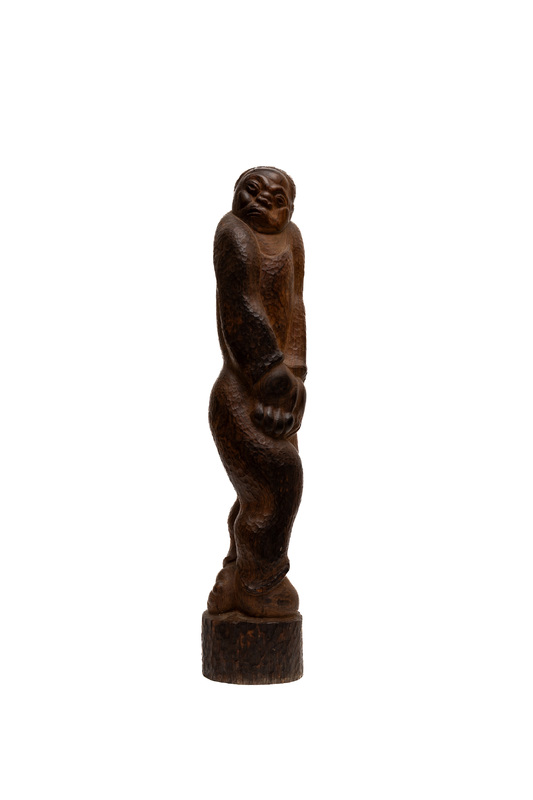
The totem, while not a field spirit, serves as a significant cultural artifact representing ancestral lineage, identity, and community values. Often intricately carved, it embodies the spirit of unity and protection.
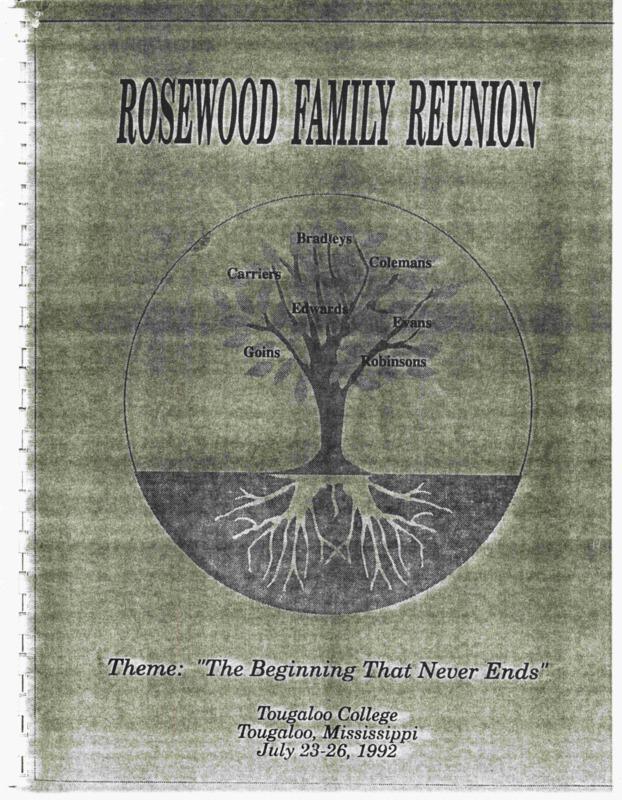
This program booklet is from an event that Tougaloo College, in Tougaloo, Mississippi, set up from July 23 to July 26, 1992. With the theme, “The Beginning That Never Ends,” Tougaloo College president Adib A. Shakir honors Rosewood victims by putting on a family reunion complete with a Sunday school and banquet.
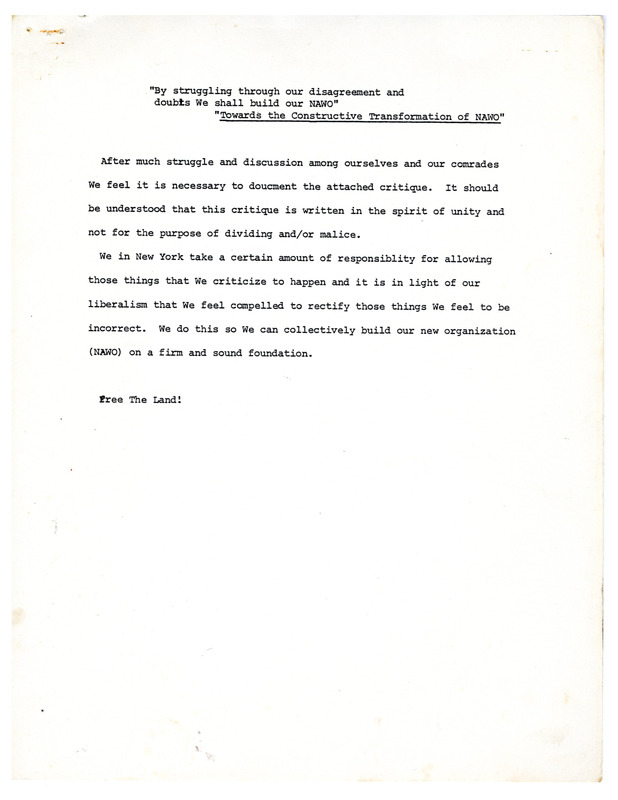
An essay that critiques certain aspects of the New Afrikan Women's Organization (NAWO). The author notes that "this critique is written in the spirit of unity and not for the purpose of dividing and/or malice."
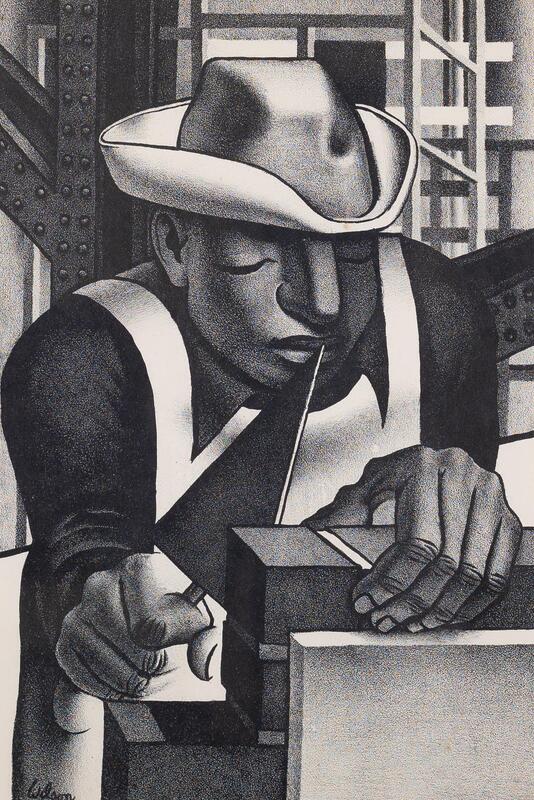
John Woodrow Wilson was a sculptor, painter, printmaker, and educator from Roxbury, MA. Trabajador is a black-and-white depiction of a Black bricklayer working at a construction site. The bricklayer is wearing a ten-gallon hat and overalls and holding bricks as he uses a trowel. There are steel beams in the background.
Charles W. Stallings was a painter, printmaker, sculptor, and educator from Gary, IN. Tragic Figure is a sculpture of a gender-ambiguous person standing on a pedestal. The subject adopts a demure pose as it stares over its shoulders toward the viewer.
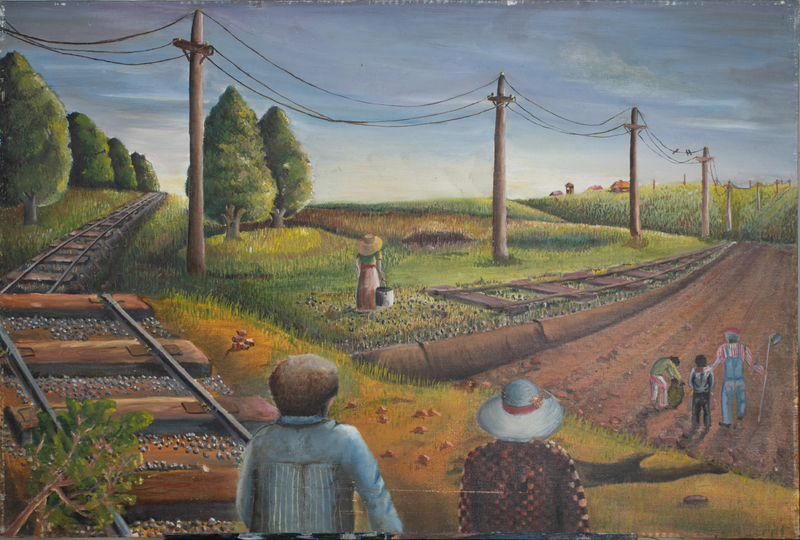
Leonard Henderson's cool-colored composition depicts a calm landscape of farmers working a field next to train tracks. The tracks running next to the field may hint at the contrast between urban and rural life, and show the development of rural areas during the turn of the 20th century.
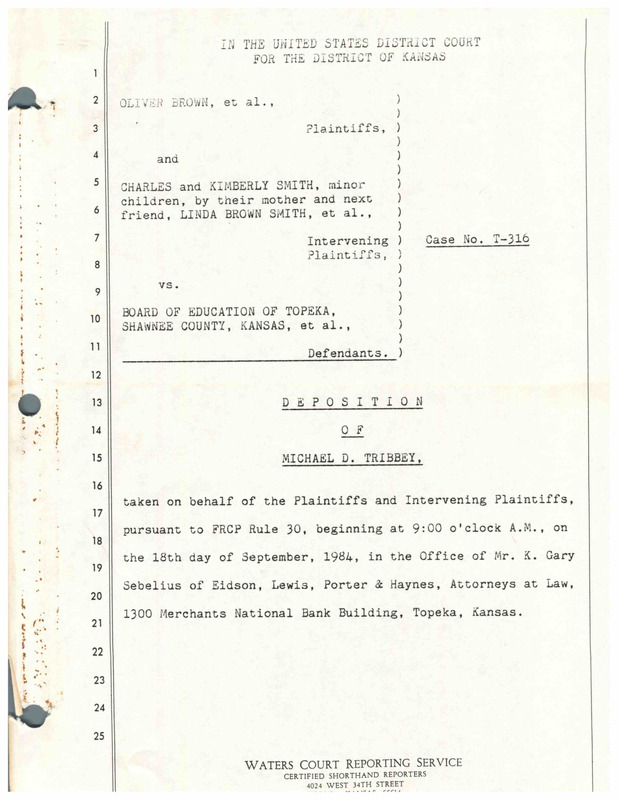
Case Data and Exhibits for Brown III, a relitigation of Brown v. Topeka Board of Education (1954) that corrected resegregation issues caused by open enrollment school choice in 1992. Transcript of Michael Tribbey, Assistant Superintendent of Program Audit and Planning for Topeka Public School District, being deposed by ACLU attorney Chris Hansen.
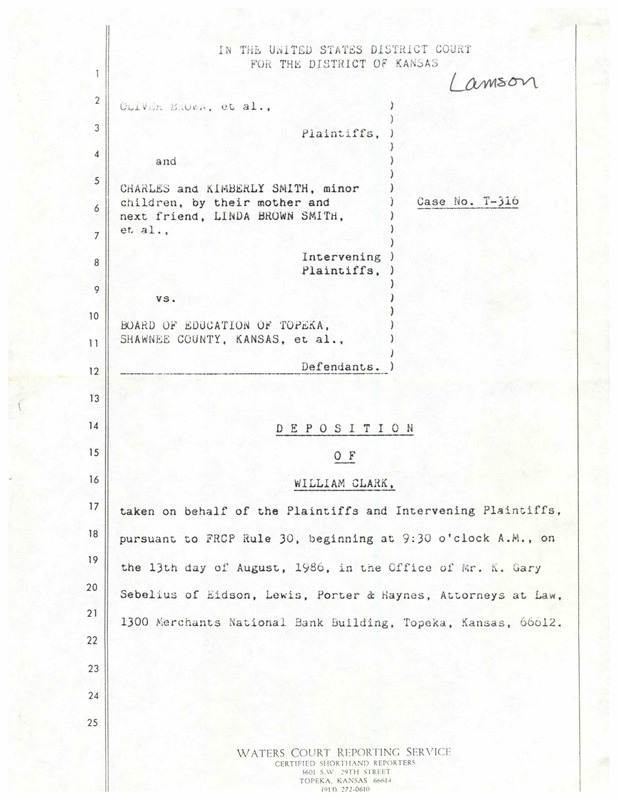
Case Data and Exhibits for Brown III, a relitigation of Brown v. Topeka Board of Education (1954) that corrected resegregation issues caused by open enrollment school choice in 1992. Transcript of Defense Witness William Clark being deposed by ACLU attorney Chris Hansen. Clark was acting as an expert demographic witness for the defense.
Case Data and Exhibits for Brown III, a relitigation of Brown v. Topeka Board of Education (1954) that corrected resegregation issues caused by open enrollment school choice in 1992. Transcript of Director of Demographic Services for Topeka Public Schools Gerald A. Miller being deposed by ACLU attorney Chris Hansen.
Case Data and Exhibits for Brown III, a relitigation of Brown v. Topeka Board of Education (1954) that corrected resegregation issues caused by open enrollment school choice in 1992. Transcript of Superintendent of Topeka Public Schools James M. Gray being deposed by ACLU attorney Chris Hansen.
Case Data and Exhibits for Brown III, a relitigation of Brown v. Topeka Board of Education (1954) that corrected resegregation issues caused by open enrollment school choice in 1992. Transcript of Topeka Public Schools officials Owen M. Henson, Rex G. Weimer, and Francisco Ybarra being deposed by ACLU attorney Chris Hansen.
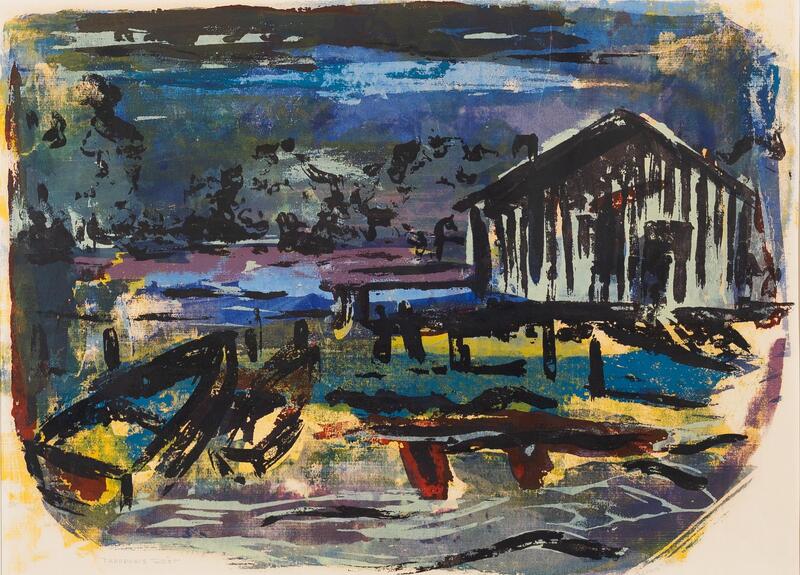
Samella Sanders Lewis was a printmaker, painter, sculptor, and art historian from New Orleans, LA. Trapper's Rest depicts a fishing pier at night. Two boats, fishing equipment, and a pier lodge, which fishermen often use for rest and storage, are positioned alongside the pier.
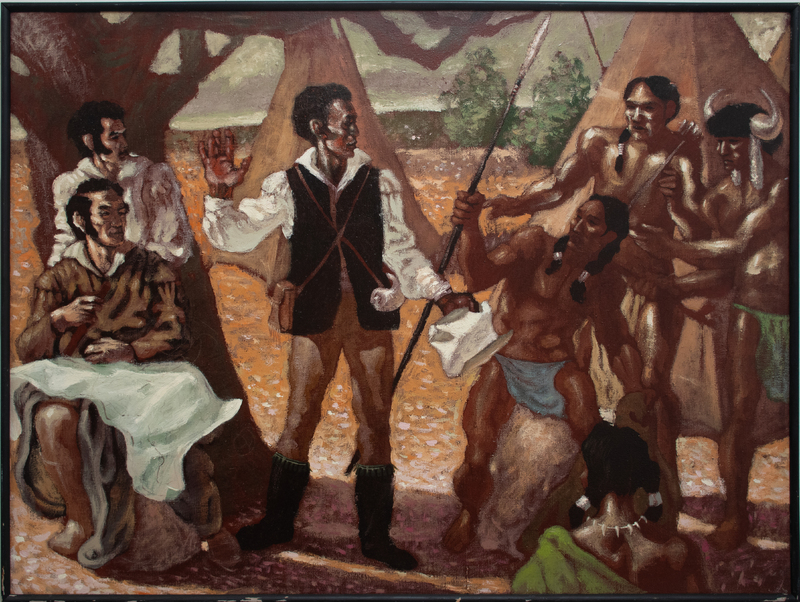
Oliver's painting depicts an accord between settlers and a group of indigenous Americans. Colonizers consistently broke their agreements with tribes and took more and more land from them. Indigenous peoples of the American Southwest are frequent subjects of Oliver's work.
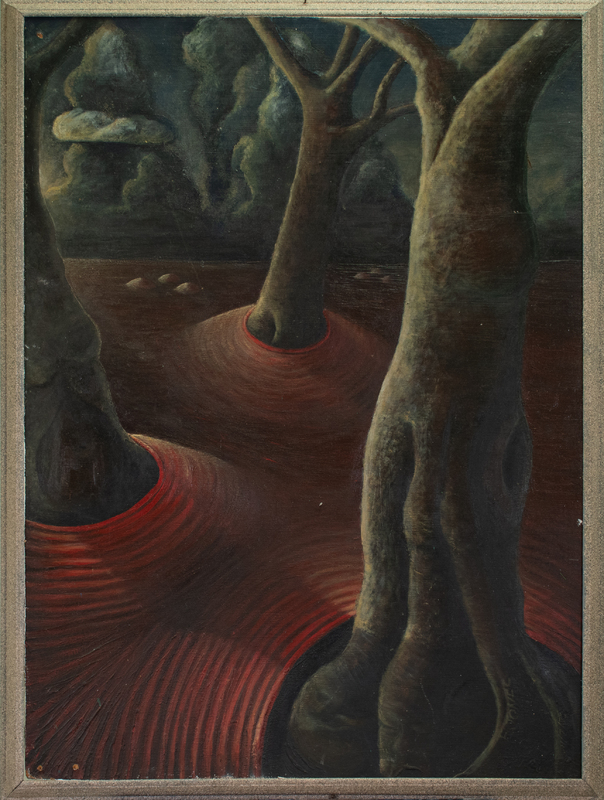
This work by Earl Jones is an abstract, desert landscape of barren trees, emerging from red and orange rings in the ground. Jones was a student at Texas Southern in the mid-1970s and was taught by artists and instructors like Dr. John T. Biggers and Professor Carroll Harris Simms. Biggers frequently urged his students to draw inspiration from nature and their immediate surroundings.