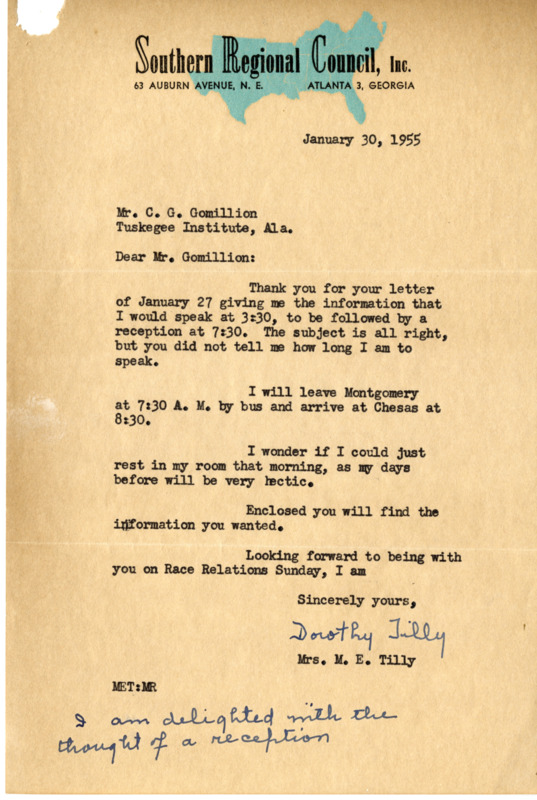
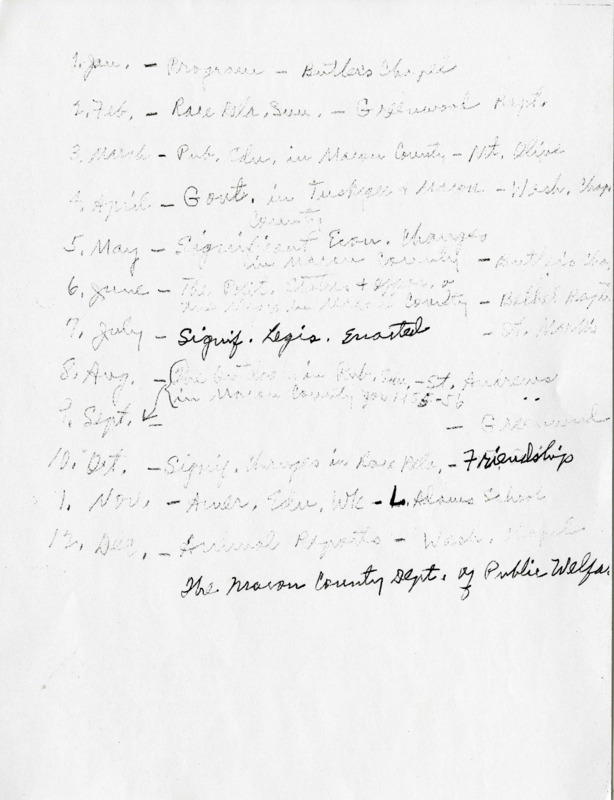
A letter from Mrs. Dorothy Tilly to Charles G. Gomillion in which she states that she will speak at 3:30 p.m. She also asks if she can rest in the morning due to the hectic nature of the past few days of travel.
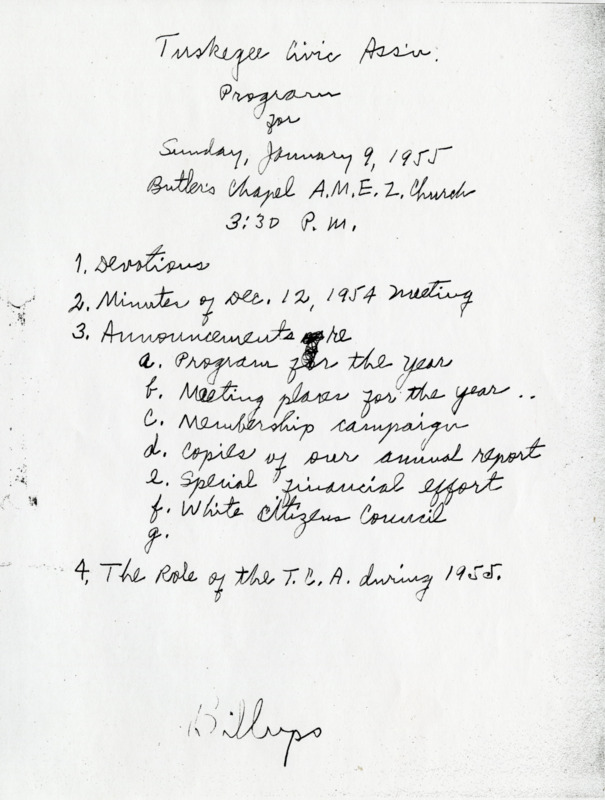
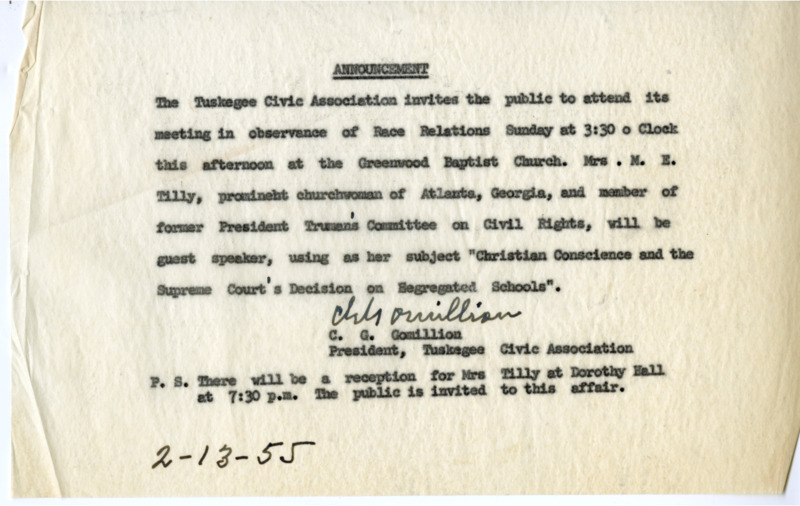
An announcment made by Dr Charles G. Gomillion inviting the public to attend a meeting over race relation with Mrs. Dorothy Tilly being a guest speaker.
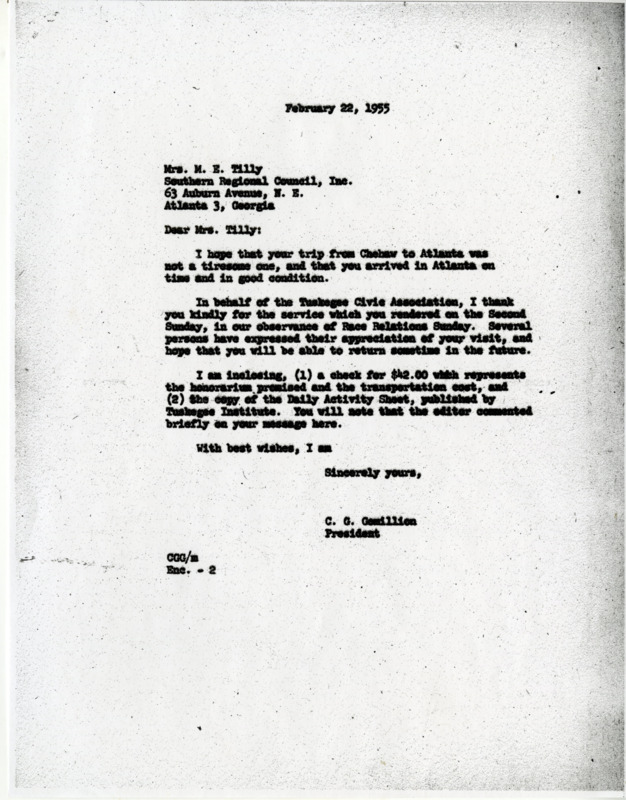
A thank-you letter from Charles G. Gomillion to Mrs. Dorothy Tilly, expressing gratitude for her visit and the services she rendered in observance of Race Relations Sunday.
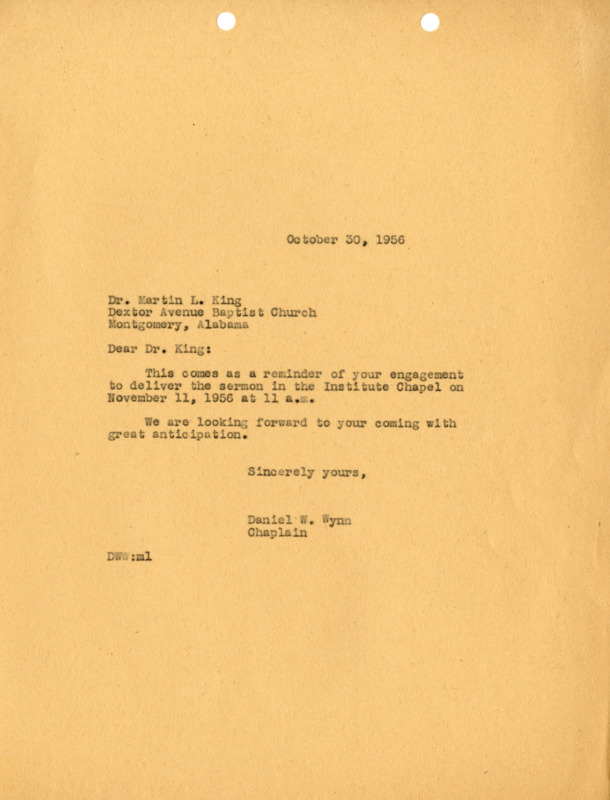
A letter from Chaplain Wynn to Dr. Martin Luther King Jr. reminding Dr. King of his speaking engagement at Tuskegee Institute’s Chapel on 11/11/1956 at 11am.
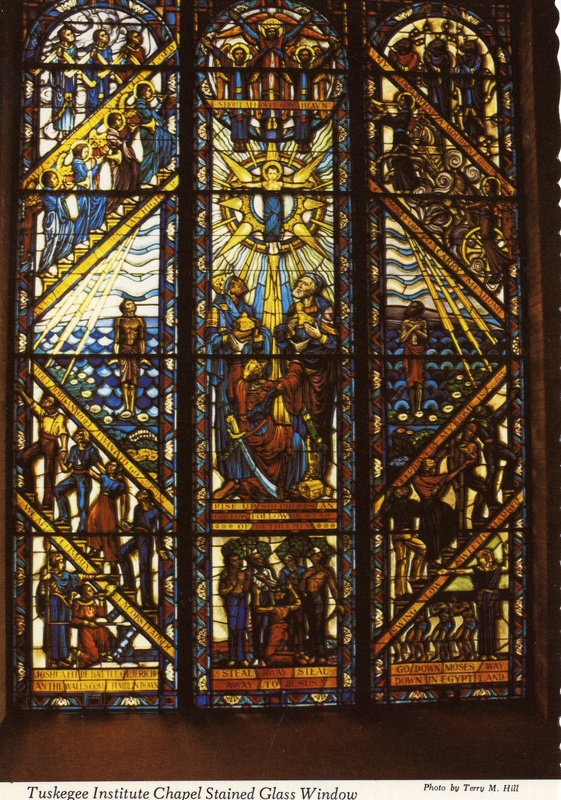
A colored image of the interior of Tuskegee Institute Stained Glass Window, taken by Terry M. Hill. This stained glass window, created by J & R Lamb of New York, depicts eleven Negro spirituals.
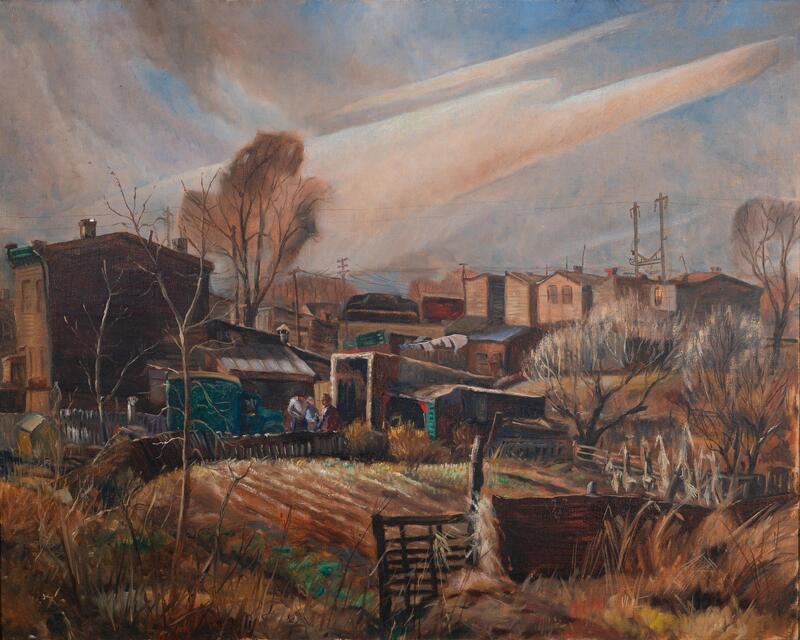
Edward L. Loper was an artist and teacher from Delaware known for his vibrant palette and juxtaposition of colors. Twelfth Street Gardens is a landscape piece illustrating a rural town under a slightly cloudy, blue sky during Autumn. The piece shows three men conversing beside a field in a rural residential area.
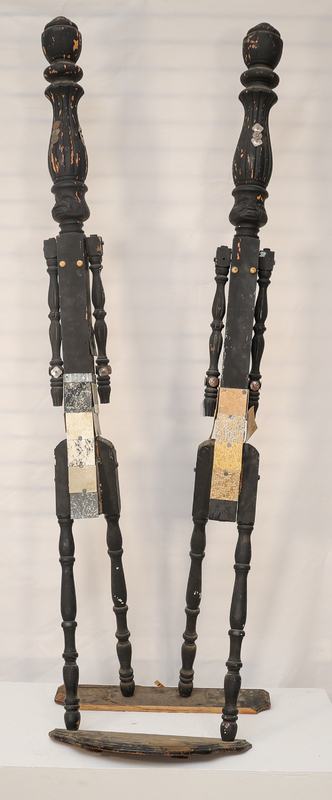
Dr. Eddie Jack Jordan, Sr. was a Southern artist from Wichita Falls, TX. Twin Fetish is a wooden sculpture of twins made from upcycled materials. This readymade art piece uses pieces of furniture to depict two twin siblings.
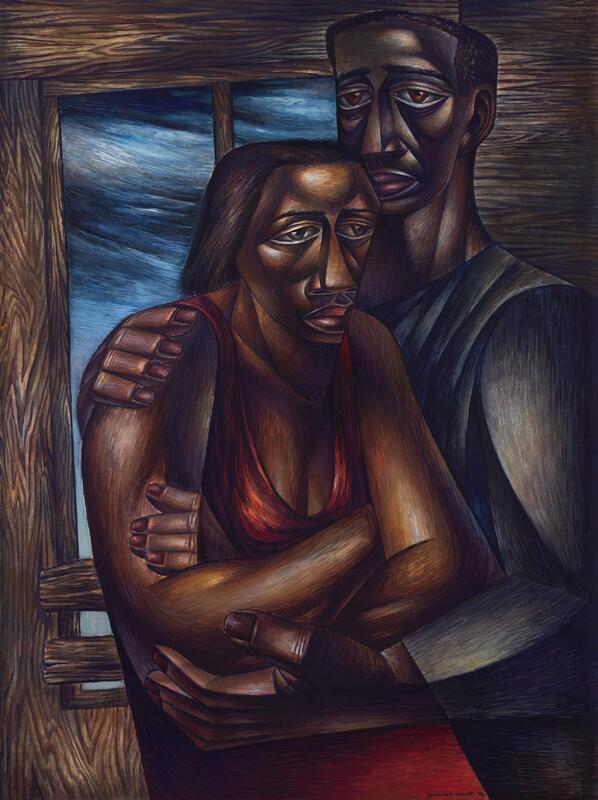
Charles White was a painter, printmaker, muralist, and educator known for his stylistic approach to African American subjects from Chicago, IL Two Alone is a painting of a man embracing a woman as they stand in front of a window. The woman stands, arms crossed, leaning into the man who looks into the distance and above her head.
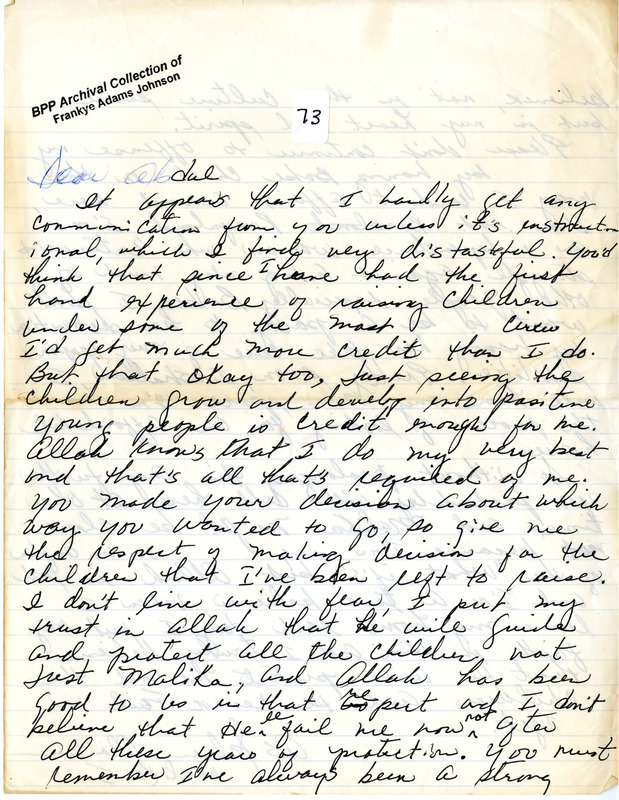
A letter from Frankye Adams-Johnson (Malika) to her husband, Nuh Abdul Qaiyum, who has been imprisoned since 1975. She writes about their rare correspondence and lack of depth in conversation. She also writes about her faith and how Allah will continue to protect her and the children through hard times.
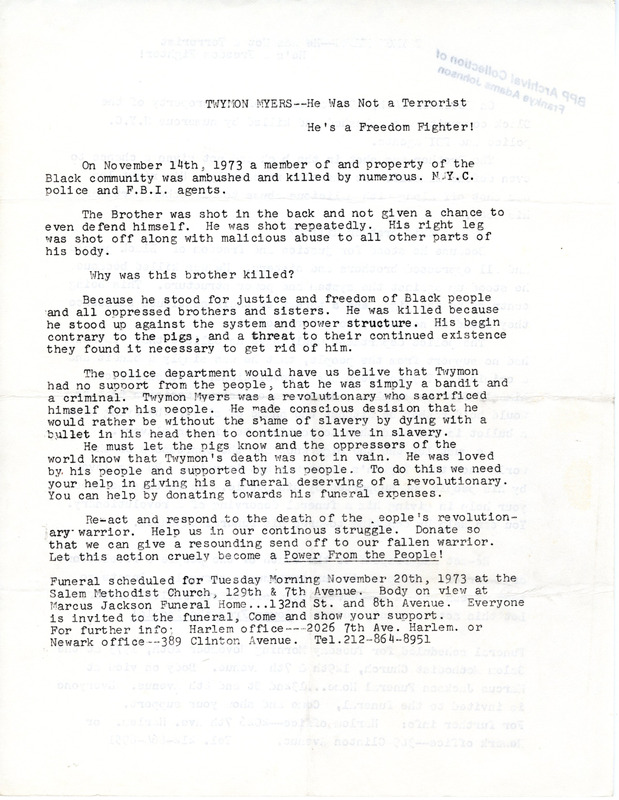
A memo calling for assistance with the funeral for Twymon Myers who was killed by New York City police officers and F.B.I. agents on November 14th, 1973. The unknown author asks the community for donations toward his funeral as a way to show the police that he was a beloved freedom fighter with the support of the people and not a criminal.
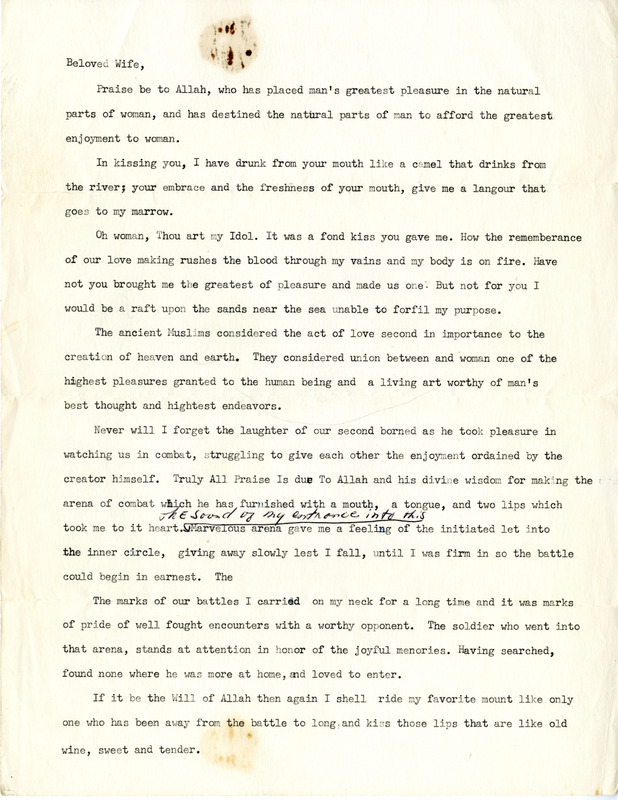
A letter from Nuh Abdul Qaiyum, who is imprisoned, to his wife Frankye Adams-Johnson (Malika). He details their love as it relates to their nature and their religion. He writes of their divine connection and compares their physical love to arena warfare. He compares her presence to an engraving on his brain.
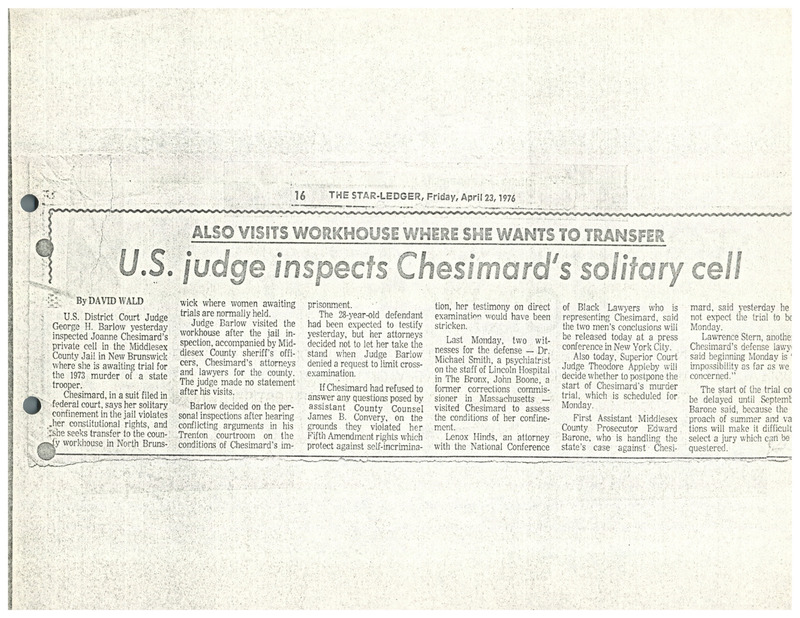
A newspaper article from The Star Ledger about District Court Judge George H. Barlow inspecting the cell where Assata Shakur (JoAnne Chesimard) is being held in Middlesex County to stand trial for the May 1973 killing of a state trooper. Shakur was convicted in 1977 of the killing and escaped prison in 1979.
A red button with the logo for the Uhuru Cultural Center. The Uhuru Movement (from the Swahili word for "Freedom”) is an African Internationalist movement founded in 1972 by the African People's Socialist Party (APSP). Uhuru cultural centers and art centers were established around the country.
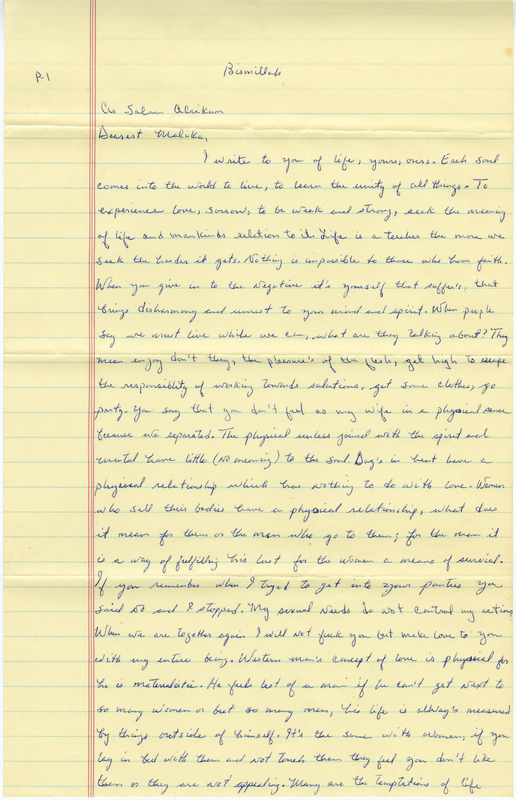
A letter from Nuh Abdul Qaiyum, who is imprisoned, to his wife Frankye Adams-Johnson (Malika). He writes about their spiritual union, its power, and giving into negativity in life and the world. He reassures her of their true love outside of the physical sense. He includes meditations for her to practice in the hopes that she will find peace.
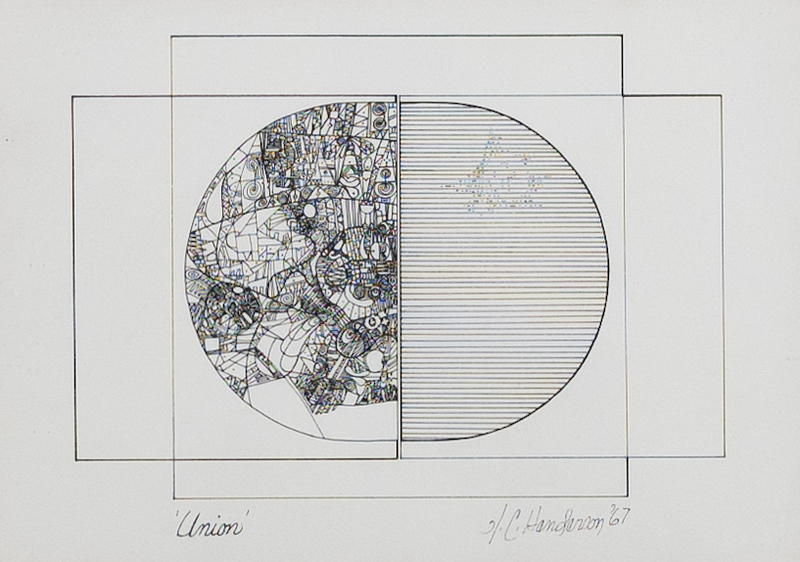
William C. Henderson II was an artist from Pontiac, MI. Union is a geometric drawing that interrogrates the intersection of lines and shapes. The piece centers a split circle, one side consisting of lines, the other of shapes, with two intersecting squares overlayed over it.
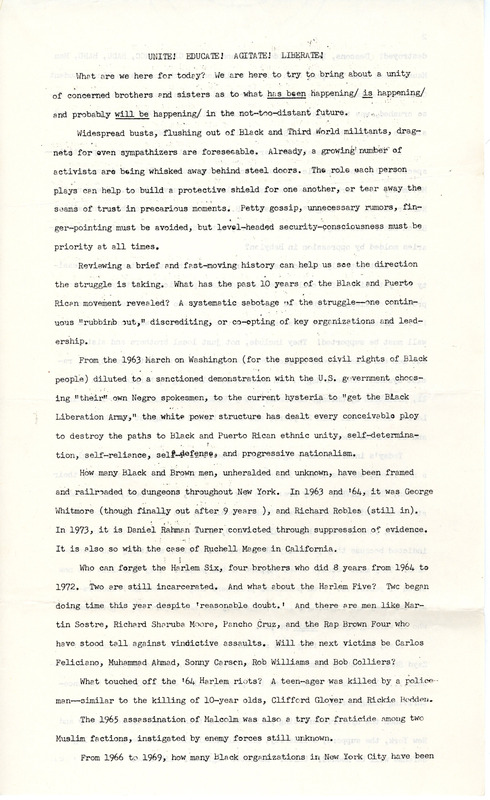
A call for support, solidarity, and financial aid for the legal defense of people on trial for police killings. The author writes that the incarcerations are part of a long-term strategy of the system to destroy the Black and Puerto Rican freedom movements and gives multiple examples of people and organizations that had been carried out on.
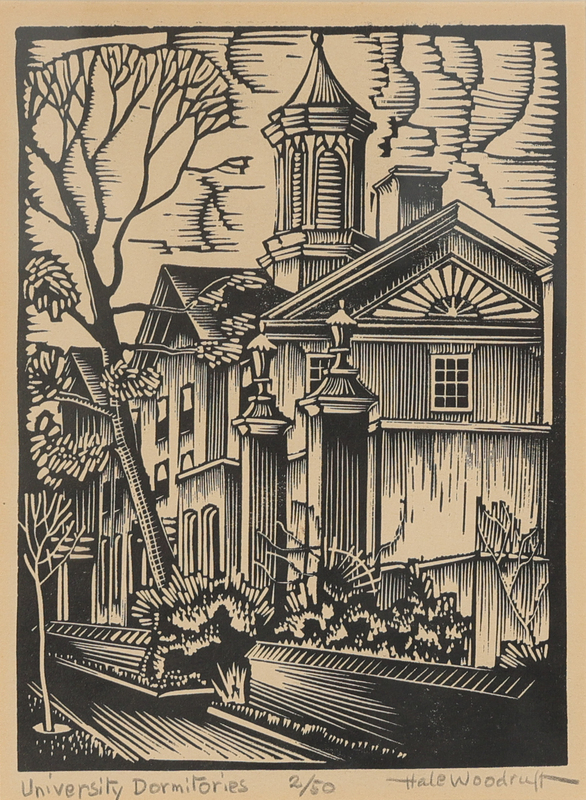
Hale Aspacio Woodruff was an artist and art educator known for his murals, paintings, and prints from Cairo, IL. "University Dormitories" depicts a student housing building likely on the campus of one of the colleges and universities historically associated with the Atlanta University Center (AUC): Atlanta University, Clark College, Morehouse College, Spleam College, or Morris Brown College.
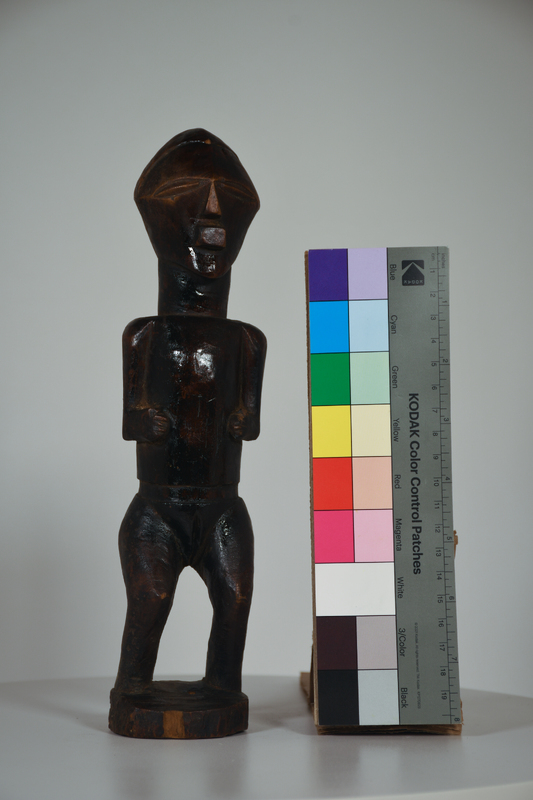
This is a simple work of a richly colored woman featuring a geometric face with oval eyes, a triangle nose, and a prominent square mouth. The sculpture has African origins, yet the specific ethnic group is unknown because of the lack of body markings and hair adornments. The sculpture has a glossy finish.
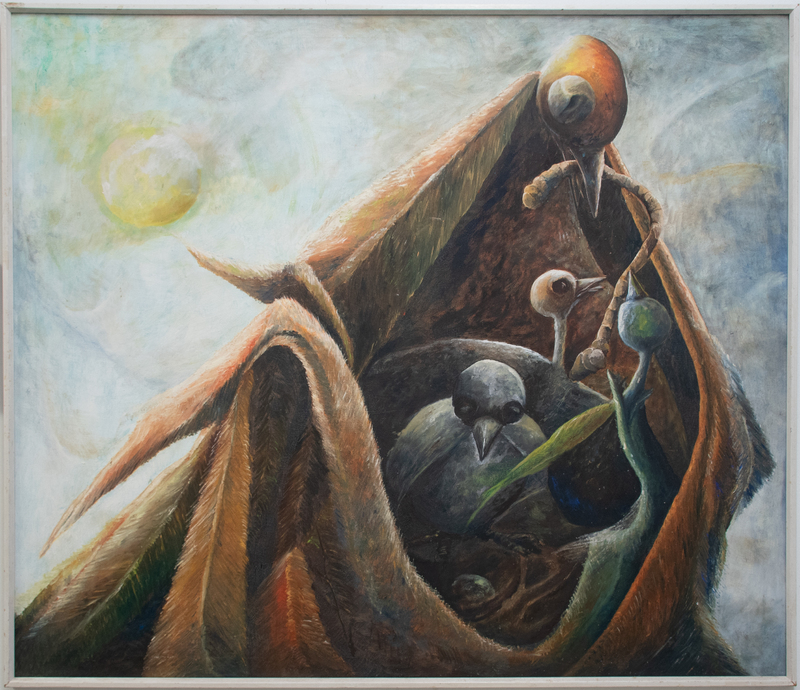
Vital's painting depicts a bird feeding a worm to its three offspring, reflecting the theme of the mother & child(ren) relationship that often appears in TSU student work. The artist often featured animals and nature in his work. After his graduation, Vital taught art for many years at Texas Southern.
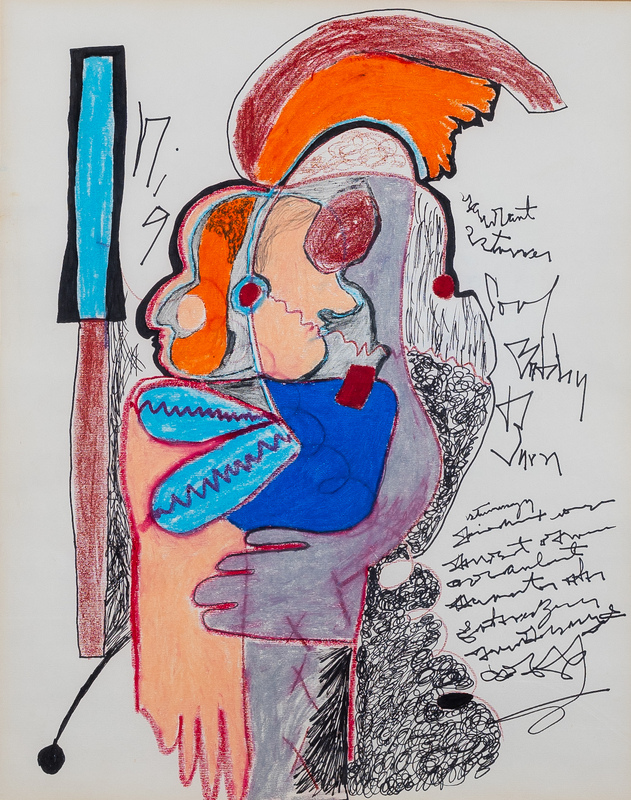
Alexander S. McMath was a painter and educator from Clinton, SC. Untitled depicts a surrealist anatomical rendering of a human figure's side profile. Signed text by the artist sits on the right of the figure.
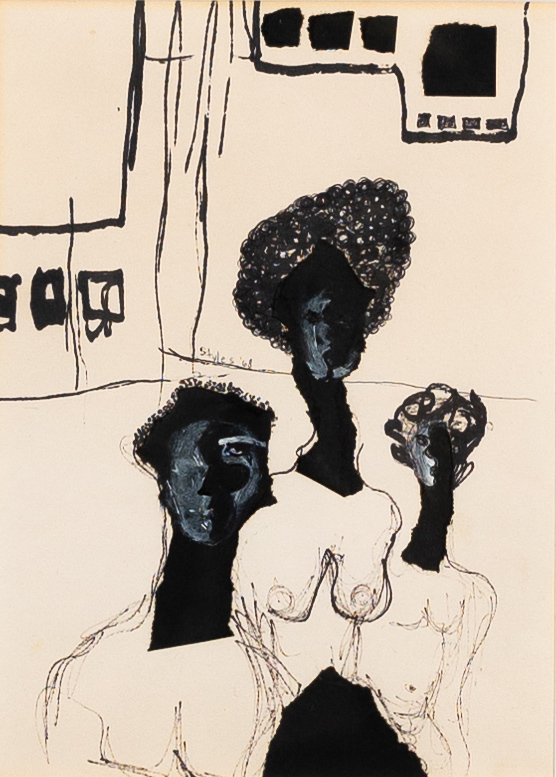
Freddie Styles was an abstract painter and collage artist from Madison, Georgia. Untitled is an ink painting of three women with elongated necks, curled hair, and black-painted skin. Their faces are partially concealed as they stare straight ahead. Their torsos are white, with exposed breasts outlined in black ink.