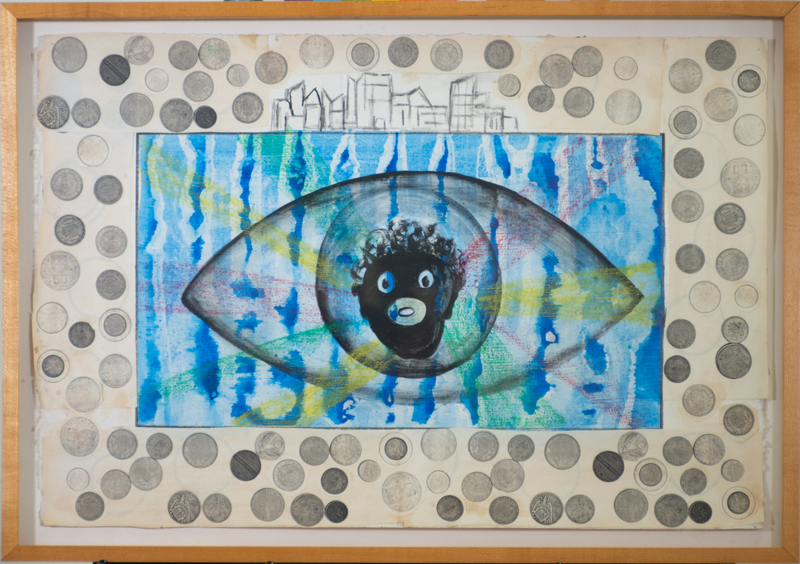
This is a watercolor sketch of Long’s Post Rome. In the full print, the center of the design is a large, oval-shaped eye. This is a frequently used motif in Long’s artwork, across many different mediums. Vertical and diagonal rays and bars draw attention towards the eye, which features a man’s face where the pupil would be. The final piece is placed in a cast bronze frame embedded with coins, like this sketch shows. Long’s print was created during his 1990 Prix de Rome fellowship.
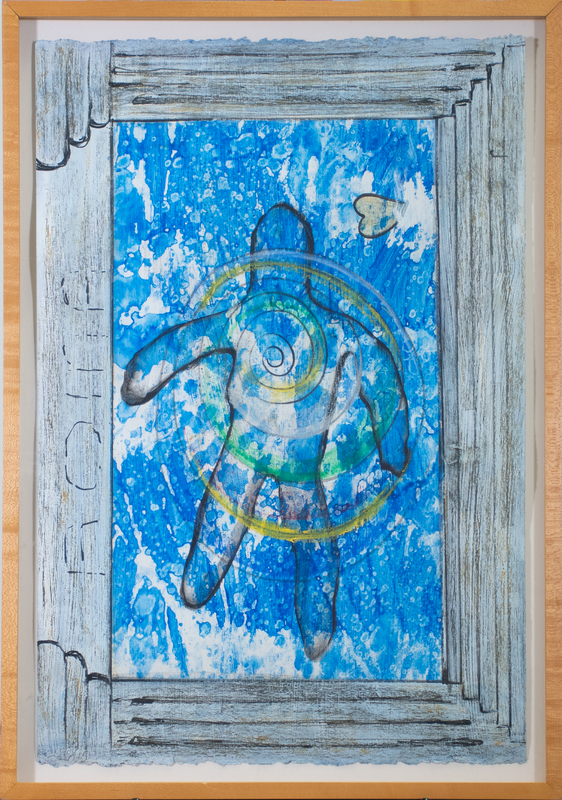
This is a watercolor sketch for Long’s piece Roma, which was created during his 1990-91 Prix de Rome fellowship. Featuring a blobby figure and colorful swirls, the composition is somewhat reminiscent of Da Vinci’s Vitruvian Man. Long also included a sketch of the frame he intended to create for the piece. Long rose to prominence as an “outsider artist” without formal training, later becoming one of the co-founders of Project Row Houses.
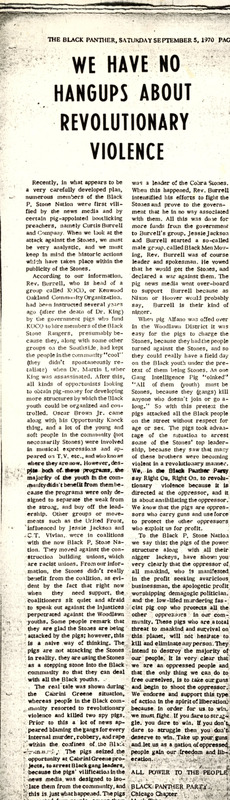
A newspaper article from The Black Panther by Moak Teba of the Chicago Black Panther Party. The article describes acts of violence against the people in Chicago and argues for taking that same violence to the oppressors. The story centers on the Panthers’ support of the Black P. Stone Nation, one of Chicago’s most notorious street gangs.
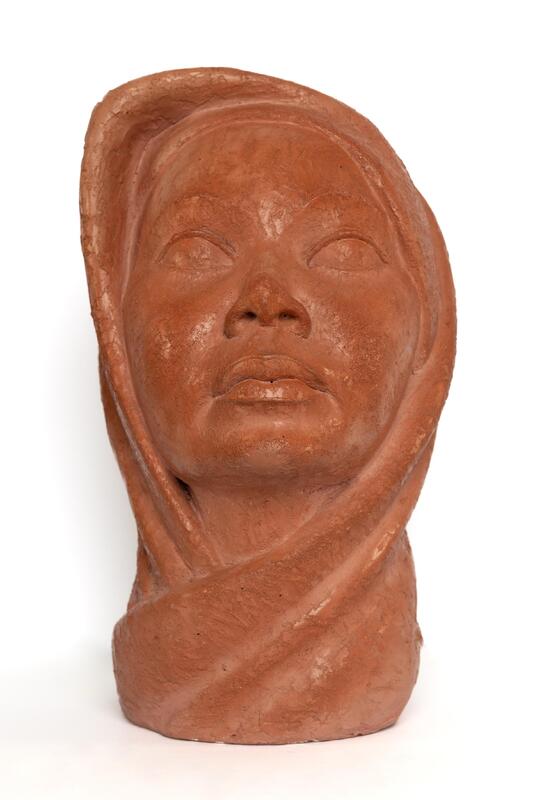
William Artis was a sculptor from Washington, NC. We Have Seen His Face is a ceramic bust of a hooded woman with her head raised. The subject holds a reverent expression as she looks toward God.
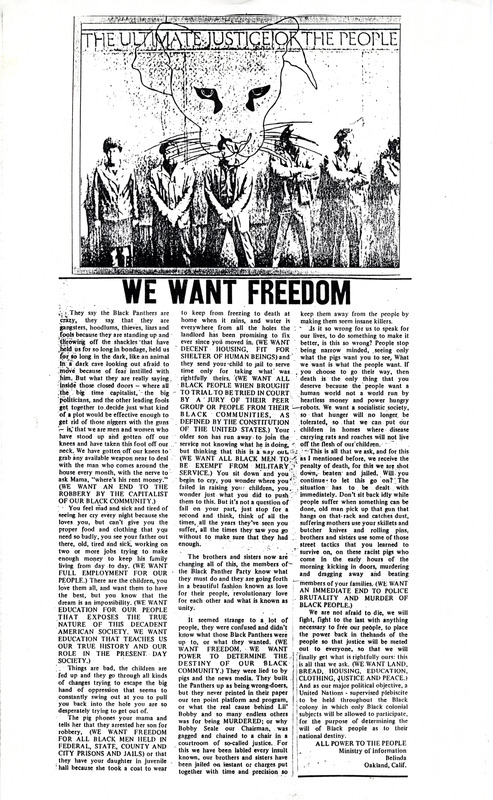
A newspaper article from The Black Panther (unknown date) explaining the Black Panther Party's Ten Point Program. The article is credited to the Ministry of Information, Belinda, Oakland, California. The author gives a detailed explanation of each of the points of the Ten Point Program that lies at the core of Black Panther ideology.
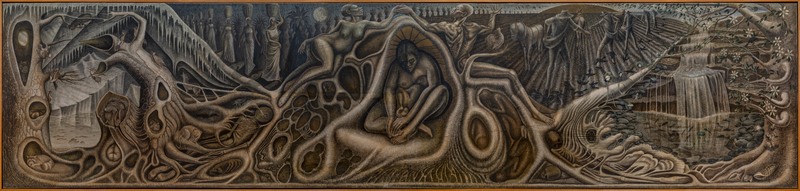
Biggers completed work on this mural in 1959 after returning from his UNESCO fellowship in West Africa. Originally installed in the Samuel M. Nabrit Science Building on Texas Southern’s campus, it is now located in the University Museum. Mother Nature is at the center of this work, surrounded by embryos and skeletons, animals and fish, and men and women. It speaks to the interconnectedness of life.
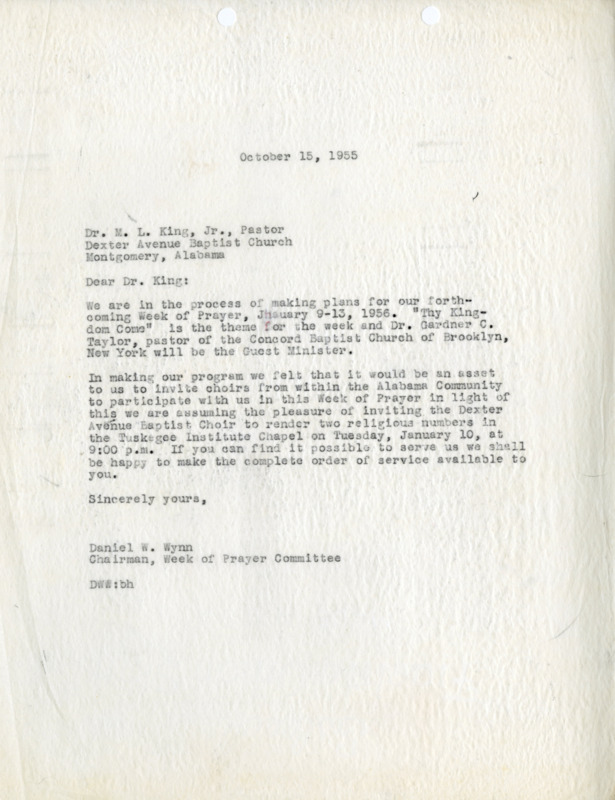
A letter on onion skin paper from Chaplain Wynn to Dr. MLK Jr. requestion the use of the Dexter Avenue Baptist Church choir during the Week of Pray would be able to sing at the Week of Prayer 01/09-13/1956.
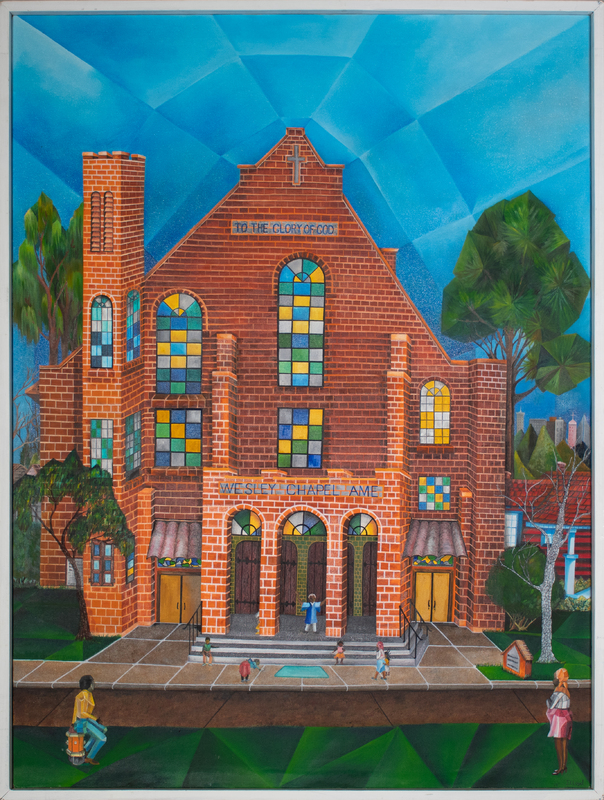
Lloyd’s painting depicts the facade of the historic Wesley Chapel AME Church, founded in Houston’s Third Ward in the 1870s. The landscape and sky are painted in geometric form, commonly found in 1970s TSU student artwork. The church is set to be renovated and turned into a multi-purpose complex with a gospel music museum, recording studio, and affordable housing units.
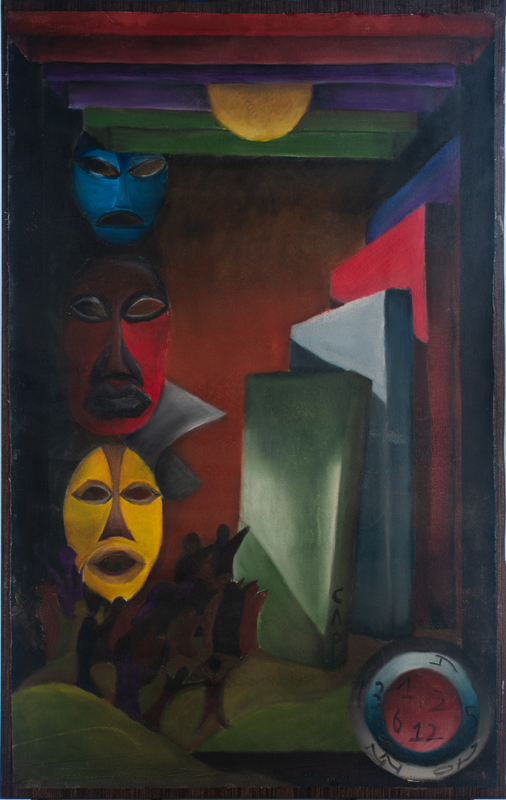
Boyd's painting is inspired by philosopher Charles W. Mills's book, "Blackness Visible." Boyd's painting responds to the question of "what makes Blackness visible?" with, in her words, "three possible answers to this: our culture, our revolutions, and/or our d/Death. Is it our culture? Our revolution? Our d/Death? Or is it an amalgamation of all three?" The artist is a graduate of Texas Southern University and cites her parents, who always encouraged her to write and draw, as creative inspirations.
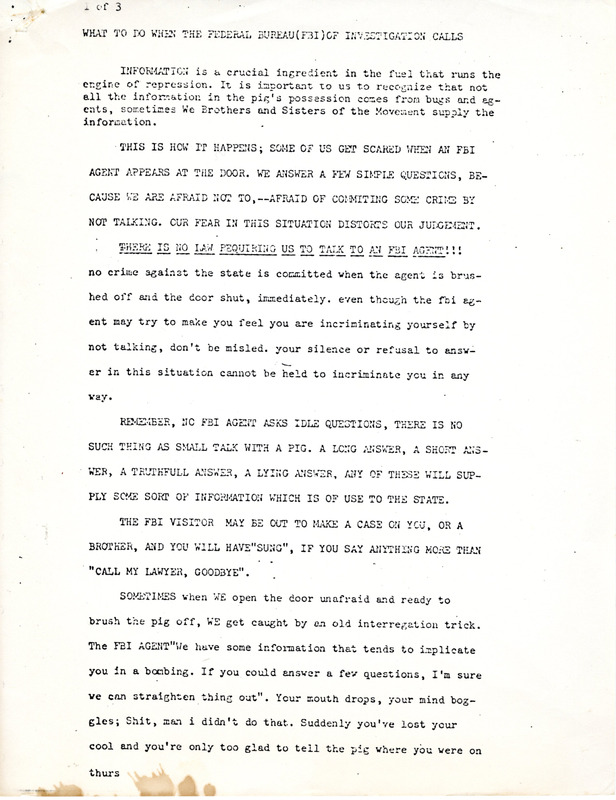
A memo describing one's rights when confronted by the Federal Bureau of Investigation (FBI). The memo states that FBI agents are always asking questions intentionally to incriminate the subject and therefore no one should ever speak with them without an attorney present, especially considering it is not against the law to not talk to an agent.
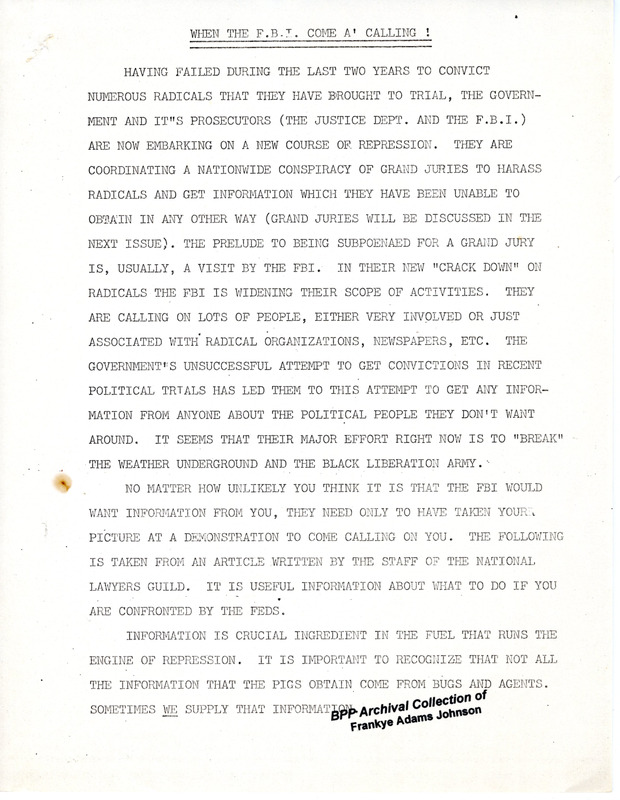
A memo describing one's rights when confronted by the Federal Bureau of Investigation (FBI). The memo states that the FBI is coordinating grand juries to harass radicals. Agents are always asking questions intentionally to incriminate the subject and therefore no one should ever speak with them without an attorney present.
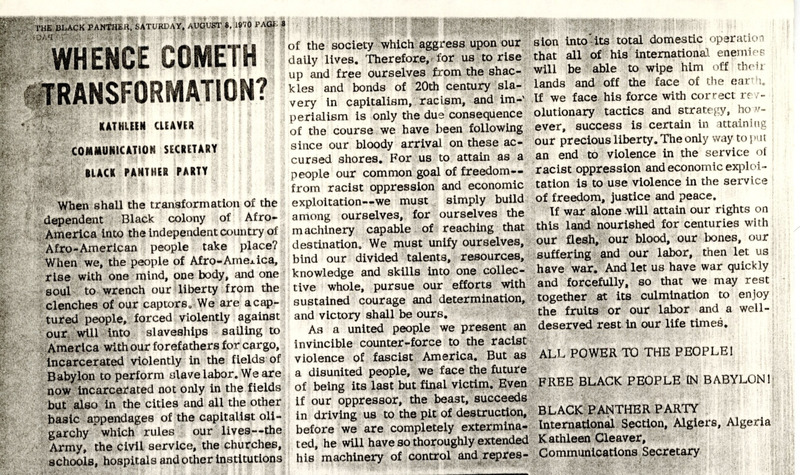
A newspaper article from The Black Panther. Communications Secretary Kathleen Cleaver argues that unity amongst Black people is necessary to fight oppression and that the use of violence in the service of freedom, justice, and peace is the only way to put an end to the violence of racism against “the Black colony of Afro-America.”
Samuel L. Gandy called the congregation to practice silence, sight, and service by becoming attentive to others’ needs, rejecting the emptiness of material pursuits warned against in Ecclesiastes.
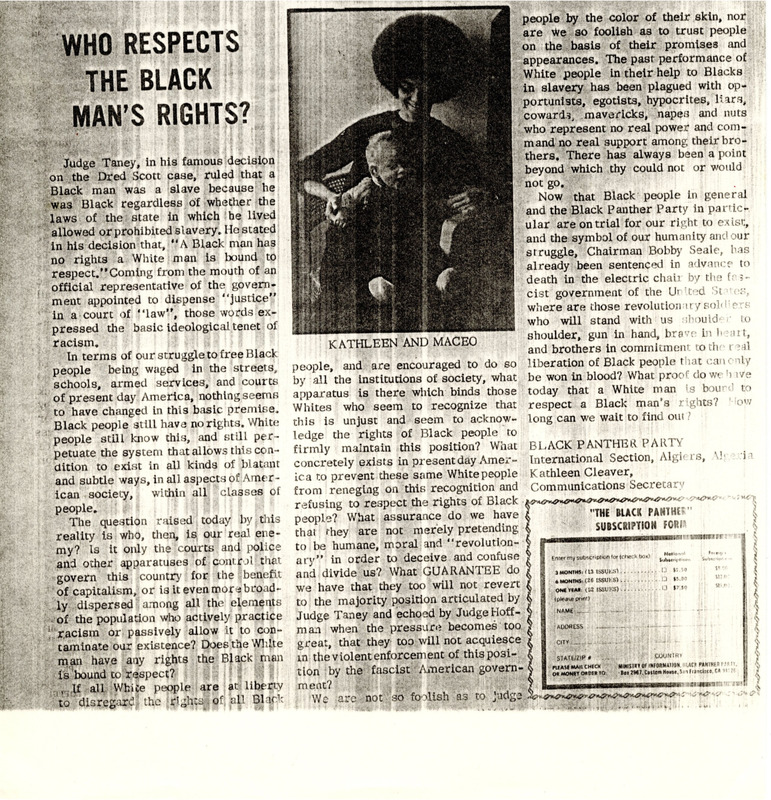
A newspaper article from The Black Panther. Communications Secretary Kathleen Cleaver ponders the idea of Black people's rights and how White people react to them. She wonders if revolutionary Whites are just pretending to be revolutionary as a way to divide Black people.
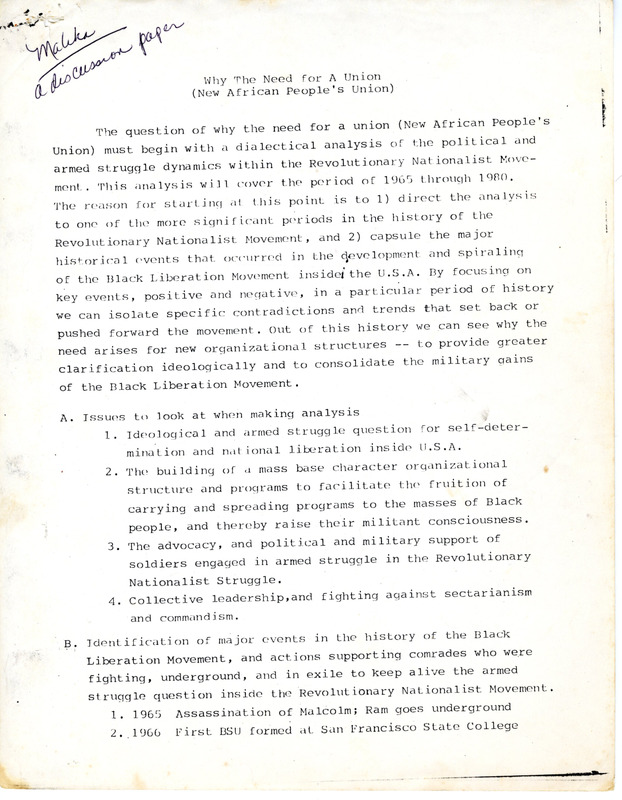
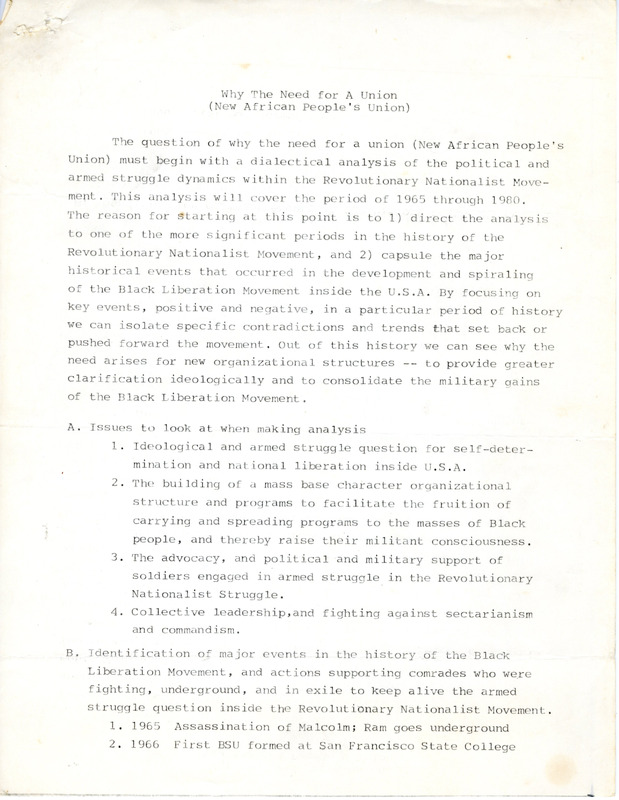
An undated essay about the need for a New African People's Union. The author argues for the union by identifying major historical events in the Black liberation movement that can be used to organize the union. This view of history can provide greater clarification ideologically and consolidate the military gains of the Black liberation movement.
A historical analysis outlining the need for a New African People's Union. The author writes that the need for the new union can be understood by doing a historical analysis on the years 1965-1980, the time when the Black liberation movement in the United States was spiraling, and that 1980 was a time of natural evolution within the movement.
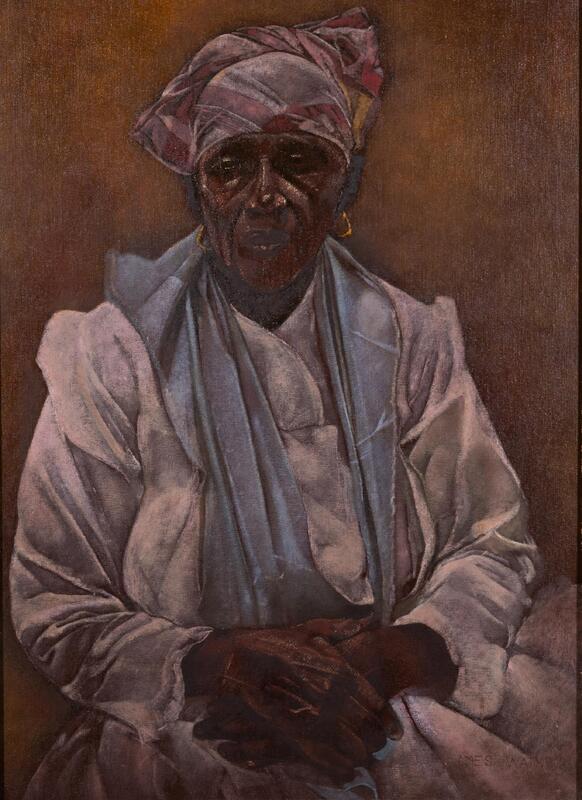
James Watkins was an artist from Akron, OH. Widow Woman is a portrait of an elderly Black woman wearing a long white dress, a light blue shawl, a pink headwrap, and small golden earrings. She looks straight ahead in solitude, her hands folded over one another.
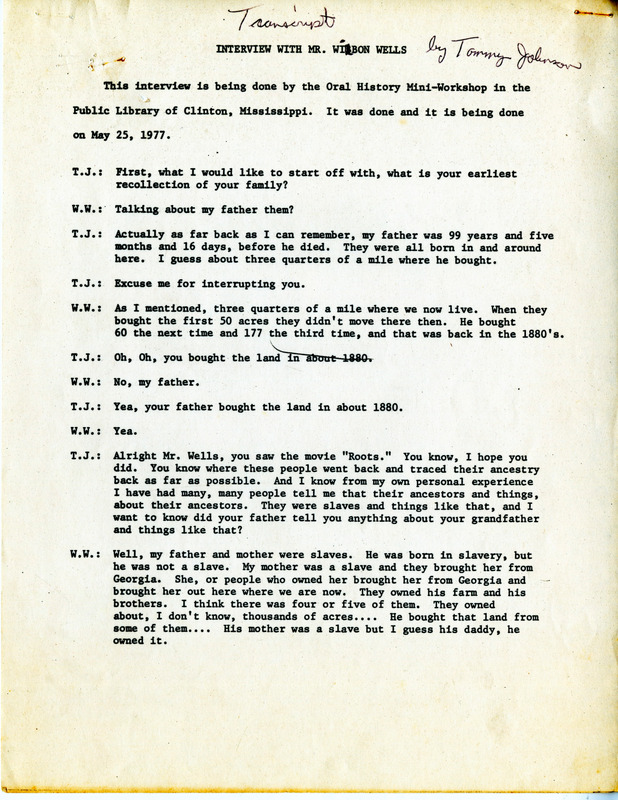
Mr. Wells had roots in the Clinton community, going back to his parents' ancestry in slavery. He discusses his time in the military during World War I, his education at Jackson State, and Black land ownership in Clinton, especially the amount of Black people who lost or gave up land during The Great Migration.
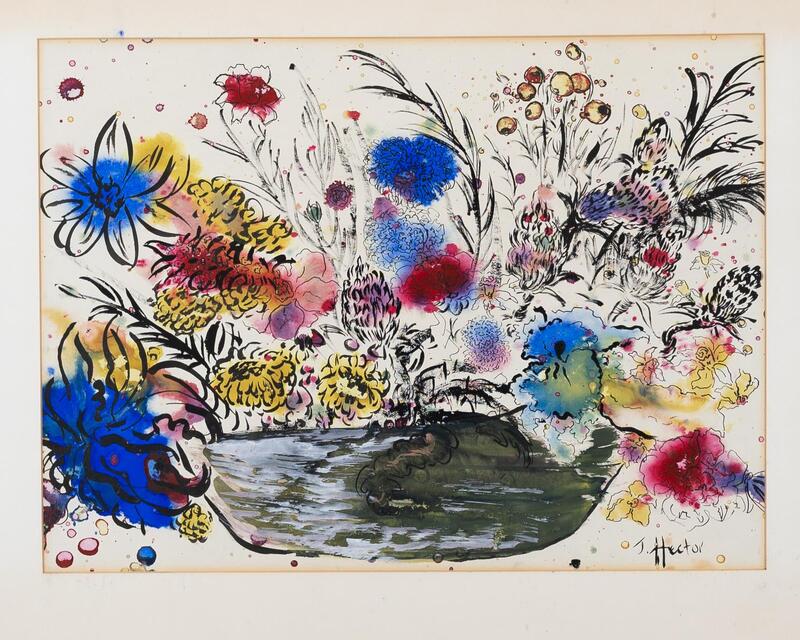
June Hector was an artist from Atlanta, GA. Wild Flowers displays a landscape of flowers in multiple colors and plant organisms all surrounding a small body of water. The colors blue, red, yellow, and purple are layered throughout the painting.
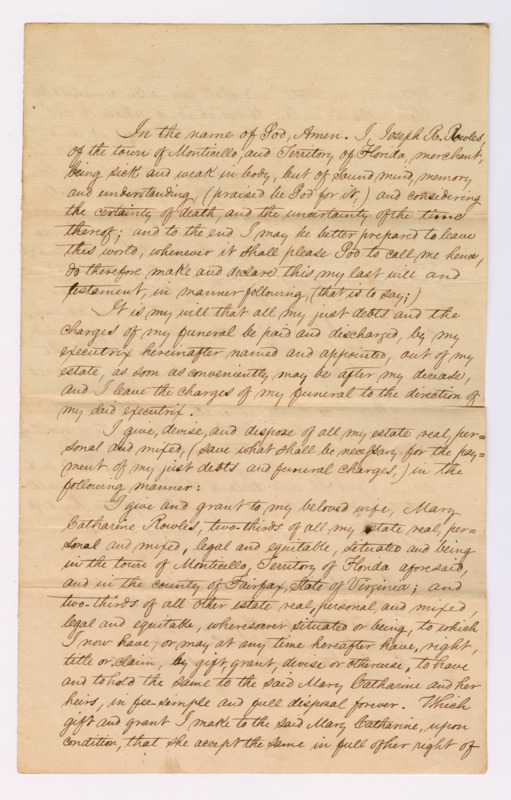
Joseph B. Rowles himself wrote this document when he felt his illness was worsening and death was imminent. Within this will and testament, Rowles divided his estate, which included slaves, between his wife and brother. Descriptions of the enslaved were included, ranging from “good” to “doubtful” and “bad,” along with other numerical information.
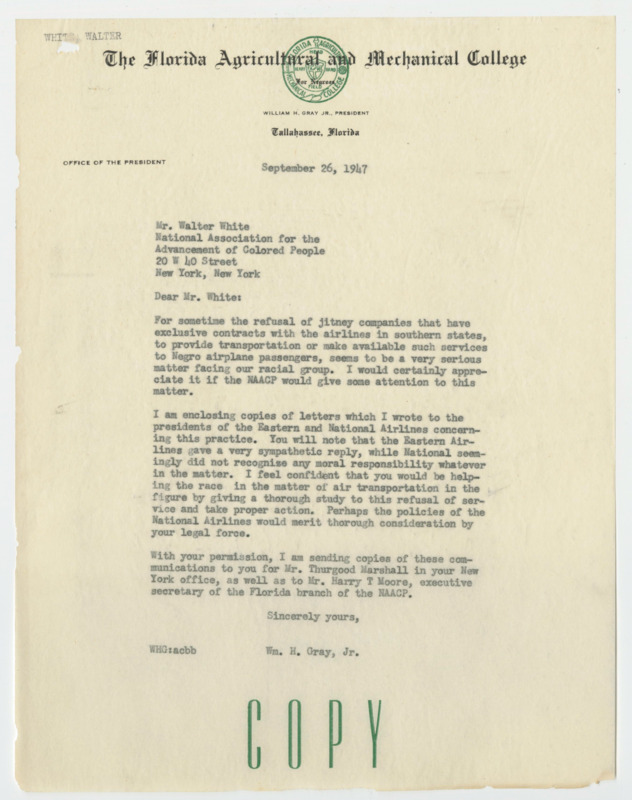
This letter between former Florida A&M president William H. Gray, Jr. and Walter White of the National Association for the Advancement of Colored People (NAACP) discusses discrimination of jitney companies that have exclusive airline contracts in the South. These companies refuse to provide transportation to Negro airplane passengers.
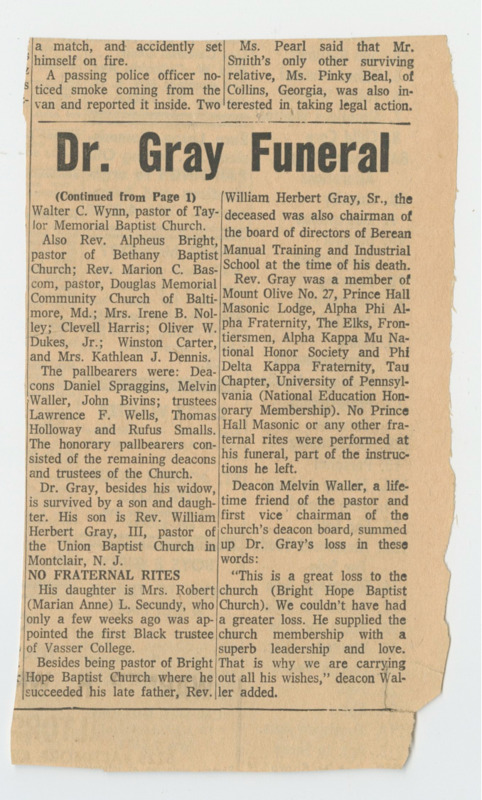
These newspaper clippings discuss the unfortunate passing of former Florida A&M President Dr. William H. Gray, Jr. Gray allegedly had a premonition of his death before it occurred, giving his wife instructions on what to do.
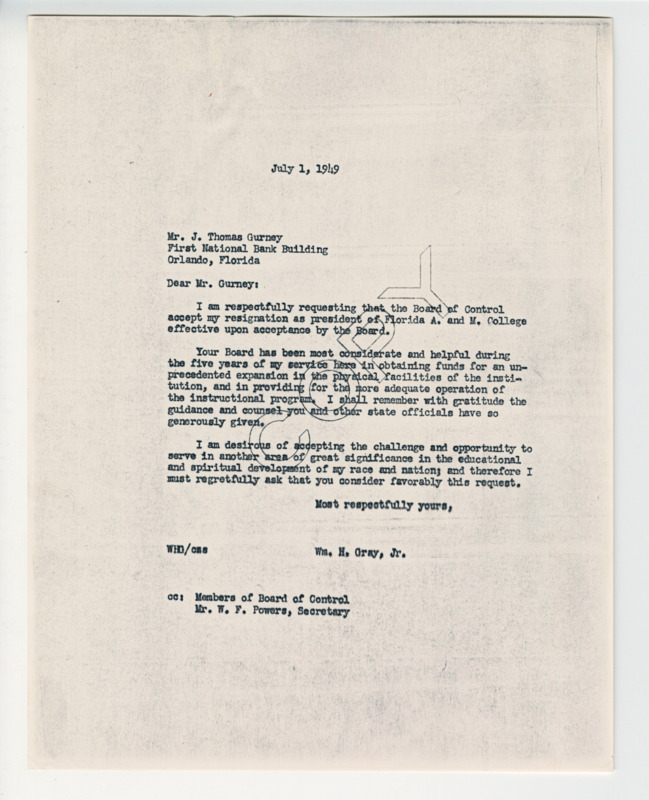
After five years as FAMC president, W. H. Gray tendered his resignation to the Board of Control, effective July 7, 1949. He expressed gratitude for his tenure and interest in pursuing new opportunities. In a separate note, he cited developments prompting his decision and plans to discuss further with Dr. C. C. McCracken.
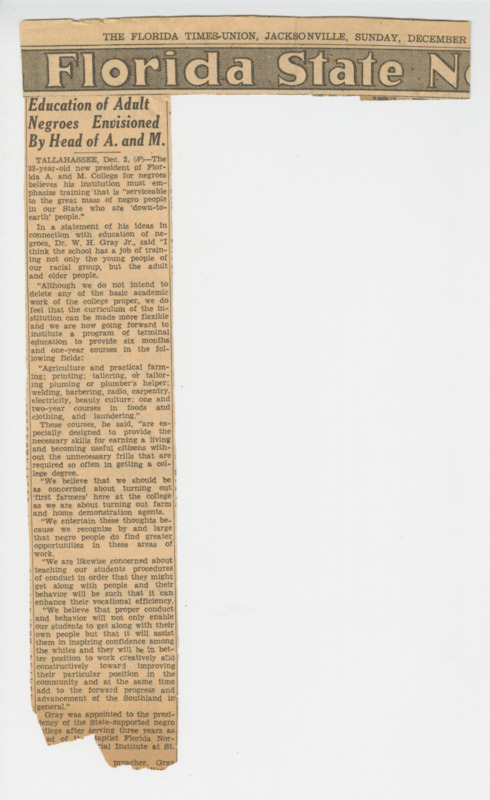
Dr. W. H. Gray’s appointment as FAMC president was celebrated in a newspaper article, where he discussed his vision for practical education. Focused on agriculture, trades, and two-year programs, Gray’s approach aimed to prepare Black students for leadership, an ode to his prior experience leading a Baptist institution.
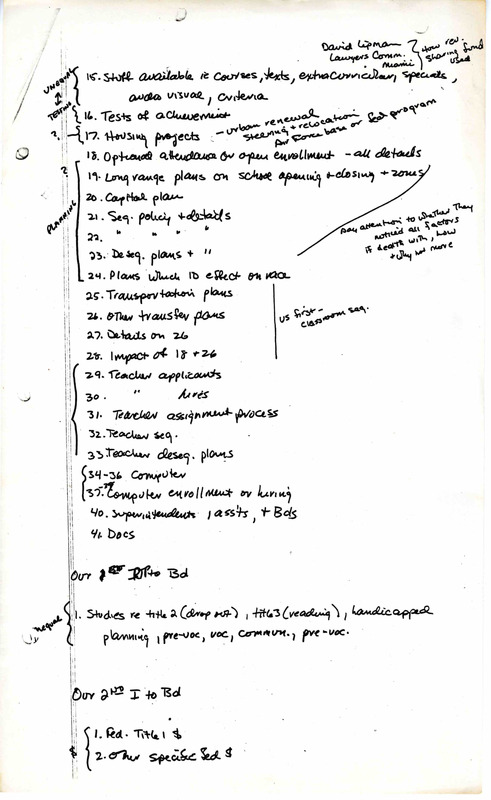
Handwritten notes and charts by William Lamson. Included topics: elementary school boundary changes through the 1950's and 1960's; notes on the meaning of "demographic changes" in Topeka schools; yearly rank of school size by students; and an analysis of what these findings show. Some original, some photocopies of originals.
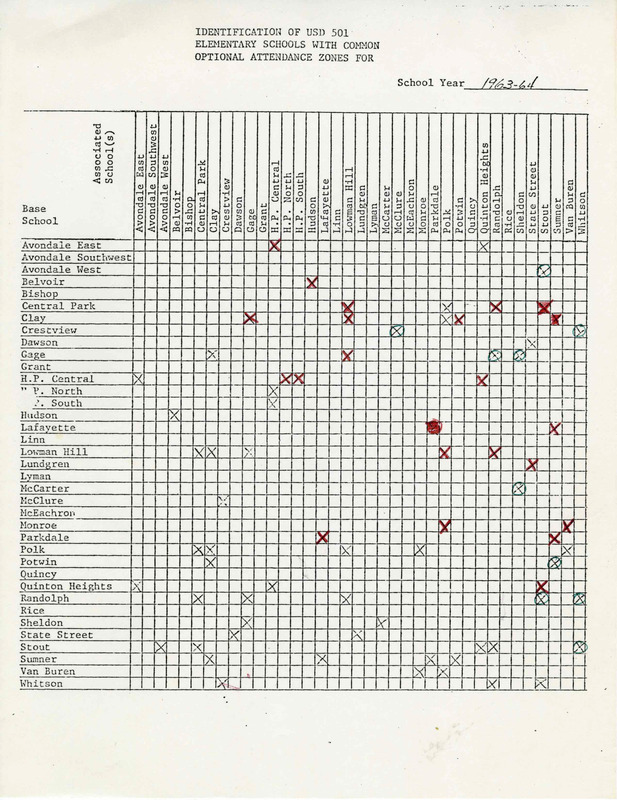
Case Data and Exhibits for Brown III, a relitigation of Brown v. Topeka Board of Education (1954) that corrected resegregation issues caused by open enrollment school choice in 1992. Charts that identify Topeka elementary schools with common attendance zones for School Years 1963-64 to 1974-75 and William Lamson’s analysis of those numbers.
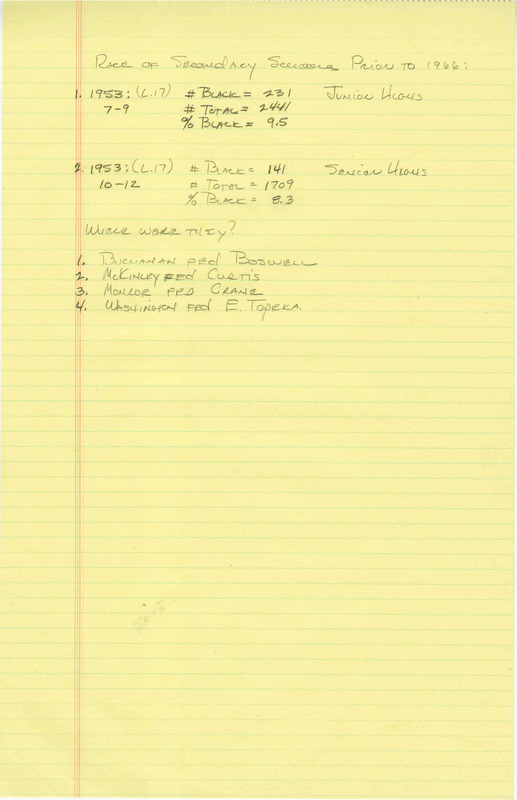
Case Data and Exhibits for Brown III, a relitigation of Brown v. Topeka Board of Education (1954) that corrected resegregation issues caused by open enrollment school choice in 1992. Handwritten analysis by William Lamson of secondary schools in Topeka, Kansas, including race percentages; feeder patterns; building construction by year; and more.
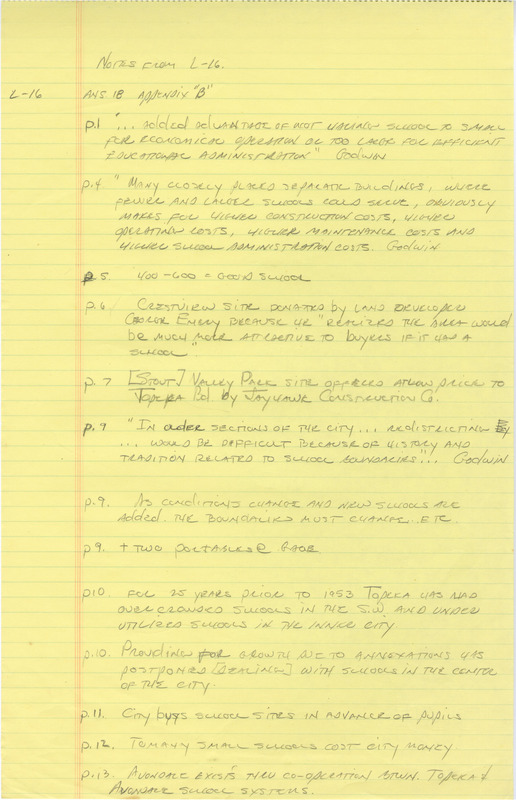
Case Data and Exhibits for Brown III, a relitigation of Brown v. Topeka Board of Education (1954) that corrected resegregation issues caused by open enrollment school choice in 1992. William Lamson’s notes in response to a court document referred to as L-16, Appendix B. The notes are about land usage and school construction in Topeka, Kansas.
Case Data and Exhibits for Brown III, a relitigation of Brown v. Topeka Board of Education (1954) that corrected resegregation issues caused by open enrollment school choice in 1992. William Lamson’s preliminary report on demographic trends in Topeka, Kansas, and the effects on the racial makeup of area schools, specifically elementary schools.