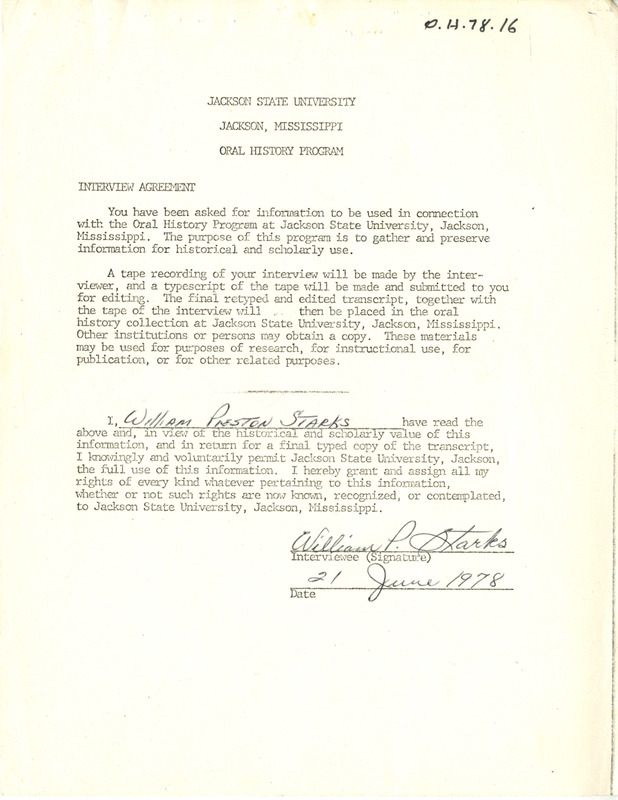
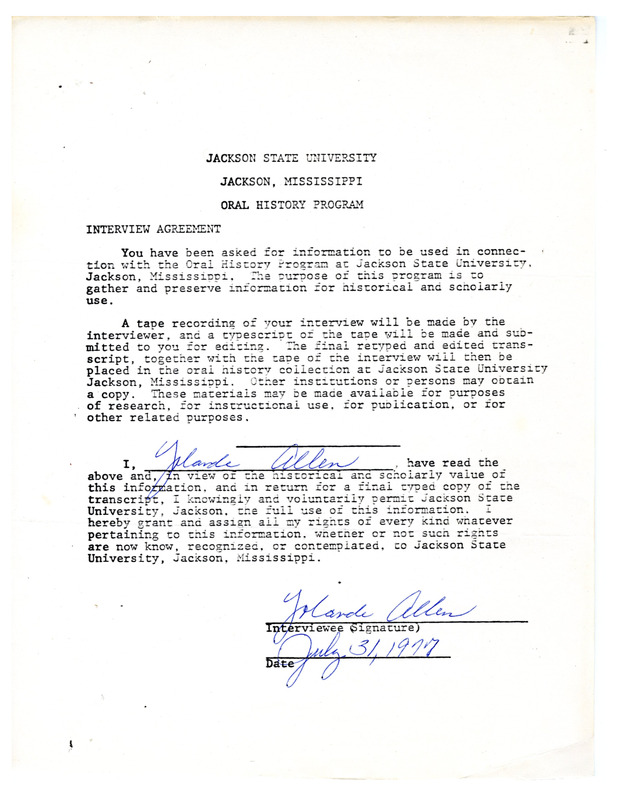
William Preston was born in Jackson in 1921 and worked as a mail carrier for the City of Jackson. In the interview, Mr. Preston talks about the food culture in the Farish Street District, including the Big Apple Inn, Big John's, and other restaurants located in the district. The transcript is heavily edited with handwritten notes.
Willie Crump was part of the group that started the first Head Start program in Edwards, Mississippi, in 1965. She talks about her previous work in the community and working with her daughter on the Edwards Head Start program. She also recounts some of the obstacles they faced while getting the center going.
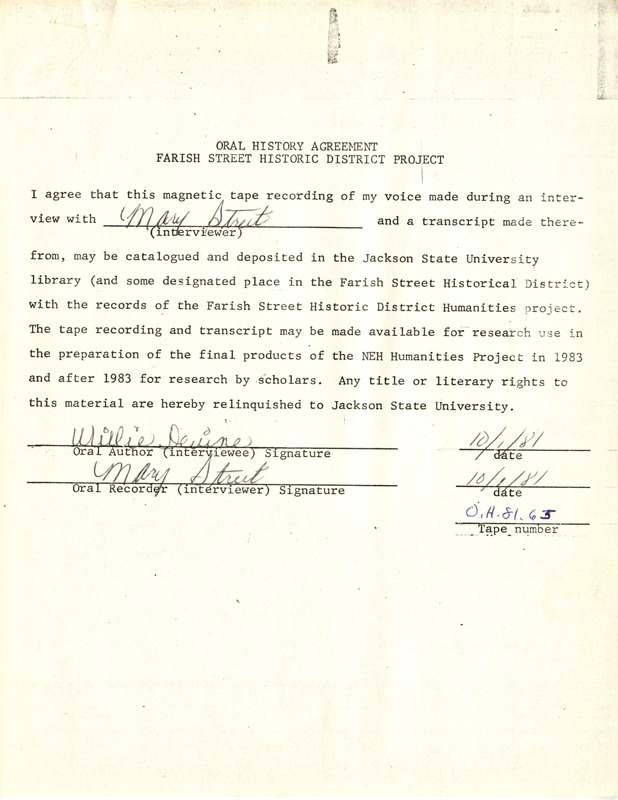
Willie Devine lived many years in the Farish Street District. He talks about growing up and the activities he did, including swimming at the newly built pool and the music and dancing in the district. He recounts the harassment of young Black children by White people on the streets when he was in grade school.
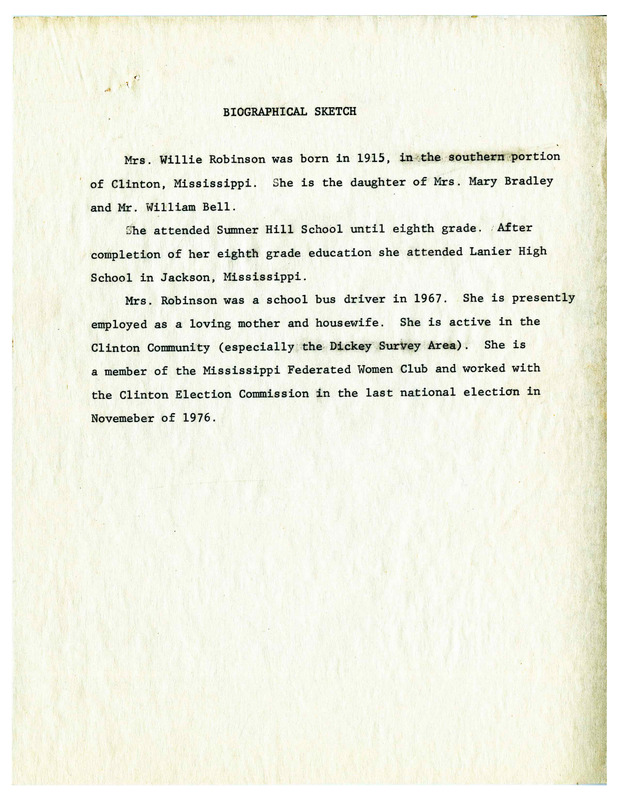
Mrs. Willie Robinson was born in Clinton and lived there her entire life, remaining very involved in the community and local politics. In the interview, she talks about the Dickey Survey Area, a plot of land bought in the northwest part of Clinton for Black residents and she discusses the growth of Clinton and its effect on the school system.
Willie Daugherty worked at Head Start in Benton County, Mississippi. She speaks about educators, church leaders, and others who had an influence on her as a teacher and community leader. She also gives her opinions on the future of Head Start. The Interview is incomplete, the first part of the recording is missing.
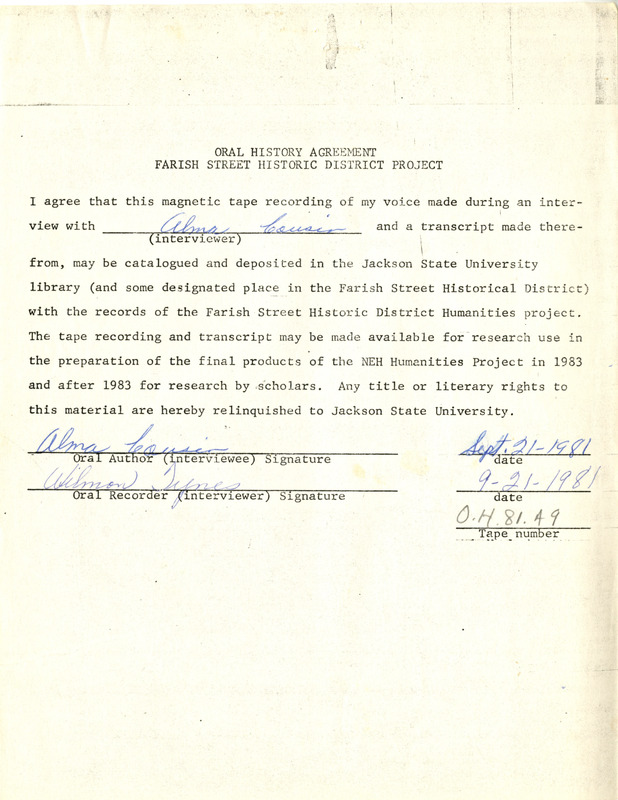
Wilmon Tynes has lived in the Farish Street District since she was 6 weeks old. She left for Chicago at the age of 10 for several years and moved back for good after that. Ms. Tynes talks about growing up in the Farish Street Historic District, recalling her church, education, and the music she heard at clubs like Crystal Palace.
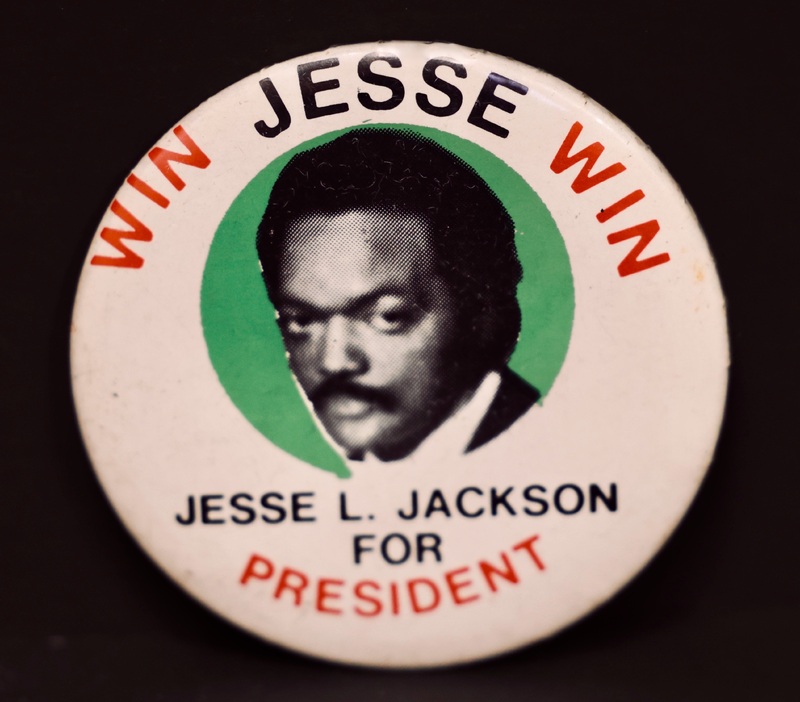
A white political campaign button in support of Rev. Jesse L. Jackson for president in the 1988 Democratic Party primary. Rev. Jackson more than doubled his vote total from the 1984 race and finished the primary in second place behind eventual Democratic nominee Michael Dukakis.
In this interview, Texas Southern art alumnus Winston Moss discusses his experiences as a student in the class of 1963. At TSU, Moss took courses with Dr. John T. Biggers and Professor Carroll Harris Simms. After graduating, he took up woodcarving as a craft, inspired by his father, who was a carpenter.
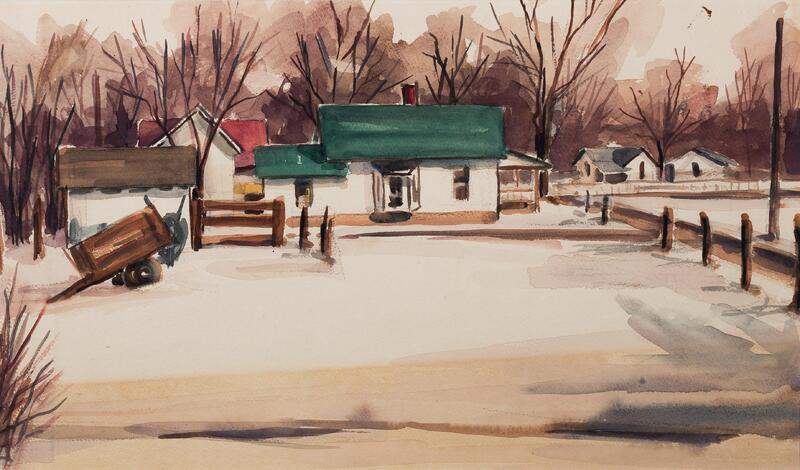
Julia Ann Fields was an artist from Lawrence, KS. Winter Feeling illustrates a residential area after a snowfall. The painting depicts a green-roofed house with a shed and wheelbarrow. In the background are three other homes in various colors and barren trees.
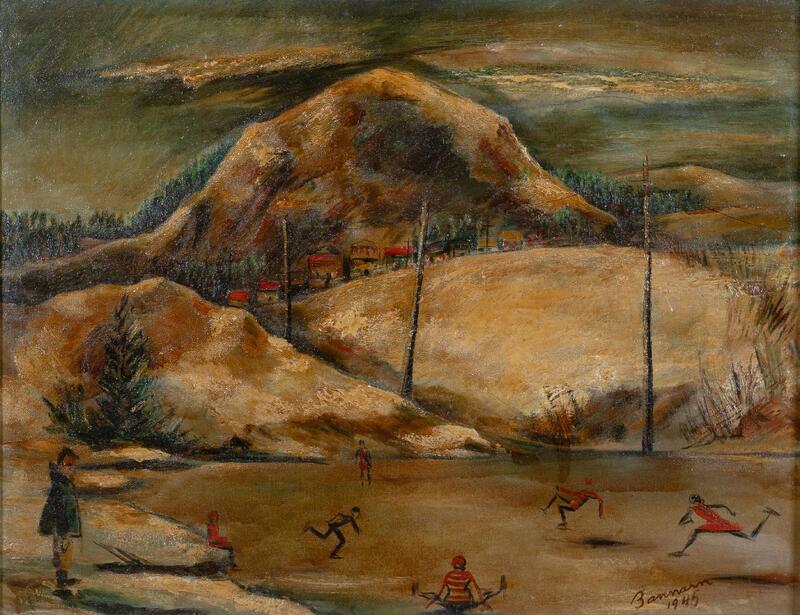
Henry Wilmer Bannarn was an educator, sculptor, painter, and sketch artist best known for his work during the Harlem Renaissance. Winter Sports is an oil painting of seven figures in a frozen pond below a town on a hill. Four figures are skating, two are sitting near the lake, and one is watching from a short distance.
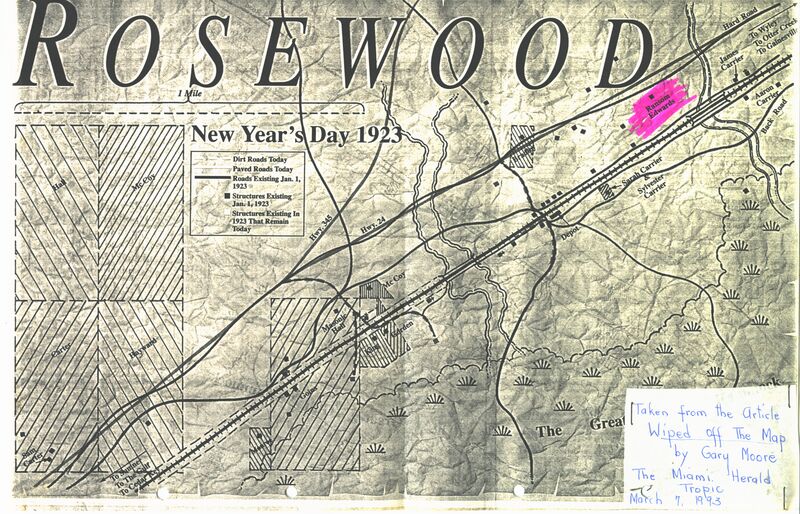
This document is a map of Rosewood on New Year’s Day 1923, taken from the article, “Wiped Off the Map” by Gary Moore for the Miami Herald Tropic’s March 1993 issue. The points on the map detail the homes of every name involved in the story to show the proximity of the witnesses and the paths the mob traveled when destroying the town.
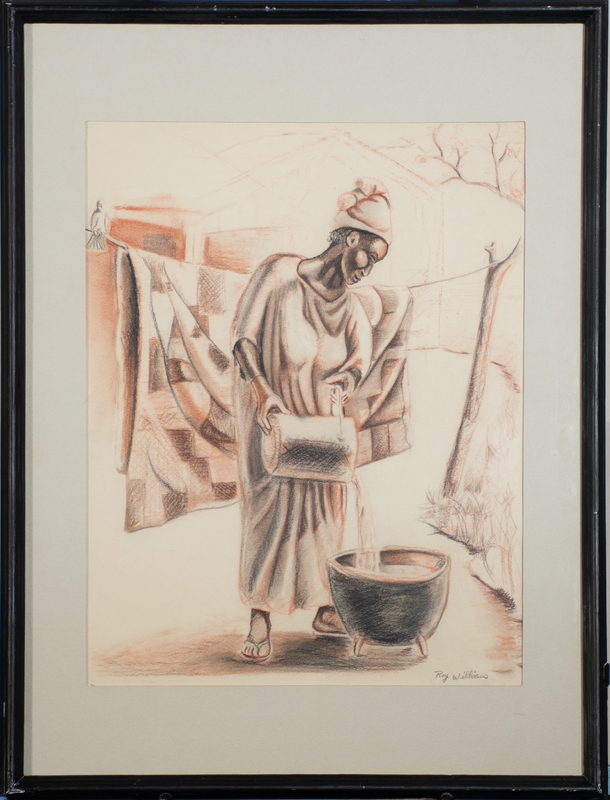
Williams' drawing depicts a woman dressed in a large, flowing garment with her hair covered, pouring water into a bin. Behind her, a checkerboard quilt hangs over a clothesline to dry. This piece highlights some of the unseen and unappreciated domestic labor performed by Black women. The checkerboard motif was frequently used by Dr. John Biggers and often appears in the artwork of his students.
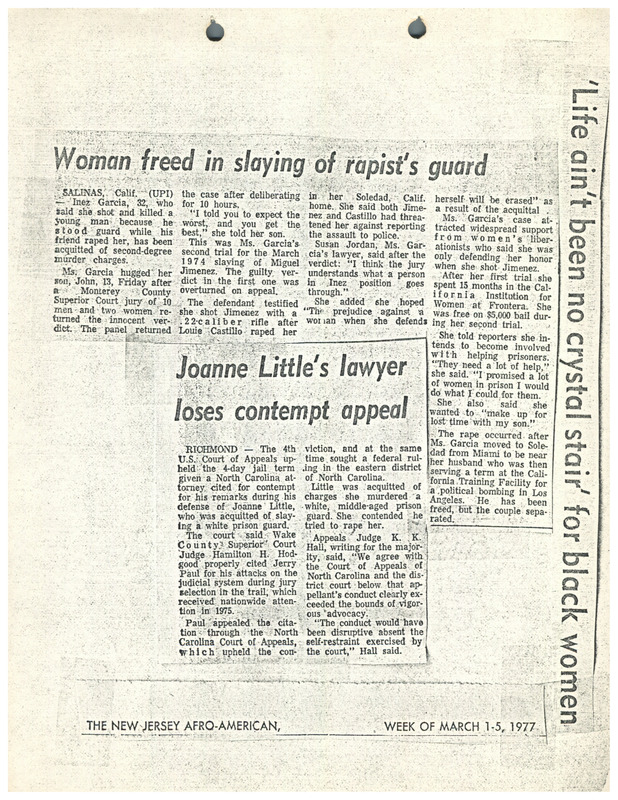
A newspaper article from The New Jersey Afro-American about Inez Garcia, a woman whose case became a rallying cry for feminists after she was acquitted for killing a man she says helped rape her. Garcia became a symbol for a woman’s right to defend herself. She says that she will go on to help other women who are imprisoned.
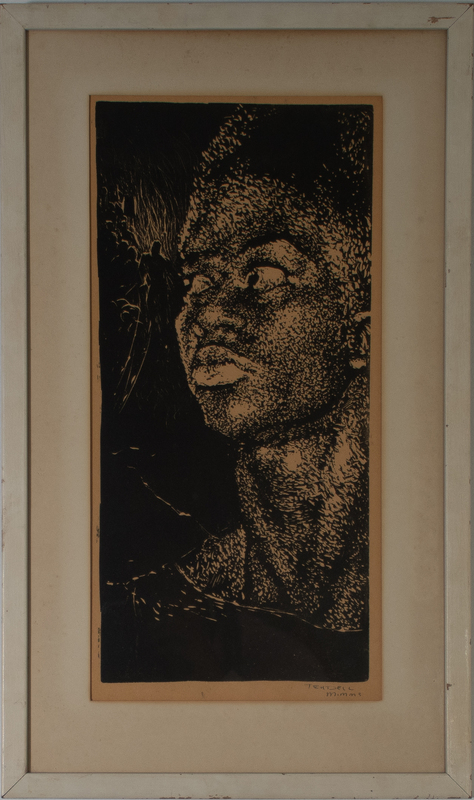
This print by Trudell Mimms shows a woman gazing to her right, with unidentifiable figures in the background. In Black Art in Houston: The Texas Southern University Experience, Dr. John T. Biggers referred to Mimms as "one of our finest painters."
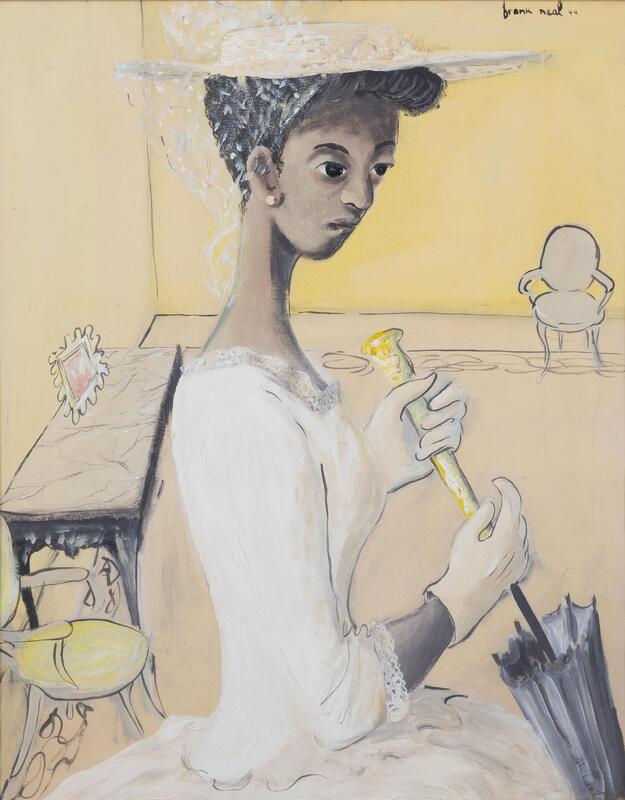
Frank Neal was a painter who studied in Mexico and at The Art Institute of Chicago. Woman in White is a portrait painting of a Black woman in all-white attire holding an umbrella with a white and gold handle. She is depicted as high-class in a bright yellow room with two chairs, a white picture frame, and a marble table in the background.
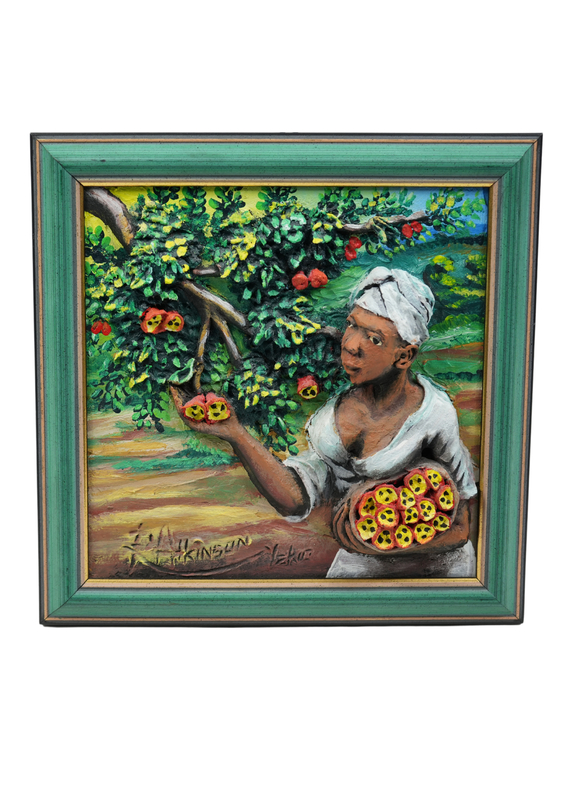
This unique 3D painting by Richard Atkinson, a Jamaican-born artist, could only be achieved through paper mâché. Belonging to the Leo P. Sam collection, the piece features a woman in white picking what appears to be fruit but could be flowers, from a tree.
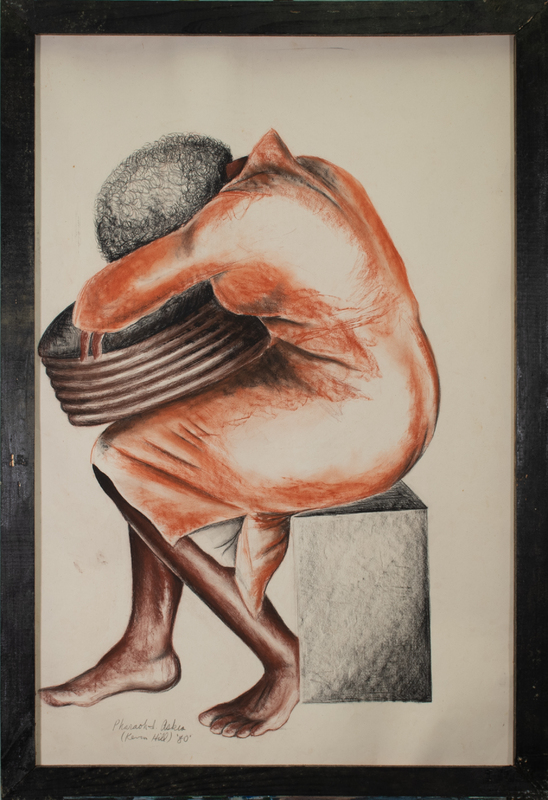
Askia’s drawing depicts a weary woman at work, stooped over a woven basket. As a student, Askia made a series of drawings that highlight Black women and the different types of labor they perform. Feminist thinkers have long argued that unpaid, domestic labor performed by women is often rendered invisible in discussions of their contributions.
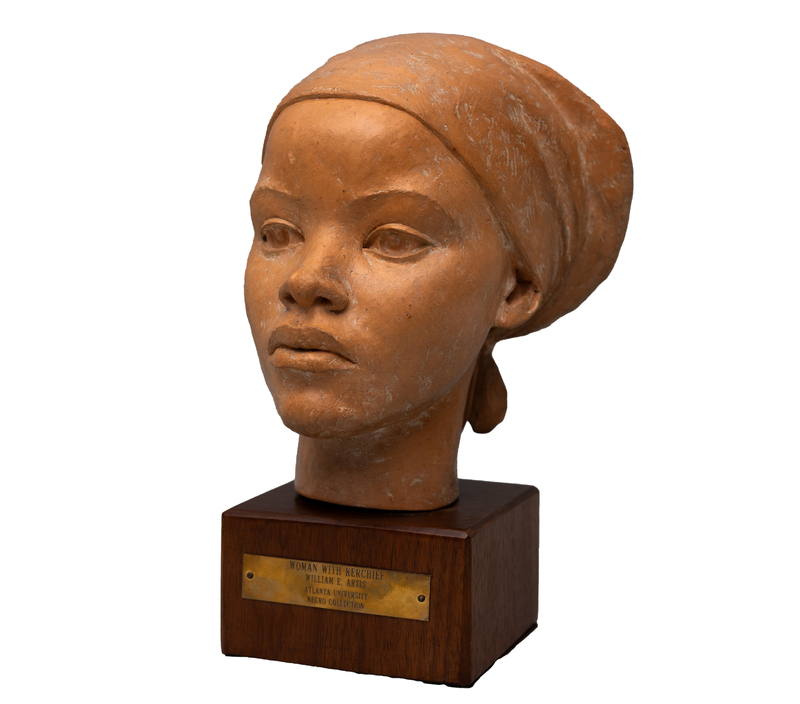
William Artis was a sculptor from Washington, NC. Woman with Kerchief is a terracotta sculpture of a Black woman with her head covered by a tied kerchief.
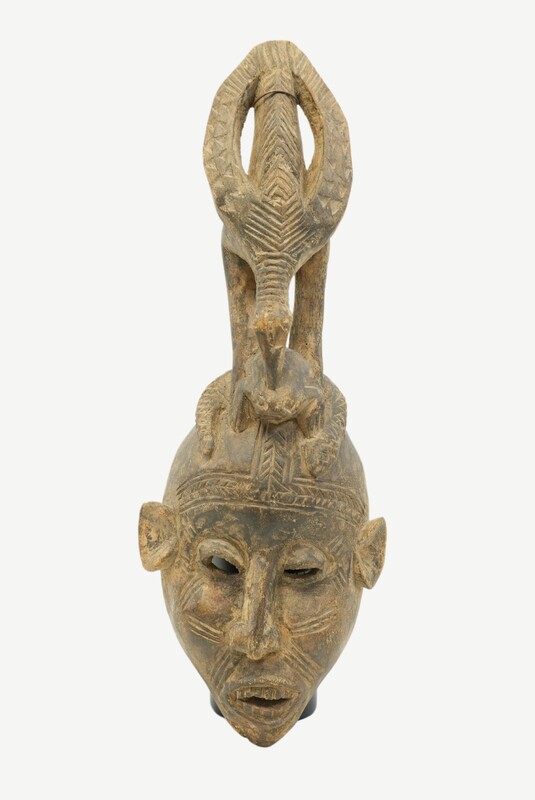
Although there is limited information about this artifact, it is believed to originate from the Baoulé (Baule) people, an Akan group from the Ivory Coast who historically migrated from Ghana. The Baule consider their ancestors’ spirits present daily; thus, their art, like these masks, mainly centers on ancestral veneration.
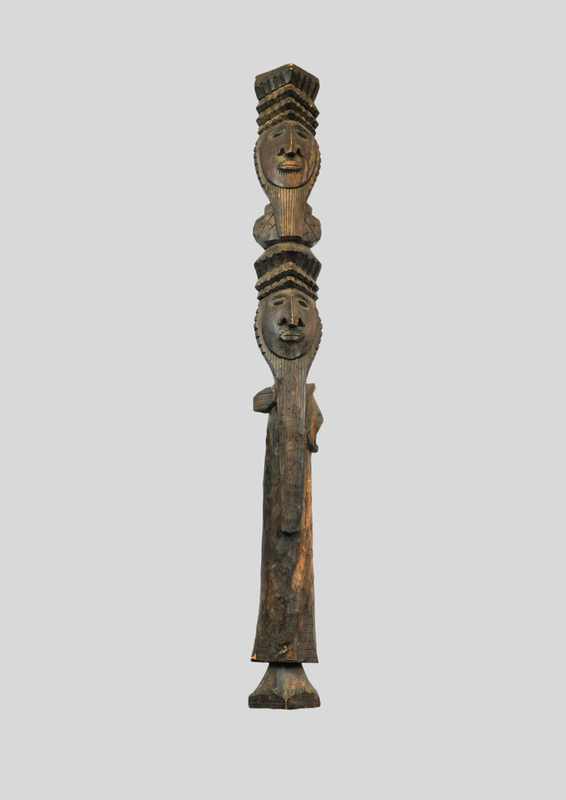
There is limited information on this African artifact. Still, it is confirmed to be a hand-carved wooden replica of a Tiki or totem pole in fair condition due to visible scratches and patina. It features two long-bearded men sitting on top of each other. They could be ancestors, spirits, or essential pillars in the community.
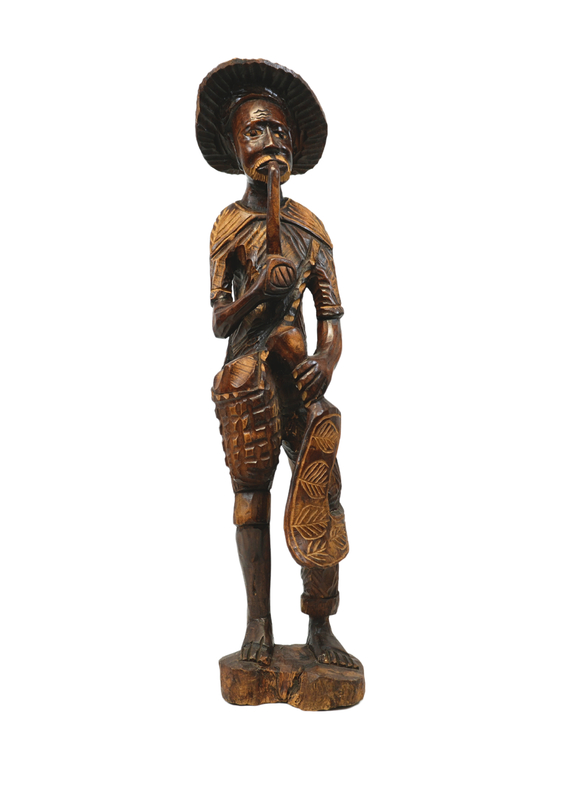
This hand-carved, wooden sculpture depicts a Caribbean or African man holding what appears to be a pipe and sheathed weapon, possibly a machete, ax, or knife. The object he is holding could also be a musical instrument, but similar statues can attribute him to a farmer or worker.
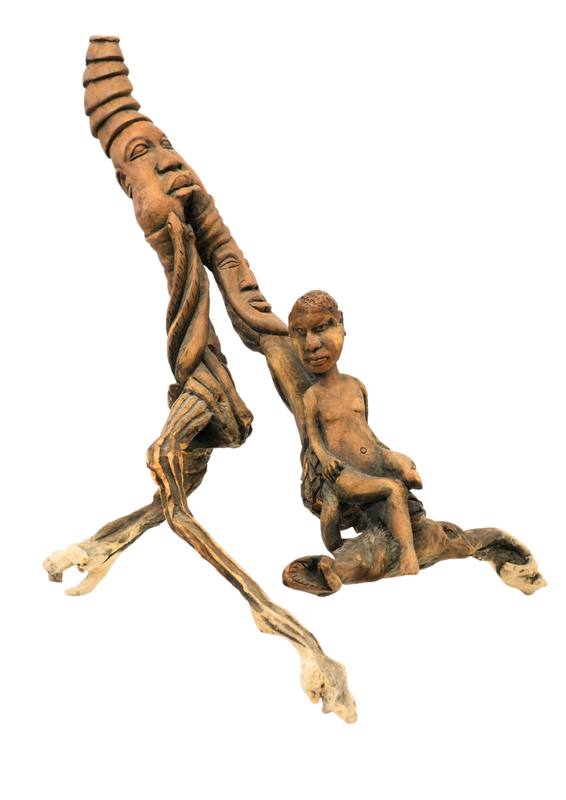
There is limited information on this vintage African artifact, but it is confirmed to be a hand-carved wooden sculpture in fair condition due to a crack on the back leg of the piece. The piece features a small boy sitting on what appears to be a tree branch (or bone marrow) with two human faces on it while a snake wraps around the tree.
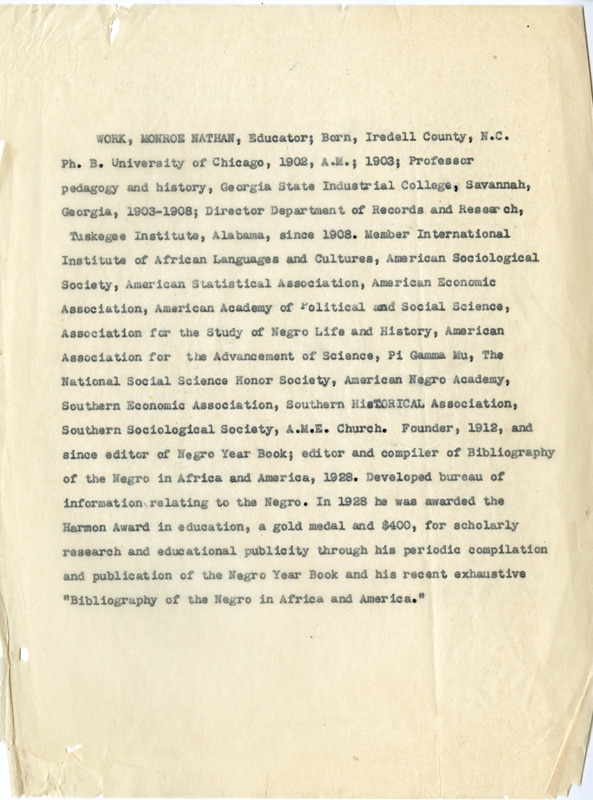
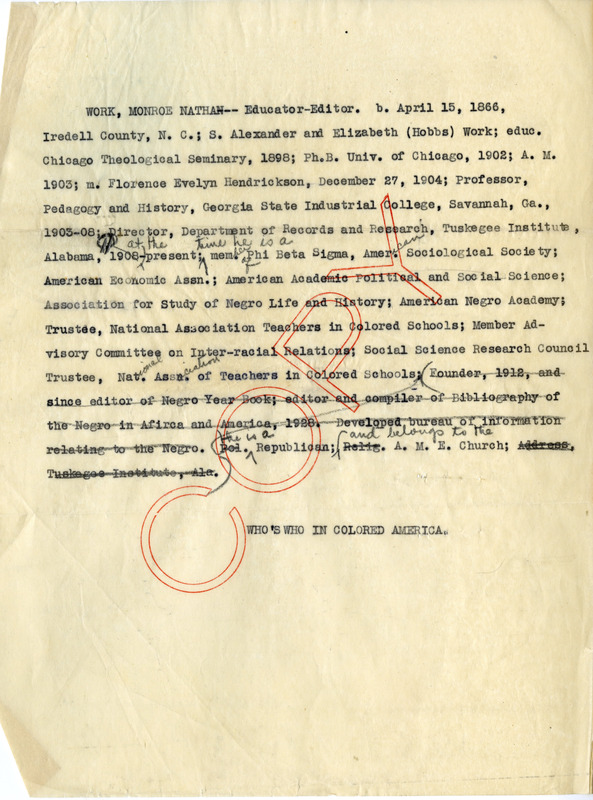
One-page document containing biographical information about Monroe N. Work, such as his work at Tuskegee, his professional accomplishments, and his membership in various organizations. Undated, but latest date listed is 1928.
One-page document containing biographical information about Monroe N. Work, such as his education, work experience, membership in organizations, and professional accomplishments. Undated, but latest date listed is 1928. Written for inclusion in Who's Who in Colored America.
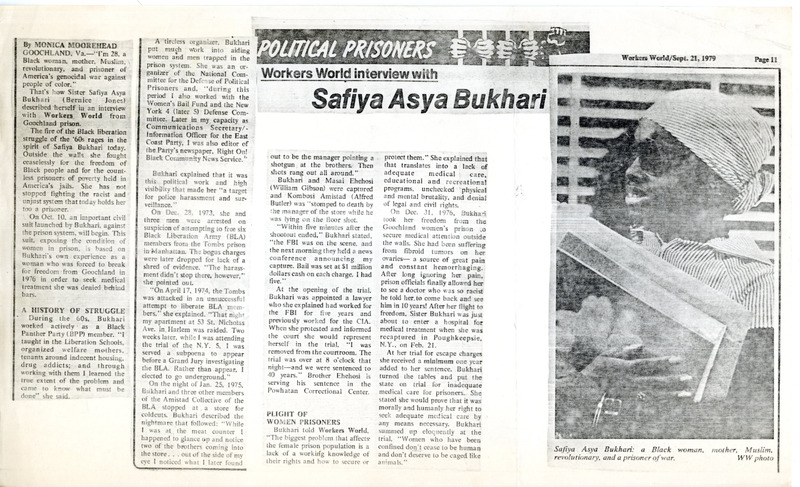
A newspaper article from Workers World. The writer interviews Safiya Asya Bukhari about her work in the community and with the Black Panthers and how that work brought police attention to her. At the time she was imprisoned at the Virginia Correctional Center for Women after being convicted in 1975 on weapons, murder, and robbery charges.
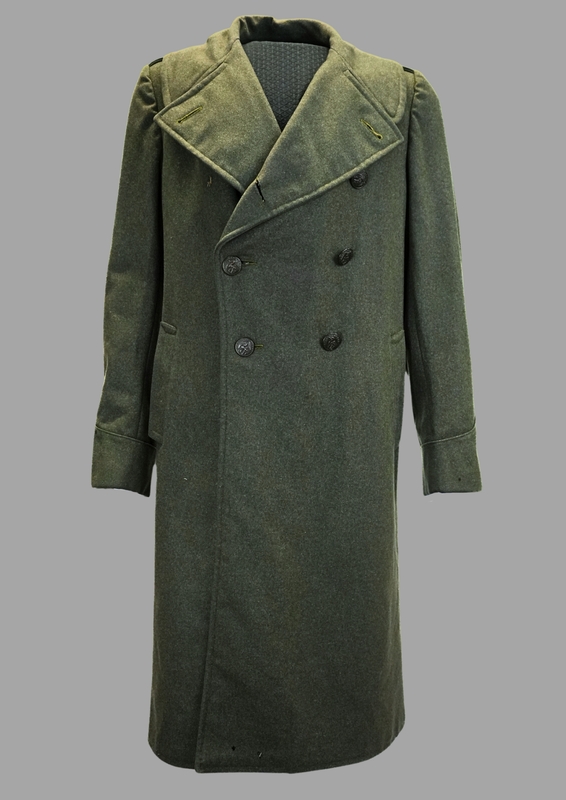
This World War II Marine overcoat issued to J. W. Cooley was donated by Alma McMillian, and owned by George Richardson of Tampa, FL. The garment was used to provide protection to soldiers against rain and cold weather conditions they faced during grueling warfare.
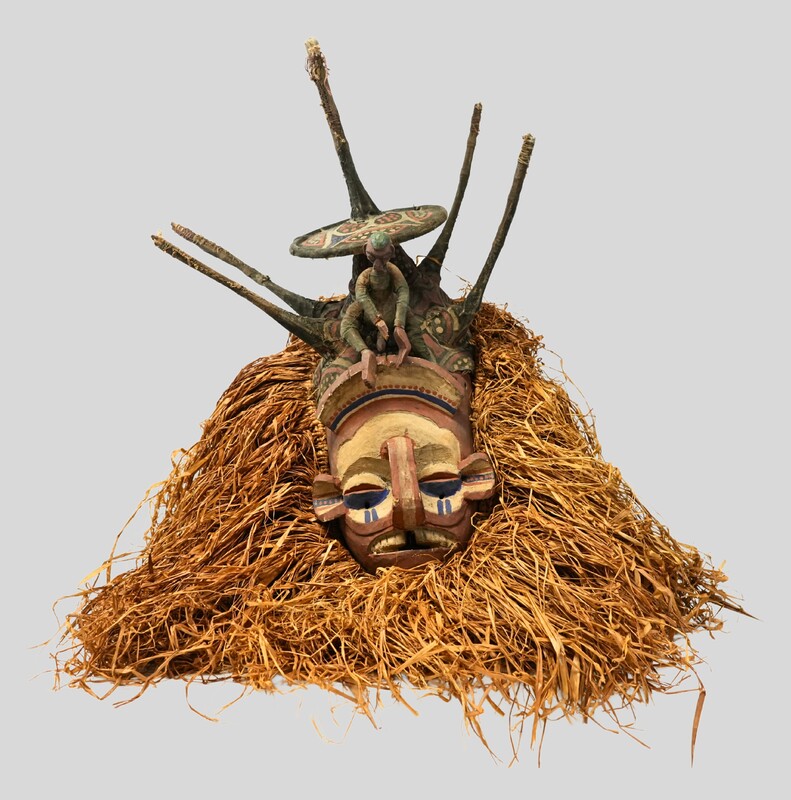
The Yaka mask, traditionally crafted by the Yaka people of the Democratic Republic of Congo, is known for its striking design and vibrant colors. Often used in initiation ceremonies and cultural performances, the mask features exaggerated facial features that convey power and spiritual significance.
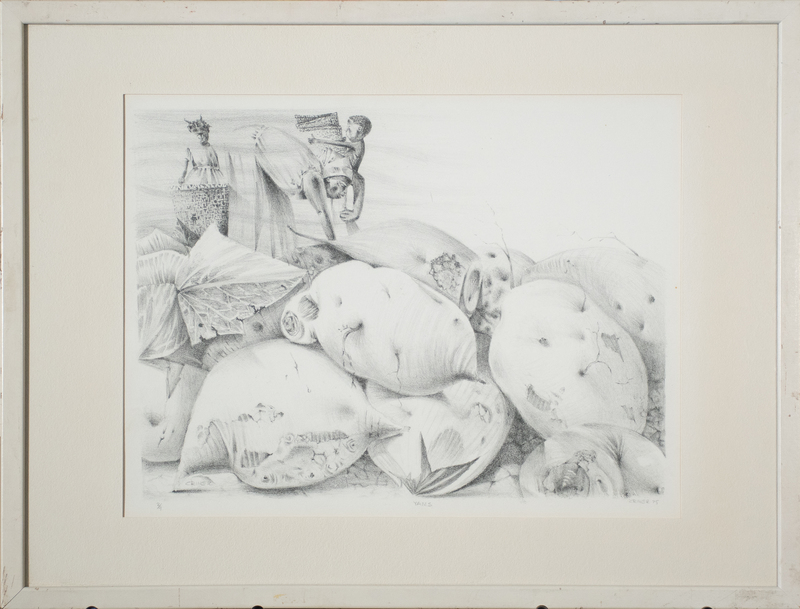
Criner's print uses forced perspective to depict a field of oversized yams and a mother picking from the land, with her children alongside. The son and daughter each hold baskets, presumably full of freshly harvested yams. Yams are a staple crop in West African culture and cuisine. In the African diaspora, sweet potatoes sometimes take yams’ place.
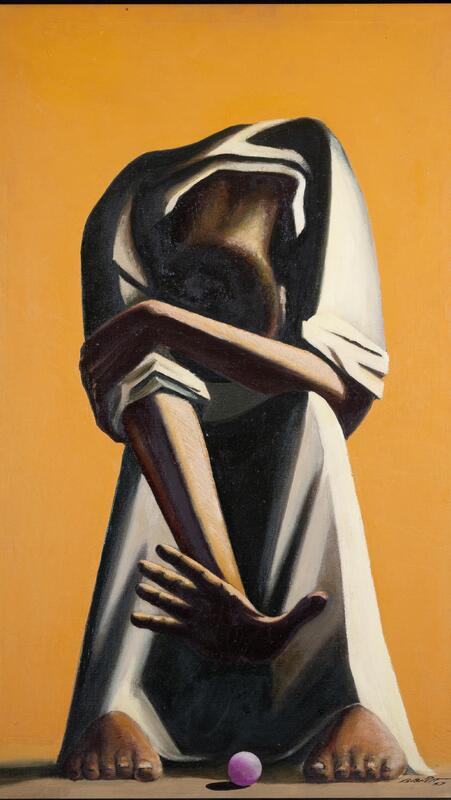
Benjamin Britt was a figurative, surrealist, abstract painter and art teacher from Winfall, NC. Yield Not depicts the debilitating nature of mental health issues and their impact on human perception and potential. The subject is cowering with his head in his lap as he reaches toward a small pink ball that he perceives as out of his reach.
The interview was used for a paper that Mr. Langdon wrote for Dr. Alferdteen Harrison's Summer 1977 Workshop on Oral History. He outlines the history of Head Start in Mississippi and writes about his research goals and outcomes and creates a lesson plan for the workshop.